
Pothos (Devil’s Ivy) Varieties in Australia: Golden, Marble Queen, Neon, N’Joy & More

The main pothos varieties you’ll find in Australia
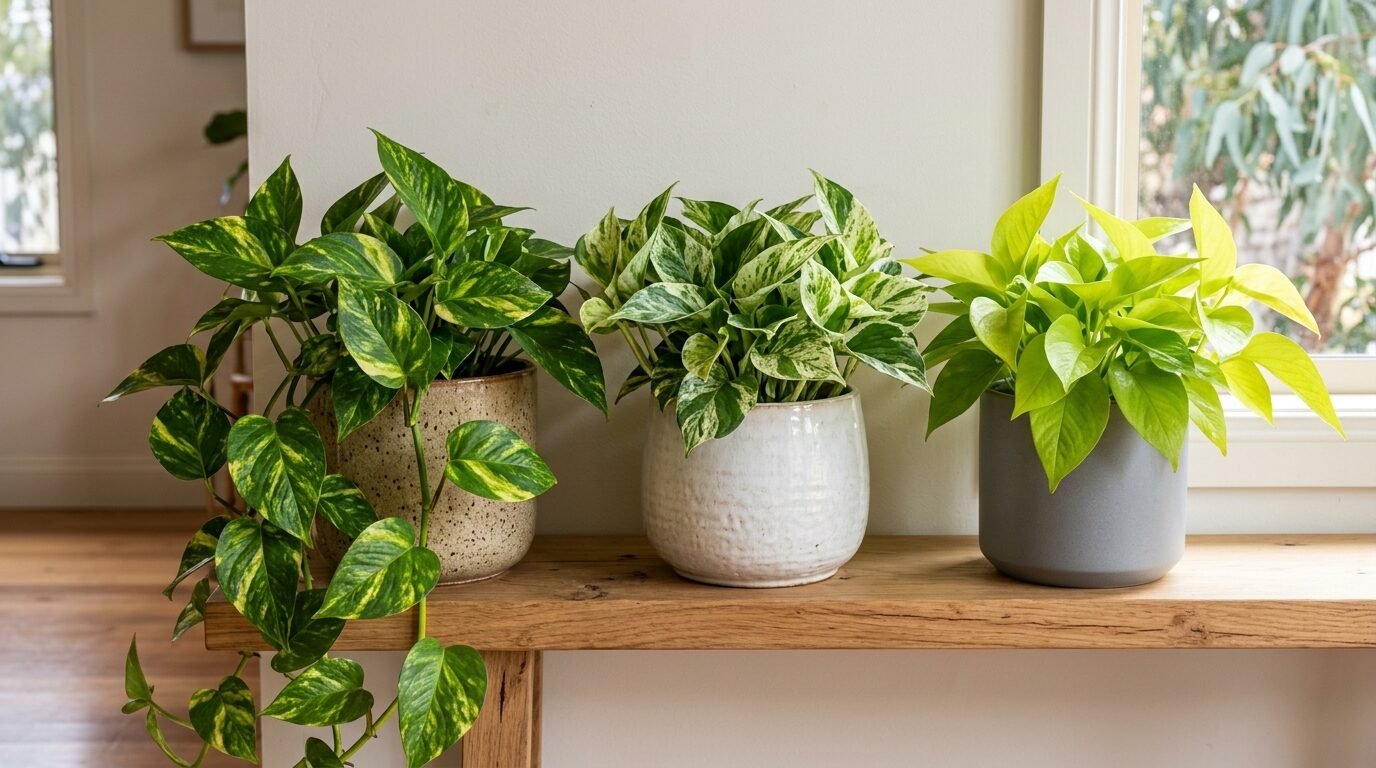
Almost every “pothos” or “Devil’s Ivy” on sale is a cultivar of one species, Epipremnum aureum. They climb or trail the same way, root just as easily, and want the same thing: warmth and bright, indirect light. The practical differences come down to colour, pattern and how much light each one needs to look its best. Here is a quick comparison of the ones you’re most likely to see.
| Variety | Look | Variegation | Light to look its best | Vigour |
|---|---|---|---|---|
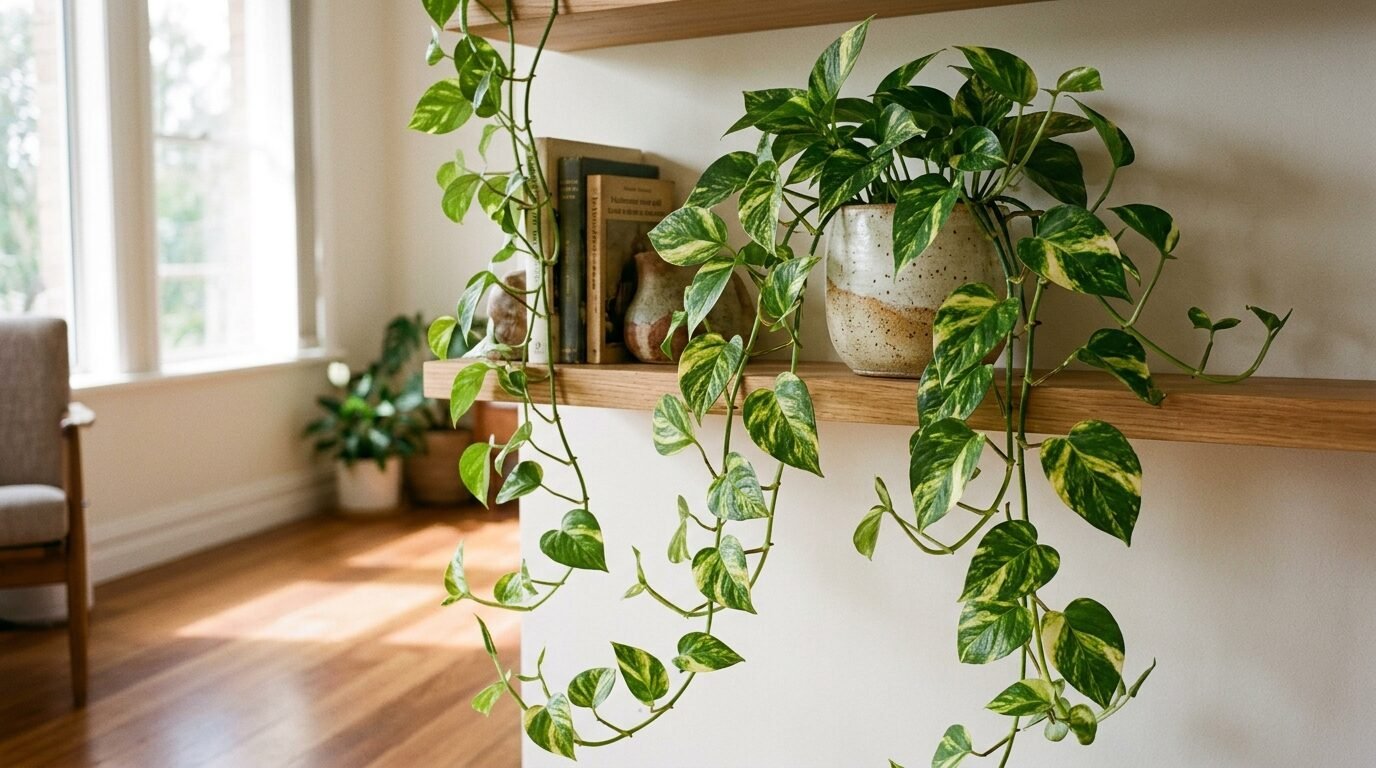
| Golden Pothos | Glossy green with golden-yellow streaks | Moderate | Bright indirect; tolerates lower light | Fast, very hardy |
| Jade Pothos | Solid deep green | None | Handles the lowest light of the group | Fast, very hardy |
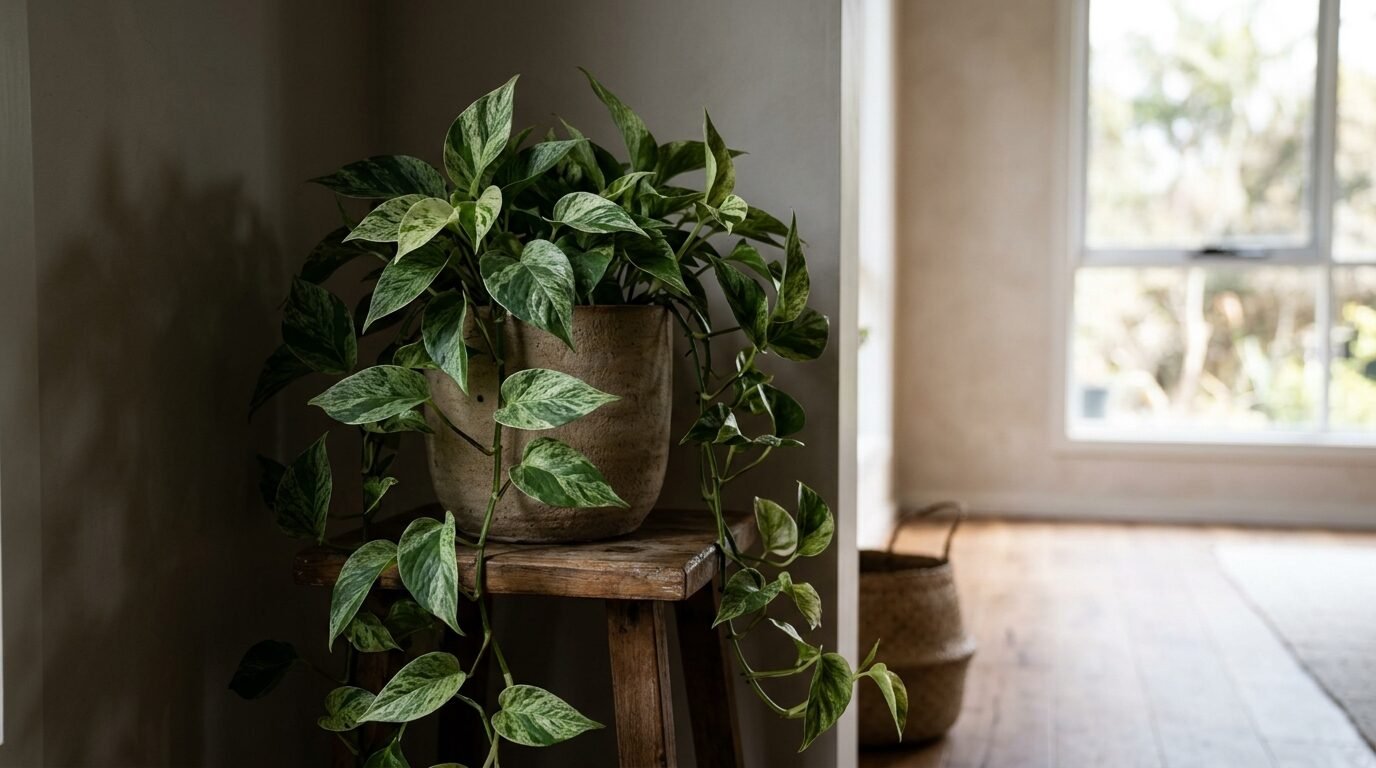
| Marble Queen | Heavy white & cream marbling on green | Very high | Needs bright indirect to stay white | Slower |
| Snow Queen | Even whiter than Marble Queen | Very high | Bright indirect essential | Slow |
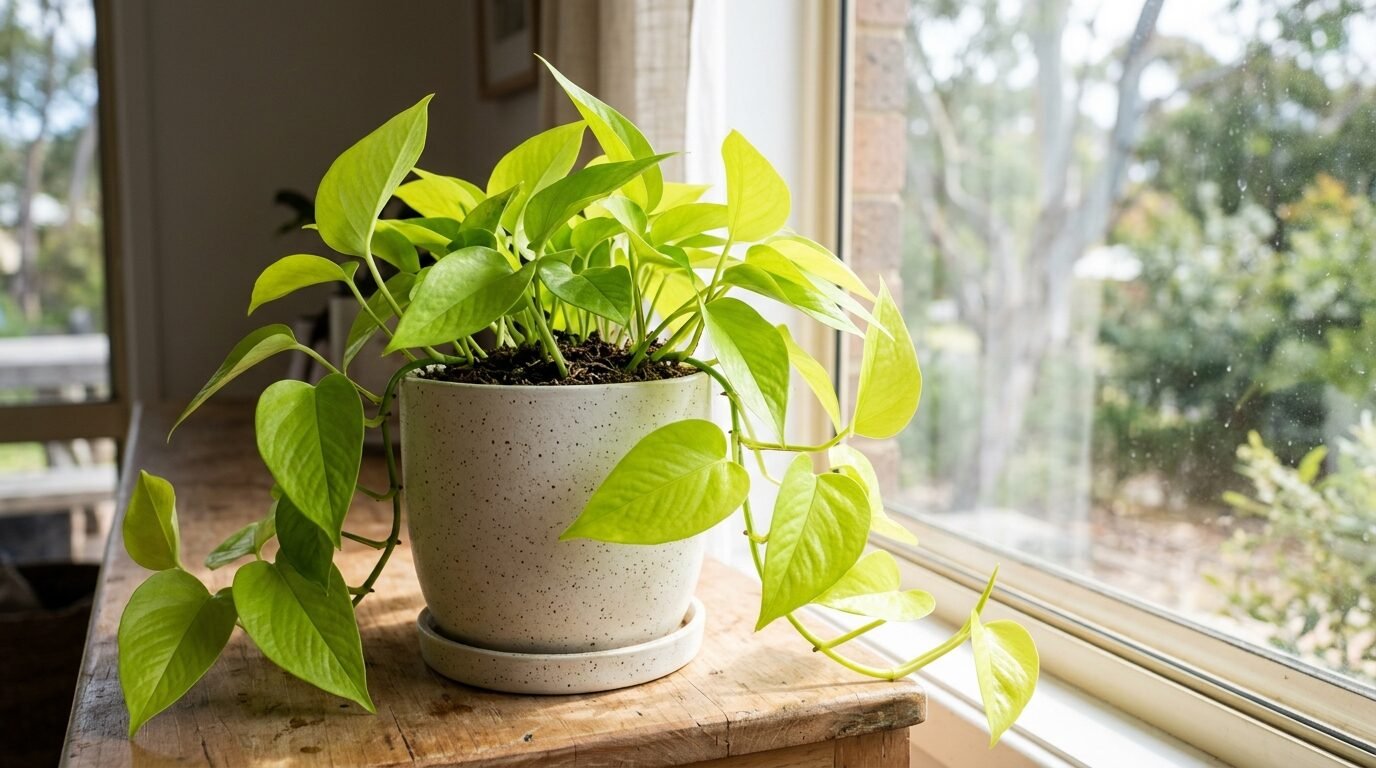
| Neon | Solid chartreuse / lime green | None | Bright indirect keeps it vivid | Fast |
| N’Joy | Small leaves, crisp green centres with white patches | High | Moderate to bright indirect | Compact, slow–moderate |
| Pearls & Jade | Like N’Joy but with grey-green and speckled edges | High | Moderate to bright indirect | Compact, slow |
| Manjula | Wavy leaves, swirled cream, white & green with speckles | High | Bright indirect | Slow |
| Global Green | Green-on-green: deep green centre, lighter green edge | Low (green) | Moderate indirect | Moderate |
| Glacier | Compact, small white-and-green leaves with silvery flecks | High | Bright indirect | Slow |
| Cebu Blue | Elongated silvery blue-green leaves | None | Bright indirect; fenestrates on a pole when mature | Fast (different species — see below) |
How to read “variegation” before you buy
The white, cream and pale-green sections of a variegated pothos contain little or no chlorophyll, so they can’t photosynthesise. That has two everyday consequences worth knowing before you pick a plant:
- More white = slower growth and more light needed. Snow Queen and Marble Queen grow slowly and will drift back towards green in a dim corner. Golden and Jade are far more forgiving.
- Solid-colour types don’t “lose variegation” — but they can still fade. Neon stays lime only in good light; in deep shade it dulls, and in harsh direct sun it bleaches. If your variegated pothos is turning plain green, that’s a light problem covered in our guide on why pothos lose their variegation.
Which pothos should you choose?
If your room is on the darker side
Go for Golden or Jade. They keep growing in light levels where the white cultivars sulk. Remember that “low light tolerant” means they’ll survive and stay green — no pothos actually thrives in a dark room. See how much light Devil’s Ivy really needs for what “bright indirect” looks like in a typical Australian home.
If you want maximum “wow” and have good light
Marble Queen, Snow Queen, Manjula and Glacier are the show-stoppers, but give them a bright spot out of direct sun — think a metre or two back from a north or east-facing window. In them, bright light is what pays for all that white.
If you want something compact for a shelf
N’Joy, Pearls & Jade and Global Green have smaller leaves and a tidier, less rampant habit, which suits shelves and smaller pots.
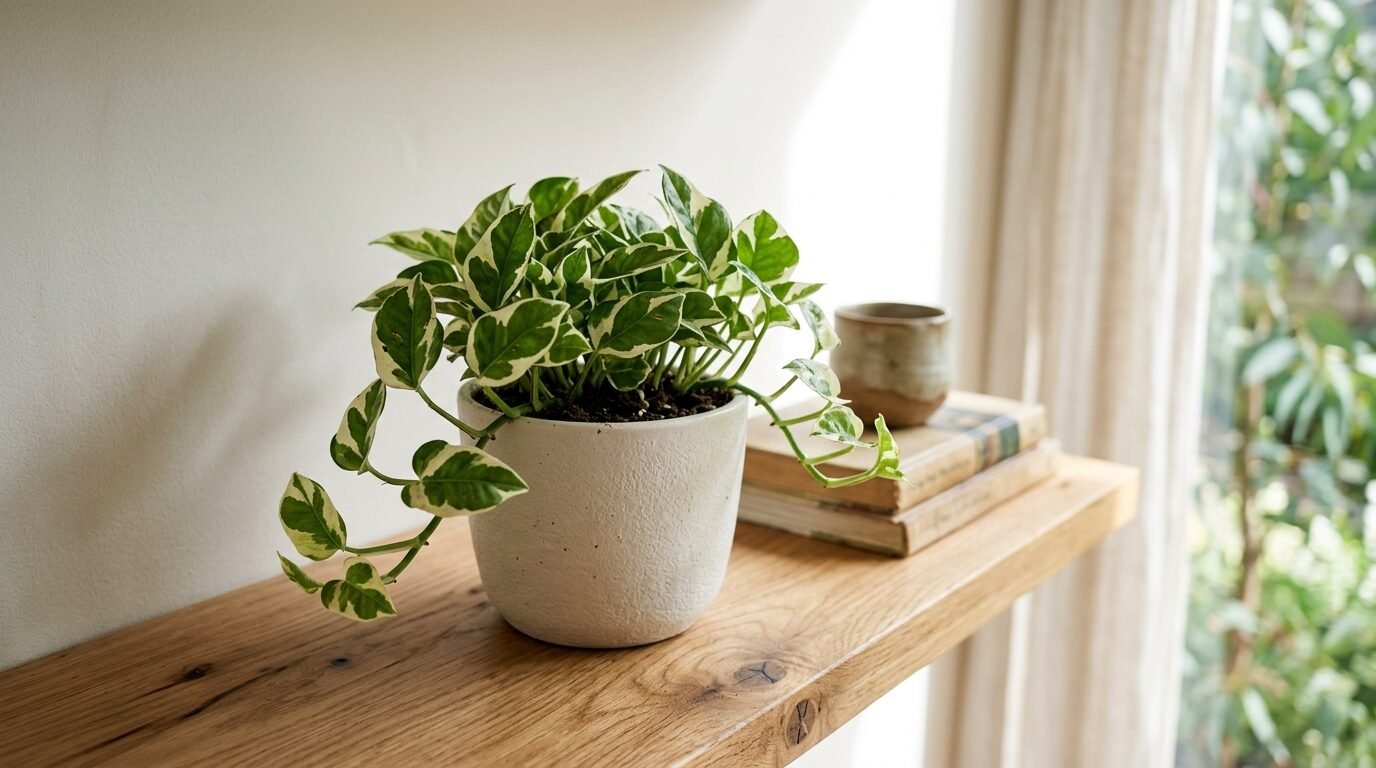
“Is Cebu Blue a pothos?”
Cebu Blue is Epipremnum pinnatum — the same genus as pothos but a different species. It’s sold alongside pothos and cared for identically, so it’s fair to shelve it with the family. Its party trick is that, trained up a moss pole with age and good light, the leaves can develop natural splits (fenestrations), which ordinary pothos won’t do. If you’d like to encourage that, our guide on training Devil’s Ivy up walls and moss poles applies to Cebu Blue too.
“Satin Pothos” is not actually a pothos
They’re all cared for the same way
Whichever variety you choose, the fundamentals are identical: warmth, bright indirect light, and watering only once the top few centimetres of mix have dried. The full routine is in the Devil’s Ivy (Pothos) care guide, with detail on seasonal watering and propagation if you want to turn one plant into many.


