Pothos want a light, chunky, free-draining mix — not dense soil that stays soggy. A simple recipe is roughly 2 parts quality indoor potting mix, 1 part perlite, and 1 part orchid bark or coco chips. Repot every 1–2 years, or when roots fill the pot, moving up just one pot size. The best time in Australia is spring to summer, while the plant is actively growing.
✔ How this guide was checked
Mix proportions and repotting advice follow standard aroid culture for Epipremnum aureum and are framed for materials easily bought in Australia (indoor potting mix, perlite, orchid bark, coco coir). Timing is tied to the local growing season rather than Northern-Hemisphere months. Root-rot cautions are kept conservative and cross-linked to our dedicated guide.
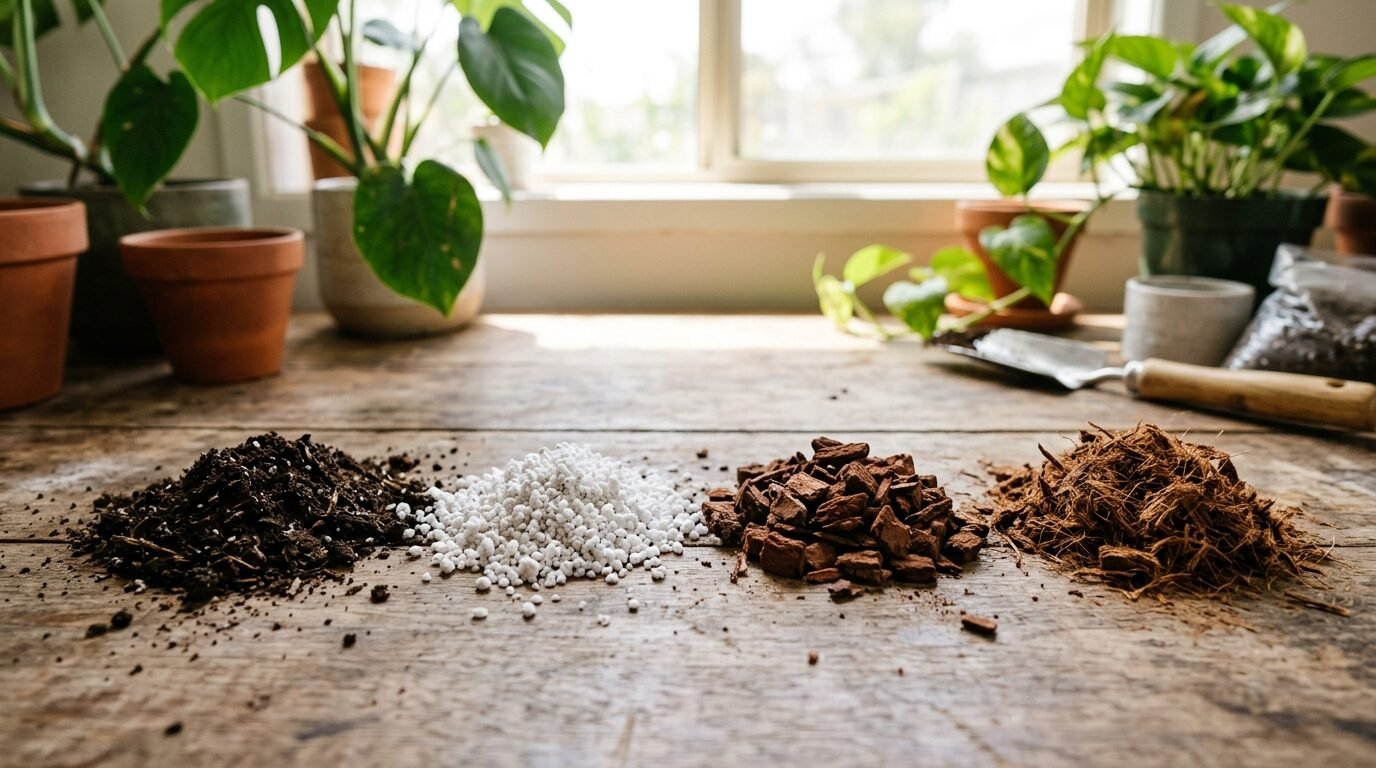
Potting mix, perlite, orchid bark and coco coir laid out for an aroid mix
What pothos actually want from their soil
Pothos are climbing aroids whose roots evolved to run through loose leaf litter and bark, not sit in heavy ground soil. So the ideal potting medium does three things at once: it holds a little moisture, drains the rest away fast, and keeps air around the roots. Get that balance right and most pothos problems — especially root rot — simply don’t start. They’re not fussy about richness, and they prefer a mix that’s slightly acidic.
The thing to avoid
Straight, fine, water-holding soil in a pot with poor drainage is what kills pothos. It stays wet, starves the roots of air, and leads to the yellowing and mushy stems covered in our guide on yellow leaves and root rot. Everything below is really about avoiding that one situation.
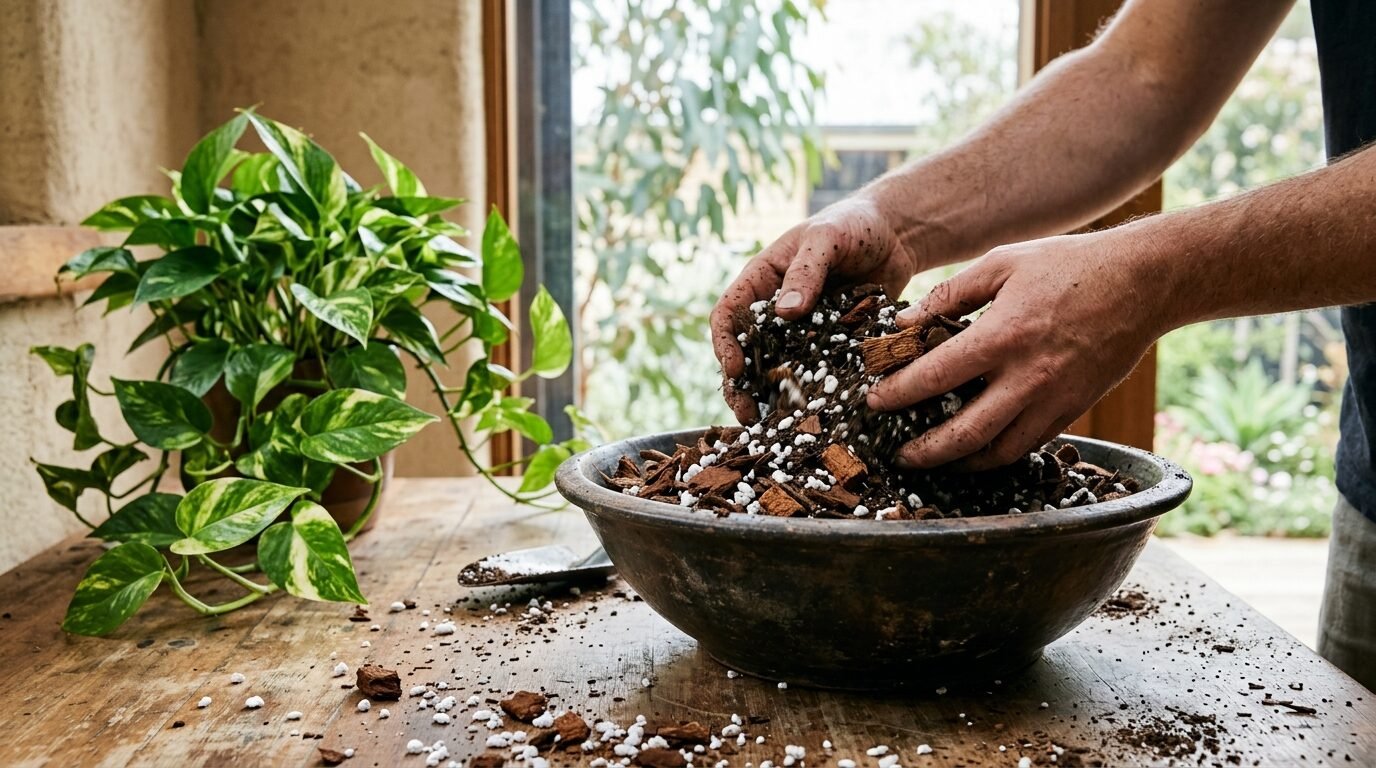
Repotting a pothos into fresh free-draining potting mix
A simple pothos mix you can make at home
You don’t need anything exotic. This blend is cheap, forgiving and made from things sold at any Australian garden centre or hardware shop:
Ingredient
Rough proportion
What it does
Quality indoor/potting mix
2 parts
Base — holds some moisture and nutrients
Perlite
1 part
Opens the mix up for drainage and air
Orchid bark or coco chips
1 part
Adds structure the roots can breathe through
Coco coir (optional)
small handful
Evens out moisture without going soggy
Worm castings (optional)
small handful
Gentle, slow nutrition
If you’d rather buy ready-made, a bagged “aroid mix” or a premium indoor-plant mix with added perlite and bark does the same job. The test of a good mix: when you water, it should drain freely within seconds, and feel damp — never swampy — a day later.
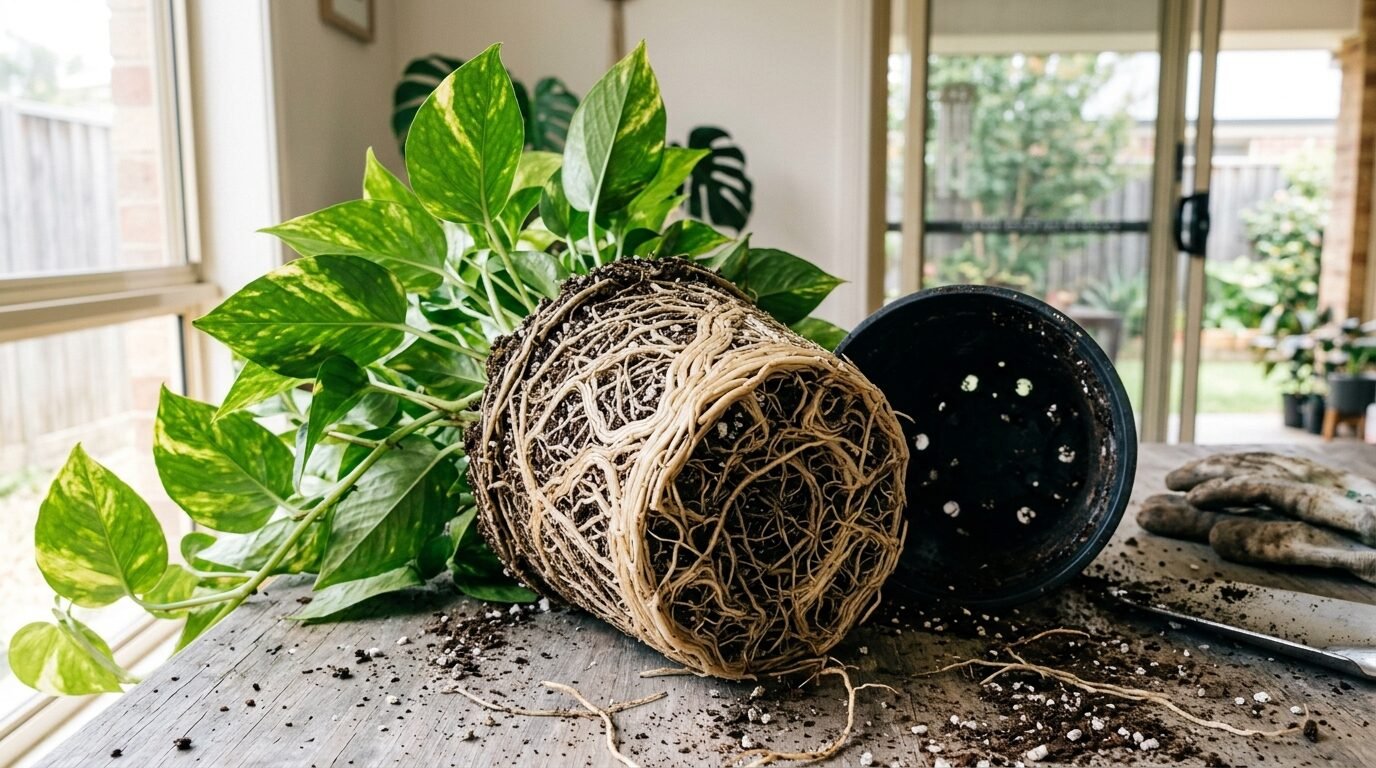
A root-bound pothos lifted from its pot with roots circling the shape
Can you just use normal potting mix?
In the short term, yes — pothos are tough and will cope. But bagged potting mix on its own tends to compact and hold water over a few months, which slowly raises the risk of root rot and makes watering harder to judge. The easy fix is to stir through a couple of handfuls of perlite and bark at potting time. It’s the single cheapest upgrade you can make to a pothos’s life.
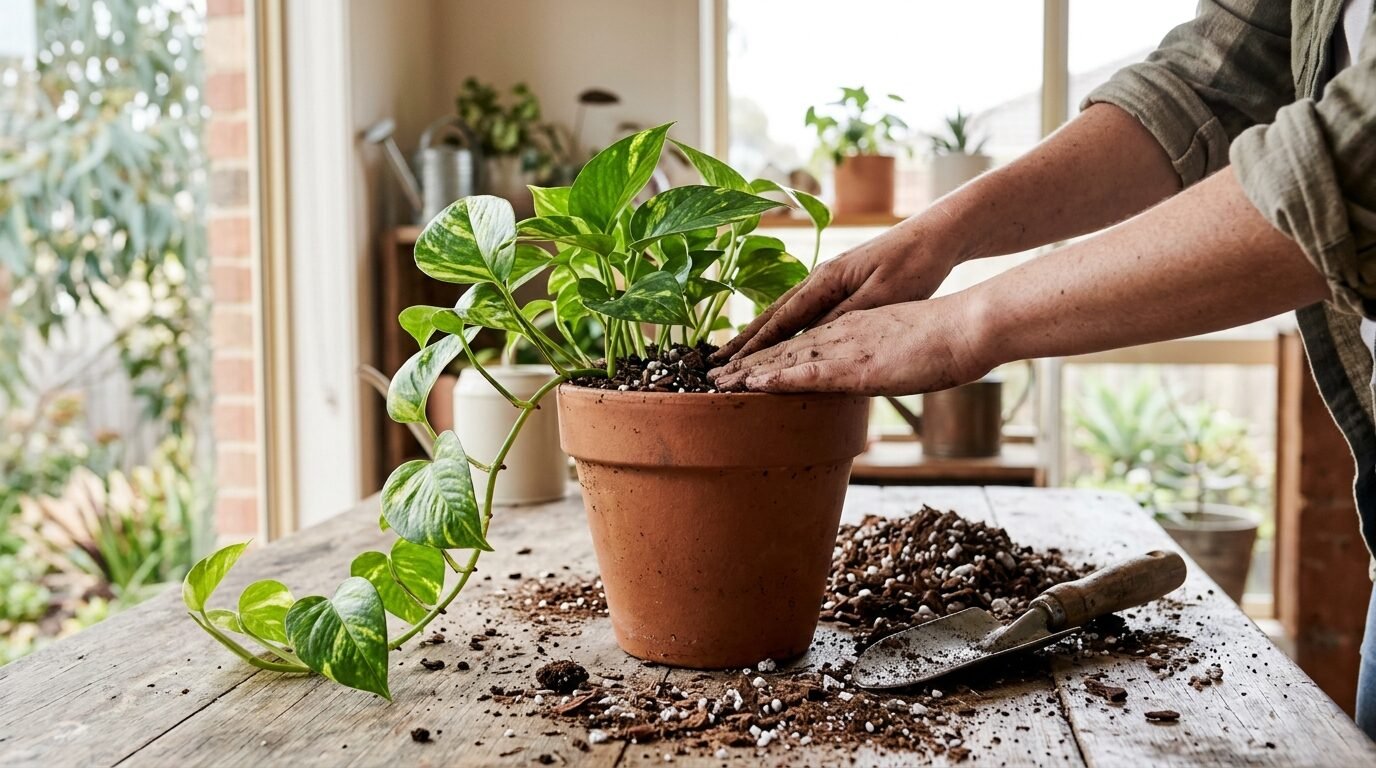
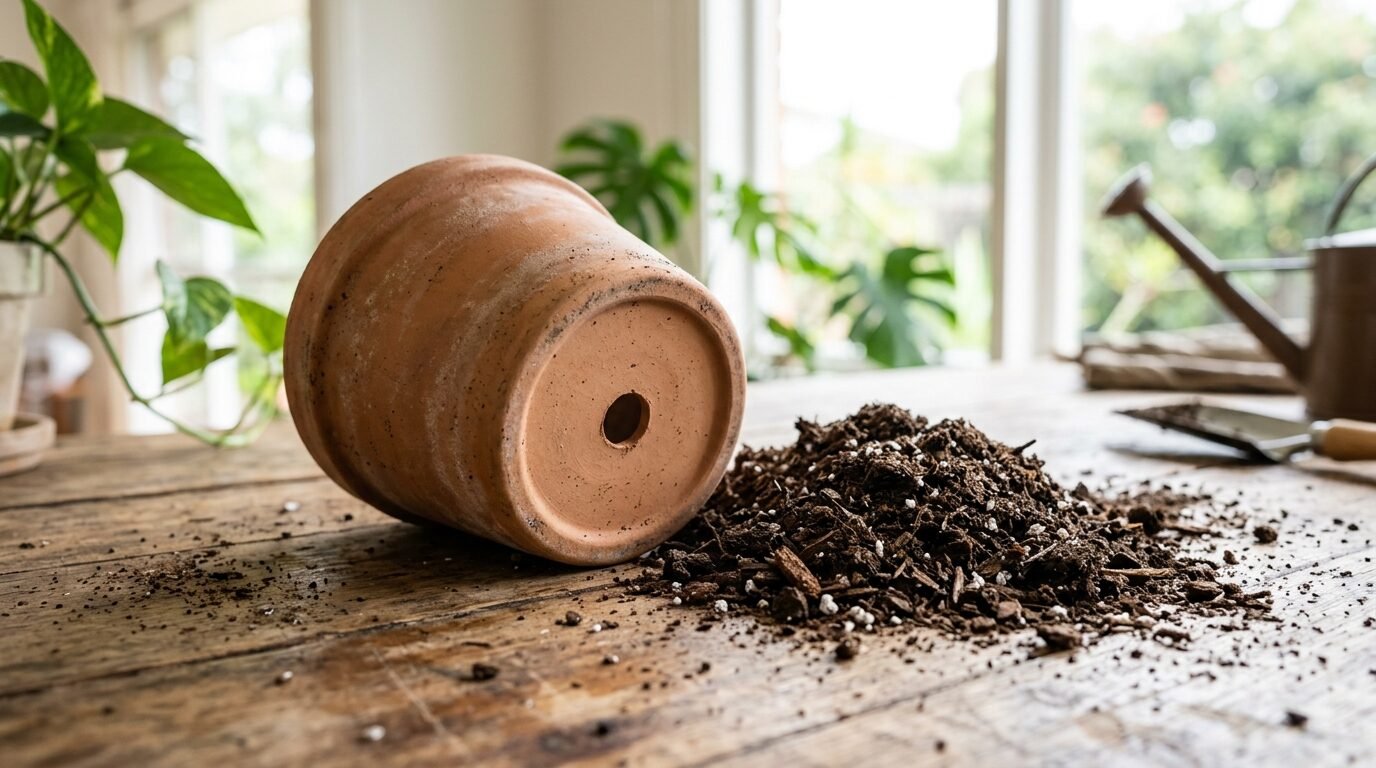
A terracotta pot with drainage holes beside loose potting mix
When should you repot a pothos?
Pothos actually like being a little snug, so there’s no need to rush. Repot when you see a few of these signs:
Roots circling the inside of the pot, or poking out the drainage holes
Water runs straight through and the plant dries out much faster than it used to
Growth has slowed and the plant looks top-heavy for its pot
It’s simply been 1–2 years since the last repot and the mix looks tired
Up one size only
When you do repot, go up just one pot size — about 2–3 cm wider. A pot that’s too big holds a reservoir of wet mix the small root ball can’t use, and that’s a fast track to rot. Bigger pot does not mean a bigger plant.
How to repot a pothos, step by step
1
Water a day before
Moist roots slide out cleanly and suffer less shock than bone-dry ones.
2
Pick the right pot
One size up, with drainage holes. Terracotta if you tend to overwater; plastic or glazed if you forget to water.
3
Ease the plant out
Tip it sideways and squeeze the pot; don’t yank the vines. Gently loosen the outer roots.
4
Check the roots
Healthy roots are firm and pale. Snip away any dark, soft or smelly ones with clean scissors.
5
Pot into fresh mix
Add some new mix to the base, sit the plant at its old depth, and backfill around the sides. Firm lightly — don’t pack it down hard.
6
Water in and settle
Water until it drains out the bottom, tip away any excess, and return the plant to bright indirect light. Hold off feeding for a few weeks while new roots establish.
Pot type and drainage
Drainage holes are non-negotiable — a pothos in a pot with no holes is the most common slow-rot setup. Beyond that, the pot material just changes how often you’ll water: terracotta breathes and dries faster (forgiving if you’re heavy-handed with the watering can), while plastic and glazed ceramic hold moisture longer (kinder if you’re forgetful). If you love a decorative pot with no hole, use it as a cover pot and keep the plant in a plain nursery pot inside.
Best time of year to repot in Australia
Aim for spring through summer, when warmth has the plant actively growing and new roots establish quickly. Avoid routine repotting in the cooler months, when growth slows right down and fresh wet mix sits around idle roots for longer. The one exception is an emergency: if a plant has root rot, repot it into fresh dry mix straight away, whatever the season.
A light, free-draining mix: roughly 2 parts quality potting mix, 1 part perlite and 1 part orchid bark or coco chips. A bagged aroid mix does the same job. Avoid dense soil that stays wet.
Can I use cactus or succulent mix for pothos?
Not on its own — it drains too hard and dries too fast for a pothos. You can blend some into regular potting mix for extra drainage, but a potting-mix-plus-perlite-and-bark blend suits them better.
How often should I repot my pothos?
Every 1–2 years, or when roots fill the pot and circle out the drainage holes. Pothos like being slightly snug, so there’s no need to repot more often than that.
Should I go up a lot in pot size?
No. Move up just one size (about 2–3 cm wider). An oversized pot holds wet mix the roots can’t use, which causes root rot. A bigger pot doesn’t make a bigger plant.
Does a pothos pot need drainage holes?
Yes. Drainage holes are the single most important feature. If you want a decorative pot without a hole, keep the plant in a plain nursery pot and drop it inside as a cover pot.
When is the best time to repot in Australia?
Spring to summer, while the plant is actively growing and can establish new roots quickly. Avoid routine repotting in winter — unless it’s an emergency like root rot.
Do pothos like to be root-bound?
A little. They tolerate being snug and don’t need frequent repotting, but once roots completely fill the pot and water runs straight through, it’s time to move up a size.
Should I add fertiliser to the new mix?
A small handful of worm castings is fine, but hold off on liquid feeding for a few weeks after repotting so new roots can settle. Then feed lightly during the warm growing season.