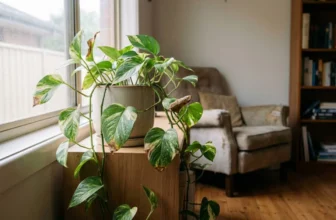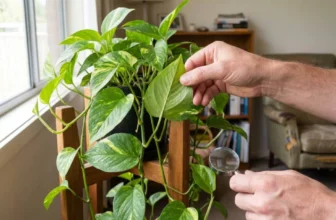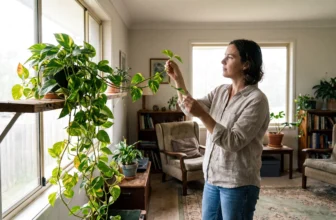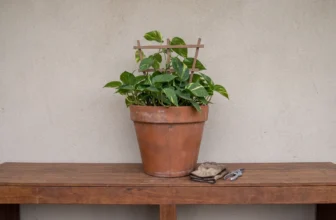

Overwatering is one of the most common causes of decline in this plant, particularly in low light and through winter. The problem is often a fixed watering habit that does not adjust as the pot dries more slowly.
If you want the wider picture on light, feeding and general care, start with the complete Devil’s Ivy care guide for Australia.
✋ The Three-Check Method
Rather than a rule, use a quick routine. Do all three — any one on its own can mislead you.
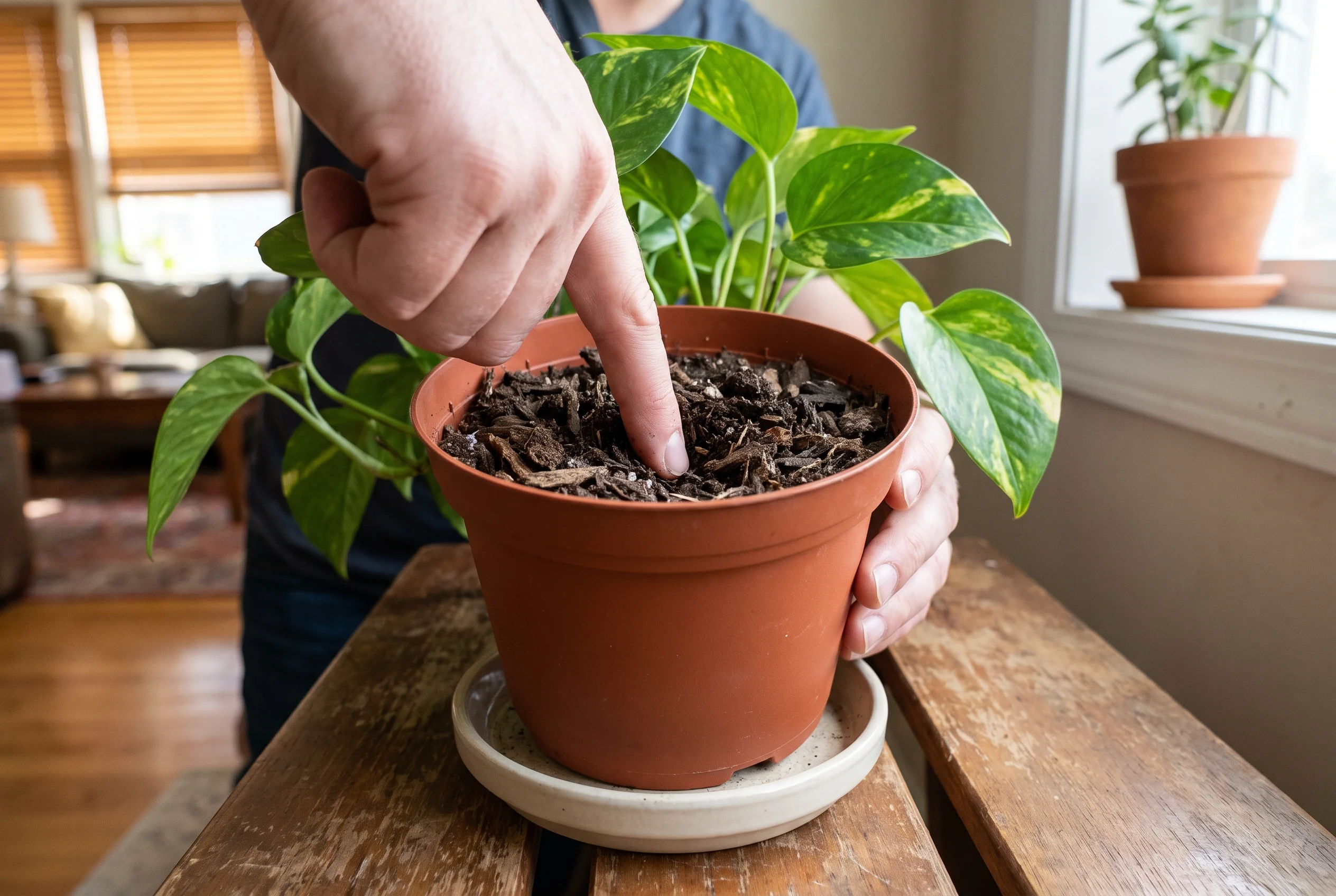
1. Feel the upper mix
Push a finger into the top of the mix. You are checking whether the upper portion has partly dried — not hunting for a magic depth. How far down you need to go depends on the pot: a shallow pot and a deep pot are not the same.
2. Lift or tilt the pot
Pot weight is a useful signal once you have learned how that particular container feels after watering and as it dries.
3. Check the conditions
Ask whether the plant and pot are in a state to use the water: is it growing, is there light, is it root-bound, was it recently repotted, is it sitting in a cover pot? A dormant plant in a dim corner does not drink like a growing one.
🔄 What Actually Changes the Drying Rate
The reason a schedule fails is that all of these vary from home to home, and several of them change through the year.
🌏 Australian Climate: Tendencies, Not Timetables
Find the description that matches your conditions. These are tendencies to expect, not intervals to follow — you still check the pot.
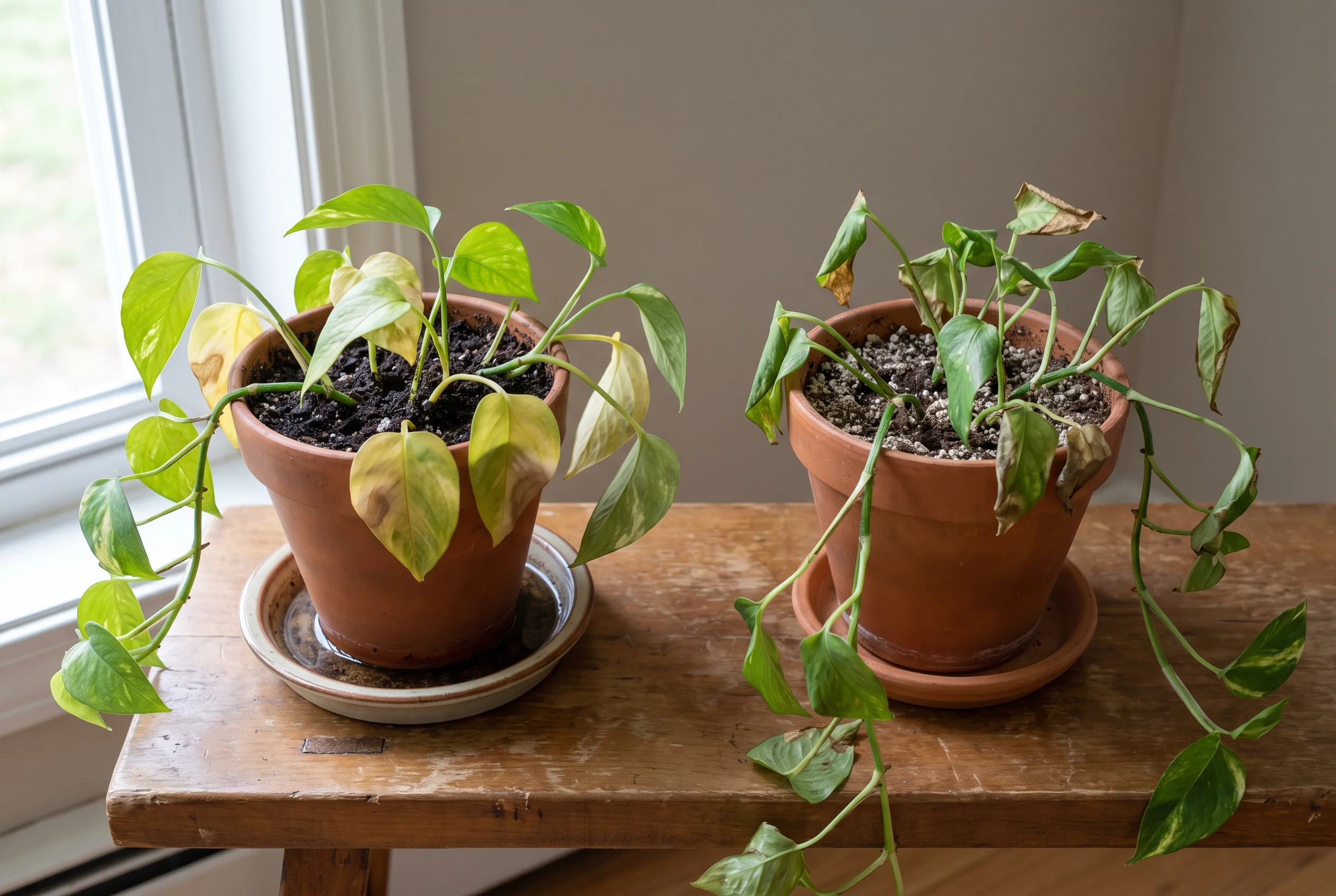
⚖️ Overwatering vs Underwatering
🚿 How to Water It
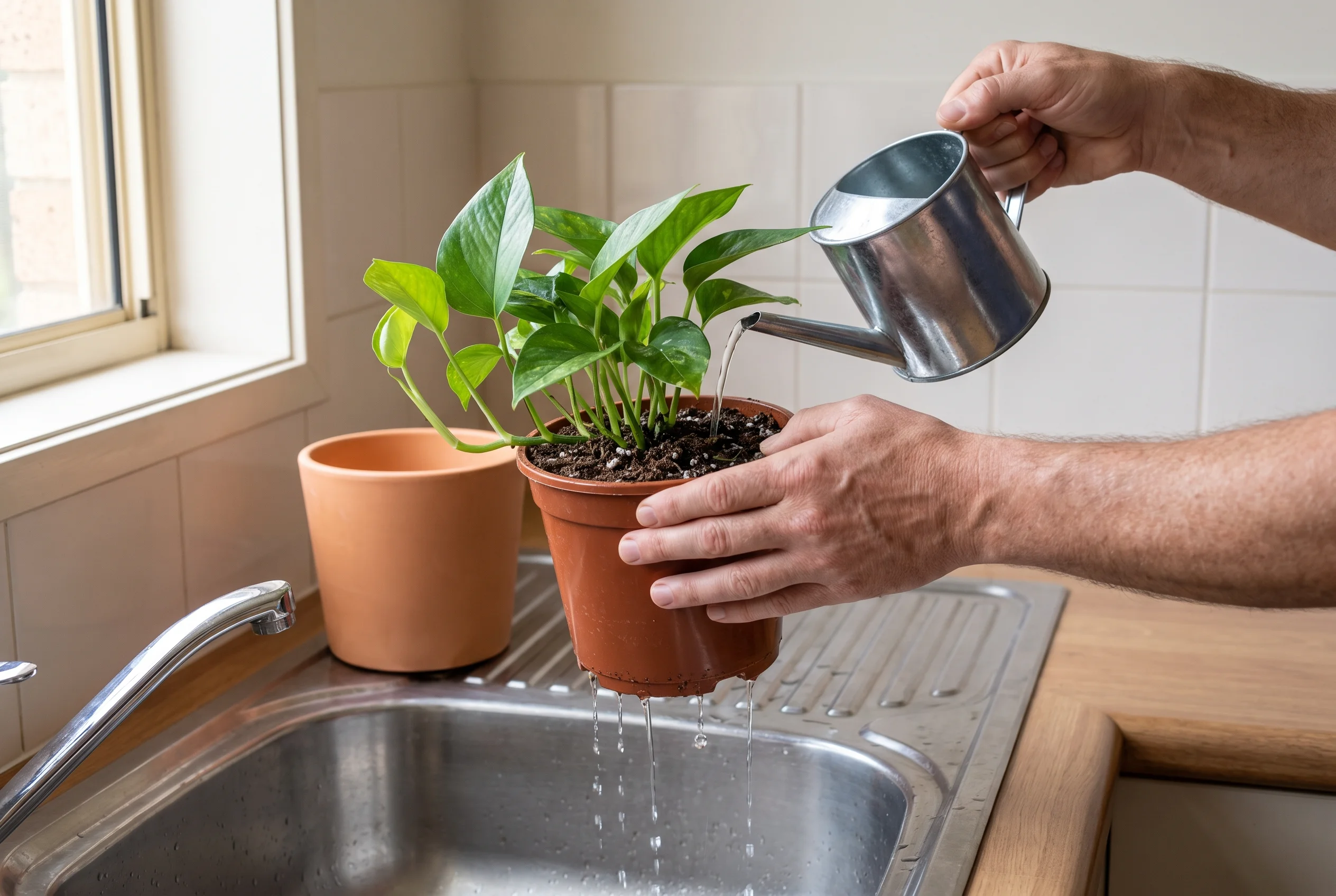
- Water thoroughly — until excess runs freely from the drainage holes.
- Let the excess drain completely before the pot goes back.
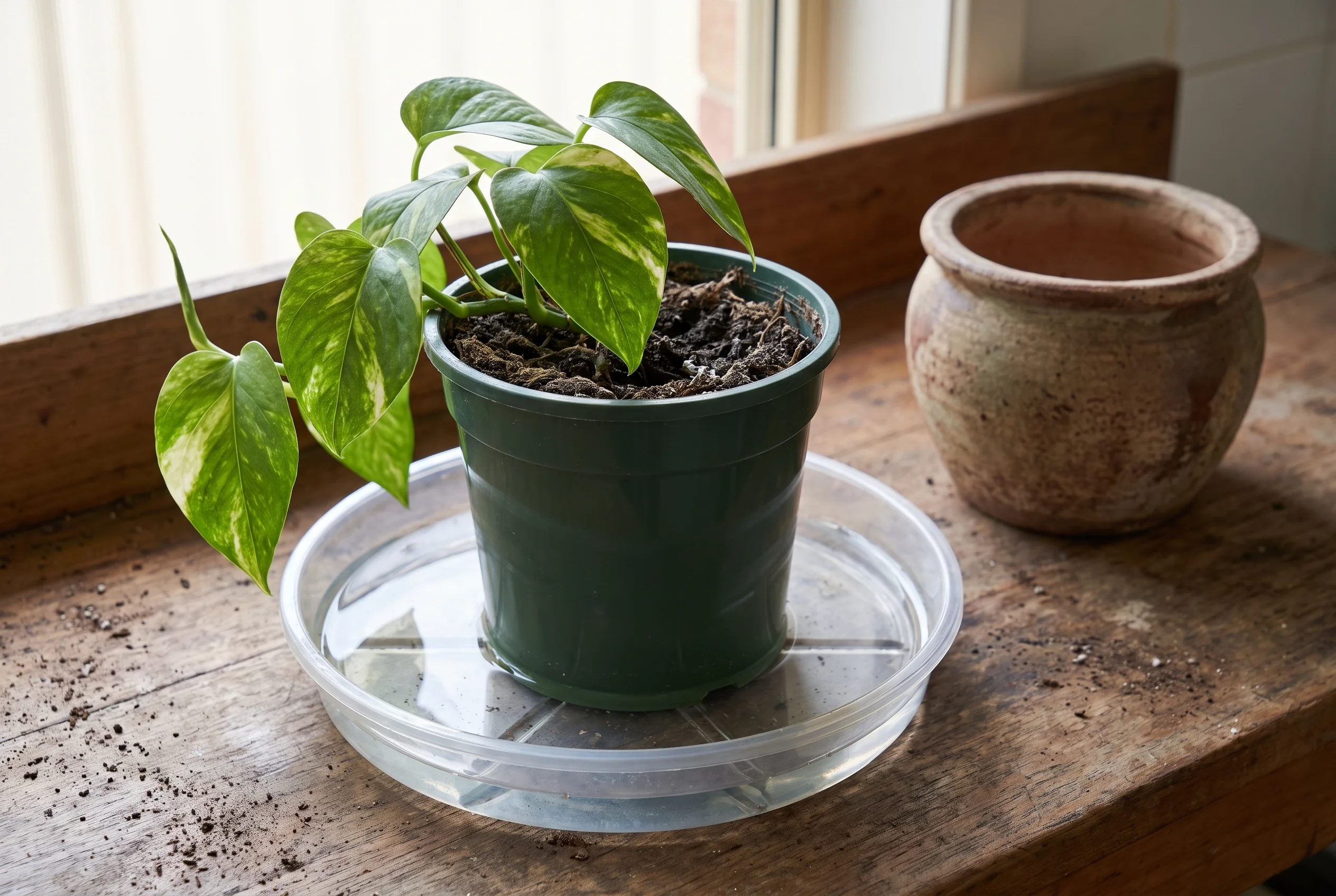
- Empty the cover pot or saucer. Do not leave the nursery pot standing in water.
- Avoid repeated small sips. Splashing a little on top wets the surface and leaves the root zone dry.
- Watch for water running straight through. If it pours out the bottom in seconds, the mix may be hydrophobic or badly compacted rather than properly watered.
🔧 Special Situations
More fresh mix than roots to use it, so it stays wet longer. Ease off and check carefully — a classic overwatering window.
Almost all root, barely any mix. Dries fast, and water may run down the sides. Usually a sign to repot rather than to water more often.
A reduced root system cannot use much water. Go lighter than feels natural and let the mix dry further between waterings while it recovers.
These keep the mix consistently moist, which suits some plants more than others. Let the reservoir run empty and the mix dry somewhat before refilling.
If water runs down the sides and straight out, the mix is repelling water. Rehydrate gradually — stand the pot in a shallow tray long enough for the mix to rehydrate, then remove it and let it drain fully — or repot into fresh mix.
The surface can be dry while the base is still wet. The finger test is least reliable here — trust weight, and be conservative.
Growth slows, so water use drops. The watering habit often does not drop with it, so the same routine can become excessive.
🚰 A Word on Tap Water
Most Devil’s Ivy plants cope with ordinary tap water. If your local water is unusually hard, or leaf-tip damage persists despite good watering and feeding practices, it is worth investigating your local water quality — rather than assuming tap water is the cause and changing everything at once.
❓ Frequently Asked Questions
❓ How often should I water in summer?
More often than in the cool months, but still based on the pot rather than the calendar. In a bright, warm spot with a growing plant you may find yourself checking every few days; in a shadier position it will be longer. Check, then decide.
❓ How often in winter?
Considerably less. Growth slows, the plant uses less water, and the mix stays damp for longer. Some plants may go a long time between waterings in cool conditions, while others will not. Check the pot rather than using the interval as a rule.
❓ Should I mist Devil’s Ivy?
Misting has only a brief effect on humidity and will not correct watering problems or brown tips on its own.
❓ Is bottom watering better?
It is a useful technique, particularly for a hydrophobic mix, because water is drawn up evenly rather than running down the sides. It is not inherently superior for routine watering, and you should still let the mix dry appropriately between drinks.
❓ Can it recover after drying out completely?
Often, yes. Devil’s Ivy is fairly forgiving of a missed watering. Water thoroughly, let it drain, and give it time. If the mix has gone hydrophobic, rehydrate it gradually rather than tipping more water at it.
❓ Why is the soil still wet after two weeks?
Usually low light, cool conditions, a pot that is too large, a dense mix, or a plant that is barely growing. It is a signal to water less, not a sign something is broken.
❓ Should I water after repotting?
Water it in to settle the mix around the roots, then be conservative. Fresh mix holds water that a small root system cannot yet use, so this is one of the easiest times to overwater.
❓ Does a moss pole change watering needs?
The pole is not the plant’s water supply — the roots in the pot are. A sphagnum pole can be lightly dampened if you want the aerial roots to attach, but the potting mix still needs watering on its own terms.