
Part of our complete guide: Devil’s Ivy (Pothos) care in Australia.
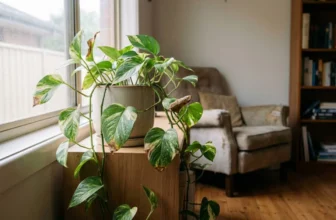
Devil’s Ivy tolerates lower light, but it grows best in bright indirect light. “Low light” describes conditions the plant can survive in—usually with slower growth, smaller leaves, and longer bare stems—not the conditions where it truly thrives.
Simply put: surviving in a dim corner and flourishing in one are two very different things.
This is the most misread piece of advice about the plant. Devil’s Ivy is sold as “low light”, and that label does a lot of quiet work. It is true in the sense that the plant will not collapse in a dim room. It is misleading because most people read it as “this plant does not care about light” — and then wonder why, two years on, they own a few very long stems carrying leaves the size of a fifty-cent coin.
Light is the input the plant converts into growth. Watering, feeding and support all sit downstream of it. For how the pieces fit together, start with our complete Devil’s Ivy care guide for Australia. This page deals only with light.
What “Low Light” Actually Means
A room that feels bright to you can still be dim for a plant — your eyes adjust across a huge range of brightness without telling you, and a leaf cannot. Four things change the light a plant actually receives, and none of them are about whether the room feels pleasant:
- Distance from the window. Intensity falls off sharply as you move back from the glass. A plant two metres in sits in a very different world from one on the sill.
- What is outside it. A wall, fence, awning, balcony above or large tree can strip most of the light from a window that faces the “right” way.
- The glass. Tinted, frosted or coated glazing cuts light — and so does a sheer curtain, which is sometimes exactly what you want and sometimes the reason nothing is growing.
- The room itself. A windowless bathroom is not a naturally lit room, however much steam is in it.
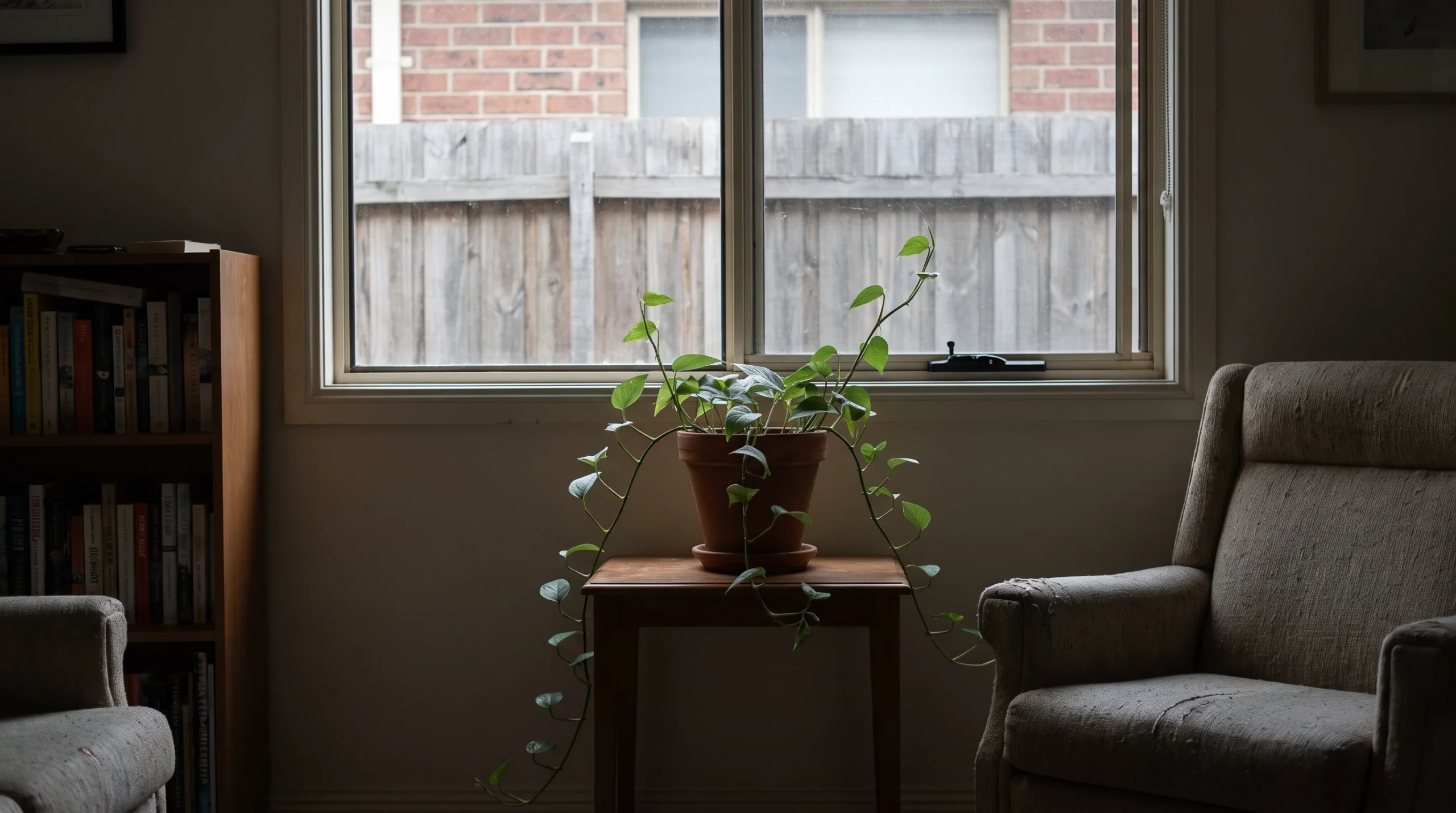
A useful check: stand where the plant sits and look toward the window. How much open sky can you see? Open sky is the light source. If the plant’s view of it is mostly blocked, it is in lower light than the room suggests.
Calathea is another indoor plant where “tolerates shade” should not be read as “likes darkness”; see our Calathea growing guide for Australia for its brighter indirect-light and humidity needs.
Window Orientation in Australia
Orientation is a starting point, not a rule. In the southern hemisphere the sun sits to the north, which reverses the advice on most overseas plant blogs.
| Aspect | Tends to give | Watch for |
|---|---|---|
| East | Often useful morning light | Direct summer sun through clear glass can still scorch close to the pane |
| North | Bright and warm; the strongest winter aspect here | Can be too strong right at the glass in summer; a sheer or a step back usually fixes it |
| West | Bright, arriving in the hottest part of the day | West-facing glass can create strong afternoon heat, particularly in summer, but the actual risk depends on glazing, obstructions, latitude and distance from the window |
| South | Usually dimmest, most even | Often fine — but a south room with an obstruction outside can be genuinely too dark |
Latitude and season shift all of it. A north window in Hobart in July and a north window in Cairns in January are not the same window. Treat the table as a hypothesis about your room, and let the plant confirm or correct it.
Signs Your Plant Wants More Light
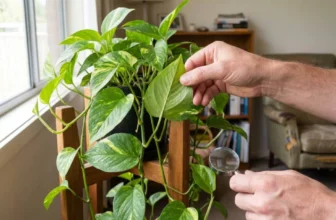
The plant tells you well before it looks sick. Read the newest growth, not the oldest leaves:
- Long gaps between leaves. The clearest signal, and usually a light problem — see leggy Devil’s Ivy.
- New leaves smaller than old ones. The plant is producing what it can afford.
- Slow growth, or none, through a season when it should be moving.
- Vines leaning toward the window — reaching, rather than filling out.
- Less variegation on new growth in variegated cultivars.
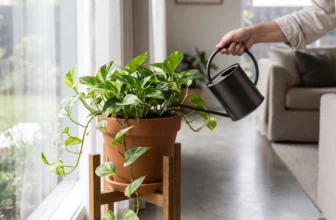
- Mix staying wet for a long time. A plant in dim light uses less water, so the pot dries slowly. See our watering guide.
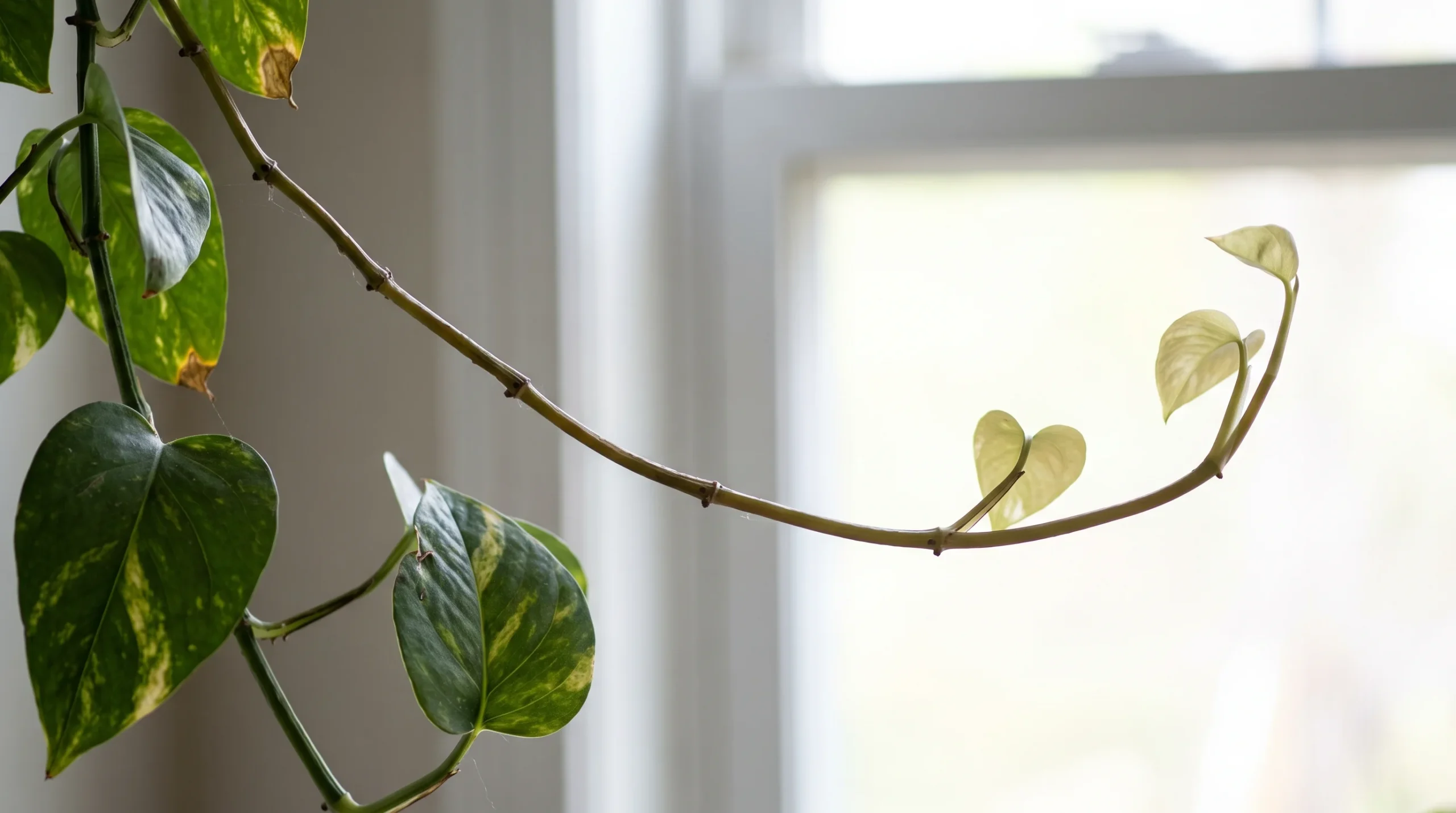
That last point matters more than it sounds. Low light is not harmless. It can contribute indirectly to decline, because the plant uses water more slowly and the mix may stay wet longer.
Signs of Too Much Direct Sun
- Bleached or washed-out patches
- Pale, scorched areas that do not recover
- Crisp edges, with damage concentrated on the side facing the window
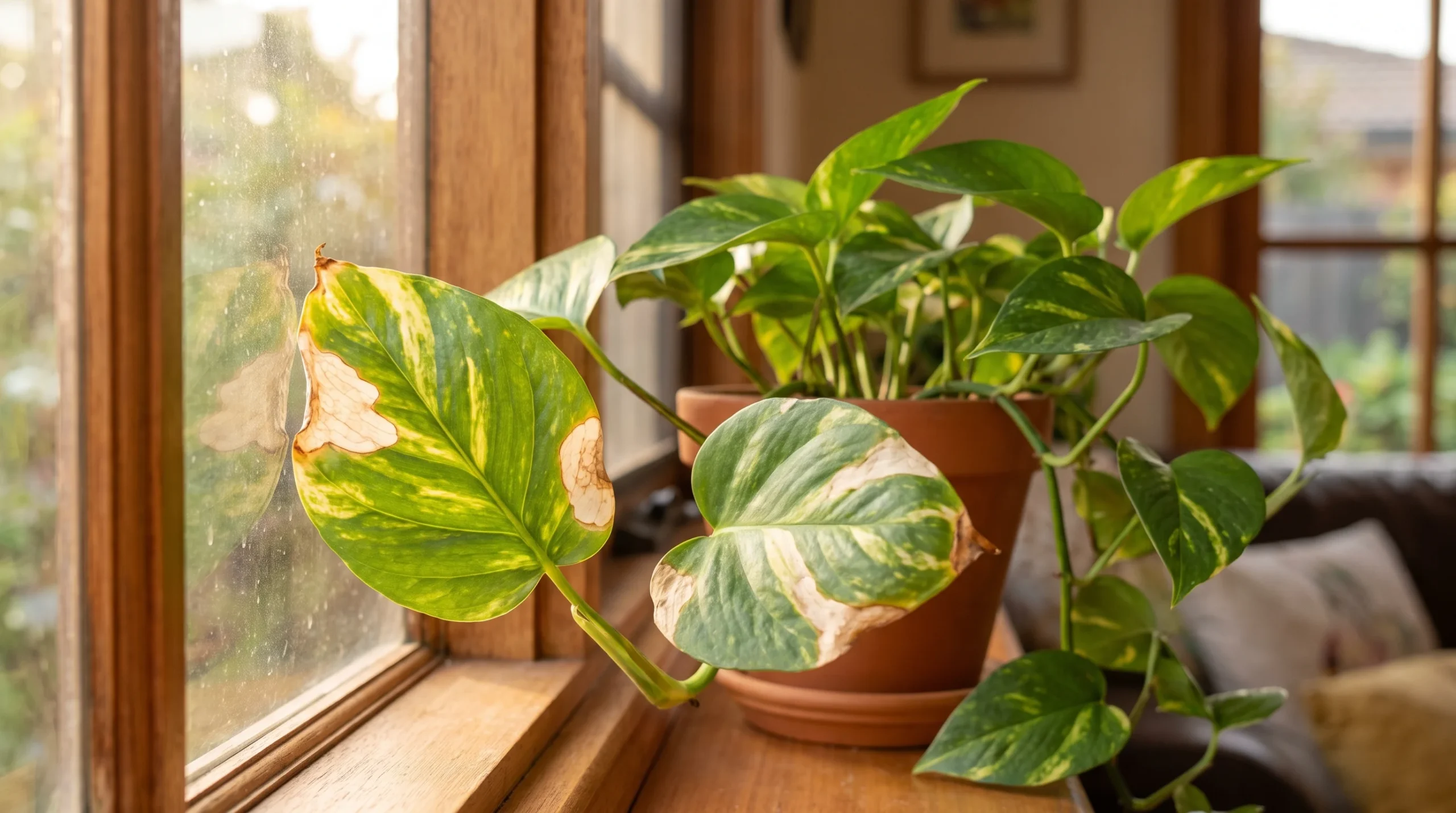
Sun damage is usually one-sided and worst nearest the glass. If the crisping is even, on all sides, and on tips rather than sun-facing surfaces, sun is probably not the cause — see brown crispy tips.
Light and Variegation — Handle With Care
Variegated cultivars such as Marble Queen and Golden Pothos generally hold more pattern in brighter light, and lower light generally reduces it. That is the honest generalisation. Less follows from it than the internet suggests:
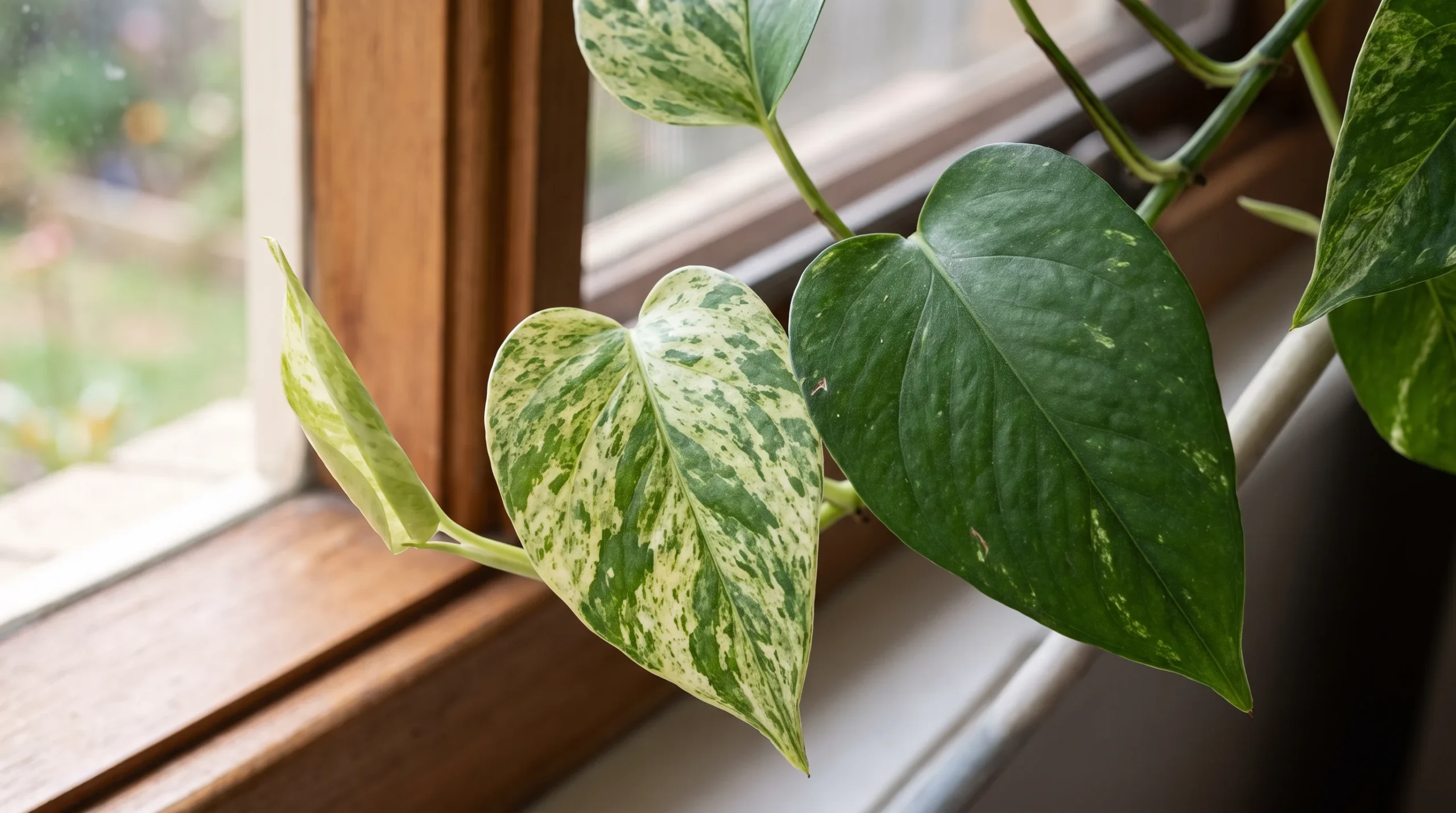
- A greener new leaf is not automatically “reversion”. Natural variation between shoots is normal in these cultivars.
- Growth that has genuinely reverted may stay green regardless of where you put the pot. Brighter light can influence the new growth that comes after the move — not what has already opened.
- Do not try to “fix” a green plant with strong direct sun. You will get scorch, not variegation.
Moving a Plant Into Brighter Light
A plant that has spent months in a dim corner has adjusted to it. Move it straight to a bright window and you can burn leaves that would have been perfectly happy there had they arrived gradually. Move the plant gradually and watch the newest leaves. Pale or scorched patches mean the change was too abrupt, so step it back and adjust more slowly. If the goal is to have it climb rather than trail, brighter light and a support surface work together — see training Devil’s Ivy to climb.
Grow Lights: Intensity, Not Just Hours
Grow lights work. The usual advice — “run an LED for eight to ten hours” — does not tell you much on its own, because it describes duration while ignoring the thing that decides the outcome.
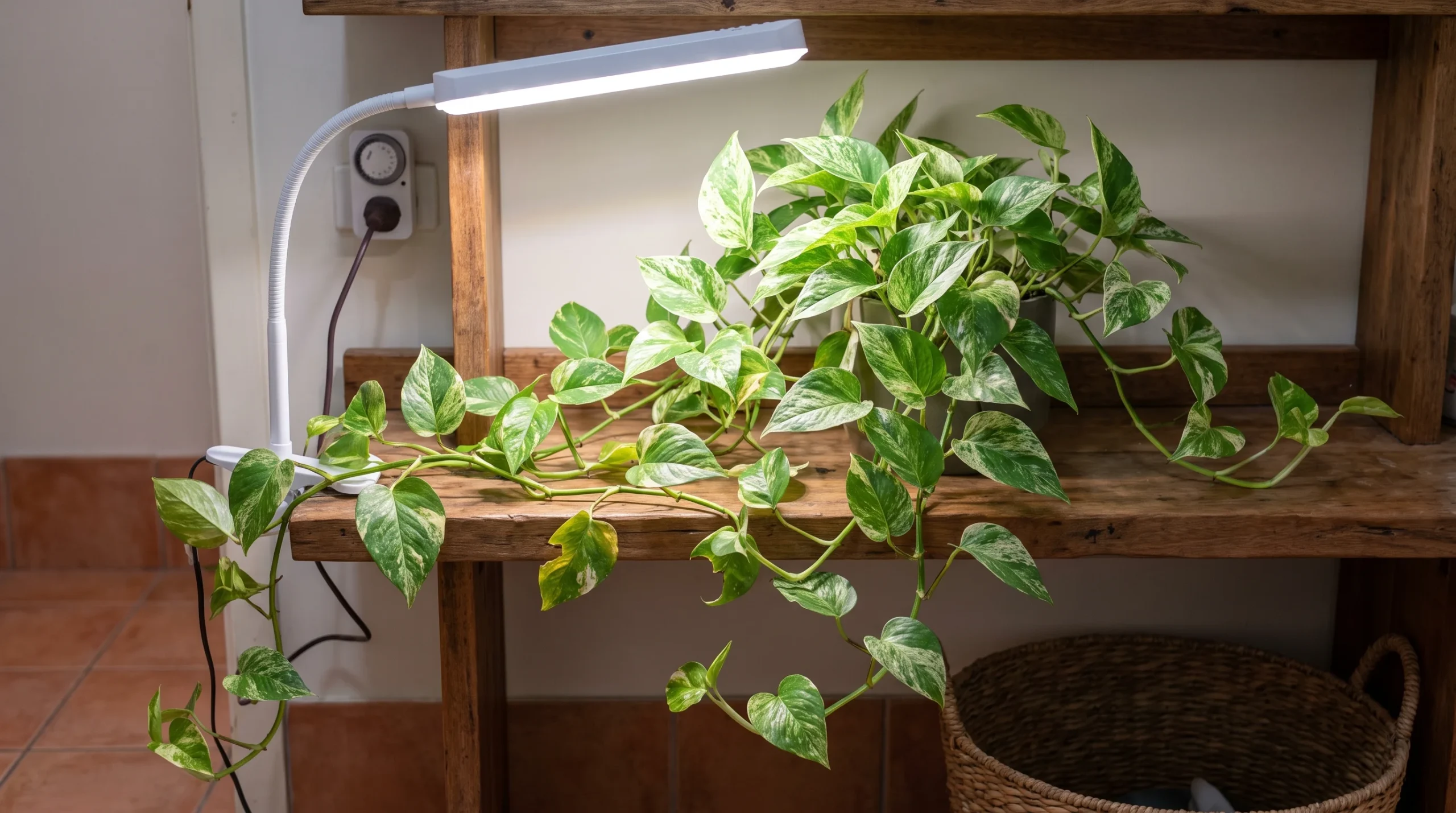
- Brightness and distance decide it. The same lamp at 20 cm and at a metre is effectively two different lamps.
- Coverage matters. A narrow beam lights one part of a trailing plant and leaves the rest dark.
- Ordinary room lighting is often too weak to support useful plant growth, unless the fixture is bright, close enough and positioned for the foliage.
- Follow the stated distance and run time for the light you actually bought, rather than a number borrowed from a different lamp.
Windowless Rooms and Bathrooms
Rotating a plant in and out of a windowless room is possible, and people do it. It is also inconsistent, easy to forget, and leaves the plant in poor conditions for long stretches. If a plant is to live permanently in a room with no window, a proper plant light is the more reliable answer. Humidity is not a substitute for light: a steamy bathroom with no window is still a dark bathroom.
The Australian Seasonal Shift
The light in a fixed spot changes through the year even though nothing has moved. Winter days are shorter and the sun sits lower, so a position that was bright in February can be dim in July — more so the further south you are. Summer brings the reverse: a western window that was pleasant in winter can turn punishing. Air-conditioning and heating do not change the light, but they change how fast the mix dries in it, which changes how you water. Re-check your plant’s position twice a year, at the start of summer and the start of winter.
Frequently Asked Questions
It can hang on for a while, but it will not grow well and will slowly decline. A grow light is the reliable fix; shuttling it to a bright room now and then is a compromise, not a solution.
Morning sun is usually gentler, because afternoon sun arrives with the day’s heat. But gentler is not the same as safe — direct sun through clear glass in summer can scorch leaves whatever time of day it lands.
Check what is outside that window, and check the glass — an awning, fence, tree or tinted pane can cut the light sharply while the room still looks bright. Root health can also limit growth even when light is adequate: see yellow leaves and root rot.
It can influence the new growth that appears after the move. It will not repaint leaves that have already opened, and growth that has truly reverted may stay green regardless.