
Camellia japonica is a cornerstone of Australian winter gardens, but the ‘Takanini’ cultivar requires specific understanding to reach its full potential. Known for its exceptionally long flowering season and rich color, ‘Takanini’ is a premium choice for home gardeners and landscape designers alike.
However, generic camellia advice often fails in Australia’s diverse climates. This comprehensive guide, grounded in horticultural evidence from the Australian Camellia Society and regional botanical gardens, provides the exact framework you need to successfully grow, diagnose, and maintain ‘Takanini’ in your garden.
Quick Takanini Care at a Glance
| Feature | Cultivar Specifics |
|---|---|
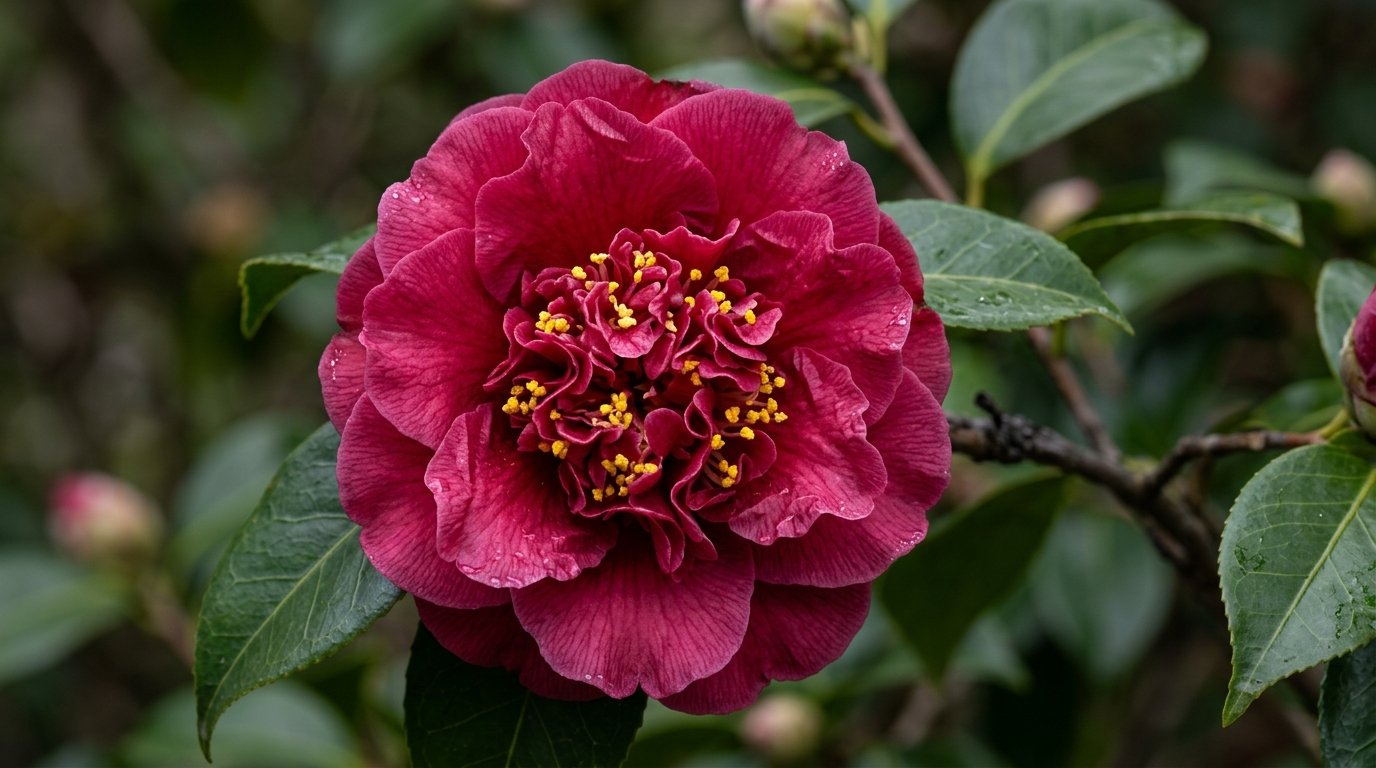
| Flower Form & Size | Small elegans form with an anemone-like centre |
| Flower Colour | Deep plum-red |
| Growth Habit | Rapid, upright growth |
| Soil Preference | Mildly acidic (pH 5.0–6.5) and well-draining |
| Light | Dappled light, morning sun and afternoon shade |
| Best Uses | Hedging, screening, specimen planting and large containers |
1. Takanini Plant Profile
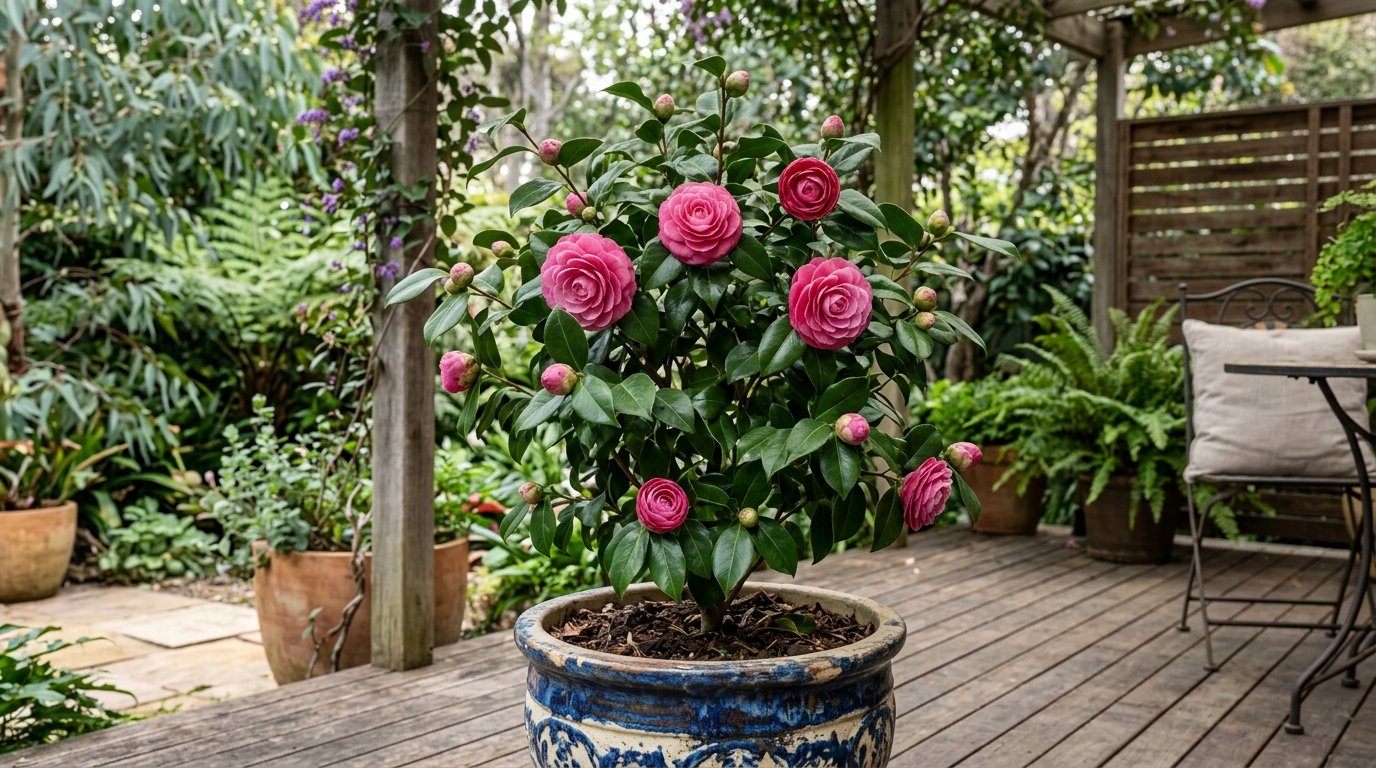
Before planting, it is important to understand the specific genetics of this cultivar. According to the Australian Camellia Society cultivar nomenclature, ‘Takanini’ is characterized by its deep plum-red blooms in a small elegans form. Unlike many spreading japonicas,
‘Takanini’ features rapid, upright growth, making it highly structural and responsive to shaping.
2. What Makes Takanini Different?
‘Takanini’ stands out primarily for its extended flowering period. While some japonicas bloom in a brief, spectacular flush, ‘Takanini’ pushes buds over a much longer winter window. Combined with its rapid, upright growth habit, it is uniquely suited for residential screening where both height and prolonged winter color are prioritized.
3. Where Can You Grow Takanini in Australia?
Australia’s climatic variation means ‘Takanini’ cannot be treated identically in every state. It is broadly adaptable but requires regional strategy:
- Sydney: Humidity and coastal conditions are tolerated, but protection from hot, western afternoon sun and careful drainage in heavy clay are essential.
- Melbourne: Cooler winters suit ‘Takanini’ well, but it must be shielded from drying summer northerly winds and harsh western exposure.
- Adelaide: Dry summers and potentially alkaline soils mean vigilant soil testing and reliable deep-watering regimes are critical.
- Perth: Intense heat, dry conditions, and often alkaline or limestone-influenced soils require heavy soil amendment and significant afternoon shade.
- Brisbane: Heat and humidity mean careful positioning (focusing on eastern/dappled light) to avoid fungal issues in the sub-tropics.
- Canberra: Tolerates cold well, but young plants need protection from severe winter frost settling in garden hollows.
- Hobart/Tasmania: Cooler, temperate conditions are excellent, but ensure adequate winter sunlight for optimal bud development.
Australian Climate Decision Table
| Australian Situation | What ‘Takanini’ Needs |
| Hot western exposure | Afternoon protection (hardscape or canopy shade). |
| Dry inland summer | Reliable deep watering + thick organic mulch. |
| Heavy clay | Excellent drainage (mounding or raised beds). |
| Alkaline/limestone soil | Soil testing + appropriate long-term pH management. |
| Coastal garden | Protection from direct salt-laden winds. |
| Frost-prone site | Protection while young (avoid planting in frost hollows). |
| Container growing | More frequent moisture monitoring and premium potting mix. |
4. Choosing the Right Position
Camellia japonica is fundamentally a woodland understory plant. The ideal position offers gentle morning sun and complete protection from the harsh Australian afternoon sun. Protection from persistent, drying winds is equally important to prevent leaf scorch and premature bud drop.
5. Soil pH & Drainage: The Foundation of Health
Understanding Soil pH
Camellias are acid-loving plants. Aim for mildly acidic soil, roughly pH 5.0 to 6.5, with the exact target depending on your growing situation and soil test results. In strongly alkaline soils, essential nutrients (particularly iron) become chemically “locked up” and unavailable to the roots, leading to chlorosis.
Why Drainage Matters More Than Most Gardeners Realize
Camellias thrive on moisture, but they will rapidly decline in permanently saturated soil. Poor drainage suffocates the fine, fibrous root system and invites root-rot pathogens (Phytophthora).
- Clay Soils: If you have heavy or poorly draining clay, first determine whether the soil is simply compacted or genuinely sodic. Improve structure with appropriate organic matter (compost, aged pine bark) and plant on raised mounds to let gravity assist drainage. Gypsum is highly useful in sodic clay soils but isn’t a magic “clay breaker” for every garden.
6. How to Plant Takanini: Step-by-Step
Proper installation prevents a lifetime of horticultural problems.
- Choose the position: Ensure morning sun and afternoon shade.
- Test soil pH: Target 5.0 to 6.5; amend if highly alkaline.
- Check drainage: Dig a test hole, fill with water, and ensure it drains within a few hours.
- Prepare the planting area: Cultivate organic matter into a wide area, not just a small hole.
- Don’t plant too deeply: The top of the root ball MUST sit at or slightly above the soil surface.
- Position the plant: Loosen any circling roots gently.
- Backfill correctly: Firm the soil gently to remove large air pockets, but do not compact it heavily.
- Water thoroughly: Deeply settle the soil around the roots.
- Apply mulch: Spread a 5–7 cm layer of organic mulch, keeping it clear of the immediate trunk.
- Monitor moisture: Check the root zone consistently during the first 12 months of establishment.
7. Watering Through the Australian Seasons
Forget rigid schedules like “water twice a week.” Readers need a decision system based on conditions.
- In-ground ‘Takanini’: Check the moisture in the root zone by digging a finger under the mulch. Water deeply only when the top few centimeters feel dry.
- Container ‘Takanini’: Check much more frequently, as pots dry out rapidly in the Australian sun.
- During heatwaves: Monitor daily. Do not wait for leaves to wilt.
- After heavy rain: Do not automatically add more water. Overwatering can be just as fatal as drought.
8. Feeding & Mulching
Feed lightly. Apply a dedicated, slow-release Azalea and Camellia fertilizer once in early spring as new growth pushes, and optionally a very light application in late summer to support bud development. Mulch annually with composted pine bark to naturally support soil acidity and retain moisture.
9. Pruning Takanini
Because ‘Takanini’ has rapid, upright growth, it responds excellently to pruning, but timing is critical.
- Light annual pruning: For shape and size, prune immediately after the final flowers fade in spring.
- Hedge pruning: Regular, light tip-pruning encourages dense, lateral branching.
- Structural pruning: Older, overgrown plants can be pruned harder to rejuvenate the framework.
- What not to do: Never prune heavily in summer or autumn once the new growth has hardened and flower buds for the next season are forming—you will simply cut off your winter display.
10. How to Get Bigger, Better Flowers: Disbudding
‘Takanini’ is a prolific bloomer. Sometimes, excessive bud load results in smaller individual flowers as the plant’s energy is divided.
- The Technique: To get show-stopping, large blooms, you can manually “disbud” in autumn. Gently twist off the smaller, secondary buds in a cluster, leaving only one primary bud per terminal.
- Optional for Home Gardeners: While exhibition growers swear by this, it is entirely optional. If you prefer a mass of slightly smaller color over individual massive blooms, leave the buds alone.
11. Bud Drop vs Bud Balling: What Is Actually Happening?
The loss of buds before or during flowering is the most common frustration. The causes are rarely a single “fungus” or “sunburn,” but rather complex environmental stressors.
Bud Drop
What it is: Plump buds detach entirely and fall to the ground before opening.
Possible Contributors:
- Water stress (especially severe dry spells followed by flooding).
- Sudden, extreme weather changes.
- Frost or freezing conditions on developing buds.
- Excessive bud load (the plant self-regulating).
- Root problems or salt stress.
Bud Balling
What it is: The bud develops, swells, and shows color, but fails to open normally. The outer petals become tight, turn brown, and the whole flower rots or drops.
Possible Contributors:
- Cultivar susceptibility (flowers with many petals are more prone).
- Inconsistent moisture during development.
- Severe temperature fluctuations.
- Unsuitable light conditions (morning moisture followed by harsh, immediate light).
- Inadequate nutrition or coastal salt exposure.
The Australian Camellia Society recommends maintaining a consistent, adequate water supply through autumn and winter as the single most effective defense against both conditions.
12. Why Isn’t My Takanini Flowering?
If your plant is green but flowerless, consider these diagnostic causes:
- Too much shade: While they need afternoon protection, dense, deep shade will suppress bud formation.
- Inappropriate pruning: Pruning in summer or autumn removes the developing buds.
- Inconsistent watering: Drought during the autumn bud-setting phase aborts the process.
- Excessive competition: Large, aggressive tree roots nearby can steal necessary water and nutrients.
- Plant maturity: Very young plants often focus energy on root and shoot growth before flowering.
13. Yellow Leaves, Brown Leaves & Other Symptoms
Accurate diagnosis separates guesswork from real horticulture. Use this matrix to identify issues.
| What you see | What it may mean | Check first | What to do |
| New leaves yellow, veins remain green | Possible iron availability problem | Soil pH (alkaline soil locks iron) | Test pH before treating; apply iron chelates if confirmed. |
| Older leaves uniformly yellow | Possible nutrient deficiency (often Nitrogen) | Feeding history and soil quality | Check soil organic matter; apply balanced, slow-release fertilizer. |
| Leaf margins brown/scorched | Heat, drought, wind, or salt stress | Moisture levels + physical exposure | Correct the underlying stress; erect a windbreak or adjust watering. |
| Buds fall unopened | Bud drop | Water/weather/root health | Maintain consistent moisture; apply mulch. |
| Buds turn brown and fail to open | Bud balling | Light + moisture + weather | Reduce environmental stress and assess microclimate conditions. |
| Flowers develop brown patches | Possible petal blight | Inspect flowers/fallen petals | Remove and dispose of all affected material (do not compost). |
| White insects/scales under leaves | Possible scale infestation | Leaf undersides and sticky honeydew | Confirm pest presence before treatment; apply horticultural oil if needed. |
→ Read more in [Spoke 2: Camellia Japonica Problems: Bud Drop, Yellow Leaves & Easy Fixes]
14. Pests & Diseases
While relatively hardy, ‘Takanini’ can host common garden pests.
- Pests: Look out for scale insects, aphids on fresh spring growth, and occasionally mites in dry conditions. The presence of black, powdery “sooty mould” on the leaves is almost always a secondary symptom of sap-sucking insects above it.
- Diseases: Aside from root rot caused by poor drainage, watch for Camellia Petal Blight, which causes rapid browning of the flowers. Total garden hygiene (removing fallen blooms) is the best defense.
15. Common Takanini Growing Mistakes
- Burying the trunk: Planting too deeply is lethal.
- Misguided salt flushing: If you suspect salt toxicity from fertilizers or coastal spray, thoroughly flushing the root zone with clean water can help—but only if the soil drains freely. If drainage is poor, heavy flushing will simply waterlog and drown the plant. Fix drainage first.
- Applying alkaline mulches: Avoid fresh mushroom compost or poultry manure, which disrupt the acidic pH balance.
16. Takanini for Hedges
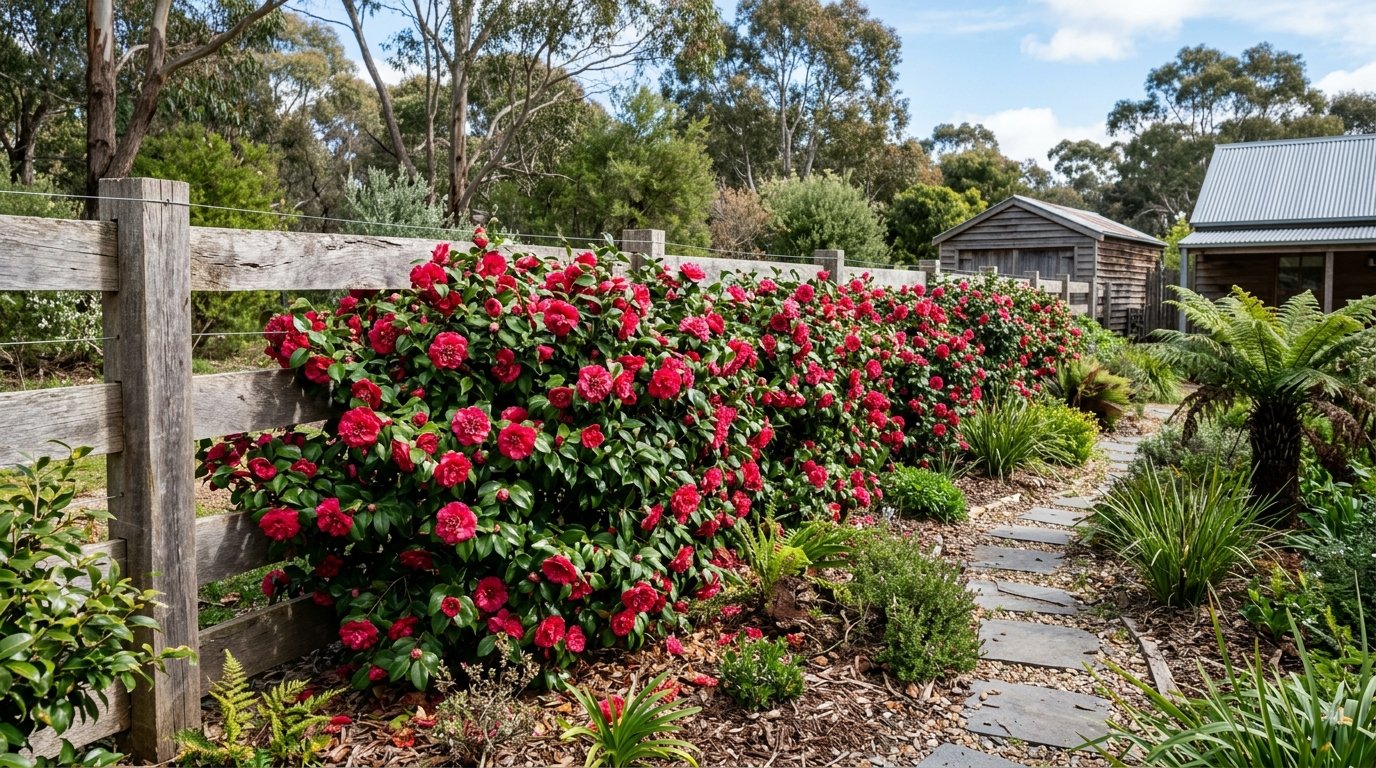
‘Takanini’ is highly sought after for evergreen winter screening due to its rapid, upright growth.
How to Calculate Your Plant Needs
Spacing depends heavily on your desired time to closure, budget, and starting plant size. However, a standard benchmark for a dense, continuous residential hedge is spacing plants approximately 1 meter apart.
Formula: Boundary length in meters ÷ Planting spacing = Approximate number of plants
Example: For a 15-meter fence line at 1m spacing, you will need 15 plants.
Note: The time required to form a solid screen depends entirely on starting plant size, climate, soil, irrigation, and pruning. Avoid guarantees of “instant” hedges in 3 years unless buying advanced stock.
→ Dive deeper in [Spoke 1: How to Grow a Camellia Takanini Hedge]
17. Takanini in Pots
With its upright form, ‘Takanini’ makes a striking container specimen. Use a premium Camellia/Azalea specific potting mix, ensure the container has oversized drainage holes, and be prepared to monitor moisture closely—pots dry out significantly faster than garden soil in the Australian sun.
→ Master container growing in [Spoke 3: Growing Camellia Japonica in Pots]
18. Complete Takanini Seasonal Calendar
Note: Exact timing varies across Australian climates. Tropical zones run earlier; cool-temperate zones run later.
| Season | Main Jobs |
| Summer | Water consistently using a root-zone decision system, maintain mulch, and protect from severe heat/western sun. |
| Autumn | Maintain consistent moisture as buds develop. Do not let the rootball dry out entirely. Consider optional disbudding. |
| Winter | Enjoy the flowering display. Monitor for frost damage on young plants and maintain garden hygiene by picking up fallen blooms. |
| Spring | Prune immediately after the final flowers fade. Apply a slow-release acid-loving fertilizer and prepare for the new flush of growth. |
19. Pros & Cons of ‘Takanini’
Pros:
- Exceptionally long flowering season compared to other japonicas.
- Rapid, upright habit is highly suited for structural landscaping and hedging.
- Deep plum-red, elegant blooms provide high-impact winter color.
Cons:
- Requires disciplined moisture management during autumn to prevent bud drop.
- Performs best in mildly acidic soil and may show nutrient problems in strongly alkaline conditions.
- Needs strategic positioning to protect from intense afternoon sun and harsh winds.
A Low-Maintenance Alternative for Difficult Sites
If a particular garden location is fundamentally unsuitable for live camellias because of extreme reflective heat, impenetrable sodic clay, heavy salt exposure, or a lack of suitable dappled light, do not force a living plant to suffer. High-quality artificial greenery panels can provide the structural evergreen visual effect you want, without the watering, pruning, or seasonal flower drop associated with living plants.
20. Frequently Asked Questions
Does ‘Takanini’ grow fast?
Yes, relative to other Camellia japonica varieties, ‘Takanini’ is noted by the Australian Camellia Society for its rapid, upright growth habit, making it excellent for screening.
Can I use regular potting mix for ‘Takanini’?
No. Standard potting mixes are often pH neutral or slightly alkaline. Always use a dedicated Azalea/Camellia mix designed to hold moisture while maintaining a mildly acidic pH (5.0–6.5).
Should I water my camellia every day in summer?
Usually no, unless it is in a small pot during a severe heatwave. Daily shallow watering encourages weak, surface-level roots. Deep watering every few days—checking the soil moisture first—encourages resilient, deep root systems.
Sources / Further Reading
To deepen your horticultural knowledge and verify cultivar specifics, we recommend consulting these leading Australian authorities:
- The Australian Camellia Society: Cultivar nomenclature, rapid upright growth habit confirmation, and multifactorial bud drop advice.
- Gardening Australia / ABC: Soil pH regional variations, nutrient deficiency identification (Iron vs. Nitrogen), and structural pruning techniques for established shrubs.
- Royal Botanic Garden Sydney: Climate-specific cultivation advice and pest identification frameworks.