
Alocasia vs Colocasia: How to Tell Elephant Ears Apart

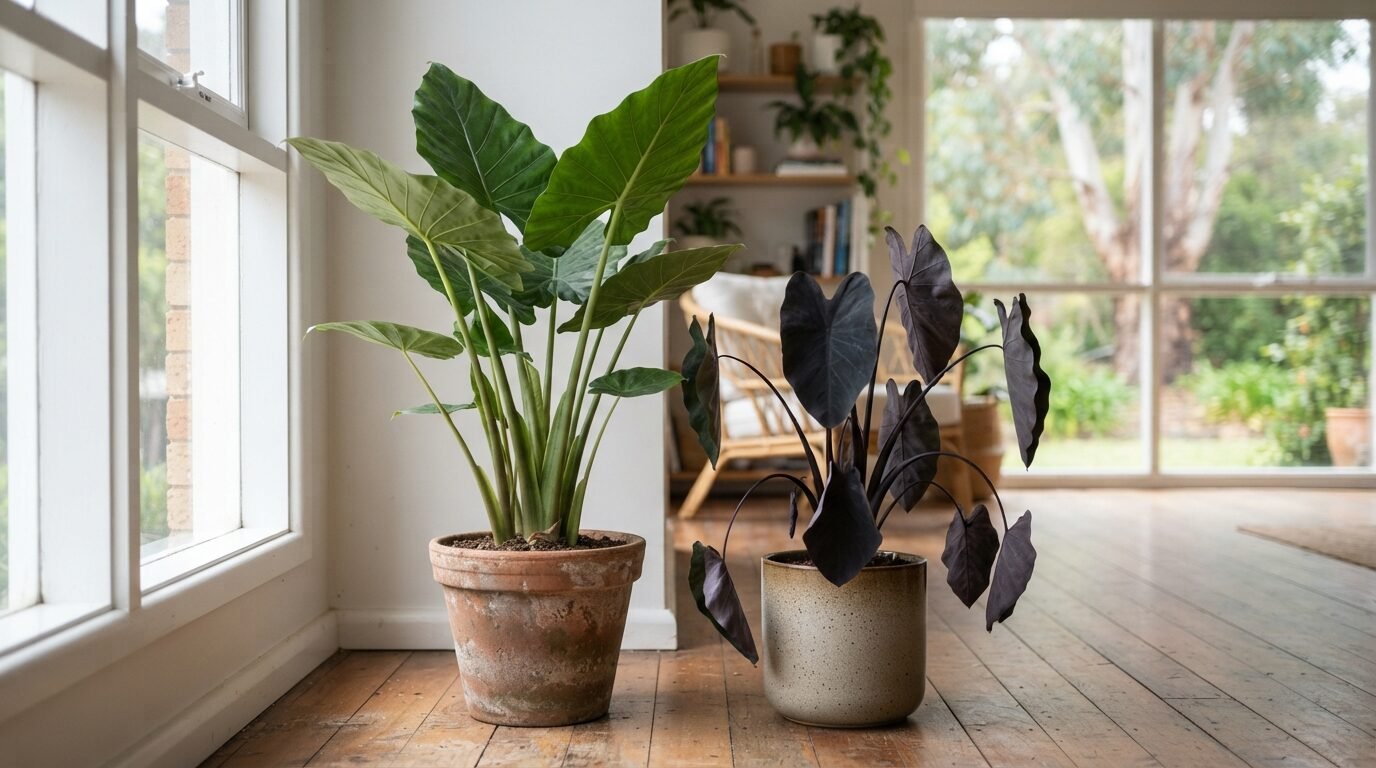
Quick answer: Both are “elephant ears” but different plants. The fastest tell is leaf direction: Alocasia hold their leaves up and outward on stiff stems and want free-draining conditions; Colocasia (taro) leaves droop downward, are usually larger and softer, and love wet, boggy soil. Colocasia corms are edible once cooked; Alocasia are ornamental only. Both are toxic raw, so keep them from pets and children.
“Elephant ear” is a nickname shared by several plants, which is why Alocasia and Colocasia get mixed up constantly. They look similar at a glance but want almost opposite conditions, so telling them apart genuinely matters for care.
The quickest way to tell them apart
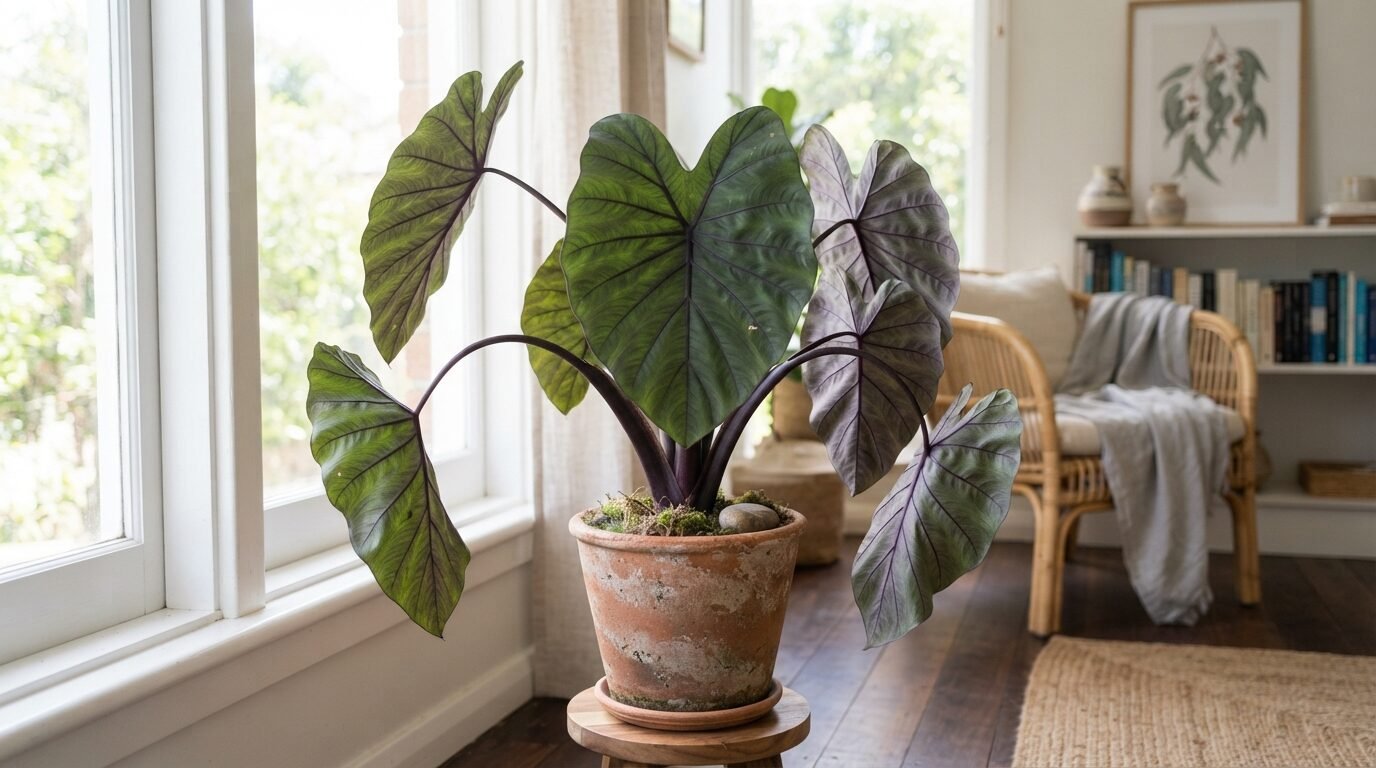
- Leaf direction: Alocasia point up/outward; Colocasia droop down, tip toward the ground.
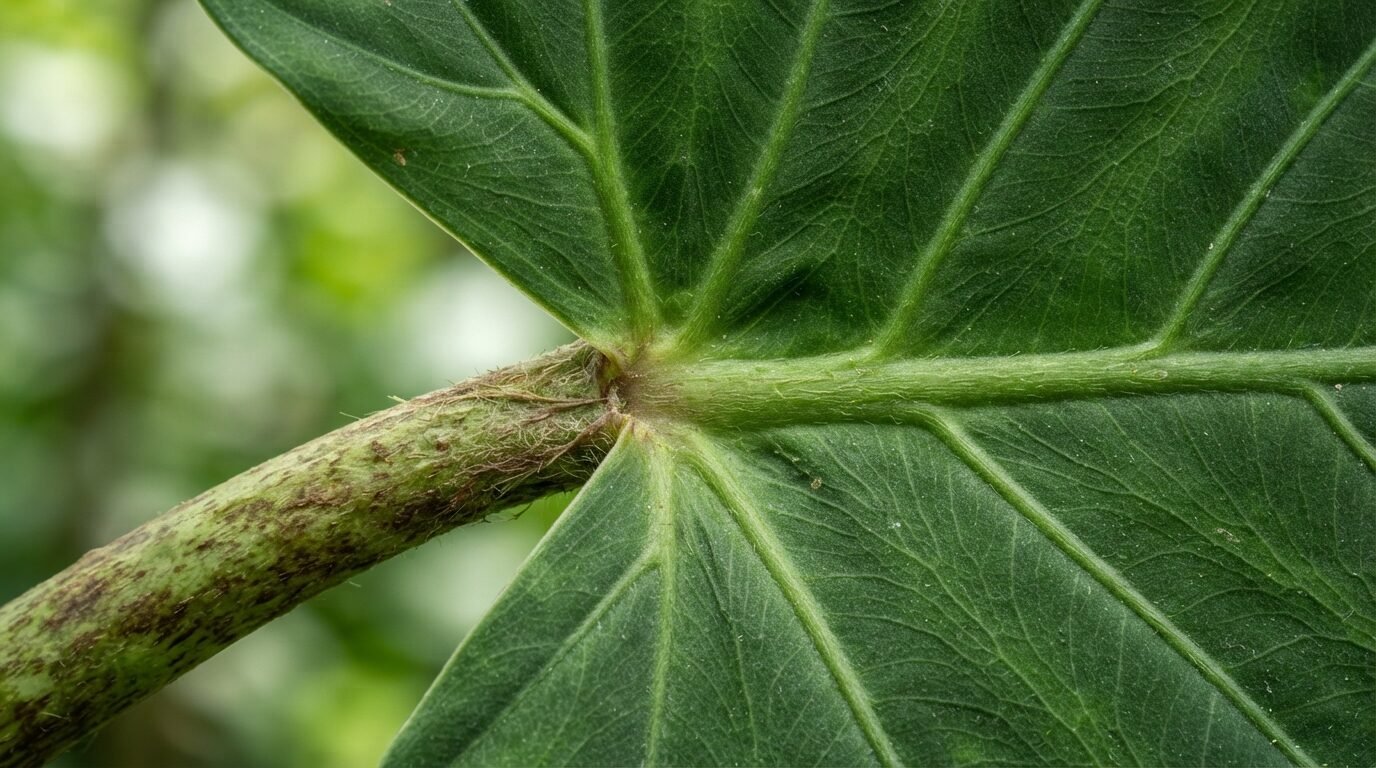
- Stem attachment: Colocasia stems join within the leaf (peltate); Alocasia join near the notch at the leaf edge.
- Texture & size: Colocasia are often larger, softer and more matte; Alocasia often stiffer with bolder, more contrasting veins.
- Water: Colocasia love wet, boggy soil; Alocasia hate wet feet and need free drainage.
Side-by-side comparison
| Feature | Alocasia | Colocasia (taro) |
|---|---|---|
| Leaf orientation | Up / outward, upright | Drooping downward |
| Stem to leaf | Near the notch (edge) | Within the leaf (peltate) |
| Water preference | Free-draining, hates wet feet | Loves wet / boggy soil |
| Typical use | Ornamental | Food crop (corms) + ornamental |
| Grows from | Corms / rhizomes | Tubers / corms |
| Edible? | No — ornamental only | Corms, only after cooking |
Care differs because conditions differ
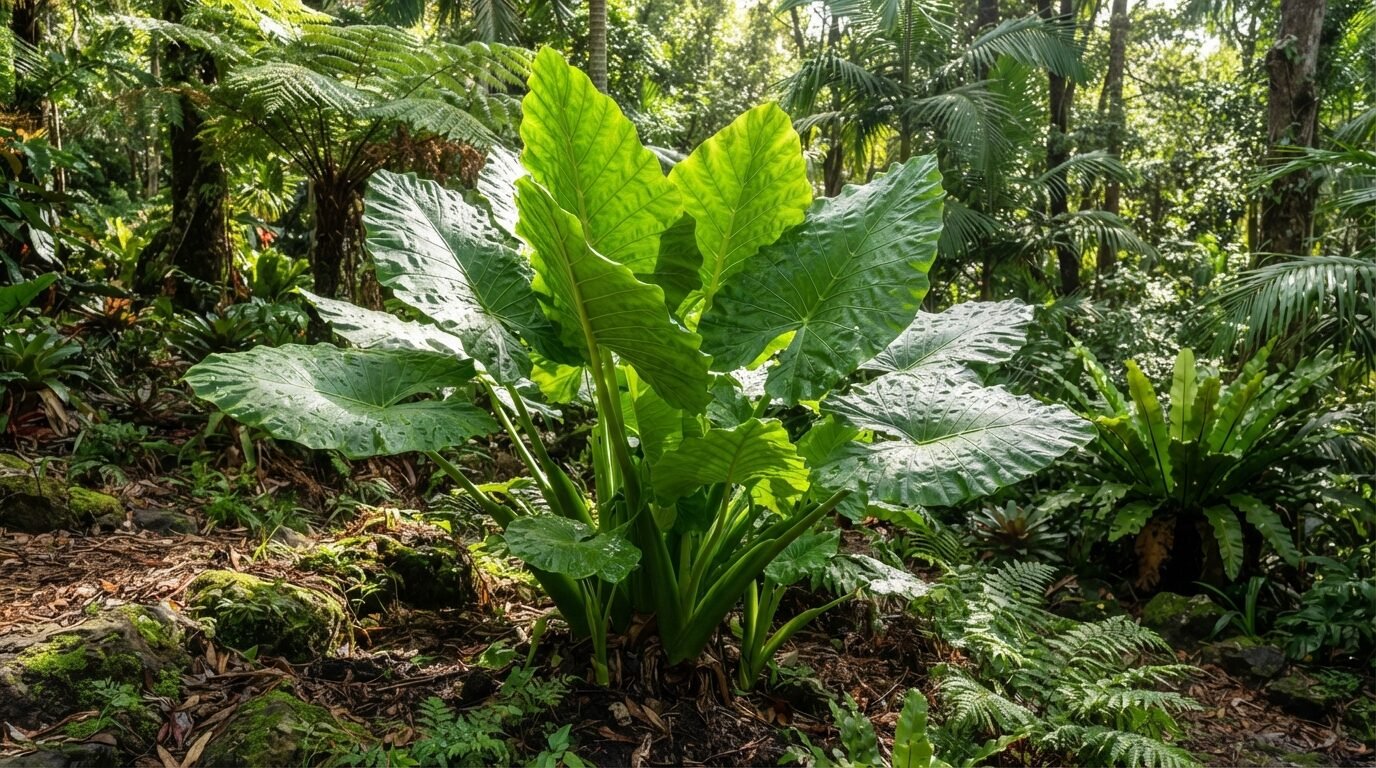
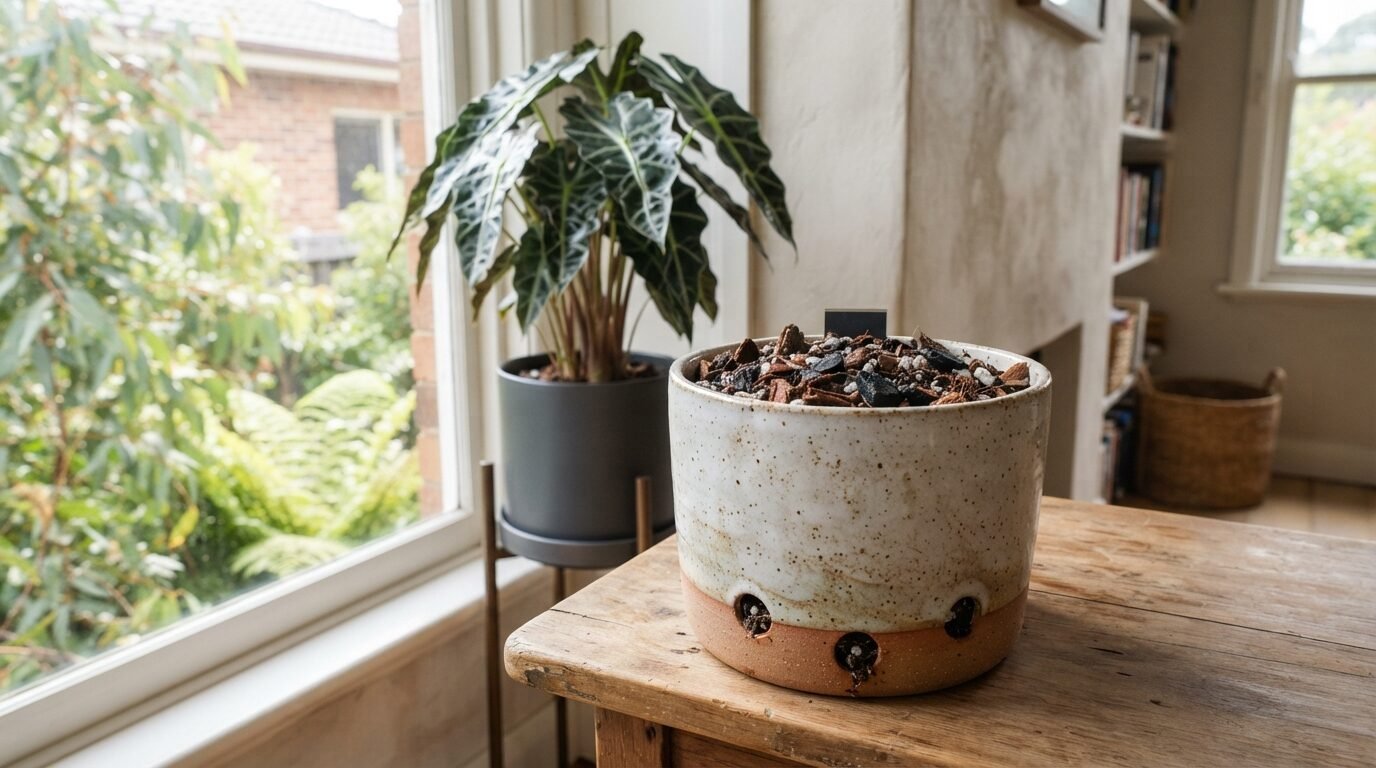
The practical takeaway: never grow an Alocasia like a Colocasia. A Colocasia can sit in constantly wet soil, but the same treatment will rot an Alocasia. If you have an Alocasia, give it free-draining mix, careful watering and bright indirect light.
Both are toxic raw: Alocasia and Colocasia both contain calcium oxalate and are not safe to chew or eat raw — keep both away from pets and children. Taro (Colocasia) corms are a food only after thorough cooking; ornamental Alocasia should not be eaten at all.
What about the Australian native elephant ear?
The native “cunjevoi” elephant ear you see in gardens and bushland is Alocasia brisbanensis — an Alocasia, not a taro. It is distinct from edible Colocasia and from the many ornamental Alocasia hybrids sold for indoors.
For full growing advice, see the Alocasia care & varieties guide for Australia.
Frequently asked questions
What is the difference between Alocasia and Colocasia?
Both are called “elephant ears” but they are different genera with different habits. The quickest tell is leaf direction: Alocasia hold their leaves up and outward, often stiff and arrow-shaped, while Colocasia leaves droop downward with the tip pointing toward the ground. Alocasia prefer free-draining conditions; Colocasia love wet, boggy soil.
How can I tell Alocasia from Colocasia at a glance?
Look at how the leaves point. Alocasia leaves generally face upward or outward on upright stems; Colocasia leaves hang down and are usually larger, softer and more matte. Where the stem joins the leaf also differs — Colocasia stems attach within the leaf (peltate), while Alocasia attach near the notch at the leaf edge.
Which one likes wet soil — Alocasia or Colocasia?
Colocasia (taro) is the water-lover and can grow in boggy ground or even pond margins, while Alocasia hate wet feet and need free-draining mix. This is the single most important care difference: never grow an Alocasia like a Colocasia or it will rot.
Is Colocasia the same as taro?
Yes — Colocasia esculenta is taro, grown worldwide for its edible corms. The corms are only edible after proper cooking; raw taro contains calcium oxalate and is not safe to eat uncooked. Alocasia are grown as ornamentals, not food crops.
Are Alocasia and Colocasia toxic?
Both contain calcium oxalate crystals and are toxic if chewed or eaten raw, causing intense mouth and throat irritation, so keep both away from pets and children. Taro corms are only edible after thorough cooking; ornamental Alocasia should not be eaten at all.
Can I grow both outdoors in Australia?
In frost-free areas, yes. Colocasia suits warm, wet, sunny-to-part-shade spots and even boggy ground; Alocasia prefer warm, sheltered, dappled part-shade with free drainage. In cooler regions both are best in pots that can be moved under cover for winter.
Which is easier to grow?
It depends on your conditions. Colocasia are vigorous and forgiving if you can keep them warm and wet; Alocasia are fussier about drainage and humidity but stay more compact and upright indoors. Match the plant to whether your spot is wet or well-drained.
Is the Australian native elephant ear an Alocasia or Colocasia?
The common native “cunjevoi” elephant ear, Alocasia brisbanensis, is an Alocasia. It is a different plant from edible taro (Colocasia) and from the many ornamental Alocasia hybrids sold for indoors.


