Despite the name, Satin Pothos (or Silver Pothos) is not a true pothos — it is Scindapsus pictus, a different genus from the real pothos, Epipremnum aureum. The quickest tells: Satin Pothos has matte, slightly puckered leaves with silvery markings and a felt-like sheen, while true pothos has glossy leaves with gold, white or lime variegation. Care is similar, but Satin Pothos likes to dry out a little more and prefers warmth and humidity. Both are toxic to pets.
✔ How this guide was checked
We’ve based the distinction on the accepted botany — Scindapsus pictus versus Epipremnum aureum — because the shared common name genuinely misleads buyers. Leaf, sheen and growth differences are the ones visible on a shop shelf. Care notes reflect how each behaves indoors in Australia, and toxicity wording is kept conservative for both.
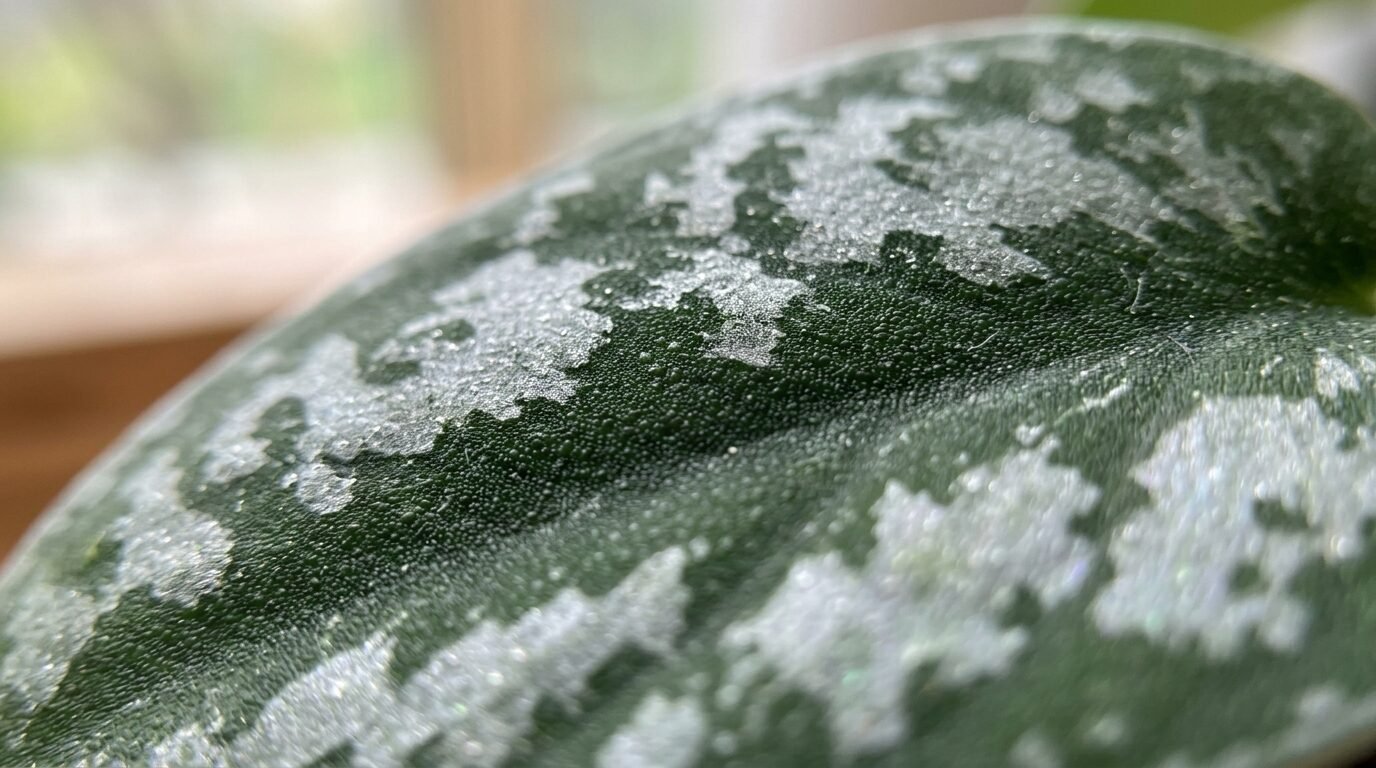
Macro of a matte, silvery Satin Pothos (Scindapsus pictus) leaf
The naming problem, cleared up
“Satin Pothos” and “Silver Pothos” are shop names, not botanical ones. The plant they describe is Scindapsus pictus — a close cousin of the true pothos, but a separate genus. A real pothos (Devil’s Ivy) is Epipremnum aureum. They look similar enough at a glance that the trade has borrowed the “pothos” label, which is why so many people end up unsure what they actually own. The good news: once you’ve seen the difference, you can’t unsee it.
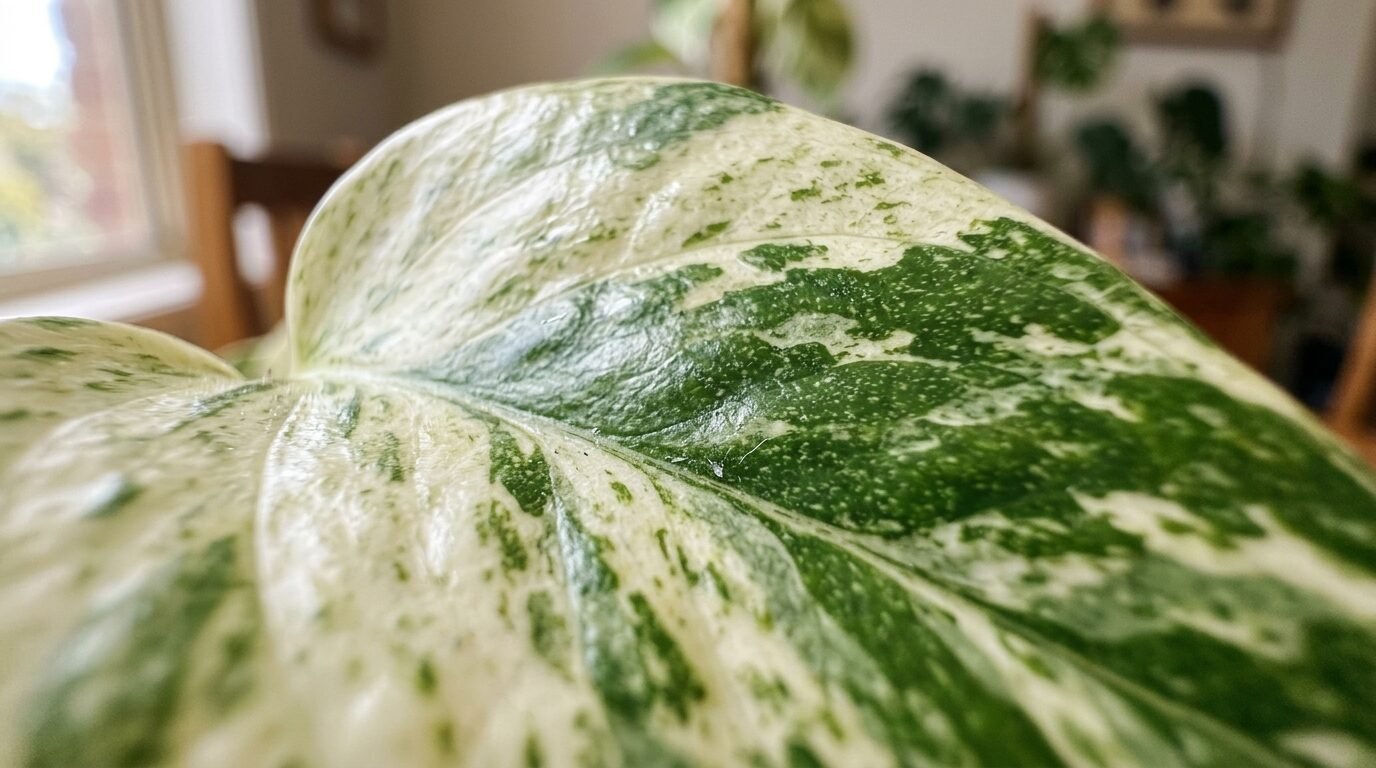
Close-up of a glossy green-and-gold pothos leaf
How to tell them apart
Feature
True Pothos (Epipremnum aureum)
Satin Pothos (Scindapsus pictus)
Leaf surface
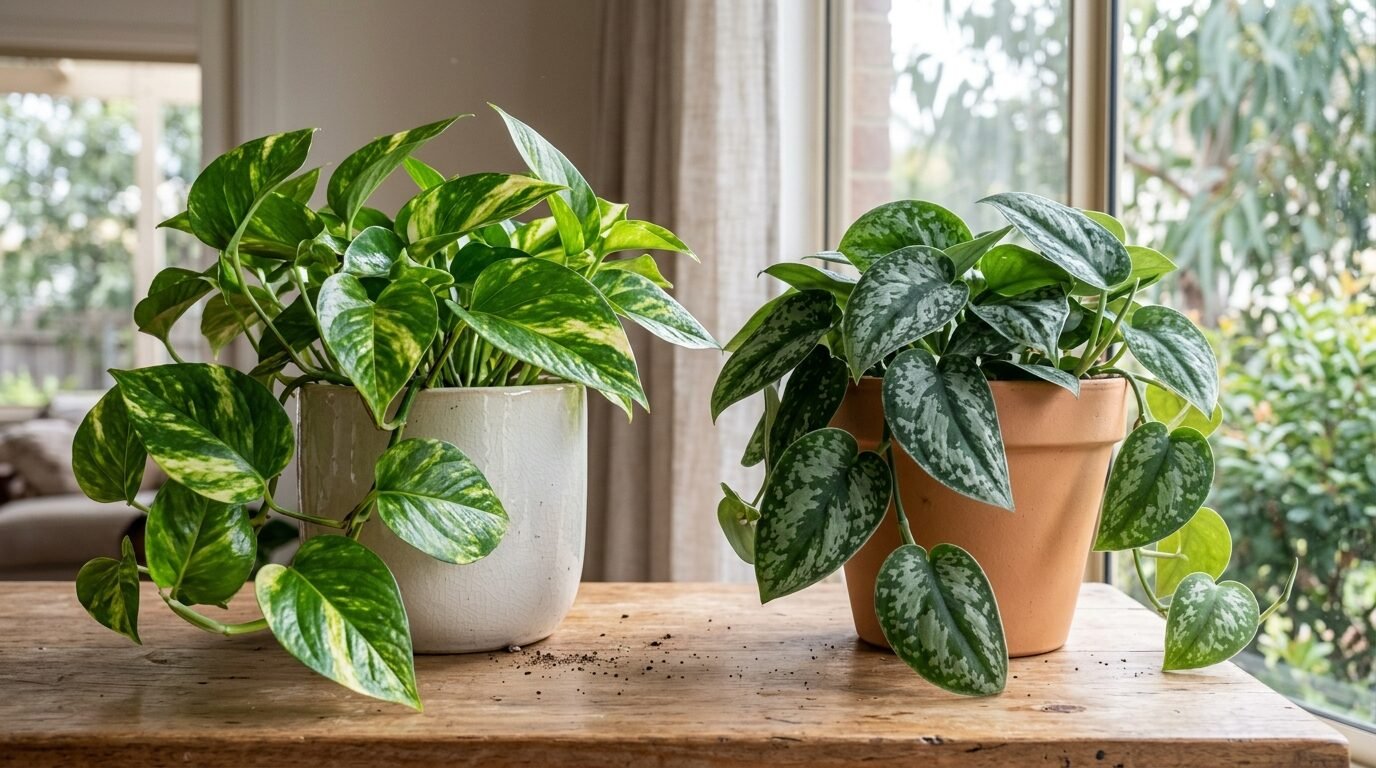
Glossy, smooth, waxy
Matte, slightly puckered, almost velvety
Markings
Gold, white or lime variegation
Silvery-grey splashes and flecks on deep green
Leaf shape
Asymmetric heart
More even, slightly stiffer heart with a defined point
Sheen
Shiny in the light
Soft satin/felt-like shimmer
Growth habit
Fast, long trailing vines
Neater, slightly slower, holds leaves closer to the vine
Thirst
Likes to dry the top few cm
Prefers to dry out a bit more between waterings
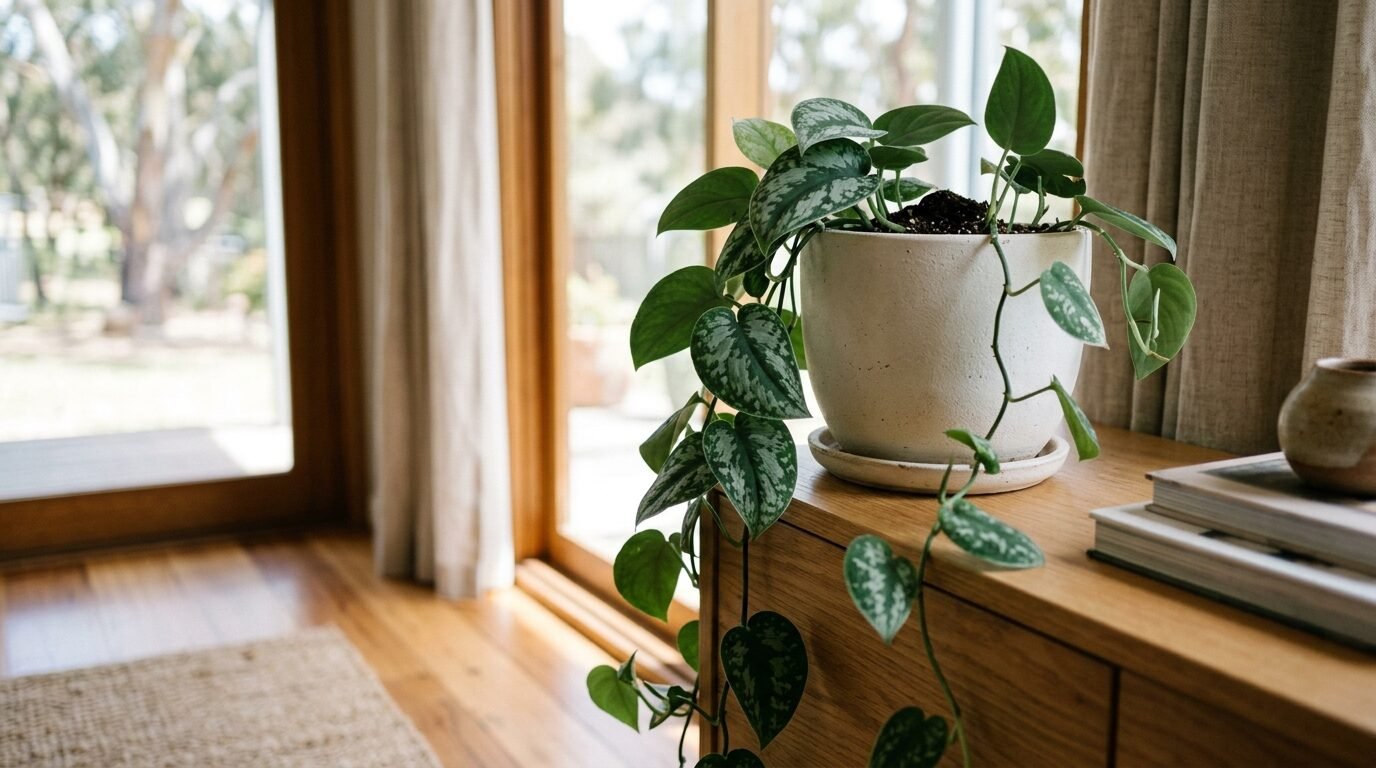
Satin Pothos (Scindapsus) trailing from a ceramic pot indoors
The easiest single check
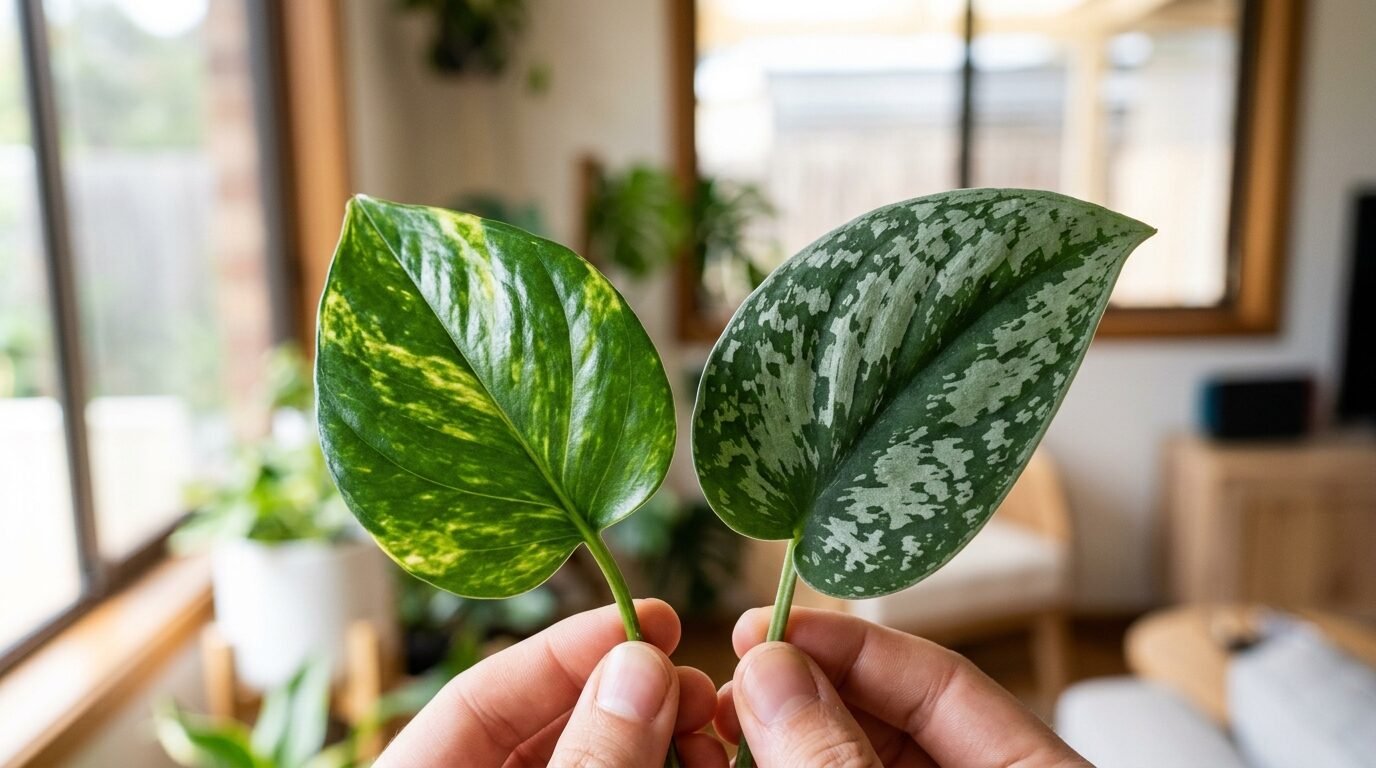
Catch the leaf in the light and look at the surface. A true pothos is glossy and reflects light like polished plastic. Satin Pothos has a matte, almost suede-like finish, and its silver markings have a faint metallic shimmer rather than a shine. If the leaf looks like brushed pewter, it’s a Scindapsus.
True pothos and Satin Pothos shown side by side to compare the leaf finish
Do they need different care?
They’re close, and anyone comfortable with one will manage the other. The differences are small but worth knowing:
Watering: Satin Pothos is a touch more drought-tolerant and resents staying wet even more than true pothos does. Let it dry a little further down the pot before watering. The general approach in our Devil’s Ivy watering guide still applies — just err drier for the Scindapsus.
Light: both want bright, indirect light; Satin Pothos keeps its silver best in good light and goes flat and plain in deep shade, much like a variegated true pothos.
Warmth and humidity: Satin Pothos is a little more sensitive to cold and dry air, so it appreciates the warmer, more humid end of a typical home — handy to know through a cooler southern winter.
What they have in common
Both climb and trail, both root easily from stem cuttings the same way (see propagation), both like a chunky free-draining mix, and both are grown purely for their foliage indoors across Australia. So while they aren’t the same plant, they slot into a collection in much the same way.
Both are toxic to cats and dogs
True pothos and Satin Pothos both contain insoluble calcium oxalate crystals, which can irritate the mouth and cause drooling or vomiting if chewed. Neither is pet-safe. See is Devil’s Ivy toxic to cats and dogs — the same cautions apply to Scindapsus.
Which should you choose?
If you love that shiny, cascading, gold-or-white look and want a fast grower, go for a true pothos variety. If you prefer the muted, silvery, slightly more refined look and don’t mind watering a little less often, Satin Pothos is a lovely choice. Neither is harder than the other — they’re just different moods of the same easy-going idea.
Frequently asked questions
Is Satin Pothos a real pothos?
No. Satin or Silver Pothos is Scindapsus pictus, a different genus from the true pothos (Epipremnum aureum). It is sold as a pothos but botanically is not one.
What is the difference between pothos and Scindapsus?
True pothos has glossy leaves with gold, white or lime variegation. Scindapsus (Satin Pothos) has matte, slightly puckered leaves with silvery markings and a satin sheen. It also prefers to dry out a bit more.
How can I tell them apart quickly?
Look at the leaf surface in the light. Pothos is glossy and shiny; Satin Pothos is matte and almost velvety, with a metallic shimmer to its silver markings.
Does Satin Pothos need different care?
Mostly the same, with small tweaks: let it dry out a little more between waterings, keep it in bright indirect light to hold its silver, and give it warmth and some humidity.
Is Satin Pothos toxic to pets?
Yes. Like true pothos, it contains calcium oxalate crystals and can irritate a cat or dog’s mouth and stomach if chewed. Keep it out of reach.
Is Cebu Blue the same as Satin Pothos?
No. Cebu Blue is Epipremnum pinnatum — the same genus as true pothos. Satin Pothos is Scindapsus pictus, a different genus. They are three separate plants often shelved together.
Does Satin Pothos lose its silver?
It can look flatter and plainer in low light, similar to how a variegated pothos reverts. Bright indirect light keeps the silver markings strong.
Can I propagate Satin Pothos like a pothos?
Yes. It roots from stem cuttings with a node, in water or straight into mix, the same way true pothos does.