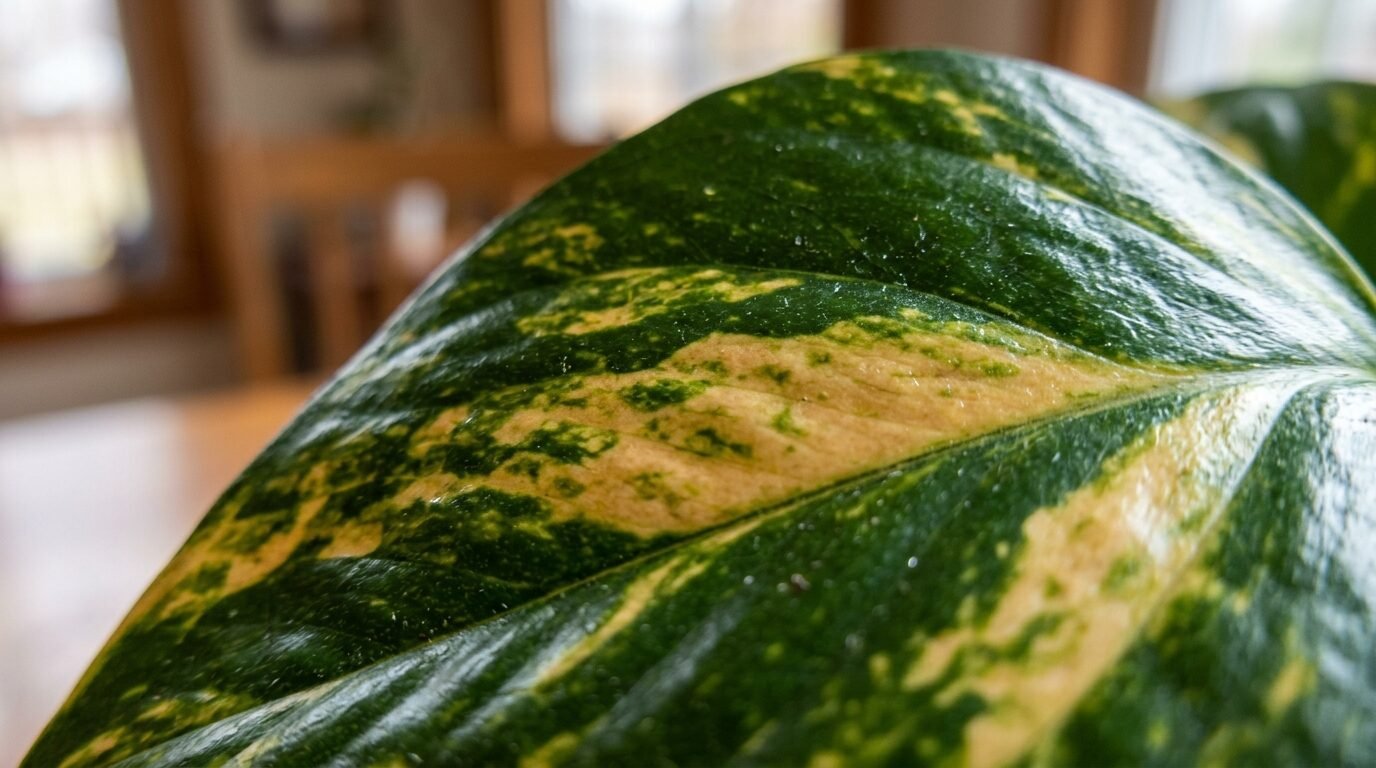
A pothos usually loses its variegation because of too little light. The white, cream and yellow parts of the leaf can’t photosynthesise, so in a dim spot the plant produces greener leaves to feed itself. The fix is to move it to brighter (but still indirect) light and prune the all-green vines back to a point where variegated leaves start. New growth will come back patterned — the leaves that already turned green won’t change back. It’s not caused by fertiliser or water.
✔ How this guide was checked
This explanation is based on how plant variegation works — variegated tissue lacking chlorophyll, and a plant’s response to low light — applied to Epipremnum aureum cultivars. We’ve separated the common, fixable cause (light) from genetic reversion, and corrected a few popular myths (fertiliser, water) so you don’t waste effort on the wrong fix.
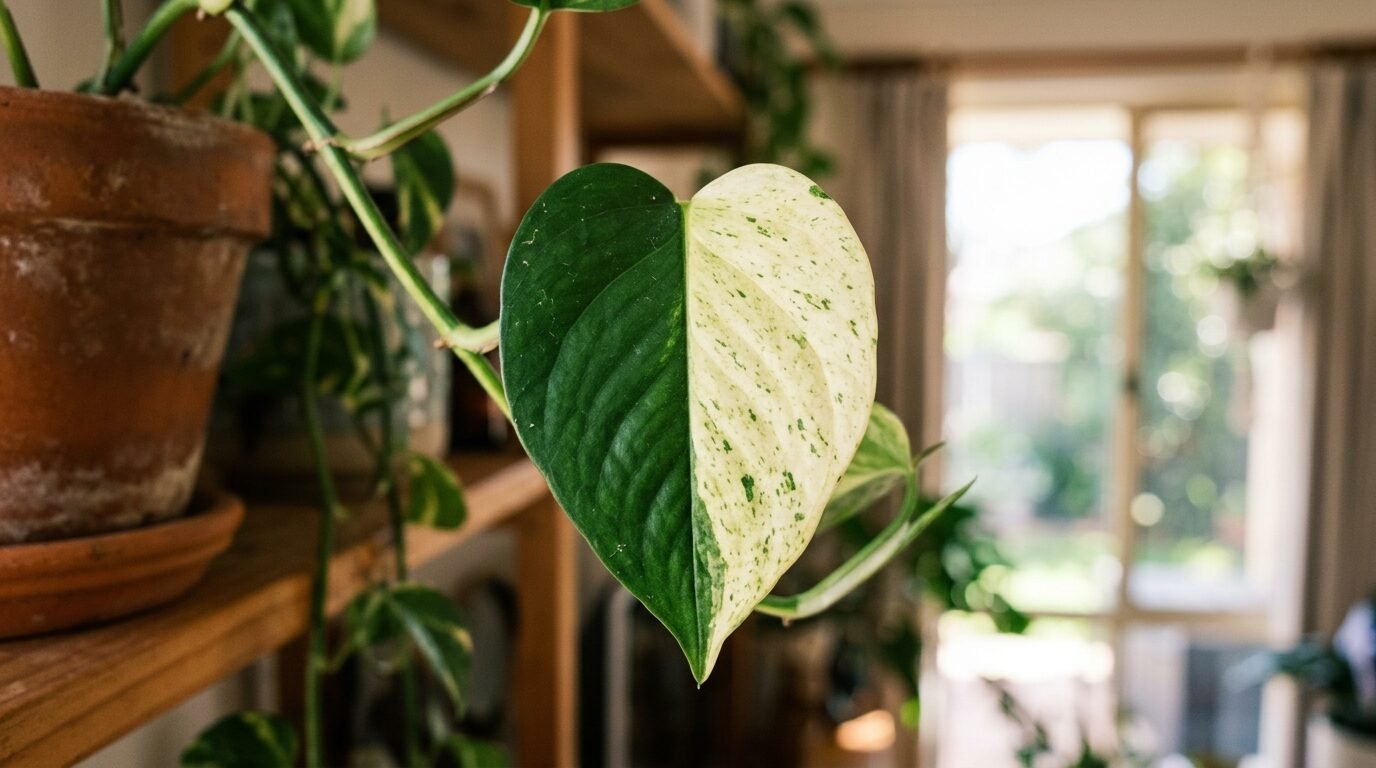
A pothos leaf half variegated and half plain green, reverting to green
Why variegated pothos turn green
Variegation is, in a sense, a handicap the plant tolerates when conditions are good. The pale sections of a Marble Queen or Golden pothos have little or no chlorophyll — the green pigment that turns light into food. Those patches look beautiful but do almost no work. When light is plentiful, the plant can afford them. When light is scarce, it can’t, so it starts producing leaves with more green to survive. That’s the whole story behind “my pothos is turning green”.
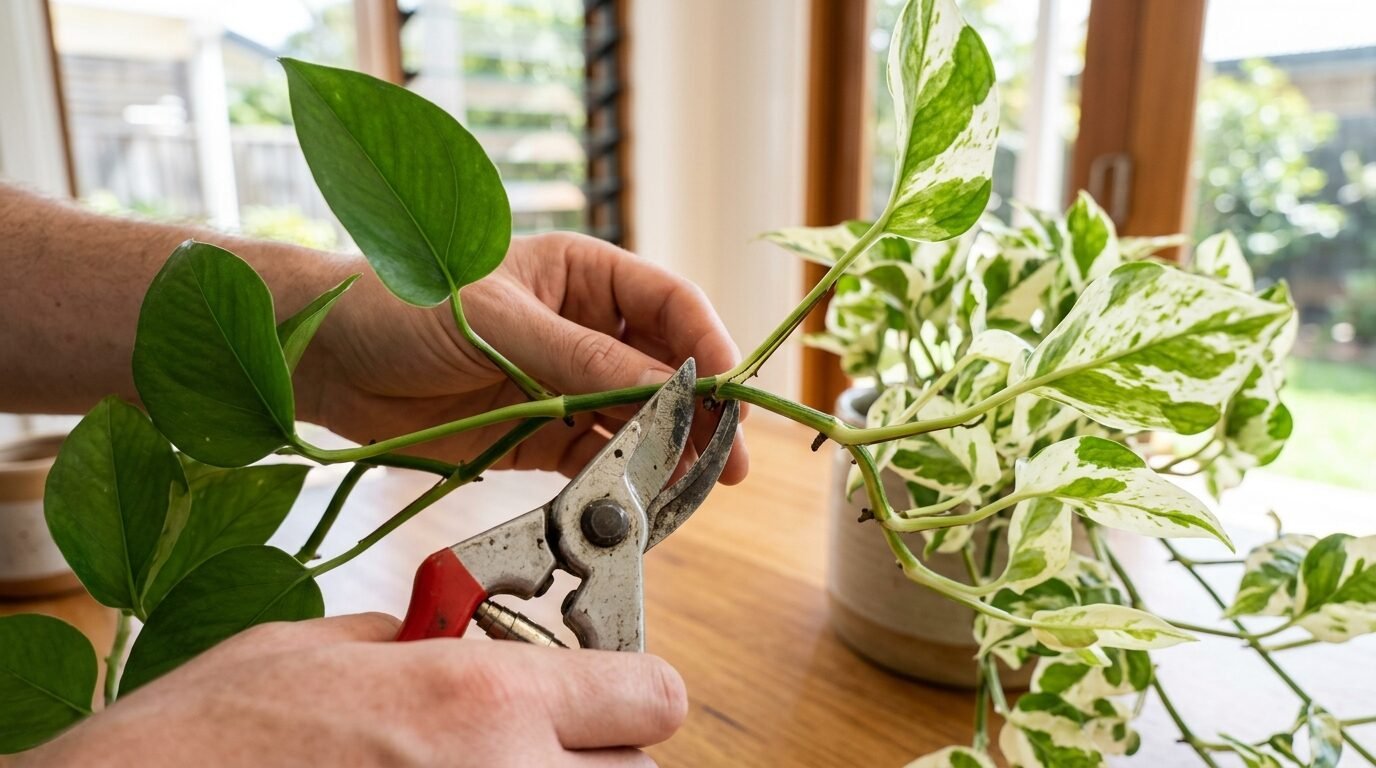
Pruning an all-green pothos vine back to variegated growth with secateurs
The main cause: not enough light
Nine times out of ten, a pothos losing its pattern has simply been sitting somewhere too dark. This is especially common with the heavily white cultivars — Marble Queen, Snow Queen, Manjula — which need more light than Golden pothos just to hold what they have. If your plant’s newest leaves are noticeably greener than its older ones, read that as the plant asking for a brighter position. Our guide on how much light Devil’s Ivy needs shows what “bright indirect” actually looks like in an Australian home.
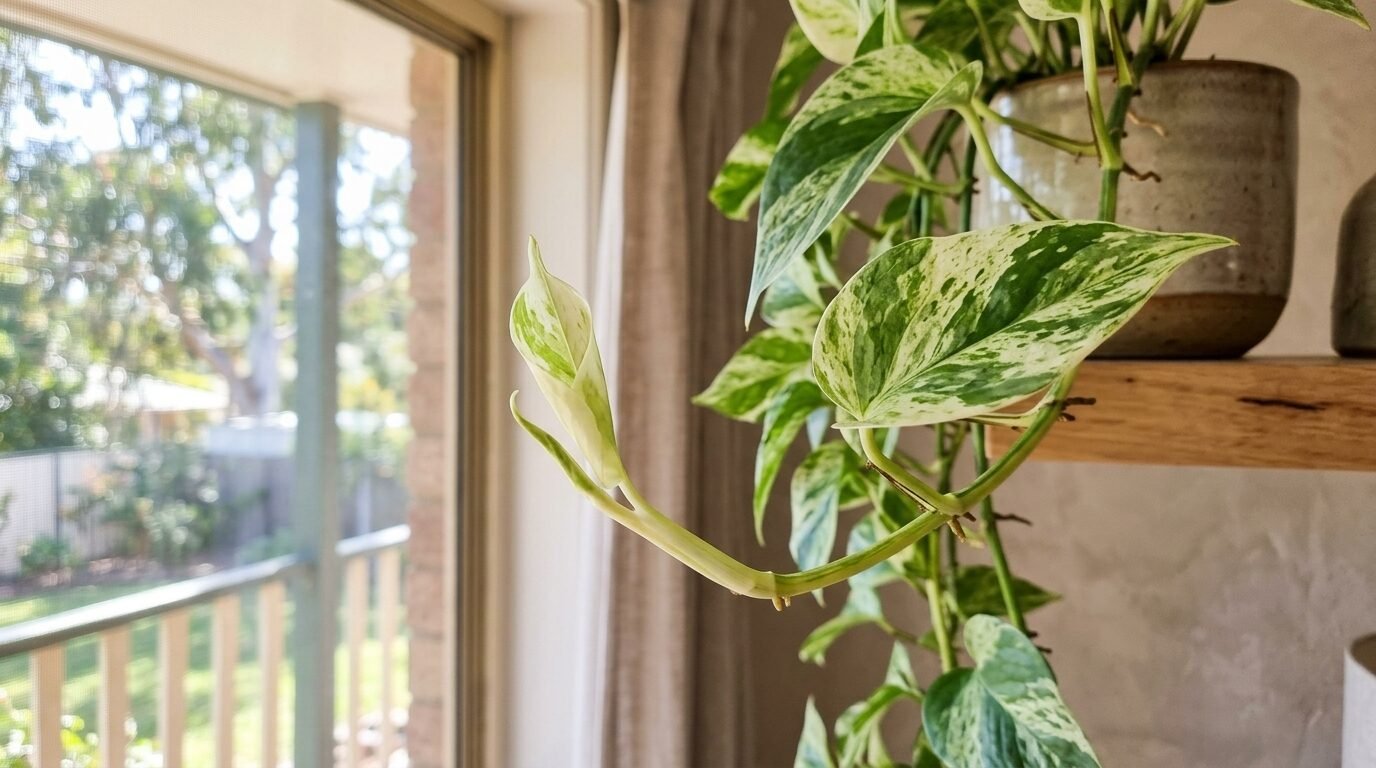
Fresh variegated new pothos leaves unfurling in good light
Other reasons it can happen
Natural reversion. Sometimes a vine throws out an all-green shoot on its own. Because that shoot photosynthesises more efficiently, it grows faster and can take over the plant if you let it.
Season. Through the shorter, dimmer days of an Australian winter, indoor light drops and new leaves may come through greener. They often improve again as spring light returns.
The variety. Highly variegated types revert far more readily than stable ones. A Golden pothos rarely loses its gold; a Snow Queen will drift green at the first sign of shade.
A glossy golden pothos leaf catching the light
What it is NOT
Myths worth dropping
Losing variegation is not caused by too much fertiliser, by your tap water, or by something you did wrong at watering time. You can’t feed variegation back into a leaf, and no product restores it. The lever that matters is light — plus a little pruning. Spend your effort there.
How to bring the variegation back
1
Move it to brighter indirect light
A spot a metre or two from a bright window, out of harsh direct sun. This is the single most effective change.
2
Prune the all-green vines
Follow each plain-green vine back to where variegated leaves begin, and cut just above a variegated node. This stops the green growth outcompeting the rest and pushes energy into patterned shoots.
3
Propagate your most variegated cuttings
Turn those prunings to your advantage — root the most patterned pieces (see propagation) and pot them back in for a fuller, more variegated plant.
4
Be patient — watch the new growth
Existing leaves won’t re-variegate. Judge progress by the leaves that emerge after you improve the light, not the ones already there.
5
Rotate the pot
A quarter-turn each week keeps light even, so one side does not drift green while the other stays bright.
Don’t overcorrect into direct sun
Brighter means brighter indirect light. Blasting a variegated pothos with harsh direct sun does not boost variegation — the pale, chlorophyll-poor patches have no protection and scorch or bleach to papery white. A bright position out of the sun’s direct line is the goal.
Can a fully green pothos ever come back?
Partly. The leaves that have already grown in green will stay green — there’s no way to repaint them. But as long as a few variegated leaves or nodes remain, improving the light and pruning back the green growth will coax patterned new leaves over the following weeks and months. If a plant has reverted completely to green with no variegated tissue left anywhere, it will generally stay green; in that case, start again with a well-variegated cutting from a healthier plant.
A word on Neon and solid-colour pothos
Not every colour change is “losing variegation”. Neon pothos has no variegation to begin with — if it looks duller or deeper green, that’s also a light signal, just the solid-leaf version of the same story. Move it brighter and the fresh lime colour returns on new growth.
Frequently asked questions
Why is my variegated pothos turning green?
Almost always too little light. The pale parts of the leaf cannot photosynthesise, so in low light the plant makes greener leaves to feed itself. Move it to brighter indirect light and prune the all-green vines.
Will the green leaves turn variegated again?
No. A leaf that grew in green stays green. You bring variegation back through new growth after improving the light, not by changing existing leaves.
Does fertiliser affect variegation?
No. Fertiliser does not cause or cure loss of variegation. The factor that matters is light, supported by pruning back green growth. Feeding will not restore a pattern.
Should I cut off the all-green leaves?
Yes — prune green vines back to a node where variegated leaves start. This stops the faster-growing green shoots taking over and redirects energy into variegated growth.
Which pothos lose variegation most easily?
The heavily white types — Marble Queen, Snow Queen and Manjula — revert most readily in low light. Golden pothos is far more stable and rarely loses its gold.
Can too much light cause problems too?
Yes, but a different one. Harsh direct sun does not increase variegation; it scorches the pale, unprotected patches to papery white. Aim for bright indirect light, not direct sun.
My pothos went green over winter — is that normal?
It is common. Shorter, dimmer winter days mean less indoor light, so new leaves can come through greener. They often improve again as light increases in spring.
Is a reverted pothos still healthy?
Yes. An all-green pothos is perfectly healthy — often more vigorous, because green leaves photosynthesise better. Only the appearance changes.