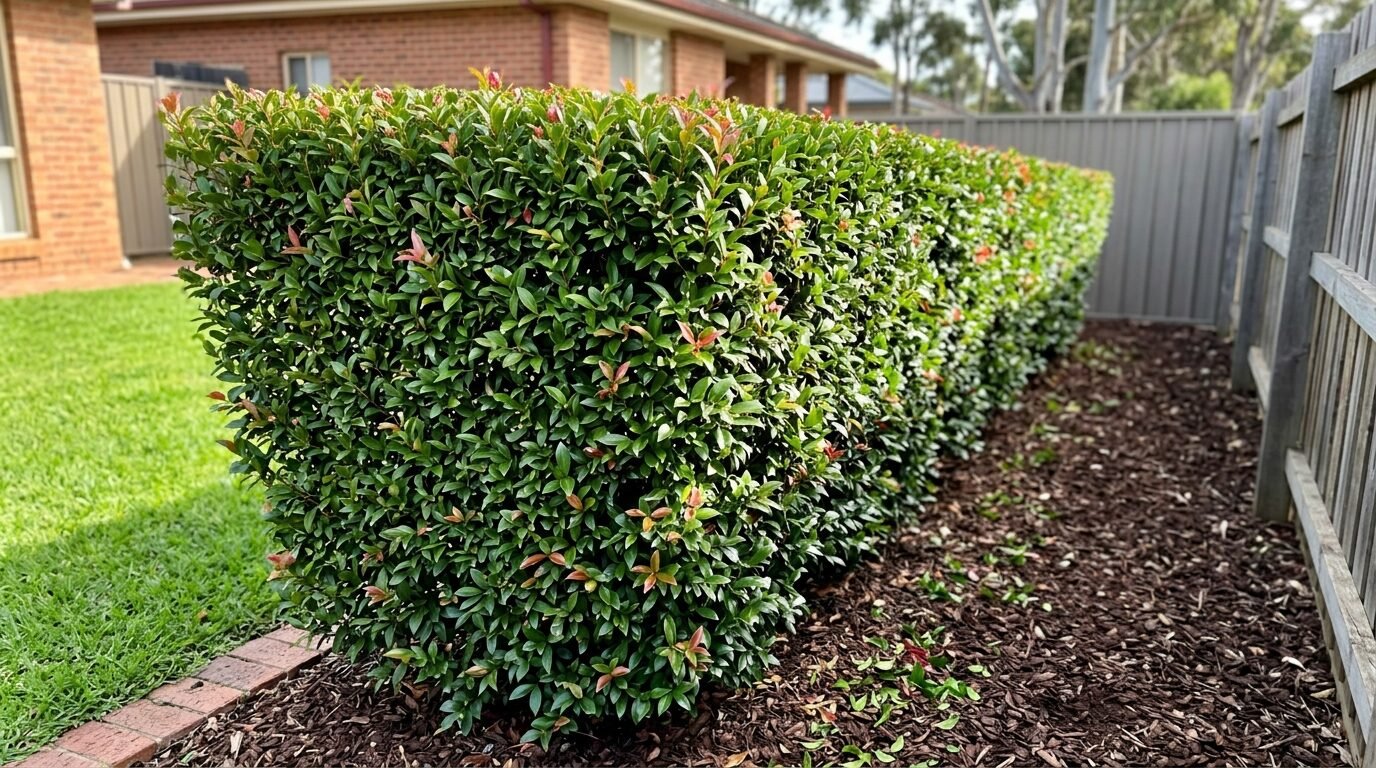
Prune a Lilly Pilly hedge little and often — two to three light trims a year rather than one hard cut. Best times: after the main spring flush and again in late summer, avoiding frost periods. Tip-pruning from a young age is what makes a hedge dense; Lilly Pillies also tolerate hard renovation pruning if an old hedge is overgrown or bare. Pruning is also your main tool for removing psyllid-affected new growth.
✔ How this guide was checked
Pruning advice follows standard practice for fast-growing Syzygium and Acmena hedges in the Australian climate — timing tied to the local growing season, tip-pruning to build density, and their well-known tolerance of hard cutting back. We’ve linked watering and feeding steps that make recovery reliable.
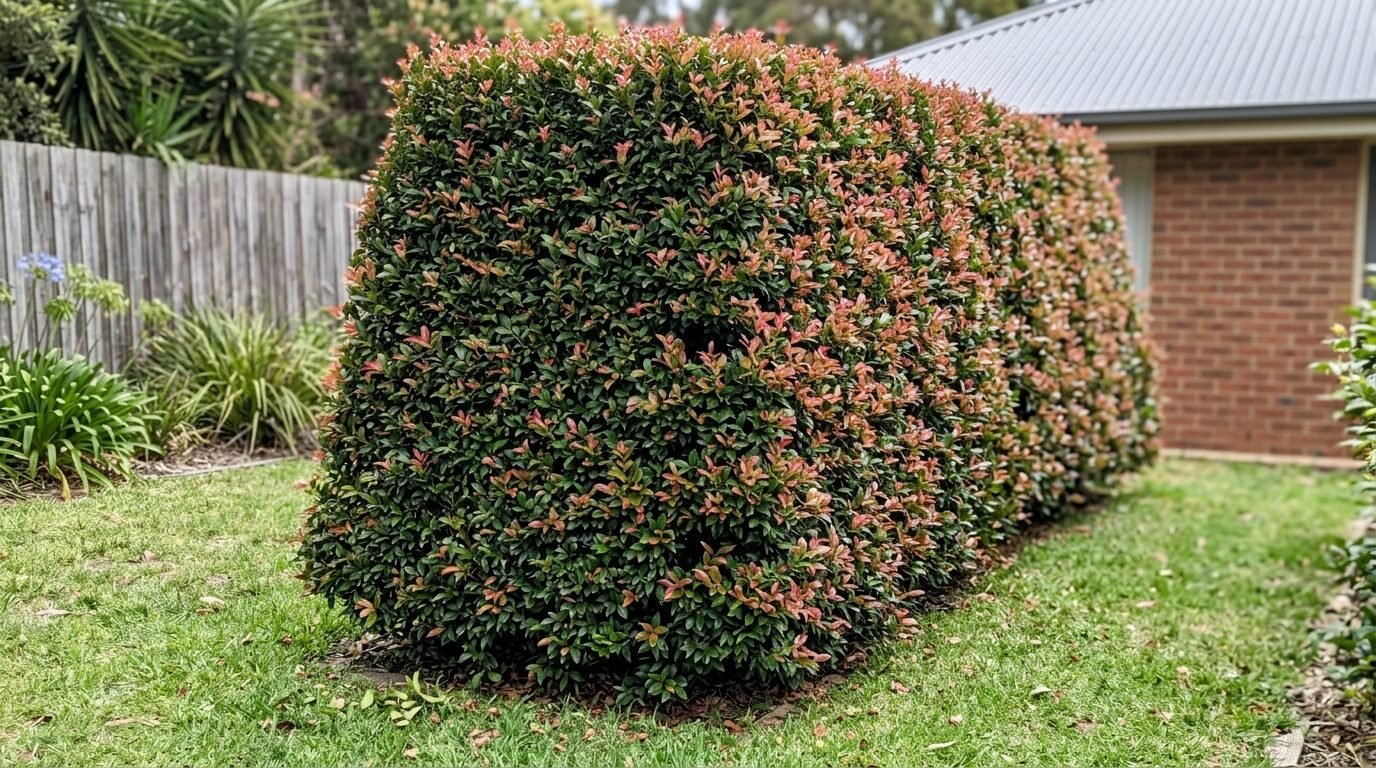
Lilly Pilly hedge trimmed to a wider-at-the-base A-shape profile
Why and when to prune
Lilly Pillies are vigorous — that’s why they make great screens, but a hedge left alone quickly becomes tall, lumpy and bare at the base. Regular pruning keeps it dense, flat-faced and the right height. In most of Australia the two key windows are spring, once the first big flush has extended, and late summer, with an optional tidy-up between. Avoid pruning right before or during frosts — fresh cuts and soft regrowth are frost-tender.
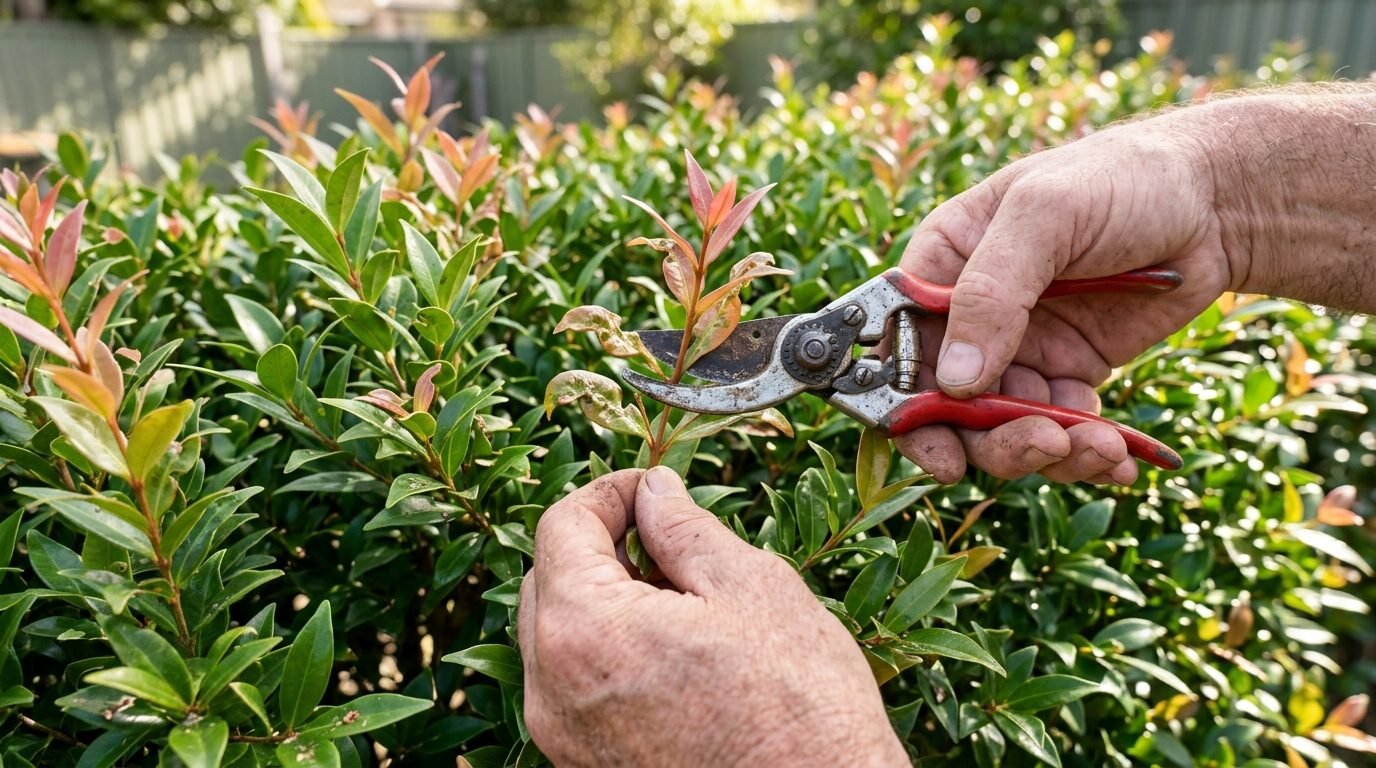
Tip-pruning a single Lilly Pilly stem to force branching
How often: formal vs informal
Hedge style
Trims per year
Approach
Formal / crisp screen
2–3 (or more)
Light, frequent tip-pruning to a defined face and top
Informal / soft screen
1–2
Shape once or twice, let it billow a little between
Overgrown renovation
1 hard cut + follow-ups
Cut back hard in the warm season, then tip-prune the regrowth
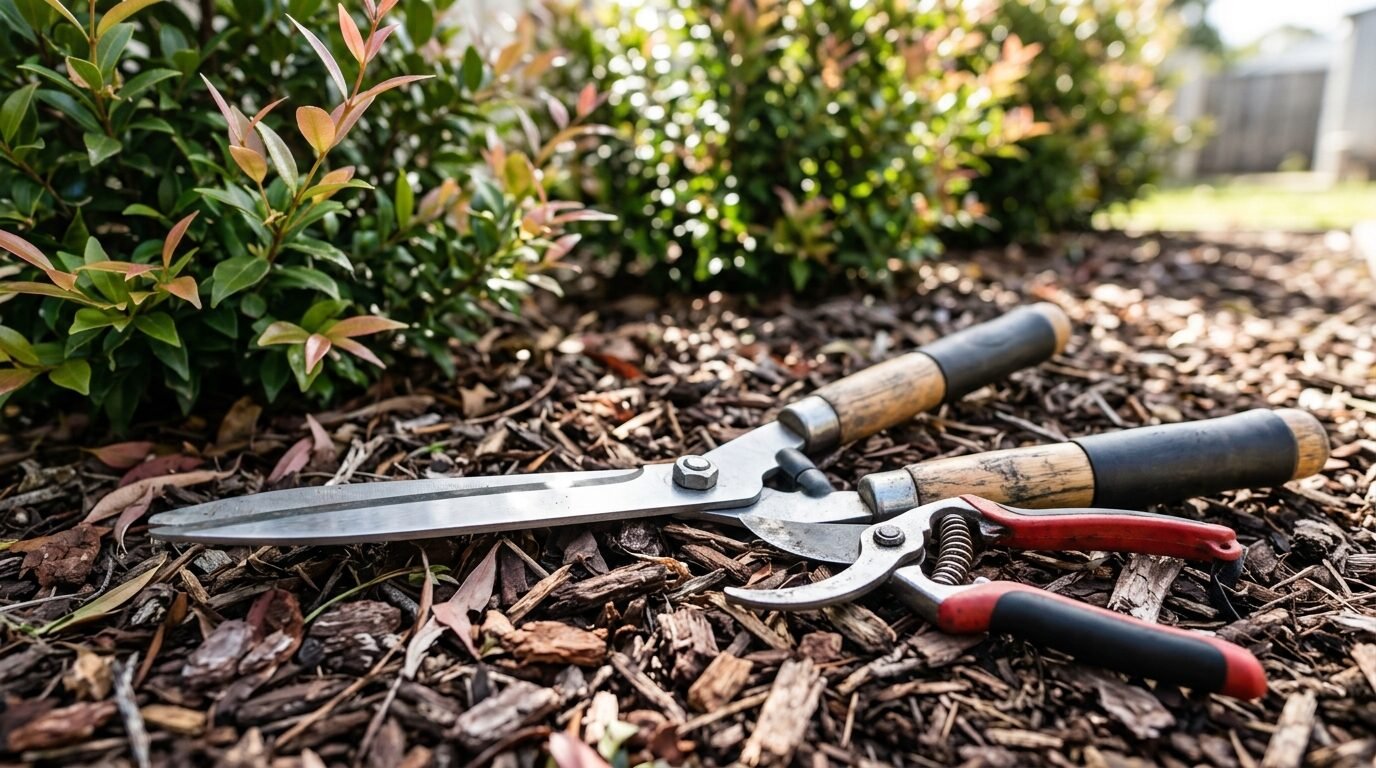
Clean hedge shears and secateurs resting on garden mulch
The technique that actually thickens a hedge
Density comes from tip-pruning: taking just the soft growing tips off repeatedly. Each cut forces two or more shoots to branch below it, so the more often you tip a young hedge, the bushier it gets. Start while plants are small — don’t wait for full height. Always keep the base slightly wider than the top (a gentle A-shape, or “batter”) so light reaches the lower leaves; this is the number-one way to stop a hedge going bare at the bottom.
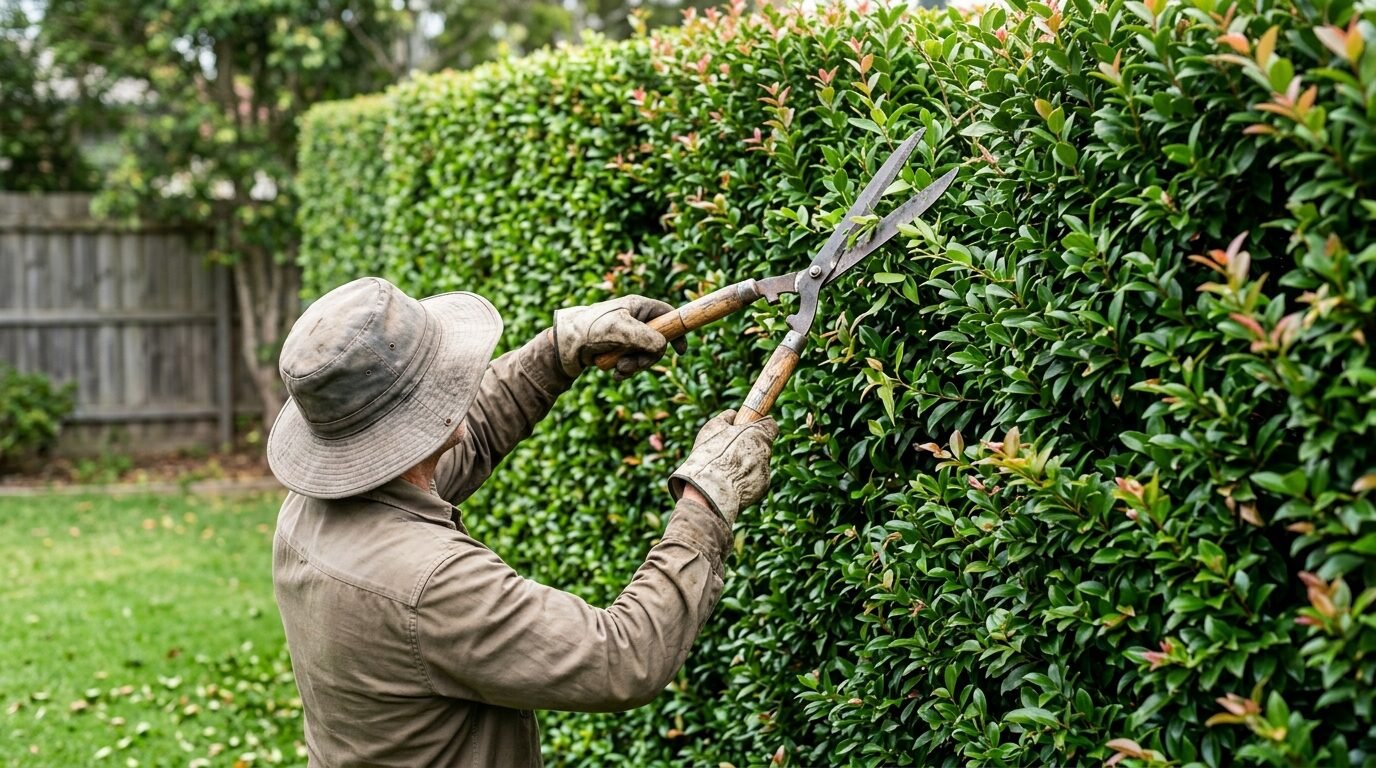
Freshly trimmed dense green Lilly Pilly hedge
Hard renovation pruning
One of the Lilly Pilly’s best traits is that it reshoots readily from old wood. If a hedge is overgrown, woody or bare-legged, cut it back hard — even by a third to a half — in the warm growing season, and it will flush new growth. Do it in spring or early summer so it recovers before cold weather, feed and water well, and expect it to look rough for a few weeks before the fresh growth greens it up.
Pruning for berries vs a dense hedge
Lilly Pillies flower and fruit on growth that’s had time to mature, so very frequent tight clipping reduces flowering and the edible berries. Want the cream flowers and pink-purple fruit? Prune a little less often and let some growth run. Want a crisp formal face? Trim more often and accept fewer berries. You can’t fully maximise both at once.
After-pruning care
Feed after a hard prune with a native-safe or controlled-release fertiliser to fuel regrowth.
Clean tools between hedges to avoid spreading disease.
Frequently asked questions
When should I prune my Lilly Pilly hedge?
After the main spring flush and again in late summer are the key windows, with an optional tidy-up between. Avoid pruning just before or during frosts.
How often should a Lilly Pilly hedge be trimmed?
For a formal hedge, two to three light trims a year or more. Informal screens can get by with one or two. Little and often beats one hard annual cut.
Can you cut a Lilly Pilly back hard?
Yes. Lilly Pillies reshoot readily from old wood, so an overgrown hedge can be cut back by a third to a half in the warm growing season, then fed and watered to recover.
How do I make my Lilly Pilly hedge thicker?
Tip-prune the soft tips frequently from a young age to force branching, and keep the base wider than the top so light reaches the lower leaves. Feed and water to support dense growth.
Why is my Lilly Pilly hedge bare at the bottom?
Usually too little light low down, or being left to grow tall and leggy before pruning. Keep an A-shaped profile and tip-prune from young. See our bare-bottom guide for the full fix.
Will pruning stop the berries?
Frequent tight clipping reduces flowering and fruit, because Lilly Pillies flower on more mature growth. Prune a little less often if you want the flowers and berries.
What tools should I use?
Sharp secateurs or shears for small hedges, or a hedge trimmer for larger runs. Keep blades sharp and clean so cuts heal quickly and disease is not spread.
Does pruning help with psyllid?
Yes. Pruning off the pimpled new growth removes the psyllid and triggers a fresh, cleaner flush. It is one of the main ways to manage psyllid culturally.