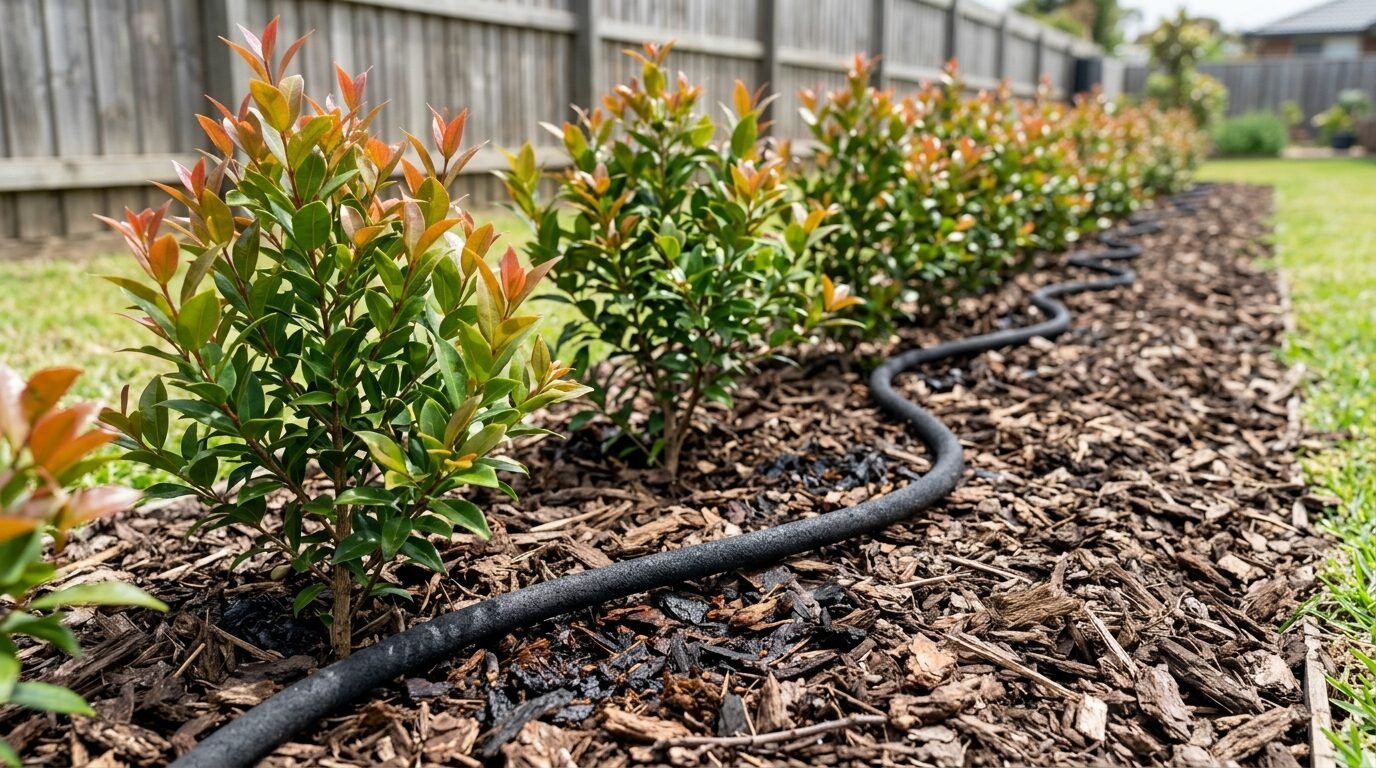
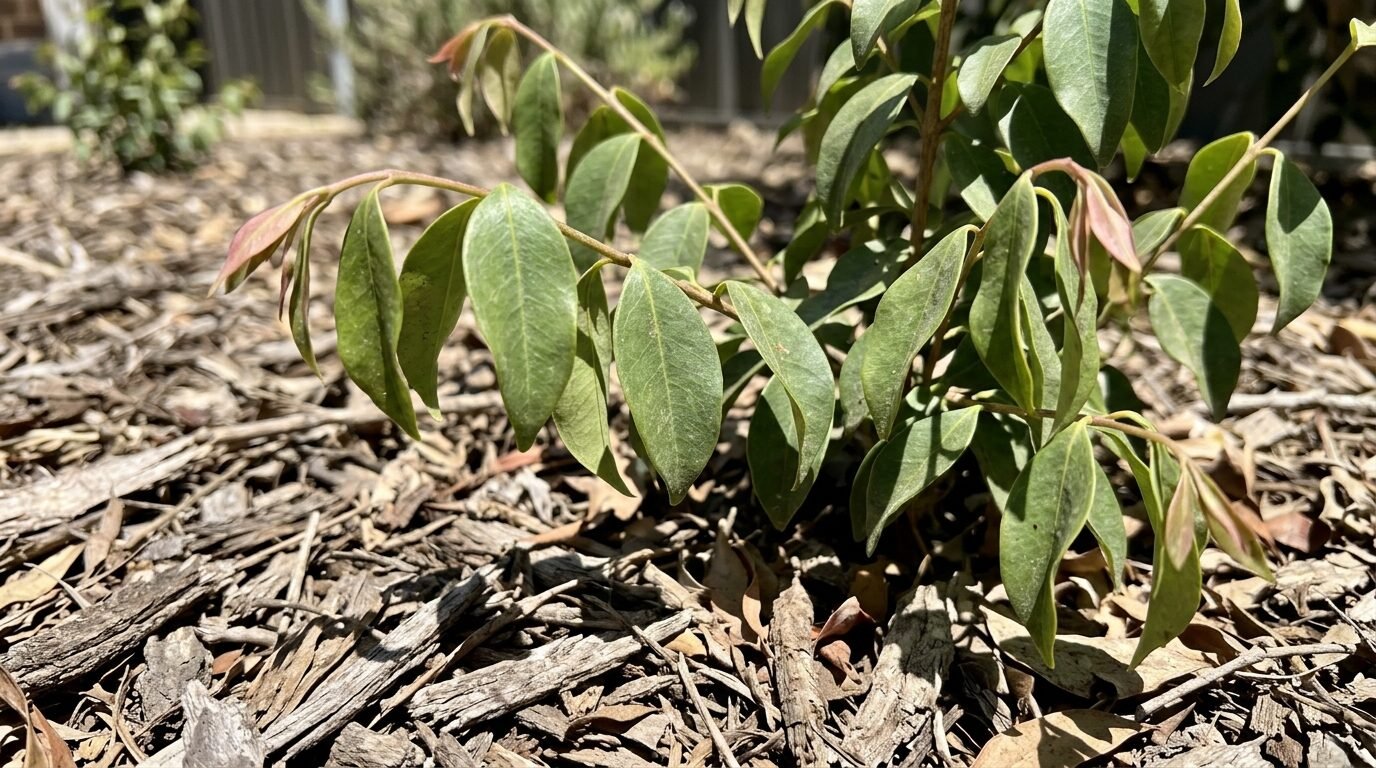
Water a new Lilly Pilly hedge deeply two to three times a week through its first spring and summer, soaking the whole root zone each time rather than light daily sprinkles. The first 12 months are critical while roots establish. Mulch well to hold moisture. Once established (after a year or so), Lilly Pillies are fairly drought-tolerant and need far less.
✔ How this guide was checked
Watering frequencies are practical ranges to adjust for your soil, climate zone and season — sandy soils and hot inland areas need more, heavy or coastal soils less. The emphasis on deep, infrequent watering and the first-year establishment window reflects standard practice for establishing hedges in Australia.
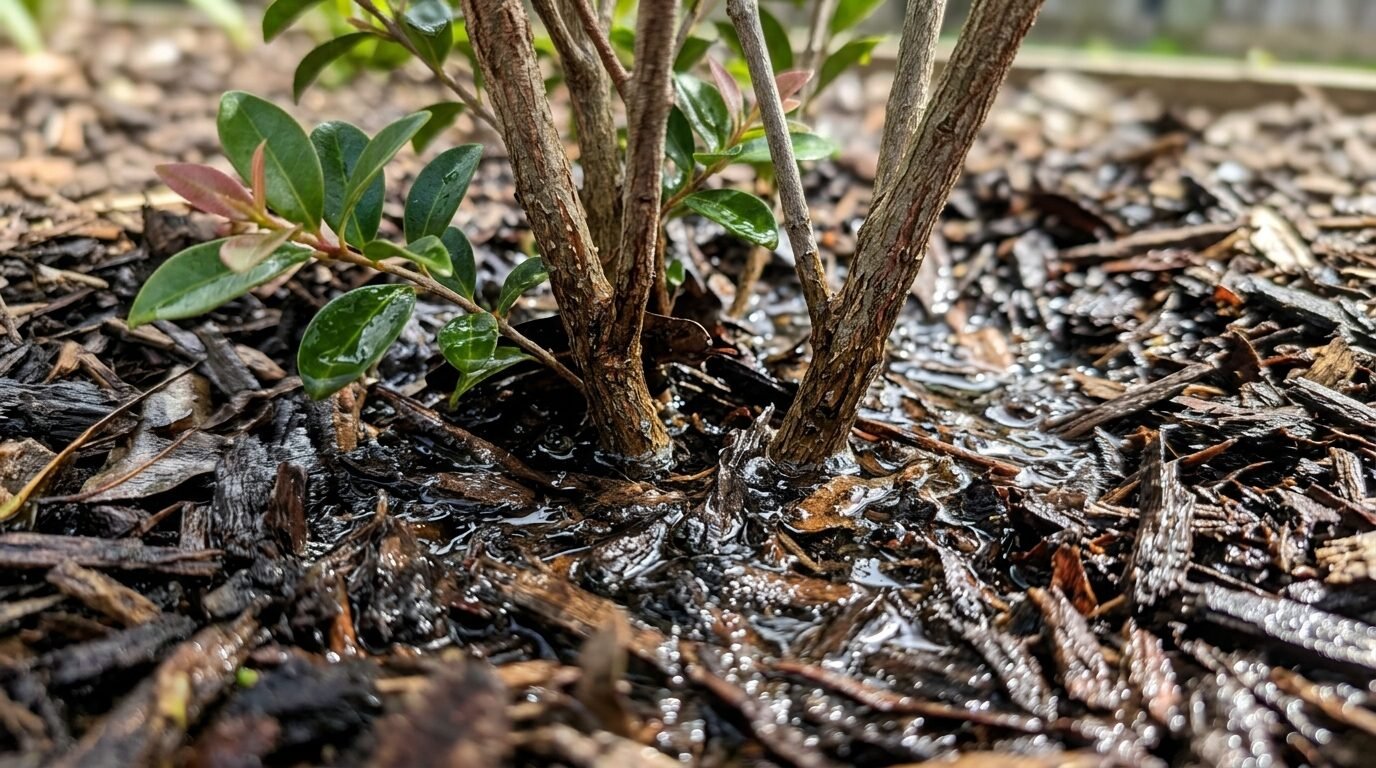
Water soaking deeply into mulched soil at the base of a Lilly Pilly
Why the first year matters most
A newly planted Lilly Pilly has a small root ball and can’t yet reach moisture deeper in the soil. Until its roots spread out and down — the best part of a year — it depends on you to keep the root zone consistently moist. Get the first summer right and you’ll have a tough, largely self-sufficient hedge; let it dry out repeatedly and you’ll see stress, leaf drop and losses.
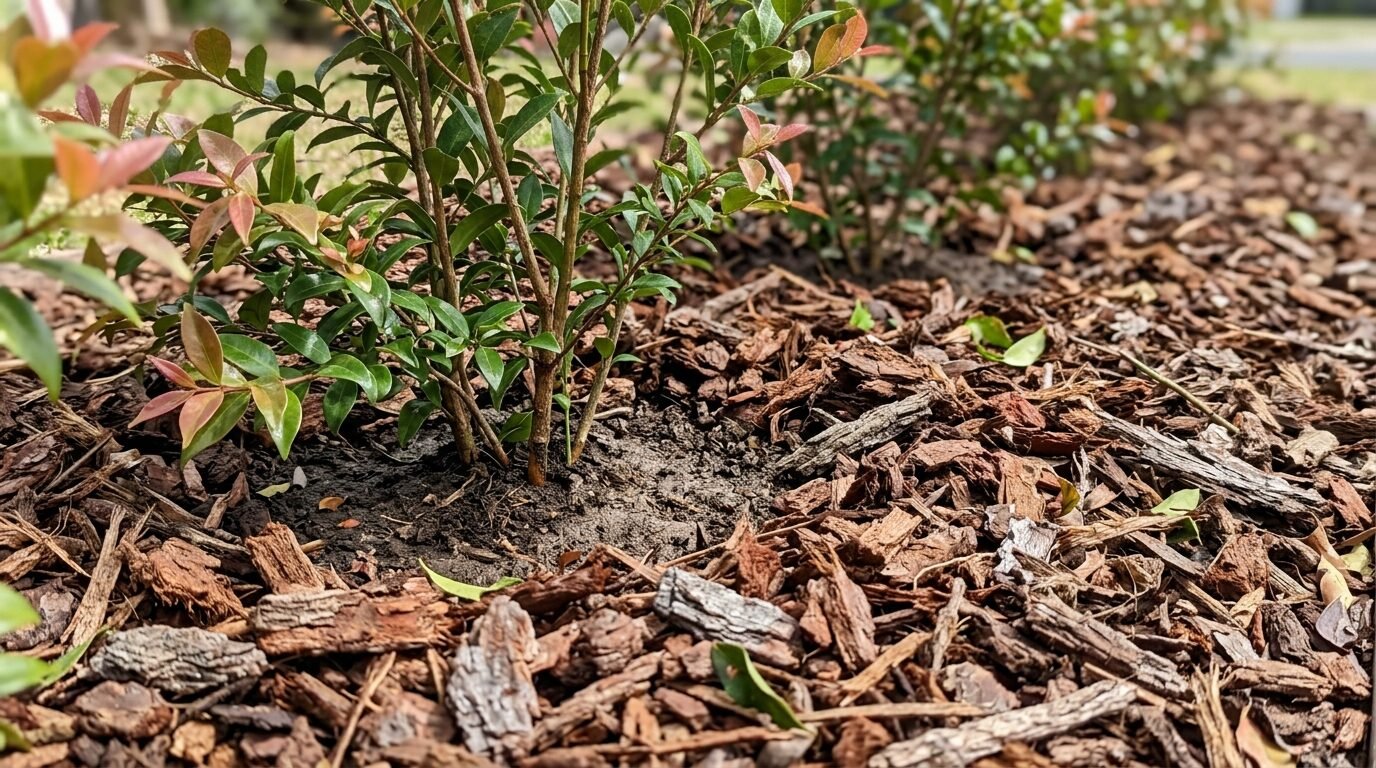
Bark mulch spread over the root zone of a Lilly Pilly hedge
How often and how much
Stage
Watering guide
First 2–4 weeks
Every 1–2 days, deeply, to settle roots
First spring/summer
2–3 deep soaks per week
First autumn/winter
Taper to weekly or as rain allows
Established (12 months+)
Deep water only in dry spells; otherwise rainfall
“Deep” means wetting the soil right through the root zone — a slow soak from a dripper, soaker hose or a hose run gently at the base, not a quick spray over the leaves.
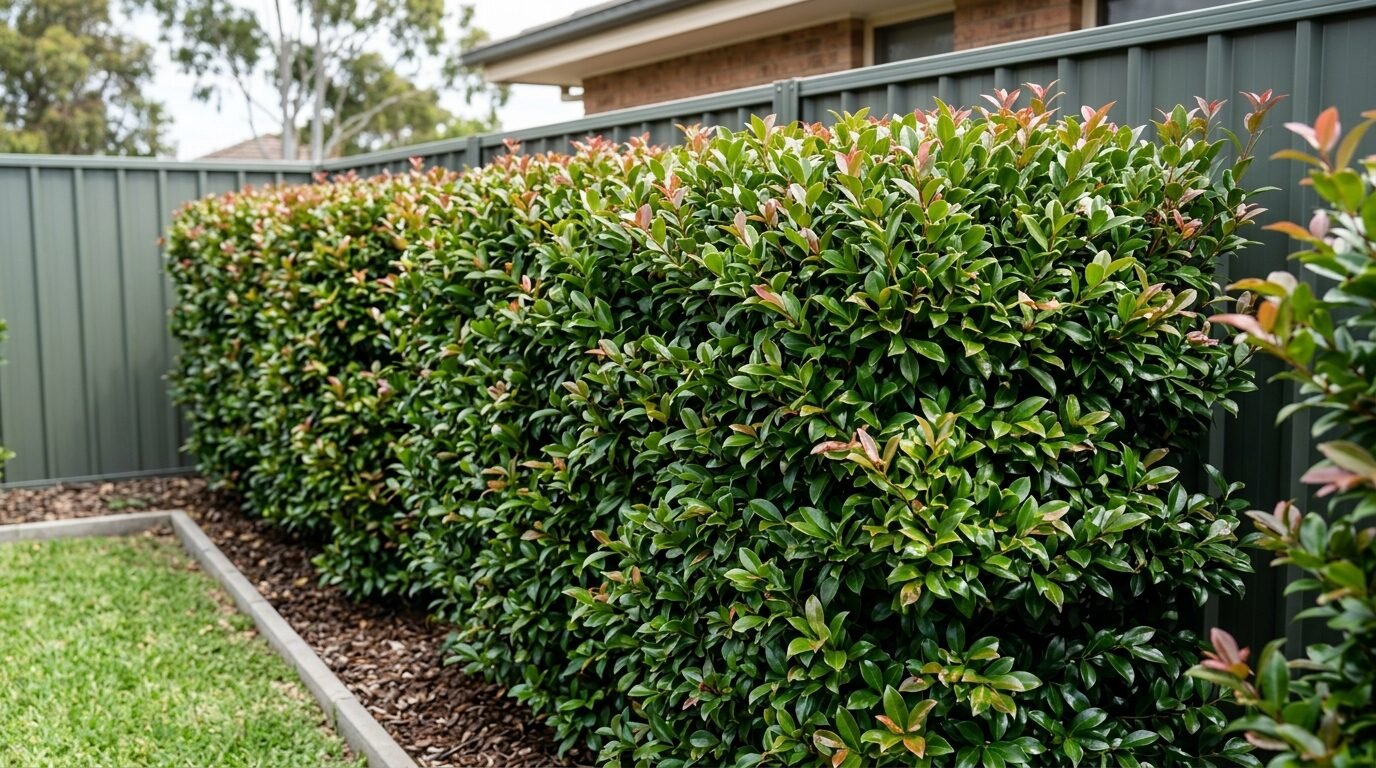
Lush, healthy, well-watered young Lilly Pilly hedge
Deep and infrequent beats little and often
Frequent shallow watering only wets the surface and trains roots to stay up high, where they dry out fast and make the plant fragile. Deep, less-frequent soaking draws roots down and builds a drought-hardy hedge. A soaker hose or drip line along the row is the easiest way to do this evenly.
Lilly Pilly leaves showing mild heat and water stress
Mulch is half the job
A 5–7 cm layer of mulch over the root zone (kept clear of the stems) dramatically cuts evaporation, keeps roots cool and suppresses the weeds that steal water. Top it up as it breaks down. Good mulching can roughly halve how often you need to water a new hedge.
Signs you’re getting it wrong
Too little water: wilting, dull or folding leaves, crisp brown tips and leaf drop — worst in heat.
More new hedges are lost to constant sogginess and poor drainage than to drought. Let the top few centimetres start to dry between deep soaks, and never let plants sit in waterlogged ground.
Frequently asked questions
How often should I water a new Lilly Pilly hedge?
Deeply two to three times a week through the first spring and summer, more in the first few weeks after planting. Taper to weekly in cooler months and much less once established.
How long until a Lilly Pilly is established?
About 12 months. After the first full year of good watering the roots have spread enough that the hedge becomes fairly drought-tolerant and needs watering only in dry spells.
How much water does each plant need?
Enough to soak the whole root zone each time — a slow deep soak rather than a light sprinkle. The exact volume depends on soil and weather; aim to wet down through the roots.
Is it better to water deeply or often?
Deeply and less often. Deep soaking draws roots down and builds a drought-hardy hedge; frequent shallow watering keeps roots near the surface where they dry out fast.
Should I water the leaves or the base?
Water the base and root zone, not the foliage. A soaker hose or drip line along the row delivers water where the roots are and keeps leaves dry.
Do established Lilly Pillies need watering?
Much less. After about a year they are fairly drought-tolerant and mainly rely on rainfall, needing a deep water only during extended dry or very hot spells.
Why is my new hedge yellowing even though I water it?
Often overwatering or poor drainage rather than lack of water. Constantly wet roots turn leaves yellow and can rot. Check drainage and let the surface dry between soaks.
Does mulching really help?
A lot. A 5–7 cm mulch layer cuts evaporation, keeps roots cool and suppresses weeds, and can roughly halve how often you need to water a new hedge.