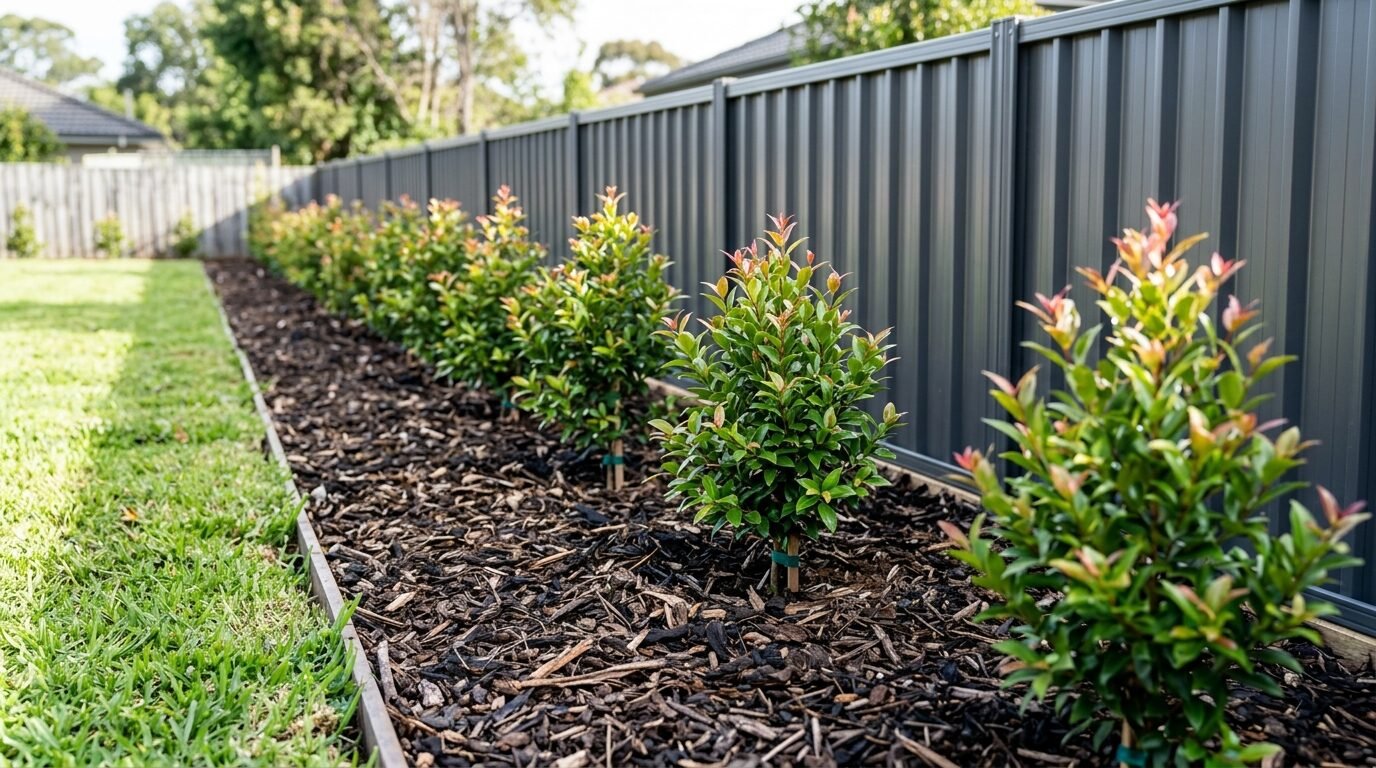
For a Lilly Pilly hedge, space plants roughly 50–80 cm apart in a single straight row — closer (about 45–60 cm) for a fast, dense screen or narrow varieties, wider (80 cm+) for large-growing types. Plant into well-prepared soil, dig each hole twice the width of the pot, water in thoroughly and mulch. Spacing is a trade-off: closer = quicker screen but more plants; wider = cheaper but slower to close up.
✔ How this guide was checked
Spacing ranges follow common Australian hedging practice and are a guide to adjust by variety and how fast you want the screen to close — always check the mature width of your specific cultivar. Planting steps reflect standard best practice for establishing Syzygium and Acmena hedges, and link to native soil prep and establishment watering.
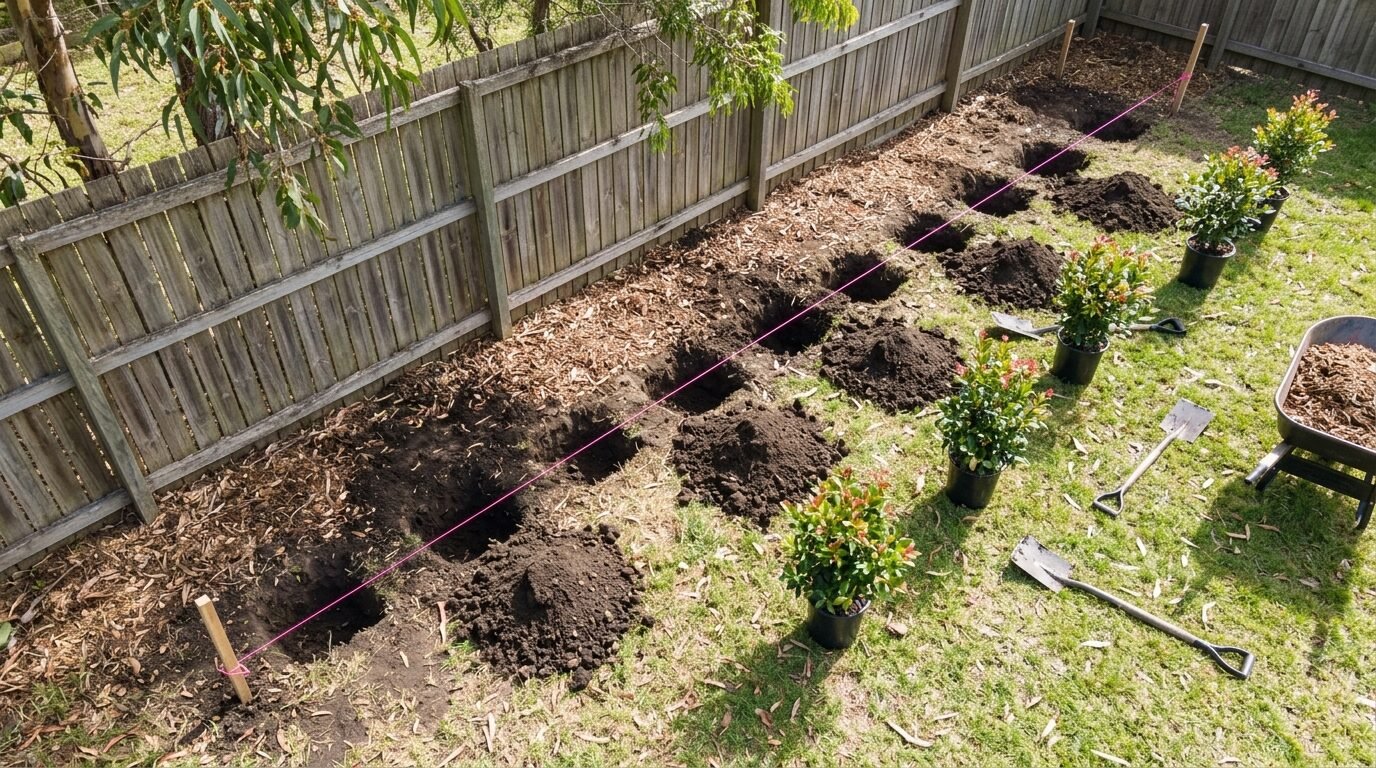
Evenly spaced planting holes dug for a new Lilly Pilly hedge row
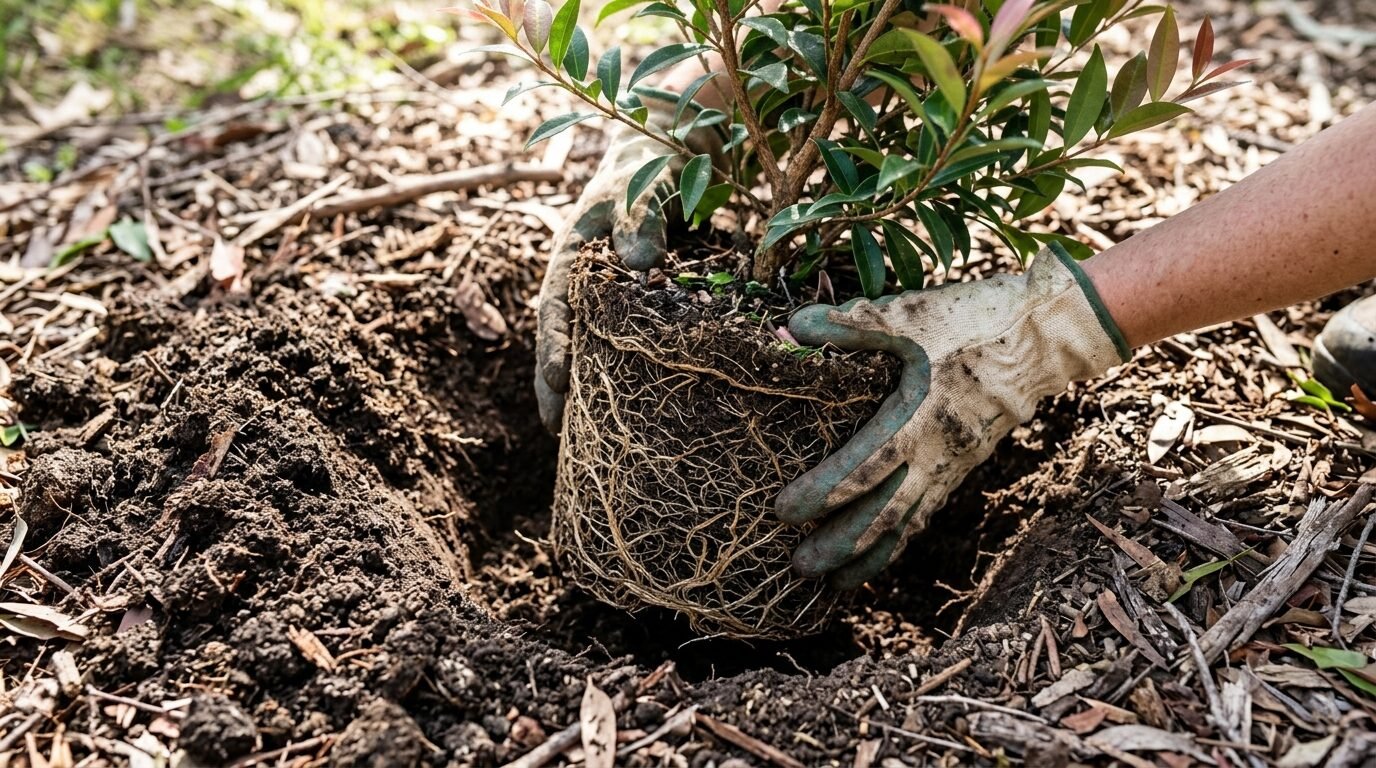
Lowering a Lilly Pilly root ball into a planting hole
Single row or double row?
A single straight row suits almost every home hedge and is easiest to prune and maintain. A staggered double row (two offset rows) makes a thicker, more solid barrier faster and is sometimes used for large privacy or noise screens — but it uses far more plants, takes more width, and is harder to trim. For most gardens, one well-spaced row is the right call.
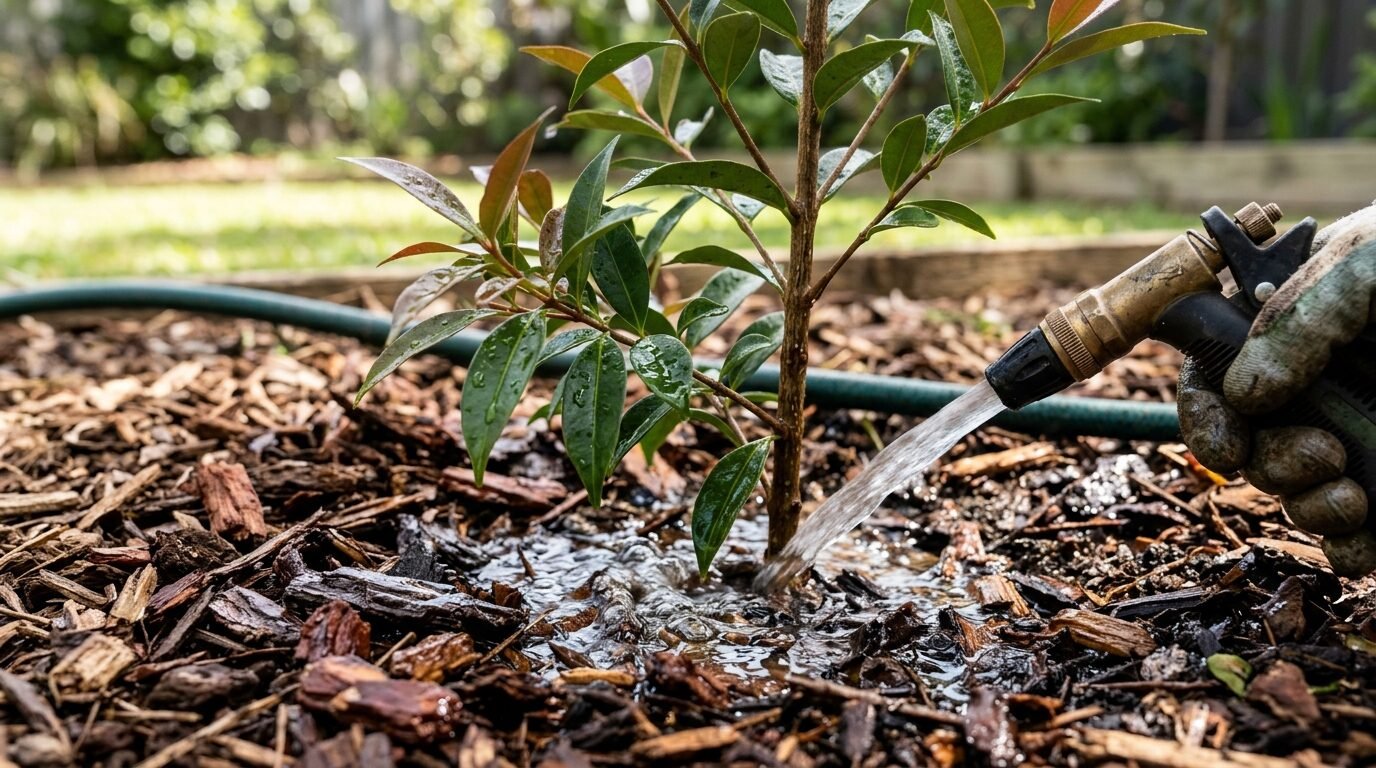
Watering in a newly planted Lilly Pilly and mulching the base
How to plant, step by step
1
Mark a straight line
Run a string line so the hedge is dead straight, then mark each planting position at your chosen spacing.
2
Prepare the soil
Dig over the row, clear weeds and improve the soil with compost — see preparing soil for Australian native plants. Good drainage matters; Lilly Pillies dislike waterlogged ground.
3
Dig each hole
Make each hole about twice the width of the pot and the same depth, so the top of the root ball sits level with the surrounding soil.
4
Tease and place
Gently tease out any circling roots, set the plant in, backfill, and firm the soil so there are no air pockets.
5
Water in and mulch
Water each plant in deeply to settle the soil, then mulch the whole row (keeping mulch off the stems) to hold moisture and suppress weeds.
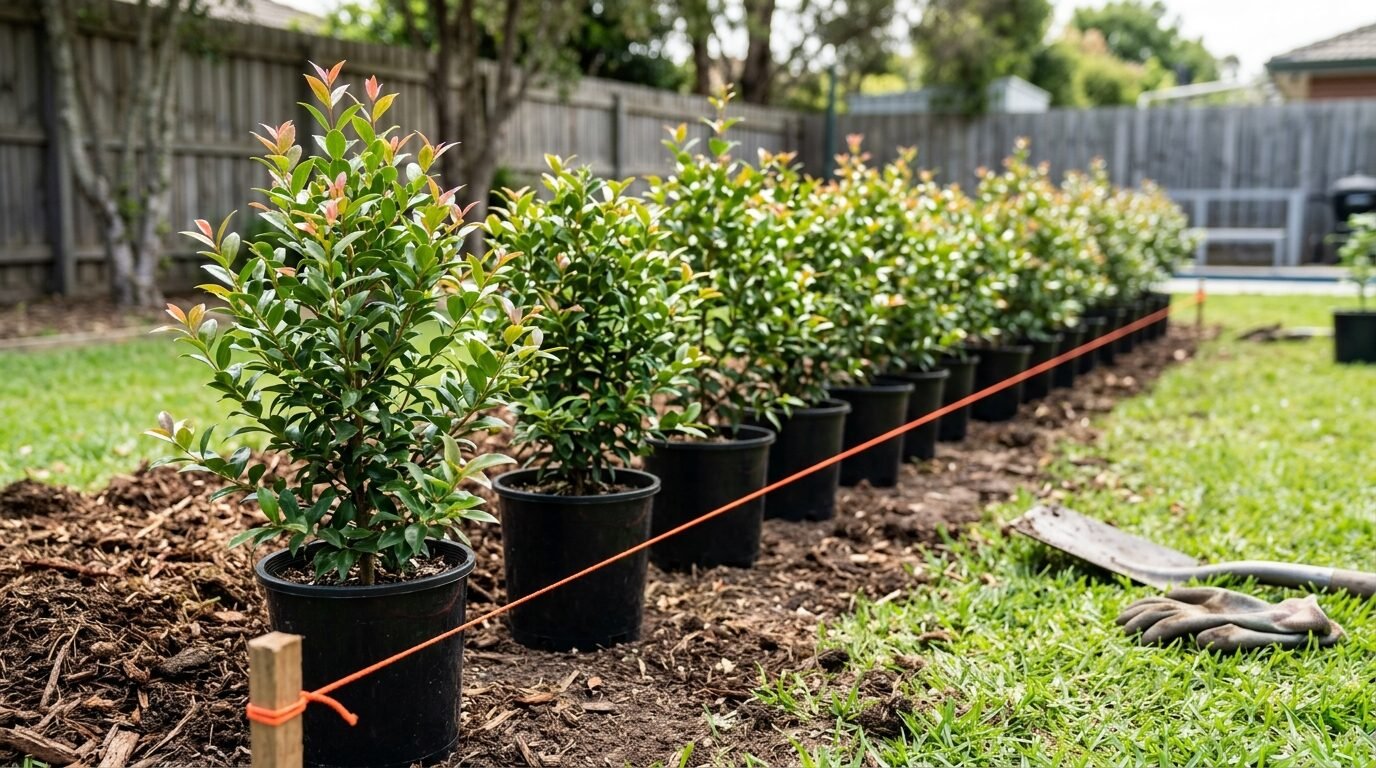
Newly planted single row of young Lilly Pilly along a fence
Best time to plant in Australia
Autumn and spring are ideal in most of the country — the soil is warm enough for roots to establish but plants aren’t stressed by peak summer heat. In frost-prone areas, plant in spring once frost risk has passed so young growth isn’t burnt. Whenever you plant, the first 12 months of establishment watering make or break the hedge.
Give it room to pre-close
The most common planting mistake is cramming plants too close to “get a hedge faster”. Over-crowded Lilly Pillies compete, grow thin at the base and are harder to keep healthy. Stick to roughly half the mature width and let them fill in.
Frequently asked questions
How far apart should I plant a Lilly Pilly hedge?
Usually 50–80 cm apart centre to centre: around 45–60 cm for a fast dense screen or narrow varieties, and 80 cm+ for large-growing types. A good rule is about half the plant mature width.
Can I plant Lilly Pillies closer for a faster hedge?
A little closer speeds up the screen, but cramming them too tight makes plants compete, thin out at the base and struggle. Do not go much under 45 cm for most varieties.
Should I plant one row or two?
A single straight row suits almost all home hedges and is easiest to maintain. A staggered double row makes a thicker barrier faster but uses far more plants and space.
What is the best time to plant a Lilly Pilly hedge?
Autumn or spring in most of Australia. In frost-prone areas, wait until spring once frost risk has passed so soft new growth is not burnt.
How big a hole should I dig?
About twice the width of the pot and the same depth, so the top of the root ball sits level with the surrounding soil. Improve the backfill with compost.
How many plants do I need?
Divide your hedge length by your spacing. For example a 10 m hedge at 60 cm spacing needs roughly 17 plants (10 divided by 0.6).
Do Lilly Pillies need special soil?
They are not fussy but want free-draining soil improved with compost, and dislike waterlogged ground. Prepare the whole row, not just each hole.
How soon will the hedge close up?
With good spacing, watering and tip-pruning, fast varieties can form a screen within a couple of growing seasons; larger or wider-spaced plants take longer.