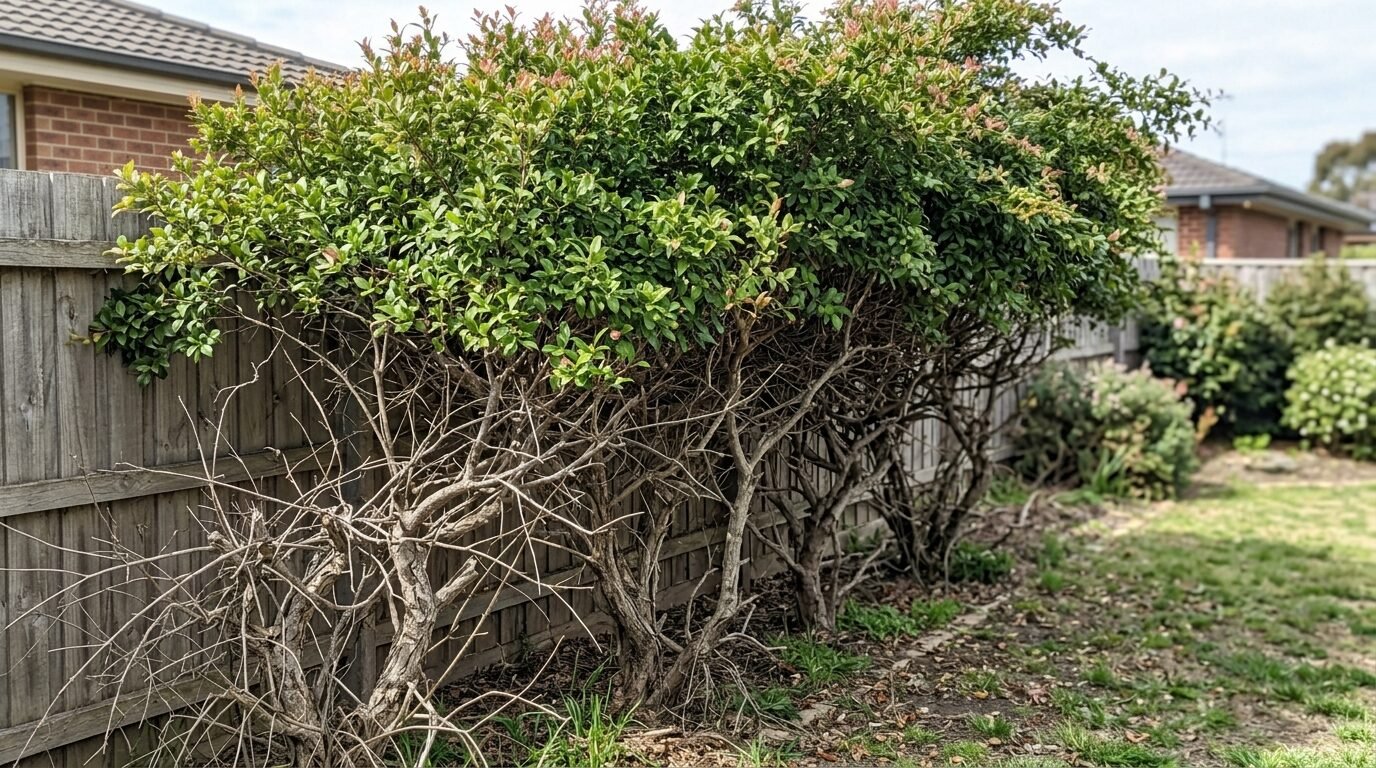
A Lilly Pilly hedge goes bare and leggy at the base mostly from too little light reaching the lower growth — usually because it’s been left to grow tall and wide at the top, shading its own base, or wasn’t tip-pruned from young. Fix it by keeping the base wider than the top (an A-shape), tip-pruning regularly, feeding and watering, and in bad cases hard-pruning to force fresh low growth, which Lilly Pillies do readily.
✔ How this guide was checked
This applies the standard hedging principle that lower foliage needs light to stay dense (the “batter” or A-shaped profile), combined with the Lilly Pilly’s known ability to reshoot from old wood. Feeding and watering steps are linked for reliable recovery, and variety choice is flagged for prevention.
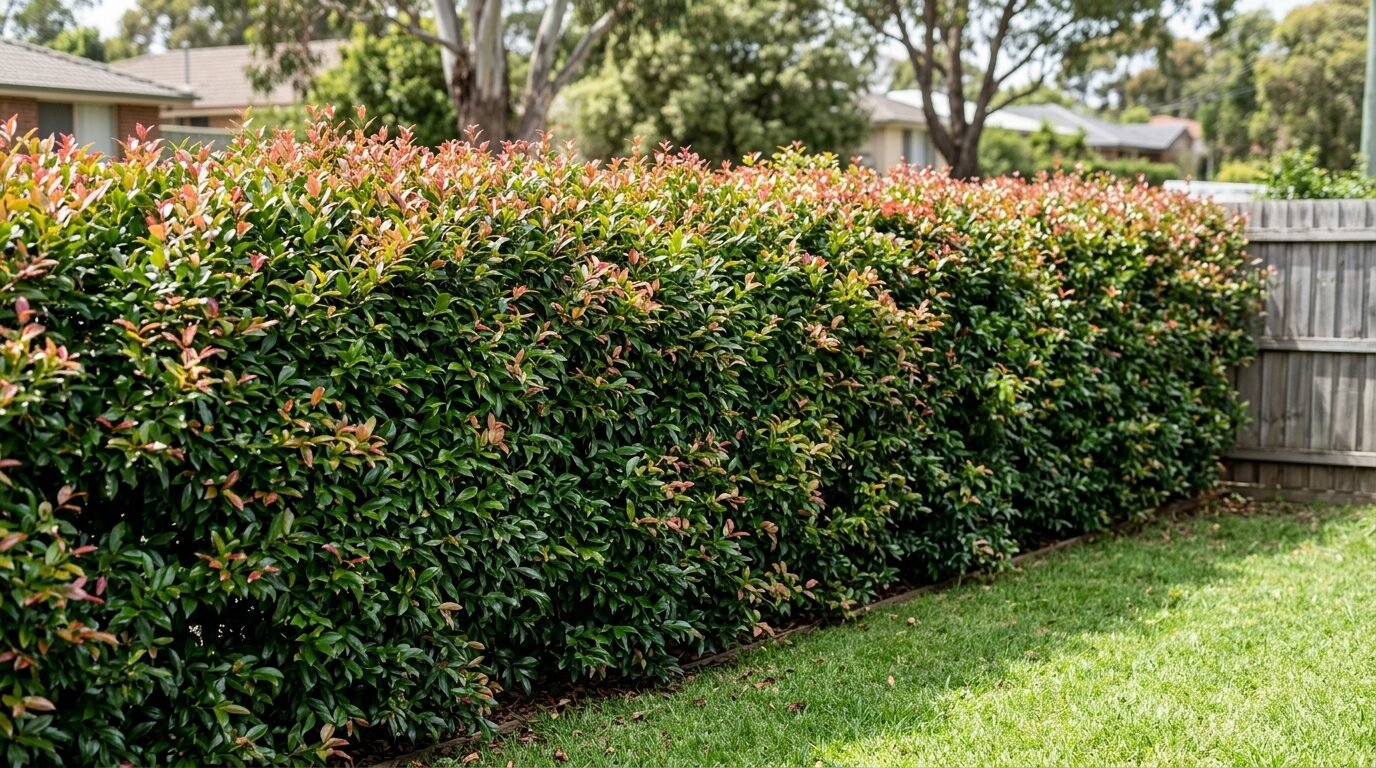
Lilly Pilly hedge reshaped into an A-shape to let light to the base
Why hedges go bare at the bottom
It almost always comes down to light. Leaves stay alive and dense only where they get enough of it. The common causes:
Top-heavy shape. If the hedge is as wide or wider at the top than the bottom, upper growth shades the lower leaves, which thin out and drop.
Left to get leggy. Plants allowed to shoot up tall before any tip-pruning put energy into height, not low branching.
Shade from elsewhere. A fence, wall, tree or another hedge blocking light to the base.
Under-feeding or dry roots. A stressed hedge sheds its oldest (lowest) leaves first.
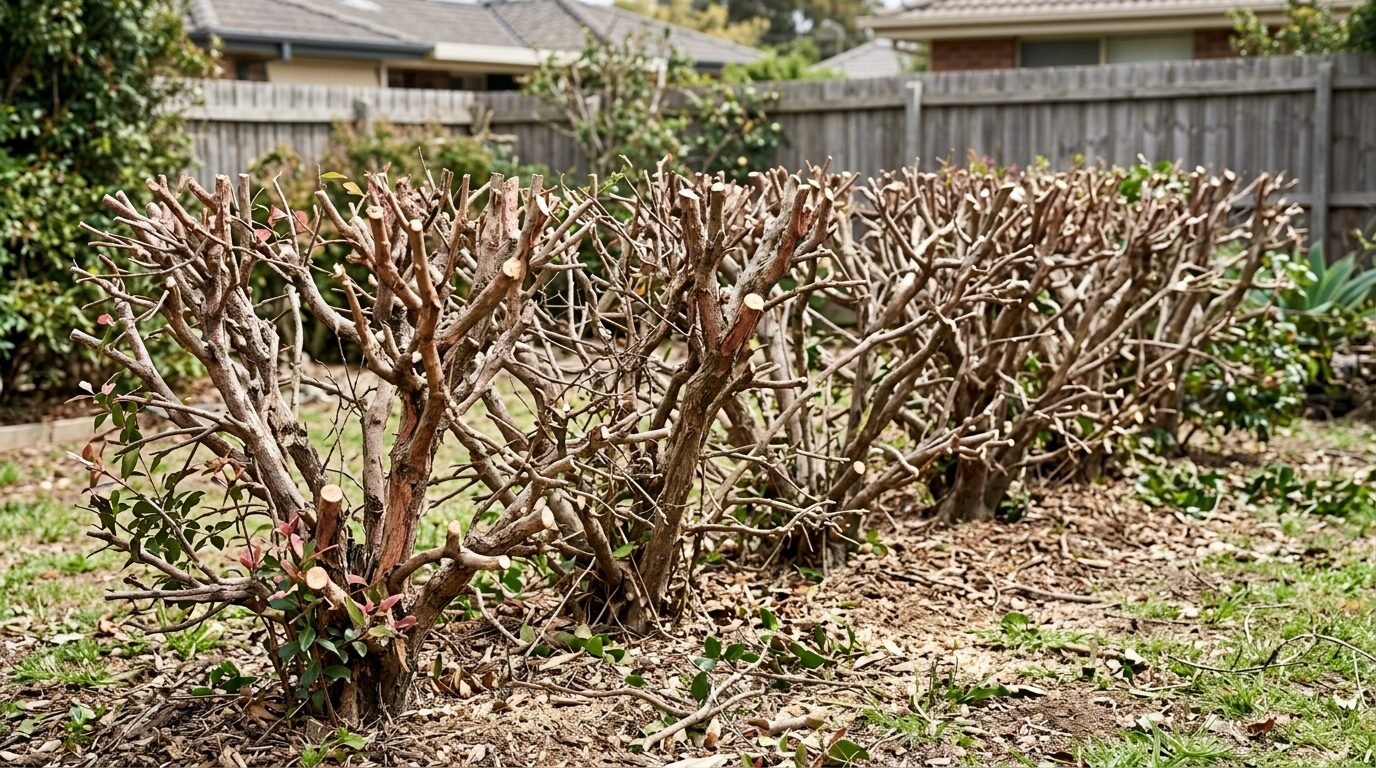
Lilly Pilly hedge hard-pruned back to bare stems for renovation
The A-shape (batter) principle
The single most important fix is the hedge’s profile. Keep it slightly wider at the base than at the top, so the whole face — including the bottom — catches light. Hedges trimmed into a flat-sided box, or worse wider at the top, inevitably go bare below. This gentle A-shape (the “batter”) is how professional hedges stay dense to the ground.
Picture it
Think of the cross-section as a very slight triangle, not a rectangle: bottom a touch wider, tapering in as it rises. Even a small taper makes a big difference to how much light the lower leaves receive.
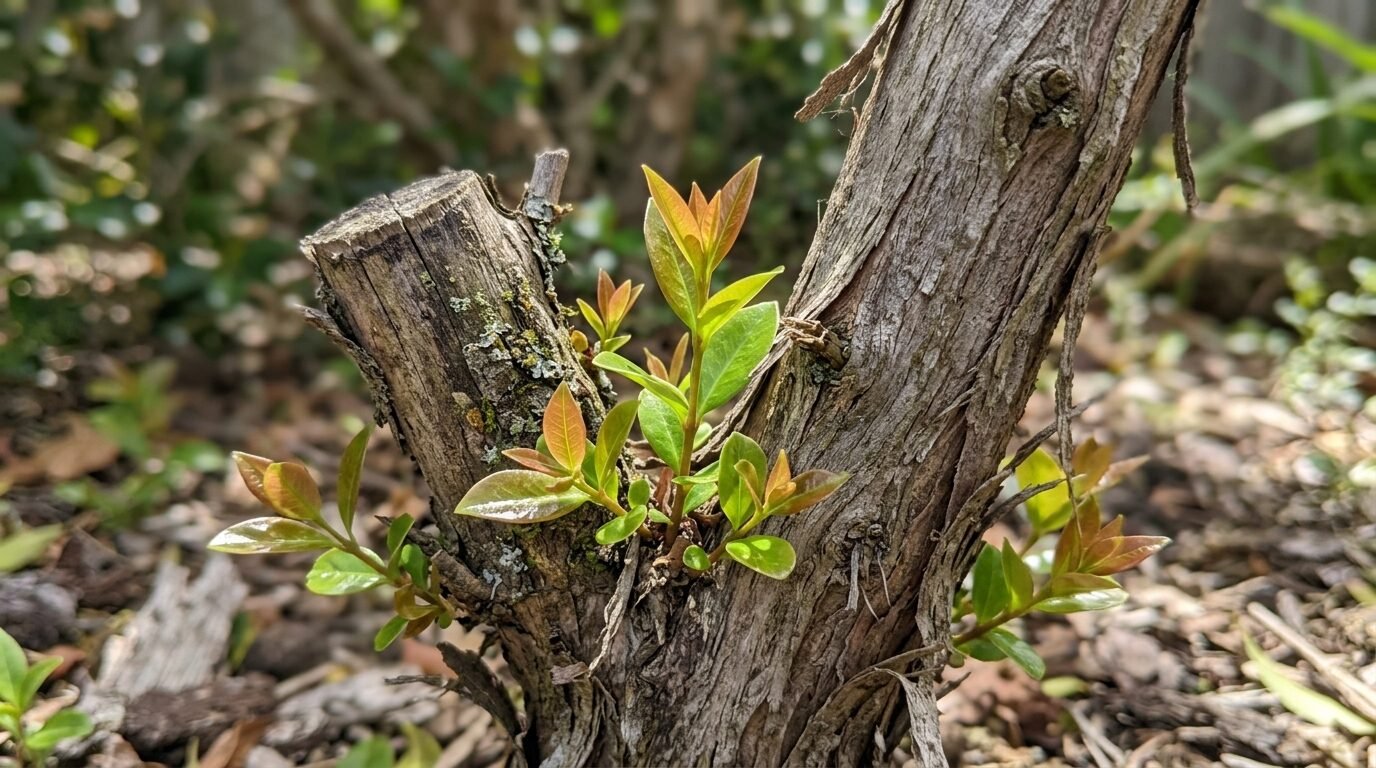
Fresh green reshoots emerging low on old Lilly Pilly wood
How to thicken a thin or bare hedge
1
Fix the shape first
Re-trim so the base is wider than the top. This alone lets light back to the lower growth and stops the problem getting worse.
2
Tip-prune regularly
Frequent light tipping forces branching and density. Start young if you can; on an older hedge, tip the new growth each flush. See how to prune a Lilly Pilly hedge.
3
Feed and water
A hungry, dry hedge drops lower leaves. Feed in spring and keep water up so the plant can afford to hold dense low foliage.
4
Hard-prune if it is badly bare
Lilly Pillies reshoot from old wood, so a severely bare-legged hedge can be cut back hard in the warm season to force fresh low growth — then shaped with the A-profile as it regrows.
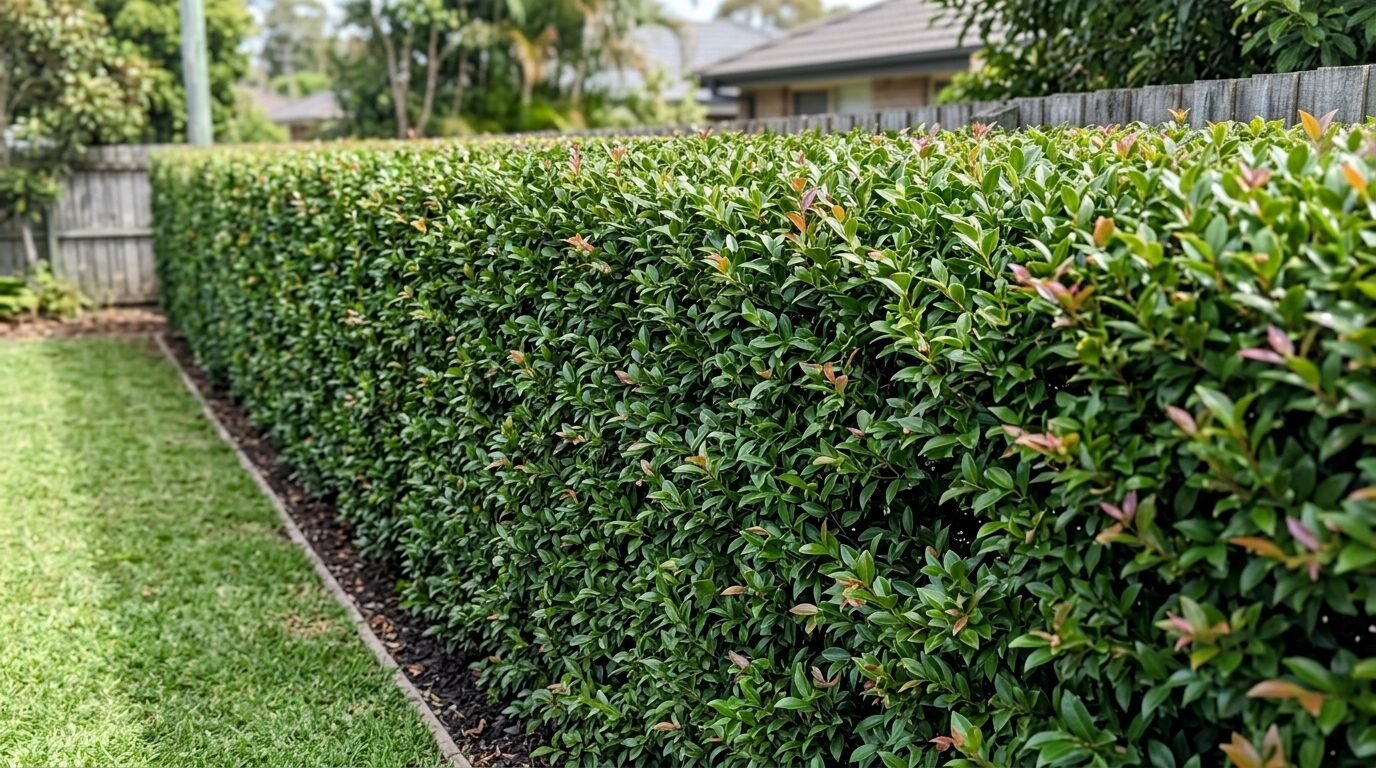
Dense Lilly Pilly hedge full of foliage right to the ground
Renovating a badly bare-bottomed hedge
If the lower third is just bare woody stems, light trimming won’t bring it back — there are no leaves or buds to respond. The reliable fix is a hard renovation prune in spring or early summer: cut the hedge back hard enough to trigger new shoots low down, feed and water generously, then build the dense A-shaped profile from the fresh growth. It looks drastic for a few weeks but Lilly Pillies recover strongly.
Prevention and variety choice
Prevent it by tip-pruning from the day you plant, keeping the A-shape, and feeding and watering well. A naturally dense, compact variety suited to your height also helps — our best Lilly Pilly varieties guide and best hedges by height help you match the plant to the job.
Frequently asked questions
Why is my Lilly Pilly hedge bare at the bottom?
Mostly too little light reaching the base, usually because the hedge is as wide or wider at the top and shades its own lower growth, or was left to get tall and leggy before tip-pruning.
How do I fix a Lilly Pilly that is bare at the base?
Re-shape it so the base is wider than the top (an A-shape) to let light in, tip-prune regularly, feed and water well, and if it is severely bare, hard-prune in the warm season to force fresh low growth.
Will bare woody stems grow leaves again?
Lilly Pillies reshoot from old wood, so a hard renovation prune in spring or early summer can trigger new growth low down even on bare stems. Light trimming alone usually will not.
What is the A-shape or batter?
Trimming the hedge slightly wider at the base than the top so the whole face, including the bottom, catches light. It is the key to keeping a hedge dense to the ground.
How do I make my Lilly Pilly hedge thicker?
Tip-prune frequently to force branching, keep the A-shaped profile, and feed and water so the plant can hold dense low foliage. Start while plants are young for best density.
Can shade cause a bare bottom?
Yes. A fence, wall, tree or neighbouring hedge blocking light to the base will thin the lower leaves. Improve light where you can, or choose a more shade-tolerant variety.
Should I hard-prune to renovate?
For a badly bare-legged hedge, yes. Cut back hard in spring or early summer, feed and water, and rebuild the A-shape from the regrowth. It looks rough briefly but recovers strongly.
Which varieties stay dense to the ground?
Naturally compact, dense cultivars matched to your desired height stay fuller at the base. See our varieties and by-height guides to pick one suited to the job.