
Lilly Pilly Hedge Problems Australia: Symptoms, Causes & Fixes

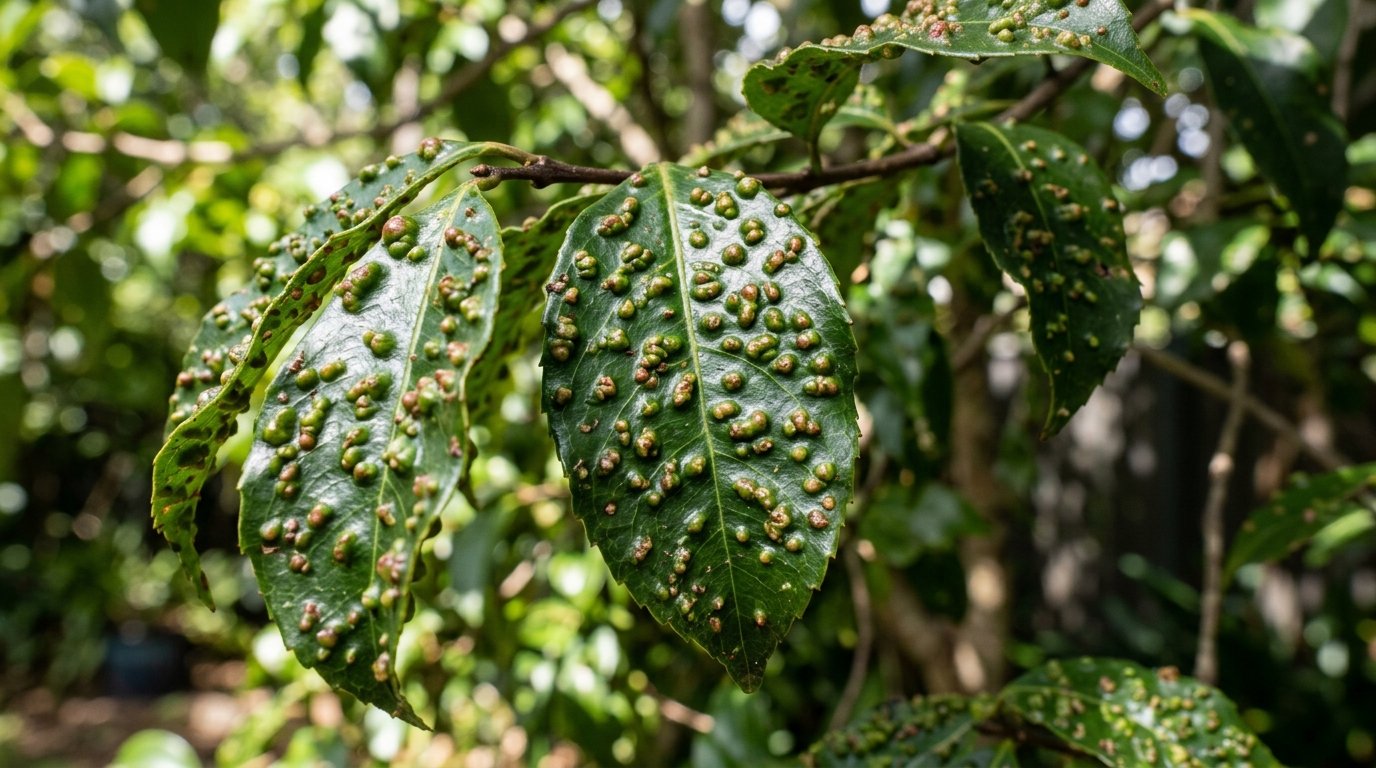
If a Lilly Pilly hedge is looking sick, start with the pattern of damage rather than reaching straight for fertiliser or pesticide. Pimply, distorted new leaves strongly suggest Lilly Pilly psyllid; sticky leaves with black coating point toward scale and sooty mould; yellow leaves can come from wet roots, nutrition or soil chemistry; crispy brown tips are more consistent with moisture or heat stress; and a hedge that is green on top but bare underneath is often a light-and-pruning problem rather than a disease.
Syzygium australe is an accepted Australian native species in the Myrtaceae family according to Kew’s Plants of the World Online, with a native range in Queensland and New South Wales. PlantNET also records Syzygium australe, commonly called Brush Cherry, in New South Wales. It is naturally suited to the moist, well-drained conditions associated with its eastern Australian rainforest origins, but selected cultivars are now used as hedges across much of Australia.
The important diagnostic point is that several Lilly Pilly problems look similar from a distance. A brown hedge does not automatically need more water, and a yellow hedge does not automatically need fertiliser. Before treating anything, look at which leaves are affected, whether the soil is wet or dry, whether the newest growth is distorted, and whether the damage occurs across the whole hedge or only in one section.
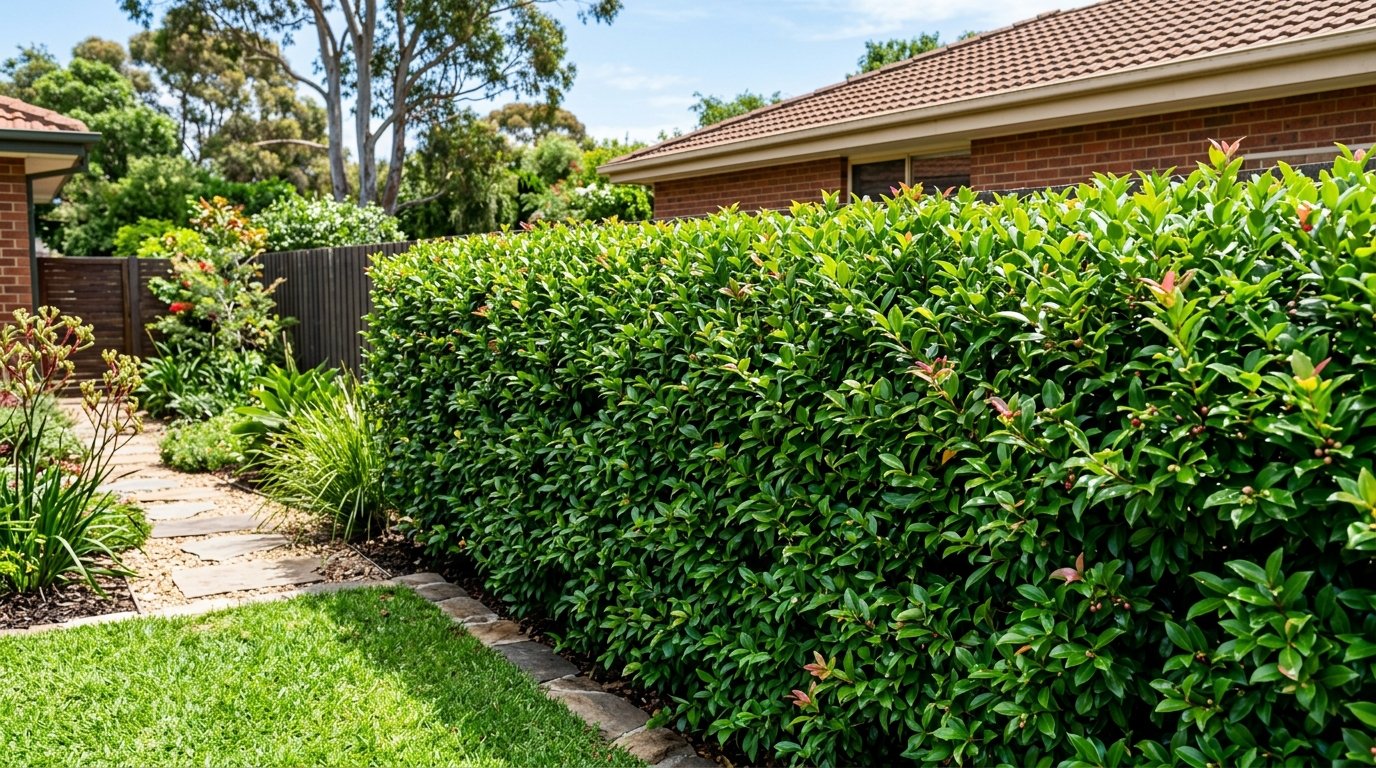
Which Lilly Pilly hedge problem is it?
| What you can see | Likely cause | What to check or do first |
|---|---|---|
| Pimples, blisters, curled or distorted new leaves | Lilly Pilly psyllid | Inspect the soft new growth; remove badly affected growth and consider psyllid-resistant cultivars for persistent problems |
| Yellow lower or older leaves with wet soil | Overwatering, poor drainage or root stress | Check soil moisture below the surface and whether water is draining away |
| Yellow new leaves with greener veins | Possible iron chlorosis / nutrient availability problem | Check soil pH and nutrition before adding repeated fertiliser |
| Dry brown tips or crispy margins | Under-watering, heat, drying wind or root stress | Check moisture through the root zone rather than judging only the soil surface |
| Whole section of hedge suddenly declining | Drainage, root damage, irrigation failure or disease | Compare the affected section with healthy plants beside it and inspect the root-zone conditions |
| Sticky foliage with scale-like bumps | Scale insects | Inspect stems and leaf undersides for sap-sucking insects |
| Black coating on leaves | Sooty mould growing on honeydew | Find and control the scale or other sap-sucking pest producing the honeydew |
| Dense top but thin or bare lower hedge | Self-shading, wrong hedge shape, insufficient early pruning | Let more light reach the lower foliage and correct the pruning profile |
| Hedge growing taller but not becoming dense | Insufficient tip pruning, low light, water/nutrition stress or excessive spacing | Encourage branching rather than continually allowing long vertical shoots |
| Scorched patches after extreme heat | Sun/heat stress, often worsened by dry roots | Check moisture and wait to see what tissue remains alive before heavy pruning |
| Damage after a cold night, especially on fresh tips | Frost injury | Wait until the danger of further frost passes before removing all damaged growth |
This table is a starting point, not a laboratory diagnosis. More than one problem can occur at the same time—for example, a water-stressed hedge can also become more vulnerable to pests.
Pimpled new growth: Lilly Pilly psyllid
Psyllid damage is the classic Lilly Pilly complaint. Gardening Australia describes the insect as a tiny sap-sucker whose young stages feed around the developing leaves. The feeding disrupts normal growth and produces the characteristic pimples, blisters, puckering and distorted new foliage.
Syzygium australe and some of its cultivars are susceptible. The damage is usually easiest to identify on a fresh flush of growth because the affected leaves open distorted rather than simply developing dry brown edges.
Once a leaf is badly deformed, it will not flatten itself back into perfect foliage. Gardening Australia recommends pruning off affected growth as a practical non-chemical response. For a light infestation on an otherwise vigorous hedge, that may be enough to restore its appearance as clean new growth develops.
If psyllid returns every time the hedge flushes, plant choice becomes more important than repeatedly treating symptoms.
Which Lilly Pilly varieties resist psyllid?
There is no reason to assume every plant sold as “Lilly Pilly” has the same resistance.
Ozbreed specifically lists Straight and Narrow™ Syzygium australe ‘SAN01’ as psyllid resistant. Plantmark likewise sells Straight and Narrow as a psyllid-resistant Lilly Pilly and lists Syzygium australe ‘Resilience’ as a psyllid-resistant Lilly Pilly.
Gardening Australia identifies Syzygium ‘Cherry Surprise’ as bred for psyllid resistance. Its older Gardening Australia material also notes that forms historically sold as Acmena smithii—now generally treated within Syzygium smithii—are notably resistant to pimple psyllid.
Ozbreed’s Lilly Pilly comparison material also lists Sublime™, traditionally sold under Acmena smithii, as extremely psyllid resistant.
That does not mean every narrow or compact Lilly Pilly is resistant. Ozbreed’s current specification material, for example, describes Pinnacle™ Syzygium australe ‘AATS’ as susceptible to psyllids. Read the actual cultivar information rather than relying on the words “Lilly Pilly” on the nursery label.
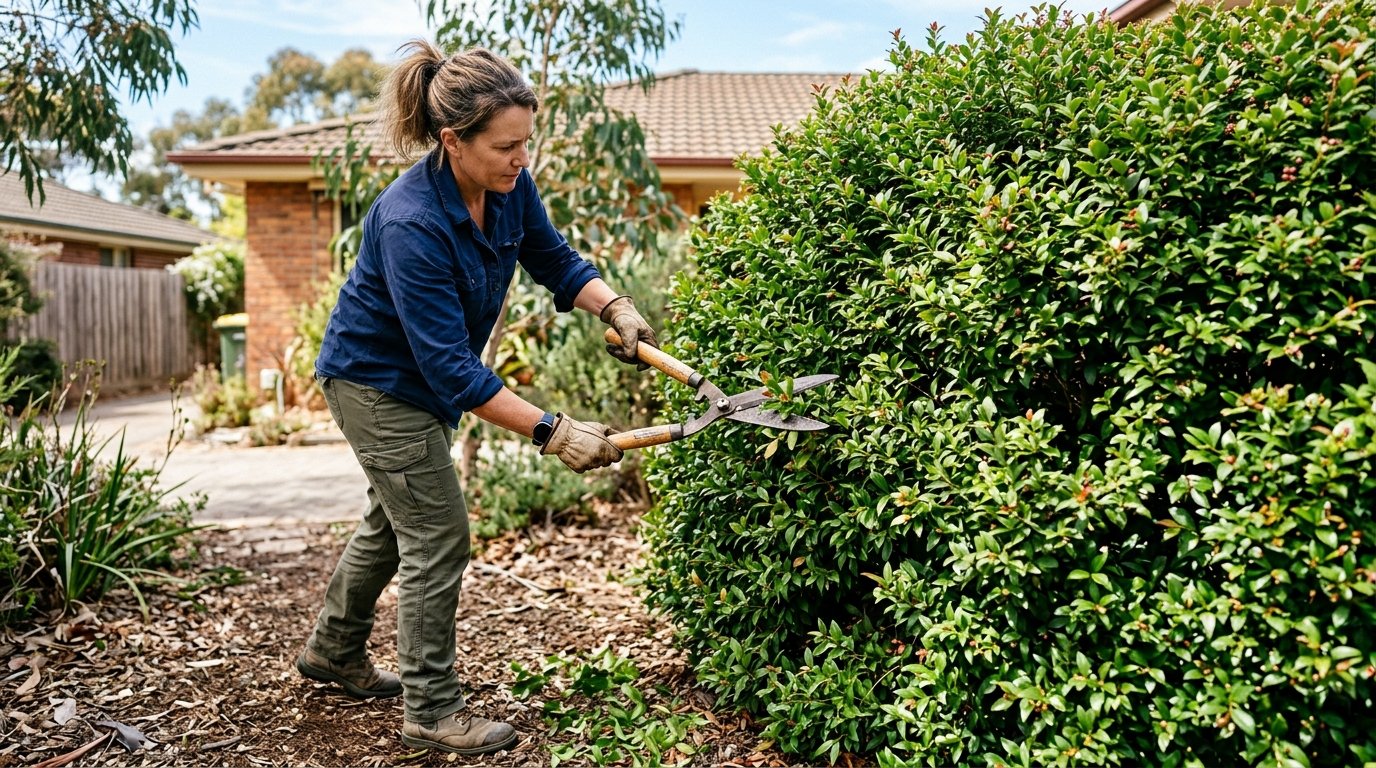
Yellow Lilly Pilly leaves: check water before adding fertiliser
Yellowing is a symptom, not a diagnosis.
Bunnings Australia lists both nutrient deficiency and overwatering among common causes of yellow Lilly Pilly foliage. That is why automatically applying more fertiliser can miss the real problem.
If the yellowing is strongest on lower foliage and the root zone remains wet for long periods, investigate drainage first. Gardening Australia recommends slightly moist but well-drained soil for Lilly Pillies and specifically warns that poor drainage can lead to root rot.
If the plant is actively growing, drainage is sound and foliage remains pale, nutrition becomes a stronger possibility.
Where the newest leaves are yellow while their veins remain comparatively green, iron chlorosis is another possibility. Australian nursery guidance notes that this pattern can occur where soil is too alkaline or has been heavily limed, making iron less available to the plant.
Before correcting chlorosis, establish whether soil chemistry is actually the problem. Adding iron repeatedly while leaving an unsuitable root environment unchanged is not a long-term fix.
Brown tips and dying shoots: do not assume the hedge needs more water
Dry brown leaf tips and margins commonly occur when the plant is losing water faster than its roots can replace it. That can happen through genuine drought, extreme heat or drying wind.
But roots sitting in damaged or waterlogged soil can produce a surprisingly similar above-ground result because unhealthy roots cannot supply the foliage properly.
On our own hedge work, this is why we check the root zone before reaching for the hose. If the soil is dusty and dry deeper down, watering is the obvious correction. If it is already saturated, adding more water can make the decline worse.
When only one part of a continuous hedge is brown, compare that section with the healthy plants beside it. A blocked dripper, low spot that collects water, localised root damage, reflected heat or another site-specific difference is often more informative than a whole-hedge diagnosis.
If substantial portions of the plant are dying rather than simply showing cosmetic leaf damage, see our more detailed guide to why a Syzygium is dying rather than treating the symptom in isolation.
Root rot and wet feet
Lilly Pillies are often described as moisture-loving plants, but that should not be translated as “keep the roots permanently saturated”.
Gardening Australia says Lilly Pillies prefer rich, slightly moist, well-drained soil and lists poor drainage as a cause of root rot. Ozbreed’s Straight and Narrow guidance similarly specifies moist, well-drained soil.
Warning signs that make us investigate the root zone include:
- yellowing that continues despite feeding;
- loss of vigour while the soil remains wet;
- branches dying back without obvious psyllid damage;
- one section failing in a low or poorly drained part of the bed;
- plants declining after prolonged rain or irrigation changes.
The fix depends on why the soil remains wet. Reducing irrigation may solve overwatering, but it will not correct heavy clay, a buried drainage problem or water collecting against a retaining structure.
Ozbreed also notes that fungal/root diseases can become a greater risk after flooding or waterlogging. Where decline is severe or the cause is uncertain, identify the root problem before applying fungicides.
Scale and black sooty mould
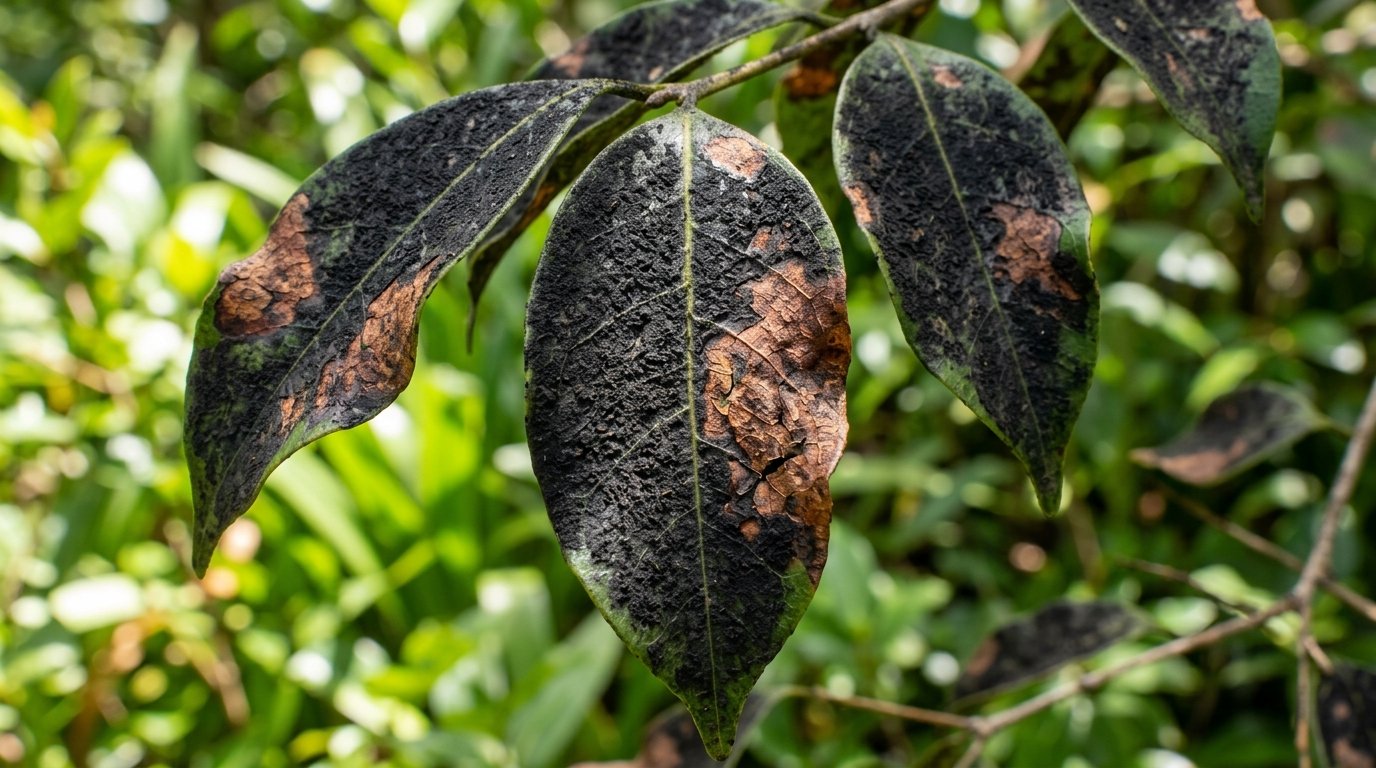
If Lilly Pilly foliage feels sticky and carries small scale-like insects on leaves or stems, inspect for scale.
The black coating that often follows is usually sooty mould. Bunnings Australia explains that sooty mould grows on the sugary honeydew deposited by scale and other sap-sucking pests. Gardening Australia has also documented scale and sooty mould building up inside dense Lilly Pilly foliage after humid weather.
The black mould is therefore often the secondary problem. Deal with the insect producing the honeydew and the source of the mould disappears.
Gardening Australia has demonstrated pruning a congested Lilly Pilly to remove badly affected growth and improve light and airflow. Its older Lilly Pilly guidance also mentions white oil for scale. If using any horticultural oil or pesticide, follow the current Australian product label and avoid spraying stressed plants in unsuitable weather.
Why a Lilly Pilly hedge becomes thin at the base
A bare lower hedge is frequently blamed on fertiliser, but the pruning geometry is often more important.
When the top becomes wider or denser than the bottom, it shades the lower branches. Over time the base loses foliage because those leaves are receiving much less light.
Australian hedge guidance consistently recommends keeping the hedge slightly broader at the base and narrower toward the top. That lets light reach more of the hedge face.
We also see this where a young hedge has been allowed to race upward without enough formative tip pruning. Long vertical shoots give height quickly, but they do not automatically create the lateral branching needed for a dense privacy screen.
If the hedge is still reasonably healthy, gradual corrective pruning can encourage new branching. Severe old woody sections may take longer to recover, and recovery depends on the amount of live growth and light reaching the lower framework.
For cultivar choice, spacing and normal hedge maintenance rather than troubleshooting, use our Lilly Pilly Hedge: Ultimate Australian Guide.
Why the hedge grows but will not thicken up
A Lilly Pilly can gain height without becoming a good hedge.
The common reasons are:
- not tip-pruning enough while the plants are young;
- allowing a few dominant shoots to run far ahead of the rest;
- insufficient light;
- poor establishment watering;
- nutrient stress;
- plants spaced too widely for the intended finish;
- trying to hold a cultivar permanently far below its natural size.
Pruning stimulates branching below the cut, so light, repeated shaping during establishment generally builds a denser framework than waiting until the hedge reaches its final height and then cutting the top off.
Do not compensate for poor light by continuously feeding the hedge. A shaded lower section still needs light.
For the underlying growing conditions—soil, feeding, position and normal maintenance—see our Syzygium australe growing and care guide.
Sunburn and heat scorch
Established Lilly Pillies handle Australian sun well when their root systems have adequate moisture, but extreme heat can scorch exposed foliage, especially after a sudden change in conditions.
Look for dry, browned surfaces or margins on the most exposed side of the hedge rather than the distorted, blistered new leaves associated with psyllid.
Newly planted hedges and plants with restricted or dry root systems are more vulnerable because the foliage is losing water before the roots can replace it.
Our approach is to correct the water stress first and wait until the heat event has passed before making a hard cosmetic prune. Some browned leaves may drop, while living stems can push fresh growth later.
Under-watering versus overwatering
Both can produce a tired-looking Lilly Pilly.
| More consistent with under-watering | More consistent with overwatering / poor drainage |
|---|---|
| Dry soil through the root zone | Soil staying wet long after irrigation or rain |
| Wilt during hot weather | Persistent yellowing and weak growth |
| Crispy tips and margins | Decline despite apparently plentiful water |
| Rapid improvement after a proper deep watering where roots are healthy | Little improvement when more water is added |
Gardening Australia notes that Lilly Pillies can tolerate some dry conditions once established, but their rainforest background means they perform best when adequately watered. The useful goal is consistent root-zone moisture with oxygen still available around the roots—not a permanently soggy bed.
Frost damage
Gardening Australia describes Lilly Pillies generally as tolerating only light frost, although tolerance differs by species, cultivar, plant maturity and site.
Fresh new growth is normally the first part to show damage. Leaves and shoot tips may blacken, brown or collapse after a cold event while older internal wood survives.
Do not rush into a severe prune while more frost is likely. Gardening Australia’s pruning guidance recommends waiting until frost danger has passed in cooler climates before major pruning.
Once conditions improve, remove clearly dead material and assess where healthy growth resumes.
When old Lilly Pilly hedges become woody
A hedge that has been repeatedly clipped at exactly the same outer surface can gradually develop a woody shell with foliage concentrated at the tips.
Another common pattern is a hedge that was never shaped while young, became much taller than required, and is then repeatedly cut back into old wood.
Lilly Pillies can respond strongly to pruning. Gardening Australia has demonstrated substantial rejuvenation pruning on established plants, but that does not mean every stressed hedge should immediately be cut to the ground.
Before a hard renovation, check:
- whether the stems are still alive;
- whether the root system is healthy;
- whether adequate light will reach the regrowth;
- whether the cultivar is fundamentally too large for the space;
- whether frost or extreme heat makes the timing unsuitable.
On otherwise healthy hedges, staged reduction is often easier to manage than combining root stress and severe canopy removal at the same time.
Do not confuse normal red new growth with a disease
Many Lilly Pilly cultivars naturally flush bronze, copper, pink or red before their leaves mature green. Gardening Australia lists colourful new growth as one of the group’s normal ornamental features.
Healthy coloured growth should still open normally.
What concerns us is colour combined with:
- pimples or blisters;
- severe curling;
- yellow or orange powdery pustules;
- dead shoot tips;
- rapid defoliation.
Those signs justify closer inspection for psyllid, Myrtle rust or another problem rather than assuming the red colour itself is abnormal.
A brief note on Myrtle rust
Lilly Pillies belong to the Myrtaceae family and can be affected by Myrtle rust. Gardening Australia lists it among Lilly Pilly fungal diseases, while Australian diagnostic guidance describes yellow to orange powdery pustules, lesions and damaged young shoots as warning signs.
That is a different presentation from ordinary reddish new foliage or the raised pimples caused by psyllid.
Because Myrtle rust is a significant plant disease and similar symptoms can be misidentified from photographs, avoid moving suspect infected material around unnecessarily and seek a positive identification before deciding on treatment.
When should you replace the Lilly Pilly rather than keep treating it?
Replacement can make more sense when the underlying mismatch cannot realistically be corrected.
Examples include a permanently waterlogged position, a cultivar far too large for the available space, or a highly psyllid-susceptible hedge that requires repeated intervention when resistant alternatives are readily available.
That is particularly relevant with psyllid. A mature established hedge with occasional cosmetic damage may be worth retaining. A newly planted hedge that is badly affected at every growth flush may justify reconsidering the cultivar rather than committing to years of repeated treatment.
For new hedges, our broader Lilly Pilly hedge guide compares the planting and maintenance decisions that should be made before problems begin.
Our diagnosis order for a struggling Lilly Pilly hedge
When we look at a declining hedge, we work from visible evidence rather than starting with a product:
- Look at the newest leaves. Pimples and distorted growth immediately put psyllid high on the list.
- Feel the soil and check drainage. Dry and saturated roots can both produce browning.
- Check the pattern. One failing plant suggests a local root-zone or irrigation issue; the whole hedge points toward a shared condition.
- Inspect stems and leaf undersides. Scale and other sap-suckers are easy to miss from standing height.
- Look at hedge shape and light. A bare base may be self-shading rather than disease.
- Consider recent weather. Heat, drying wind and frost can create sudden symptoms.
- Only then decide whether the answer is pruning, irrigation, nutrition, pest control or a deeper diagnosis.
That order avoids one of the costliest gardening habits: treating the wrong cause because two problems happen to produce similarly coloured leaves.
If your symptoms do not match these patterns, several causes appear to be overlapping, or the hedge keeps declining after the obvious growing conditions are corrected, Garden Green’s plant and flower disease diagnosis service can help identify the likely cause and next step; you can also contact Garden Green with the details of the problem.
Frequently asked questions
What causes pimples and curled leaves on a Lilly Pilly hedge?
Pimples, blisters and distorted new leaves are characteristic of Lilly Pilly psyllid damage. Gardening Australia explains that the sap-sucking insect feeds around developing foliage and causes the leaf tissue to grow abnormally. Prune off badly affected growth, and if the problem repeatedly returns, consider a cultivar specifically documented as psyllid resistant.
Which Lilly Pilly varieties are resistant to psyllid?
Australian sources identify several resistant choices. Ozbreed and Plantmark list Straight and Narrow™ Syzygium australe ‘SAN01’ as psyllid resistant, Plantmark lists Syzygium australe ‘Resilience’ as psyllid resistant, and Gardening Australia identifies ‘Cherry Surprise’ as bred for resistance. Do not assume every Syzygium australe cultivar is resistant; Ozbreed lists Pinnacle™ as susceptible.
Why are my Lilly Pilly hedge leaves turning yellow?
Yellow leaves can indicate more than one problem. Bunnings Australia lists nutrient deficiency and overwatering among common causes, while Gardening Australia warns that poor drainage can lead to root rot. Yellow new leaves with greener veins can also suggest iron chlorosis, so check soil moisture, drainage and the pattern of yellowing before automatically adding fertiliser.
Why is my Lilly Pilly hedge turning brown at the tips?
Dry brown tips or leaf margins commonly point to moisture stress, heat or drying wind, but damaged or waterlogged roots can create similar symptoms because they cannot supply the canopy properly. Check moisture deeper in the root zone before adding more water. If only one section is affected, look for a local irrigation, drainage or root problem.
Why is my Lilly Pilly hedge bare at the bottom?
The lower hedge is often being shaded by its own upper growth. A hedge kept wider at the top blocks light from reaching the base, and lower foliage gradually thins. Shape the hedge slightly wider at the base than at the top and use formative pruning to encourage branching rather than allowing young plants to grow straight upward unchecked.
What causes black leaves on Lilly Pilly?
A black surface coating is commonly sooty mould growing on honeydew produced by scale or another sap-sucking insect. Bunnings Australia and Gardening Australia both associate scale with sooty mould on Lilly Pilly. Find and control the underlying pest rather than treating the black coating as an independent leaf disease.
Can overwatering kill a Lilly Pilly hedge?
Yes. Lilly Pillies appreciate reliable moisture, but they still need drainage. Gardening Australia specifically warns that poor drainage can cause root rot. Persistent wet soil combined with yellowing, weak growth or dieback is a reason to investigate drainage and root health rather than increasing irrigation.
Can a woody or sparse Lilly Pilly hedge grow back?
Often, provided the roots and remaining stems are healthy. Lilly Pillies generally respond well to pruning, and Gardening Australia has demonstrated substantial rejuvenation pruning on established plants. Recovery is less certain where root disease, severe shade or an unsuitable cultivar is the underlying problem, so diagnose those conditions before making a severe cut.


