Best Privacy Hedges by Height: How to Choose

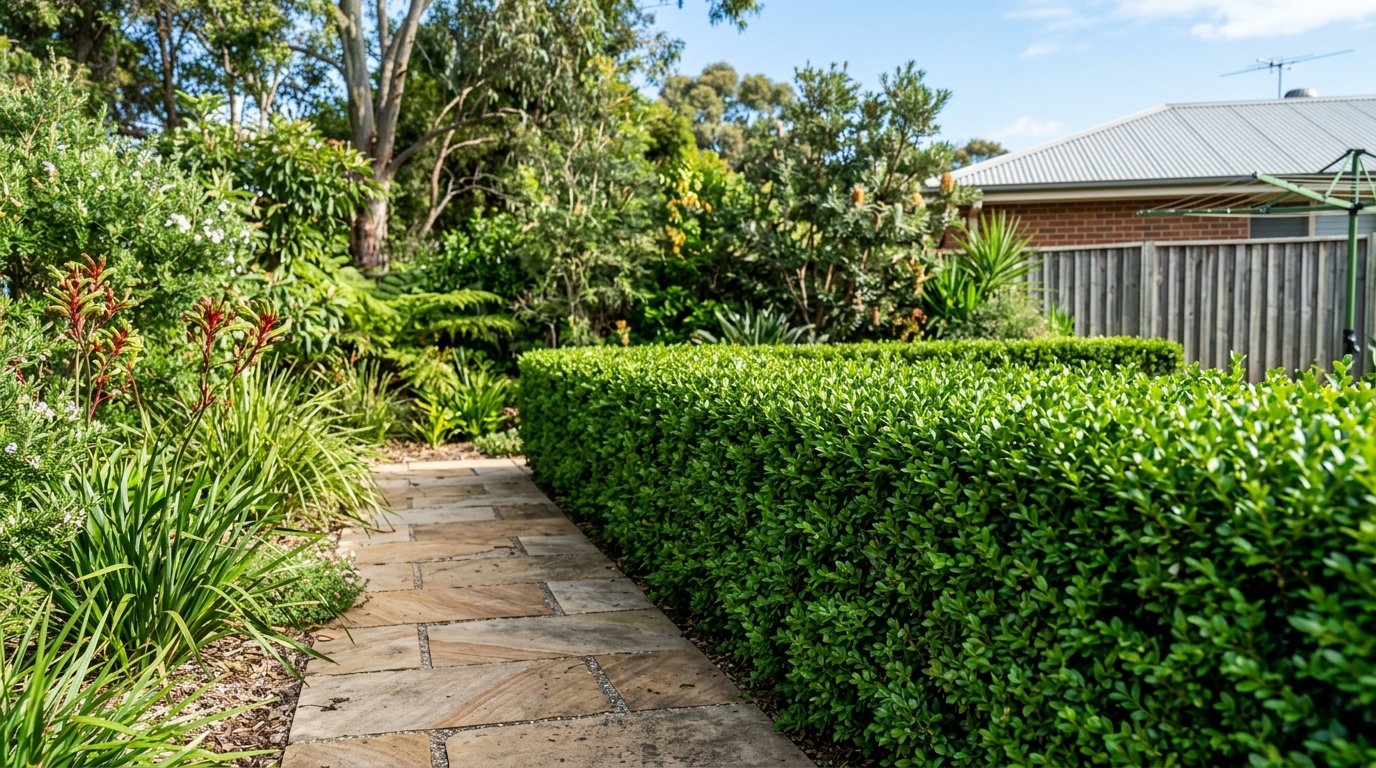
The best screening hedge is the one whose natural mature height roughly matches the height you actually need — not the fastest grower you can force into shape. For a low boundary, a compact hedge such as Japanese Box or Westringia is easier to keep than a tall species trimmed hard. For a two-to-three-metre privacy screen, Lilly Pilly, Viburnum or Murraya suit most gardens. For blocking a tall building or a double-storey outlook, Ficus Hillii, Waterhousea or a pleached tree does the job. Choosing by target height first prevents the most common and most expensive hedging mistake.
People usually shop for a hedge by looks or by “fast growing”. The more useful question is: how tall do you need the finished screen to be, and how tall does this plant want to be? A plant whose natural height sits close to your target needs far less ongoing trimming than one you are constantly fighting to keep short — or straining to push taller.
Choose by height band first
| Screen height you need | Reliable choices | Why |
|---|---|---|
| Low border (under ~1 m) | Japanese Box, dwarf Westringia, dwarf Lilly Pilly | Naturally compact — easy to keep low |
| Mid screen (~1–2 m) | Westringia, Viburnum, mid Lilly Pilly, Murraya | Sit comfortably at fence-to-eye height |
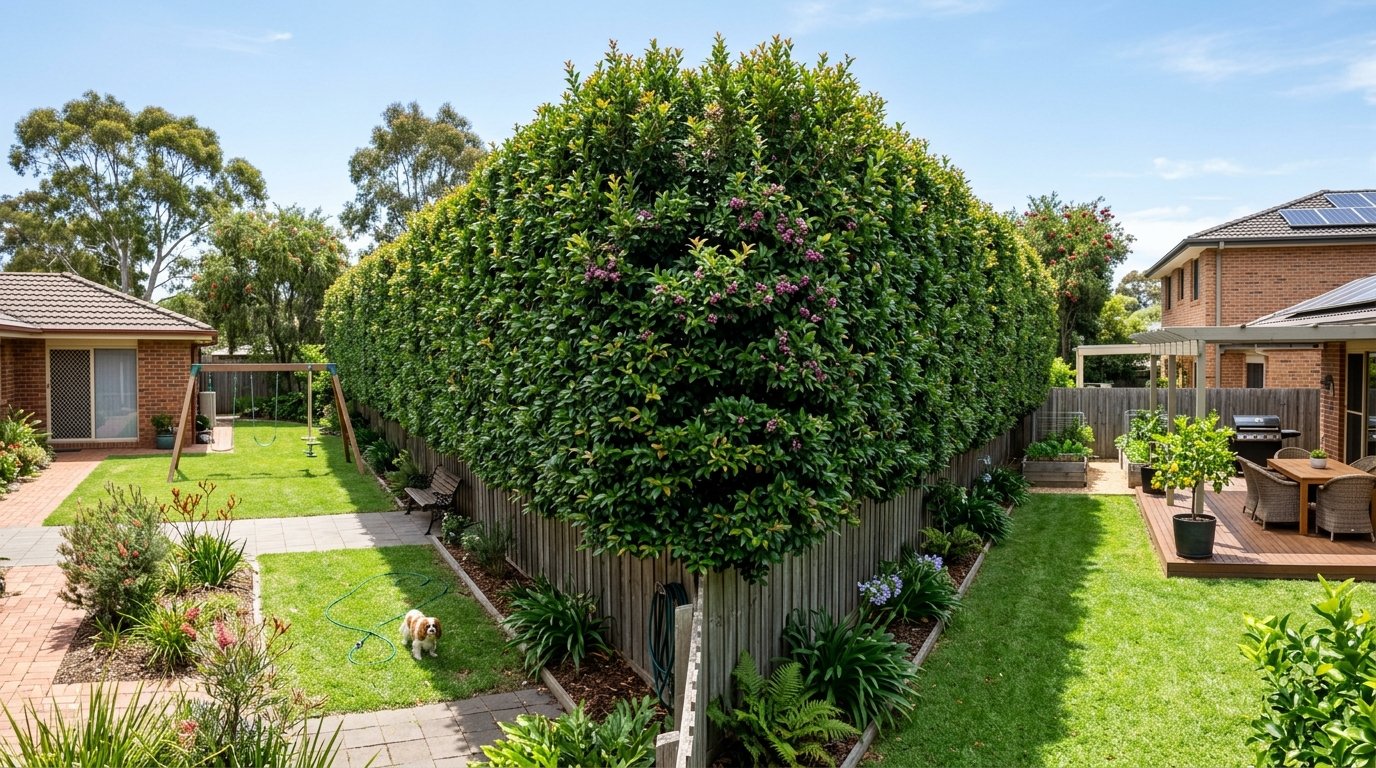
| Tall privacy (~2–3 m) | Lilly Pilly (taller varieties), Viburnum odoratissimum, Murraya | Dense screening at first-floor window height |
| Very tall / double-storey | Ficus Hillii, Waterhousea floribunda, pleached trees | Vigorous or trainable to real height |
Why “matching height” matters more than “fast growing”
A fast-growing plant reaches your target sooner — then keeps growing.
If its natural height is well above what you need, you are committed to frequent trimming forever, just to hold it down.
If its natural height is close to your target, the hedge largely “wants” to sit where you need it, and maintenance drops.
Speed gets you there faster; suitability keeps it manageable for years.
Low hedges: under about a metre
For a low border, formal edge or knee-to-waist boundary, choose naturally compact plants.
Japanese Box is a classic formal low hedge. Dwarf forms of Westringia and compact Lilly Pilly varieties also hold low heights well.
Forcing a naturally tall plant into a low hedge is possible but means constant shearing and a thin base over time.
Mid-height screens: about one to two metres
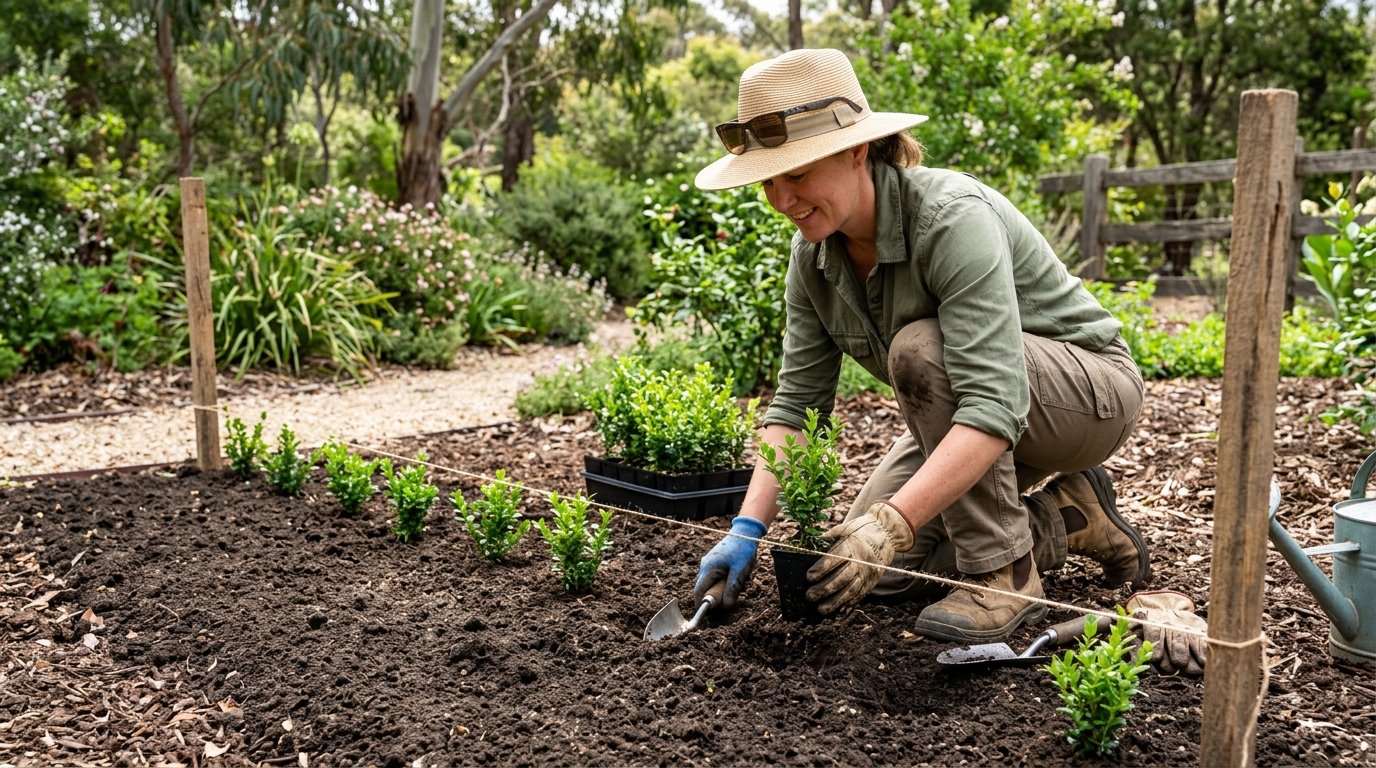
This is fence-line to just-above-eye height — the most common suburban privacy need.
Westringia, mid-size Lilly Pilly varieties, Viburnum and Murraya all sit comfortably in this band without a fight.
At this height most gardeners can still trim from the ground or a low step, which keeps maintenance realistic.
Tall privacy screens: about two to three metres
To screen a first-floor window, a neighbour’s deck or an unappealing outlook, you need real height and density.
Taller Lilly Pilly varieties, Viburnum odoratissimum and Murraya all reach this band while staying dense enough to screen.
Remember that a three-metre hedge needs safe access to trim the top — a stable platform, not an unsafe ladder.
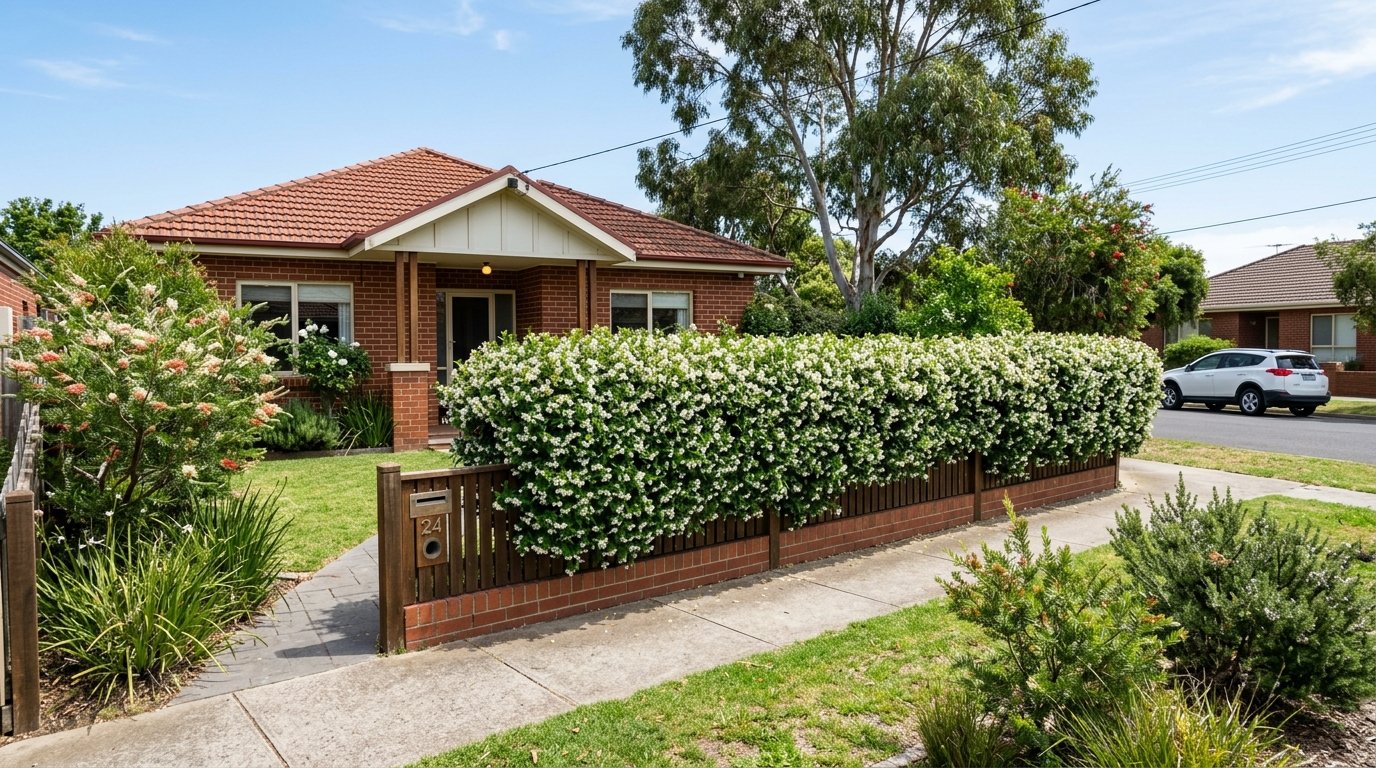
Very tall screening: double-storey and above
For blocking a double-storey house, a large building or a tall boundary, most mid-size hedges simply will not reach.
Ficus Hillii is vigorous and reaches serious height, and Waterhousea floribunda makes a tall soft screen.
Ficus is powerful but has vigorous roots — keep it well away from pipes, paving and boundaries, and think carefully before planting it in a small garden.
When to use pleached trees instead of a hedge
Sometimes you need screening high up but not at ground level — to block an upstairs window while keeping a view or a path clear below.
Pleached trees (a “hedge on stilts”) give a panel of foliage elevated on clear trunks.
They are ideal for narrow side boundaries and for screening precisely at first-floor height without a solid wall of green from the ground up.
Match vigour to height, not the other way around
The species you pick brings a natural vigour with it.
- Vigorous plants (Ficus) reach great height but demand control near structures;
- moderate growers (Lilly Pilly, Viburnum, Murraya) suit typical privacy heights;
- compact growers (Box, dwarf Westringia) suit low, formal work.
Pick the vigour band that matches your height, then choose the species within it that suits your soil, climate and look.
Some plants hate being cut short
Not every hedge recovers from hard height reduction.
Westringia, for example, can be reluctant to reshoot from bare old wood, so it should be kept in shape with regular light trimming rather than periodically slashed back hard.
Ficus and Lilly Pilly are far more forgiving of renovation. If you know you will occasionally need to reduce height hard, choose a species that tolerates it.
Think about width, not just height
A tall hedge needs room to be a certain width, or it becomes thin and sparse.
On a narrow boundary, a very tall species squeezed into a thin strip will struggle. In that situation a naturally narrower plant, a pleached tree, or accepting a slightly lower screen is often the better answer.
Height and width are linked — plan for both.
Access and safety at height
Every extra metre of hedge is another metre you have to reach safely to trim.
Before committing to a very tall screen, be honest about whether you can maintain it — or budget for a professional to keep the top in shape.
A beautiful three-metre hedge you cannot safely trim becomes an overgrown problem within a couple of seasons.
Common height-matching mistakes
Buying “fast growing” without checking mature height
Fast growth above your target means endless trimming to hold it down.
Forcing a tall species into a low hedge
Constant hard shearing thins the base and stresses the plant.
Choosing a plant that resents hard cutting for a tall screen
If you will need to reduce height, pick a species that reshoots well.
Ignoring width on a narrow boundary
Tall plants squeezed thin become sparse; consider a pleached tree.
Planting vigorous Ficus near pipes or paving
Its roots need real distance from structures.
Not planning safe access to the top
If you cannot trim it safely, it will get away from you.
Need help choosing or installing the right screen?
If you are unsure which species matches your target height, soil and boundary — or you want a tall screen installed and maintained properly — Garden Green can help you plan and plant a hedge that suits the height you actually need. Get in touch to talk through your screening problem.
Match the plant to the height and the rest gets easier
The simplest way to choose a screening hedge:
- decide the finished height you genuinely need;
- pick a species whose natural height sits close to it;
- check it tolerates the trimming (or renovation) you will do;
- allow for the width that height requires;
- confirm you can maintain the top safely.
Get the height match right and the hedge largely looks after itself. Get it wrong and you spend years fighting a plant that never wanted to be the size you needed.
Frequently asked questions
What is the best hedge for privacy in Australia?
It depends on the height you need. For a typical two-to-three-metre privacy screen, Lilly Pilly, Viburnum odoratissimum and Murraya are reliable. For double-storey screening, Ficus Hillii, Waterhousea or pleached trees reach greater height. Choose the species whose natural mature height is close to your target so the hedge is easier to maintain.
Should I just choose the fastest-growing hedge?
Not on its own. Fast growth gets you to your target height sooner, but if the plant naturally grows well above what you need, you will be trimming constantly to hold it down. It is usually better to pick a species whose natural height matches your target, so the hedge largely wants to sit where you need it.
What is a good tall hedge to block a double-storey house?
Vigorous species such as Ficus Hillii or a tall soft screen like Waterhousea floribunda can reach the height needed to block a double-storey outlook. Pleached trees are another option where you want screening elevated at first-floor height. Keep vigorous, deep-rooted species well away from pipes, paving and boundaries.
What is the best low hedge under a metre?
Naturally compact plants such as Japanese Box, dwarf Westringia forms and compact Lilly Pilly varieties hold low heights well without constant hard shearing. Forcing a naturally tall species into a low hedge is possible but leads to frequent trimming and a thinning base over time.
Can I keep a tall hedge species trimmed short?
You can trim a taller species down, but if its natural height is far above your target you commit to frequent maintenance, and some plants thin at the base when constantly sheared low. It is usually easier and healthier to choose a plant whose mature height is close to the height you want.
What are pleached trees and when should I use them?
Pleached trees are trained to form a panel of foliage on clear trunks, like a hedge raised on stilts. They suit situations where you need screening high up — for example blocking an upstairs window — while keeping the space below open. They also work well on narrow side boundaries where a full ground-to-top hedge would be too wide.
Does hedge width matter as much as height?
Yes. A tall hedge needs a certain width to stay dense; squeezed into a thin strip it becomes sparse and see-through. On narrow boundaries, consider a naturally narrower plant, a pleached tree, or a slightly lower screen. Always plan for both the height and the width the plant needs.
Which hedges do not like being cut back hard?
Some plants, such as Westringia, can be reluctant to reshoot from bare old wood and are best kept in shape with regular light trimming rather than occasional hard cutting. More forgiving species like Lilly Pilly and Ficus tolerate harder renovation. If you expect to reduce height significantly at times, choose a species that recovers well from hard pruning.


