
Westringia fruticosa: Coastal Rosemary Hedge, Size and Growing Guide Australia

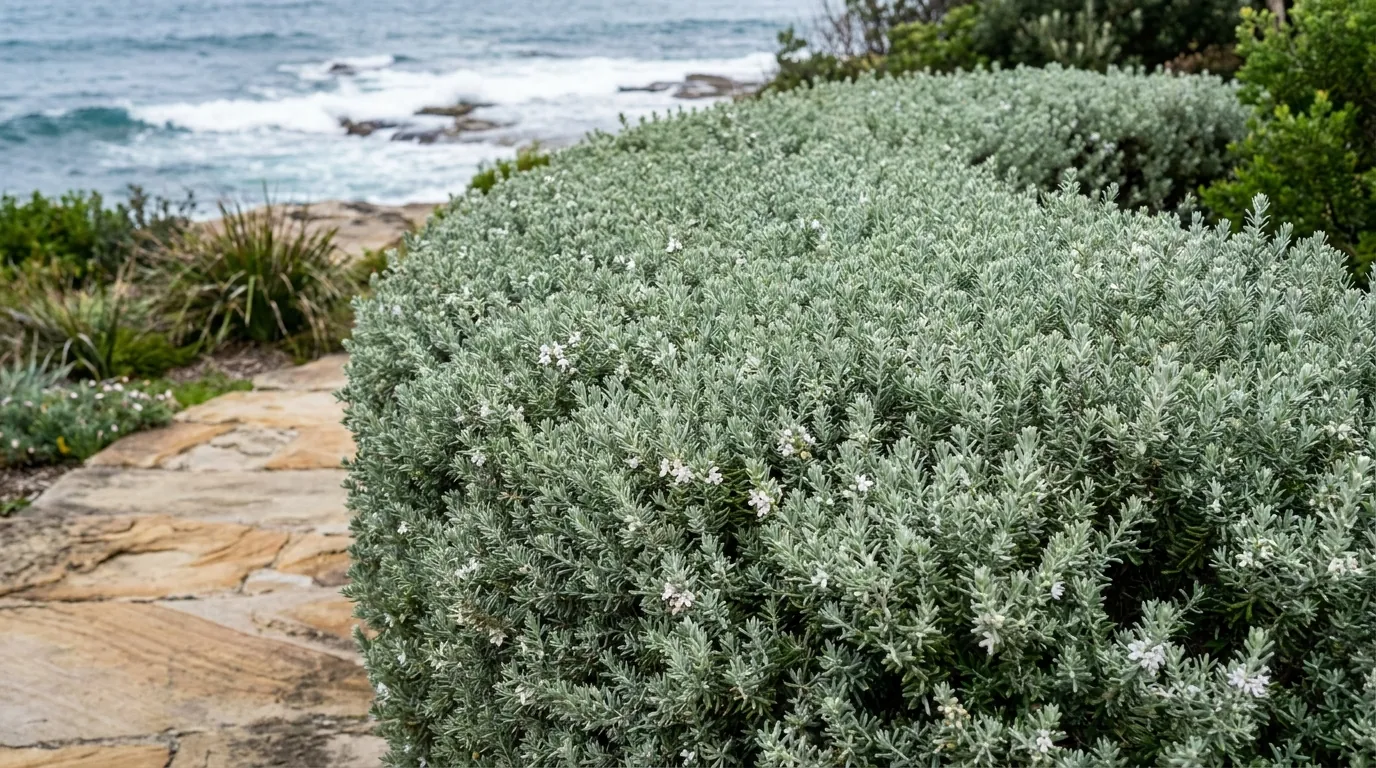
Westringia fruticosa, or Coastal Rosemary, is a tough Australian evergreen shrub that usually grows around 1–2 m high in cultivated gardens, although older straight-species plants can spread considerably wider. Gardening Australia gives the species at about 1–2 m tall and wide, while the Australian Plants Society records plants potentially reaching about 3 m high × 3 m across. The Australian National Botanic Gardens has documented established specimens reaching at least 2 m high and 5 m across.
If you want a taller evergreen screen, our Lilly Pilly hedge guide walks through the best varieties for Australian gardens.
That range matters because many plants sold as “Westringia” are compact cultivars rather than the straight species. We do not use the 40–100 cm size of a dwarf selection to describe ordinary Westringia fruticosa. For a hedge, screen or foundation shrub, check the cultivar label before you design the spacing.
First, make sure you are buying the straight species
“Coastal Rosemary” has become a broad nursery label, and that creates a size problem online. The straight species, Westringia fruticosa, is naturally a medium shrub. Named selections can be dramatically smaller.
| Plant | Published size | Garden role |
|---|---|---|
| Straight Westringia fruticosa | About 1–2 m high in SA Plant Selector+; potentially around 3 m × 3 m in Australian Plants Society records | Medium hedge, screen, background shrub |
| ‘Jervis Gem’ | 0.8–1 m high × 0.8–1 m wide in SA Plant Selector+ | Compact hedge or rounded shrub |
| ‘Zena’ | 0.8–0.9 m high × 0.8–1 m wide in SA Plant Selector+ | Low hedge or compact feature |
| ‘Smokie’ | 0.8–1 m high × 1–1.5 m wide in SA Plant Selector+ | Low spreading hedge |
| ‘Milky Way’ | 0.2–0.4 m high × 0.2–0.4 m wide in SA Plant Selector+ | Low border or foreground shrub |
This is why we read the full botanical label on jobs instead of relying on the common name. If you need a 40 cm border and accidentally buy the straight species, pruning will become the garden’s permanent job. If you need a 1.5 m screen and buy a ground-hugging cultivar, the plants will never do the job you bought them for.
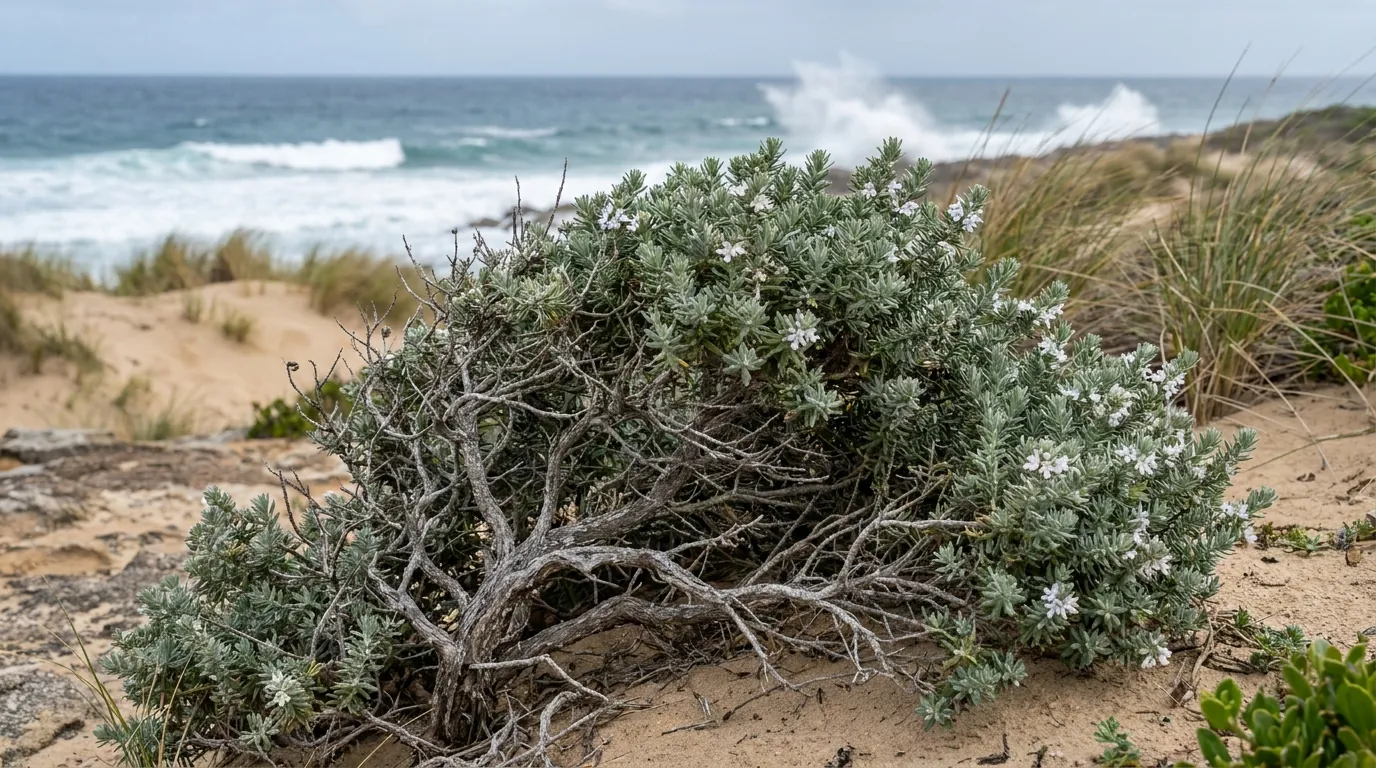
The species is naturally built for exposed coastal sites
Australian Plants Society NSW records the natural range mainly along the New South Wales coast, where the species grows on coastal cliffs, sand dunes, sandstone and exposed coastal shrublands. NSW environmental records describe it growing near sea and estuary foreshores, including exposed cliffs and headlands.
That natural habitat explains why Coastal Rosemary performs so reliably in wind, salt spray and poor coastal soils. The South Australian Plant Selector+ lists tolerance to drought, moderate frost, soil salinity and salt spray, and Gardening Australia also highlights its ability to handle sea spray, frost, sandy soils and clay.
On exposed jobs, this is one of the shrubs we reach for when a more delicate hedge would be constantly burnt by wind or salt. Its compact grey-green foliage does not present the same large sail area as broad-leaved screening plants, and established plants recover well from clipping.
How big does straight Westringia fruticosa really get?
Garden references do not all give the same dimensions because the species changes its form with exposure and cultivation.
| Australian source | Published size |
|---|---|
| Gardening Australia | 1–2 m high and wide |
| SA Plant Selector+ | 1–2 m high × 1–4 m spread |
| Australian Plants Society NSW | Potentially 3 m high × 3 m across |
| Australian National Botanic Gardens | At least 2 m high × 5 m across in garden cultivation |
| Randwick City Council | Average 1–1.5 m high × about 1.5 m spread |
The ANBG observation is especially useful. Wild plants on exposed cliffs can be wind-trimmed low, while plants receiving better garden conditions can become much larger and more dome-shaped.
For ordinary suburban planning, we work with roughly the 1–2 m height class unless the actual stock is a named compact cultivar. We also leave enough width for the species to broaden rather than assuming its hedge height is also its natural maximum spread.
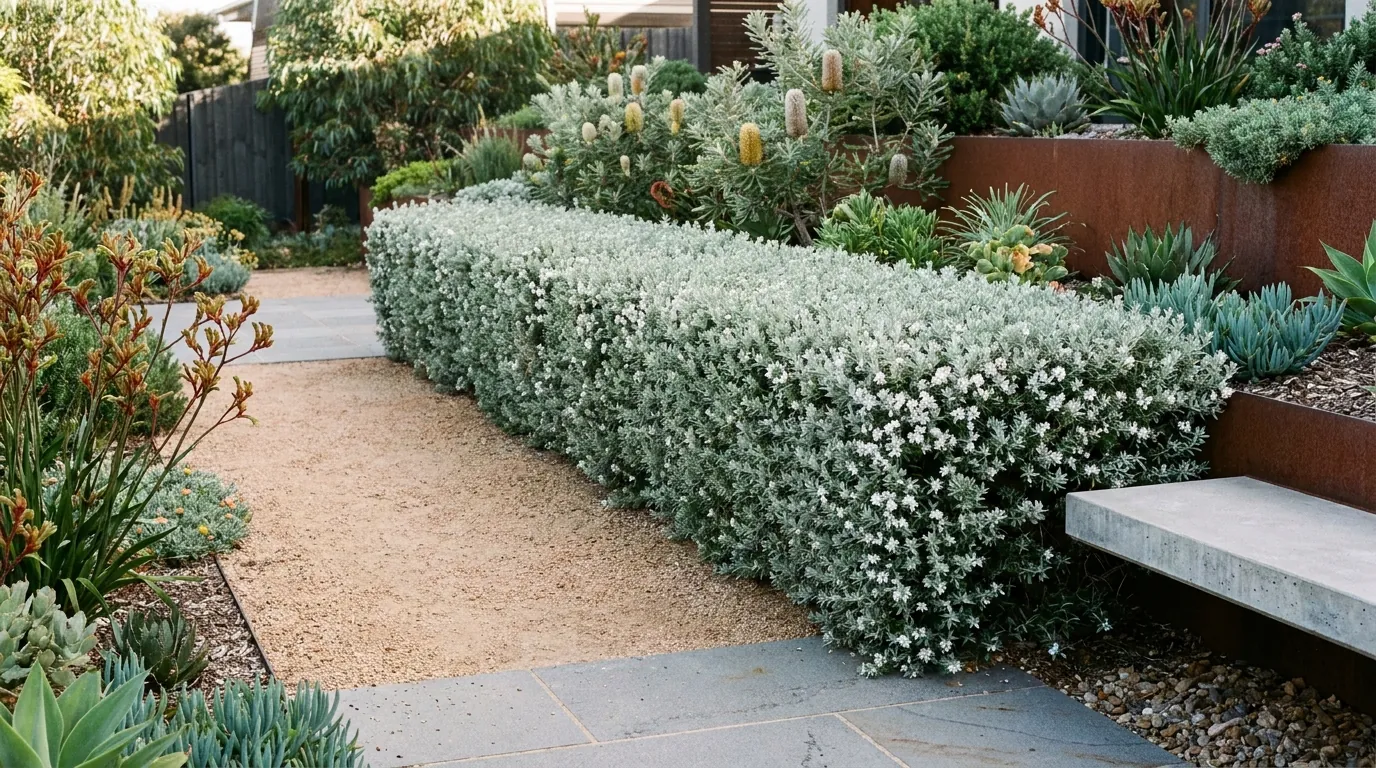
For hedging, spacing depends on the hedge depth you want
Gardening Australia gives one of the best practical spacing explanations for the straight species: plant them about as far apart as you eventually want the hedge to grow deep. In its Coastal Rosemary example, plants were spaced at about 75 cm for a hedge intended to be clipped to roughly that depth.
Australian nursery recommendations range more widely. Current straight-species listings suggest anything from about 25–40 cm for a very tight nursery hedge using smaller stock to around 80 cm–1.5 m for broader informal screening.
| Desired result | Useful spacing reference | What to expect |
|---|---|---|
| Tight formal hedge | About 50–75 cm centres | Quicker closure and more clipping |
| Medium clipped screen | About 75–100 cm centres | Good balance between closure and individual plant space |
| Loose informal planting | About 1–1.5 m centres | Plants retain more natural rounded form |
The 75 cm reference is directly supported by Gardening Australia’s straight-species hedge example. The broader ranges reflect current nursery practice, so we treat them as layout guidance rather than one mandatory botanical spacing.
On installations, we also check access before tightening the centres. A Westringia hedge is easy to shape when you can reach both faces; it becomes much more awkward when the back disappears against a fence.
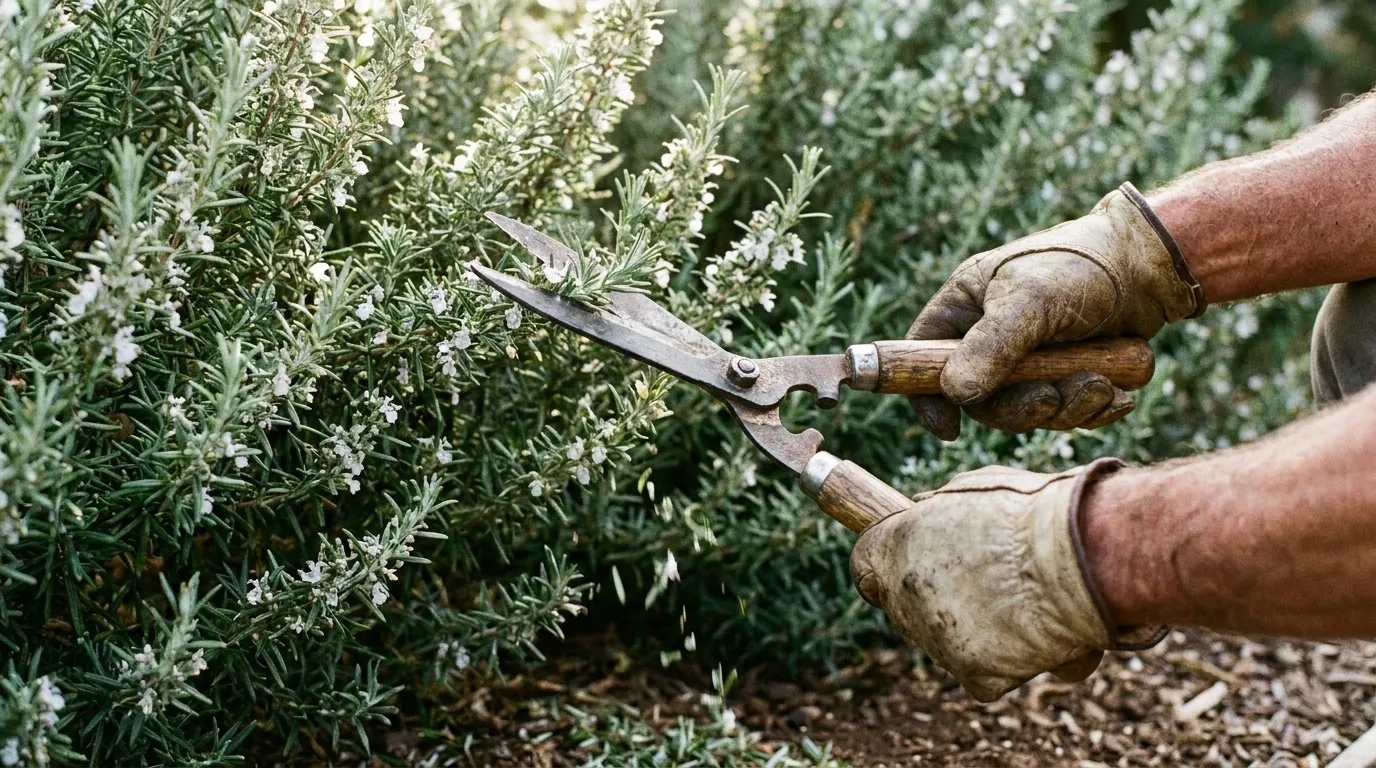
It takes hard pruning better than many Australian natives
The South Australian Plant Selector+ says straight Westringia fruticosa responds to heavy pruning. Gardening Australia likewise says the species can be clipped quite hard and notes that exposed coastal plants can effectively be wind-pruned almost flat.
That toughness is why Westringia works so well in formal native hedges and rounded topiary. In our own maintenance work, we get the best result by starting light tip-pruning early rather than allowing a plant to become woody and oversized before trying to force it back into shape.
Early trimming encourages branching closer to the centre of the shrub. Once that framework is established, keeping a dense hedge is much easier.
Flowering is the trade-off. Water Corporation WA notes that frequent hedge clipping reduces flowering on ‘Jervis Gem’, and the same basic principle applies to the species: if every flowering tip is repeatedly removed, you cannot expect the same flower display as an informal shrub.
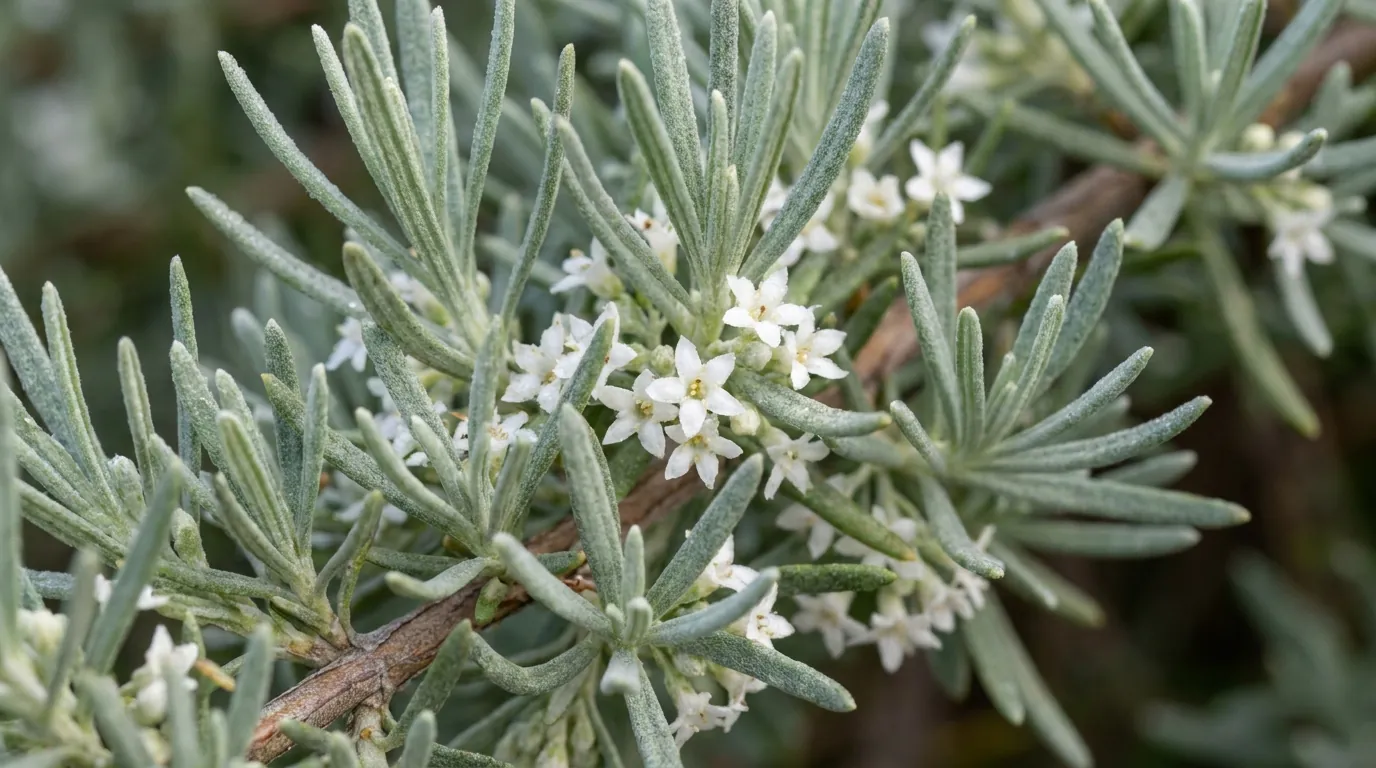
The flowers are small, but they can appear for a long season
HortFlora at Royal Botanic Gardens Victoria describes straight Westringia fruticosa flowers as about 1–1.5 cm long, white with brown or purple spotting, and records flowering through the year in cultivation. The South Australian Plant Selector+ lists the main display in spring and summer, while Gardening Australia also emphasises flowers through spring and summer.
The useful interpretation is that Coastal Rosemary can flower intermittently for a long period, with the strongest flush often occurring through the warmer seasons.
We do not choose it as a spectacular flowering shrub. The flowers are small. We choose it because the flowers add detail to an evergreen structure that is already doing useful work as a hedge, windbreak or low-maintenance screen.
Full sun gives the densest result
Australian sources consistently list full sun to part shade for the species. Gardening Australia says it thrives in full sun, while SA Plant Selector+ lists both full sun and part shade.
For formal hedging, we favour the brighter position. What we see on jobs is that Westringia grown in useful light holds a tighter, denser framework and is easier to clip into a solid shape. In deeper shade, growth can become more open.
Part shade is still workable, particularly where the plant receives several hours of good light. If the site is genuinely dark, a shade-oriented screening species will usually be a better choice than expecting Coastal Rosemary to behave like a sun-grown hedge.
Its soil tolerance is broader than its coastal origin suggests
The South Australian Plant Selector+ lists straight Westringia for clay, loam and sand and across acidic, neutral and alkaline soil categories. Gardening Australia likewise notes tolerance of both sandy and clay soils.
The common denominator is drainage. Australian cultivation sources repeatedly recommend well-drained soil even though the species copes with poor fertility and very exposed sites.
On planting jobs, we do not spend time trying to turn average soil into a rich compost bed for Westringia. We are more interested in whether water can leave the root zone. A tough coastal shrub can cope with lean soil far better than it can cope with a planting hole that stays stagnant after every rain event.
Drought tolerance comes after the roots establish
SA Plant Selector+ lists supplementary watering as minimal and identifies the species as drought tolerant. Current Australian cultivation guides make the same distinction: established Westringia handles dry periods well, but newly planted stock still needs regular establishment moisture.
We water deeply at planting and then monitor the root ball and surrounding soil while the plant begins to move roots outward. Once established, we lengthen the interval rather than maintaining a high-frequency nursery watering routine forever.
During prolonged summer heat, even a drought-tolerant hedge can benefit from a deep soak. The key is depth rather than constantly wetting the surface.
There is no need to push it with heavy fertiliser
Westringia naturally occupies lean coastal soils. Current Australian nursery guidance typically recommends a light slow-release feed in spring, with container plants needing more regular attention because their root volume is restricted.
We keep feeding modest. A Westringia that is pale or weak because its roots are waterlogged will not be repaired by more fertiliser, and a hedge growing too vigorously only creates extra clipping work.
For established ground-grown plants, sound soil structure, drainage and occasional seasonal feeding are more useful than trying to drive maximum growth.
How fast does Coastal Rosemary grow?
There is no authoritative species-wide centimetres-per-year figure from the stronger botanical sources. Commercial Australian listings commonly describe the species as moderate to fast; Adelaide Plant Co currently publishes about 30–50 cm per year under good conditions, while another current nursery listing gives roughly 30–60 cm per year.
We treat those as nursery planning estimates, not independent scientific measurements.
For a hedge, the more useful question is how quickly the side branches begin to meet. Stock size, spacing, pruning and light can change that visual result as much as raw top growth.
On jobs, we look for fresh extension growth followed by branching after tip-pruning. A hedge that is only racing upward without thickening sideways is not yet doing the job it was planted to do.
Coastal conditions are where the species really earns its name
SA Plant Selector+ explicitly lists tolerance to soil salinity, salt spray and coastal exposure and recommends the species for wind protection. Gardening Australia also highlights sea-spray tolerance.
That makes Westringia useful in beachfront and near-coastal gardens where many conventional hedge plants show burnt foliage on the exposed side.
We still give young plants establishment care. “Coastal hardy” does not mean a fresh nursery plant should be planted into dry sand, blasted by salt wind and forgotten on day one. Once the roots are established, its natural coastal adaptations become much more useful.
Frost tolerance is useful but not absolute
The South Australian Plant Selector+ lists moderate frost tolerance, while Gardening Australia also describes Westringia as frost tolerant. That is good evidence for use through much of southern Australia.
We would still protect very young stock from an unusually hard frost while it establishes, particularly where the plant came from a sheltered nursery environment. Mature, hardened plants are much better equipped to handle exposure than fresh soft growth.
It is Coastal Rosemary in name only
Westringia fruticosa belongs to the mint family, Lamiaceae, but it is not the culinary rosemary normally used for cooking.
The common name comes from the narrow rosemary-like foliage and coastal habitat, not culinary equivalence. HortFlora describes the leaves at roughly 1–3 cm long and 3–5 mm wide, arranged mainly in whorls of four.
We keep this distinction explicit because a surprising number of garden searches ask whether Coastal Rosemary can be harvested like ordinary rosemary. We would not recommend using an ornamental Westringia as a substitute culinary herb.
Wildlife value comes from both flowers and structure
The South Australian Plant Selector+ records the species as attracting birds, native butterflies and insects, and providing habitat for birds. Landcare references also describe it as bird attracting.
Small flowers may not dominate the garden visually, but they provide repeated insect activity over a long flowering period. Dense clipped or informal shrubs also create refuge at a height many small birds use readily.
In our native gardens, we prefer Westringia as part of a mixed planting rather than an ecological monoculture: its evergreen structure pairs well with larger-flowered Grevilleas, Banksias and seasonal groundcovers.
Straight species or dwarf cultivar?
| If you need… | Better choice | Why |
|---|---|---|
| A 1–2 m hedge | Straight Westringia fruticosa | Its natural size fits the job with manageable clipping |
| A roughly 1 m compact hedge | ‘Jervis Gem’, ‘Zena’ or another verified compact selection | These cultivars naturally stay closer to the target height |
| A very low border around 20–40 cm | A dwarf cultivar such as ‘Milky Way’ | The straight species is far too large for that layer |
| A broad informal coastal shrub | Straight Westringia fruticosa | It can develop its natural spreading form |
| A formal topiary mound | Species or compact cultivar | Choose according to the final diameter you actually want |
This is the main buying decision. Westringia’s toughness is shared across many selections, but their sizes are not. We would rather choose a plant genetically suited to the final height than spend years forcing a 2 m species into a 40 cm border.
Frequently asked questions
How big does Westringia fruticosa grow?
Gardening Australia puts the straight species at about 1–2 m high and wide, while Australian Plants Society records show it can reach around 3 m × 3 m and older garden specimens can spread wider. Named dwarf cultivars may be much smaller, so check the plant label before using a cultivar’s size for the species.
How far apart should Coastal Rosemary be planted for a hedge?
Gardening Australia used about 75 cm spacing for a straight-species hedge intended to be clipped to a similar depth. Current Australian nursery practice ranges from roughly 50–75 cm for tight formal hedging to around 1–1.5 m for looser informal planting.
How fast does Westringia fruticosa grow?
Strong botanical sources do not publish a reliable species-wide annual rate. Current Australian nursery estimates commonly sit around 30–60 cm per year under favourable conditions, but those figures are best treated as commercial planning guidance rather than measured national growth data.
Can Westringia fruticosa be pruned hard?
Yes. The South Australian Plant Selector+ says the species responds to heavy pruning, and Gardening Australia also notes that Coastal Rosemary tolerates hard clipping. For the densest hedge, regular tip-pruning from a young age is easier than waiting until the plant becomes woody and oversized.
Does Coastal Rosemary tolerate salt spray?
Yes. Salt spray and coastal exposure are among the species’ best-documented strengths. Australian botanical and garden sources list tolerance to sea spray, wind, soil salinity and exposed coastal conditions once the plant is established.
Is Westringia fruticosa frost tolerant?
Yes. The South Australian Plant Selector+ lists moderate frost tolerance, and Gardening Australia also recommends Westringia for frost-prone conditions. Young nursery plants still benefit from protection during unusually severe cold while establishing.
Does Westringia need full sun?
The species grows in full sun to part shade. For a tight formal hedge, brighter conditions usually produce denser growth; deeper shade can result in a more open plant.
Is Coastal Rosemary the same as culinary rosemary?
No. Westringia fruticosa is an Australian native in the mint family, but it is not the culinary rosemary used as a herb. The common name refers to its narrow rosemary-like leaves and coastal habitat.


