
Fastest-Growing Privacy Hedges Australia (Honestly)

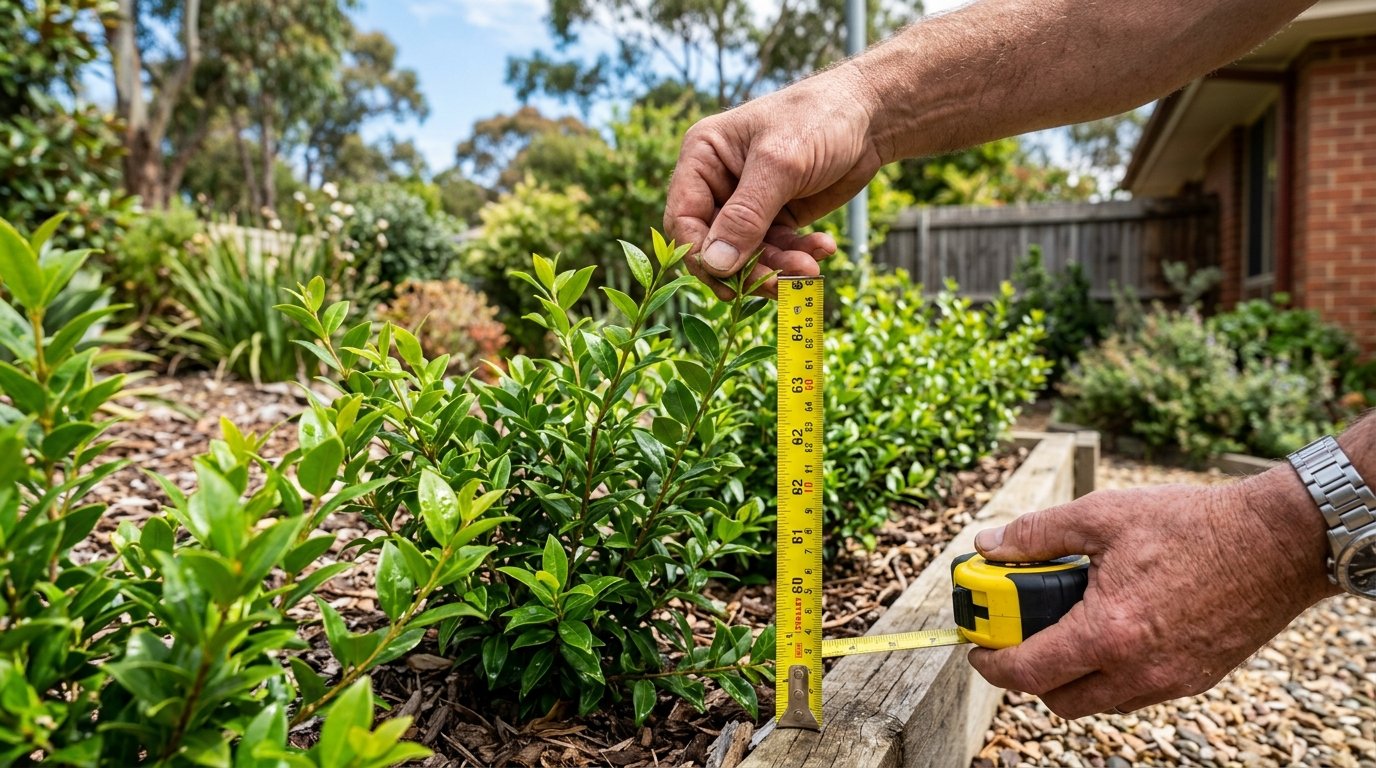
The fastest-growing screening plants in Australia — Ficus Hillii, Murraya, Acmena/Syzygium Lilly Pilly and Photinia — can give you real privacy within a season or two, but “fast” always comes with a cost: more trimming, more feeding, and sometimes vigorous roots. The honest way to choose is to pick the fastest plant that still suits your final height, your soil and your tolerance for maintenance — not simply the quickest grower on the shelf. A fast hedge you cannot keep up with becomes a bigger problem than a slower one you can.
Everyone who wants privacy wants it now. That is completely reasonable. But growth speed and long-term ease of care pull in opposite directions: the vigour that fills a fence line quickly is the same vigour you then have to manage for years. This guide ranks the practical fast options and, just as importantly, tells you what each one asks of you in return.
Fast options at a glance
| Plant | Speed | The trade-off |
|---|---|---|
| Ficus Hillii | Very fast, very tall | Vigorous invasive roots — keep well away from pipes and paving |
| Murraya paniculata | Fast, dense | Frequent trimming to stay formal; scented flowers |
| Lilly Pilly (vigorous varieties) | Fast | Psyllid on susceptible types; regular trimming |
| Photinia ‘Red Robin’ | Fast | Needs regular tip-pruning for the red flush; leaf spot in humidity |
| Viburnum odoratissimum | Fast, dense | Wants room; regular trimming to keep tidy |
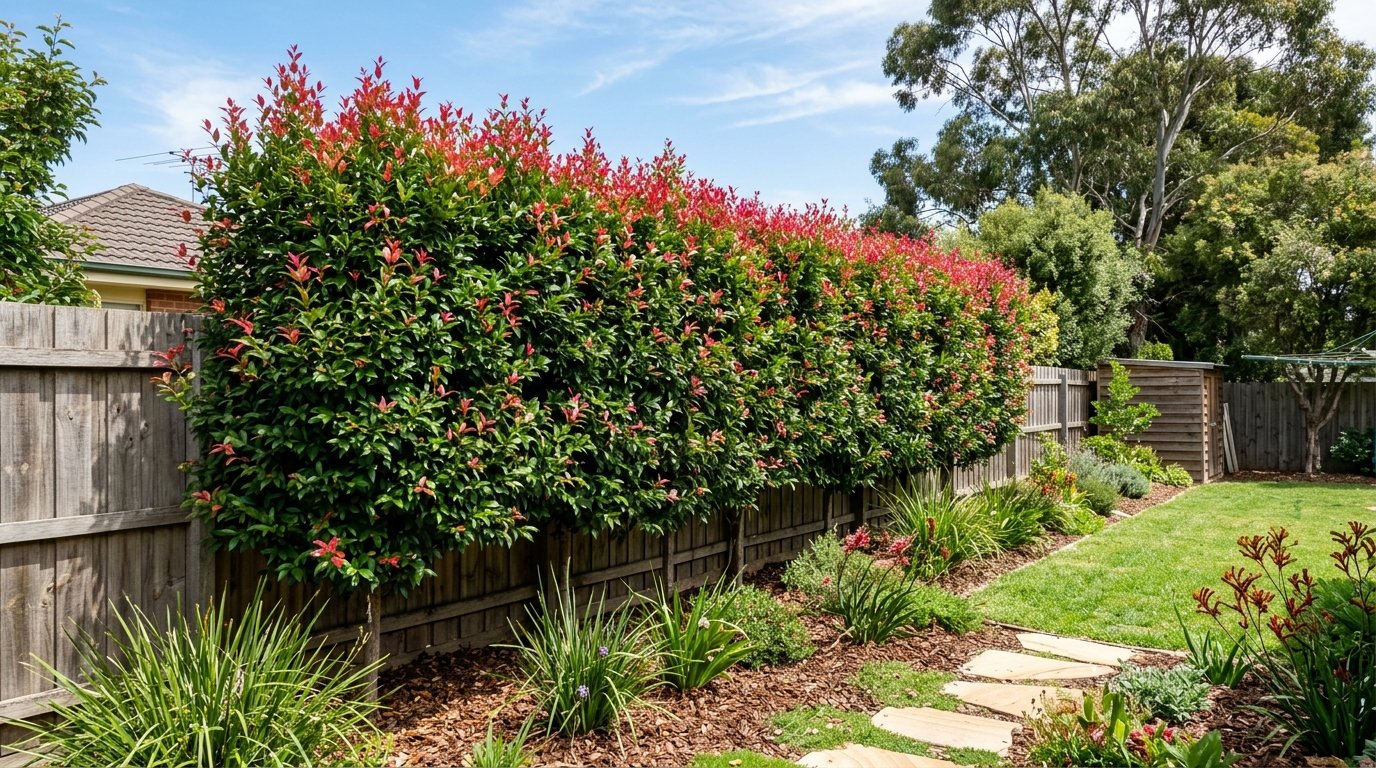
The honest rule of fast hedges
A plant that grows fast to reach your height keeps growing fast after it gets there.
That means more frequent trimming, not less, for the life of the hedge.
So the real question is not “what grows fastest?” but “what is the fastest plant I can still comfortably maintain at my target height?”
Ficus Hillii: fastest and tallest — with a catch
Ficus Hillii is one of the quickest ways to a tall, dense screen, and it tolerates hard pruning well.
The catch is its root system. Ficus roots are vigorous and can affect pipes, paving, foundations and boundaries.
It is an excellent fast screen for the right open position — and a poor choice squeezed next to a house, driveway or drainage. Give it real distance from structures.
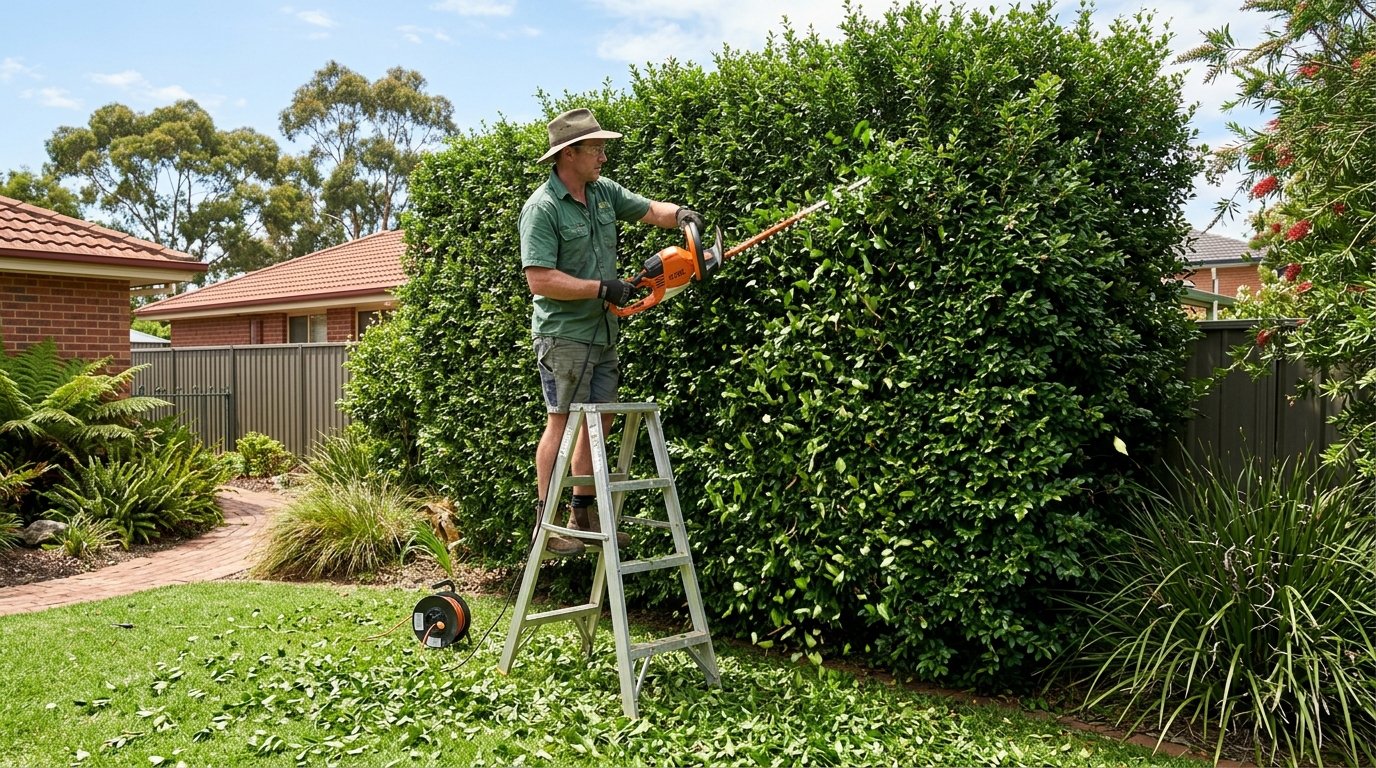
Murraya: fast, fragrant and formal
Murraya paniculata grows quickly into a dense, glossy hedge and rewards you with scented white flowers.
It responds well to shaping, but that same vigour means it needs regular trimming to stay crisp and formal.
For a fast, fragrant privacy hedge at typical suburban heights, it is one of the most popular choices in warmer parts of Australia.
Lilly Pilly: fast, but choose the variety carefully
Lilly Pilly includes some of the most popular fast screening plants in the country.
The key is variety choice. Older, more psyllid-susceptible types can be disfigured by pimple-like leaf galls, while modern resistant varieties largely avoid this.
Pick a vigorous, psyllid-resistant variety suited to your height and you get fast growth without the disfigurement that gave some Lilly Pillies a bad name.
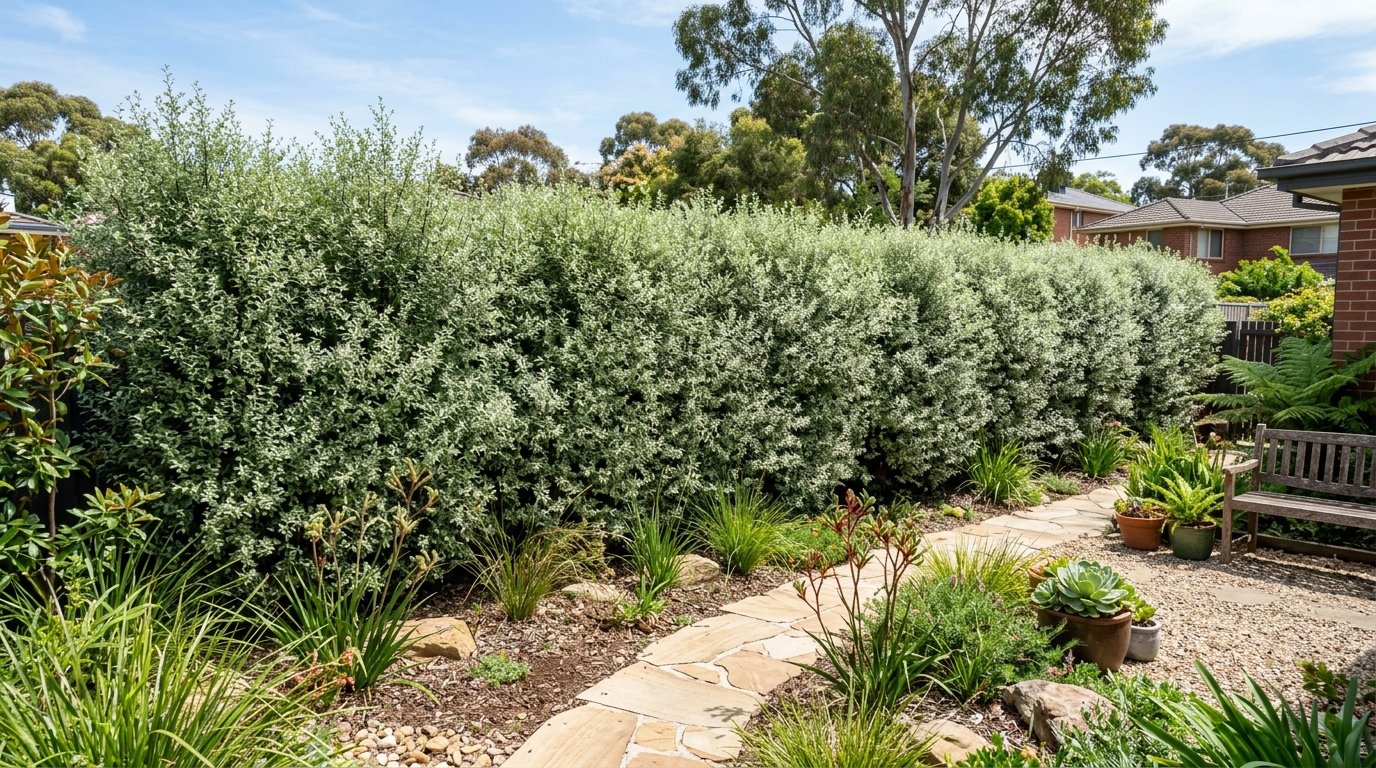
Photinia ‘Red Robin’: fast with a colour cost
Photinia grows quickly and its red new growth is popular, but that red flush depends on regular tip-pruning to keep producing fresh shoots.
In humid conditions it can also suffer leaf-spot problems.
It is a fast screen, but the look people buy it for is maintenance-dependent — skip the trimming and the red largely disappears.
Viburnum odoratissimum: fast and dense
Viburnum odoratissimum (Sweet Viburnum) is a fast, dense screening plant that reaches good privacy heights.
It wants a bit of room to do its best and needs regular trimming to stay tidy, but it is a reliable, forgiving fast hedge for many gardens.
Fast growth means more feeding and watering — at first
Rapid establishment is not automatic. To grow fast, a young hedge needs:
- consistent watering while it establishes;
- appropriate feeding;
- good soil preparation;
- mulch to hold moisture and suppress weeds.
Starve or under-water a “fast” hedge and it will not live up to its reputation. The speed is a potential you have to support early on.
Fast growth and roots
Vigorous top growth is usually matched by vigorous roots.
With the fastest species — Ficus especially — that means being deliberate about distance from pipes, paving, foundations and shared boundaries.
A fast screen planted too close to infrastructure trades a quick result now for an expensive problem later.
Don’t sacrifice final height for speed
It is tempting to buy the fastest plant regardless of how tall it gets.
But a very vigorous, very tall species used for a modest screen means years of holding it down. Match the plant to your target height first, then choose the fastest suitable option within that band.
Spacing fast growers
Because fast plants fill in quickly, resist the urge to overplant.
Plants crammed too close compete, thin at the base and create problems as they mature.
Correct spacing looks a little sparse at first but produces a healthier, denser hedge — and a fast grower closes the gaps sooner than you expect.
The maintenance trade-off, stated plainly
Fast screening hedges will generally need:
- more frequent trimming than slow growers;
- good early feeding and watering;
- attention to root distance from structures;
- variety choice to avoid known pest problems.
If you want privacy quickly and you are willing to trim regularly, a fast hedge is ideal. If low maintenance matters more than speed, a moderate grower may serve you better in the long run.
Common fast-hedge mistakes
Planting Ficus near pipes or paving
Its roots need real distance from structures.
Choosing a psyllid-susceptible Lilly Pilly
Pick a modern resistant variety for a clean, fast screen.
Overplanting to fill gaps faster
Crowded fast growers compete and thin at the base.
Under-watering a “fast” hedge
Speed depends on good early water, feeding and soil.
Buying speed regardless of final height
A too-tall fast grower means endless trimming to hold it down.
Expecting the red on Photinia without pruning
The red flush depends on regular tip-pruning.
Want a fast screen installed and kept under control?
If you want privacy quickly but you are worried about choosing a plant that becomes a maintenance or root problem, Garden Green can help you pick a fast screen that suits your space — and keep it in shape once it is in. Get in touch to talk through your screening needs.
Fast is fine — if you match it to the space and the upkeep
To choose a fast screening hedge without regret:
- confirm the final height you need first;
- pick the fastest species that suits that height;
- choose the right variety to avoid pest problems;
- keep vigorous roots well clear of structures;
- support early growth with water, feeding and mulch;
- accept that fast growth means regular trimming for life.
Speed is a genuine benefit when it is matched to the space and to how much maintenance you are willing to do. Choose on both, and you get privacy quickly and a hedge you can actually live with.
Frequently asked questions
What is the fastest-growing hedge in Australia?
Ficus Hillii is among the fastest and tallest screening plants, followed by vigorous choices such as Murraya, fast Lilly Pilly varieties, Photinia and Viburnum odoratissimum. The fastest option is not always the best, though — Ficus has vigorous roots that must be kept well away from pipes and paving, so match speed to your space and maintenance tolerance.
Is a fast-growing hedge more work to maintain?
Generally yes. A plant that grows quickly to reach your target height keeps growing quickly afterwards, so it needs more frequent trimming for the life of the hedge. Fast hedges also benefit from good early watering and feeding. Choose the fastest plant you can comfortably maintain at your target height, rather than the fastest plant overall.
Why is Ficus Hillii not always the best fast hedge?
Ficus Hillii grows fast and tall and prunes well, but its root system is vigorous and can affect pipes, paving, foundations and boundaries. It is excellent in an open position with distance from structures, but a poor choice planted close to a house or driveway. Consider the roots, not just the speed, before choosing it.
Which fast Lilly Pilly should I choose?
Choose a vigorous but psyllid-resistant modern variety. Older susceptible types can be disfigured by pimple-like leaf galls, which gave some Lilly Pillies a poor reputation. A resistant variety suited to your target height gives you fast growth and a clean screen without the leaf damage.
How can I make my hedge grow faster?
Support the growth it is capable of: prepare the soil well, water consistently while the hedge establishes, feed appropriately, and mulch to hold moisture and suppress weeds. A “fast” species that is under-watered or starved will not live up to its reputation, because the speed is a potential you have to support in the early years.
Should I plant a fast hedge closer together to fill gaps sooner?
No. Overplanting fast growers makes them compete, thin at the base and cause problems as they mature. Use correct spacing, which may look slightly sparse at first, and let the fast growth close the gaps naturally. A vigorous plant fills in sooner than you expect without crowding.
Is a fast-growing hedge or a slow one better?
It depends on your priorities. If you want privacy quickly and are willing to trim regularly, a fast hedge is ideal. If low maintenance matters more than speed, a moderate grower may suit you better long term. The best choice balances how soon you need the screen against how much ongoing trimming you are prepared to do.
Does Photinia ‘Red Robin’ keep its red colour?
The red is new growth, so it depends on regular tip-pruning to keep producing fresh red shoots. Without that trimming the red largely disappears. Photinia can also suffer leaf-spot problems in humid conditions, so the look people buy it for is maintenance-dependent rather than automatic.


