
Cordless vs Petrol Hedge Trimmers: Which to Buy

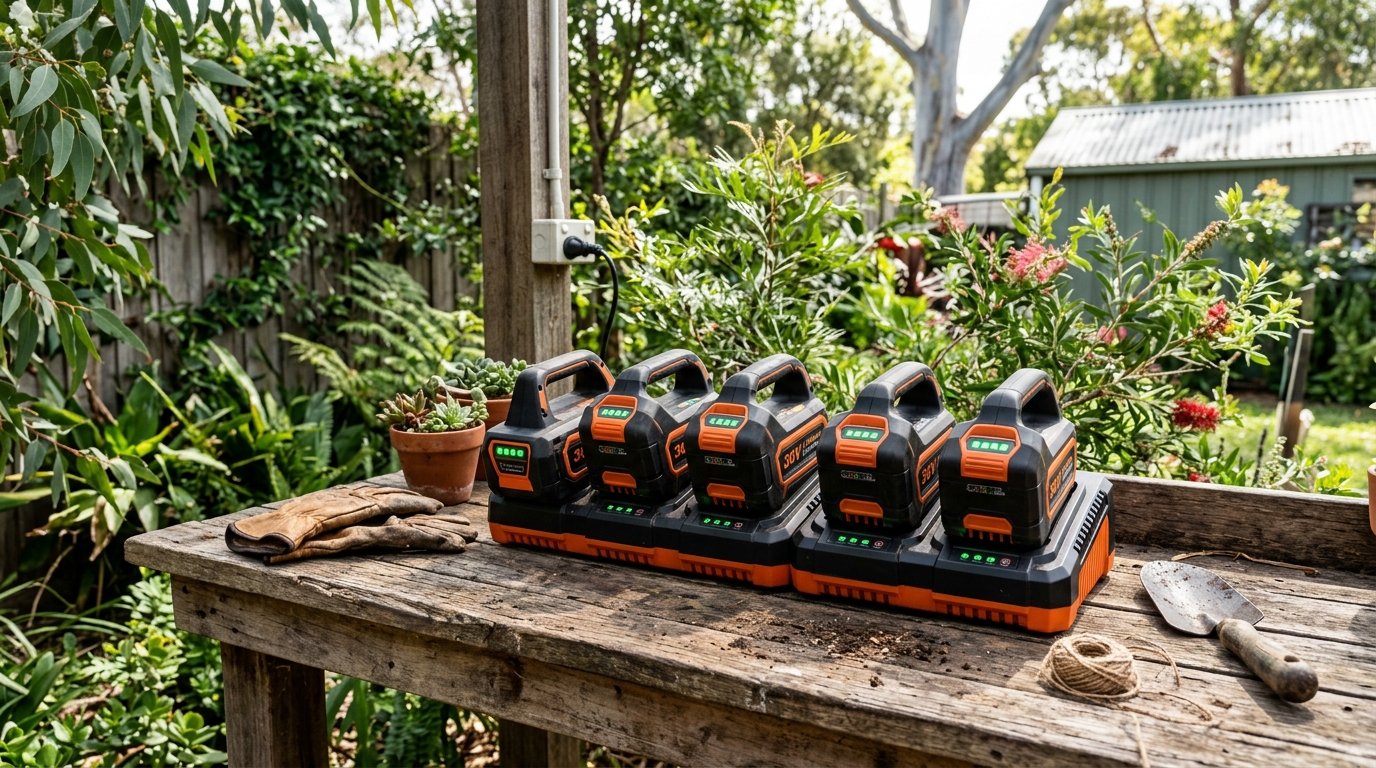
For most Australian home gardeners, a modern cordless (battery) hedge trimmer is now the better choice; petrol still wins for large properties, all-day commercial use and very heavy overgrown work. Battery trimmers have improved enormously — they are lighter, quieter, start instantly and need far less maintenance — while petrol keeps its advantages in raw runtime and sustained power. The right answer depends on how much hedge you have, how long you cut for and how tolerant you are of maintenance.
This is a decision guide, not a spec sheet. Rather than ranking specific models, it walks through the trade-offs that actually determine which type will suit your garden, so you can choose confidently before you compare individual trimmers.
Brands widely available in Australia span both camps — STIHL, Husqvarna, Makita, Ryobi, EGO, Bosch, Ozito and others offer petrol, battery or both. Garden Green has not yet joined an affiliate program or completed controlled side-by-side testing of current hedge trimmers, so this guide does not publish live retailer links, prices, invented runtime tests or fake “best trimmer” rankings. Its purpose is to help you choose the right type.
Quick verdict by garden type
| Your situation | Usually the better choice |
|---|---|
| Suburban block, normal hedges | Cordless battery |
| Small courtyard or a few shrubs | Cordless battery (or corded electric) |
| Large rural or acreage property | Petrol, or high-capacity battery system |
| All-day / commercial use | Petrol (or professional battery platform) |
| Very heavy, neglected, thick growth | Petrol or a high-end battery trimmer |
| Noise-sensitive neighbourhood | Cordless battery |
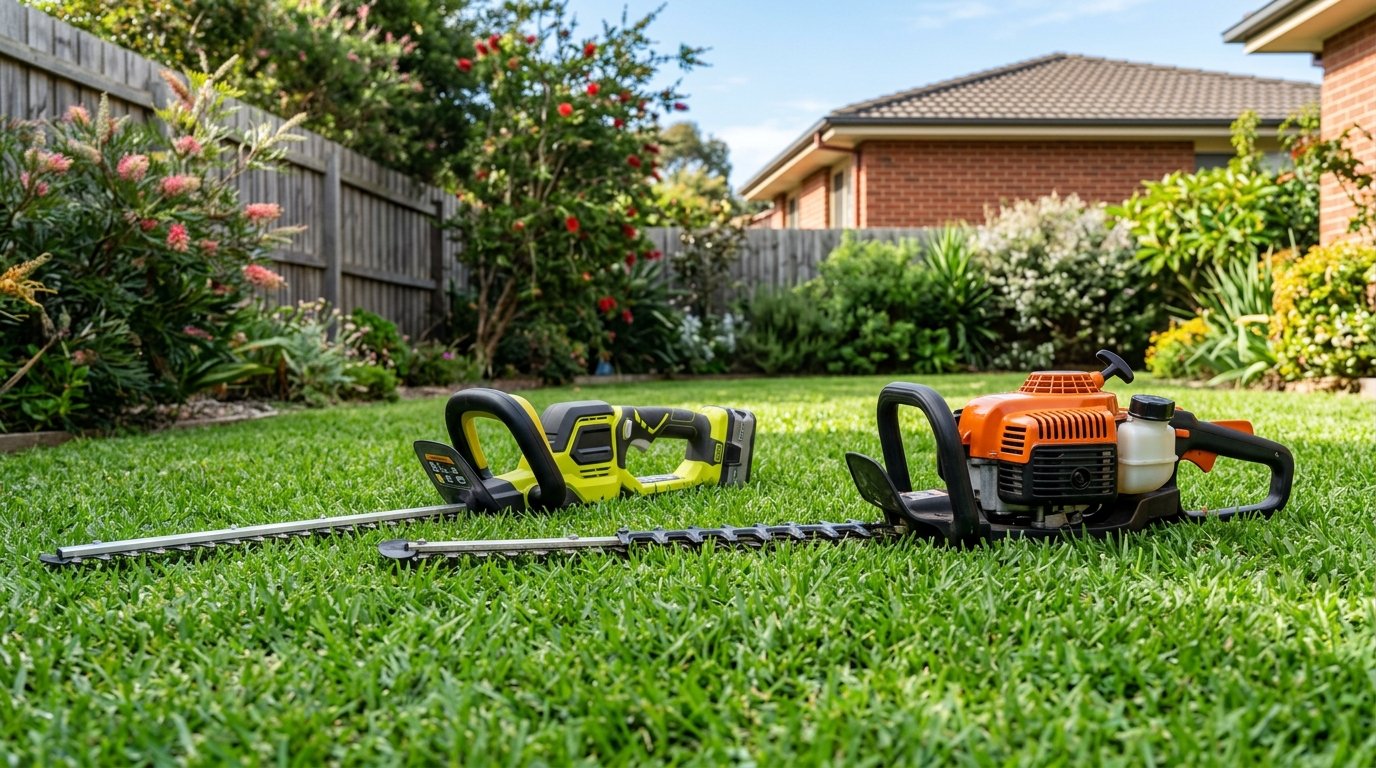
The short version
Battery hedge trimmers have become the default recommendation for ordinary home gardens because they removed most of petrol’s day-to-day annoyances without giving up the performance a typical hedge needs.
Petrol remains relevant where runtime and sustained power outweigh convenience — large properties, professional use and severely overgrown work.
If you are unsure and you have a normal suburban garden, start with battery.
Weight and fatigue
Hedge trimming is often done with arms raised, so weight matters more than the number on the box suggests.
Battery trimmers are generally lighter than comparable petrol units, and lighter tools cause less fatigue during overhead work along a long hedge.
Petrol trimmers carry an engine and fuel, which adds weight exactly where it is most tiring to hold.
Noise
Petrol two-stroke engines are loud.
Battery trimmers are significantly quieter, which matters for:
- early-morning or evening trimming;
- close neighbours;
- your own hearing comfort;
- noise restrictions in some areas.
Hearing protection is still sensible with any hedge trimmer, but battery models are far easier to live with.
Starting and stopping
A battery trimmer starts instantly at the press of a trigger, every time.
Petrol trimmers require a starting routine and can be reluctant, especially if stored over winter or fuelled with stale mix.
For stop-start jobs — trim a bit, move the ladder, trim again — instant battery starting is a real quality-of-life advantage.
Maintenance: the biggest hidden difference
This is where the two types genuinely diverge.
Petrol two-stroke trimmers need ongoing maintenance:
- mixing oil and petrol correctly;
- managing stale fuel;
- spark plugs;
- air filters;
- occasional carburettor issues.
Battery trimmers remove almost all of this. There is no fuel to mix, no engine to tune — just charged batteries and a clean, oiled blade.
Fuel mixing and stale fuel
Many petrol hedge trimmers are two-stroke, meaning oil must be mixed with petrol in the correct ratio.
Get the mix wrong and you can damage the engine.
Fuel also degrades. Two-stroke mix left in the tank for months is a common cause of hard starting and poor running.
Battery owners never deal with any of this.
Runtime: petrol’s core advantage
A petrol trimmer runs as long as you keep refuelling.
A battery trimmer runs until the battery is flat, then needs a charged pack.
For a normal suburban hedge this is rarely a problem — one or two batteries usually cover the job.
For hours of continuous cutting, petrol’s refuel-and-continue model is still hard to beat unless you invest in multiple large batteries.
Managing battery runtime
If you choose battery for a larger garden, the usual solutions are:
- a second (or larger-capacity) battery;
- charging one pack while using another;
- choosing a platform whose batteries are shared across your other garden tools.
Battery ecosystems matter: staying within one brand’s battery platform lets the same packs power your trimmer, blower and mower.
Sustained cutting power
Good battery trimmers handle normal hedge growth easily.
For very thick, woody or badly neglected growth, higher-end petrol units — and top-tier professional battery trimmers — hold sustained power better under heavy load.
For branches beyond hedge-trimmer capacity, the right tool is a pruning saw, not a bigger trimmer forced through wood it was never designed to cut.
Corded electric: the third option
For small gardens near a power point, a corded electric trimmer is worth considering.
It offers:
- light weight;
- unlimited runtime;
- low noise;
- low maintenance;
- lower cost.
The trade-off is the cord, which limits range and needs care around the blade. For a courtyard or a few shrubs, though, it can be the simplest, cheapest answer of all.
Cost over time, not just at purchase
Petrol and battery trimmers can look similar on the shelf, but total cost differs.
Petrol adds ongoing fuel and maintenance costs.
Battery adds the cost of extra or replacement batteries over time, though these are shared if you buy into one tool platform.
Think about total cost of ownership, not just the sticker price.
Environmental and health considerations
Two-stroke petrol engines emit exhaust and are noisy.
Battery trimmers produce no exhaust at the point of use and are quieter.
For gardeners who trim regularly, close to the house or with health sensitivities to fumes and noise, battery has a clear liveability advantage.
Blade length and the type decision
Blade length affects reach and cutting speed regardless of power source.
Longer blades cover a hedge face faster but are heavier and harder to control — which interacts with the weight advantage of battery models.
Match blade length to your hedge size and your own strength, then choose the power type.
Safety applies to both
Every hedge trimmer is a powered blade and deserves respect:
- use eye and hearing protection;
- wear sturdy gloves and footwear;
- keep both hands on the tool;
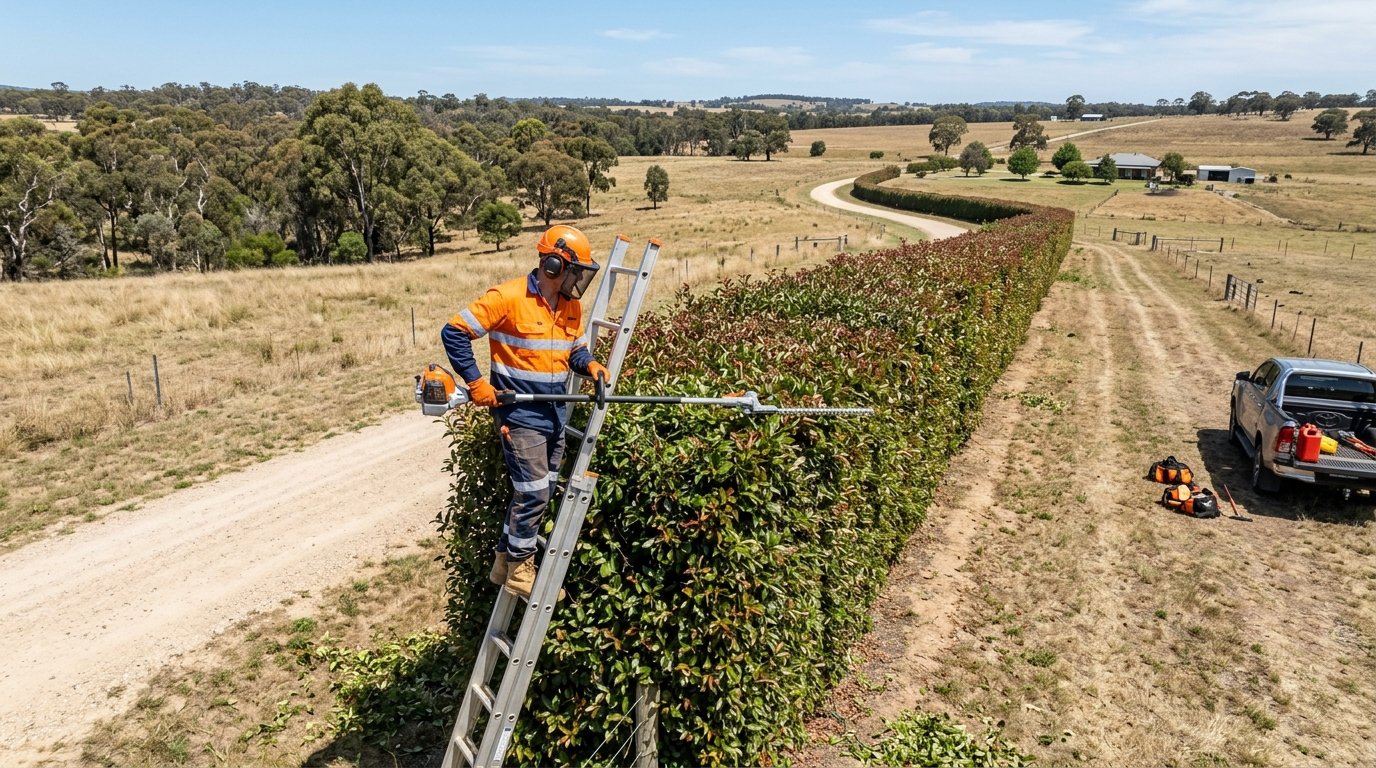
- never trim from an unstable ladder;
- keep the cord (corded) or bystanders clear of the blade.
Battery trimmers start instantly, so treat the trigger with the same caution you would a running petrol engine.
When petrol is still the right call
Choose petrol if you have:
- a large rural or acreage property;
- hours of continuous trimming;
- commercial or contract workloads;
- very heavy, neglected growth;
- no interest in managing charging, but full willingness to manage fuel and servicing.
When battery is the right call
Choose battery if you have:
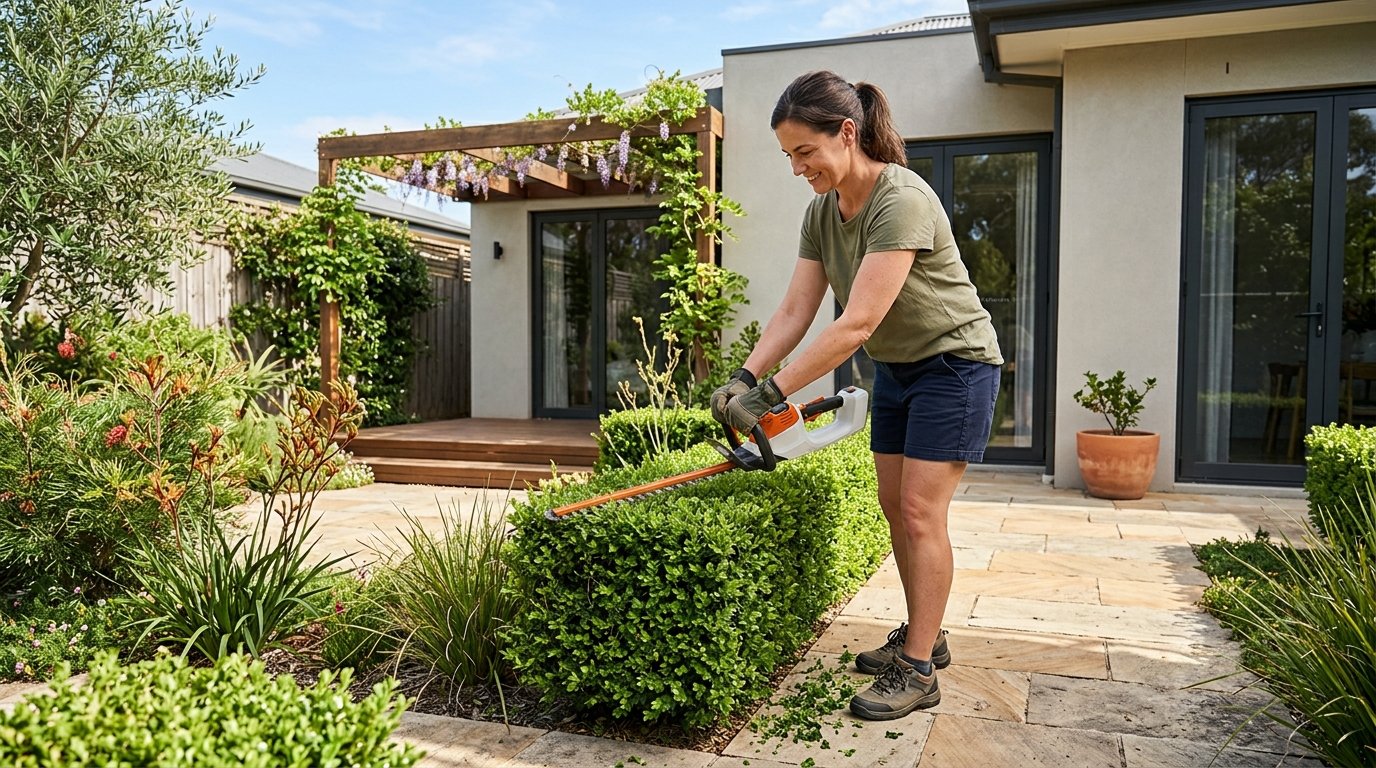
- a normal suburban garden;
- typical hedges such as Lilly Pilly, Westringia or box;
- close neighbours or noise sensitivity;
- a preference for low maintenance;
- other tools in the same battery platform.
Common buying mistakes
Buying petrol out of habit
For most home gardens, battery now does the job with far less hassle.
Buying battery without a second pack for a big garden
Large hedges may need a spare or higher-capacity battery.
Ignoring the battery ecosystem
Shared packs across brands’ tools change the value equation.
Forcing any trimmer through thick branches
Use a pruning saw for wood beyond trimmer capacity.
Underestimating petrol maintenance
Fuel mixing, stale fuel and servicing are ongoing commitments.
Overbuying blade length
A long heavy blade is tiring and harder to control on a small hedge.
Where our recommended trimmer picks will go
Garden Green has not yet joined an affiliate program and has not completed controlled hands-on comparisons of current hedge trimmers. We therefore are not publishing a fake “best hedge trimmers” list assembled from product pages.
When recommendations are added, they should be grouped by genuine use case: a light battery trimmer for suburban gardens, a corded option for small courtyards, a high-capacity battery platform for larger blocks, and petrol for commercial or heavy-property use.
Battery for most, petrol for the heavy end
The honest summary for Australian gardeners in 2026:
- if you have a normal suburban garden, buy battery and enjoy the quiet, low-maintenance convenience;
- if you have acreage, commercial workloads or severely overgrown hedges, petrol still earns its place;
- for a tiny courtyard, corded electric may be the simplest answer;
- whichever you choose, match blade length to your hedge and stay within one battery platform where you can.
The days when petrol was the automatic choice for serious hedge work are largely over for home gardens. For most people, the better tool is now the lighter, quieter, lower-maintenance one — and that is usually battery.
Frequently asked questions
Are cordless hedge trimmers as good as petrol?
For most home gardens, yes. Modern battery trimmers handle normal hedge growth easily while being lighter, quieter, maintenance-free and instant to start. Petrol keeps an advantage in continuous runtime and sustained power under heavy load, which mainly matters for large properties, commercial use and severely overgrown work.
When should I still choose a petrol hedge trimmer?
Choose petrol for large rural or acreage properties, hours of continuous trimming, commercial workloads, or very thick neglected growth where sustained power and refuel-and-continue runtime matter most. You should also be willing to manage fuel mixing, stale fuel and regular servicing, which are ongoing commitments with two-stroke engines.
How long does a battery hedge trimmer run on one charge?
It varies with the trimmer, battery capacity and how heavy the growth is, so this guide does not quote a fixed figure. For a typical suburban hedge, one or two batteries usually cover the job. For larger gardens, use a spare or higher-capacity battery, or charge one pack while using another.
Do petrol hedge trimmers need a lot of maintenance?
More than battery trimmers. Two-stroke petrol units need correct oil-and-petrol mixing, management of stale fuel, and periodic attention to spark plugs, air filters and sometimes the carburettor. Battery trimmers remove almost all of this, leaving mainly battery charging and normal blade cleaning and oiling.
Is a corded electric hedge trimmer worth considering?
For small gardens near a power point, yes. Corded trimmers are light, quiet, low-maintenance, inexpensive and offer unlimited runtime. The trade-off is the cord, which limits range and must be kept clear of the blade, so they suit courtyards and small shrub plantings rather than large properties.
Does the battery brand or platform matter?
It matters a lot for value. Staying within one brand’s battery platform lets the same packs power your trimmer, blower, mower and other tools, spreading the cost of batteries across your whole garden kit. Buying isolated tools on incompatible platforms means paying for separate batteries and chargers.
Can a hedge trimmer cut thick branches?
No hedge trimmer is designed for thick woody branches. Forcing any trimmer through wood beyond its capacity risks damage and is unsafe. For branches too large for the trimmer, use a pruning saw or loppers and remove them deliberately rather than trying to shear through them.
Which is quieter, battery or petrol?
Battery is significantly quieter. Petrol two-stroke engines are loud enough to be a genuine consideration where neighbours are close, where you trim early or late, or where local noise rules apply. Hearing protection is still sensible with any trimmer, but battery models are much easier to live with day to day.


