
Best Secateurs Australia: How to Choose

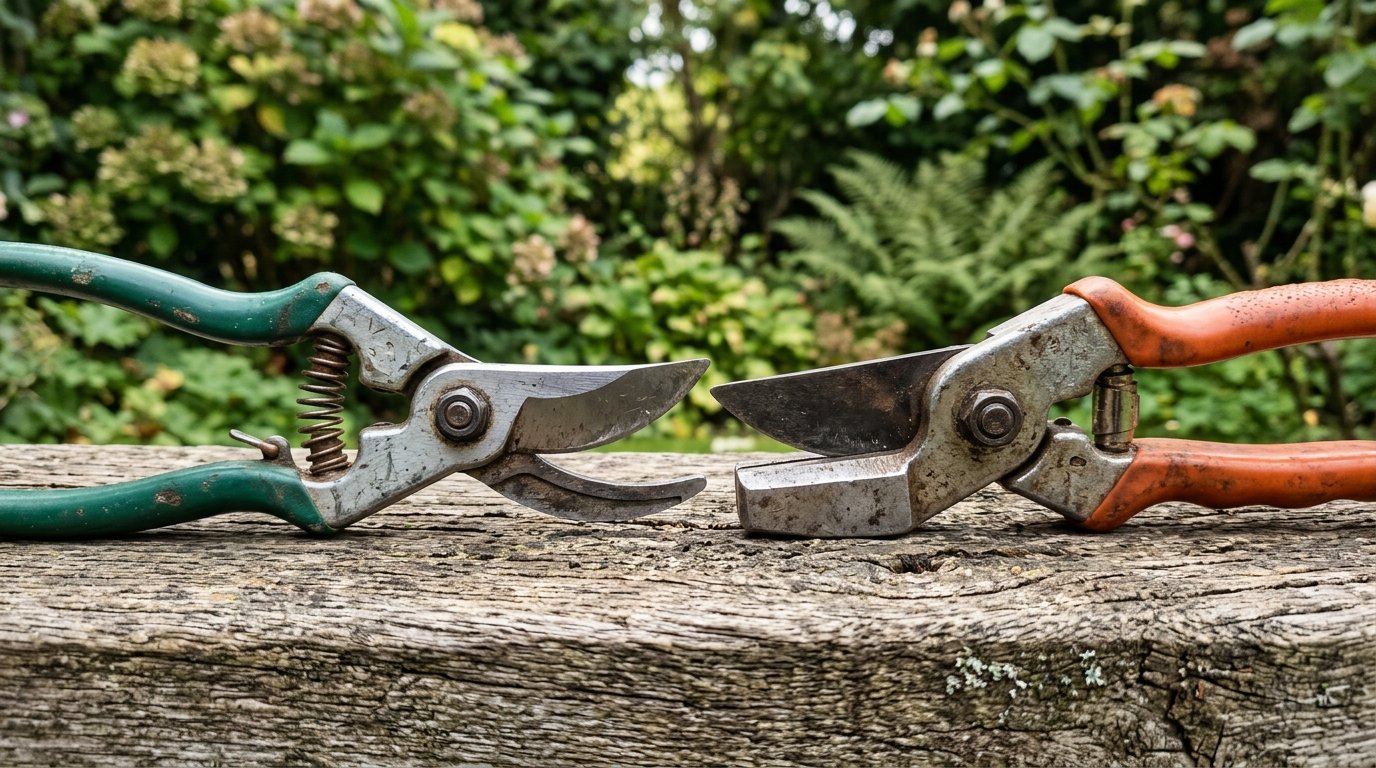
For most Australian gardeners, a good pair of bypass secateurs is the best all-round choice because the two blades pass each other cleanly and are well suited to live stems, hedge shoots, roses, citrus, shrubs and routine pruning. Anvil secateurs make more sense on dry, dead or tougher wood where a crushing action is acceptable, while ratchet secateurs can reduce hand effort on thicker cuts but are slower for rapid repetitive pruning.
The most important buying decision is not the brand name on the handle. It is whether the secateurs fit your hand, stay sharp, cut the stem size you actually work with and can be cleaned properly between plants. On a fast-growing Lilly Pilly hedge or Murraya hedge, secateurs are often the right tool for individual thicker shoots that should not be forced through a hedge trimmer.
Brands commonly available to Australian gardeners include Felco, Bahco, Fiskars, Cyclone, Niwaki, Kent & Stowe and ARS. Garden Green has not yet joined an affiliate program or completed controlled side-by-side testing of current models, so this guide does not publish live retailer links, prices, invented cutting tests or pretend rankings. Instead, it explains what actually matters when choosing a pair.
Quick pick: which secateur type suits your job?
| Task | Best starting secateur type | Why |
|---|---|---|
| Light deadheading and soft green stems | Light bypass secateurs | Clean, precise cuts with less crushing |
| General garden pruning | Medium bypass secateurs | Best all-round choice for live stems and routine shrub work |
| Thicker woody hedge stems | Heavy-duty bypass or ratchet secateurs | More leverage for individual stems, within the stated cutting capacity |
| Dry dead wood | Anvil secateurs | Compression against a flat anvil suits tougher dead stems |
| Small hands | Compact ergonomic bypass secateurs | Shorter handle span reduces over-stretching and improves control |
| High-frequency pruning | Serviceable bypass secateurs with replaceable parts | Better long-term value when blades, springs and fasteners can be replaced |
Bypass secateurs: the best all-round choice
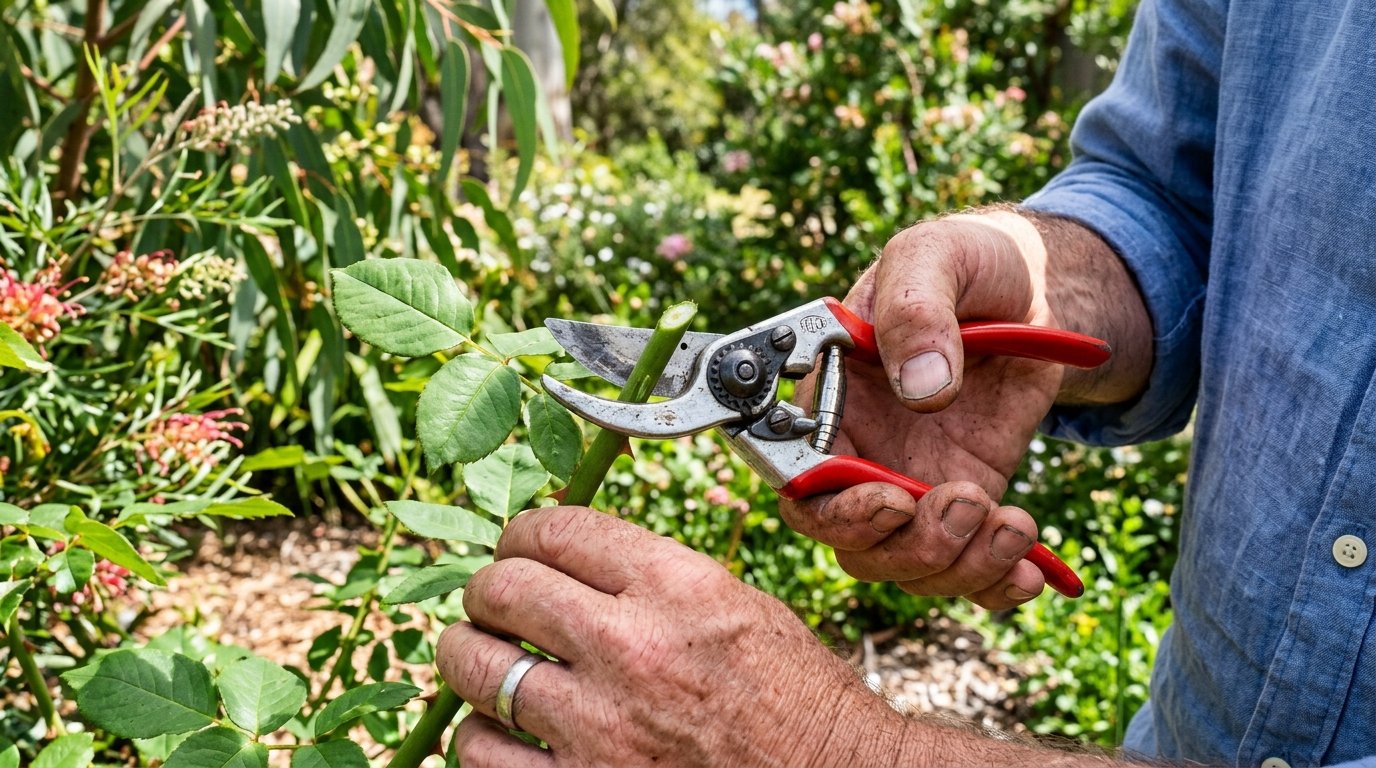
Bypass secateurs use a sharpened cutting blade that passes closely beside a supporting blade.
This creates a slicing action rather than simply crushing the stem.
They are usually the best choice for:
- live hedge shoots;
- roses;
- fruit trees;
- shrubs;
- young woody growth;
- general formative pruning;
- cutting individual stems that are too thick or awkward for a hedge trimmer.
For regular work on Viburnum, Lilly Pilly, Murraya and other actively growing hedges, bypass secateurs are the type we would start with.
Anvil secateurs: better for dry or dead wood
Anvil secateurs use a sharpened blade that closes onto a flat lower surface.
The action is more like cutting against a block.
That makes them useful for:
- dry dead stems;
- tough brittle wood;
- jobs where a little crushing is less important because the tissue is already dead.
They are generally less suitable for fresh live stems because the cut can compress tissue more heavily than a sharp bypass action.
For living hedge growth that you want to heal cleanly, bypass secateurs are usually the safer default.
Ratchet secateurs: useful when hand strength is limited
Ratchet secateurs divide the cut into several stages rather than requiring the stem to be severed in one squeeze.
That can reduce the effort needed for tougher individual stems.
They are useful where:
- hand strength is limited;
- the stem is near the upper end of normal secateur capacity;
- you are making occasional heavier cuts rather than dozens of rapid repetitive ones.
The trade-off is speed. A ratchet action is slower than a direct bypass cut.
For continuous hedge work, we usually prefer a comfortable bypass pair and move up to loppers or a pruning saw when stems become too large.
Do not exceed the stated cutting capacity
Every pair of secateurs is designed for a limited stem diameter.
Do not judge capacity simply by whether a branch can be forced between the blades.
If the stem is too large:
- the blades can twist;
- the pivot can loosen;
- the cut can become ragged;
- your hand has to apply excessive force;
- the plant can be crushed rather than cleanly cut.
Use loppers or a pruning saw for branches beyond the secateur’s stated capacity.
This is especially relevant on old Lilly Pilly or Murraya hedges where individual stems can become far heavier than the surrounding leafy growth.
When secateurs are better than a hedge trimmer
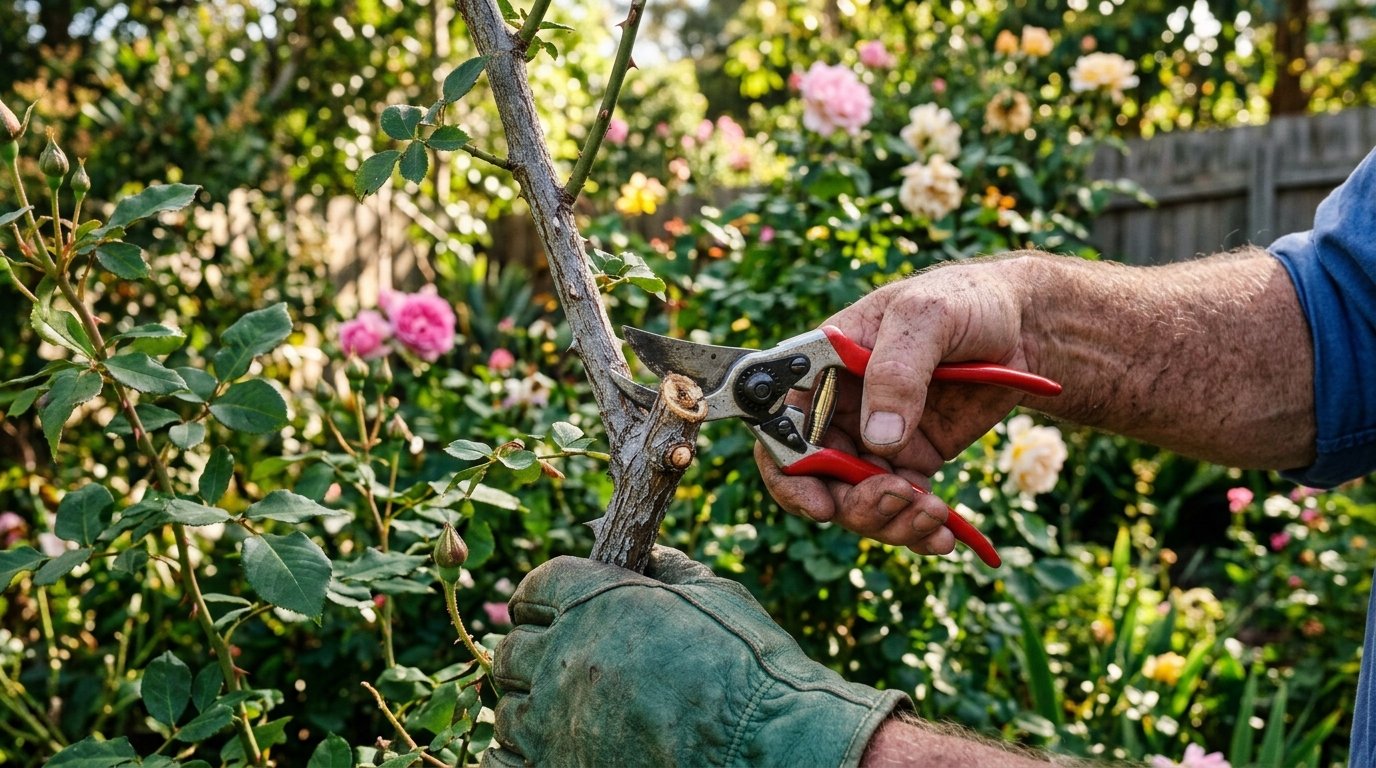
A powered hedge trimmer is excellent for shaping a hedge face quickly, but it is not the right tool for every branch.
Secateurs are better for:
- one thick shoot sticking through the hedge;
- crossing branches;
- stems growing back toward the centre;
- selective thinning;
- removing diseased shoots;
- making a clean cut back to a branch junction.
If you are choosing a powered tool for the broader hedge surface, see our sibling guide to choosing a hedge trimmer for Australian gardens.
Blade material: carbon steel versus stainless steel
Most quality secateurs use hardened steel blades, but the exact steel and heat treatment vary by manufacturer.
You will commonly encounter:
- high-carbon steel;
- hardened tool steel;
- stainless steel;
- coated blades designed to reduce friction or corrosion.
High-carbon and hardened steels
These steels can take a very sharp edge and often hold that edge well when properly hardened.
The trade-off is that some carbon steels are more prone to surface rust if left wet or dirty.
That means cleaning and light oiling matter.
Stainless steel
Stainless blades can offer better corrosion resistance, which is useful in humid gardens or where tools are frequently exposed to moisture.
But “stainless” does not automatically mean sharper, harder or better.
The quality of the blade geometry, heat treatment and overall construction matters more than the label alone.
Blade coatings: useful, but not magic
Some secateurs use low-friction or corrosion-resistant coatings.
These can help reduce sap sticking to the blade or provide some protection against surface corrosion.
They do not remove the need to:
- clean sap and resin;
- dry the tool;
- oil moving parts;
- sharpen the cutting edge.
A coated blade that is blunt and dirty will still cut badly.
Hardness and edge retention
Harder steel can generally hold an edge for longer, but very hard blades can also be less forgiving if abused against wire, nails or branches beyond their intended capacity.
For ordinary gardening, the most useful qualities are:
- a blade that takes a clean edge;
- reasonable edge retention;
- easy sharpening;
- available replacement parts if the blade eventually wears out.
Do not buy secateurs based on a steel-hardness number alone unless the manufacturer provides enough context to explain what it means for the tool.
Hand size is one of the most overlooked buying factors
A technically excellent pair of secateurs can be miserable to use if the handles are too wide for your hand.
If the handle span is too large, you repeatedly stretch your fingers before every cut. That reduces control and increases fatigue.
For smaller hands, look for:
- compact secateur bodies;
- shorter handle spans;
- adjustable opening widths where available;
- ergonomic handle shapes;
- models specifically marketed for smaller hands.
Some manufacturers offer different secateur sizes within the same range rather than assuming one tool fits everyone.
This is especially useful for gardeners with smaller hands and for anyone doing repeated pruning rather than occasional cuts.
“Women’s secateurs” versus correctly sized secateurs
Some brands market smaller secateurs specifically toward women.
The useful feature is not the label—it is the handle size, span, weight and grip geometry.
A compact tool can suit any gardener with smaller hands, while a larger-hand user may find the same pair unnecessarily cramped.
Choose by fit rather than marketing category.
Rotating handles: useful for high-frequency pruning
Some professional and ergonomic bypass secateurs use a lower handle that rotates as the fingers close.
The aim is to reduce rubbing and distribute effort across the hand during repetitive cutting.
Some gardeners love this design; others prefer a conventional fixed handle.
If you are pruning hundreds of stems, it is worth trying both styles before buying.
For occasional garden use, a comfortable fixed-handle secateur may be simpler.
Left-handed options matter
A true left-handed secateur is more than a right-handed tool held in the opposite hand.
Some manufacturers offer dedicated left-handed models with blade and handle geometry arranged for left-hand use.
If you prune primarily left-handed, this can improve visibility of the cut and make the tool feel more natural.
Do not assume every ergonomic secateur is ambidextrous.
Handle materials and grips
Good secateur handles should provide enough grip without creating pressure points.
You may see:
- forged aluminium handles;
- steel handles;
- composite bodies;
- rubberised or textured grips;
- replaceable grip covers.
For frequent hedge work, we care more about how the handle feels after repeated cuts than whether it looks premium on the shelf.
Springs: small part, big difference
The spring opens the handles again after each cut.
A weak, rough or badly positioned spring makes repetitive pruning noticeably less pleasant.
Look for a spring that:
- opens the blades smoothly;
- does not feel excessively stiff;
- is easy to clean;
- can be replaced on serviceable tools.
Springs are also one of the small parts most likely to be lost or worn over the life of a heavily used secateur, so replacement availability has real value.
Locking mechanisms should work with your hand
The locking catch keeps the blades closed during storage and transport.
A good lock should be:
- secure enough not to release accidentally;
- easy to operate without putting fingers near the blade;
- unlikely to engage unintentionally while pruning.
If possible, test the lock before buying. Some gardeners prefer a thumb-operated latch; others prefer a rear catch.
Replaceable parts can turn secateurs into a long-term tool
One of the biggest differences between disposable and premium secateurs is serviceability.
Higher-quality pruning tools often allow replacement of:
- cutting blades;
- counter blades;
- springs;
- pivot bolts;
- locking components;
- handle grips.
This matters because a good secateur body can last much longer than one cutting blade.
If you prune frequently, check whether replacement parts are actually available in Australia rather than simply assuming they exist somewhere overseas.
Buy-once versus budget secateurs
Budget secateurs can be perfectly adequate for occasional pruning.
If you make only a handful of cuts each month, you may not need a fully rebuildable professional tool.
For frequent use, the value calculation changes.
A more serviceable pair can justify itself through:
- replaceable blades;
- replaceable springs;
- better pivot adjustment;
- more comfortable handles;
- availability of spare parts;
- the ability to sharpen and rebuild rather than replace the whole tool.
We would describe the tiers qualitatively as:
| Use level | What to prioritise |
|---|---|
| Occasional homeowner | Comfort, clean bypass cut, simple lock, easy maintenance |
| Regular gardener | Better steel, ergonomic sizing, reliable spring, adjustable pivot |
| High-frequency / professional | Replaceable parts, multiple hand sizes, serviceability, excellent ergonomics |
Clean cuts matter for plant health
A sharp bypass secateur slices through living tissue more cleanly than a blunt or badly adjusted pair that crushes and tears.
That matters when pruning live hedge stems because a clean wound is easier for the plant to compartmentalise than ragged crushed tissue.
This is one reason we prefer bypass secateurs for live plants such as Lilly Pilly, Murraya, Viburnum and Westringia.
How to position the blade for a clean cut
With bypass secateurs, place the sharpened cutting blade toward the part of the plant you are keeping where possible.
The supporting blade sits on the waste side.
That helps keep any slight compression away from the retained stem.
For a stem above a bud:
- cut just above a healthy bud or branch junction;
- avoid leaving a long dead stub;
- do not cut so close that the bud or branch collar is damaged;
- make the cut cleanly in one controlled action.
A modest angle can help water run away from a bud, but there is no benefit in making an exaggerated long diagonal wound.
Disease hygiene: secateurs can move problems between plants
Pruning tools physically contact sap, leaf surfaces and infected tissue.
That means dirty blades can help move some plant pathogens from an affected plant to healthy plants.
This matters particularly where you are dealing with:
- suspected box blight;
- Myrtle rust;
- fungal dieback;
- bacterial disease;
- unknown lesions or stem cankers.
Our hedge-problem guides repeatedly stress tool hygiene because pruning a diseased hedge and immediately moving to a healthy one with contaminated blades is an avoidable risk.
When should secateurs be disinfected?
At minimum, disinfect tools when moving:
- from a clearly diseased plant to a healthy plant;
- between plants where a contagious disease is suspected;
- after removing infected stems;
- between properties where plant-health status differs.
If you are simply pruning a row of healthy plants with no evidence of transmissible disease, constant sterilisation between every cut is generally unnecessary.
The hygiene intensity should match the disease risk.
Clean first, then disinfect
Disinfectants work poorly through a heavy layer of sap, resin and soil.
A practical sequence is:
- remove plant debris;
- wipe away sap and resin;
- clean the blade surface;
- apply an appropriate disinfecting method where disease risk warrants it;
- allow the tool to dry;
- lightly lubricate moving metal parts if the cleaning process has stripped oil away.
Follow the disinfectant manufacturer’s directions for dilution, contact time and material compatibility. Strong chemicals can damage coatings, handles or metal if used incorrectly.
Box blight makes hygiene especially important
If pruning Japanese Box where box blight is suspected, cleaning tools between infected and healthy plants matters because contaminated clippings and equipment can move fungal material through the garden.
Do not prune wet infected box and then walk directly into an unaffected hedge with the same dirty secateurs.
Myrtle rust and pruning tools
Myrtle rust spores can contaminate equipment that contacts infected new growth.
That matters when pruning Myrtaceae plants such as Lilly Pilly and other susceptible Australian natives.
Where Myrtle rust is suspected, avoid unnecessary handling, follow local biosecurity guidance and clean tools before moving to healthy susceptible plants.
Psyllid damage is different
Psyllids are insects rather than a fungal disease, so secateur disinfection is not the main control measure.
But if you are pruning distorted Lilly Pilly foliage and there is any doubt about accompanying disease symptoms, cleaning the tool before moving to other plants is still sensible garden hygiene.
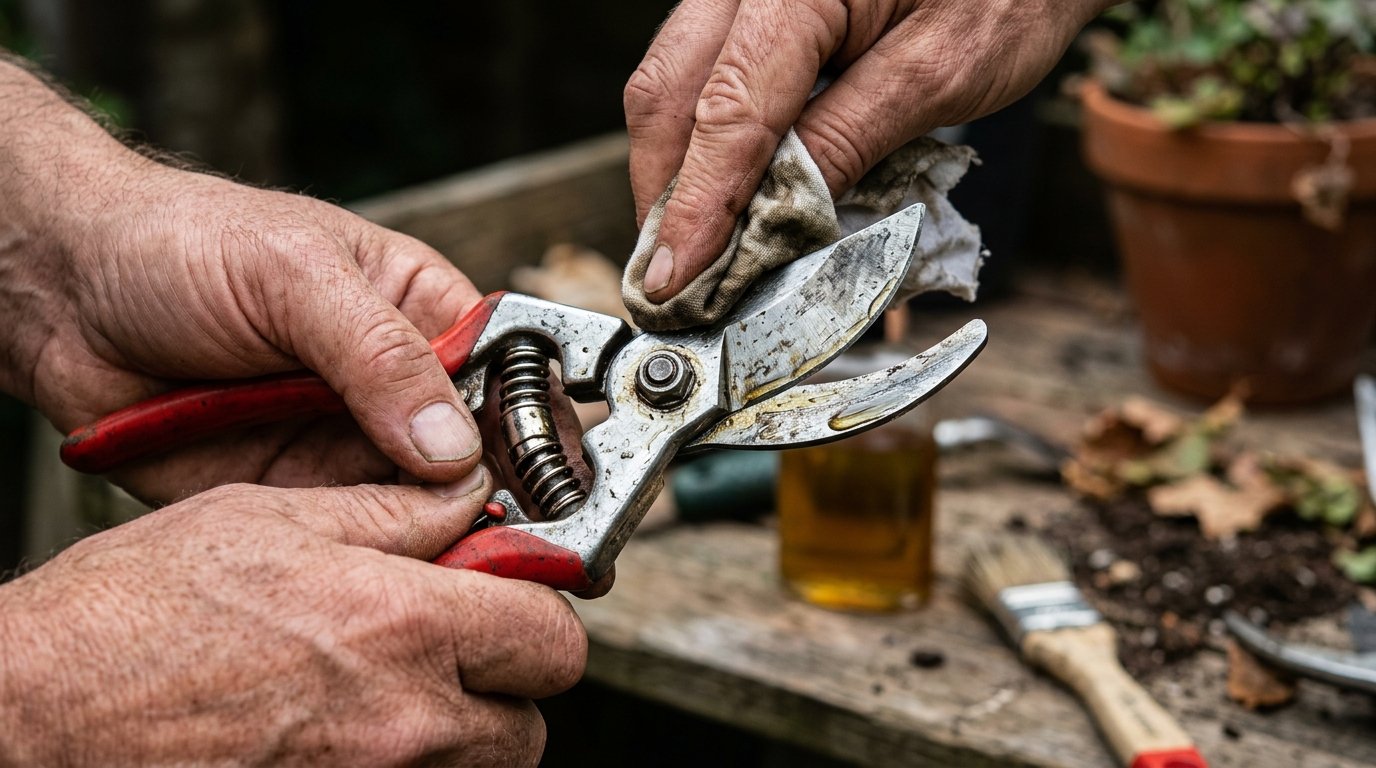
How to clean sticky sap and resin from secateurs
Hedge and shrub pruning can leave sticky residue on blades, particularly after repeated cuts through fresh growth.
After use:
- lock or safely open the secateurs according to their design;
- wipe off loose plant material;
- remove sticky sap with a cleaner appropriate for tool steel;
- dry the blades;
- apply a light lubricant to the pivot and exposed metal where recommended.
Do not store secateurs wet and dirty.
Sharpening: sharp secateurs are easier and safer to control
Blunt secateurs require more hand force.
That can lead to:
- crushed stems;
- slipping;
- repeated squeezing;
- twisting the tool through the cut.
A sharp pair completes appropriate cuts with less force and better control.
Sharpen only the intended cutting face according to the manufacturer’s geometry. On bypass secateurs, careless sharpening of the wrong side can create a gap between the blades and worsen cutting performance.
Blade adjustment matters too
A sharp blade can still cut badly if the pivot is too loose.
Symptoms of poor adjustment include:
- stems bending between the blades instead of being cut;
- the cutting blade moving sideways;
- an obvious gap between bypass surfaces;
- rough movement through the pivot.
Serviceable secateurs usually allow pivot adjustment. Tight enough to keep the blades properly aligned does not mean so tight that the handles become difficult to open.
Safety: simple tool, sharp blade
Secateurs look less intimidating than powered tools, but sharp professional blades can cut deeply.
Basic precautions include:
- close and lock the blades when carrying them;
- keep the free hand away from the cutting path;
- do not hold a branch immediately behind the blades;
- wear suitable gloves where thorny or awkward growth is involved;
- do not use secateurs as wire cutters unless the tool is specifically designed for that task;
- replace damaged locks, springs or handles rather than improvising repairs.
Keeping the blade sharp generally improves safety because less excessive force is required.
Matching secateurs to Australian hedge jobs
| Plant / task | Best starting choice | Why |
|---|---|---|
| Lilly Pilly thicker individual shoots | Strong bypass secateurs | Clean cuts through live woody growth within capacity |
| Murraya hedge corrective pruning | Bypass secateurs | Useful for selective live shoots and branch thinning |
| Viburnum formative pruning | Medium bypass secateurs | Clean live-stem cuts during shaping |
| Japanese Box small corrections | Compact bypass secateurs | Precision around fine formal growth |
| Westringia selective green pruning | Bypass secateurs | Better for controlled live cuts than crushing old stems |
| Dry dead twig removal | Anvil secateurs | Useful where tissue crushing is not a concern |
| Heavy branch beyond secateur capacity | Loppers or pruning saw | Correct tool for larger woody material |
Where our recommended secateur picks will go
Garden Green has not yet joined an affiliate program and has not completed controlled real-world comparisons of current secateur models. We therefore are not publishing a fake “best secateurs” ranking assembled from product descriptions.
When model recommendations are added, they should be grouped by actual use case: compact hands, general bypass pruning, heavy hedge shoots, ergonomic repetitive use and fully serviceable buy-once tools.
Common secateur buying mistakes
Buying the largest pair available
A larger handle span can make the tool uncomfortable for smaller hands and reduce control.
Using anvil secateurs for every live stem
For healthy living growth, bypass secateurs usually give a cleaner cut.
Forcing branches beyond the tool’s capacity
Move up to loppers or a pruning saw instead of abusing the pivot and blades.
Ignoring spare-part availability
A premium pair is far more valuable if replacement blades, springs and fasteners can actually be sourced.
Buying by brand without checking hand fit
A famous tool that does not fit your hand is still the wrong tool.
Never cleaning disease-contaminated blades
Tool hygiene matters when pruning infected box, Myrtle-rust hosts or other diseased plants.
Replacing blunt secateurs instead of maintaining them
Many good tools simply need cleaning, sharpening and adjustment.
Quick pick by task
| Task | Secateur type / feature to prioritise |
|---|---|
| Light deadheading | Compact light bypass secateurs |
| General pruning | Comfortable medium bypass secateurs |
| Thick woody live stems | Heavy-duty bypass or ratchet within stated capacity |
| Dry dead wood | Anvil secateurs |
| Small hands | Compact handles, reduced span, adjustable opening where offered |
| High-frequency use | Ergonomic, serviceable bypass secateurs with replaceable parts |
| Left-handed pruning | Dedicated left-handed option where available |
The best secateurs are the pair that fits your hand and stays sharp
For most gardeners, the sensible buying order is:
- choose bypass for general live pruning;
- make sure the handle size fits your hand;
- check the stated cutting capacity;
- look for replaceable parts if you prune frequently;
- choose a locking system you can operate safely;
- maintain the blade rather than forcing a blunt tool through stems.
Good secateurs should make a controlled clean cut without requiring you to wrestle the branch. If a stem needs both hands, repeated twisting or excessive force, the answer is usually a larger pruning tool rather than stronger squeezing.
Frequently asked questions
Are bypass or anvil secateurs better for general gardening?
Bypass secateurs are usually the better all-round choice for general gardening because they slice through live stems with less crushing. Anvil secateurs are better suited to dry or dead wood where compression of the stem is less important.
What secateurs are best for thick Lilly Pilly or Murraya stems?
Use strong bypass secateurs for live woody stems that remain within the tool’s stated cutting capacity. Ratchet secateurs can help where extra leverage is useful. If the branch is too large for normal secateurs, move up to loppers or a pruning saw rather than forcing the blades.
How do I choose secateurs for small hands?
Look for compact handles, a shorter opening span, low weight and adjustable handle width where available. Some manufacturers offer dedicated smaller-hand models. The important factor is fit and control rather than whether the tool is marketed specifically to women.
Are expensive secateurs worth buying?
They can be if you prune frequently and the tool is genuinely serviceable. Replaceable blades, springs, pivot parts and handles can make a quality pair economical over many years. For occasional light pruning, a simpler well-made bypass pair may be entirely adequate.
How often should I disinfect secateurs?
Disinfect them when moving from a diseased plant to a healthy plant, after pruning infected material or when a contagious disease such as box blight or Myrtle rust is suspected. Clean off sap and debris before disinfecting because heavy organic residue can reduce the effectiveness of the disinfectant.
How do I know when secateurs need sharpening?
Sharpening is due when appropriate stems are being crushed, frayed or bent instead of cut cleanly, or when much more hand force is required than before. First clean sap and check the pivot adjustment, because dirty or loose blades can also produce poor cuts.
Can secateurs spread plant diseases?
Yes. Pruning blades can carry contaminated sap, fungal material and plant debris between plants. Tool hygiene is especially important when pruning plants with suspected box blight, Myrtle rust, dieback or other transmissible diseases.
When should I use loppers instead of secateurs?
Use loppers when a branch is beyond the secateur’s stated cutting capacity or requires excessive hand force. For still larger branches, use a pruning saw. The correct larger tool gives better leverage and usually makes a cleaner, safer cut than forcing small secateurs through heavy wood.


