
Japanese Box Hedge Australia: Buxus japonica Size, Spacing, Pruning and Care

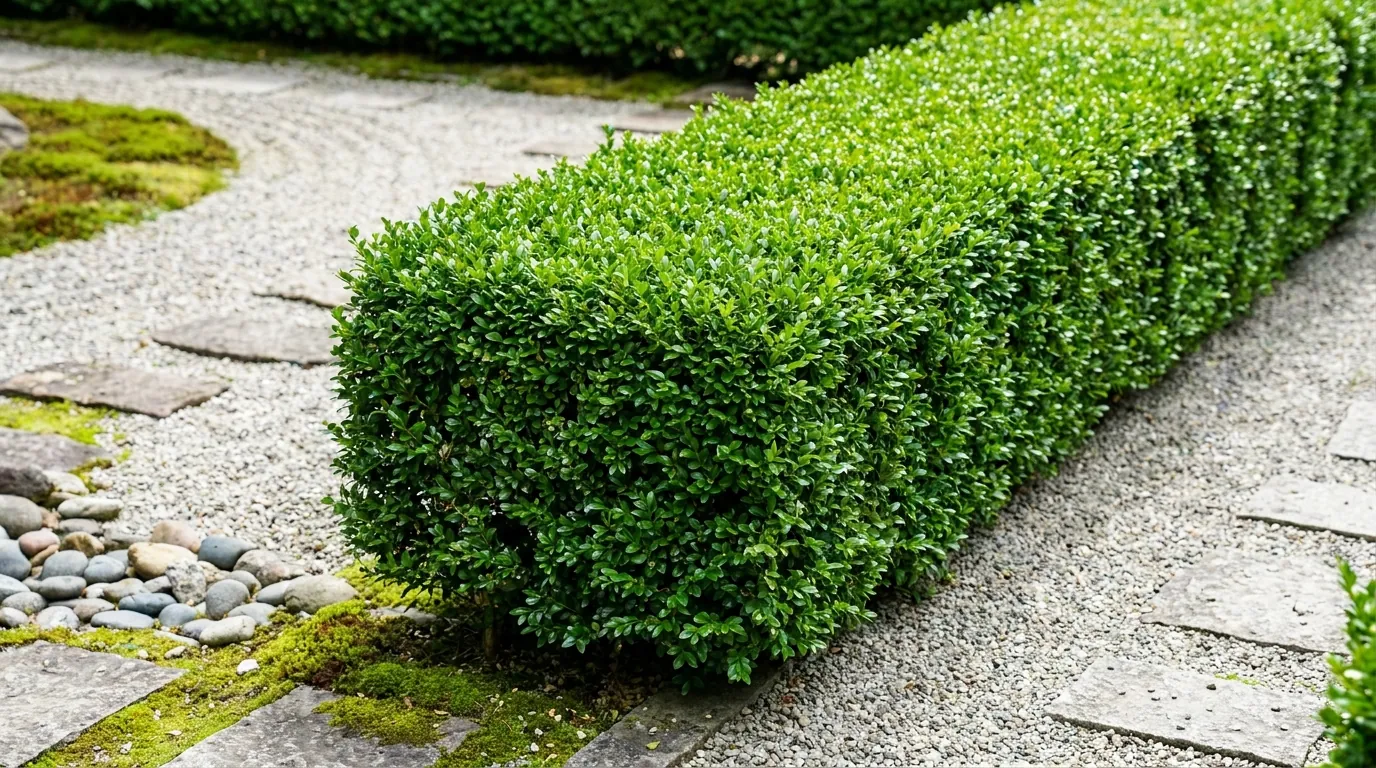
Japanese Box (Buxus microphylla var. japonica) is best understood as a slow-to-moderate, small-leaved evergreen that most Australian growers keep as a low formal hedge of roughly 0.3–1 m, even though left unclipped it can reach about 1–2 m tall and 1–1.5 m wide over several years. Australian nurseries such as Australian Plants Online, Nurseries Online and Garden Express consistently describe that 1–2 m mature range, and it is the size we plan around on real jobs.
Weighing up hedge species? Our Lilly Pilly hedge guide compares the most popular Australian screening plants.
The one thing worth saying up front, because it decides almost everything else: Japanese Box is the box you choose when the garden gets hot or humid. It holds up in warm temperate, subtropical and coastal conditions far better than traditional English Box, and it is a little faster and coarser as the trade-off. If you garden in a cool district and want the tightest, darkest formal line, English Box is still the classic — we cover that comparison in full below.
How big Japanese Box actually gets
Botanically this is Buxus microphylla var. japonica — Kew’s Plants of the World Online lists that as the accepted name under the species Buxus microphylla Siebold & Zucc. In the trade you will also see it sold simply as “Buxus japonica” or “Japanese Box”, which are the same plant.
| Australian source | Published size |
|---|---|
| Australian Plants Online | Around 1–2 m tall, kept lower as a hedge |
| Nurseries Online | Commonly 1–1.5 m as a maintained hedge, to ~2 m unclipped |
| Garden Express | Hardy evergreen, typically hedged well below its natural height |
| Evergreen Growers | Dense hedging form, width roughly 1–1.5 m if unclipped |
For planning, we treat Japanese Box as a low-to-medium hedge plant: excellent from about 30 cm up to knee- or waist-height, workable up to around a metre, and only reaching towards 2 m if you deliberately stop clipping it for years. It is not a fast privacy screen, and it is not the plant for a 2.5 m boundary hedge — there are better choices for that, and we would say so rather than oversell box.
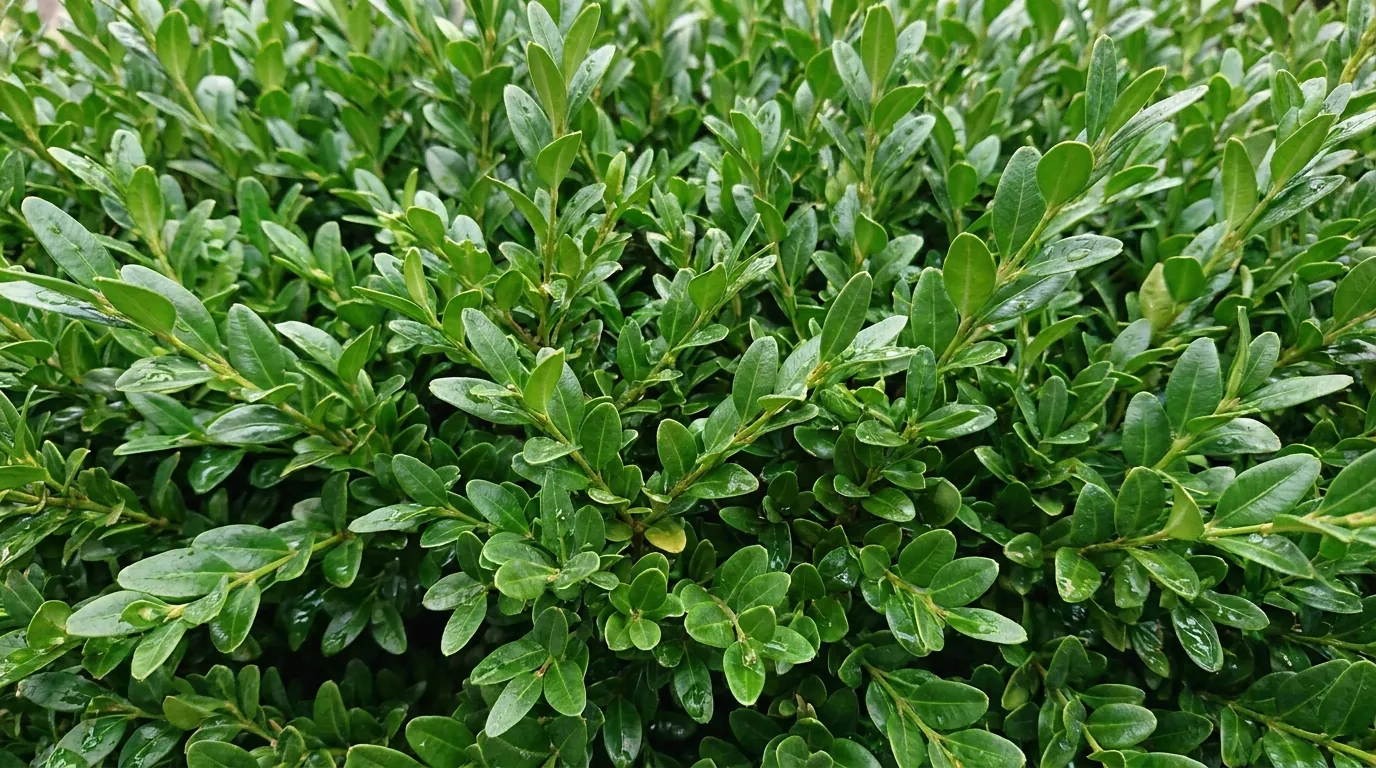
The foliage is the whole reason it works as a formal hedge
The leaves are small, rounded, glossy and densely packed, which is exactly what lets box hold a crisp clipped edge that larger-leaved plants cannot. Japanese Box foliage is a fraction coarser and a slightly lighter, fresher green than English Box, and it holds that colour better through heat rather than bronzing or dulling.
On our own jobs, that density is the point of using box at all. When a client wants a sharp geometric line, a parterre or a clean edge along a path, the tight small-leaf habit is what makes the shape read as deliberate rather than shaggy. If a design does not actually need that formality, we will often suggest something faster and cheaper instead.
How fast it grows — and why we don’t promise a fixed number
Australian nurseries generally describe Japanese Box as moderate-growing and notably quicker than other box, with several putting it at roughly 15–20 cm a year, and some suggesting up to about 30 cm in a warm season with good soil and water. Garden Express and others note it reaches a usable hedge size in about three to five years.
We report those figures as nursery guidance, not a guarantee. Real growth depends on climate, soil, water and how often you clip — and regular clipping, which is the whole point of a formal hedge, deliberately slows upward growth in exchange for density. So on a job we judge progress by how well the hedge is thickening and holding its face, not by chasing a centimetres-per-year number.
Spacing depends on the hedge you actually want
This is where most box hedges are won or lost. Plant too far apart and the gaps take years to close; plant sensibly and the line knits together far sooner.
| Situation | Typical Australian spacing |
|---|---|
| Low formal hedge / edging (tubestock–140 mm) | About 25–30 cm apart (≈3–4 plants per metre) |
| Larger stock (200 mm) | Around 3–4 plants per metre |
| Advanced stock (300–400 mm) | About 2–3 plants per metre |
| Looser, taller informal line | Wider, around 40–60 cm apart |
For a genuinely formal low hedge, we lean to the closer end — around 25–30 cm from smaller stock — because a box hedge is judged on how solid and continuous the face is, and tighter spacing gets you there faster. For a taller or more relaxed line, spacing out is fine and cheaper.
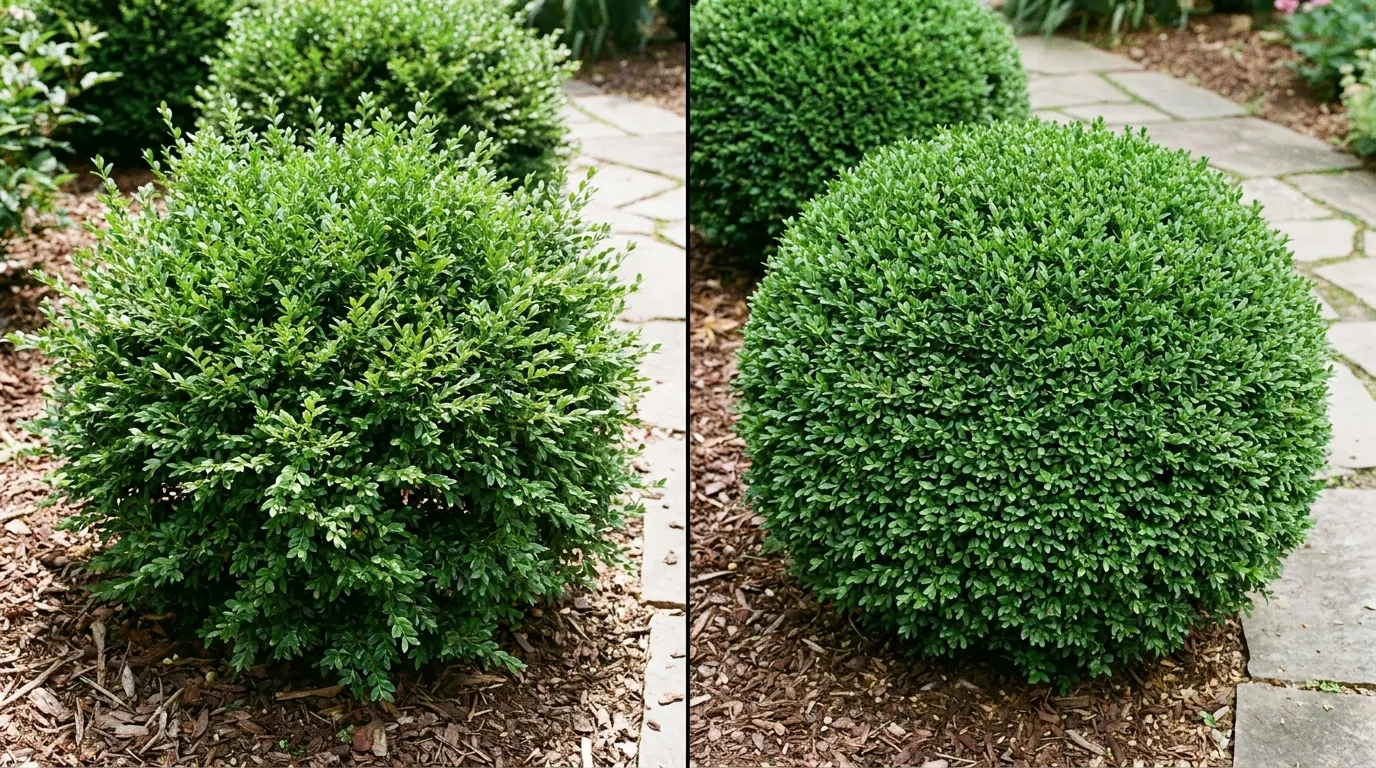
Japanese Box vs English Box: which one for your climate
This is the decision most people are really trying to make, so it deserves a straight answer rather than a list of adjectives.
| Japanese Box | English Box (Buxus sempervirens) | |
|---|---|---|
| Leaf & colour | Slightly coarser, fresher green, holds colour in heat | Finer, darker, very tight |
| Growth | A little faster | Slower, denser habit |
| Heat & humidity | Handles it well; warm temperate, subtropical, coastal | Prefers cooler districts; can struggle in heat/humidity |
| Cold | Frost tolerant once established | Very cold hardy; excellent in cool/cold districts |
| Best for | Most Australian gardens, especially warm/humid | Cool-climate formal parterres and low hedges |
Ultimate Backyard, Flower Power and Gardening Australia all land in the same place: Japanese Box is the safer, more forgiving choice across most of Australia, while English Box remains the traditional pick in genuinely cool districts where its finer, darker line can be shown off without heat stress. If you are north of the temperate zone or anywhere hot and humid, Japanese Box is almost always the sensible call.
Full sun to part shade, and it isn’t fussy about soil
Australian sources list Japanese Box for full sun through to part shade, across sandy, loamy and clay soils. That adaptability is part of why it is such a workhorse hedge.
In practice we give it the best light the site allows, because more sun generally means a denser, better-coloured hedge. In shade it still grows but tends to open up. The non-negotiable is drainage: box dislikes sitting wet, so on heavy clay we improve the planting line and avoid low spots where water pools.
Frost and heat tolerance
Once established, Japanese Box handles light to moderate frost, which is why it performs across both warm and cool Australian districts. At the other end, it keeps growing through the kind of heat — 35°C and above — that stresses European box.
Young, newly planted box is more vulnerable at both extremes, so during establishment we water consistently through summer heat and avoid pushing soft new growth right before a hard-frost winter.
Pruning: little and often beats one hard cut
Box responds beautifully to shearing, which is exactly why it has been the hedging and topiary plant of choice for centuries. The reliable approach is light, regular clipping through the growing season rather than one heavy annual chop.
On our jobs we shape box while growth is soft, keep the base slightly wider than the top so light reaches the lower foliage, and avoid cutting hard right before frost so tender new growth isn’t caught out. Frequent light trims are what build the dense, solid face that makes a box hedge look professional.
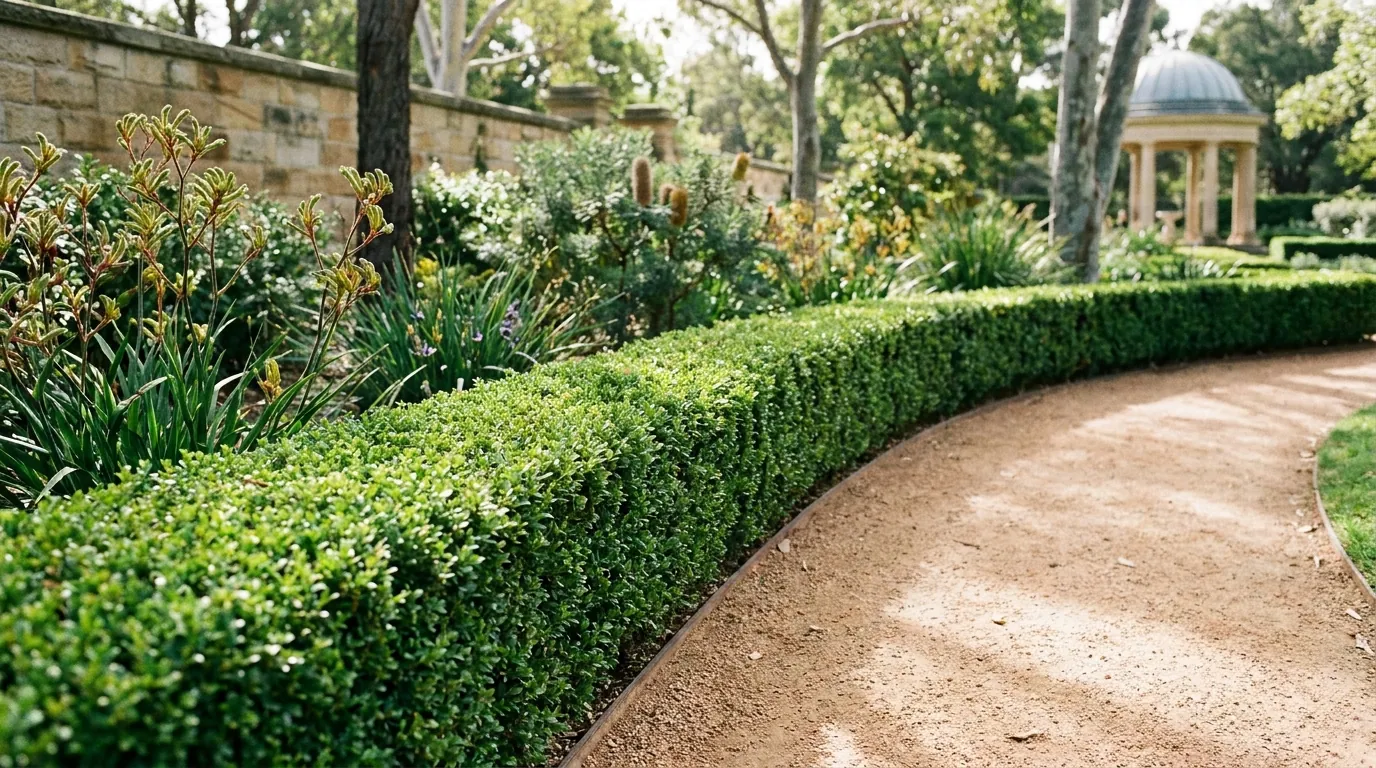
As low hedges, edging and parterres
This is where Japanese Box genuinely earns its place. A clipped box line defines a path, frames a garden bed, structures a formal courtyard or draws a parterre pattern in a way few other plants can, because the small dense leaf holds a crisp geometric edge.
We use it most for low structural lines — edging, borders and formal geometry — rather than as a tall screen. Kept in that role, in decent light with regular clipping, it is one of the most dependable formal plants available in Australia.
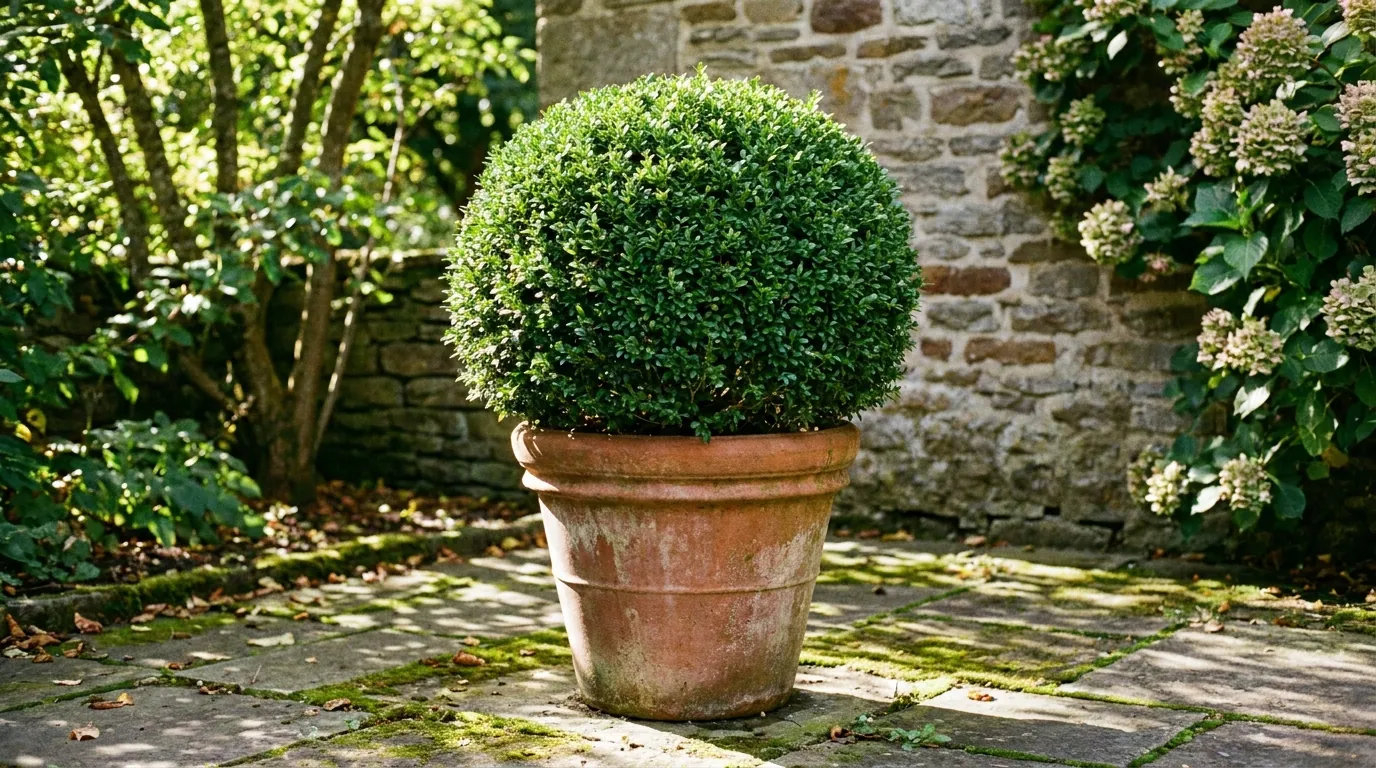
In pots and as topiary
Japanese Box takes very well to containers, balls, cones and standards, which makes it a favourite for framing entrances, flanking doorways or adding formal structure to courtyards and balconies.
In pots the two things that matter most are drainage and consistent watering — a container dries out far faster than open ground, and box will thin if it swings between bone-dry and waterlogged. We use a good free-draining mix, keep watering steady, and clip regularly to hold the shape tight.
Pests and diseases to watch
Japanese Box is relatively resistant to boxwood psyllid, one of the pests that troubles other box, but like all Buxus it can be affected by leaf spot and, more seriously, box blight. Box blight is the disease worth taking seriously because it can defoliate a hedge and spread through wet, still conditions and on tools.
Our practical approach is prevention: give the hedge airflow and light rather than burying it in a damp, crowded planting, avoid overhead watering late in the day, and clean pruning tools between hedges if blight is a known problem in the area. If a hedge starts showing bare patches and dark leaf lesions rather than simple seasonal thinning, treat it as a possible disease issue and confirm it rather than just clipping over the top.
Where it fits — and where we’d choose something else
| Garden requirement | Japanese Box fit |
|---|---|
| Low formal hedge, edging or parterre | Excellent |
| Warm, humid or coastal climate | Excellent — better than English Box |
| Topiary, balls, pots and standards | Very good |
| Coolest districts wanting the finest, darkest line | Good, but English Box may suit better |
| Fast tall privacy screen (2 m+) | Poor fit — choose a faster, taller hedge |
| Low-effort, never-pruned informal planting | Poor fit — box earns its look through clipping |
For us the honest summary is simple: Japanese Box is the most reliable formal low-hedge and edging plant for the majority of Australian gardens, and the clear pick anywhere hot or humid. Its limits are equally clear — it is not a quick tall screen, and it only looks its best if you are prepared to clip it regularly.
Frequently asked questions
How big does Japanese Box grow?
Australian nurseries commonly list Japanese Box at around 1–2 m tall and 1–1.5 m wide if left unclipped, but it is almost always kept much lower as a hedge — anywhere from about 30 cm to a metre. It is best treated as a low-to-medium formal hedge rather than a tall screen.
How fast does Japanese Box grow?
It is moderate-growing and faster than other box. Several Australian nurseries put it at roughly 15–20 cm a year, occasionally up to about 30 cm in warm conditions with good soil, reaching a usable hedge size in about three to five years. These are general nursery figures, not guarantees, and regular clipping deliberately slows upward growth.
How far apart should I plant Japanese Box for a hedge?
For a low formal hedge from smaller stock, about 25–30 cm apart (roughly 3–4 plants per metre) is typical. Larger 300–400 mm plants can go around 2–3 per metre, and a looser informal line can be spaced wider at about 40–60 cm. Closer spacing closes the hedge face sooner.
What is the difference between Japanese Box and English Box?
Japanese Box has slightly coarser, fresher-green foliage, grows a little faster, and tolerates heat and humidity much better, which makes it the safer choice across most of Australia. English Box is finer, darker, slower and denser, and is very cold hardy, so it remains the traditional pick for cool-district formal hedges and parterres.
Is Japanese Box frost tolerant?
Yes. Once established it handles light to moderate frost, so it performs across both warm and cool Australian districts. Young, newly planted box is more vulnerable, so protect it during severe cold while it establishes and avoid forcing soft growth just before winter.
Does Japanese Box grow in full sun or shade?
Both. Australian sources list it for full sun through to part shade across sandy, loamy and clay soils. More sun generally gives a denser, better-coloured hedge, while in shade it still grows but tends to open up. Good drainage matters more than soil type.
When and how should I prune Japanese Box?
Clip lightly and regularly through the growing season rather than making one hard annual cut. Keep the base slightly wider than the top so light reaches the lower foliage, and avoid cutting hard right before frost so tender new growth is not damaged. Frequent light trims build the dense face that makes box look formal.
Is Japanese Box affected by box blight or pests?
It is relatively resistant to boxwood psyllid but, like all box, can be affected by leaf spot and box blight. Box blight is the serious one, spreading in wet, still conditions and on tools. Prevention is best: give the hedge airflow and light, avoid late-day overhead watering, and confirm any suspected disease rather than just clipping over bare patches.


