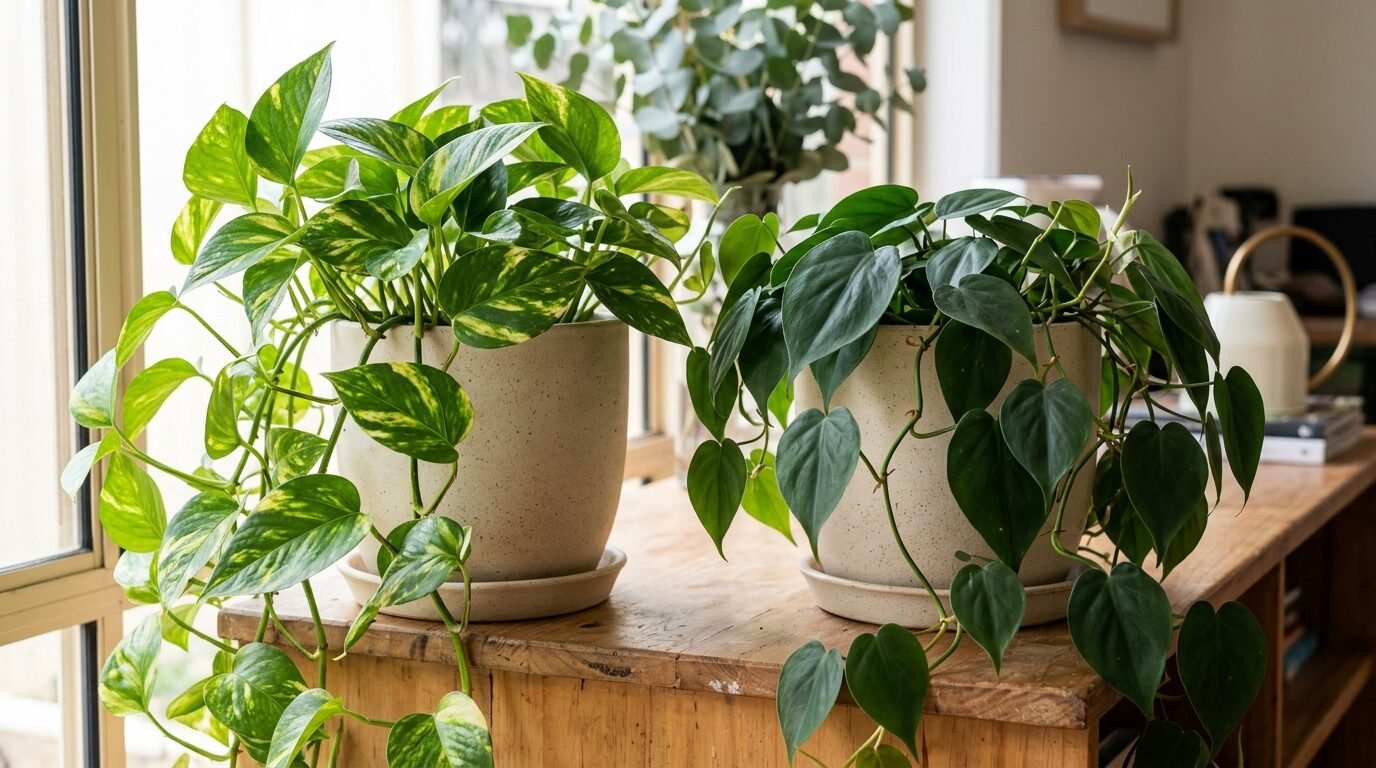
Pothos (Epipremnum aureum) and heart-leaf philodendron (Philodendron hederaceum) are both trailing aroids and are constantly mixed up. The quickest tells: pothos leaves are thicker, waxier and slightly bumpy with a grooved leaf stalk, while philodendron leaves are thinner, softer and matte with a round, smooth leaf stalk. A new philodendron leaf unfurls from a papery sheath (a cataphyll) that later dries and drops; a new pothos leaf emerges straight out of the previous leaf. Day-to-day care is almost identical, and both are toxic to pets.
✔ How this guide was checked
Identification points are drawn from established botanical descriptions of Epipremnum aureum and Philodendron hederaceum — petiole shape, cataphylls, leaf texture and aerial-root habit — chosen because they’re visible to an ordinary buyer without a hand lens. Care comparisons reflect how both behave as indoor plants in Australian homes. Pet-safety wording is kept conservative; both genera contain calcium oxalate.
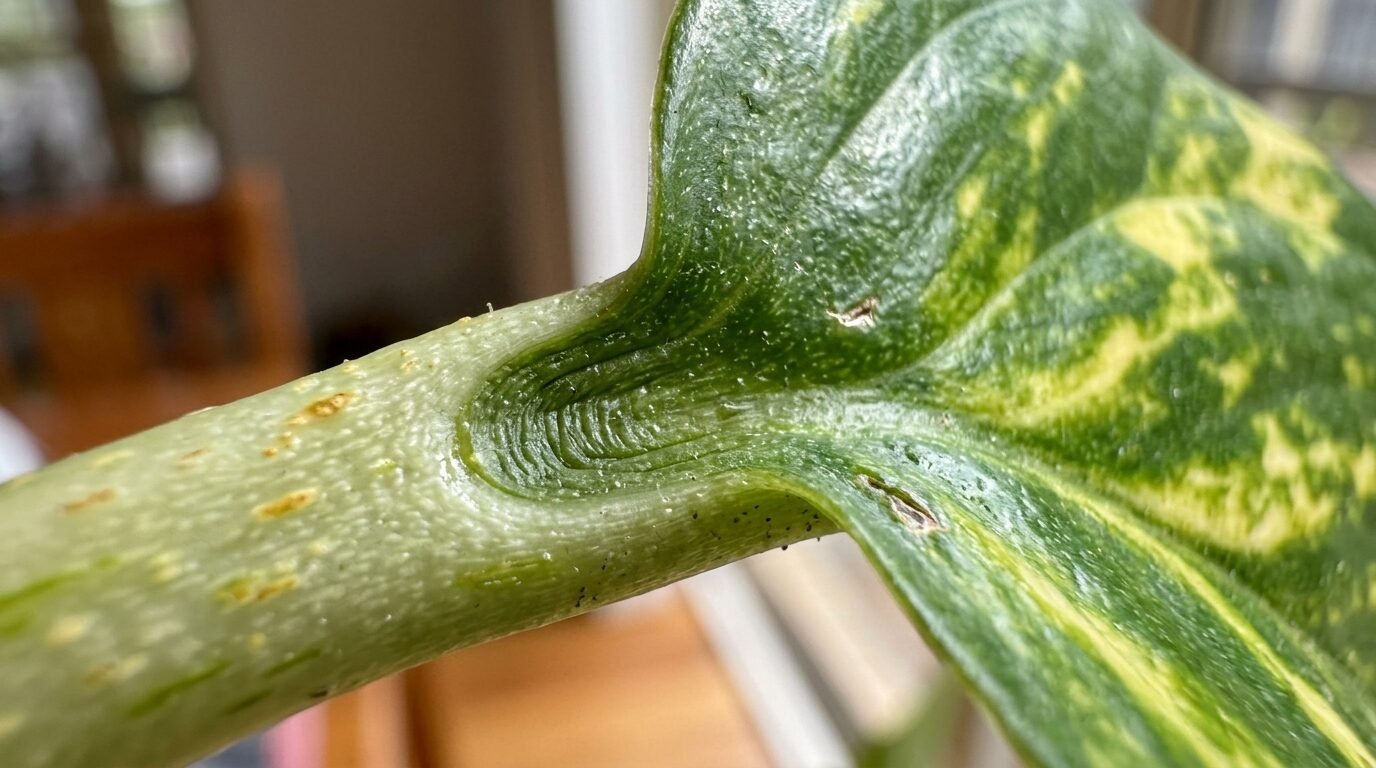
Macro of a glossy pothos leaf showing the grooved leaf stalk
Why they get confused
Pothos and heart-leaf philodendron are sold side by side, both trail or climb, both have glossy heart-shaped leaves, and both are marketed as near-indestructible beginner plants. They’re even in the same plant family (Araceae). But they’re different genera, and once you know what to look for you can tell them apart at a glance — even without a label.
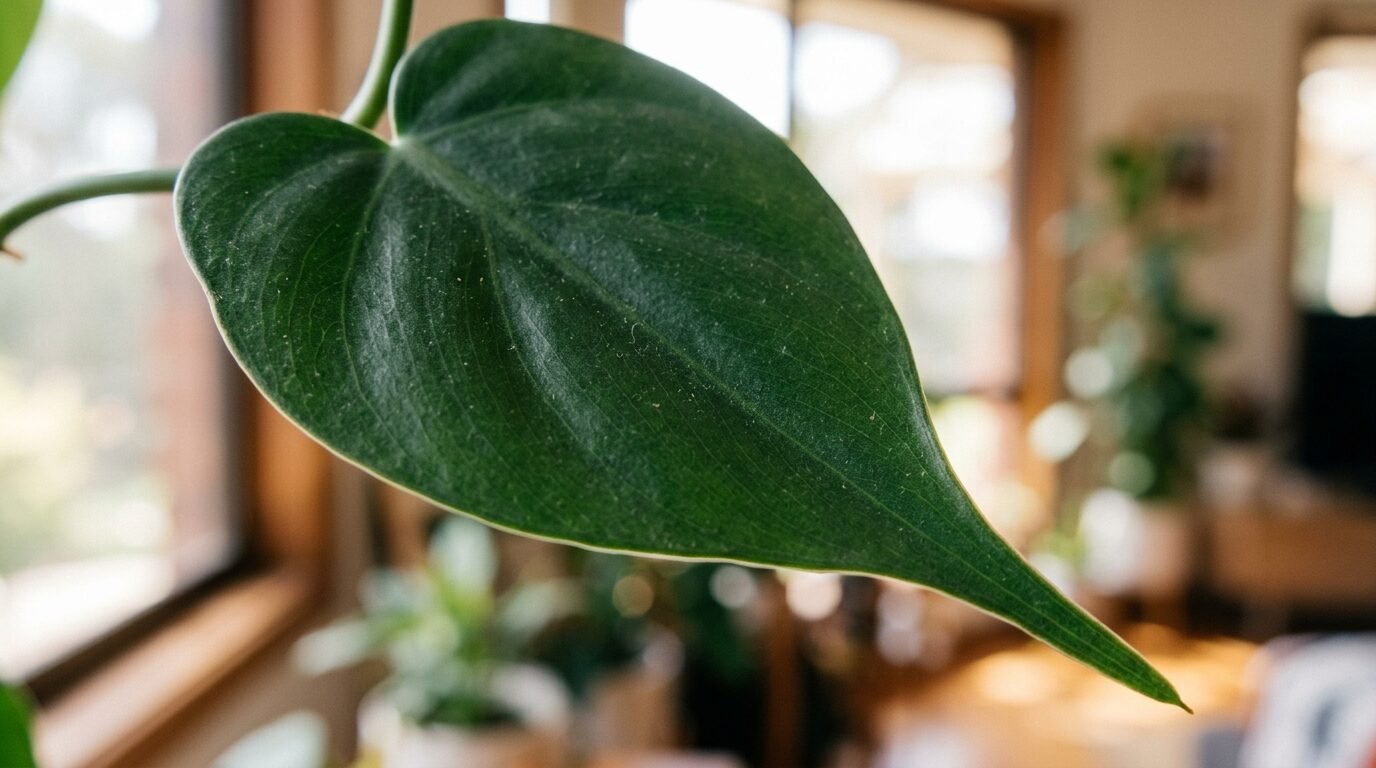
Macro of a soft matte heartleaf philodendron leaf with a long drawn-out tip
The five reliable tells
Feature
Pothos (Epipremnum aureum)
Heart-leaf Philodendron (P. hederaceum)
Leaf texture
Thick, waxy, slightly leathery, faintly bumpy
Thinner, softer, smooth and matte
Leaf shape
Asymmetric heart, shorter tip
More even heart, longer drawn-out tip
Leaf stalk (petiole)
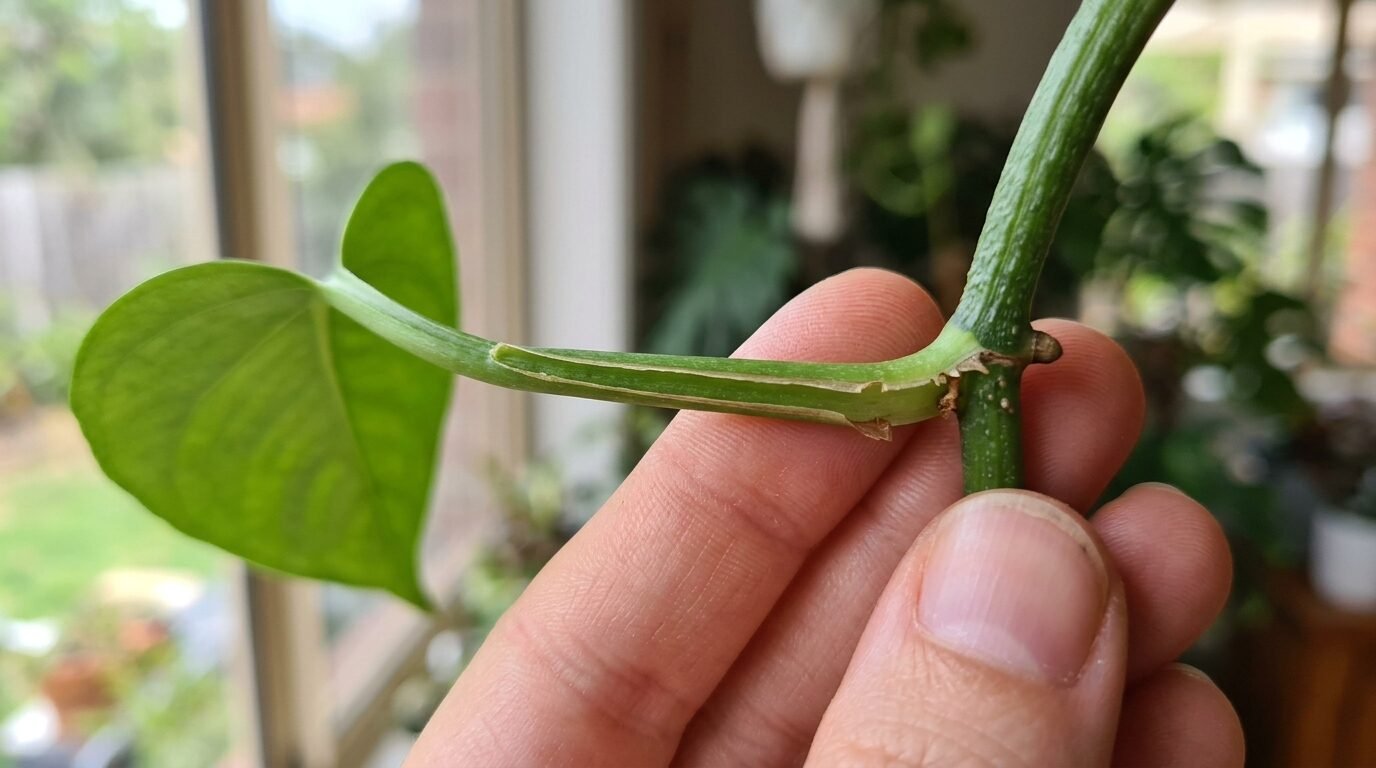
Grooved / indented along the top, slightly flattened
Rounded and smooth in cross-section
New growth
Emerges green, straight from the previous leaf
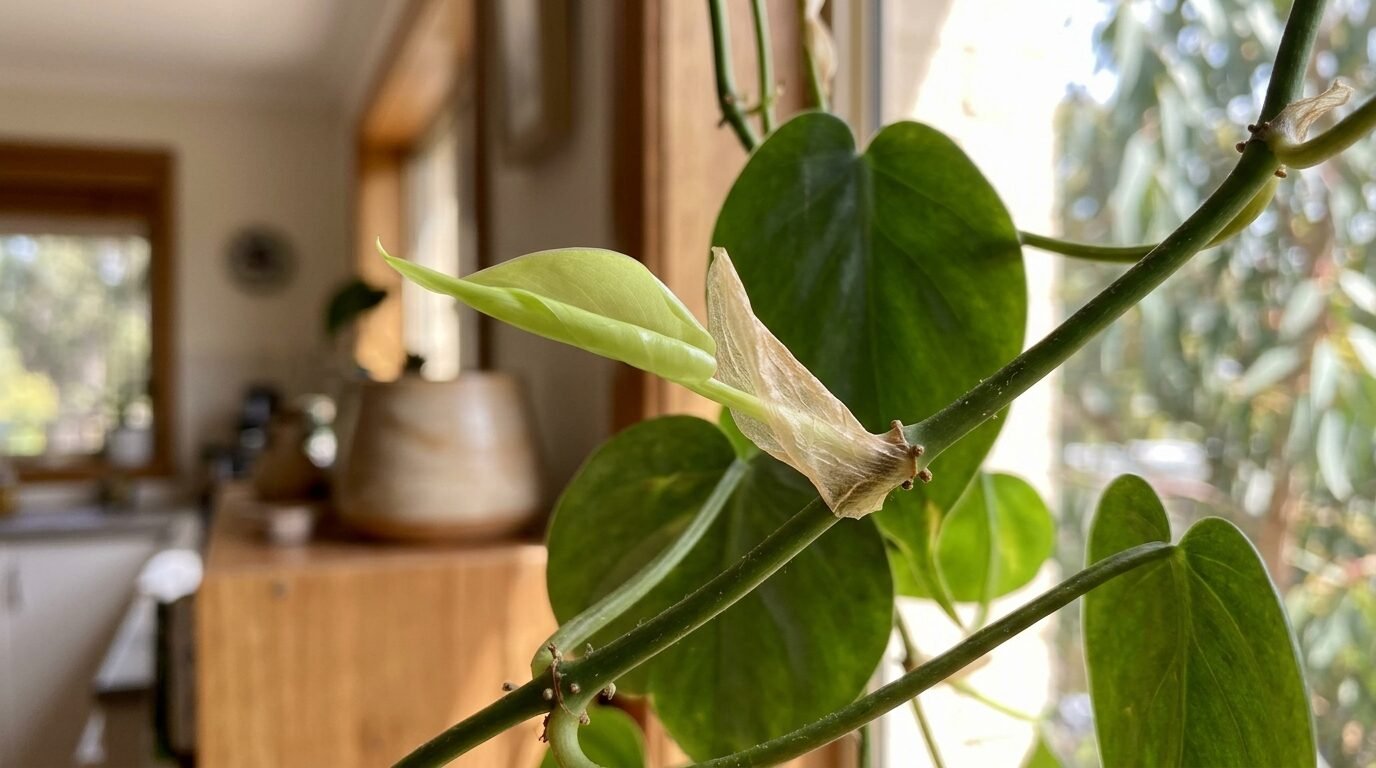
Emerges from a papery sheath (cataphyll); often bronze/translucent at first
Aerial roots
One thick, stubby root per node
Often several thinner roots per node
Variegation
Commonly gold, white or lime
Usually solid green (some cultivars like Brasil excepted)
A philodendron new leaf unfurling from a papery cataphyll sheath
The single best check: the leaf stalk
If you only remember one thing, remember the petiole — the stalk joining the leaf to the vine. Run a fingernail along the top of it. On a pothos it has a distinct groove or channel and feels slightly flat-topped. On a philodendron it’s smooth and round all the way along. This one feature is reliable even on a young plant with plain green leaves, which is exactly when the two are hardest to separate.
A hand holding a pothos vine, close-up on the leaf stalk
The second-best check: how new leaves appear
Watch where a new leaf comes from. A philodendron grows a thin papery sheath called a cataphyll; the new leaf unfurls out of it, and the sheath then dries to a brown papery strip and eventually falls off. A pothos has no cataphyll — the new leaf simply pushes out of the centre of the most recent leaf. If you keep finding little papery brown strips on the soil, you have a philodendron.
On colour
Variegation is a helpful hint, not a rule. Gold, white or lime markings almost always mean pothos, because most common philodendrons are solid green. But variegated philodendrons do exist (‘Brasil’, ‘Rio’), so don’t rely on colour alone — check the petiole. For the full pothos line-up see our guide to pothos varieties.
Do they need different care?
For everyday purposes, no — if you can keep one alive, you can keep the other. Both want bright, indirect light, a chunky free-draining mix, and watering once the top few centimetres have dried. The small differences are:
Low light: heart-leaf philodendron is a touch more forgiving of dimmer spots than most pothos, though neither truly thrives in deep shade. See how much light Devil’s Ivy needs.
Moisture: pothos is a little more tolerant of being forgotten and drying out; philodendron prefers slightly more consistent moisture.
Leaf feel: because philodendron leaves are thinner, they wilt and bounce back faster, which can make watering mistakes easier to read.
Both root readily from stem cuttings the same way — the method in our propagation guide works for either plant.
Both are toxic to cats and dogs
Pothos and philodendron both contain insoluble calcium oxalate crystals, which can irritate the mouth and cause drooling or vomiting if chewed. Neither is pet-safe. More detail in is Devil’s Ivy toxic to cats and dogs — the same cautions apply to philodendron.
So which should you buy?
Honestly, either. Choose a pothos if you want variegation and a plant that shrugs off the odd missed watering; choose a heart-leaf philodendron if you want soft, uniform green foliage and a plant that copes a little better in a less-bright room. Many Australian plant lovers end up with both — and now you can tell visitors which is which.
Frequently asked questions
Is Devil’s Ivy a pothos or a philodendron?
Devil’s Ivy is a pothos — Epipremnum aureum. It’s often mislabelled as a philodendron in shops, but botanically it’s a separate genus.
What’s the easiest way to tell pothos from philodendron?
Feel the leaf stalk. A pothos petiole has a groove along the top and feels slightly flattened; a philodendron petiole is smooth and round. This works even on plain green plants.
Do philodendrons have cataphylls and pothos don’t?
Yes. Philodendron new leaves emerge from a papery sheath (cataphyll) that dries and drops. Pothos leaves emerge directly from the previous leaf with no sheath.
Are pothos and philodendron leaves different?
Pothos leaves are thicker, waxy and slightly bumpy with a shorter tip; philodendron leaves are thinner, softer, matte and more evenly heart-shaped with a longer tip.
Can I care for them the same way?
Almost exactly. Both want bright indirect light, free-draining mix and watering when the top few centimetres dry. Philodendron tolerates dimmer light slightly better; pothos tolerates drying out slightly better.
Is one better for beginners?
Both are excellent beginner plants. Pothos is marginally more drought-forgiving, which can make it the safer pick if you tend to forget watering.
Do they both climb?
Yes. Both are climbers that will also trail. Given a moss pole and good light, both produce larger leaves as they climb.
Are both toxic to pets?
Yes. Both contain calcium oxalate crystals and can irritate a cat or dog’s mouth and stomach if chewed. Keep both out of reach.