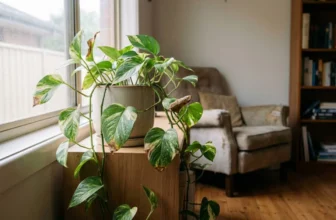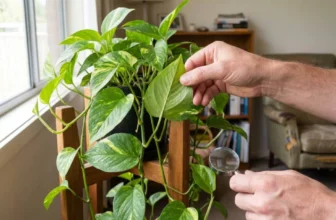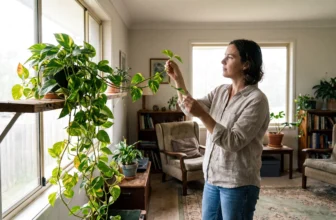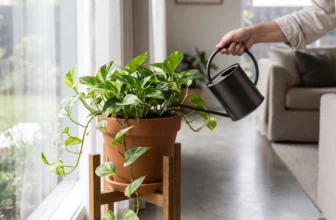

Devil’s Ivy is not simply an illegal weed across Australia — but it should not be treated as environmentally harmless outdoors either. Queensland Parks has documented Epipremnum aureum as an invasive plant of concern at Fitzroy Island National Park, and viable cuttings can root readily when they are discarded in suitable conditions.
That is the honest answer, and the rest of this guide explains what it actually means for you — including a naming problem that trips up almost everyone, and the one legal duty you do carry even though it remains commonly sold as an indoor ornamental.
New to the plant generally? Start with our complete Devil’s Ivy care guide for Australia.
🧬 The Australian Naming Trap (Read This First)
This is the part that catches people out, including people who are trying to do the right thing.
The Australian databases are not wrong. Taxonomic treatments genuinely differ, and reasonable botanists disagree about whether the golden-leaved plant is its own species or a cultivar of the native one. But it means the name alone cannot tell you whether a vine in a Queensland forest is a weed or a local.
🇦🇺 What the Queensland Evidence Actually Shows
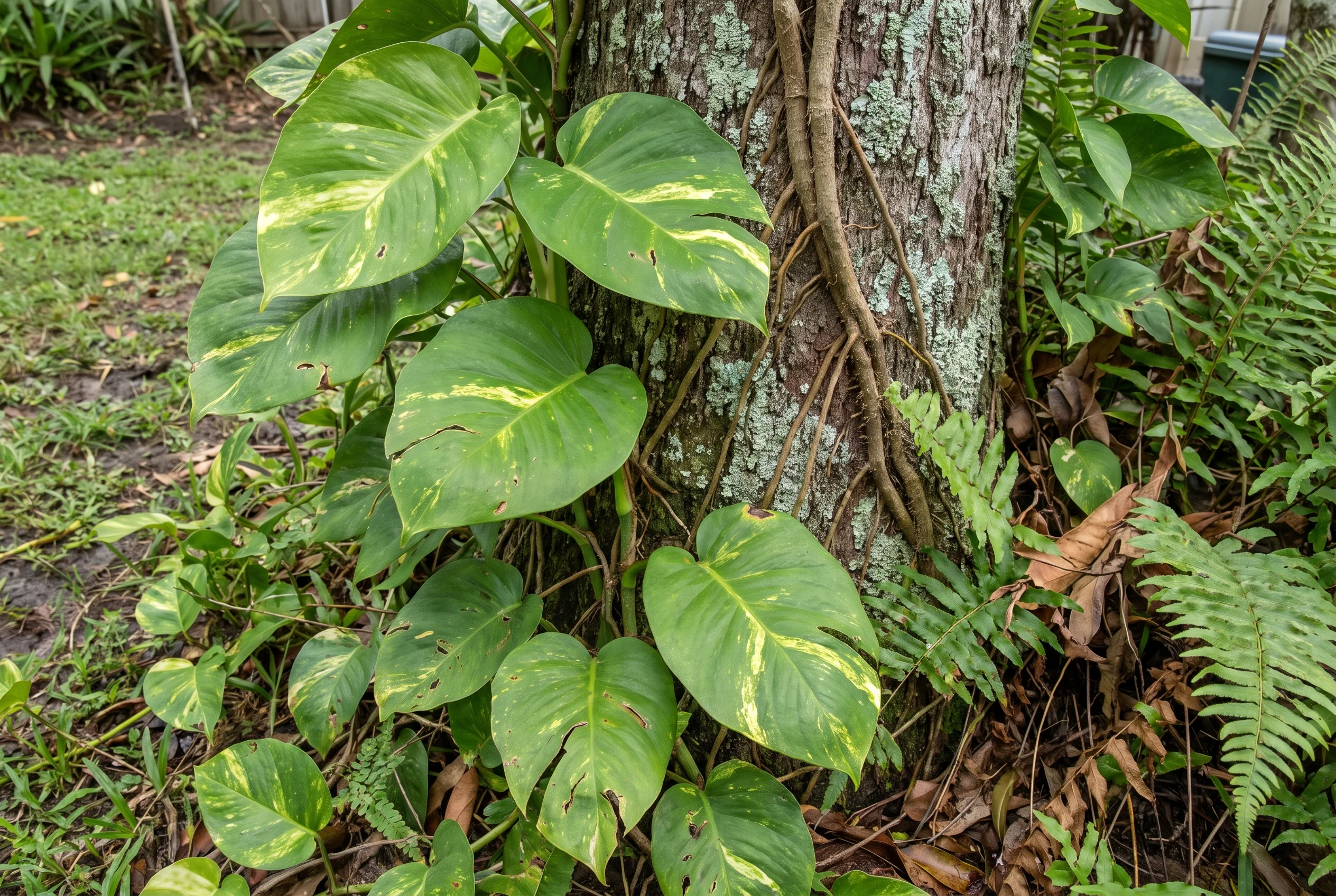
Queensland Parks, in its management plan for Fitzroy Island National Park, names Pothos (Epipremnum aureum) — Devil’s Ivy — as a plant of concern in the park because of its invasive nature. That document uses the correct name for the cultivated houseplant, which is why it is a usable piece of evidence rather than a naming muddle.
That is a real, documented Australian record of this plant behaving invasively in a protected area. It is not the same thing as saying it is rampant across the country, and we are not going to claim that. What it does establish is simple: this plant can and does escape into Australian bushland, and land managers treat it as a problem when it does.
📖 Weed, Naturalised, Declared: They Are Not the Same Thing
Most of the confusion online comes from people using these terms interchangeably. They mean different things and carry different consequences.
⚖️ The Current Queensland Legal Frame
- Prohibited and restricted plants are separate legal categories with their own current lists. Those lists are the place to check legal status — not a blog, including this one.
- The Fitzroy plan’s old “Class 2 / Class 3” pest language is historical. It predates the current Biosecurity Act framework, so it should not be read as a statement of today’s legal status.
- Devil’s Ivy was named separately in that plan as invasive and of concern — which is a management judgement about its behaviour, not a legal listing.
- Everyone in Queensland has a General Biosecurity Obligation (GBO): a duty to take reasonable and practical steps to prevent or minimise biosecurity risks under your control — which includes not spreading weeds.
On legal status: we did not identify a Queensland-wide prohibition or restriction under the names we checked. Local requirements and other states may differ. This article is environmental guidance, not legal advice — check your state biosecurity list and your council.
✂️ How It Actually Spreads: Your Cuttings
This is the practical core of the whole issue, and it is the bit you control.
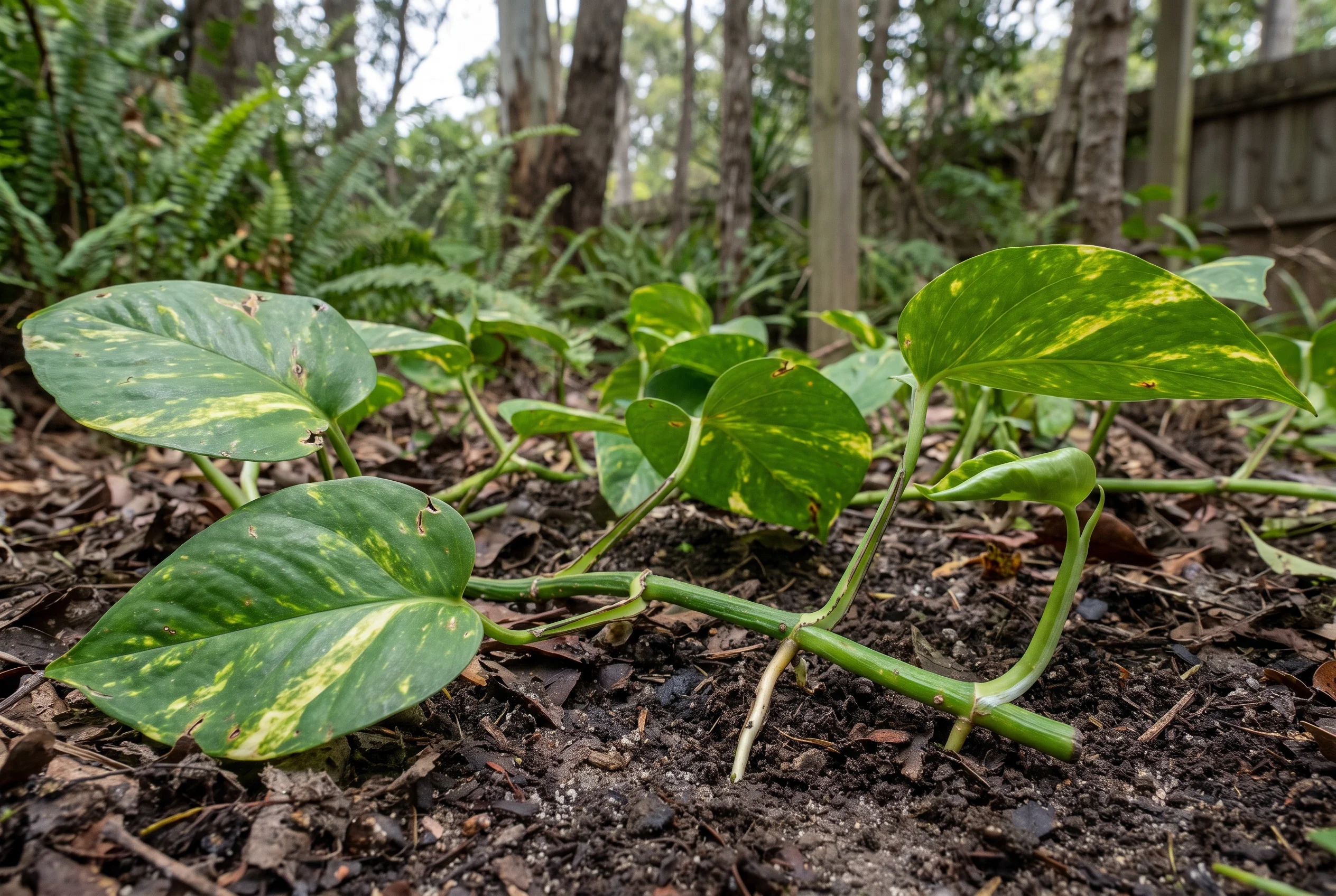
- Stem sections with nodes can root. That is the same quality that makes it so easy to propagate on a windowsill — see our propagation guide, which is about where to cut and how it roots.
- Dumped cuttings are a major avoidable risk. Seed spread is not the main focus of this guide; viable cuttings are the practical disposal risk gardeners can control.
- Do not let outdoor vines reach natural vegetation, waterways or moist ground, where nodes can strike and establish.
- Growing it indoors in a contained pot is a very different risk profile from dumping viable material outdoors. Owning the plant is not the problem. Releasing it is.
🪴 If You Want to Grow It Outdoors
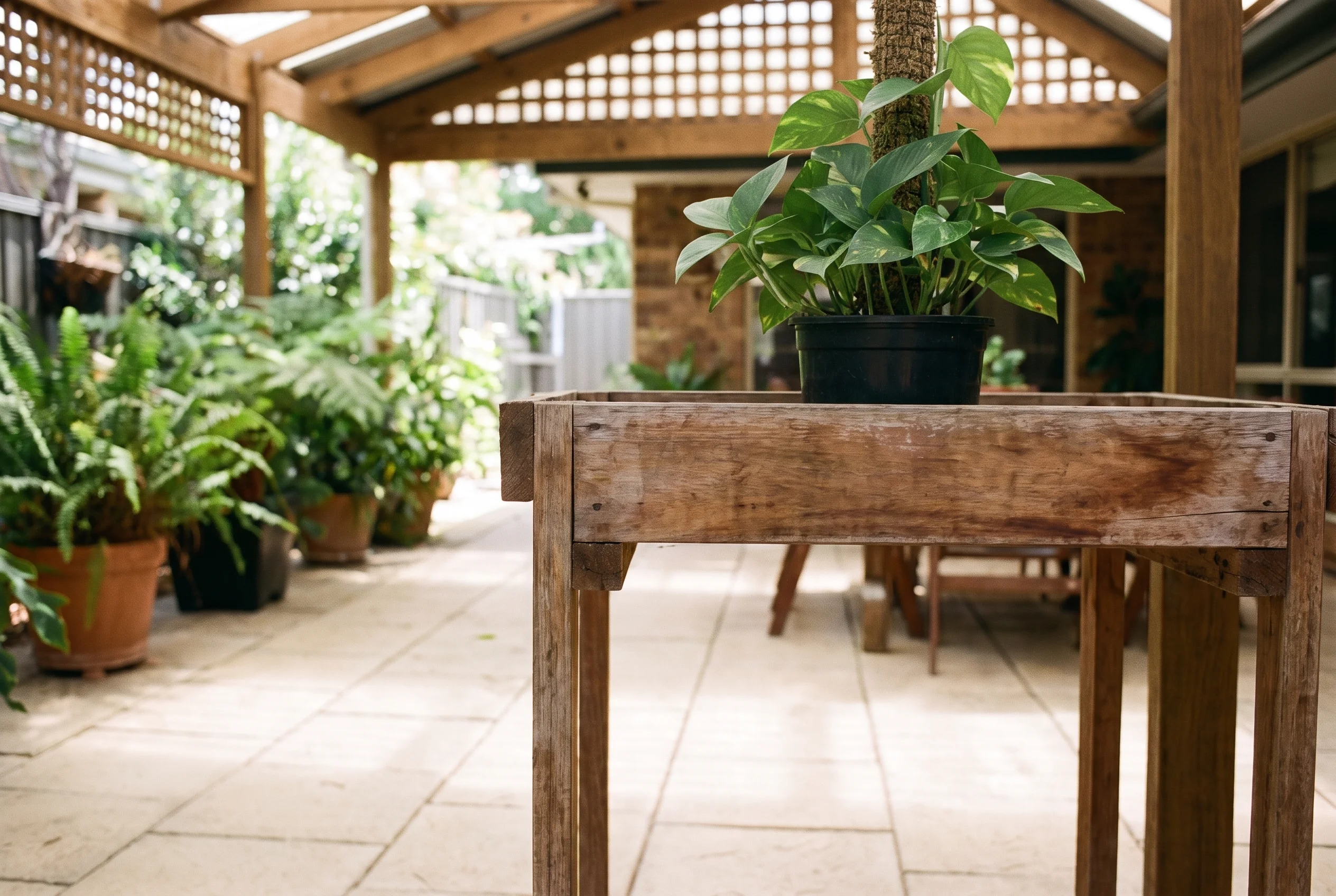
- Keep it in a contained pot.
- Prevent the vines from reaching soil or nearby vegetation. A trailing stem that touches damp ground is a stem that can root.
- Inspect it periodically for rooted nodes — where it has quietly anchored itself into a garden bed or a crack.
- Avoid planting it directly into the ground in warm, humid or frost-protected areas, which is where it has the best chance of establishing.
- Check your local council and state guidance before planting it outdoors anywhere.
🗑️ Disposing of It Responsibly
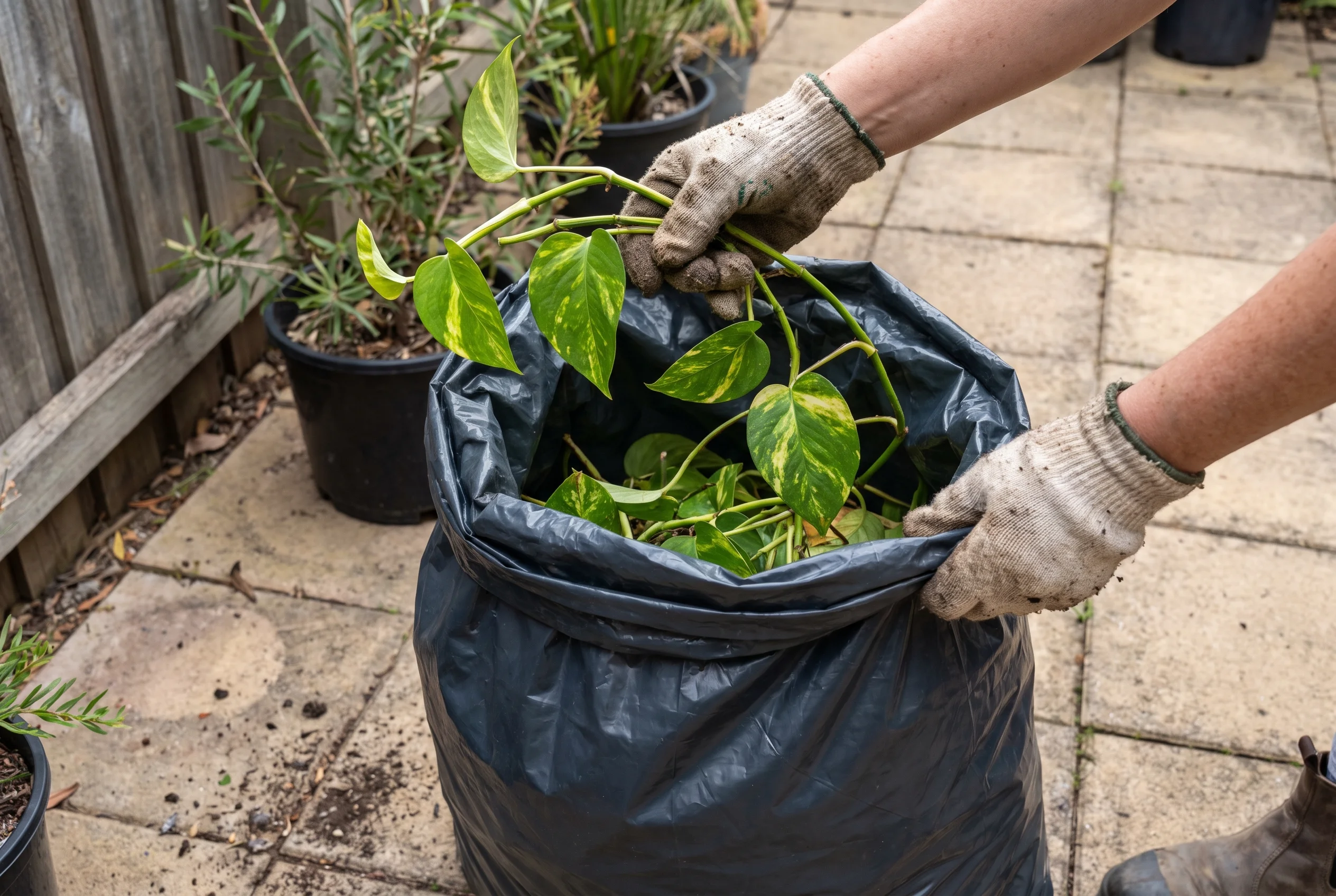
Do not dump viable cuttings in bushland, reserves, waterways, vacant land or over the back fence. Seal them for disposal, or follow your council’s current guidance for viable garden material.
If you are unsure whether your council’s green-waste stream is appropriate for viable material of this kind, ask them. Council processes vary, and we are not going to tell you what your particular facility does.
❓ Frequently Asked Questions
❓ Is Devil’s Ivy a declared or restricted invasive plant?
We did not identify a Queensland-wide prohibition or restriction under the names we checked. But that is not the same as a clean bill of health: Queensland Parks has documented it as an invasive plant of concern, and your General Biosecurity Obligation applies regardless of whether a plant appears on those lists. Check the current Biosecurity Regulation schedules and your council for the legal position.
❓ Are Devil’s Ivy and Epipremnum pinnatum the same thing?
Not quite, and this matters. Epipremnum pinnatum is native to northern Australia. The cultivated houseplant is Epipremnum aureum. Some Australian databases treat the houseplant as E. pinnatum ‘Aureum’, which places it under the native name — so a Queensland record under that name is not automatically proof that the houseplant has escaped.
❓ Can I grow Devil’s Ivy outdoors in a pot?
In a contained pot, keeping the vines off the soil and away from nearby vegetation, and with an eye on your local guidance — that is a much lower-risk approach than planting it into the ground. Check the vines periodically for nodes that have rooted where you did not intend.
❓ Can discarded cuttings regrow?
Yes. Stem sections with nodes can root in suitable conditions. That is precisely why dumped cuttings are a major avoidable risk, and why the plant that is so satisfying to propagate indoors is a problem when it is tipped out into a gully.
❓ Can I compost Devil’s Ivy?
Treat viable stem material as capable of striking roots. Whether a particular compost or green-waste process reliably destroys it depends on the process, so check your council’s current guidance rather than assuming. If in doubt, seal it for disposal.
❓ What should I do if it has rooted in the garden?
Remove the rooted sections carefully, including the nodes, and dispose of the material so it cannot re-strike — sealed, or per your council’s guidance. Do not toss viable material into a green pile at the back of the block, where it may have another chance to establish.
📚 Sources
- Queensland Parks — Fitzroy Island National Park and Marine Management Area management plan (documents Pothos, Epipremnum aureum, as of concern due to its invasive nature)
- Business Queensland — Invasive plants and weeds (prohibited and restricted categories; General Biosecurity Obligation)
- Flora of Australia / Atlas of Living Australia — Epipremnum pinnatum (native to northern Australia; cultivar-name treatment)
- Always check your current state biosecurity list and your local council. This article is environmental guidance, not legal advice.