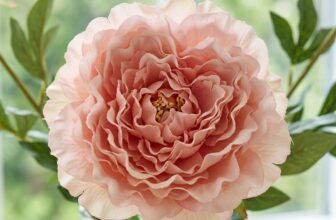

Artificial orchids are one of those flowers people either get very right or very wrong. A good faux orchid can look calm, elegant and expensive without needing the drama of a real orchid that refuses to flower again. A bad one looks like it has been sitting on a dentist reception counter since 2006.
I like artificial orchids when they are styled simply. A white phalaenopsis in a ceramic pot. A soft pink orchid on a bathroom shelf. A taller stem in an office reception where nobody has time to nurse a real plant through low light and air-conditioning. Orchids already have a sculptural shape, so they do not need much fuss.
The catch is that orchids are close-up flowers. People notice the petals, roots, leaves and pot. If the material is too shiny or the stems are too stiff, it gives the game away quickly.
Orchids are close-up flowers — petals, roots, leaves and pot all have to look right. A white phalaenopsis in a simple ceramic pot is the safest choice. Avoid shiny petals and stiff, straight stems.
| Orchid type | Best for | Watch out for |
|---|---|---|
| Phalaenopsis | Bathrooms, offices, entry | Stems too straight |
| Cymbidium | Events, larger displays | Harsh colours |
| Dendrobium | Tall vases, modern rooms | Stems too stiff |
| Vanda | Strong colour displays | Too glossy / fake |
Why artificial orchids work well in Australian homes and offices
Real orchids are beautiful, but they are not always as easy as people hope. They need the right light, watering, drainage, humidity and patience. Then, after flowering, they sit there looking like a pair of green leaves in a pot while you wonder what you did wrong. Artificial orchids solve that problem. They stay in bloom all year, handle low-light corners, do not mind air-conditioning and never punish you for going away for a week.
In Australia, artificial orchids are useful for bathrooms, office reception desks, medical and dental clinics, home entry tables, apartments and rentals, bedrooms, dining sideboards, cafés and salons, Airbnb styling and low-light rooms. They also suit modern interiors. Orchids are clean and upright, so they work well with white walls, stone benchtops, timber furniture, neutral tiles and simple pots.
Phalaenopsis orchids: the safest faux orchid choice
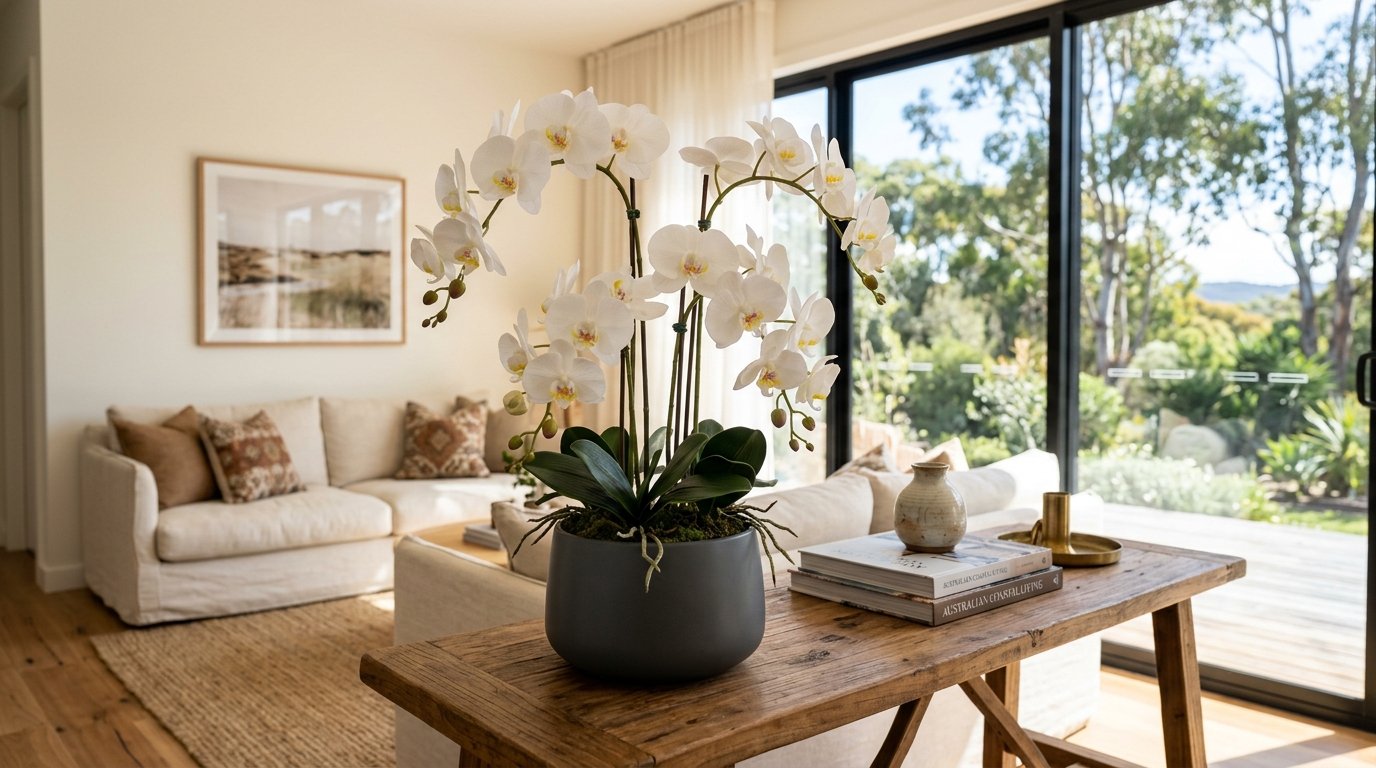
The phalaenopsis orchid, often called the moth orchid, is the one most people picture when they think of orchids. It has long arching stems and broad, rounded flowers. It is also the safest artificial orchid to use at home. A good artificial phalaenopsis should have gently curved stems, flowers facing in slightly different directions, soft matte or real-touch petals, realistic leaves at the base, simple buds near the top and a pot that does not look like an afterthought.
White phalaenopsis orchids are especially versatile. They suit bathrooms, bedrooms, entry tables and offices without clashing with the room. If you like that calm, clean look, our white artificial flowers guide gives good ideas for pairing white flowers with softer décor.
A single-stem orchid is best for small spaces like a bathroom vanity, bedside table or apartment entry. It should look neat, not lonely, and a good pot makes a big difference. Two stems are usually better for entry tables, console tables and office counters, giving height and fullness without turning the arrangement into a display stand. Three or more stems can work in a large reception area, salon or dining sideboard, but at home use them with care. Too many stems can look a bit display home, and not in the charming way.
Other artificial orchid types to know
Cymbidium orchids have fuller sprays and a slightly more formal look. They can be beautiful in larger arrangements or event styling, suiting dining tables, weddings, larger vases and formal living rooms. They look best when the flowers have proper shape and the colour is muted.
Dendrobiums have slimmer, upright stems with smaller flowers. They can look elegant in tall vases and modern arrangements, but the stems should not be too straight. Vanda orchids are bolder and often come in purple, pink or blue-purple tones. Artificial vanda orchids can look dramatic, but they are less forgiving, so use them when you want a strong colour statement. Some artificial orchids are sold as loose stems or branches rather than potted plants; these are useful for vases, wedding arrangements and mixed displays, but keep the vase simple.
Real-touch vs silk artificial orchids
This matters with orchids because the petals are often seen up close. Real-touch orchids usually have petals made from latex, polyurethane or similar soft materials. They often feel more like real orchid petals and can look excellent, with soft petal thickness, gentle curves, natural-looking centres and less fabric fraying. They are especially useful for bathrooms, offices and entry tables. The downside is that some real-touch orchids can look too rubbery or heavy. If the petal is thick enough to look like a fridge magnet, that is not the one.
Silk-style orchids are usually made from fabric or polyester. Better ones can still look good, especially from a short distance, and they are often lighter and better for larger arrangements or high shelves. The risk is frayed edges and shine. Fabric orchids with rough petal edges look cheap quickly.
What makes an artificial orchid look realistic?
- Soft, matte petals
- Detailed flower centres
- Naturally arched stems
- Thick leaves + realistic roots
- Glossy plastic petals
- Flat printed centres
- Perfectly straight stems
- Foam / plastic pot fill on show
Artificial orchids are not just flowers. The whole plant has to make sense: petals, stems, leaves, roots and pot.
Petals should not be too shiny. A little softness is fine; a glossy plastic shine is not. White orchids are especially unforgiving because sunlight shows every shine and shadow. Orchid centres are detailed, and cheap artificial orchids often skip that detail or paint it badly, so look for centres with natural shape, subtle colour, no messy glue and realistic throat markings.
Phalaenopsis stems should curve, not stand perfectly straight unless wired deliberately for a formal display. A natural arch makes the orchid feel calmer and more lifelike. Orchid leaves are broad and fleshy, so artificial versions should look firm but not like shiny green vinyl. Good leaves are deep green, slightly curved, not too glossy and arranged naturally at the base. Some better faux orchids include exposed roots, moss, bark chips or natural-looking pot fill, which makes a big difference. Avoid pots filled with flat black plastic or visible foam. Nothing says fake faster than dusty green florist foam peeking through.
Best artificial orchid colours for Australian homes
White is the safest and most elegant orchid colour. It suits modern homes, offices, bathrooms, bedrooms and entry tables, and works with almost every interior style from coastal to Hamptons to minimalist. It also looks clean in bathrooms and offices without feeling too decorative.
Pink orchids are softer and warmer. Pale pink, blush and dusty pink are easier to style than bright pink, and suit bedrooms, dressing tables, Mother’s Day arrangements, salons and guest rooms. For more pink pairing ideas, see our pink artificial flowers guide.
Purple orchids can look beautiful, especially in bathrooms and event styling, but they need restraint. Deep purple can feel rich; bright purple can look artificial very quickly, so choose muted plum, mauve or lavender-purple if the room is neutral. Yellow orchids can feel cheerful but are harder to style; soft buttery yellow is safer than bright yellow. Green orchids can look modern, but the quality has to be good. Blue orchids are usually a dyed-flower look even in real life, so use them only if the colour fits the space.
Potted artificial orchids vs loose orchid stems
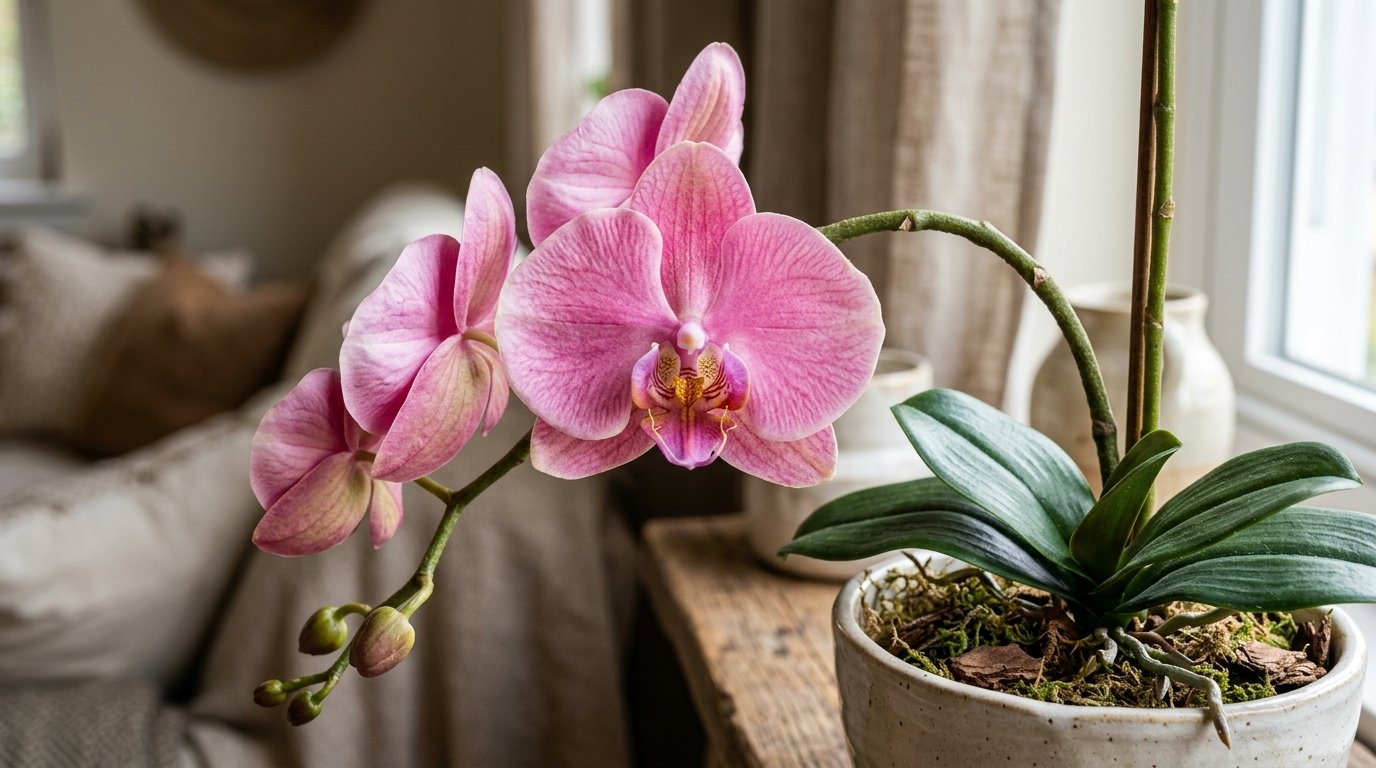
Potted orchids are the easiest option. They are ready to place and usually look more like a real plant. Use them for bathroom vanities, bedside tables, office desks, reception counters, entry consoles and rental homes. A good pot should be simple and heavy enough to balance the stems.
Loose stems are better when you want to create your own arrangement, for tall vases, wedding styling, mixed floral arrangements and event tables. Loose stems need a good vase and some support, otherwise they flop around or stand awkwardly. If you are unsure about vase height, width or shape, use our guide on choosing a vase with artificial flowers.
Styling artificial orchids in bathrooms
Bathrooms are one of the best places for artificial orchids. Real orchids can enjoy humidity, but bathrooms often have poor light or awkward temperature swings. Faux orchids do not care. White or pale pink orchids look especially good against white tiles, stone benchtops, timber vanities, grey bathrooms and matte black tapware. Use a small potted orchid on a vanity, shelf or window ledge, and keep it away from direct splash zones. Artificial does not mean it wants shampoo on its leaves. For small bathrooms, one stem is enough; for larger bathrooms, a double-stem orchid in a ceramic pot looks polished without trying too hard.
Styling artificial orchids in offices
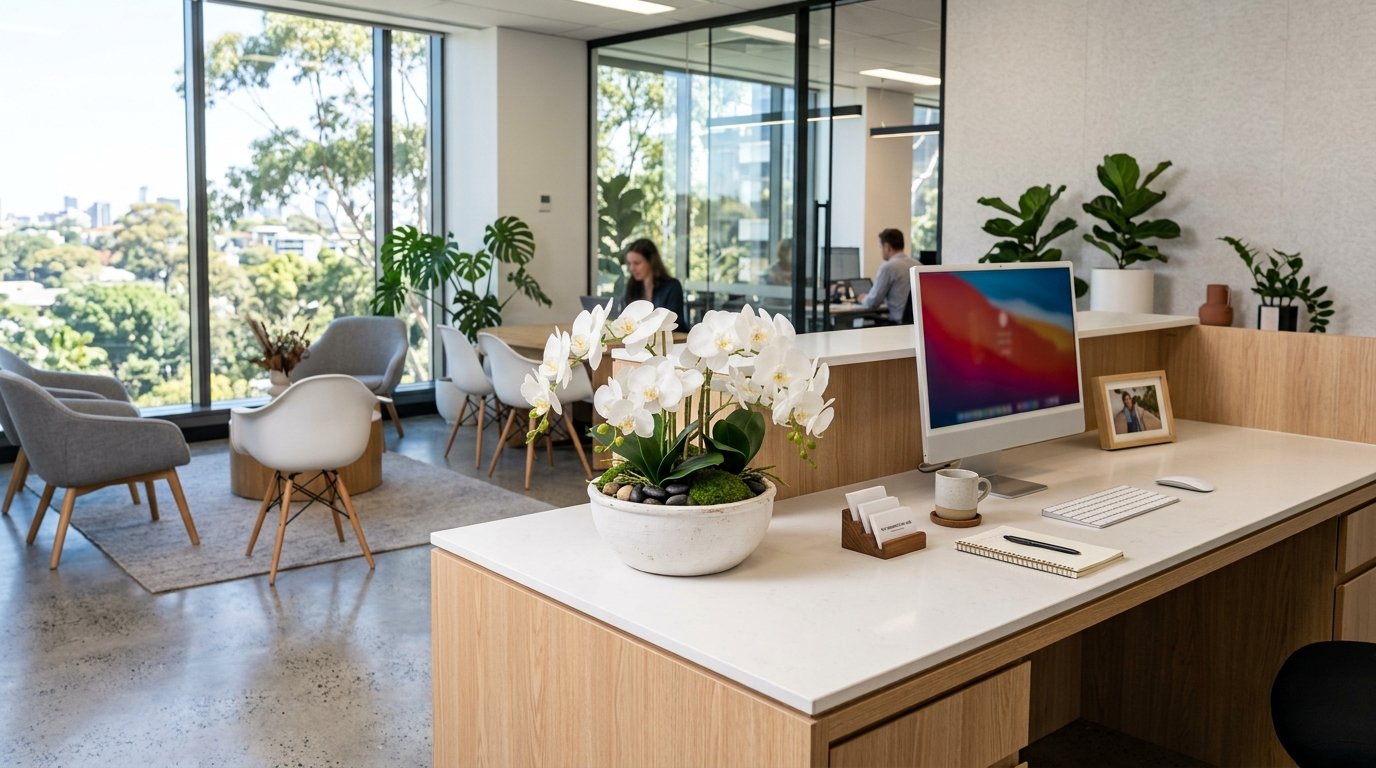
Artificial orchids are excellent in offices because they look tidy, formal and low-maintenance. They suit reception counters, waiting rooms, meeting rooms, executive offices, salon desks and clinic counters. White phalaenopsis orchids are usually the safest office choice; soft pink can work in beauty, wellness or home styling businesses. Avoid huge orchid arrangements unless the space is large. A reception counter does not need a floral tower blocking the EFTPOS machine.
Styling artificial orchids at home
A double-stem white orchid in a ceramic pot works beautifully on an entry console, giving height without clutter. In bedrooms, use soft pink, white or mauve orchids and keep the pot small and calm; bedrooms do not need corporate lobby energy. In living rooms, orchids work well on sideboards, shelves and coffee tables where their shape can be seen from the side. A small orchid can work in a kitchen, but keep it away from cooking grease. In dining rooms, a low potted orchid or a pair of small orchids can work on a sideboard; on the table itself, keep the height manageable.
Artificial orchids for weddings and events
Artificial orchids can be useful for weddings, especially when you want a clean, elegant flower that holds shape through the day. They work in bridal bouquets, corsages, buttonholes, arbour styling, table centrepieces and cake table flowers. White orchids suit classic weddings, pink orchids suit soft romantic styling, and purple orchids can work for evening events. Dendrobium and cymbidium orchids are often better for arrangements than potted phalaenopsis. For Australian weddings, artificial orchids can be practical in heat, air-conditioning and long setup windows. Fresh orchids can be lovely, but they are not always forgiving when the day runs behind. And wedding days always run behind. Anyone pretending otherwise has not been near a bridal party at 2 pm.
Can artificial orchids be used outdoors?
Some can, but only if they are outdoor-suitable or UV-treated. Most decorative potted orchids are intended for indoor use. Outdoors, artificial orchids may fade, collect dust, become brittle or lose petal shape. Covered patios are safer than full sun. If using orchids outdoors, place them under cover, away from harsh afternoon sun, out of heavy rain, and in a weighted pot so they do not blow over. Bathrooms, offices and indoor rooms are usually better homes for faux orchids than exposed outdoor areas.
How to clean artificial orchids
Artificial orchids need gentle cleaning, especially around the flower centres and leaves. Take the orchid outside if possible, shake it gently, dust petals with a soft makeup brush or clean paintbrush, wipe leaves with a dry or barely damp cloth, clean around the pot fill carefully, and use a cool low hairdryer for fine dust. Let everything dry before putting it back. Do not soak real-touch orchid petals unless the label says it is safe. For a deeper step-by-step process, read our guide on how to clean artificial flowers.
Common mistakes with artificial orchids
Shiny orchid petals look fake quickly, especially in white. A cheap pot can ruin a good orchid, so it should feel stable and suit the room. Phalaenopsis orchids need an arch; straight stems look unnatural. A few stems look elegant, but too many together can look like a hotel lobby display. The base matters too, so good leaves, moss, bark or realistic roots help the plant look believable. And indoor faux orchids are not made for Australian UV, so they can fade or age quickly outdoors.
My honest take
Artificial orchids are one of the better faux flowers for Australian homes and offices, but they demand quality. A cheap daisy can sometimes hide in a mixed bunch. A cheap orchid sits there on its own, announcing every flaw. For most homes, I would start with a white or soft pink phalaenopsis in a simple ceramic pot. For offices, white is safest. For bathrooms, keep it small and clean. For events, use higher-quality real-touch stems where people will see them up close. The goal is calm and elegant, not hotel lobby with a water feature that no longer works.