
Best Plants for Hot, West-Facing Gardens (Australia)

The best plants for a hot, west-facing Australian garden are tough, sun- and heat-loving species: hardy natives like Westringia, Grevillea, Banksia and Callistemon; Mediterranean plants like lavender, rosemary and olive; and succulents and ornamental grasses. A west-facing position takes the full force of the hot afternoon sun, so the plants that thrive there are the ones built for heat, reflected warmth and drying wind — not soft, moisture-loving species that scorch by mid-summer.
West-facing beds are one of the trickiest spots in an Australian garden, but they are only difficult for the wrong plants. Choose species adapted to heat and you get a low-maintenance, water-wise bed that looks good through the harshest part of the day.
Best plants for hot, west-facing spots
| Group | Good choices | Why they cope |
|---|---|---|
| Hardy natives | Westringia, Grevillea, Banksia, Callistemon | Evolved for heat, sun & poor soils |
| Mediterranean | Lavender, rosemary, olive, salvia | Built for hot, dry summers |
| Succulents | Agave, aloe, sedum, echeveria | Store water, love heat |
| Grasses | Lomandra, Dianella, ornamental grasses | Tough, sun-hardy, low care |
Why west-facing is harder than it looks
A west-facing bed gets sun during the hottest part of the day — the afternoon — when temperatures peak.
Afternoon sun is more punishing than morning sun because it arrives when the air and soil are already hot. Add reflected heat from walls, fences, paving or the house, plus drying afternoon winds, and it becomes one of the most demanding positions in the garden.
This is why plants that are perfectly happy in a morning-sun bed can scorch in a west-facing one — the aspect, not just the sun hours, is the challenge.
Hardy natives: first choice
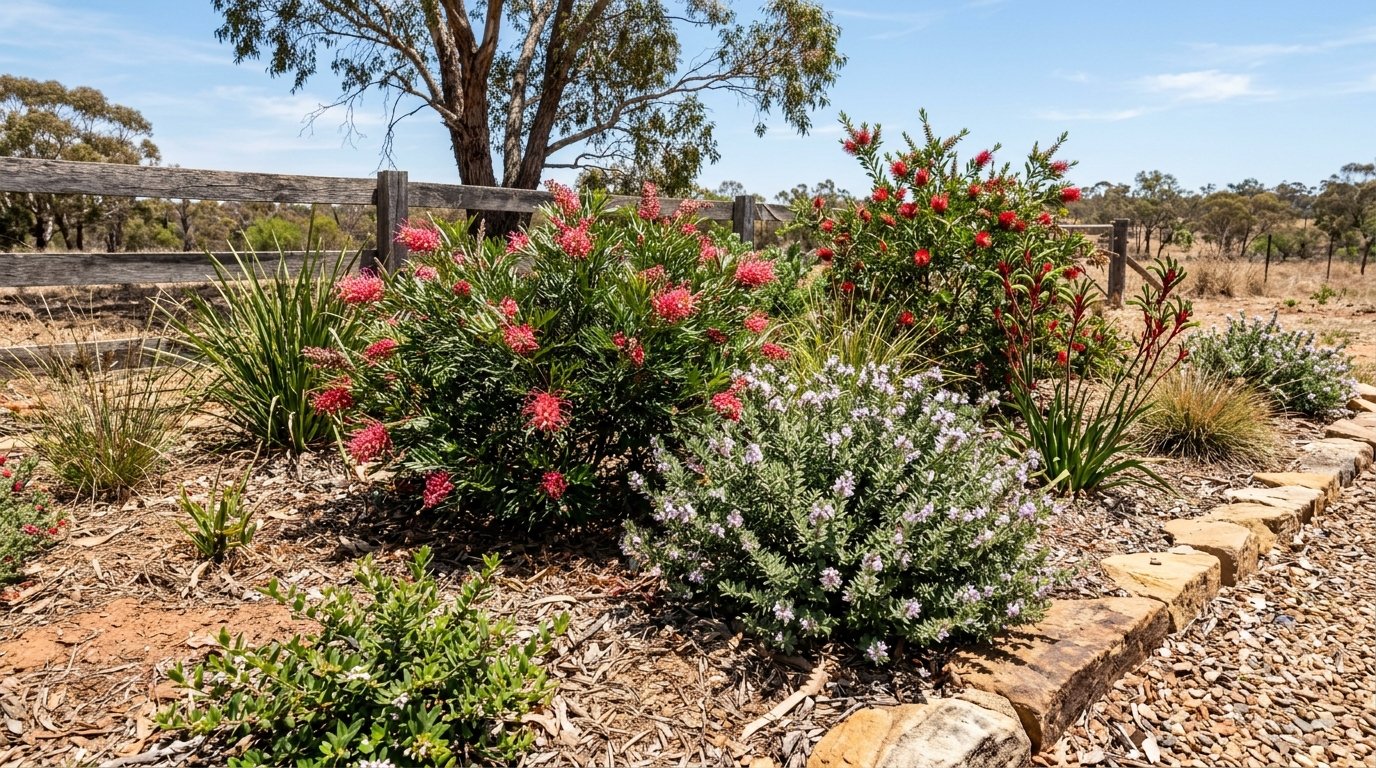
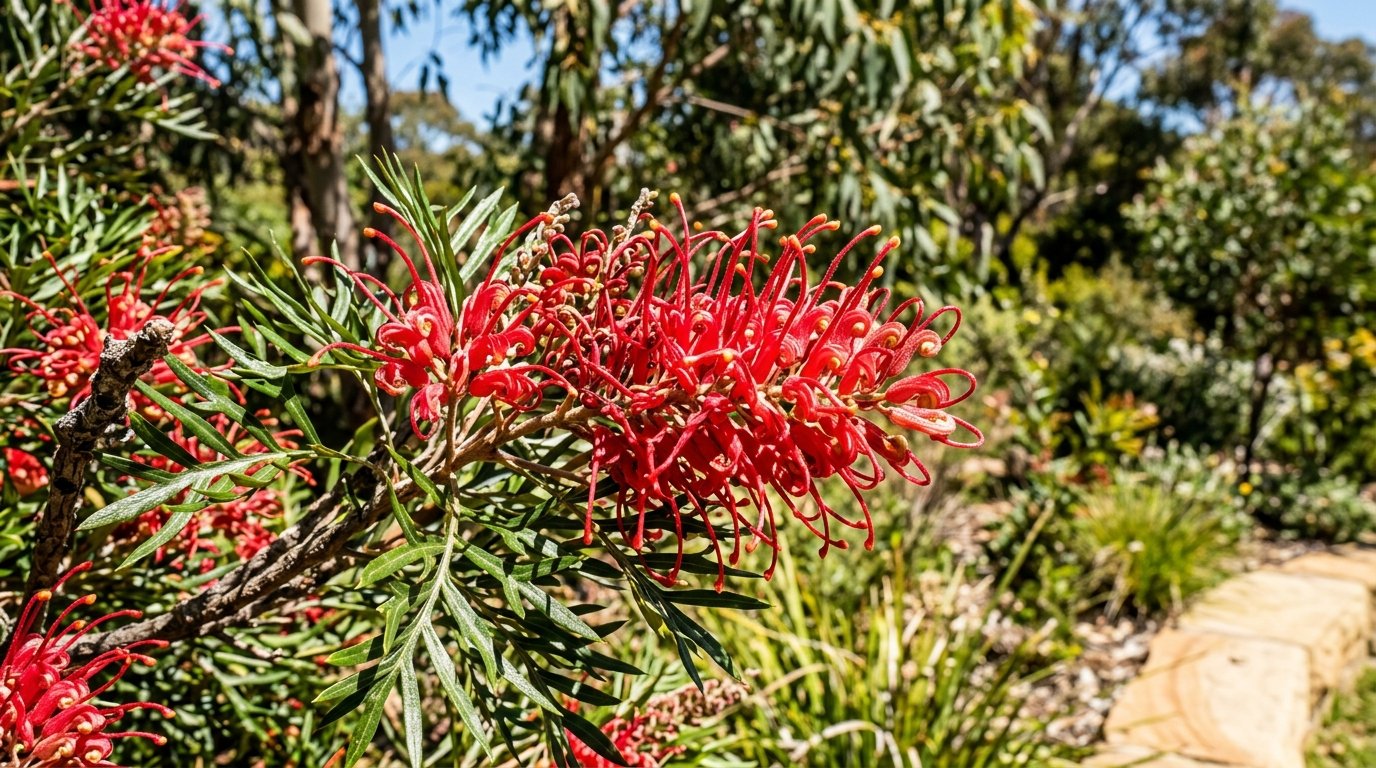
Many Australian natives evolved in exactly these hot, bright, low-fertility conditions and are the natural first choice.
- Westringia — tough, neat, handles heat, sun and coastal exposure;
- Grevillea — heat-tolerant, bird-attracting flowers;
- Banksia — sun-loving and dramatic;
- Callistemon (bottlebrush) — hardy and reliable in full sun.
For more options, see our guide to Australian native plants, most of which suit hot positions.
Mediterranean plants: made for hot, dry summers
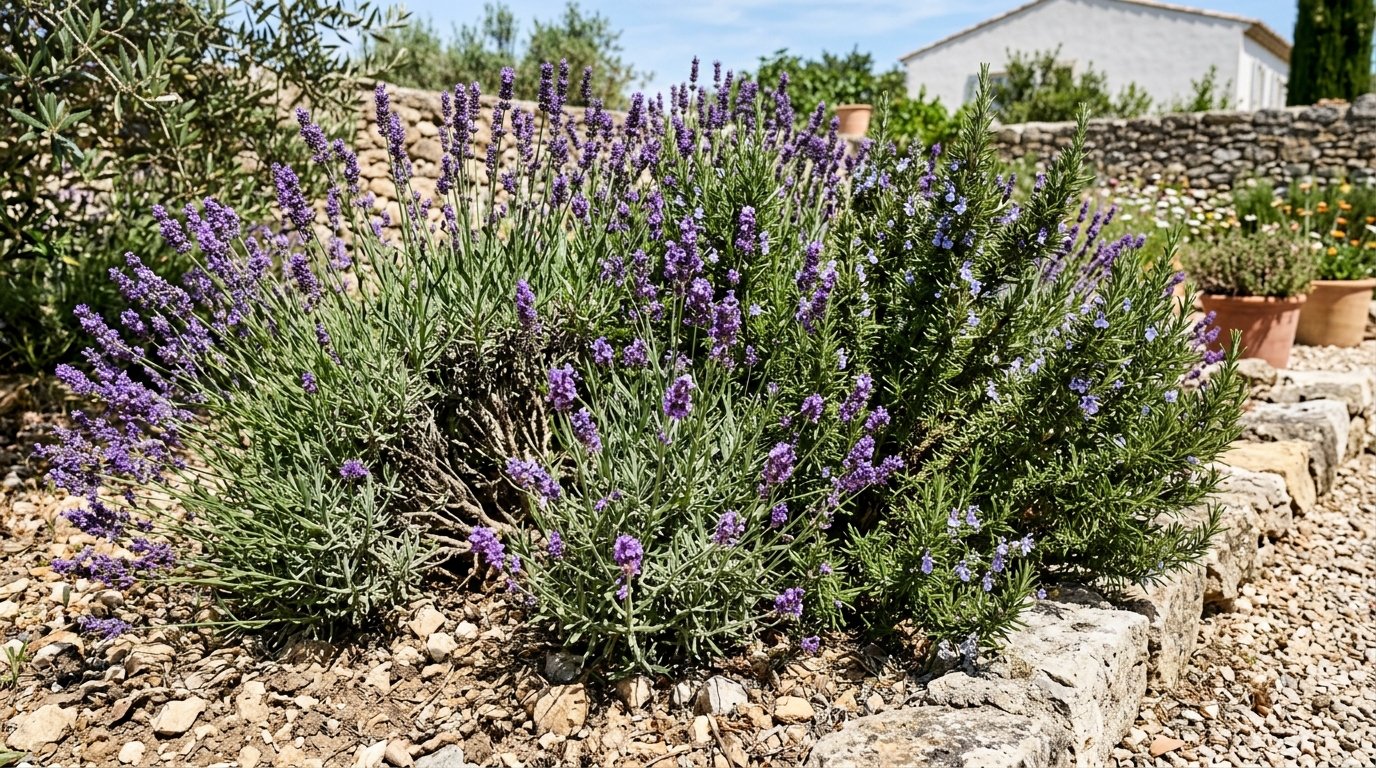
Plants from Mediterranean climates are adapted to hot, dry summers and thrive in full afternoon sun.
Lavender, rosemary, salvia, olive and many other silver- or grey-leaved plants handle heat and dryness beautifully, and their foliage colour often signals their sun tolerance. They also suit free-draining soil, which west-facing beds often have.
Succulents: heat is their happy place
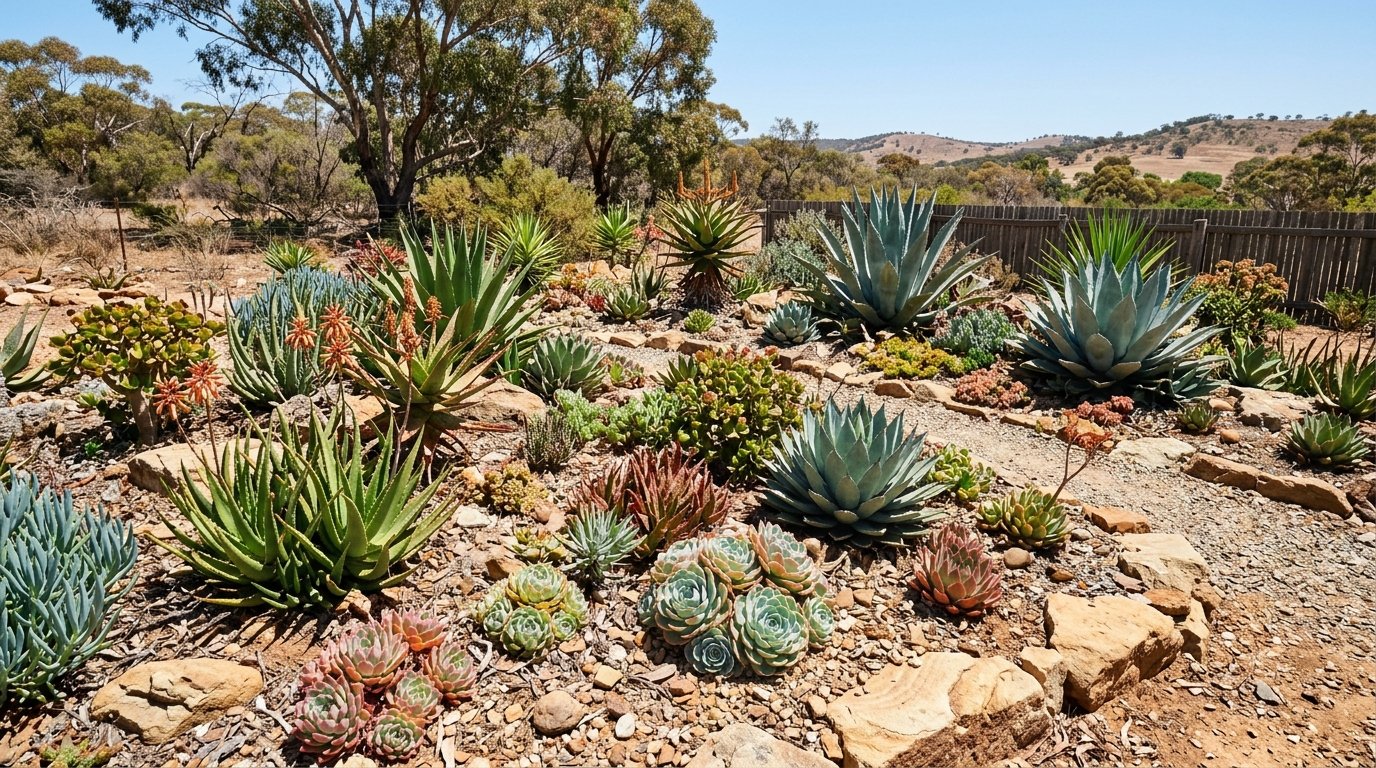
Succulents store water in their leaves and stems, making them ideal for hot, dry, sunny positions where other plants struggle.
Agave, aloe, sedum, echeveria and similar plants positively enjoy the heat and need very little water once established, making a west-facing bed an ideal home rather than a challenge.
Tough grasses and strappy plants
Hardy grasses and strappy plants like Lomandra, Dianella and ornamental grasses are sun-hardy, low-maintenance and add movement and texture.
Many are native, drought-tolerant once established, and forgiving of hot, exposed spots — useful for filling a west-facing bed with reliable structure.
What to avoid in a west-facing bed
Soft, moisture-loving and shade-preferring plants generally struggle in hot afternoon sun:
- ferns and other shade plants — scorch quickly;
- hydrangeas — wilt and burn in hot afternoon sun;
- soft-leaf tropicals that want protection;
- thin-leaved plants prone to leaf burn.
These are lovely plants — just not in this position. Match them to a cooler, shadier aspect instead.
Soil and mulch make a big difference
Even tough plants establish better with good preparation. In a hot bed:
- improve the soil with organic matter so it holds some moisture;
- mulch heavily to keep roots cool and cut evaporation — see our mulch guide;
- ensure drainage, as many heat-lovers dislike wet feet;
- group plants with similar water needs together.
Get them through the first summer
Even drought-tolerant plants need regular watering while they establish. The first summer is when hot-aspect plantings most often fail — not because the plant is wrong, but because young roots dried out before they established.
Water consistently through the first season (see summer watering), then taper off as the plants toughen up.
Use structure to soften the heat
A tough outer planting, a screen or even a well-placed tree can filter the fierce afternoon sun and create a slightly cooler microclimate behind it, letting you grow a wider range. Layering — hardy plants in front, slightly softer ones sheltered behind — is a smart way to handle a brutal west-facing aspect.
Turn a hard aspect into an easy bed
To plant a hot, west-facing garden successfully:
- choose heat- and drought-tolerant natives, Mediterranean plants, succulents or grasses;
- avoid soft, shade- and moisture-loving species;
- improve soil and mulch heavily;
- ensure good drainage;
- water consistently through the first summer, then taper;
- use structure to create cooler microclimates.
A west-facing bed is only a problem for the wrong plants. Fill it with species built for heat and it becomes one of the easiest, most water-wise, best-looking parts of the garden.
Frequently asked questions
What plants are best for a hot, west-facing garden in Australia?
The best choices are tough, sun- and heat-loving plants: hardy natives such as Westringia, Grevillea, Banksia and Callistemon; Mediterranean plants like lavender, rosemary and olive; and succulents and ornamental grasses. These are built for heat, reflected warmth and drying wind, unlike soft, moisture-loving species that scorch in hot afternoon sun.
Why is a west-facing garden so hard to plant?
A west-facing bed gets sun during the hottest part of the day, the afternoon, when air and soil are already hot. Reflected heat from walls, fences and paving plus drying afternoon winds make it one of the most demanding positions in the garden. Plants happy in a morning-sun bed can scorch here, so the aspect, not just the sun hours, is the real challenge.
What plants should I avoid in full afternoon sun?
Avoid soft, moisture-loving and shade-preferring plants such as ferns, hydrangeas and soft-leaf tropicals, which wilt and burn in hot afternoon sun, along with thin-leaved plants prone to leaf scorch. They are lovely plants but belong in a cooler, shadier aspect. Match heat-lovers to the west-facing bed and save delicate species for protected spots.
Are succulents good for hot, sunny spots?
Yes, they are ideal. Succulents such as agave, aloe, sedum and echeveria store water in their leaves and stems and positively enjoy heat, needing very little water once established. A hot, dry, west-facing bed is an ideal home for them rather than a challenge, provided the soil drains freely, as most succulents dislike sitting in wet soil.
Which native plants handle hot afternoon sun?
Many Australian natives evolved in hot, bright, low-fertility conditions and thrive in these spots, including Westringia, Grevillea, Banksia and Callistemon, plus strappy plants like Lomandra and Dianella. Most are drought-tolerant once established and low-maintenance, making them a natural first choice for a hot, west-facing bed.
How do I stop my plants scorching in the afternoon sun?
Start by choosing heat-adapted species, then improve the soil with organic matter, mulch heavily to keep roots cool and cut evaporation, and ensure good drainage. Water consistently through the first summer while plants establish, then taper off. Using a screen, hedge or tree to filter the fierce afternoon sun also creates a cooler microclimate for slightly softer plants behind it.
Do drought-tolerant plants still need watering?
Yes, especially in their first summer. Even drought-tolerant plants have small, shallow roots when young and can dry out before they establish, which is when hot-aspect plantings most often fail. Water consistently through the first season, then gradually reduce watering as the plants toughen up and their roots reach deeper, cooler soil.
Can I improve a west-facing bed with mulch and soil prep?
Very much so. Improving the soil with organic matter helps it hold some moisture, and mulching heavily keeps roots cooler and dramatically reduces evaporation in a hot bed. Good drainage matters too, as many heat-lovers dislike wet feet. Combined with the right plant choices, soil preparation and mulch turn a harsh west-facing aspect into an easy, water-wise bed.


