
Creeping Boobialla (Myoporum parvifolium) Guide AU

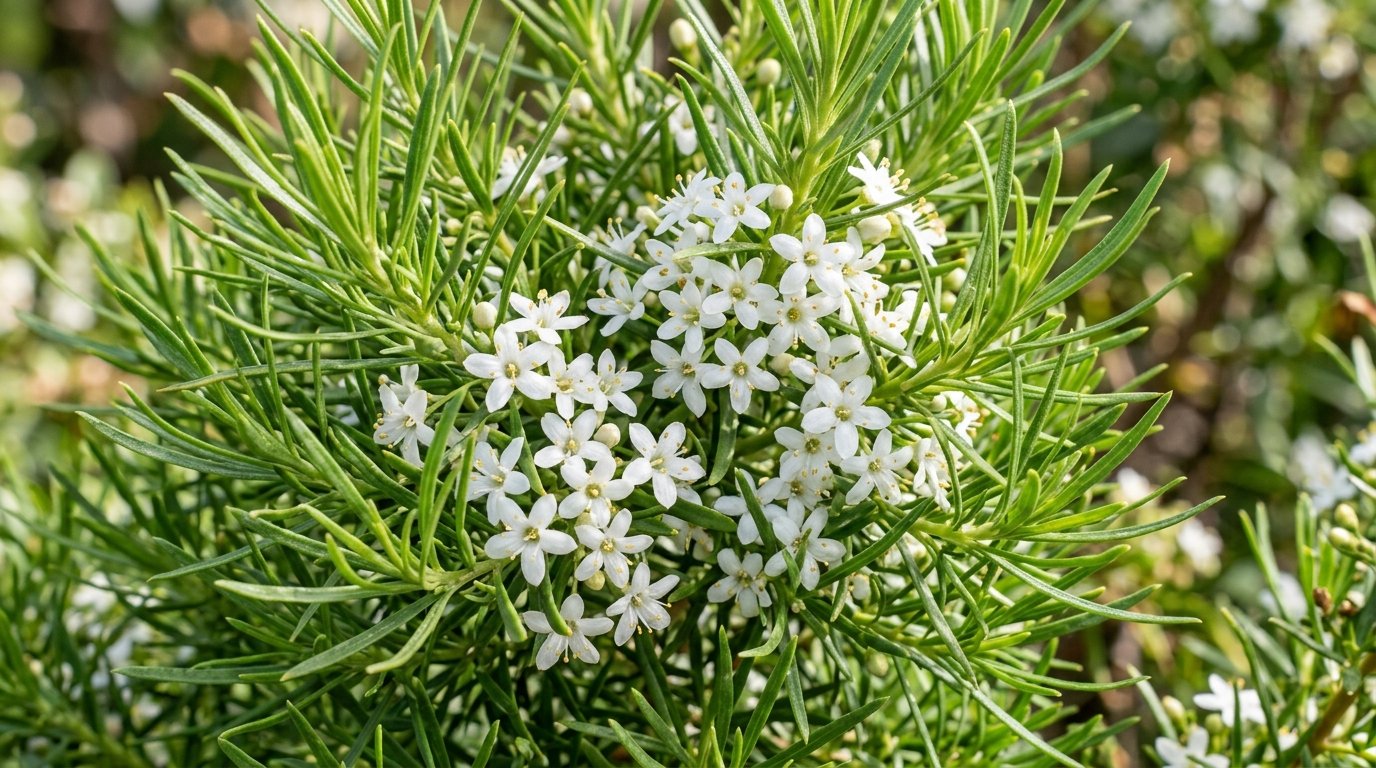
Myoporum parvifolium (Creeping Boobialla) is a fast-growing Australian native groundcover that forms a dense, weed-suppressing mat of fine evergreen foliage, spreading around 2–3 metres wide but staying very low (roughly 0.2–0.3 m high), studded with small white-to-lilac star-shaped flowers through the warmer months. It is one of the most popular native “lawn alternative” groundcovers in Australia because it is tough, drought-, frost- and salt-tolerant, and spreads quickly to cover bare soil and slopes — though it does not take regular foot traffic like a lawn.
A quick naming note first, because it causes real confusion: the cultivar name ‘Desert Star’ belongs to Carissa macrocarpa (Natal Plum), a South African shrub — not to Myoporum. If you are after the native creeping groundcover, the plant you want is Myoporum parvifolium, described here. See our separate Carissa ‘Desert Star’ Natal Plum guide if that is what you were looking for.
Quick facts
| Feature | Detail |
|---|---|
| Botanical name | Myoporum parvifolium |
| Common name | Creeping Boobialla |
| Origin | Native to southern Australia |
| Height × spread | ~0.2–0.3 m high × ~2–3 m wide |
| Flowers | Small white to pale lilac stars, often spotted, spring–autumn |
| Best in | Full sun, well-drained soil |
| Tolerates | Drought, frost, salt, coastal exposure |
| Foot traffic | Light only — not a play lawn |
What is Creeping Boobialla?
Creeping Boobialla is a low, prostrate native groundcover with long, trailing stems and fine foliage. It hugs the ground and spreads outward to form a thick living mat, rooting as it goes.
It is native to southern Australia, including coastal dunes and dry sclerophyll forest, which is why it copes so well with dry, exposed and coastal conditions.
Why gardeners love it as a lawn alternative
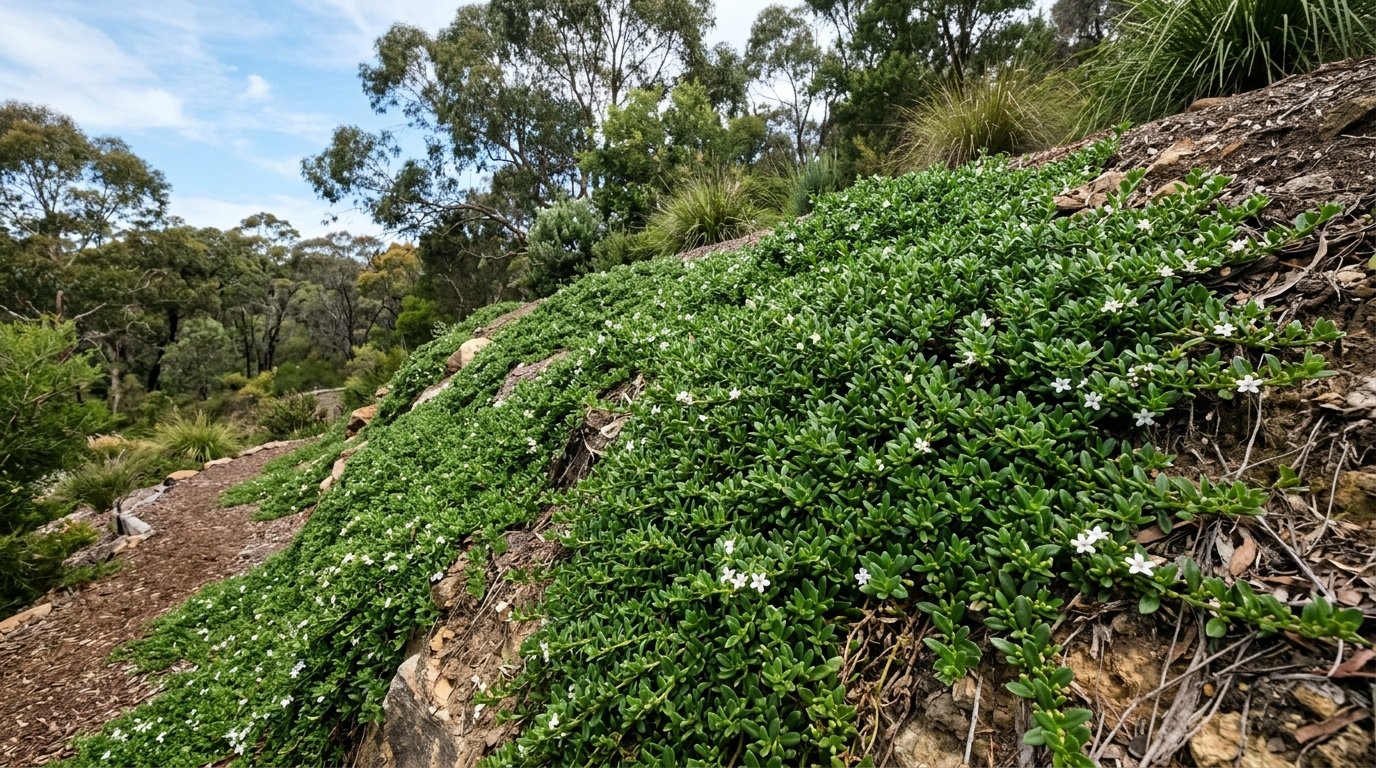
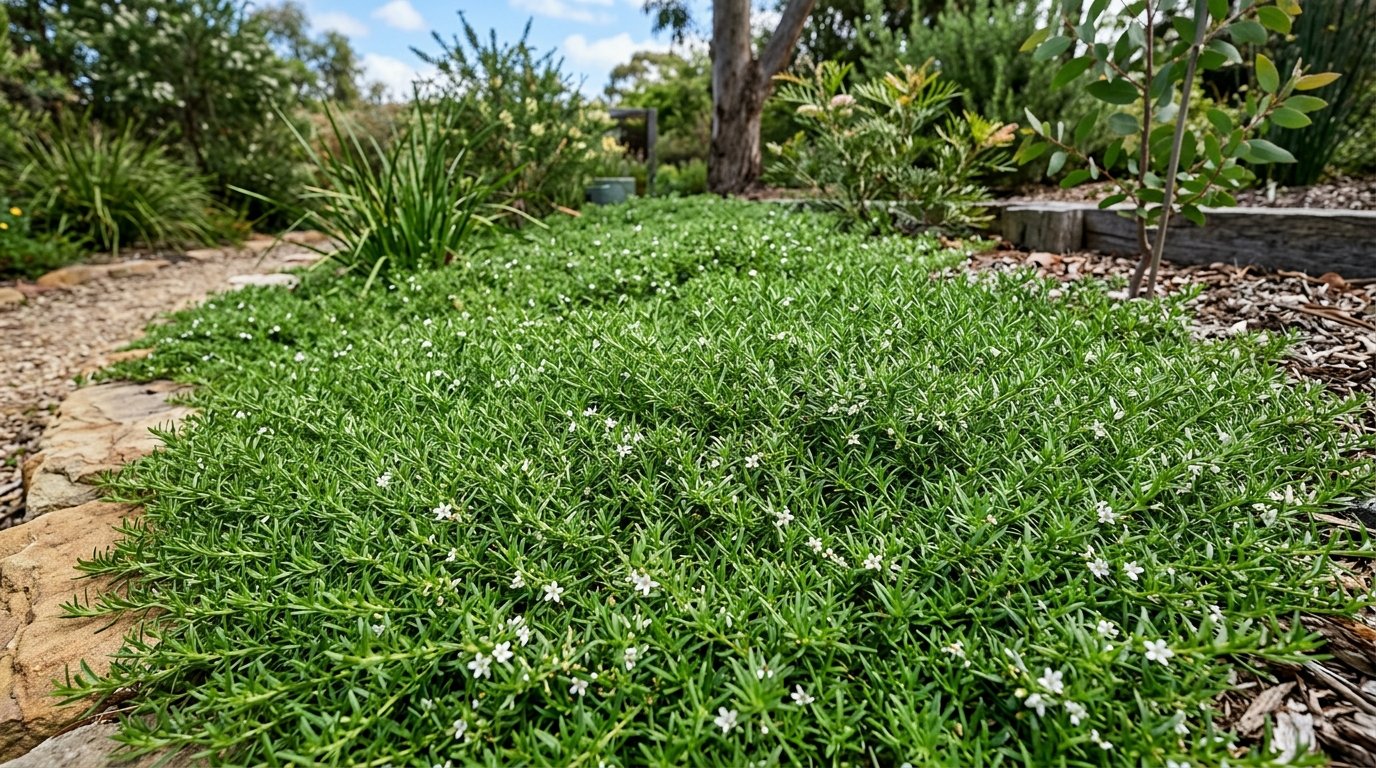
Its main appeal is as a low-water, low-mow alternative to turf. It gives a green, living carpet without the mowing, and it suppresses weeds as it thickens.
The important caveat: it tolerates only light, occasional foot traffic — it is not a hard-wearing play lawn. Use it where you want the look and weed suppression of groundcover rather than a surface for kids and pets to run on. If you need real wear tolerance, compare it against turf in our best lawn types guide.
Flowers and wildlife
Through spring, summer and autumn it produces masses of small, star-shaped white to pale lilac flowers, often delicately spotted, followed by small fleshy fruits.
The flowers attract bees, butterflies and other beneficial insects, making it a useful plant for a wildlife-friendly, low-maintenance garden.
Where to plant it
Creeping Boobialla performs best in full sun with good drainage. In these conditions it stays dense and healthy.
- In shade, the foliage thins out and the mat becomes sparse;
- in poorly drained or constantly wet soil it can struggle, as it prefers well-drained ground;
- on slopes and embankments it is excellent for covering ground and helping bind soil;
- in coastal gardens it handles salt and wind well.
For other tough, sun-loving choices, see our guide to plants for hot, west-facing gardens.

How fast does it spread?
It is fast-growing and can spread roughly 2–3 metres wide, filling gaps quickly once established. This makes it efficient for covering large areas, but it also means giving it room and keeping it in bounds where it meets paths or smaller plants.
Space plants according to how quickly you want coverage — closer for a faster mat, wider to let each plant spread and save on numbers.
Watering and establishment
Although drought-tolerant once established, Creeping Boobialla still needs regular watering through its first season while roots develop.
Water consistently after planting, mulch to hold moisture and suppress weeds while it fills in, then taper watering off as it establishes. Our summer watering guide covers the deep, infrequent approach that suits it best.
Care and maintenance
- Pruning: trim back stray or overlong stems to keep it neat and encourage density;
- Feeding: light feeding is usually enough — it is not a hungry plant;
- Drainage: the main thing to get right; avoid waterlogging;
- Weeds: keep weeds down while it establishes, after which its mat suppresses most.
A note on toxicity
Plants in the Myoporum genus contain compounds (furanosesquiterpenoids) that can be toxic, and Myoporum toxicity is best known as a concern for grazing livestock rather than typical garden pets. As a sensible precaution, discourage pets and children from chewing the foliage or fruit, as with many ornamental plants. If a pet ingests a significant amount, contact your vet.
Is it the same as Carissa ‘Desert Star’?
No — and this is worth repeating because the two are often confused. Carissa macrocarpa ‘Desert Star’ (Natal Plum) is a compact South African shrub grown for glossy foliage, fragrant flowers and edible ripe fruit. Myoporum parvifolium (Creeping Boobialla) is an unrelated Australian native prostrate groundcover.
They suit different jobs: Carissa ‘Desert Star’ as a low hedge or border shrub, Myoporum parvifolium as a spreading groundcover or lawn alternative. If you meant the Natal Plum, see our Carissa ‘Desert Star’ guide.
Is Creeping Boobialla right for you?
Choose Myoporum parvifolium if you want:
- a fast, low-water native groundcover;
- a green lawn-look without mowing (and without heavy foot traffic);
- weed suppression on beds, slopes or embankments;
- a tough plant for hot, dry, coastal or frost-prone spots.
Give it full sun and good drainage, water it through establishment, and it will reward you with one of the easiest, most water-wise groundcovers available in Australia.
Frequently asked questions
What is Myoporum parvifolium?
Myoporum parvifolium, commonly called Creeping Boobialla, is a fast-growing Australian native groundcover. It forms a dense, weed-suppressing mat of fine evergreen foliage, staying very low (around 0.2–0.3 m high) while spreading roughly 2–3 metres wide, and produces small white to pale lilac star-shaped flowers through the warmer months. It is popular as a low-water lawn alternative.
Is Myoporum parvifolium the same as ‘Desert Star’?
No. ‘Desert Star’ is a cultivar of Carissa macrocarpa (Natal Plum), a South African shrub, not a Myoporum. The native creeping groundcover people often want is Myoporum parvifolium (Creeping Boobialla). The two are unrelated and suit different uses, so check the botanical name when buying to make sure you get the plant you intend.
Can I use Creeping Boobialla instead of a lawn?
Yes, as a lawn-look alternative. It gives a green, living carpet without mowing and suppresses weeds as it thickens. However, it only tolerates light, occasional foot traffic and is not a hard-wearing play lawn. Use it where you want the appearance and weed suppression of groundcover rather than a surface for children and pets to run on regularly.
How far does Myoporum parvifolium spread?
It is fast-growing and can spread roughly 2–3 metres wide while staying very low, filling gaps and covering ground quickly once established. This makes it efficient for large areas and slopes, but you should give it room and trim it back where it meets paths or smaller plants to keep it in bounds.
Does Creeping Boobialla need full sun?
It performs best in full sun with well-drained soil, where it stays dense and healthy. In shade the foliage thins and the mat becomes sparse, and in poorly drained or constantly wet soil it can struggle. For a thick, even groundcover, plant it in a sunny, free-draining position.
Is Myoporum parvifolium drought tolerant?
Yes, once established it is drought-, frost- and salt-tolerant, which is why it suits hot, dry and coastal gardens. Like any plant, it still needs regular watering through its first season while roots develop. Water consistently after planting and mulch well, then taper off as it establishes and becomes self-reliant.
Is Creeping Boobialla toxic to pets?
Plants in the Myoporum genus contain compounds that can be toxic, a concern known mainly for grazing livestock rather than typical garden pets. As a sensible precaution, discourage pets and children from chewing the foliage or fruit, as with many ornamental plants, and contact your vet if a pet ingests a significant amount. See our guide to plants toxic to dogs and cats for more.
How do I keep Myoporum parvifolium looking neat?
Trim back stray or overlong trailing stems to keep it tidy and encourage denser growth, keep weeds down while it establishes, and ensure good drainage to avoid waterlogging. It needs only light feeding. Once the mat has filled in, it largely looks after itself and suppresses most weeds, making it a very low-maintenance groundcover.


