Lilly Pilly roots are generally non-invasive and far safer near houses, paths and pipes than aggressive trees like figs. They have a fibrous, relatively shallow root system. That said, large-growing Lilly Pilly species planted very close to drains or thin paving can still cause issues over time, and roots will exploit already-cracked or leaking pipes. For most home hedges, planting a sensibly sized variety a reasonable distance from structures is all the caution you need.
✔ How this guide was checked
This reflects the general horticultural consensus that Syzygium/Acmena Lilly Pillies have non-aggressive, fibrous roots relative to notorious species like Ficus, while noting the common-sense caveats about very large varieties, existing pipe damage and proximity. We’ve kept it practical and avoided alarmist or absolute claims.
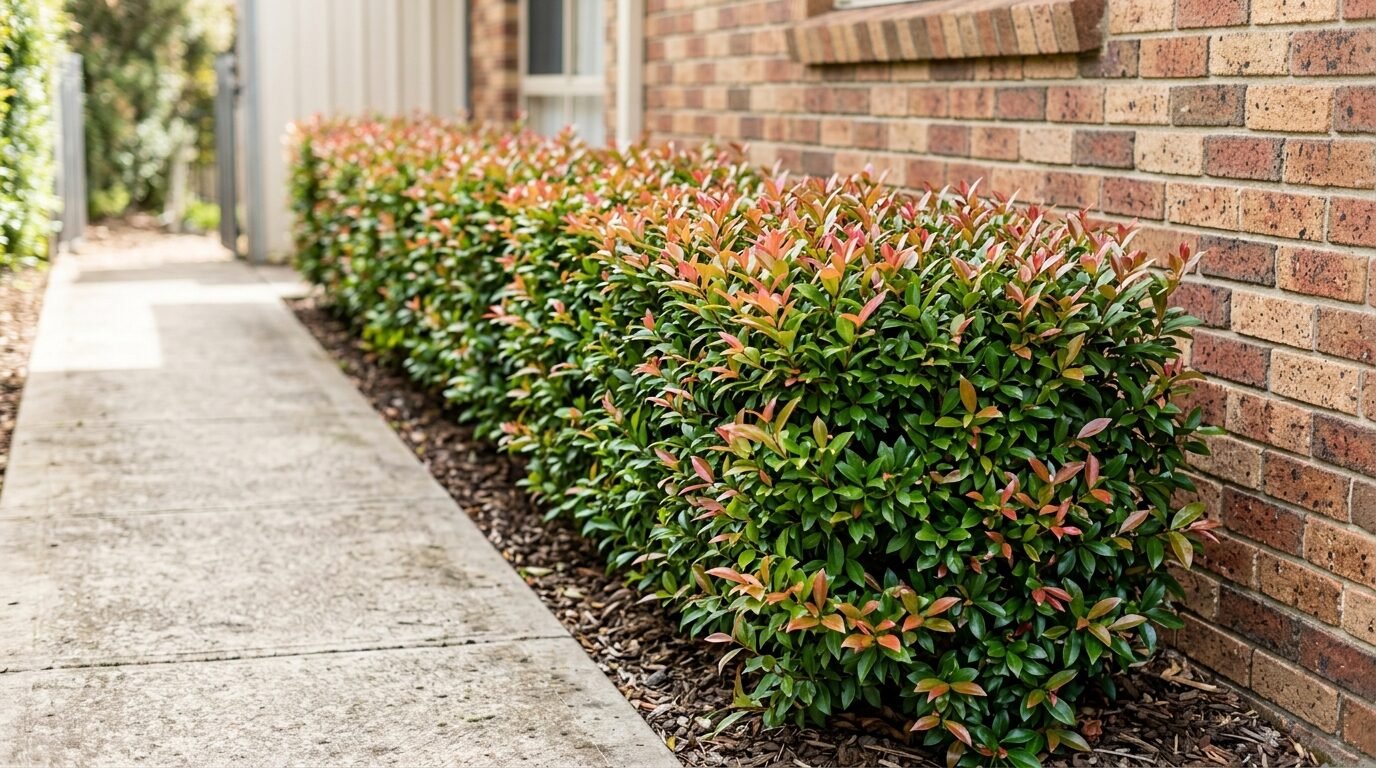
Fibrous, non-aggressive Lilly Pilly root ball
Are Lilly Pilly roots actually invasive?
For the vast majority of garden situations, no. Lilly Pillies have a fibrous, mat-forming root system rather than the thick, questing roots of trees such as Ficus Hillii or large eucalypts. They’re one of the reasons Lilly Pilly is recommended as a hedge near boundaries and buildings where a fig would be a terrible idea. The roots spread to find water and nutrients, but they don’t typically have the destructive power to lift slabs or crush sound pipes.
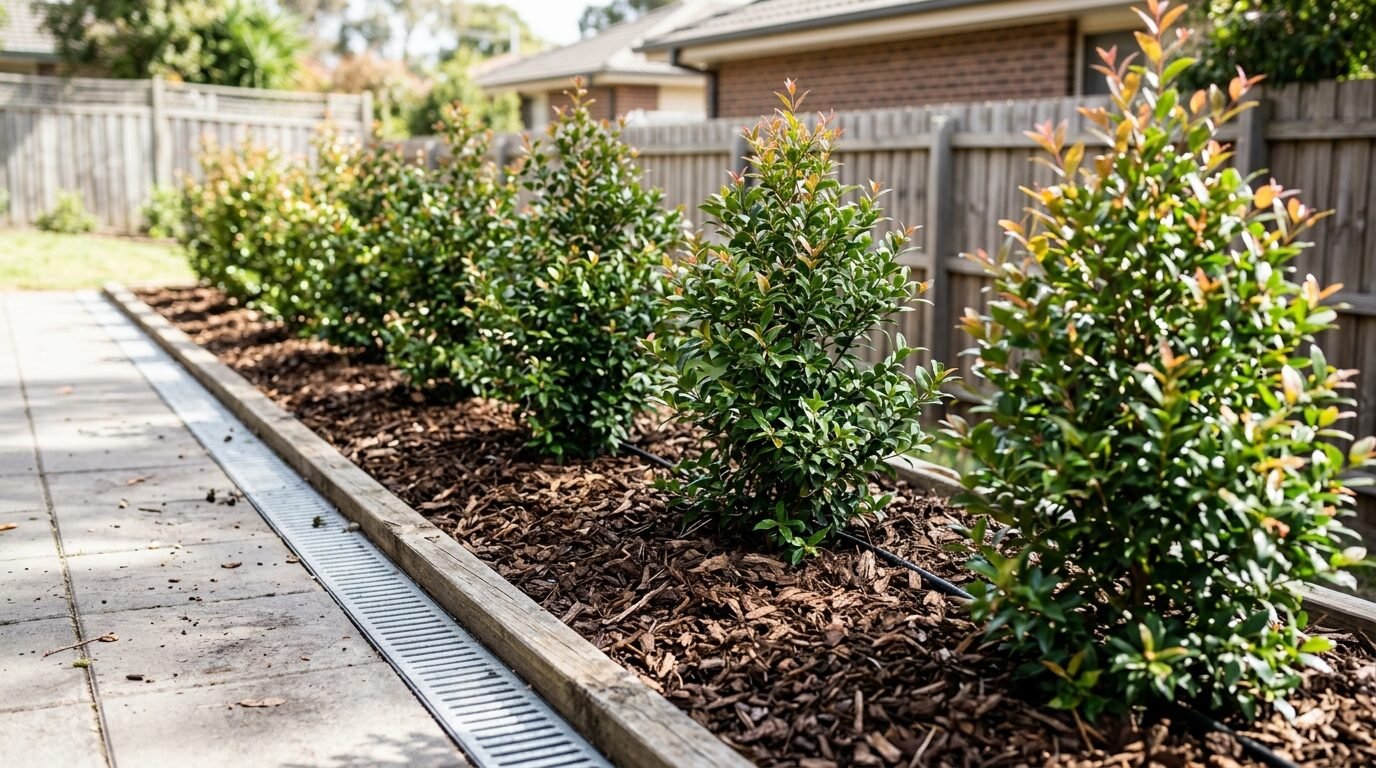
Young Lilly Pilly hedge planted a sensible distance back from paving
When Lilly Pilly roots CAN cause problems
“Generally safe” isn’t “plant anywhere”. A few situations call for sense:
Very large varieties close to structures. A big Syzygium grown as a tree, planted right against a path or wall, has more root mass and can eventually lift thin paving or disturb shallow footings. Choose a size-appropriate variety for the spot.
Already-cracked or leaking pipes. Like most plants, Lilly Pilly roots will grow into a pipe that’s already damaged and leaking — they exploit the problem rather than create it. Sound, modern pipes are rarely at risk.
Right on top of drains. Planting directly over a drainage line or septic field is asking for trouble with almost any vigorous plant.
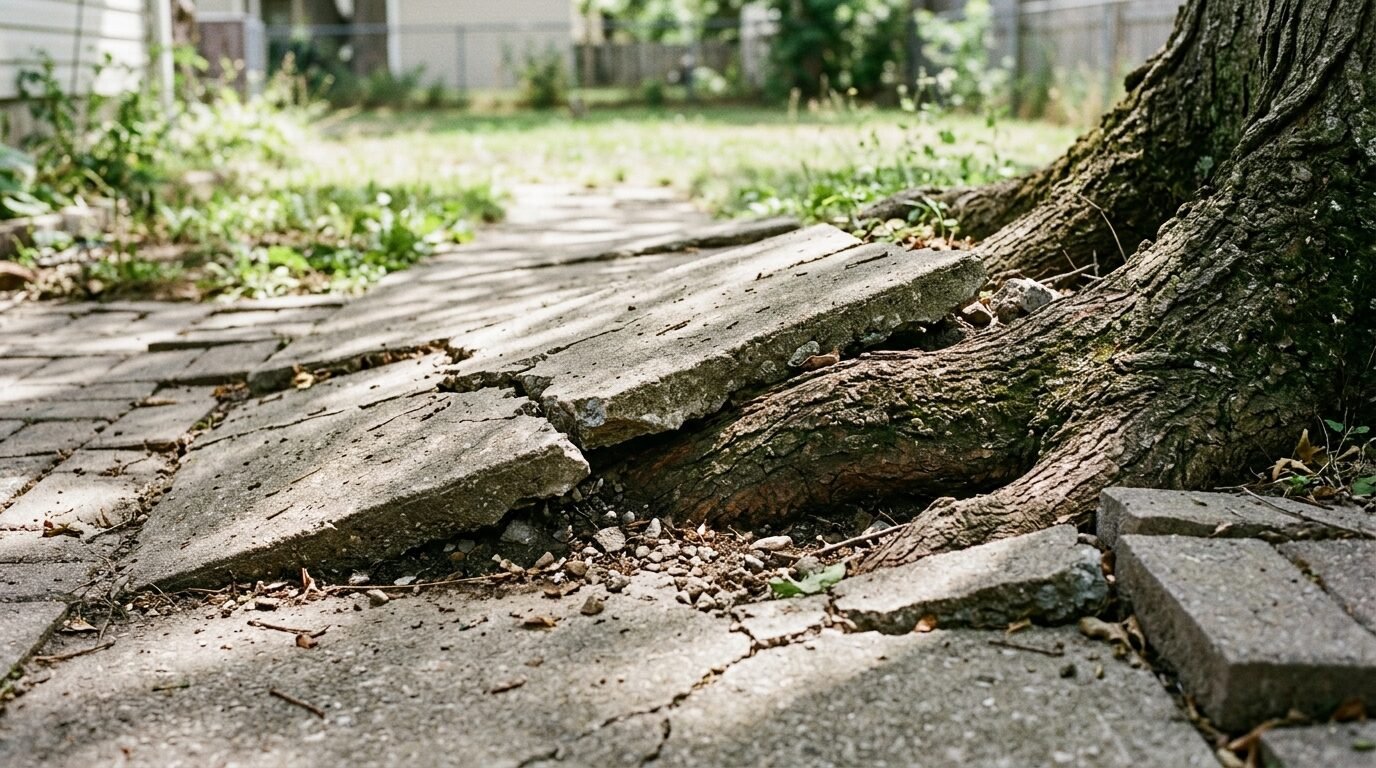
Aggressive tree roots lifting and cracking a concrete path
How far from the house or pipes should you plant?
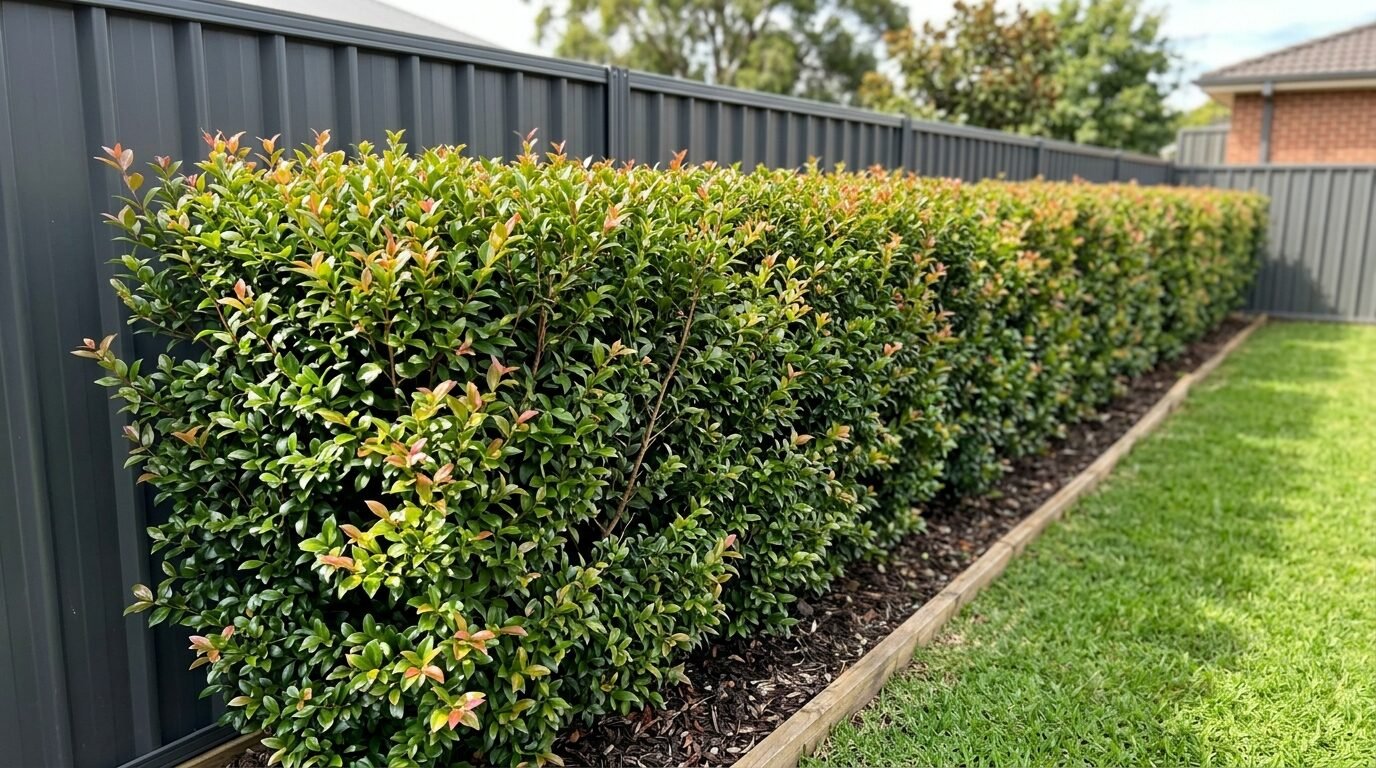
There’s no single legal number, but a sensible rule of thumb is to keep the centre of the hedge a reasonable distance back from hard structures and drainage lines — more for large varieties, less for compact ones. A small, bred hedging cultivar can sit comfortably along a boundary; a large tree form belongs well away from the house. When in doubt, pick a smaller variety rather than planting a big one too close.
Compact Lilly Pilly hedge running neatly along a boundary fence
Lilly Pilly vs genuinely invasive hedges
Context helps. If root safety near pipes and paving is your main concern, Lilly Pilly is one of the better-behaved screening choices — notably safer than Ficus Hillii (Ficus microcarpa var. hillii), whose aggressive roots are a well-known cause of lifted paths and blocked drains. That comparison is the whole reason many councils and landscapers steer homeowners toward Lilly Pilly instead.
Removing an old hedge
Because the roots are fibrous rather than one big tap-root, removing an established Lilly Pilly is usually manageable, but large old plants still have a substantial root mass. Grind or dig out stumps if you’re re-landscaping the same line.
Frequently asked questions
Are Lilly Pilly roots invasive?
Generally no. Lilly Pillies have a fibrous, relatively non-aggressive root system and are considered safe near houses and paths compared with trees like figs. Very large varieties planted too close to structures are the main exception.
Will Lilly Pilly roots damage my pipes?
Sound modern pipes are rarely at risk. Like most plants, Lilly Pilly roots will grow into pipes that are already cracked or leaking, exploiting the problem rather than creating it. Do not plant directly over drains.
How far from the house should I plant a Lilly Pilly?
Keep the hedge a reasonable distance back from hard structures and drainage lines — more for large varieties, less for compact ones. Matching the variety size to the space is the key safeguard.
Are Lilly Pilly roots safe near a pool or paving?
Compact and medium varieties are generally fine with sensible spacing. Avoid planting very large tree-form Syzygiums right against thin paving or pool shells.
Which is safer, Lilly Pilly or Ficus Hillii?
Lilly Pilly, by a wide margin. Ficus Hillii has aggressive roots that commonly lift paths and block drains, whereas Lilly Pilly roots are fibrous and far better behaved.
Do Lilly Pilly roots grow deep?
They are relatively shallow and fibrous, spreading to find moisture rather than driving deep like a tap-rooted tree. This is part of why they are considered low-risk near structures.
Can I plant a Lilly Pilly hedge along a boundary fence?
Yes — that is one of their most common uses. Choose a variety whose mature width suits the space and keep it tip-pruned, and the roots will not be a problem for a fence.
How do I stop Lilly Pilly roots spreading?
For most gardens you do not need to. If you are very close to a structure, a physical root barrier at planting and choosing a compact variety give extra peace of mind.