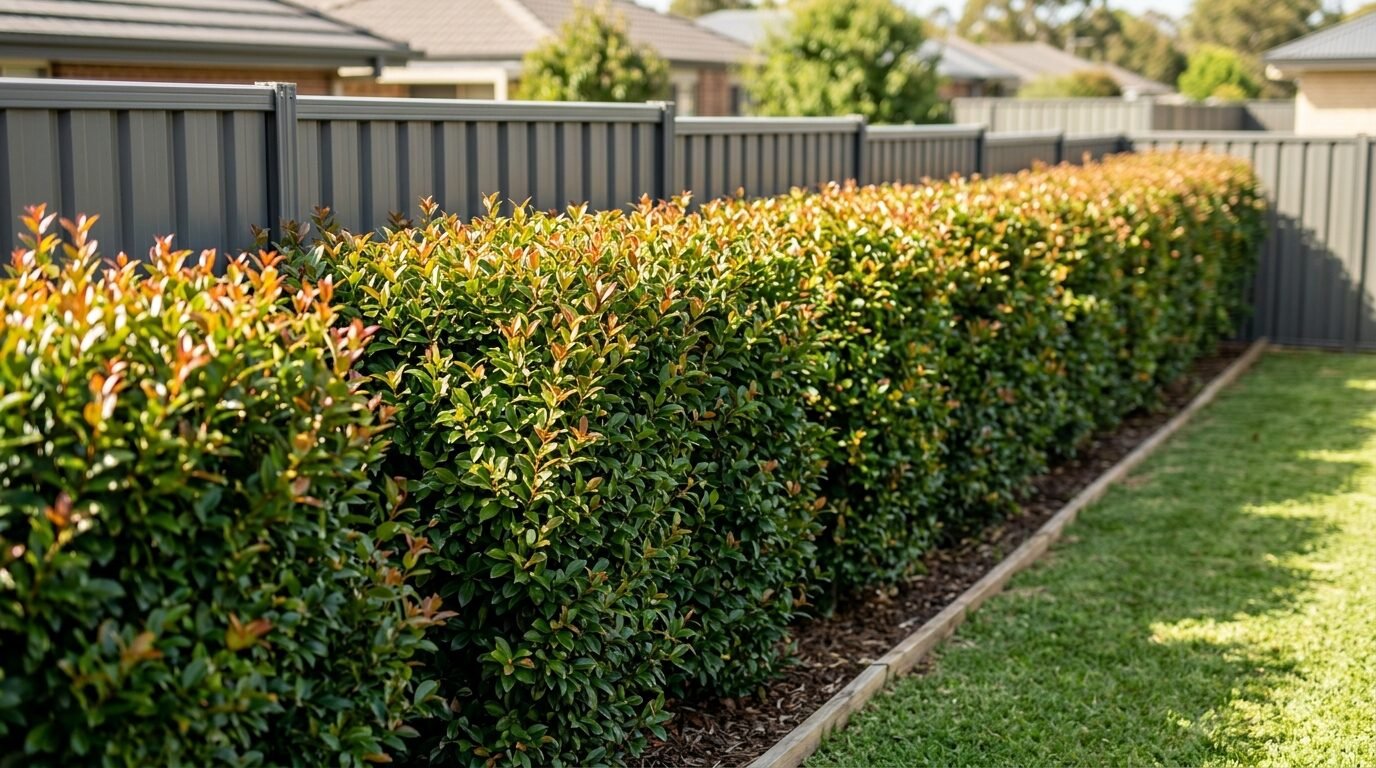
For almost every home situation, choose Lilly Pilly, not Ficus Hillii. Both are fast, dense evergreen screens, but Ficus Hillii (Ficus microcarpa var. hillii) has aggressive, invasive roots that are a well-known cause of lifted paths, cracked paving and blocked or damaged drains, and it grows into a very large tree if not constantly controlled. Lilly Pilly has fibrous, non-aggressive roots and stays a sensible hedge size. Only consider Ficus Hillii for large properties, well away from any structures and pipes.
✔ How this guide was checked
This comparison reflects the widely documented difference between the fibrous, non-aggressive roots of Syzygium/Acmena Lilly Pilly and the notoriously invasive roots and large ultimate size of Ficus microcarpa var. hillii. We’ve kept the root-damage guidance practical and avoided absolute legal claims, which vary by council.
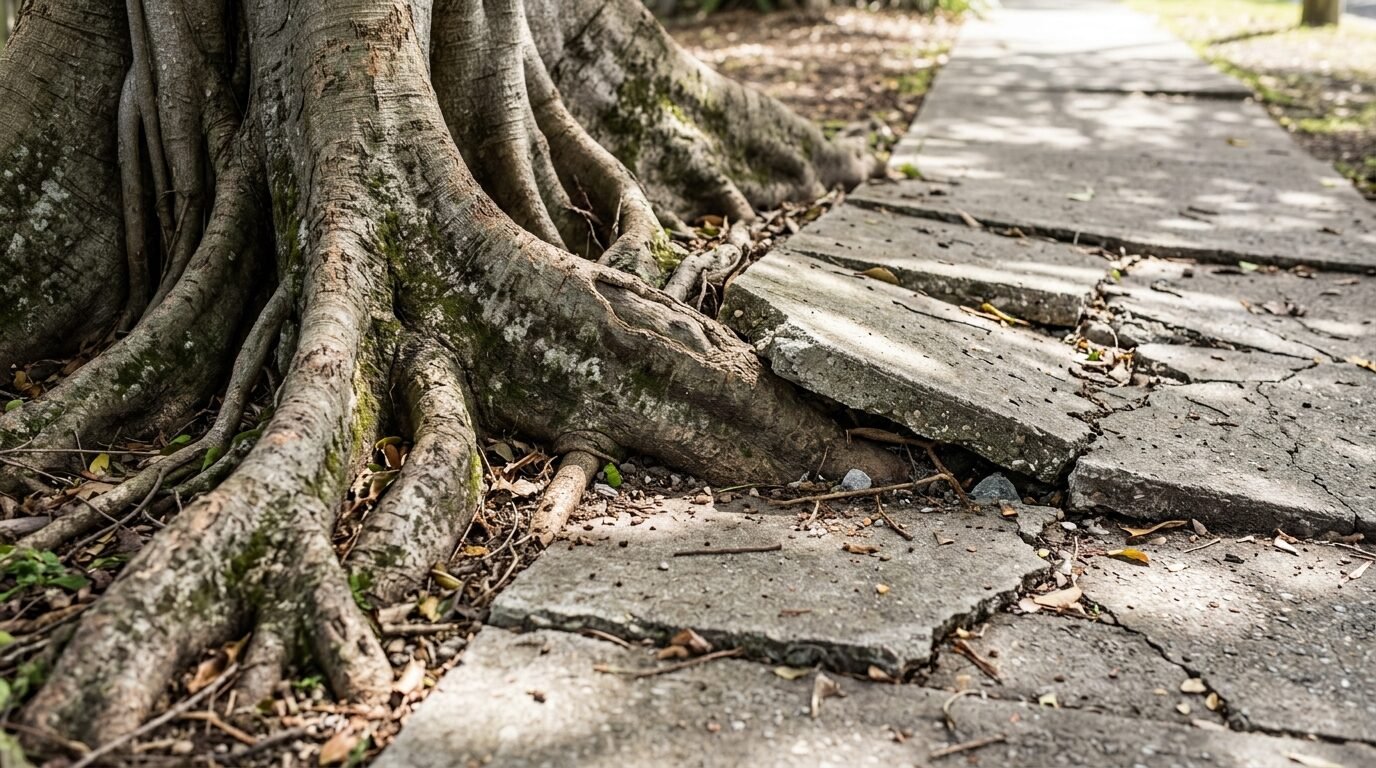
Large fig tree surface roots lifting and cracking a path
The key difference: roots
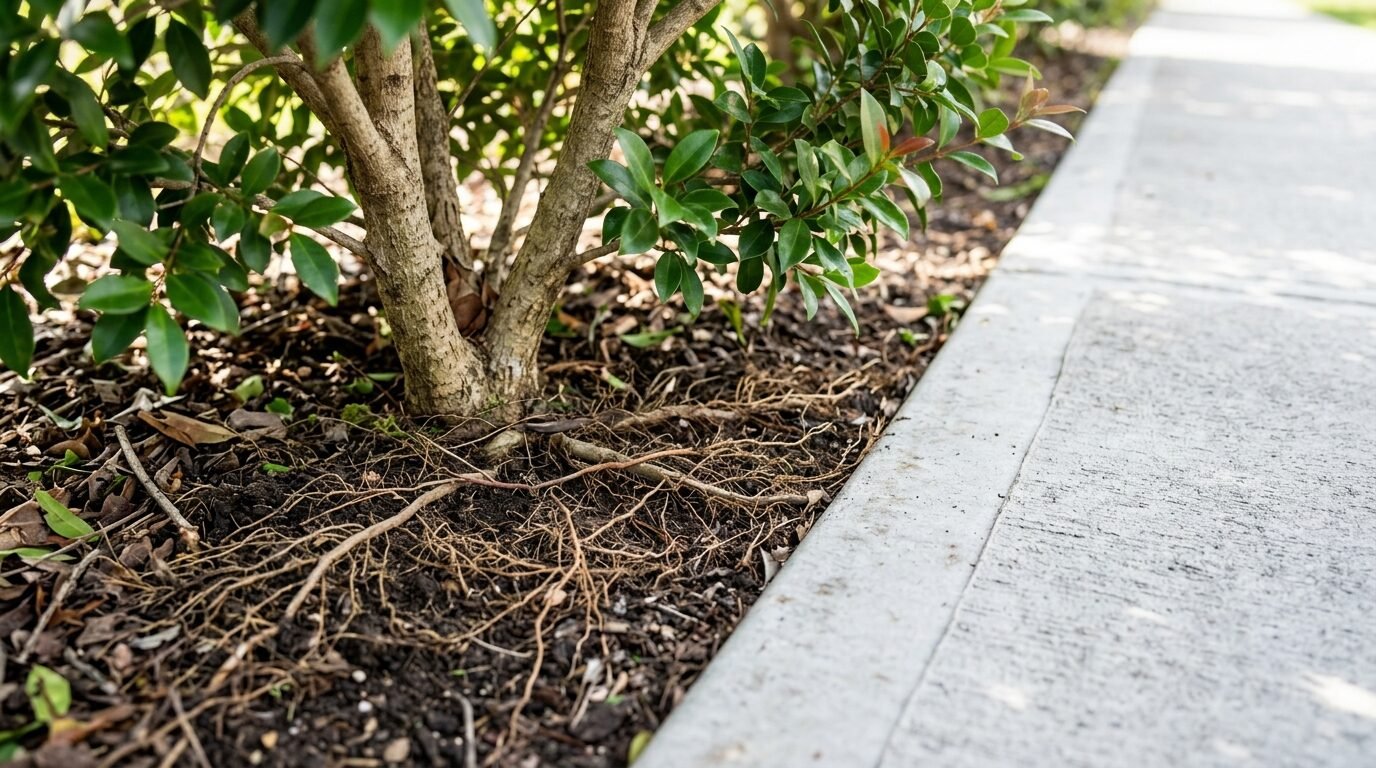
This comparison really comes down to one thing. Ficus Hillii has powerful, far-ranging roots — it’s one of the species councils and landscapers specifically warn against planting near houses, driveways, paths, pools and sewer/stormwater lines, because the roots commonly lift and crack hard surfaces and invade pipes. Lilly Pilly’s roots are fibrous and relatively shallow, and it’s routinely recommended as a safer screen near structures. If root safety matters at all — and near a suburban house it almost always does — Lilly Pilly is the clear winner. See are Lilly Pilly roots invasive for detail.
Lilly Pilly growing safely beside a clean concrete path
Lilly Pilly vs Ficus Hillii at a glance
Feature
Lilly Pilly
Ficus Hillii
Roots
Fibrous, non-aggressive — safe near structures
Aggressive, invasive — lifts paths, blocks drains
Ultimate size
Hedge to small tree (variety-dependent)
Very large tree if not controlled
Growth speed
Fast
Very fast, vigorous
Best use
Home hedges, boundaries, near buildings
Large acreage screens, well away from structures
Maintenance
Regular tip-pruning
Frequent hard pruning to contain size
Origin
Australian native
Exotic / native fig forms
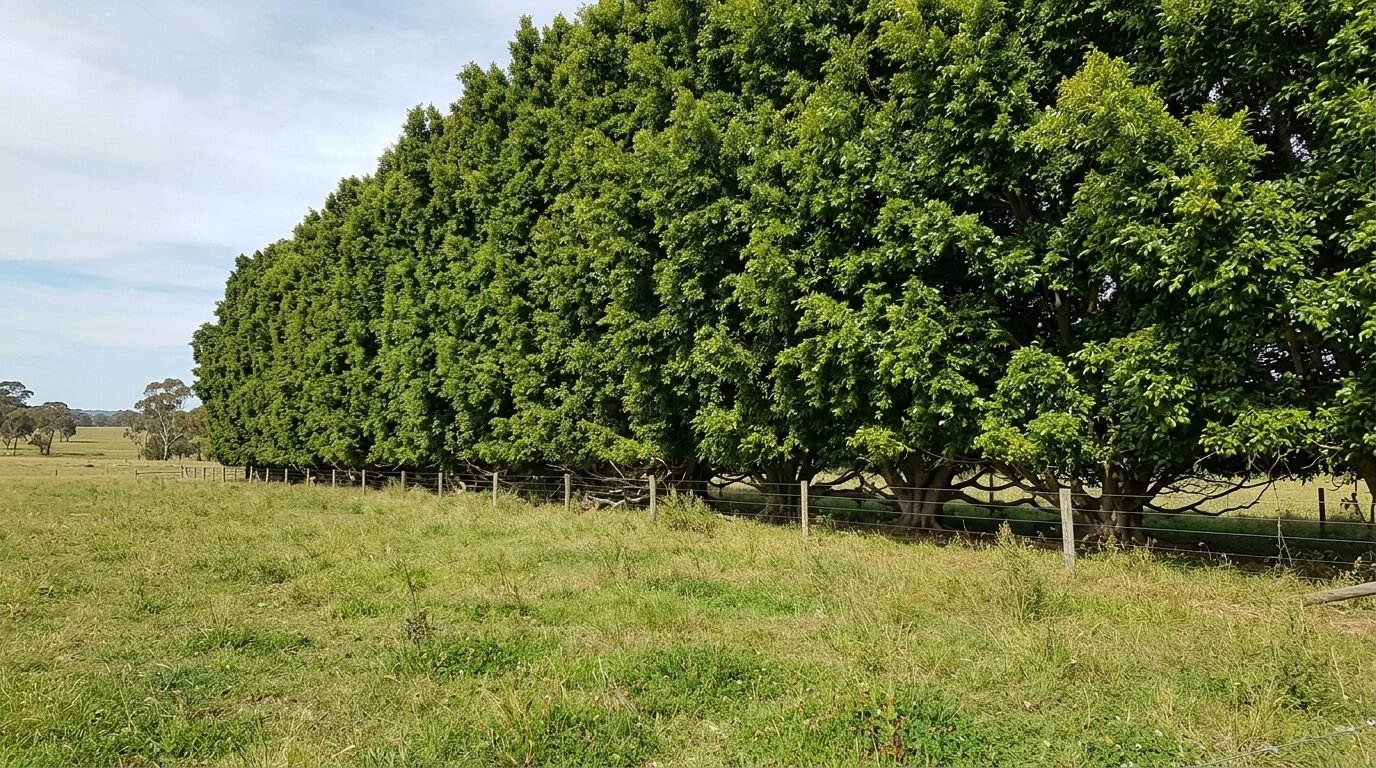
Ficus Hillii grown as a large evergreen screen on acreage
When would you ever pick Ficus Hillii?
There’s a narrow case: a large rural or acreage property wanting a tall, very fast, solid evergreen wall well away from any buildings, paving, pools and pipes, with the space and willingness to prune hard and often. In that setting its vigour is a feature. For a normal suburban block — anywhere near the house, fence footings, driveway or drains — it’s the wrong plant, and the root damage can be expensive.
Root damage is costly
Repairing paths, driveways and sewer lines invaded by fig roots can run into serious money, and disputes over roots crossing boundaries are common. If you want a fast screen near any structure, a suitable Lilly Pilly variety gives you the density without the risk.
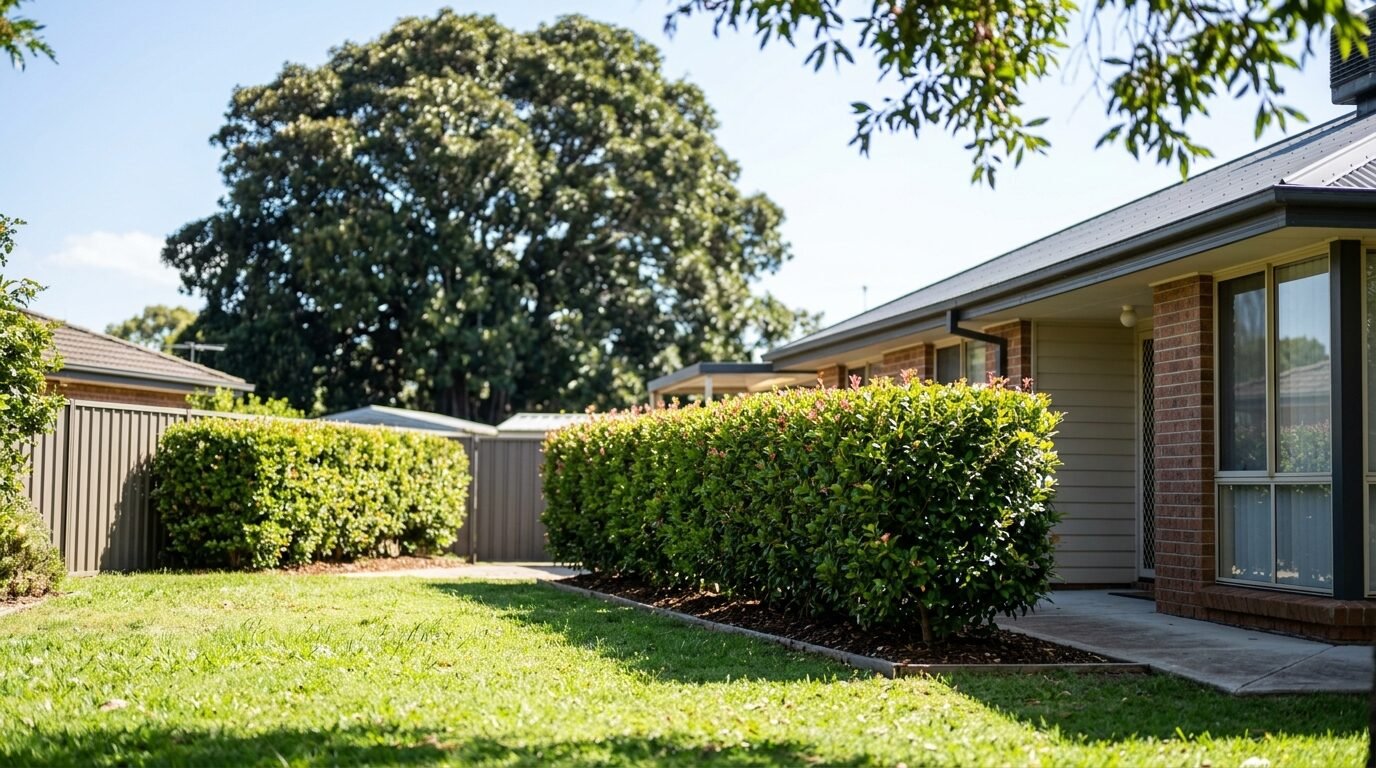
Neat Lilly Pilly hedge running along a suburban boundary fence
The verdict
Suburban garden, near anything built: Lilly Pilly, every time. It gives you the fast, dense evergreen screen you want with roots you can trust near the house. Reserve Ficus Hillii for big open spaces far from infrastructure. If you’re comparing other screens too, see Lilly Pilly vs Murraya and Lilly Pilly vs Viburnum.
Frequently asked questions
Is Lilly Pilly or Ficus Hillii better for a hedge?
For almost all home gardens, Lilly Pilly — it gives a fast dense screen with fibrous, non-aggressive roots. Ficus Hillii has invasive roots and grows into a very large tree, so it only suits large properties well away from structures.
Are Ficus Hillii roots really that invasive?
Yes. Ficus Hillii (Ficus microcarpa var. hillii) is well known for aggressive roots that lift paths and paving and invade or block drains and pipes. It is one of the species commonly warned against near buildings.
Why do people still plant Ficus Hillii?
Because it is very fast and makes a tall, solid screen. On large acreage, well away from structures and with regular hard pruning, that vigour is useful — but it is risky on a normal block.
How far from a house can you plant Ficus Hillii?
Well away — far enough that its large root system cannot reach footings, paving, pools or pipes. On most suburban blocks there is simply no safe spot, which is why Lilly Pilly is recommended instead.
Does Lilly Pilly have safe roots?
Yes. Lilly Pilly has a fibrous, relatively shallow, non-aggressive root system and is routinely recommended as a safer screening choice near houses, paths and pipes.
Which grows faster?
Ficus Hillii is extremely vigorous, but fast Lilly Pilly varieties also form a screen quickly — without the root risk. Speed is not a good enough reason to choose the fig near structures.
Can I replace a Ficus hedge with Lilly Pilly?
Yes, and many people do. Remove the fig and its roots thoroughly, improve the soil, then plant a suitable Lilly Pilly variety at the right spacing.
Is Ficus Hillii a declared weed?
Status varies by area, but its invasive roots and size make it unsuitable near infrastructure regardless. Check your local council, and prefer Lilly Pilly for suburban screens.