
Why Are My Alocasia Leaves Turning Yellow? (Australia)

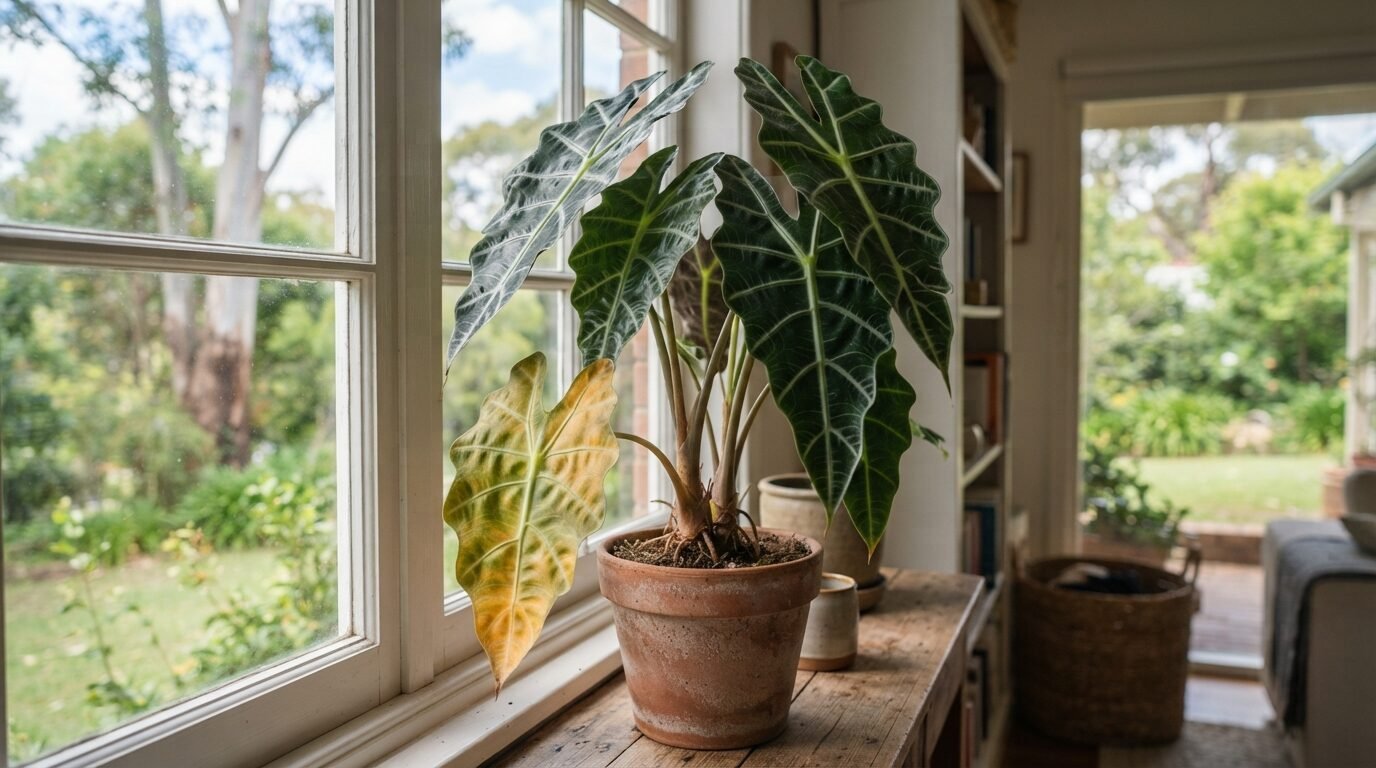
Quick answer: Yellow Alocasia leaves usually mean one of four things: overwatering/soggy soil (the most common), natural shedding of the oldest leaf as a new one grows, winter dormancy as the plant dies back but stays alive underground, or stress from light, dry soil or pests. Check the soil, the season and which leaf is yellowing before you act — and never bin an Alocasia just because it drops its leaves in winter.
Alocasia (elephant ear) are dramatic, fast-growing plants, but they are also quick to tell you when something is off — usually by yellowing a leaf. The trick is that several very different situations all look like “yellow leaves”, so the fix depends entirely on the cause. Here is how to read it in Australian conditions.
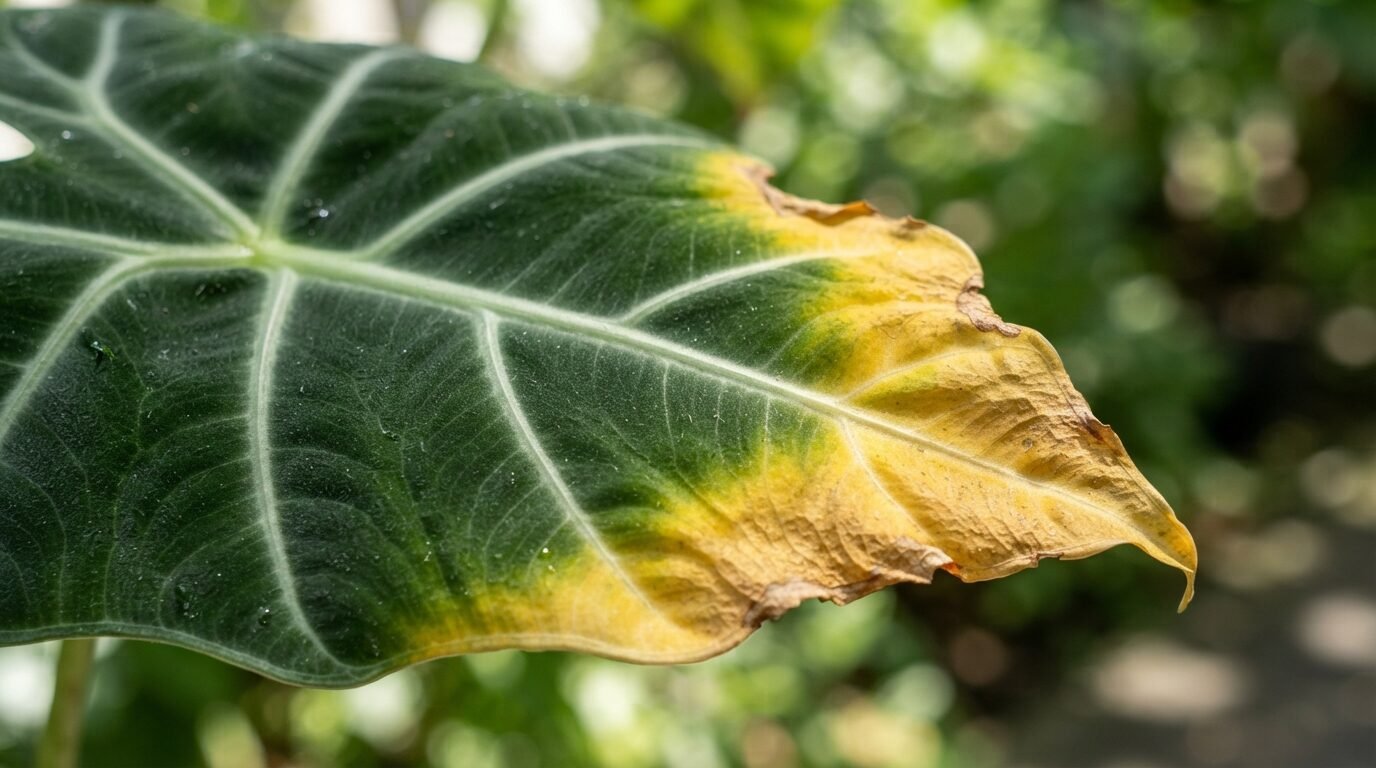
First, which leaf is yellow?
Before diagnosing a problem, rule out normal behaviour. Alocasia naturally carry a limited number of leaves and will sacrifice the oldest, lowest leaf whenever they push a fresh one from the centre.
Normal turnover: if it is only the oldest (lowest) leaf yellowing while new growth looks healthy, that is routine. Let it fade and remove it — nothing is wrong.
It becomes a problem when multiple leaves yellow at once, new leaves yellow, or yellowing comes with soggy soil, drooping or pests.
The main causes of yellow Alocasia leaves
| What you see | Likely cause | What to do |
|---|---|---|
| Soil wet/heavy, maybe soft stems or smell | Overwatering / root rot | Stop watering, check roots, improve drainage |
| Only the oldest lower leaf, rest healthy | Natural leaf turnover | Nothing — remove once fully yellow |
| Autumn/winter, plant slowing and dropping leaves | Dormancy / dieback | Ease off water, keep warm, wait for spring |
| Soil bone-dry, plant drooping, leaves crisp | Underwatering | Water thoroughly; review routine |
| Bleached/yellow patches on the sun side | Too much direct sun | Move to bright indirect light |
| Fine stippling, webbing on undersides | Spider mites | Treat pests; rinse and spray |
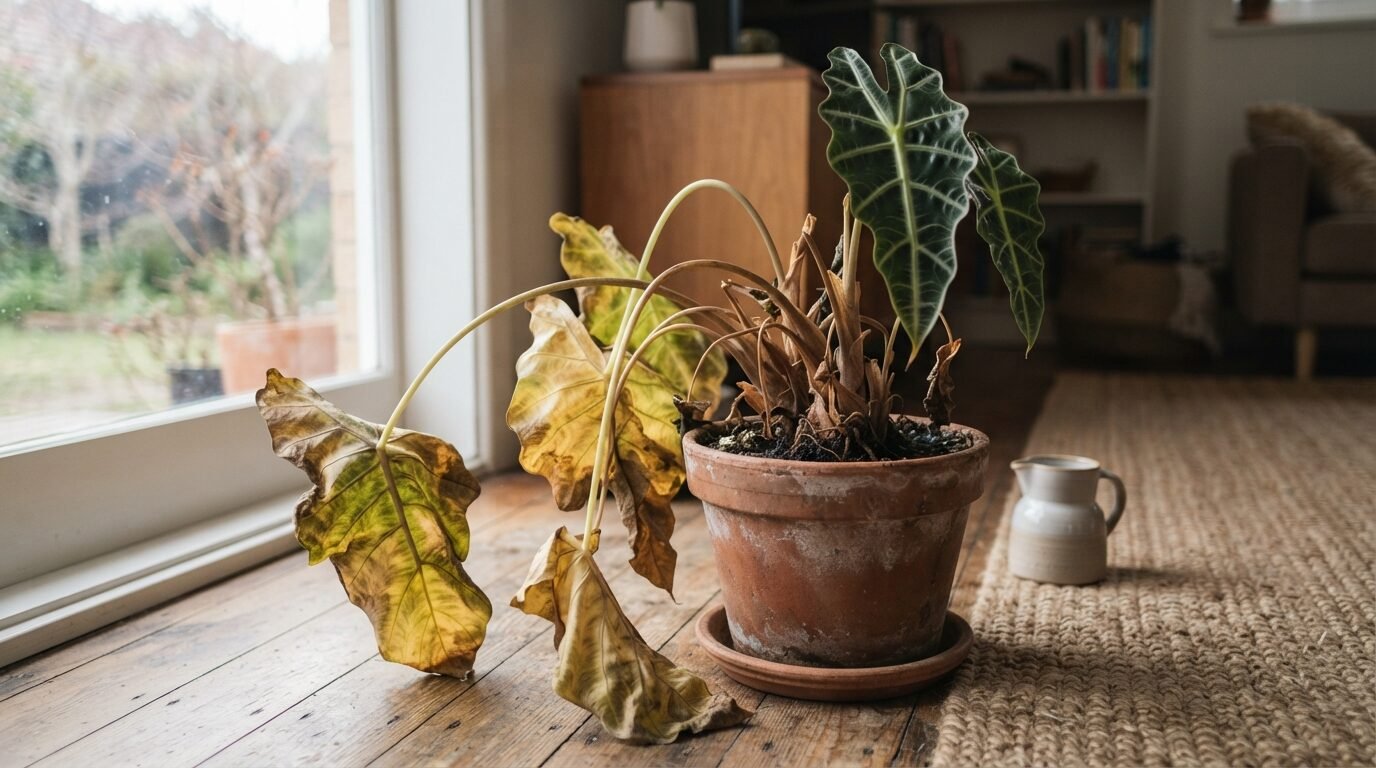
Do not misread winter dieback as death: this is the single biggest Alocasia mistake in Australia. As it cools, many Alocasia yellow, drop most or all of their leaves and look finished — but the underground corm is alive and dormant. Keep the pot barely moist in a warm spot and it will reshoot in spring. See our Alocasia dormancy & dying-back guide.
If the soil is wet: overwatering is the usual culprit
Alocasia like consistent moisture but hate sitting in water. Soggy soil starves the roots of oxygen, they start to rot, and the leaves yellow as a result. This is the most common cause of yellowing indoors.
Fixing an overwatered Alocasia
- 1Stop watering and move the pot out of any saucer of standing water.
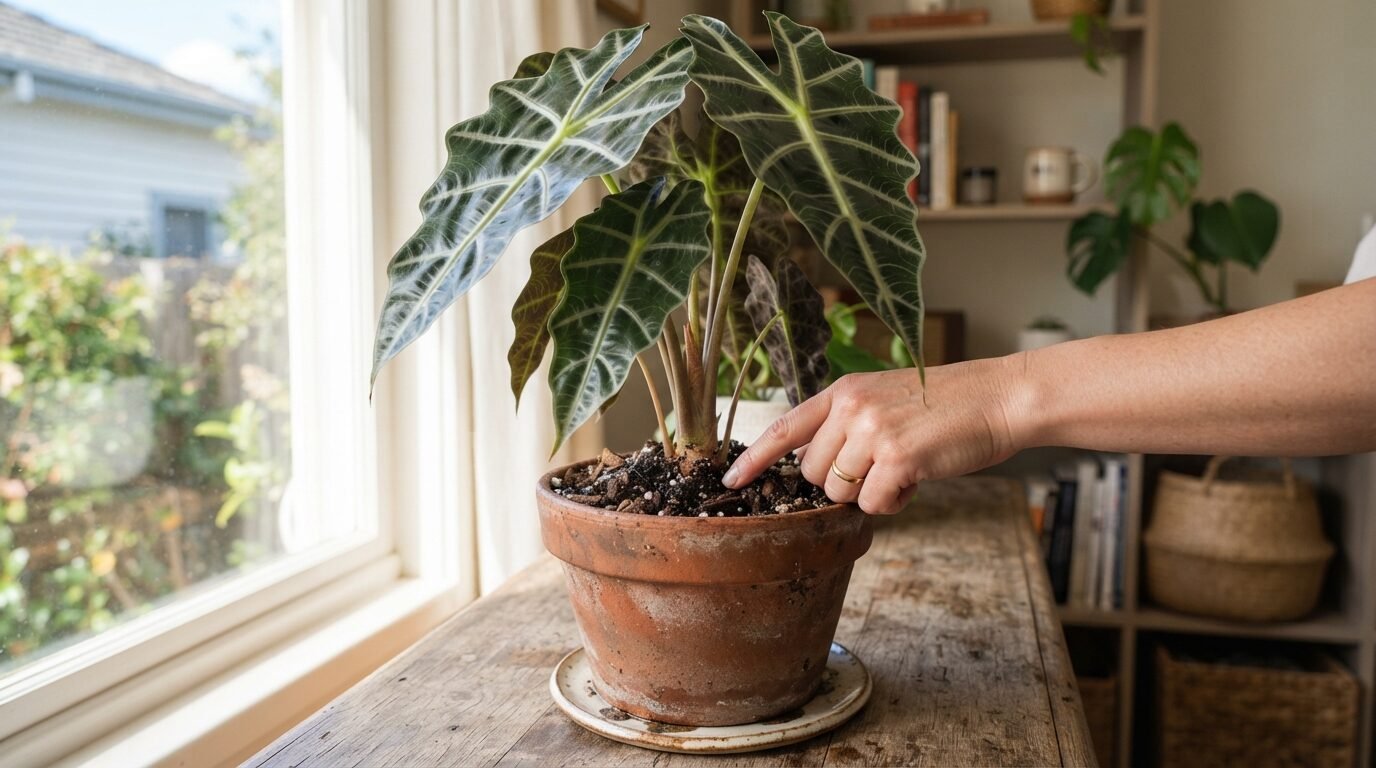
- 2Feel the soil — if it stays wet for days, the mix is holding too much water.
- 3If stems are soft or the soil smells sour, slide the plant out and check the roots; trim any brown mushy ones.
- 4Repot into a fresh, free-draining mix in a pot with drainage holes.
- 5Water only when the top of the soil dries, and keep it warm and brightly lit.
For the full method see our Alocasia watering guide and root rot rescue guide.
Other triggers worth checking
- Underwatering: if the soil is bone-dry and the plant is drooping, it is thirsty — water thoroughly and see our drooping guide.
- Harsh sun: direct rays through a hot window bleach and yellow leaves; Alocasia want bright indirect light — see the light requirements guide.
- Pests: spider mites are common on Alocasia in Australia and cause pale stippling that can look like yellowing — check leaf undersides (our pests guide covers treatment).
- Nutrients: a hungry plant in old mix can pale overall; a light feed in the growing season helps, but do not feed a dormant or stressed plant.
How to prevent yellow leaves
- water on a feel-the-soil basis, never on a fixed schedule;
- use a chunky, free-draining aroid-style mix and a pot with drainage;
- give bright, indirect light (or dappled part-shade outdoors);
- expect and accept some dieback over winter — it is not failure;
- check for mites regularly, especially in warm, dry indoor air.
For the complete picture, start with the Alocasia care & varieties guide for Australia.
Frequently asked questions
Why are my Alocasia leaves turning yellow?
The most common cause is overwatering or soggy soil, but Alocasia also naturally sheds its oldest leaf as it pushes a new one, and it can yellow and drop leaves as it enters winter dormancy. Check the soil, the season and which leaf is yellowing before deciding what to do.
Is one yellow leaf on my Alocasia normal?
Often yes. Alocasia typically keeps a limited number of leaves and will let an older, lower leaf yellow and die as a fresh one unfurls. If it is just the oldest leaf and the rest look healthy, that is normal turnover, not a problem.
Can yellow leaves mean my Alocasia is going dormant?
Yes. As temperatures drop in autumn and winter, many Alocasia slow down or die back, yellowing and dropping leaves while the underground corm stays alive. This is dormancy, not death — do not throw the plant out, just ease off watering and wait for spring.
Should I cut off yellow Alocasia leaves?
Once a leaf is mostly yellow it will not turn green again, so you can remove it with clean scissors to tidy the plant and redirect energy. Leave leaves that are only partly yellow until they fade further, as the plant is still drawing resources back from them.
How do I tell overwatering from underwatering?
Overwatering yellows leaves while the soil stays wet and heavy, often with mushy stems or a sour smell. Underwatering yellows and crisps leaves while the soil is dry and the plant droops. Feel the soil first — it tells you which way you have gone.
Do yellow leaves mean root rot?
Not always, but persistent yellowing with soggy soil and a bad smell can mean root rot. If the soil is wet and the base feels soft, check the roots: healthy roots are firm and pale, rotten ones are brown and mushy. See our root-rot guide for the rescue steps.
Can too much light cause yellow Alocasia leaves?
Harsh direct sun can bleach and yellow Alocasia leaves, especially through a hot window. Alocasia prefers bright, indirect light indoors or dappled part-shade outdoors in Australia; move a scorched plant out of direct rays.
Will yellow leaves grow back green?
A leaf that has yellowed will not re-green, but once you fix the underlying cause the plant will push healthy new leaves. Focus on correct watering, light and drainage, and judge recovery by the new growth rather than the old leaves.
- Alocasia care & varieties guide (Australia) — the complete care hub.
- Alocasia dormancy & dying back — why winter yellowing is not death.
- How to water Alocasia — the #1 cause of yellowing.


