
Alocasia Dormancy & Dying Back in Australia: Dormant, Not Dead

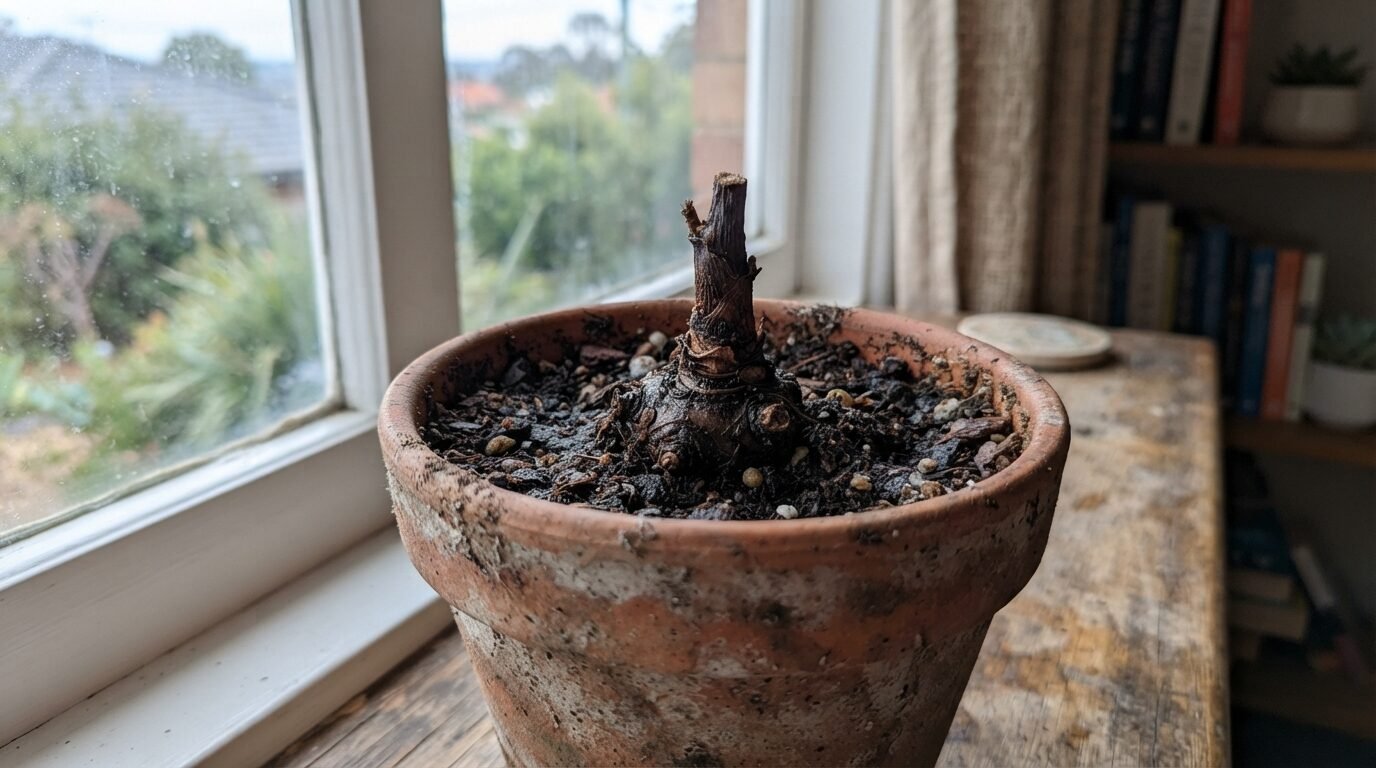
Quick answer: If your Alocasia yellows, collapses and drops its leaves as the weather cools, it is most likely going dormant, not dying. The leaves die back but the underground corm stays alive and will reshoot in spring. Keep it warm and bright, water only enough to stop the mix drying out completely, stop fertilising, and be patient. Do not throw it out, and do not keep watering it as if it were in full growth.
More healthy Alocasia get binned in Australia over winter than die of any disease — because a resting plant looks exactly like a dead one. Understanding dormancy is the single most useful thing you can know about elephant ears.
What Alocasia dormancy actually is
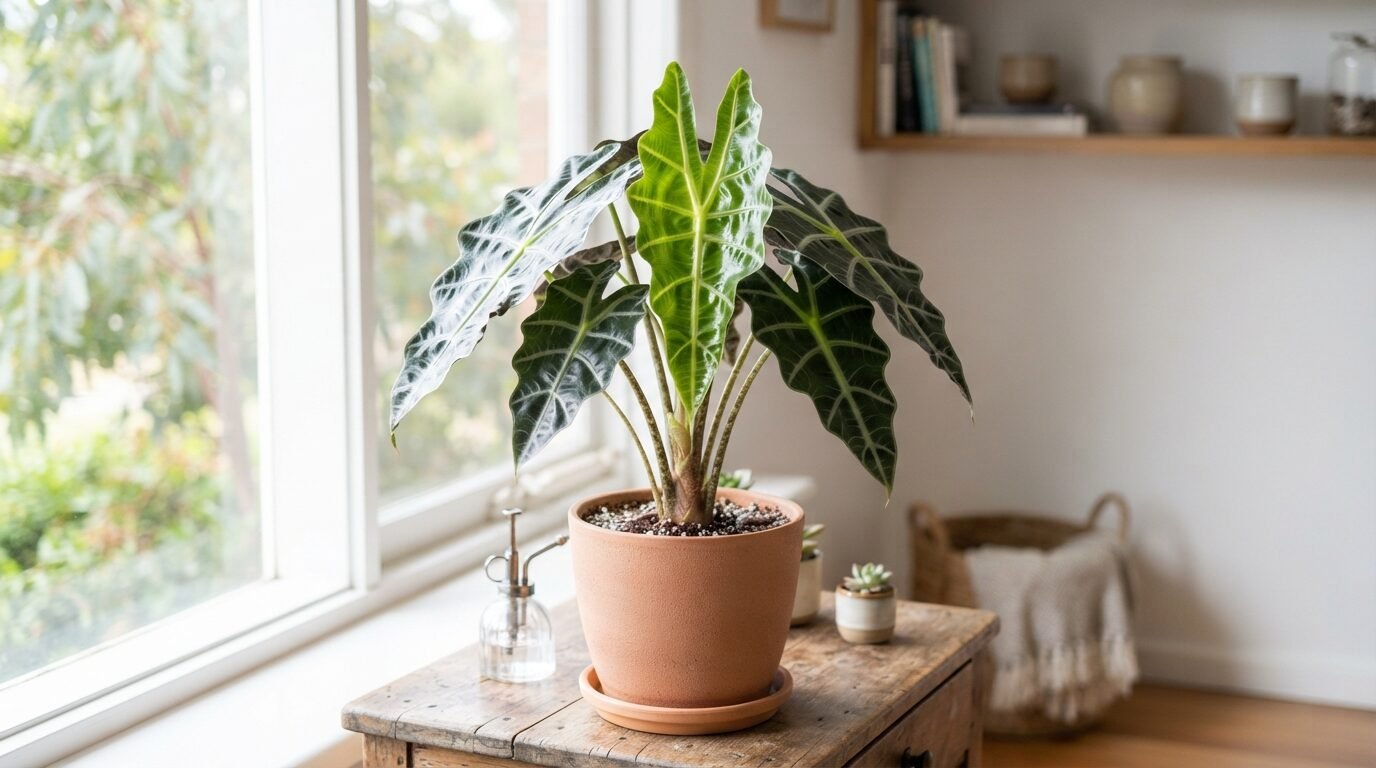
Alocasia grow from a corm (a swollen underground storage stem). When light and temperature drop, the plant protects itself by pulling energy down into that corm and letting its leaves die off, rather than trying to support big foliage through poor growing conditions. Above ground it may look finished; below ground it is simply resting.
The key idea: leaves dying back ≠ plant dying. The corm is the plant. As long as the corm is firm and alive, the leaves are replaceable.
Dormant or dead? How to tell
| Check | Dormant (alive) | Dead / rotten |
|---|---|---|
| The corm / base | Firm, solid, pale inside | Soft, mushy, brown, smelly |
| Timing | Autumn–winter as it cools | Any time, with soggy soil |
| Soil | Barely moist or dry | Waterlogged and sour |
| Roots | Firm and pale | Brown, slimy, falling apart |
If in doubt, gently unpot and feel the corm. A firm corm means wait; a mushy one means rot — see our root rot rescue guide.
How to care for a dormant Alocasia
Overwintering a resting corm
- 1Move it somewhere warm and bright (a resting corm still benefits from light and warmth).
- 2Cut watering right back — just enough to stop the mix drying out completely, roughly a little every few weeks.
- 3Stop fertilising entirely until active growth returns.
- 4Trim off fully dead leaves to keep things tidy and reduce rot risk.
- 5Leave the corm in its pot (simplest) and wait for spring, checking occasionally that the corm stays firm.
The dormancy rot trap: the most common way to lose a dormant Alocasia is to keep watering it normally. A resting corm barely drinks, so standard watering leaves it sitting in wet soil and it rots. When in doubt over winter, water less.
When and how it comes back
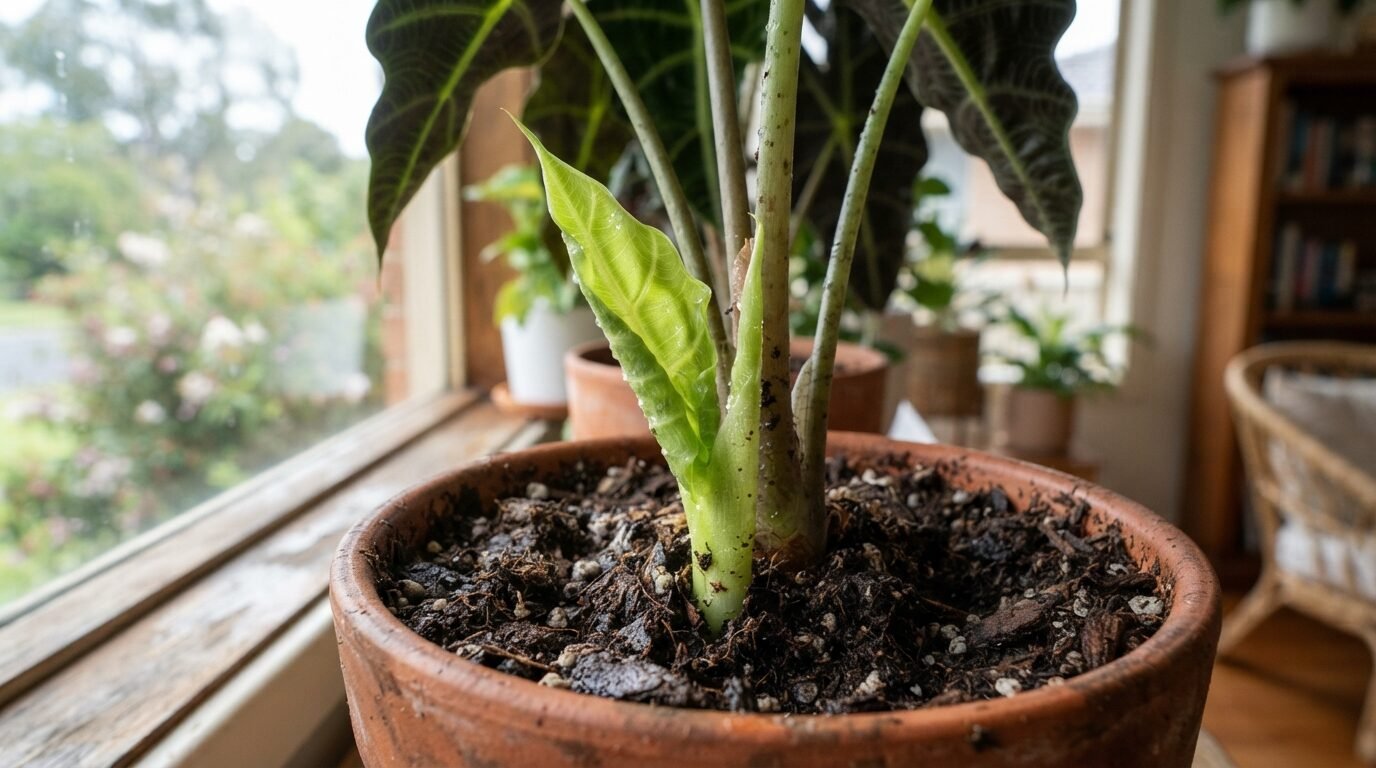
As warmth and longer days return in spring, a healthy corm typically pushes new shoots within a few weeks to a couple of months. Once you see new growth, gradually resume normal watering and, a little later, light feeding. The plant will rebuild its leaves over the warm season.
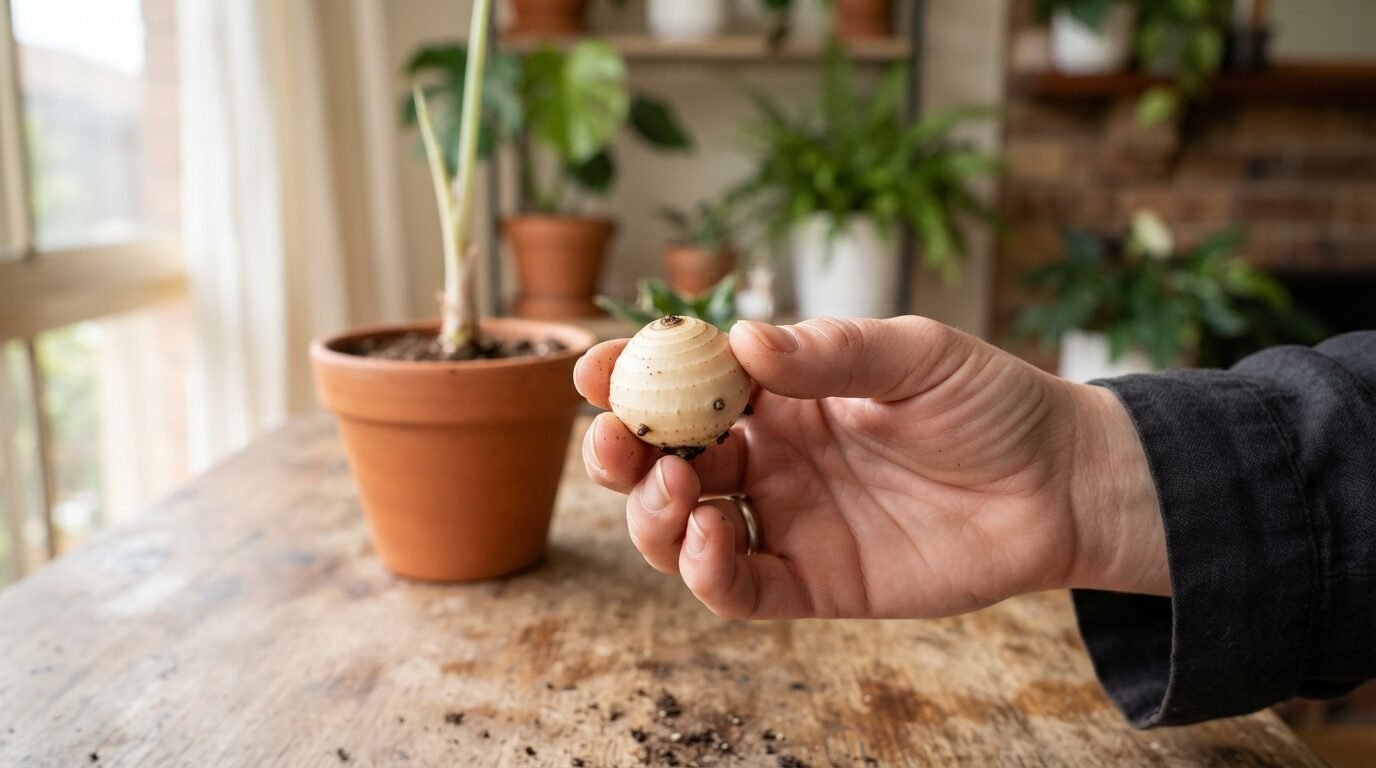
To reduce dieback next year, keep the plant as warm, bright and stable as you can over winter — see our light guide and watering guide. Many indoor Alocasia in warm, well-lit Australian homes barely slow down at all.
Frequently asked questions
Is my Alocasia dead or just dormant?
If it has dropped leaves over the cooler months but the base and underground corm are still firm, it is almost certainly dormant, not dead. A dormant corm is solid and pale inside; a dead or rotten one is soft, brown and smells off. Gently feel the corm before giving up on the plant.
Why did my Alocasia drop all its leaves in winter?
Many Alocasia naturally die back when light and temperatures fall in autumn and winter, pulling their energy down into the corm and shedding their leaves. It looks alarming but it is a normal survival strategy, especially in cooler parts of Australia or in a cold room.
How do I care for a dormant Alocasia?
Keep it warm, in bright light, and water only enough to stop the mix drying out completely — roughly a small amount every few weeks. Do not fertilise and do not keep watering on your normal schedule, as a resting corm in wet soil will rot. Then wait for spring.
When will my dormant Alocasia grow back?
As warmth and daylight return in spring, a healthy corm usually pushes new shoots within a few weeks to a couple of months. Move it somewhere warm and bright, resume normal watering once you see growth, and it will rebuild its leaves.
Should I repot or dig up a dormant Alocasia?
You do not have to. You can leave the corm in its pot through dormancy and just keep it barely moist and warm. If you want, you can lift and store firm corms in slightly damp coir in a warm spot, but leaving them potted is simpler and lower-risk.
Can I prevent my Alocasia going dormant?
Keeping it warm, bright and in stable conditions over winter reduces or avoids dieback — many indoor Alocasia in heated, well-lit AU rooms stay in leaf year-round. Cold, dark or draughty spots make dormancy more likely.
My Alocasia is dormant and the soil is soggy — what now?
That is a rot risk. A resting corm does not drink much, so wet soil around it can turn it mushy. Let the mix dry out substantially, move it somewhere warm, and if the corm feels soft, check it and cut away any rotten parts before it spreads.
Do all Alocasia go dormant?
Not all, and not always. Dormancy is most common in cooler conditions and with certain types; a well-kept plant in a warm, bright AU home may barely slow down. Treat dieback as possible dormancy first rather than assuming the plant has died.
- Alocasia care & varieties guide (Australia) — the complete care hub.
- Why Alocasia leaves turn yellow — dormancy vs overwatering.
- Alocasia root rot rescue — if the corm has gone soft.


