
Alocasia Pests in Australia: Spider Mites & More

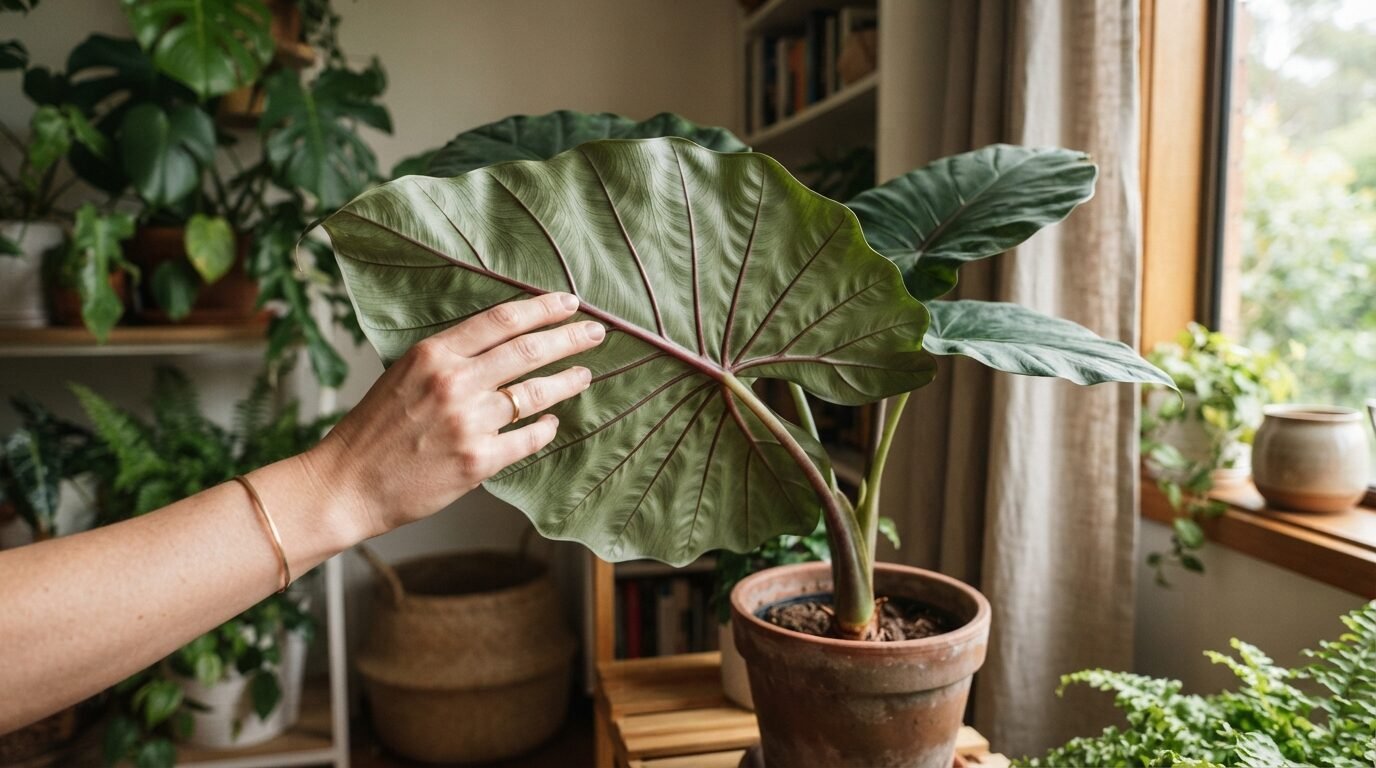
Quick answer: The main Alocasia pest in Australia is the spider mite, which thrives in warm, dry indoor air and causes fine pale stippling and webbing on the leaf undersides. Isolate the plant, rinse the foliage, then treat with neem or insecticidal soap — coating the undersides — and repeat weekly for a few weeks. Raise humidity to discourage mites. Watch too for mealybugs, scale, thrips and fungus gnats.
Alocasia are magnets for spider mites, and the glossy undersides of their big leaves are the perfect hiding spot. Catching pests early makes them far easier to beat, so make leaf-flipping a habit.
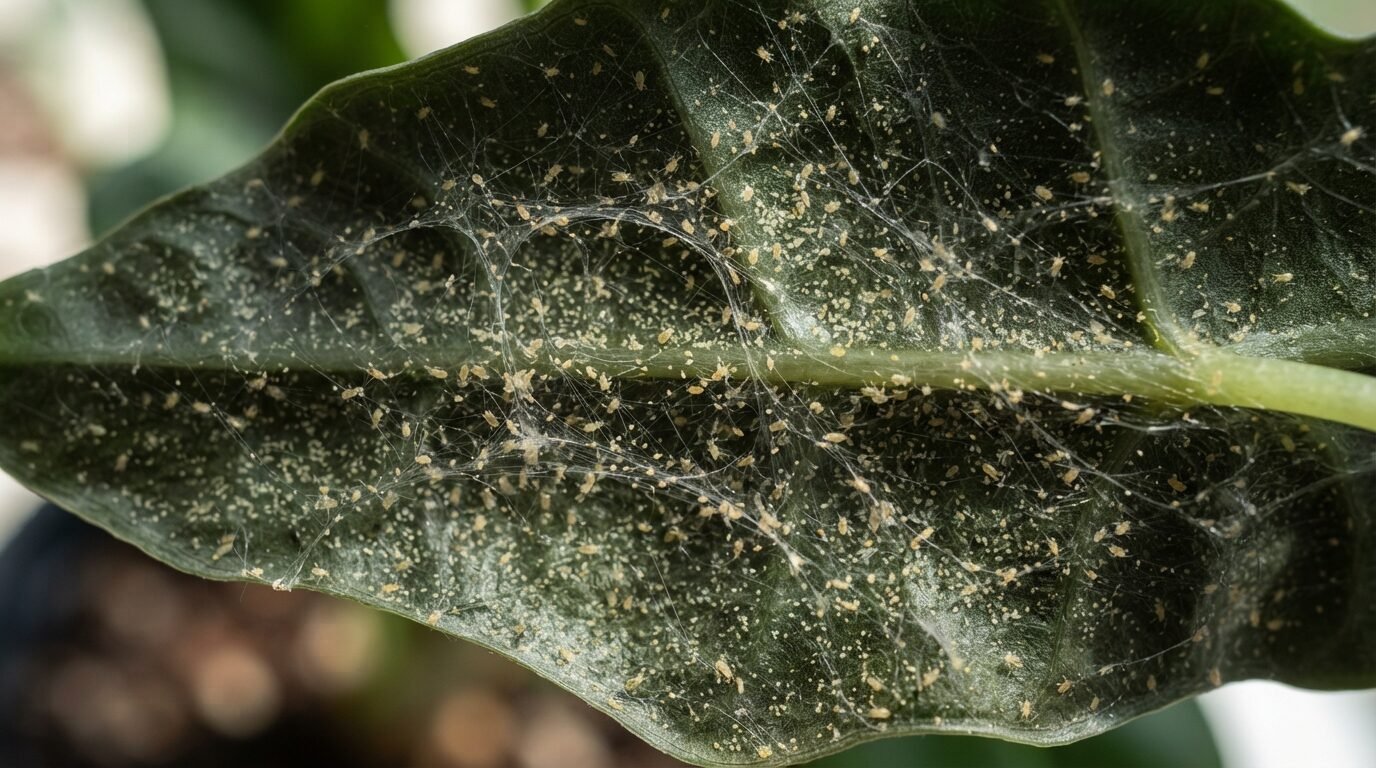
Spider mites: the number-one Alocasia pest
Spider mites are not insects but tiny relatives of spiders. They pierce the leaf cells and suck the sap, leaving:
- fine pale, silvery or bronzed speckling (stippling) across the leaf;
- a dull, dusty, slightly washed-out look;
- fine webbing where the leaf meets the stem or on the undersides in bad cases.
They explode in warm, dry air: heated or air-conditioned Australian rooms in summer are ideal mite conditions. A small population can become an infestation within days, so act as soon as you see stippling.
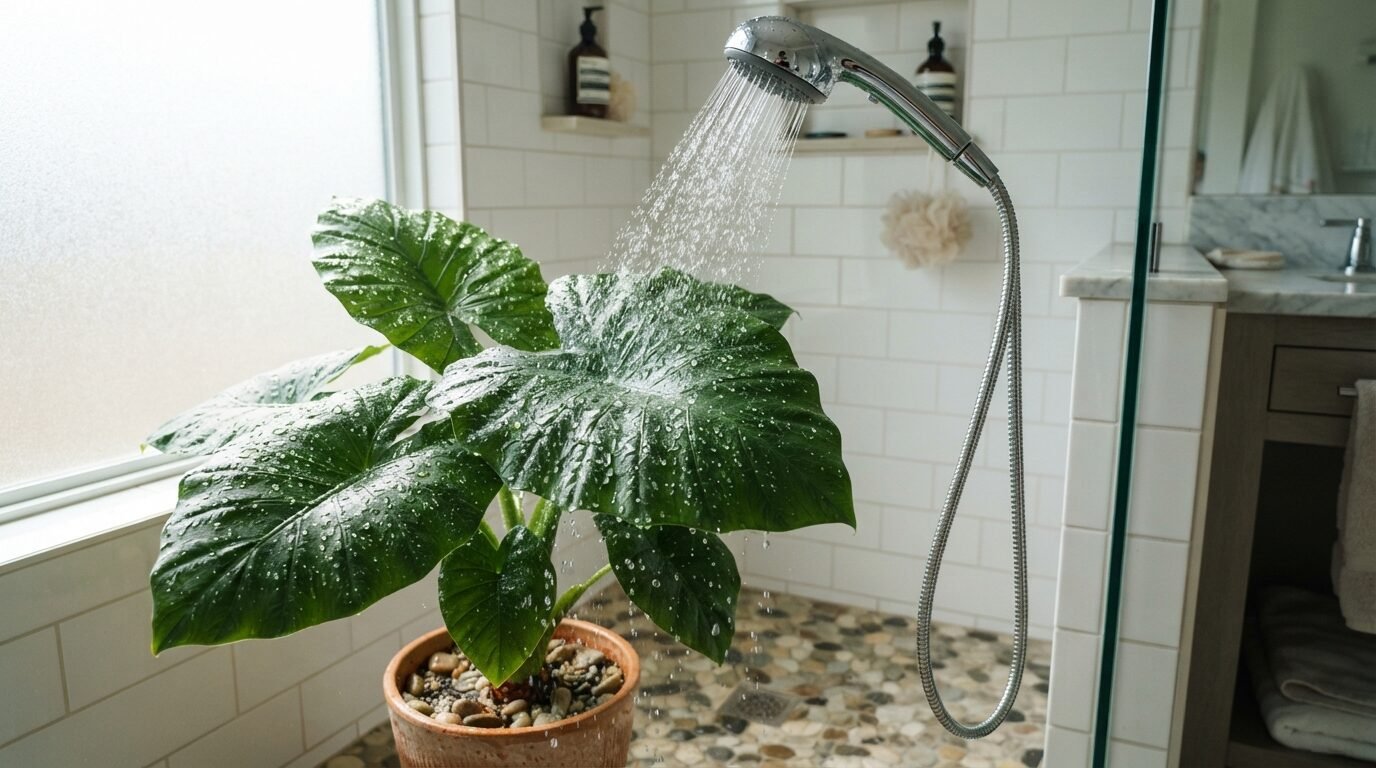
How to treat spider mites on Alocasia
Getting rid of spider mites
- 1Isolate the plant immediately so mites do not spread to your other plants.
- 2Rinse the whole plant in the shower, spraying the leaf undersides to knock mites off physically.
- 3Treat with neem oil or insecticidal soap, coating both sides of every leaf.
- 4Repeat every 5–7 days for at least 3–4 weeks to catch newly hatched mites.
- 5Raise humidity and improve airflow — mites hate humid, moving air.
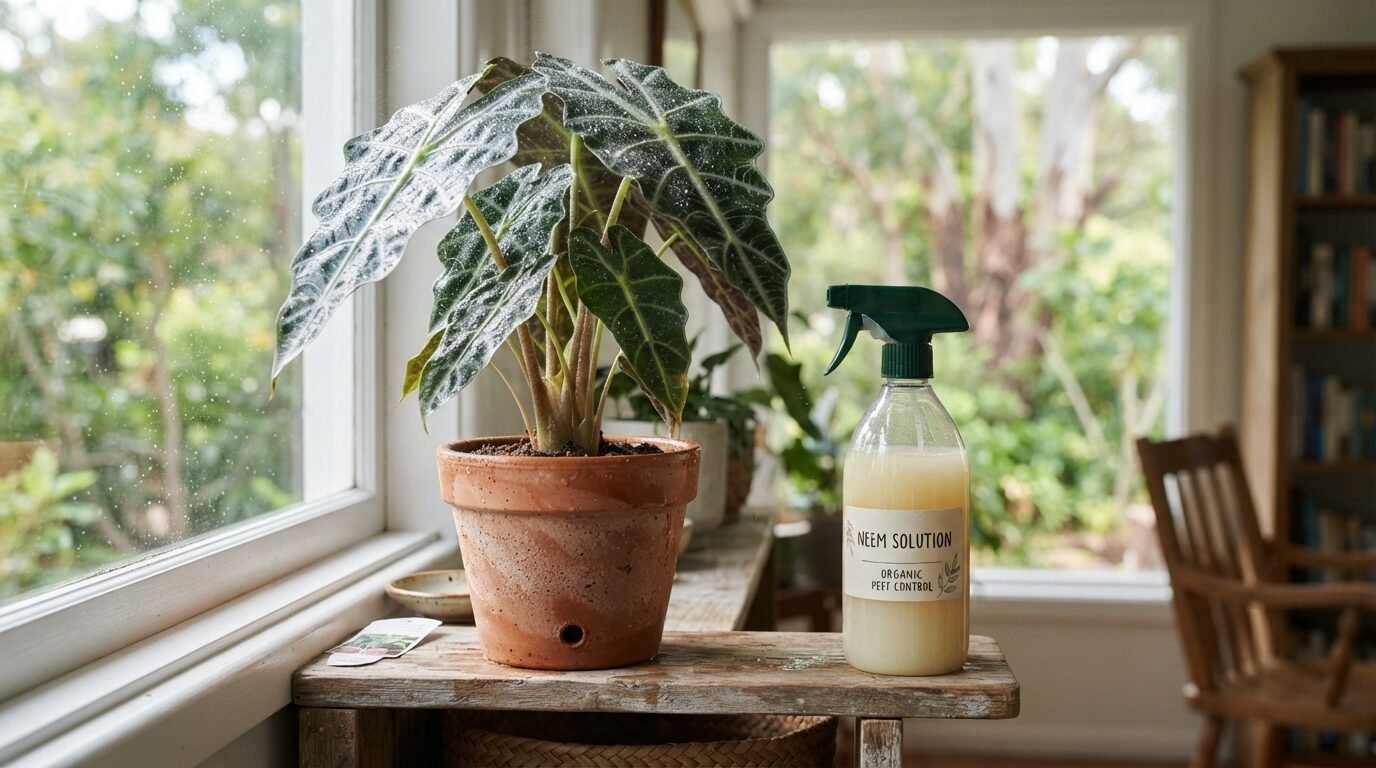
Other Alocasia pests to recognise
Mealybugs and scale
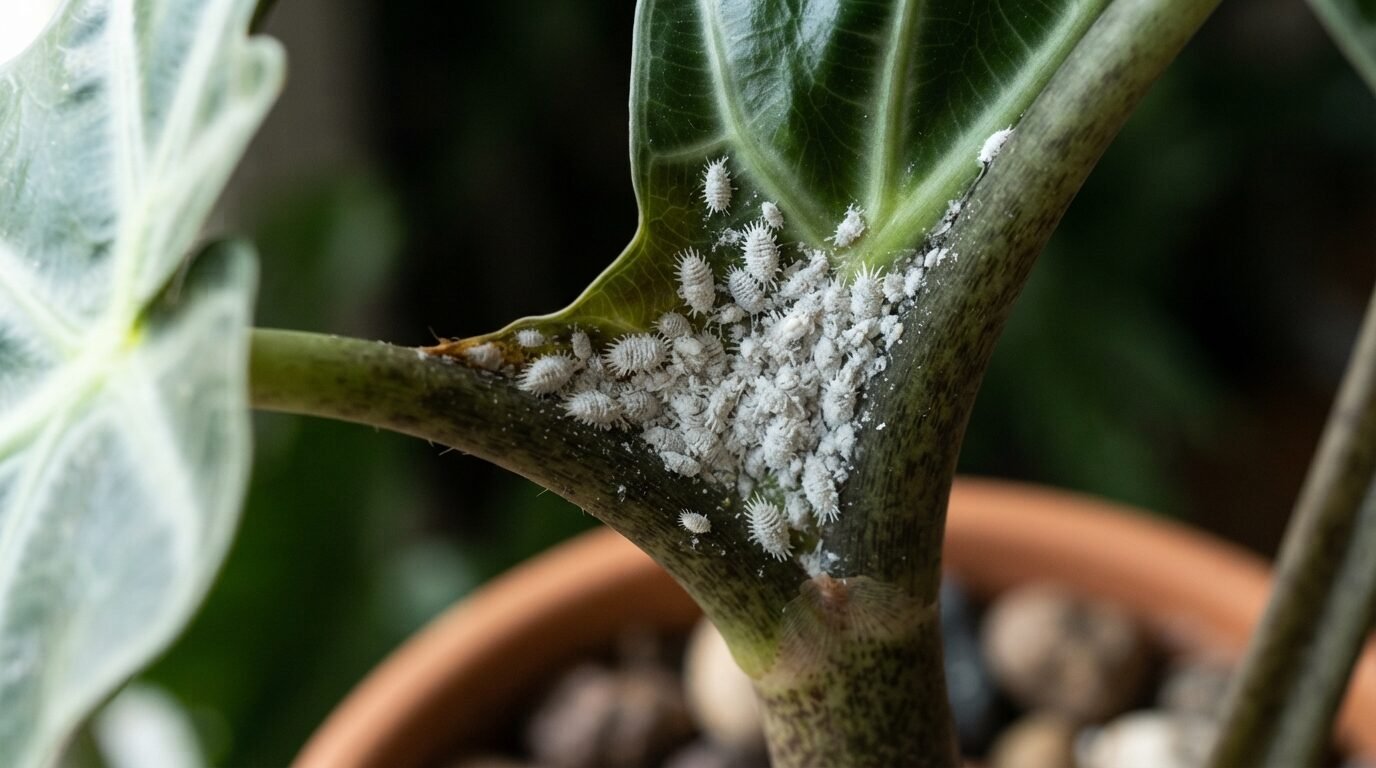
Mealybugs appear as small white cottony clumps in leaf joints; scale look like small brown bumps stuck to stems and leaves. Dab mealybugs with a cotton bud dipped in diluted isopropyl alcohol, scrape off scale, then treat with neem or insecticidal soap and recheck often.
Thrips and aphids
Thrips cause silvery streaks and distorted new growth; aphids cluster on soft new shoots. Both respond to the same rinse-and-spray routine — isolate, wash, and treat with neem or insecticidal soap, repeating until clear.
Fungus gnats: a symptom, not just a pest
Little black flies around the soil are fungus gnats, which breed in constantly wet mix. They are a sign your soil is staying too damp — let the top dry between waterings (see the watering guide) and they fade away.
Preventing pests on Alocasia
- check leaf undersides regularly, especially in warm dry weather;
- wipe dust off the leaves so pests have nowhere to hide;
- keep humidity up and air gently moving;
- quarantine any new plant for a couple of weeks before it joins the others.
Pest damage can look like other problems — cross-check our yellow leaves and drooping guides, and see the main Alocasia care guide for the full picture.
Frequently asked questions
What is the most common Alocasia pest in Australia?
Spider mites are the number-one Alocasia pest, especially in warm, dry indoor air. They are tiny, live on the leaf undersides, and cause fine pale stippling and sometimes delicate webbing. Alocasia also get mealybugs, scale, thrips and aphids, and fungus gnats in soggy soil.
How do I know if my Alocasia has spider mites?
Look for fine pale or silvery speckling across the leaves, a dull dusty look, and fine webbing where the leaf meets the stem or on the undersides. Turning a leaf over and checking with good light (or a magnifier) is the surest way to spot them early.
How do I get rid of spider mites on Alocasia?
Isolate the plant, rinse the foliage thoroughly (including undersides) in the shower, then treat with neem or insecticidal soap, coating the undersides. Repeat every 5–7 days for a few weeks to catch newly hatched mites, and raise humidity, which mites dislike.
Why does my Alocasia keep getting spider mites?
Warm, dry, still air is ideal for mites, so heated or air-conditioned rooms in summer are prime territory. Low humidity, dusty leaves and crowded plants all help them spread. Better airflow, regular leaf-cleaning and higher humidity make reinfestation much less likely.
What are the white cottony bits on my Alocasia?
Those are usually mealybugs — small sap-sucking insects that hide in leaf joints and along stems under a white, cottony coating. Dab them off with a cotton bud dipped in diluted isopropyl alcohol, then treat with neem or insecticidal soap and check regularly for more.
Do I have fungus gnats or a real pest problem?
Small black flies around the soil are fungus gnats — more a symptom than a serious pest. They breed in constantly wet soil, so they are telling you the mix is staying too damp. Let the top of the soil dry between waterings and they usually disappear.
Can I use neem oil on Alocasia?
Yes. Neem is a good, widely used option — spray in the evening or out of direct sun, coat both leaf surfaces, and repeat weekly as needed. Test on one leaf first and avoid spraying a heat-stressed or bone-dry plant.
Should I cut off badly pest-damaged leaves?
If a leaf is heavily stippled or distorted, removing it reduces the pest load and tidies the plant. Keep any leaf that is still mostly functional, treat the whole plant, and let healthy new growth replace the damaged foliage.


