
Why Is My Alocasia Drooping? Causes & Fixes (Australia)

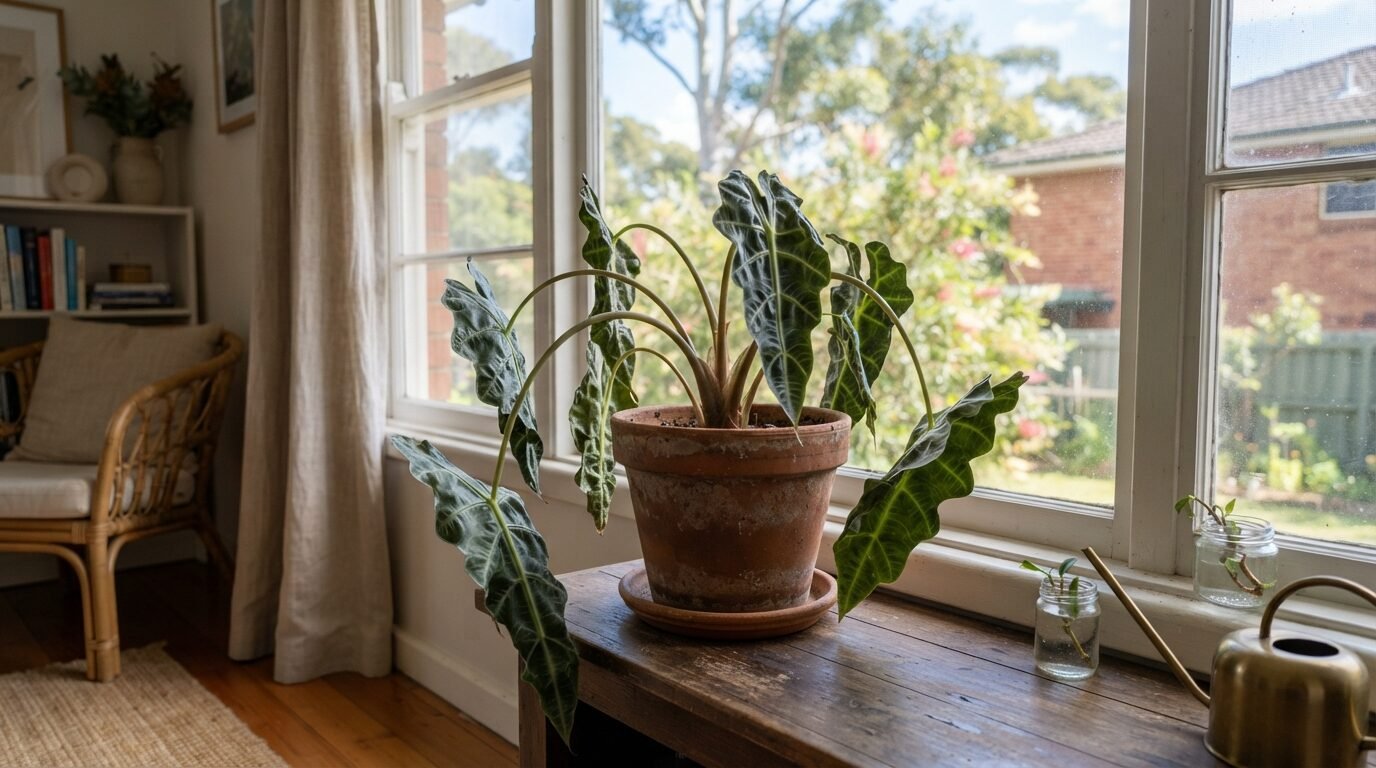
Quick answer: A drooping Alocasia is almost always telling you about water, shock or the season. Feel the soil first: dry soil means it is thirsty — water thoroughly and it should perk up within hours. Wet, heavy soil means the opposite, so stop watering and check the roots. Recent repotting, a move or a cold draught can also cause temporary drooping, and in the cool months drooping with yellowing may be the start of dormancy.
Big Alocasia leaves are heavy, so when the plant is stressed they flop dramatically. It looks alarming, but it is usually a fixable signal — as long as you read it correctly before acting.
Diagnose the cause from the soil and season
| What you notice | Likely cause | What to do |
|---|---|---|
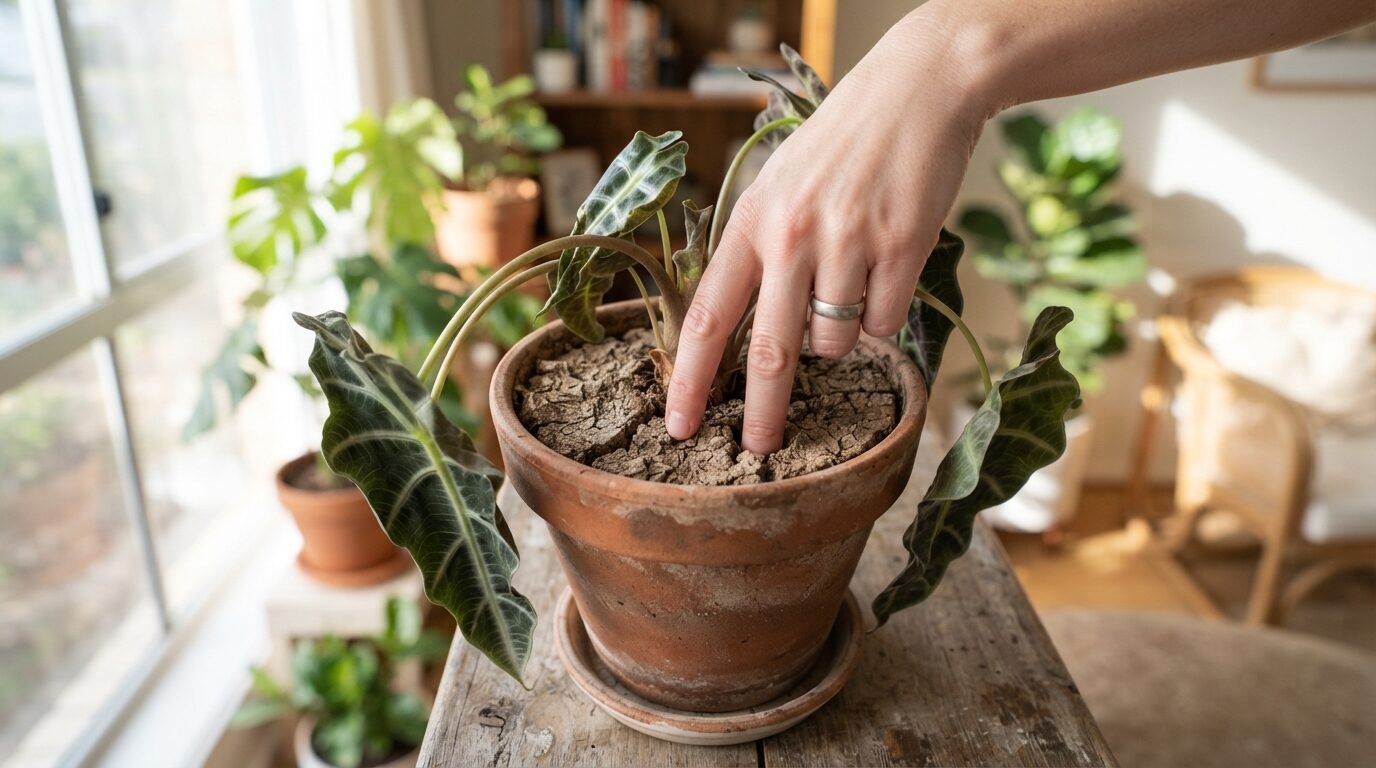
| Soil bone-dry, leaves limp | Underwatering (thirst) | Water thoroughly; perks up in hours |
| Soil wet/heavy, maybe smell | Overwatering / root rot | Stop watering, check roots, repot |
| Just repotted, moved or divided | Shock | Warmth, humidity, steady light; wait |
| Near a heater, vent or cold window | Draught / temperature stress | Move to a stable warm spot |
| Cool season + yellowing + leaf drop | Onset of dormancy | Ease off water; let it rest |
If the soil is dry: rehydrate properly
Reviving a thirsty Alocasia
- 1Confirm the top few centimetres of soil are genuinely dry.
- 2Water thoroughly until it runs from the drainage holes, wetting the whole root ball.
- 3Let all excess drain away — never leave the pot in standing water.
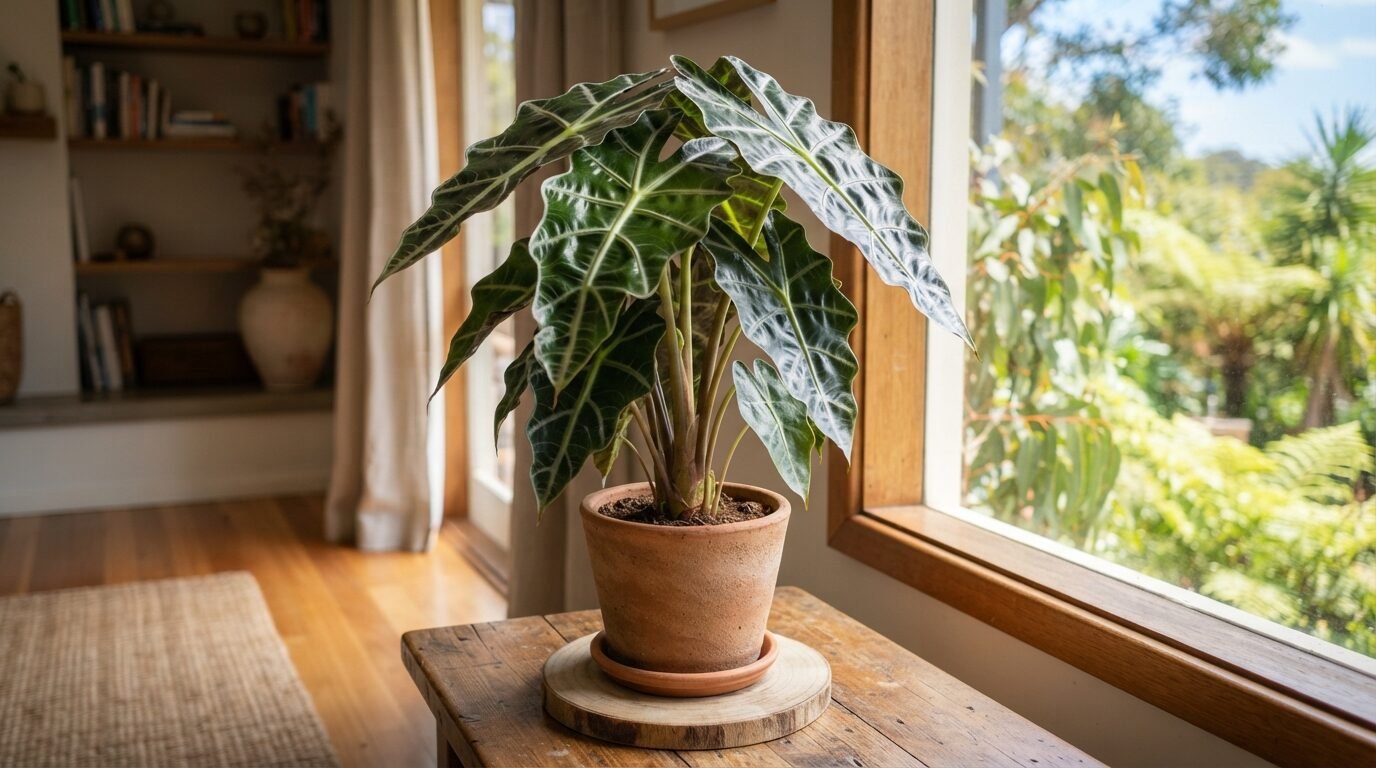
- 4Return it to warm, bright indirect light and wait; most thirsty Alocasia recover within a day.
- 5Going forward, water before it reaches the point of drooping — see the watering guide below.
If the soil is wet: stop and check the roots
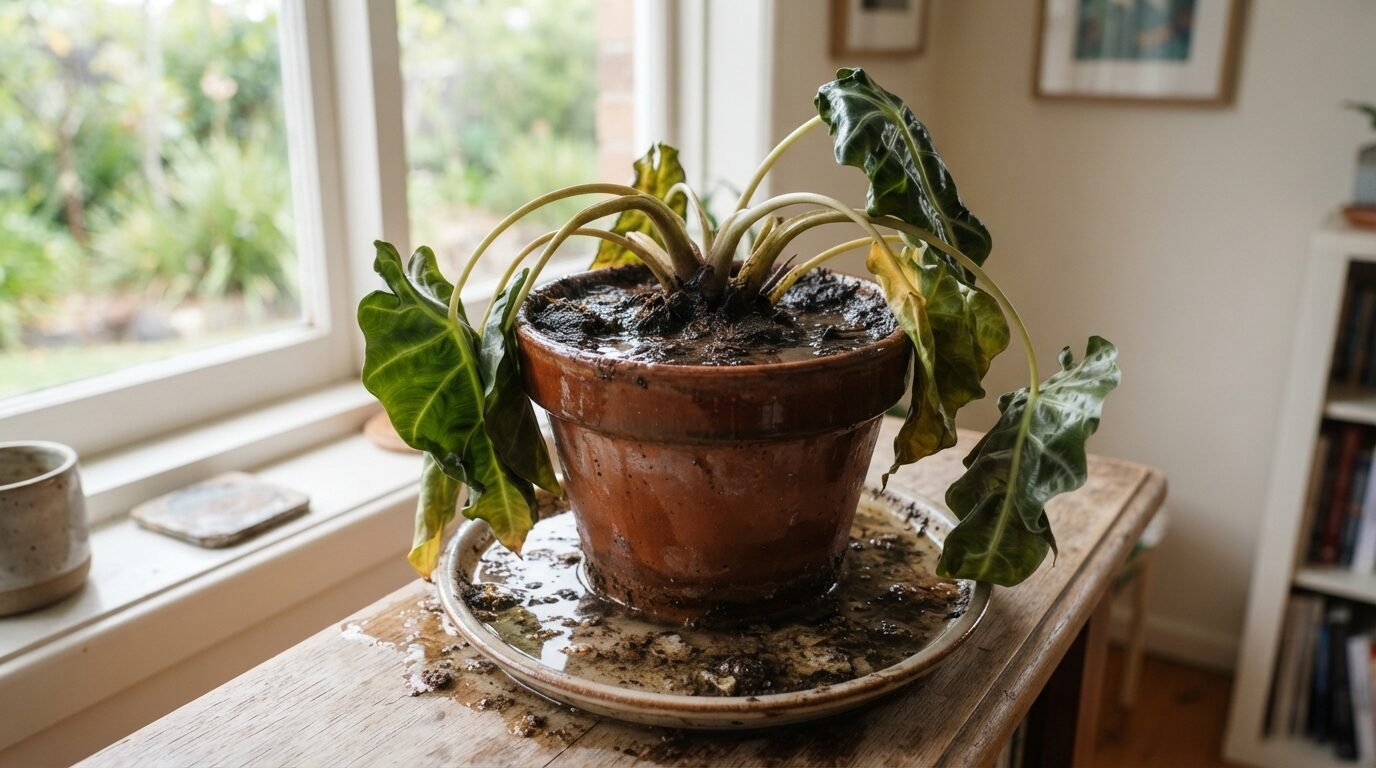
Drooping with soggy soil is an overwatering signal, and more water is the worst thing you can do. Stop watering, move it out of any saucer, and if the soil smells sour, slide the plant out and inspect the roots — trim any brown, mushy ones and repot into fresh free-draining mix. Full method in our root rot rescue guide.
Shock and seasonal drooping
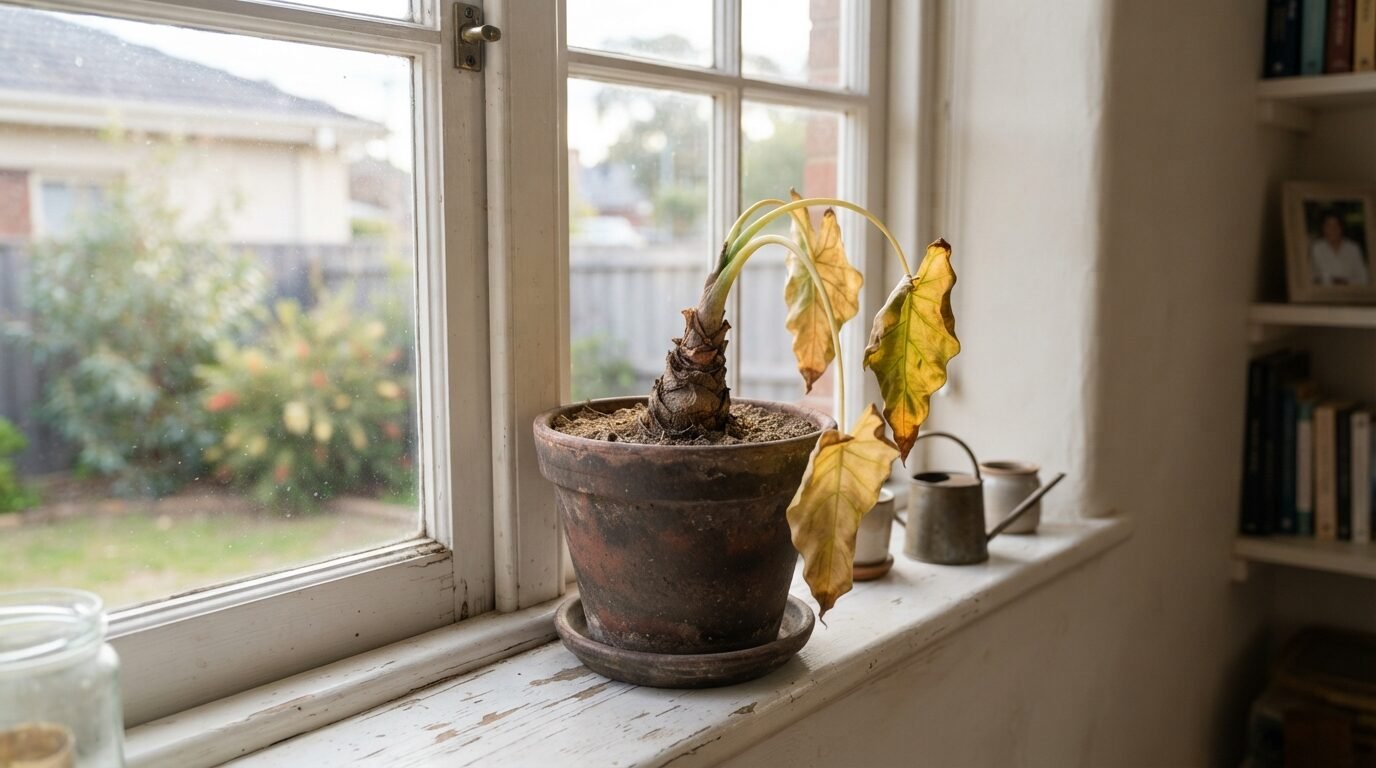
Alocasia dislike change and often droop for a week or two after repotting, division or a move. Keep them warm, humid, brightly lit and out of draughts, and be patient. And remember: in autumn and winter, drooping that comes with yellowing and leaf drop may simply be the plant entering dormancy — not dying.
Before you panic: check the season. A drooping, yellowing Alocasia in winter is very often resting, not failing. Ease off water, keep it warm, and wait for spring.
For the full care picture, see the main Alocasia care guide and the watering guide.
Frequently asked questions
Why is my Alocasia drooping all of a sudden?
Sudden drooping is most often a watering issue — either bone-dry soil (thirst) or waterlogged soil (roots struggling). It can also be shock from repotting, a move or a cold draught, or the start of seasonal dormancy. Check the soil and recent history first, because the fixes are opposite.
Does drooping mean under or over watering?
Both can cause it, so let the soil decide. Dry soil with a drooping plant means thirst, and it usually perks up within hours of a good water. Wet, heavy soil with drooping means the roots cannot take water up — an overwatering problem — so adding more water makes it worse.
Should I water a drooping Alocasia?
Only if the soil is actually dry. Feel the top few centimetres: if it is dry, water thoroughly and it should recover. If the soil is already wet, stop watering, improve drainage and check the roots rather than adding more water.
How long does an Alocasia take to recover from drooping?
A thirsty plant that is watered properly often stands back up within a few hours to a day. Recovery from overwatering, repotting shock or a cold event is slower and can take one to two weeks of steady, correct care. Healthy new growth is the clearest sign it has turned the corner.
Can repotting make my Alocasia droop?
Yes. Alocasia often sulk and droop for a week or two after repotting or division while the roots re-establish. Keep it warm, humid and in bright indirect light, water lightly, and avoid feeding until it settles — it usually recovers on its own.
Is my drooping Alocasia going dormant?
If drooping comes with yellowing and leaf drop as the weather cools, it may be entering dormancy rather than failing. In that case ease back on water, keep it warm, and let it rest — the corm stays alive and reshoots in spring.
Why is my Alocasia drooping after I moved it?
A change in light, temperature or a cold draught can shock an Alocasia into drooping. Move it away from draughts, heaters and cold glass, give it stable warmth and bright filtered light, and let it adjust without being shifted around repeatedly.
My Alocasia is drooping and the soil is wet and smelly — what now?
Soggy, sour-smelling soil with drooping points to overwatering and possible root rot. Stop watering, slide the plant out, trim any brown mushy roots, repot into fresh free-draining mix, and water only when the top of the soil dries.


