
Alocasia Root Rot: Signs, Rescue & Prevention (Australia)

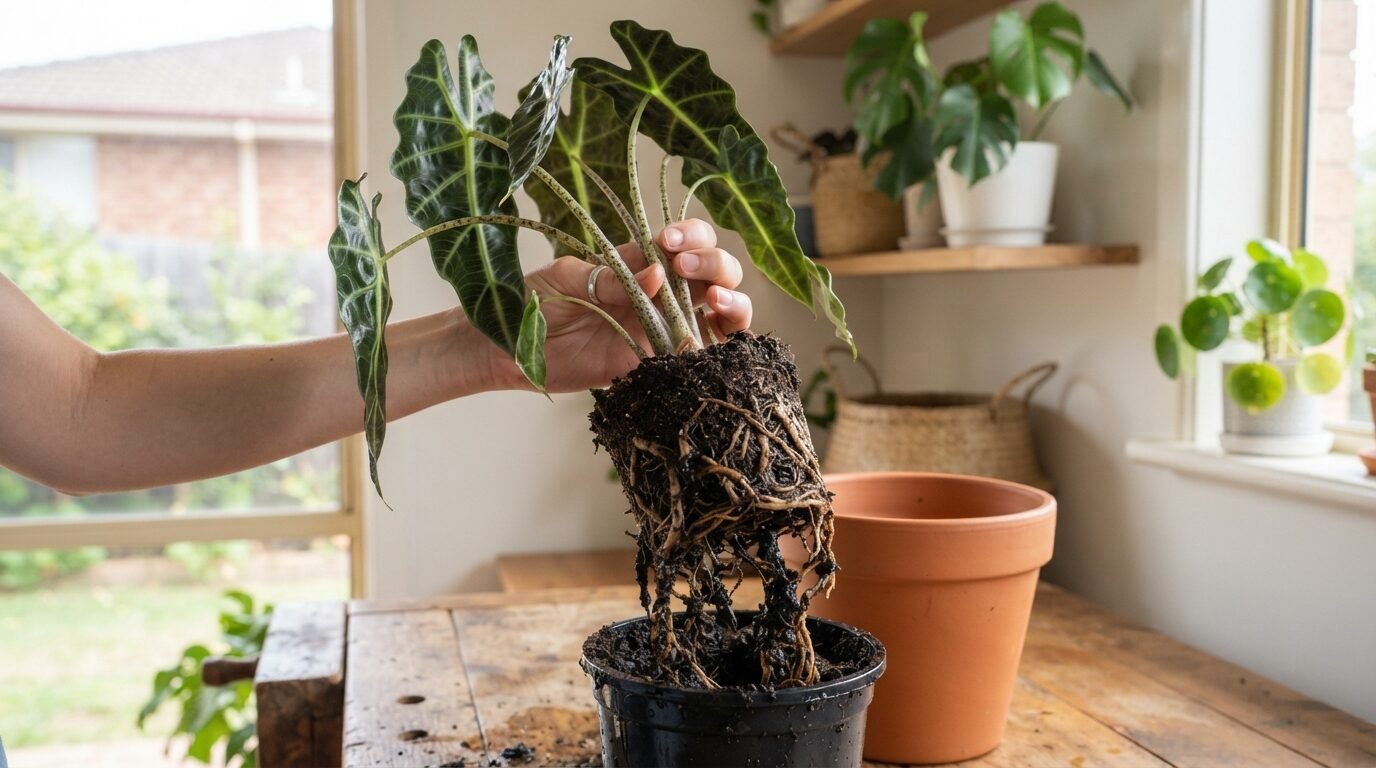
Quick answer: Alocasia root rot comes from roots sitting in waterlogged soil. The signs are yellowing and drooping that will not improve, a soft mushy base, and brown, slimy, smelly roots. To rescue it: unpot, rinse the roots, cut away every rotten part, repot into fresh free-draining mix, and water sparingly. Even a plant reduced to a firm corm can regrow — and always check it is rot, not just winter dormancy, first.
Root rot is the most serious common Alocasia problem, but it is also one of the most preventable — and often recoverable if you catch it early. The key is to act on wet, smelly soil rather than keep watering.
What causes it
Roots need oxygen as well as water. When soil stays waterlogged — from overwatering, dense mix, no drainage, or cold-and-wet conditions — the roots suffocate and rot sets in. The single most common trigger in Australia is watering a slowing or dormant plant on a summer schedule through the cool months.
Root rot or dormancy? Check first
Before treating, make sure it is actually rot and not harmless seasonal dieback:
Rot vs dormancy: Root rot = wet, sour-smelling soil and soft, mushy, brown roots or base. Dormancy = the corm is firm, the soil is not waterlogged, and it is simply resting for winter. Feel the corm and smell the soil before you act.
How to rescue an Alocasia with root rot
Root rot rescue
- 1Unpot the plant and gently wash all the old soil off the roots.
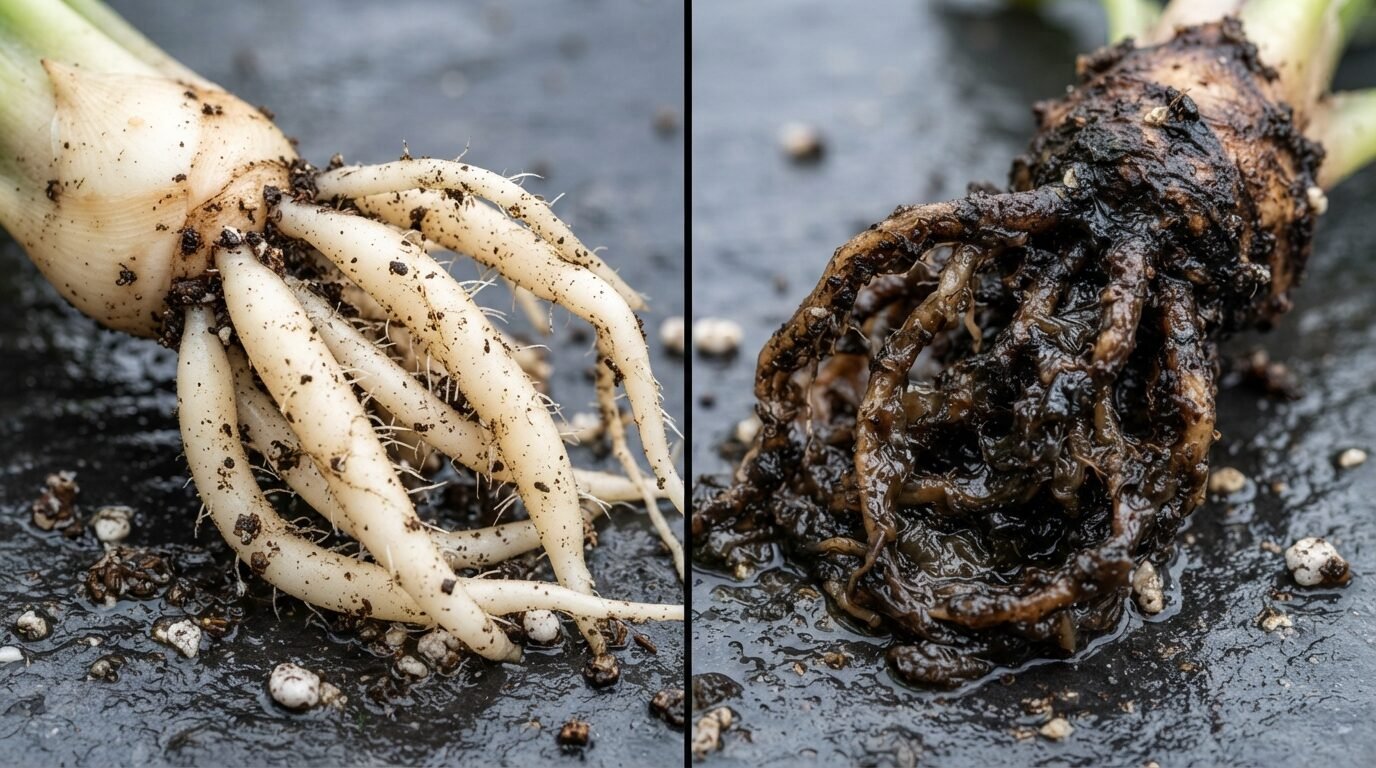
- 2Identify the rot: healthy roots are firm and pale; rotten roots are brown/black, soft and slimy.
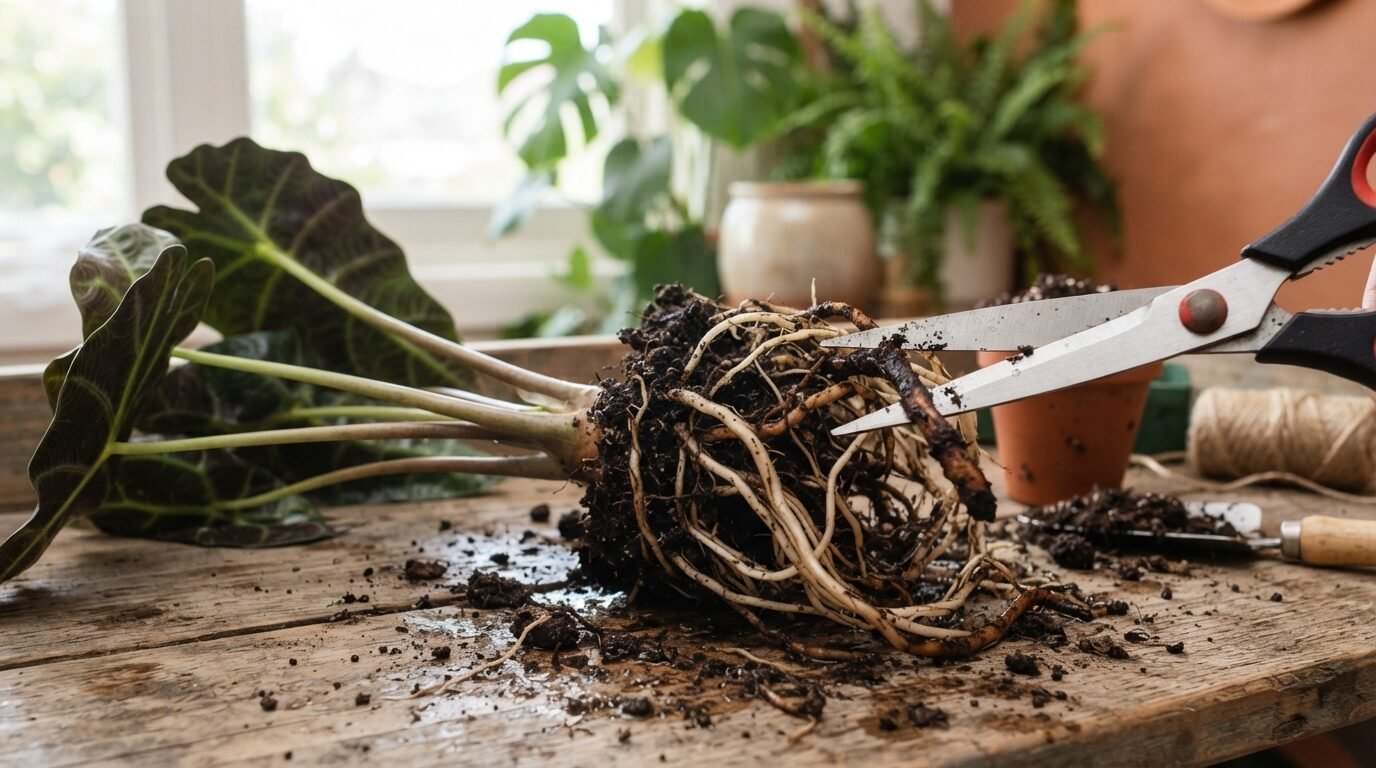
- 3With clean scissors, cut away every soft, rotten root — keep only firm tissue (even if that is just the corm).
- 4Optionally rinse the cleaned roots with a dilute hydrogen-peroxide solution or treat with a fungicide.
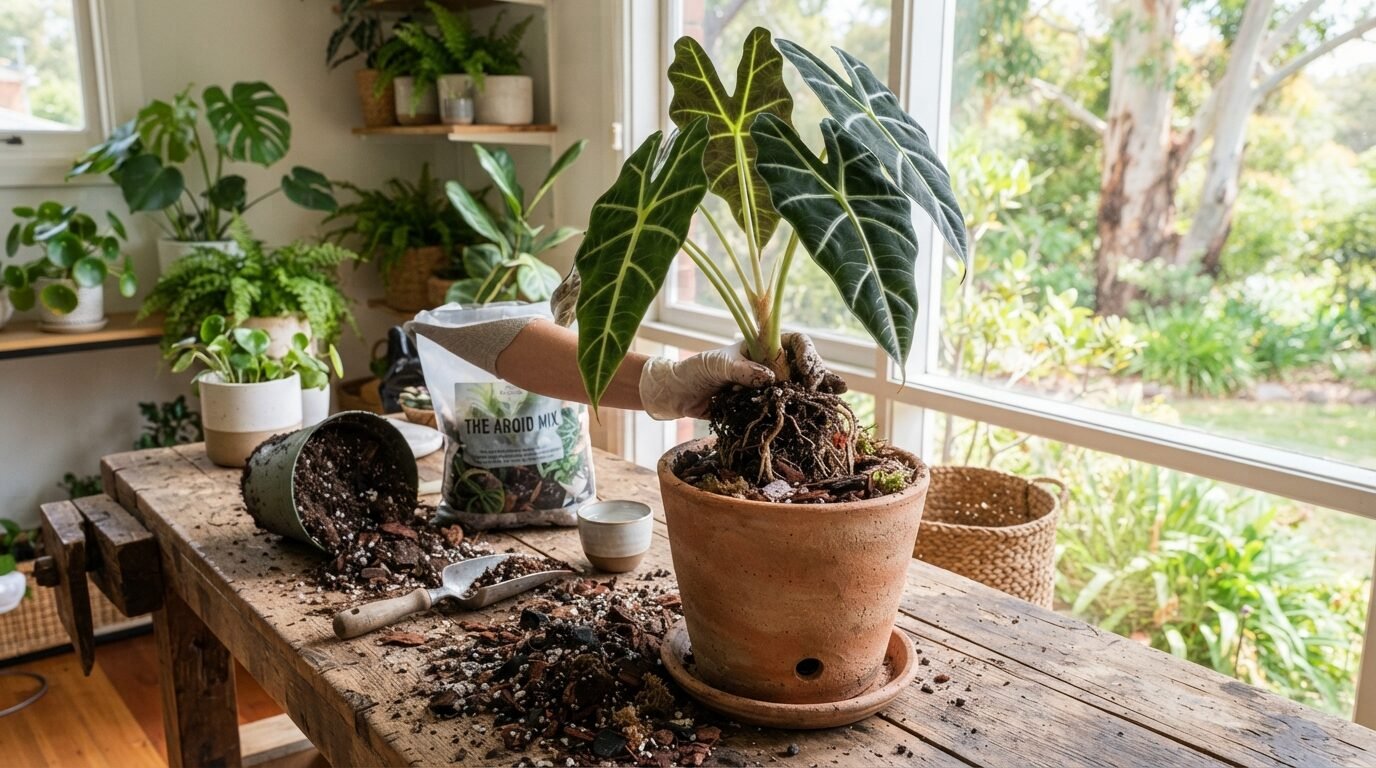
- 5Repot into fresh, chunky, free-draining mix in a clean pot with drainage holes.
- 6Water sparingly, keep warm, humid and brightly lit, and wait for new growth.
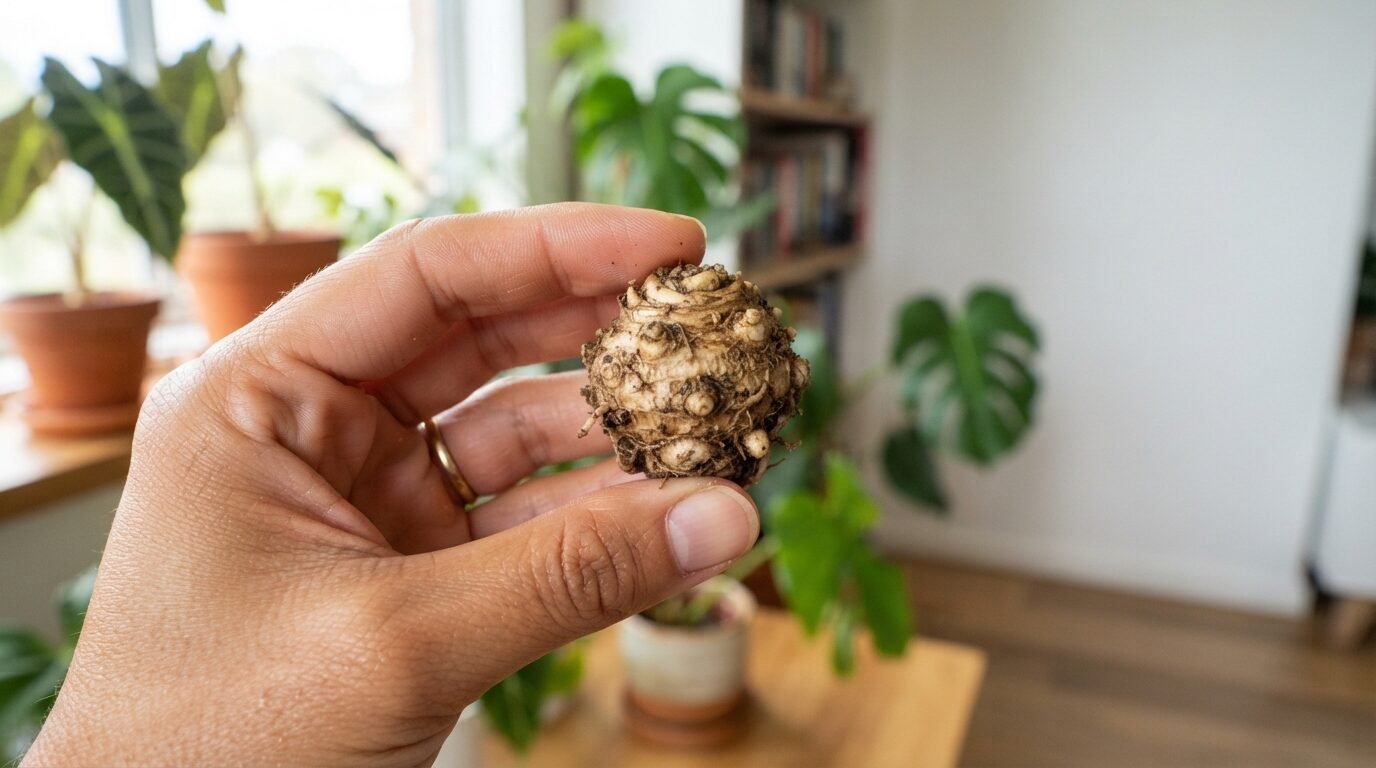
Even a bare corm can come back: if the plant has rotted to just a firm corm, do not bin it. Clean it, remove any soft parts, and start it like a fresh corm in moist sphagnum — kept warm and humid, it can regrow.
Preventing root rot
- use a chunky, free-draining mix in a pot with drainage holes;
- water only when the top of the soil dries — see the watering guide;
- never leave the pot sitting in a saucer of water;
- cut watering right back in autumn and winter.
For the full care picture, see the main Alocasia care guide.
Frequently asked questions
What causes root rot in Alocasia?
Root rot is caused by roots sitting in waterlogged soil with too little oxygen, which lets rot set in. The usual culprits are overwatering, dense water-retentive mix, a pot without drainage, and cold plus wet conditions — especially watering a slowing or dormant plant on a summer schedule.
What are the signs of root rot?
Above ground: yellowing and drooping that does not improve, and a soft, mushy base. Below ground: brown or black, slimy, falling-apart roots and a sour, rotten smell. Healthy roots by contrast are firm and pale.
Can I save an Alocasia with root rot?
Often yes, if you act early and some firm, healthy root or a firm corm remains. Unpot it, rinse the roots, cut away every soft rotten part, repot into fresh free-draining mix, and water sparingly while it recovers. Even a bare but firm corm can regrow.
How do I tell root rot from dormancy?
Dormancy is seasonal dieback where the corm stays firm and the soil is not waterlogged. Root rot involves wet, smelly soil and soft, mushy roots or a soft base. Feel the corm and smell the soil: firm and odourless points to dormancy, soft and sour points to rot.
Should I use a fungicide for Alocasia root rot?
The most important steps are removing the rotten tissue and fixing the drainage and watering. Some growers also use a fungicide or a dilute hydrogen-peroxide rinse on the cleaned roots, but these support, rather than replace, cutting away the rot and repotting into a dry, airy mix.
How do I prevent root rot in future?
Use a chunky, free-draining mix in a pot with drainage holes, water only when the top of the soil dries, never leave the pot in standing water, and cut right back on watering in the cool months. Those four habits prevent almost all root rot.
My Alocasia rotted to nothing but the corm — is it dead?
Not necessarily. If the corm is still firm, it can often regrow. Clean it, remove any soft parts, and start it like a fresh corm in moist sphagnum or a light mix, kept warm and humid. A firm corm is a living plant waiting to reshoot.
How much should I water after treating root rot?
Sparingly. A plant with a reduced root system cannot take up much water, so keep the fresh mix only lightly moist and let the surface dry between waterings until new roots and growth appear. Overwatering now would simply restart the problem.


