How Much Does It Cost to Plant a Hedge? (Australia)

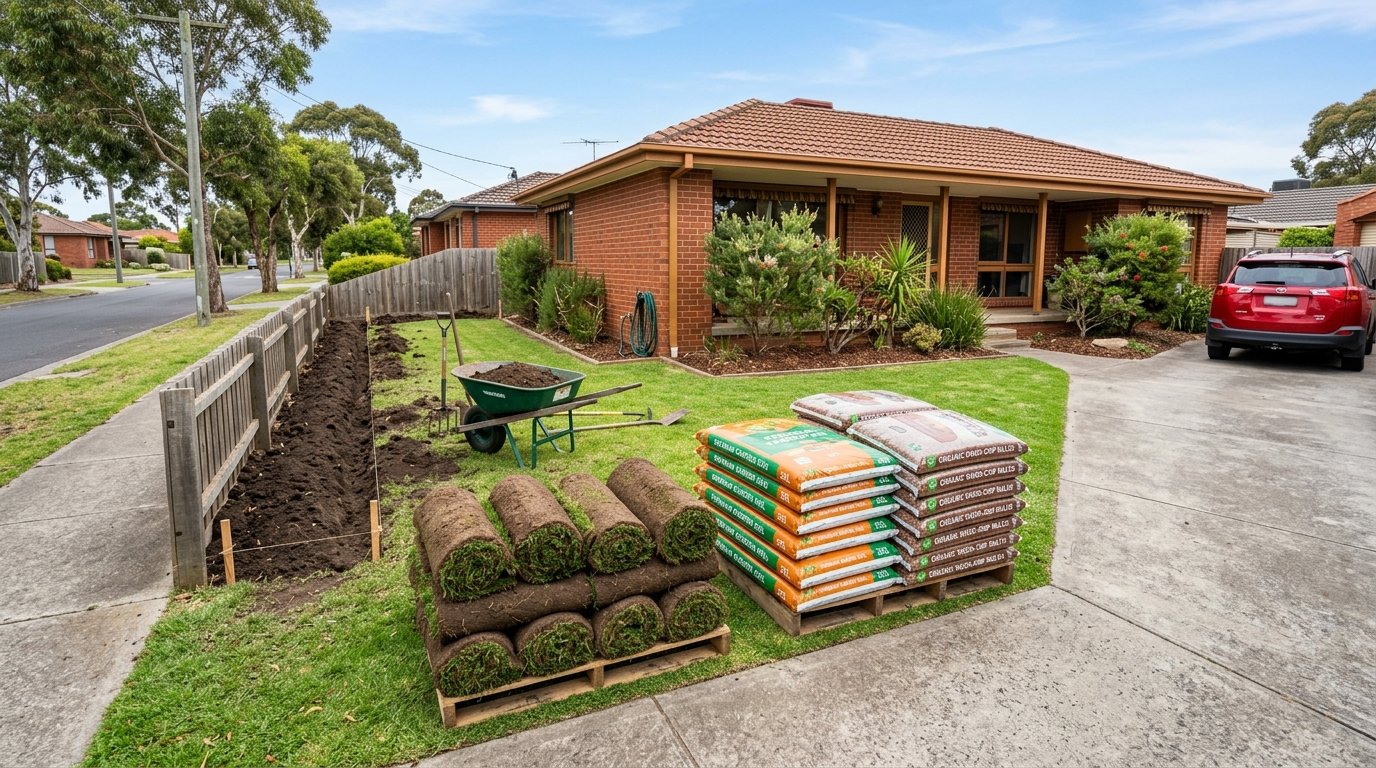
The cost of planting a hedge in Australia comes down to five things: how many plants you need, what size you buy them at, soil preparation, whether you plant it yourself or hire a professional, and ongoing maintenance. The single biggest lever is plant size — buying advanced, established plants for an instant screen costs many times more than starting with small tubestock and waiting. The second biggest is labour. Understanding these trade-offs lets you decide where to spend and where to save without setting fire to your budget.
This guide deliberately does not quote dollar figures, because hedge prices vary enormously by species, plant size, region, nursery and season, and any number printed today would mislead you tomorrow. Instead it explains exactly what drives the cost, so you can get accurate quotes and make smart choices — a far more useful thing than a made-up average.
The five things that drive hedge cost
| Cost driver | Cheaper | More expensive |
|---|---|---|
| Plant size | Tubestock / small pots | Advanced / instant hedge |
| Quantity | Wider spacing, fewer plants | Close spacing, more plants |
| Soil prep | Good existing soil | Poor soil needing improvement |
| Labour | DIY planting | Professional installation |
| Maintenance | Slow, low-care species | Fast growers, frequent trimming |
1. Plant size: the biggest single decision
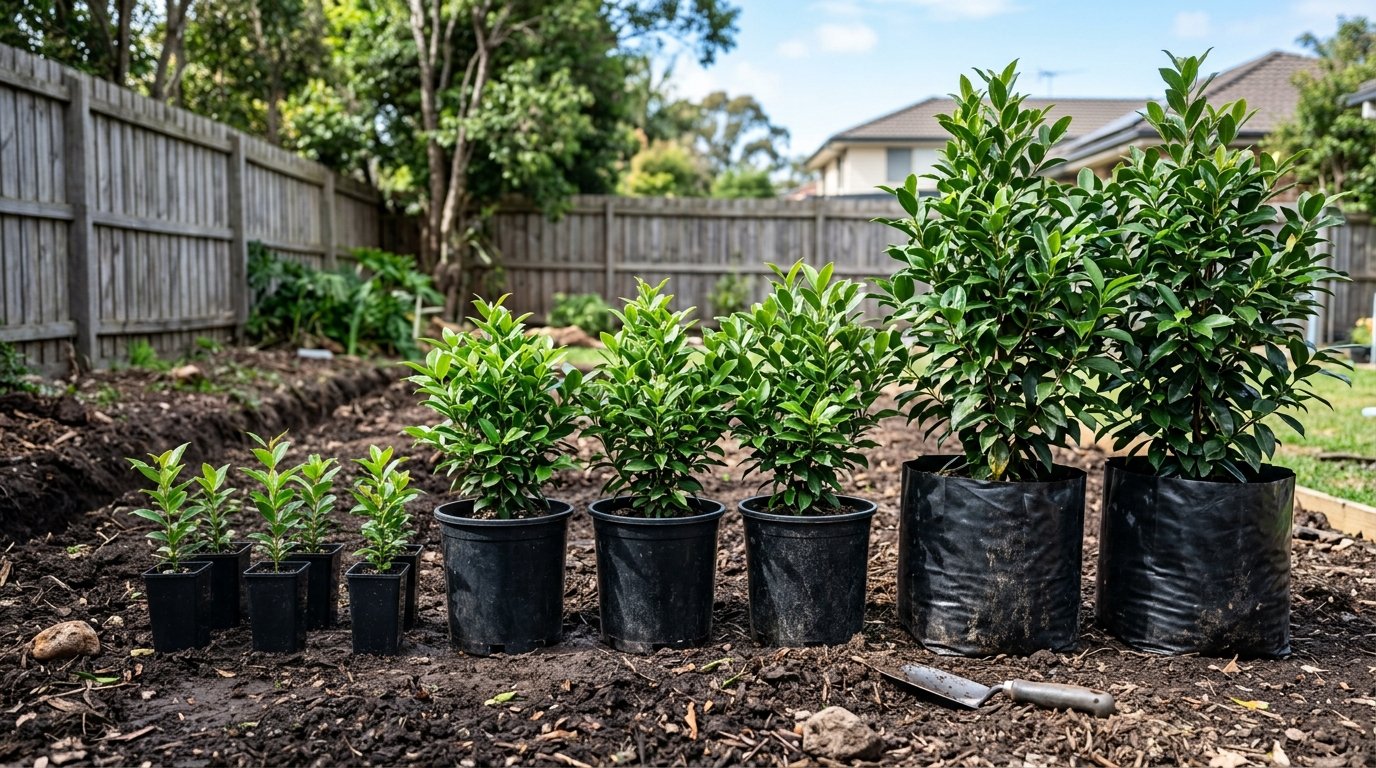
You can buy the same hedge plant as tiny tubestock, as a mid-size potted plant, or as a large advanced specimen — and the price difference between them is dramatic.
- Tubestock / small pots — cheapest per plant, but you wait longest for a screen;
- Mid-size pots — a balance of cost and head-start;
- Advanced / “instant hedge” — most expensive by far, but privacy almost immediately.
This one choice can multiply or divide the plant budget several times over.
Small plants often catch up
It is worth knowing that small plants frequently establish faster and catch up to advanced plants sooner than people expect.
A young, vigorous plant puts its energy into new roots and growth, while a large transplant spends its first season recovering.
If you can be patient for a season or two, tubestock or small pots give you the same hedge for a fraction of the plant cost.
When paying for advanced plants is worth it
Instant hedge units and advanced plants make sense when:
- you need privacy immediately (overlooked, new build);
- you are selling and want instant impact;
- you simply do not want to wait.
You are paying for time. That is a legitimate thing to buy — just go in knowing that is what the premium is for.
2. Quantity: spacing sets the plant count
How many plants you need depends on the length of the hedge and the spacing between plants.
Closer spacing means a faster-filling but more expensive hedge; wider (correct) spacing means fewer plants and a lower cost.
Resist the temptation to overplant to “fill in faster” — crowded plants compete and thin at the base. Correct spacing for the species is both cheaper and healthier. Our height guide and a plant-spacing calculator can help you estimate quantity.
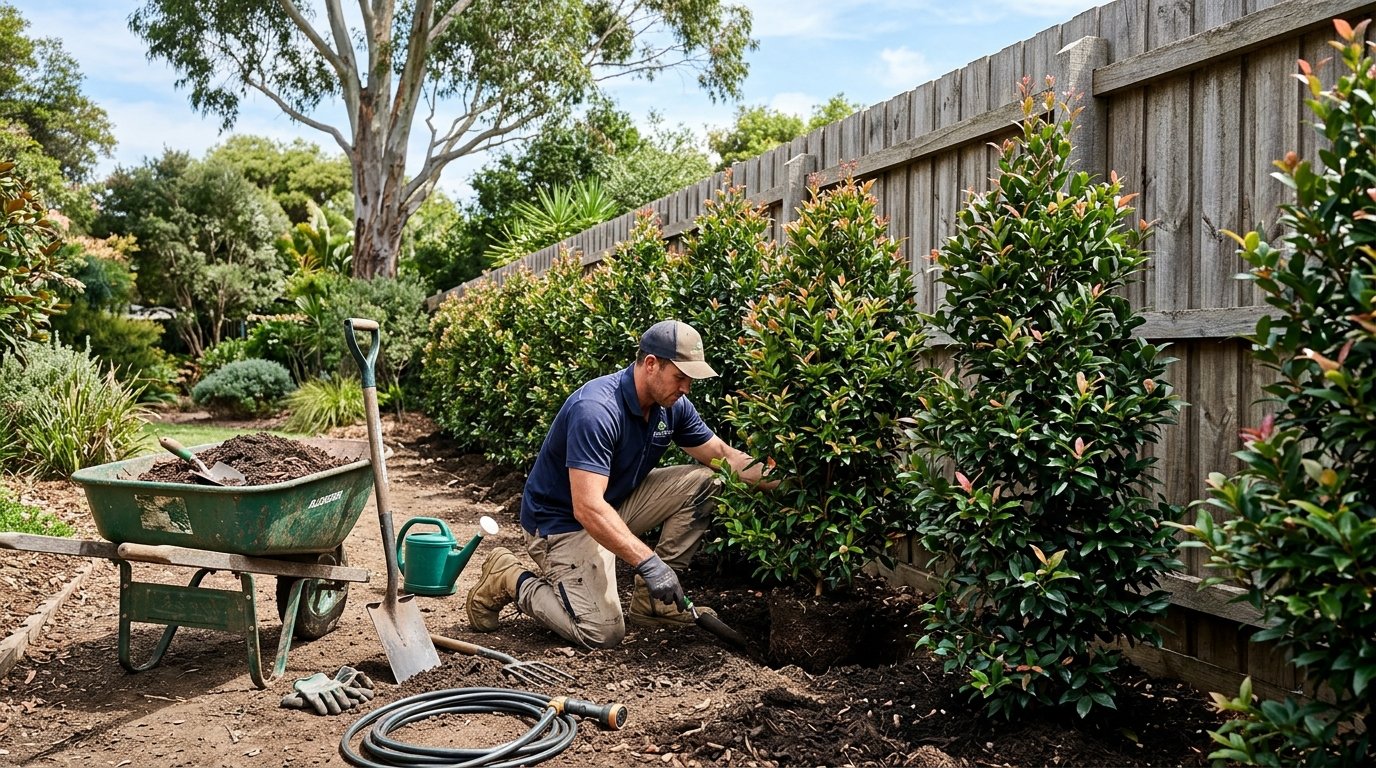
3. Soil preparation: cheap now or expensive later
Good soil preparation is where saving money backfires.
If your soil is poor, compacted or heavy clay, plants establish slowly, sulk, and some die — meaning replacement cost on top of wasted time.
Spending on soil improvement, drainage and mulch upfront is almost always cheaper than replacing failed plants and waiting again. This is the one area where spending more early genuinely saves money.
4. DIY vs professional installation
Labour is often the largest cost after plants — and the one you can most control.
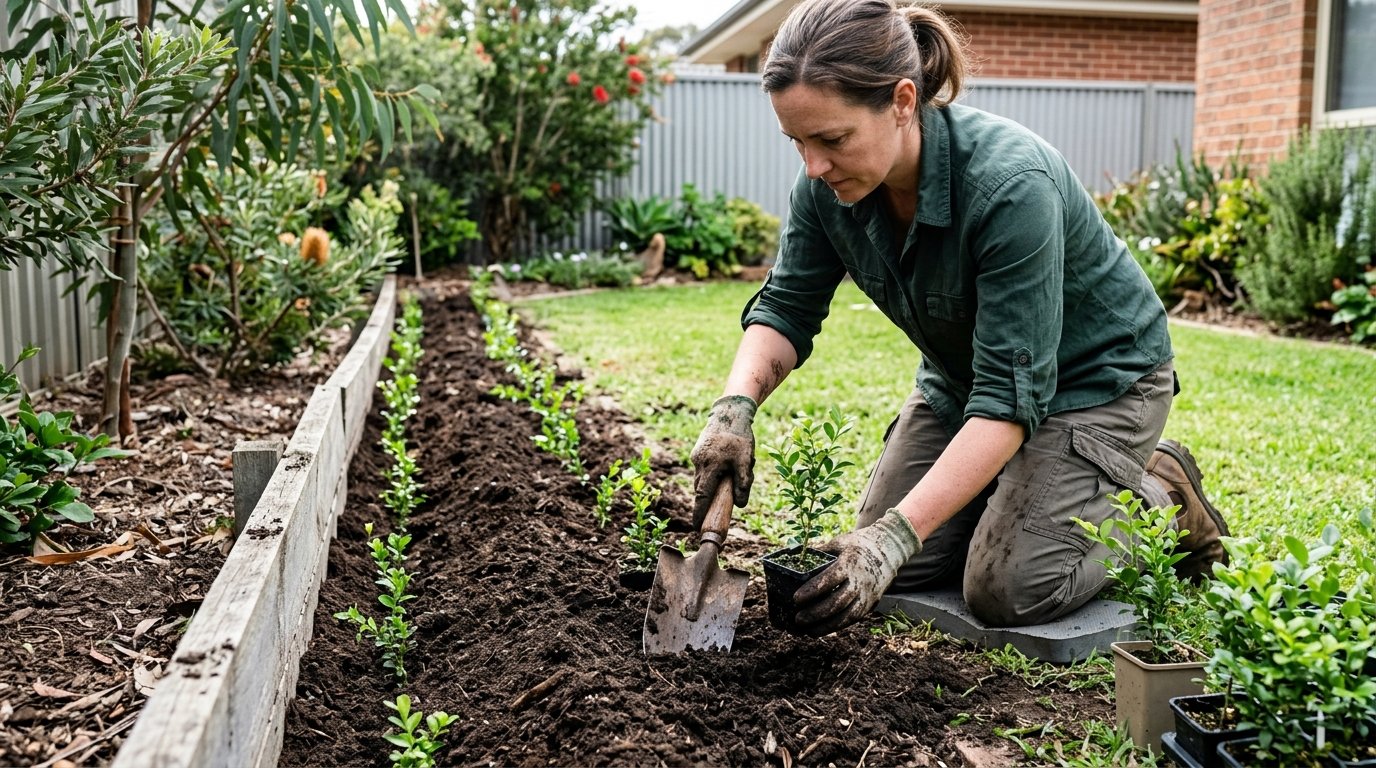
Doing it yourself saves the labour cost entirely, and planting a hedge is within reach of most home gardeners for smaller runs.
Hiring a professional costs more but buys correct spacing, proper soil prep, healthy plant selection, and often a establishment/warranty period — valuable for long, tall, or high-stakes hedges.
What a professional actually adds
Paying for installation is not just paying someone to dig holes. A good professional job includes:
- choosing the right species and size for your site;
- correct spacing and setting-out;
- proper soil preparation and drainage;
- healthy, well-matched plants;
- sometimes an establishment guarantee.
For a large or expensive hedge, that expertise can prevent costly mistakes that dwarf the labour saving.
5. Ongoing maintenance is a real cost
The cost of a hedge does not stop at planting.
Fast-growing screens need more frequent trimming — either your time or a contractor’s fee — for the life of the hedge. Slow, compact species cost less to maintain.
A cheap-to-plant fast grower can quietly become the most expensive hedge you own once you add years of trimming. Factor lifetime maintenance into the “cost”, not just the day-one spend.
Other costs people forget
- Mulch — worth every cent for moisture and weed control;
- Irrigation — even a simple dripline aids establishment;
- Fertiliser — especially in the establishment years;
- Plant replacement — budget for a few losses, particularly in tough sites;
- Tools — a decent hedge trimmer and secateurs if you maintain it yourself.
Where to save and where to spend
If the budget is tight, the smart pattern is usually:
- Save on plant size — buy smaller and be patient;
- Save on labour — do the planting yourself if the run is manageable;
- Spend on soil preparation — it prevents failures;
- Spend on the right species — a suitable plant costs far less over its life than a wrong one.
How to get an accurate hedge quote
Because prices vary so much, the only reliable figure is a quote for your specific job. To get an accurate one, know:
- the length of hedge you need;
- the target height (which influences species and plant size);
- your soil type and condition;
- whether you want an instant screen or can wait;
- whether you will maintain it or want that included.
Bring those to a nursery or landscaper and the quote will actually mean something.
Common hedge-budget mistakes
Buying advanced plants when you could wait
Small plants often catch up and cost far less.
Skimping on soil preparation
Poor prep leads to failures that cost more than the prep would have.
Overplanting to fill in faster
More plants, more cost, and crowding problems later.
Ignoring lifetime maintenance
A cheap fast grower can be expensive to keep trimmed.
Choosing the wrong species for the site
Replacements and poor performance cost more than getting it right.
Forgetting mulch, water and a few replacements
These small costs protect the big investment in plants.
Planning a hedge? Get it costed and planted right
Whether you want an instant screen or a budget-friendly plant-and-wait approach, Garden Green can help you choose the right species and size for your budget — and install it so it establishes properly the first time. Get in touch for advice or a quote on your hedge.
Spend where it prevents failure, save where you can be patient
The cost of planting a hedge is mostly within your control:
- plant size is the biggest lever — smaller is cheaper and often catches up;
- correct spacing keeps plant numbers (and cost) sensible;
- soil prep is worth paying for — it prevents expensive failures;
- DIY saves labour; a pro adds expertise on big jobs;
- lifetime maintenance is part of the true cost.
Spend where money prevents failure and save where you can afford to be patient, and you will get a healthy hedge for a sensible price — rather than a cheap start that turns expensive.
Frequently asked questions
How much does it cost to plant a hedge in Australia?
It varies too much to quote reliably, because cost depends on the number of plants, the size you buy them at, soil preparation, whether you plant it yourself or hire a professional, and ongoing maintenance. The biggest single factor is plant size — advanced “instant hedge” plants cost many times more than small tubestock. For a real figure, get a quote based on your specific hedge length, height and soil.
Is it cheaper to buy small hedge plants or advanced ones?
Small plants such as tubestock are far cheaper per plant, and they often establish faster and catch up to advanced plants sooner than people expect. Advanced plants cost much more but give an almost-instant screen. If you can be patient for a season or two, buying small is the biggest saving available.
When is it worth paying for an instant hedge?
Advanced plants and instant-hedge units make sense when you need privacy immediately — for example an overlooked new build — when you are selling and want instant impact, or when you simply do not want to wait. You are essentially paying for time, which is a legitimate thing to buy as long as you know that is what the premium covers.
Should I plant a hedge myself or hire a professional?
Doing it yourself saves the labour cost, and planting a hedge is within reach of most home gardeners for smaller runs. A professional costs more but adds correct species and size selection, proper spacing, soil preparation, healthy plants and sometimes an establishment guarantee — valuable for long, tall or high-stakes hedges where mistakes are costly.
Is soil preparation worth the extra cost?
Almost always yes. In poor, compacted or heavy clay soil, plants establish slowly, sulk and sometimes die, meaning replacement cost and more waiting. Spending on soil improvement, drainage and mulch upfront is usually cheaper than replacing failed plants, making it the one area where spending more early genuinely saves money.
Does a cheap hedge cost more in the long run?
It can. A cheap-to-plant fast grower needs frequent trimming for the life of the hedge, and that ongoing time or contractor cost can quietly make it the most expensive hedge you own. Slow, compact species cost less to maintain. Always factor lifetime maintenance into the true cost, not just the day-one spend.
How many plants do I need for my hedge?
It depends on the hedge length and the correct spacing for your chosen species. Closer spacing fills in faster but costs more and can cause crowding; correct spacing uses fewer plants and is healthier. A plant-spacing calculator, plus your hedge length and species, gives a sensible plant count and cost estimate.
What extra costs should I budget for beyond the plants?
Budget for mulch, some form of watering or irrigation to aid establishment, fertiliser in the early years, a few replacement plants (especially in tough sites), and tools such as a hedge trimmer and secateurs if you maintain it yourself. These smaller costs protect the larger investment in the plants themselves.


