
Why Is My Lawn Dying? Brown Patch Diagnosis (AU)

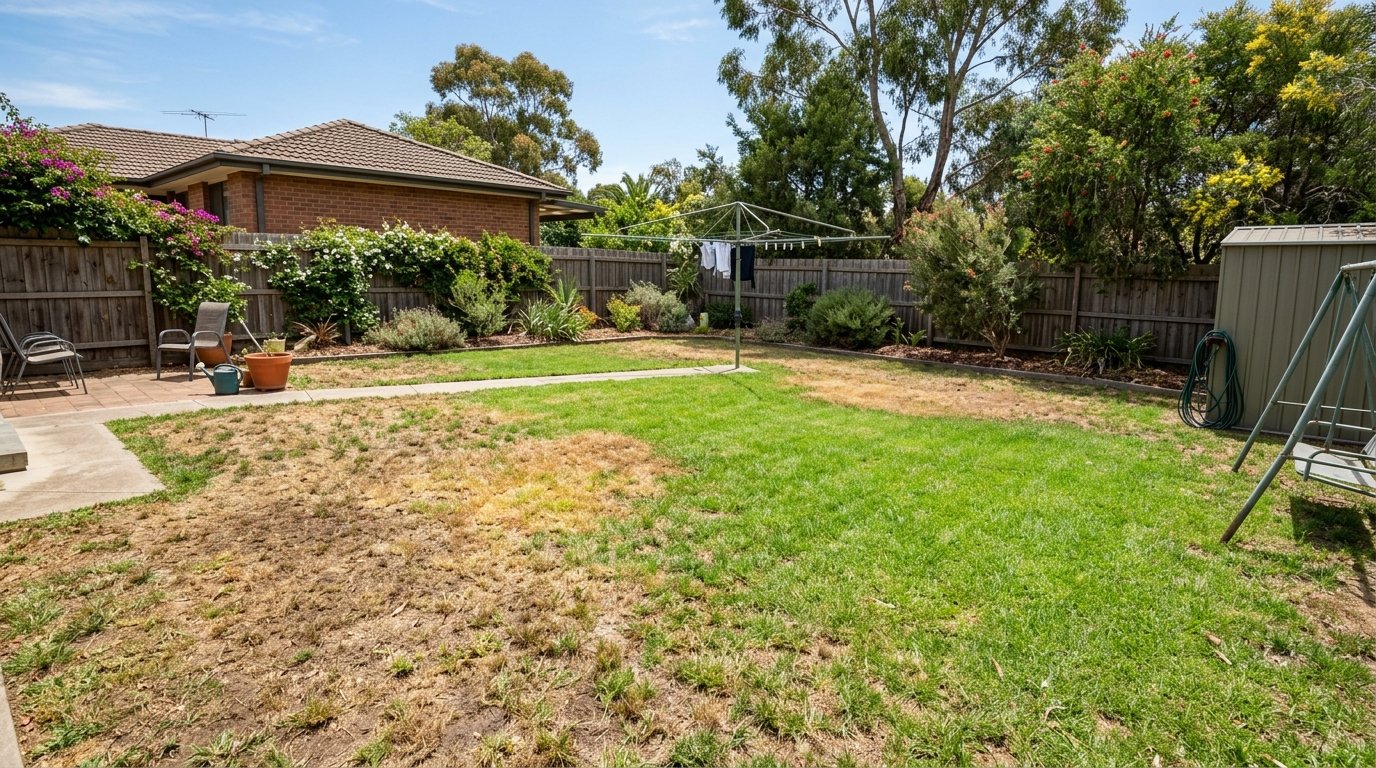
A dying lawn in Australia almost always comes down to one of a handful of causes: not enough (or too much) water, lawn grubs, fungal disease, dog urine, compaction, scalping the grass too short, or the lawn simply going dormant rather than dead. The trick is to read the pattern — where the damage is, what shape it takes, and how fast it spread — because each cause leaves a different signature. This guide walks you through diagnosing brown or dying patches so you can fix the real problem instead of guessing.
The single most common mistake is watering a lawn that is already struggling from something else — grubs, disease or compaction — which wastes water and often makes fungal problems worse. Before you reach for the hose, work out what you are actually looking at.
First, read the pattern
Before diagnosing, look carefully at the damage:
- Even, all-over browning — usually water, heat or dormancy;
- Round or spreading patches — often fungal disease or grubs;
- Small distinct spots — frequently dog urine;
- Damage in high-traffic lines or edges — compaction or wear;
- Worst in shade — light, moisture or fungal issues.
The shape and location tell you more than the colour alone.
Cause 1: Watering problems
Both too little and too much water kill lawns.
Underwatering shows as even browning, especially in heat, with grass that feels dry and crunchy and does not spring back when walked on.
Overwatering keeps the soil constantly wet, starves roots of oxygen, and invites fungal disease. A lawn that is soggy underfoot yet still browning is often overwatered, not thirsty.
A soil moisture meter or a simple screwdriver push-test helps you tell which — dry hard soil versus constantly wet soil point to opposite fixes.
Cause 2: Dormancy — dying vs just sleeping
Many Australian lawns are warm-season grasses (Buffalo, Kikuyu, Couch, Zoysia) that naturally slow or brown off in cold or drought, then green up again.
To check if a lawn is dormant rather than dead, tug a handful of grass:
- if it holds firm and the crown/base is still whitish and alive, it is likely dormant;
- if it pulls out easily with no resistance and the base is brown and rotten, that patch is dead.
A dormant lawn usually recovers with warmth and water; a dead patch needs re-establishing.
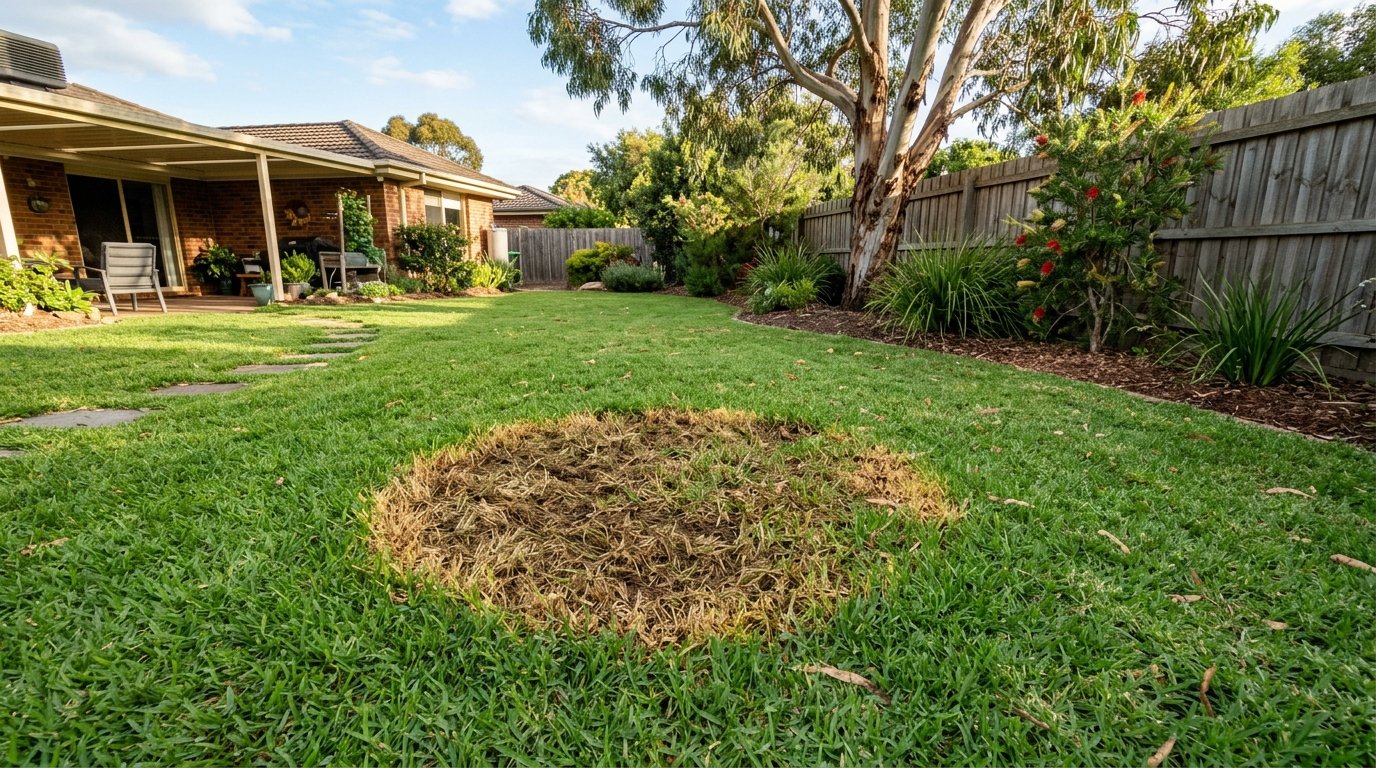
Cause 3: Lawn grubs and army worm
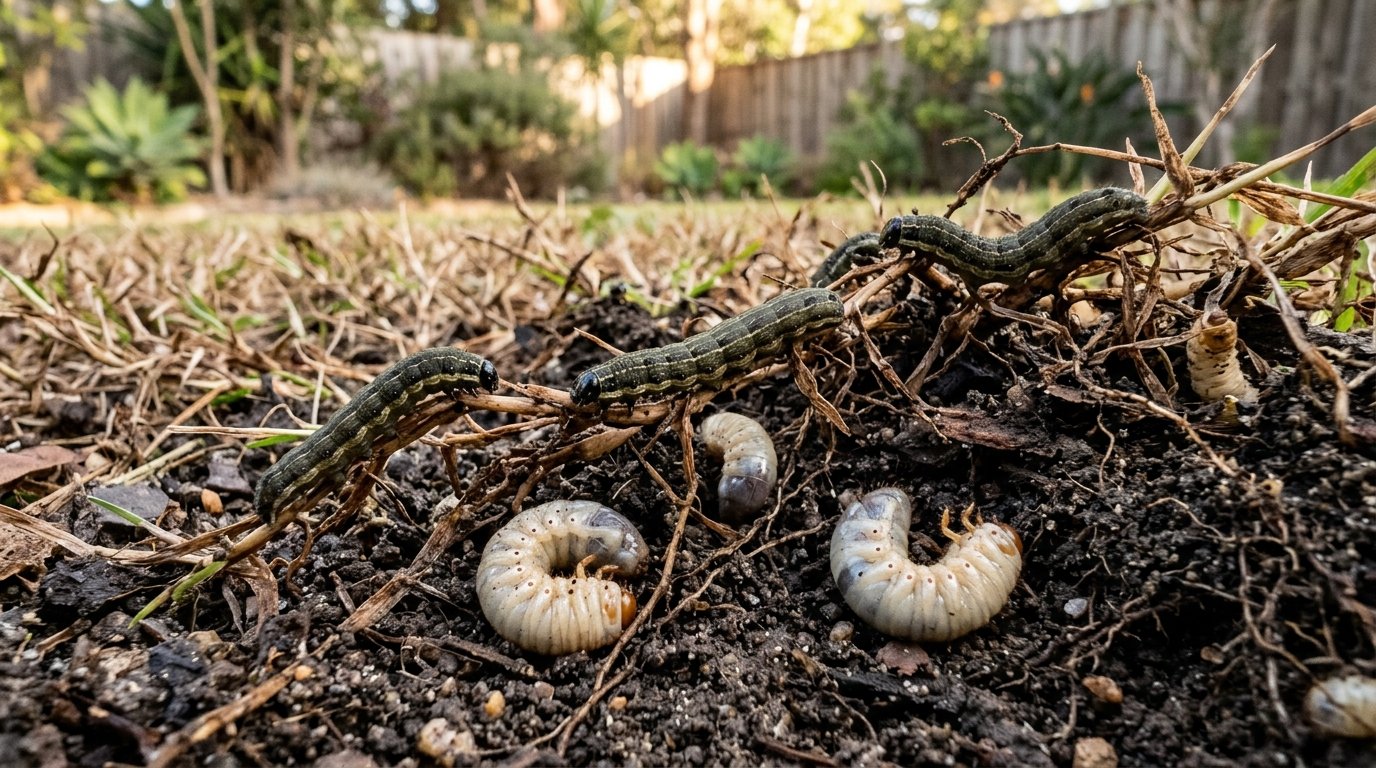
Lawn grubs (including army worm and other caterpillars) are a major Australian cause of sudden lawn death, often in late summer and autumn.
Signs include:
- brown patches that spread quickly, sometimes overnight;
- increased bird activity pecking at the lawn;
- grass that pulls up easily because roots or blades are chewed;
- caterpillars visible at dusk or after a soap-water flush test.
If patches are expanding fast and birds are feasting, grubs are a prime suspect and worth confirming before treating.
Cause 4: Fungal disease
Fungal lawn diseases such as brown patch and dollar spot tend to appear as roughly circular patches, often in warm, humid, or over-watered conditions.
They are encouraged by:
- watering in the evening so the lawn stays wet overnight;
- overwatering and poor drainage;
- excess thatch;
- high humidity.
Improving airflow, watering in the morning instead of at night, and correcting overwatering all help. Fungal problems are exactly where a proper diagnosis matters, because the wrong treatment wastes time while the patch spreads.
Cause 5: Dog urine
Dog urine burns small, distinct patches — often brown in the centre with a darker green ring around the edge, where the diluted nitrogen actually fertilises.
These spots appear wherever a dog regularly toilets and are usually small and scattered rather than large and spreading.
Flushing the area with water and encouraging the dog to use one spot both help.
Cause 6: Compaction and wear
Hard, compacted soil — along paths, play areas and high-traffic routes — stops water and air reaching the roots.
Signs include thinning grass in lines or worn zones, water pooling or running off, and soil so hard a screwdriver will barely push in.
Aeration relieves compaction and lets water, air and nutrients reach the root zone again.
Cause 7: Thatch build-up
Thatch is the layer of dead material between the green blades and the soil. A thick thatch layer repels water, harbours disease and weakens the lawn.
If water beads and runs off rather than soaking in, and the lawn feels spongy underfoot, excess thatch may be part of the problem.
Cause 8: Scalping — mowing too short
Cutting the lawn too low removes too much leaf, stresses the grass, exposes soil and invites weeds.
Scalping shows as sudden browning right after mowing, often on high spots and bumps.
Raising the mower height and never removing more than about a third of the leaf at once helps the lawn recover.
Cause 9: Nutrient deficiency
A hungry lawn fades to pale green or yellow, grows slowly and thins out, letting weeds in.
This is usually a gradual, even decline rather than sudden patches. Appropriate feeding for your grass type and season restores colour and vigour — but feeding will not fix a lawn dying from grubs, disease or compaction, so diagnose first.
Cause 10: Shade
Most warm-season lawns need good sun. In shade they thin, stretch and struggle, and are more prone to fungal problems.
If the worst damage is under trees or beside walls, shade may be the underlying cause — and no amount of water or fertiliser will make a sun-loving lawn thrive in deep shade.
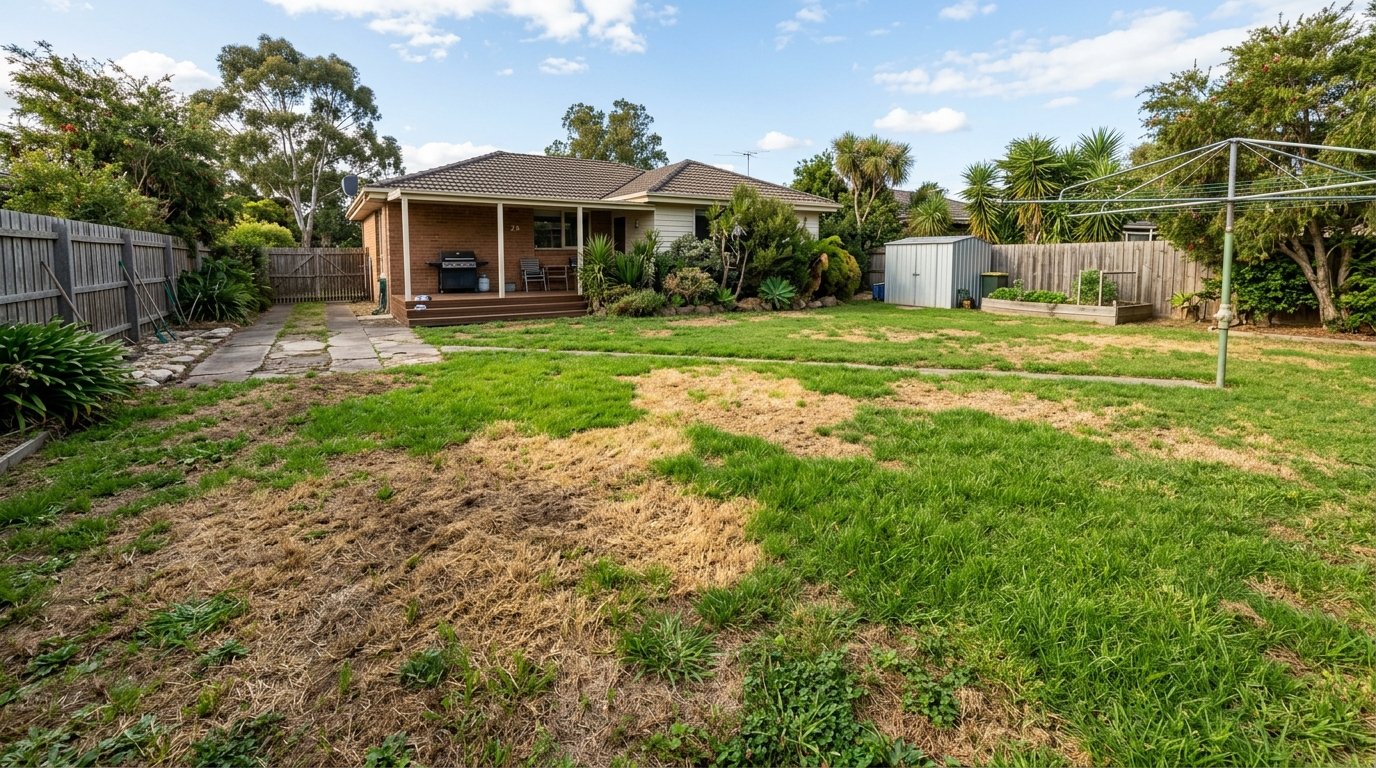
A quick diagnostic checklist
| What you see | Likely cause |
|---|---|
| Fast-spreading patches + birds | Lawn grubs / army worm |
| Round patches in humid/wet conditions | Fungal disease |
| Small spots, green rings | Dog urine |
| Even browning, dry crunchy grass | Underwatering / heat |
| Soggy soil but still browning | Overwatering |
| Thinning along paths | Compaction / wear |
| Browning right after mowing | Scalping |
| Even fade to pale/yellow | Nutrient deficiency |
| Whole lawn brown in cold/drought | Likely dormancy |
Not sure what is killing your lawn? Get it diagnosed
Lawn problems are easy to misread — grubs, fungus and overwatering can look alike, and the wrong fix lets the damage spread. If your lawn is dying and you are not sure why, Garden Green’s plant and lawn diagnosis service can identify the real cause from your description and photos and tell you exactly how to fix it, before you spend money on the wrong treatment. Send us your lawn problem and get a clear answer.
Choosing the right lawn matters too
Some lawns are far tougher for your conditions than others. If you are re-establishing dead areas or starting again, our guide to the best lawn types for Australia compares Buffalo, Kikuyu, Couch and Zoysia so you pick a grass suited to your sun, traffic and climate. Correct summer watering then keeps it healthy.
Diagnose first, then fix
To bring a dying lawn back:
- read the pattern — shape, location and speed of the damage;
- check whether it is dormant or truly dead;
- rule out grubs and disease before watering more;
- correct watering, mowing height and compaction;
- feed and choose the right grass for your conditions;
- get a diagnosis if the cause is unclear.
Most dying lawns are fixable once you know the real cause. The mistake is treating the symptom — pouring on water or fertiliser — before you have worked out what is actually wrong.
Frequently asked questions
Why is my lawn dying in patches?
Patchy death usually points to lawn grubs, fungal disease or dog urine rather than watering, which tends to brown the lawn evenly. Fast-spreading patches with bird activity suggest grubs; roughly circular patches in humid or over-watered conditions suggest fungus; small spots with green rings suggest dog urine. Read the shape, location and speed of spread to narrow it down.
Is my lawn dead or just dormant?
Tug a handful of grass. If it holds firm and the base or crown is still whitish and alive, the lawn is likely dormant and will recover with warmth and water. If it pulls out easily with no resistance and the base is brown and rotten, that patch is dead and needs re-establishing. Warm-season lawns often brown off in cold or drought without dying.
How do I know if I have lawn grubs?
Look for brown patches that spread quickly, sometimes overnight, along with increased birds pecking at the lawn and grass that lifts easily because roots or blades are chewed. Caterpillars may be visible at dusk. A soapy-water flush over a small area can bring grubs to the surface to confirm before you treat.
Can overwatering kill my lawn?
Yes. Constantly wet soil starves roots of oxygen and encourages fungal disease, so a lawn that is soggy underfoot yet still browning is often overwatered rather than thirsty. Check the soil before watering more — dry, hard soil and soggy, saturated soil call for opposite fixes, and adding water to an already wet lawn makes things worse.
Why does my lawn go brown right after mowing?
That is usually scalping — cutting too low and removing too much leaf, especially over bumps and high spots. It stresses the grass, exposes soil and invites weeds. Raise the mower height and never remove more than about a third of the leaf at once, and the lawn should recover and thicken up.
What are the brown spots with green rings on my lawn?
Those are classic dog-urine burns. The concentrated nitrogen scorches the centre while the diluted edge actually fertilises, creating a darker green ring. They appear wherever a dog regularly toilets and are small and scattered rather than large and spreading. Flushing the area with water and training the dog to one spot both help.
Will fertiliser fix my dying lawn?
Only if the problem is genuinely nutrient deficiency, which shows as a gradual, even fade to pale green or yellow. Fertiliser will not fix a lawn dying from grubs, fungal disease, compaction or overwatering, and feeding a stressed lawn can even make some problems worse. Diagnose the real cause first, then feed once the lawn is healthy enough to use it.
My whole lawn is brown — what is wrong?
Even, all-over browning usually points to watering, heat or dormancy rather than a disease or pest. In cold or dry periods, warm-season lawns often go dormant and brown without dying. Check whether the grass is dormant or dead, look at soil moisture, and rule out heat and drought stress before assuming the lawn is lost.


