
Best Narrow Hedges for Small Spaces Australia

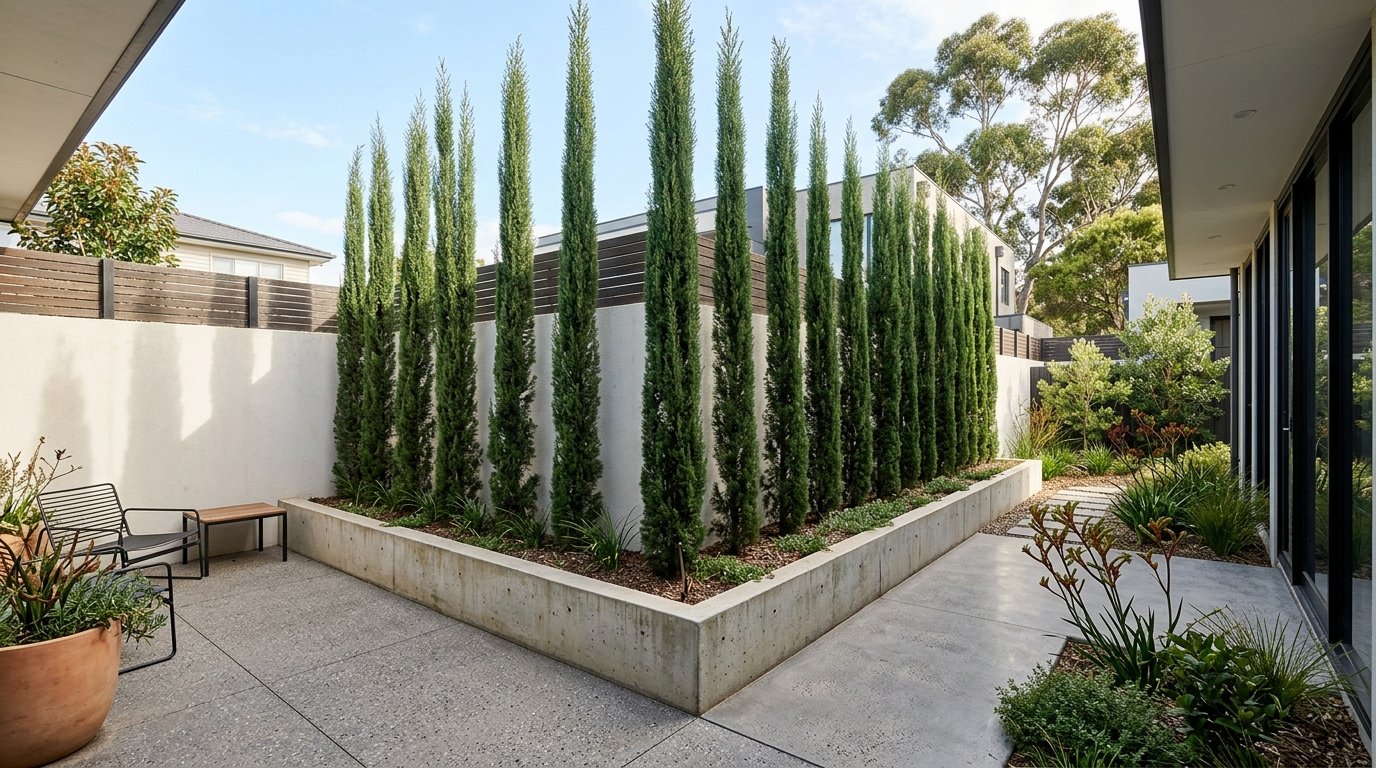
For a narrow boundary or a tight side passage, the trick is to choose a plant that is naturally slim and to accept it will need regular trimming to hold a narrow face — or to switch to a pleached tree where a ground-to-top hedge simply will not fit. Good narrow-hedge choices for Australian gardens include Murraya, upright Lilly Pilly varieties, Sweet Viburnum kept trimmed, and Slender Weavers-type bamboo in the right situation. Any hedge can be kept narrower than its natural width for a while, but the closer the plant’s habit is to slim and upright, the less you fight it.
Narrow spaces are where hedging goes wrong most often. People pick a plant they like, plant it 30 cm from a fence in a one-metre-wide bed, and are surprised when it bulges into the path, thins on the shaded side and needs cutting every few weeks. The fix starts at plant selection, not at the trimmer.
Narrow-space options at a glance
| Situation | Good choice | Note |
|---|---|---|
| Slim formal hedge | Murraya, upright Lilly Pilly | Naturally denser and easier to keep narrow |
| Tight side passage | Pleached trees | Foliage up high, clear trunks below |
| Screen above a fence only | Pleached / standard trees | No wide base needed |
| Fast narrow screen | Clumping bamboo (right species) | Only non-running, clumping types; contain carefully |
| Low narrow border | Japanese Box, dwarf Westringia | Compact and slim by nature |
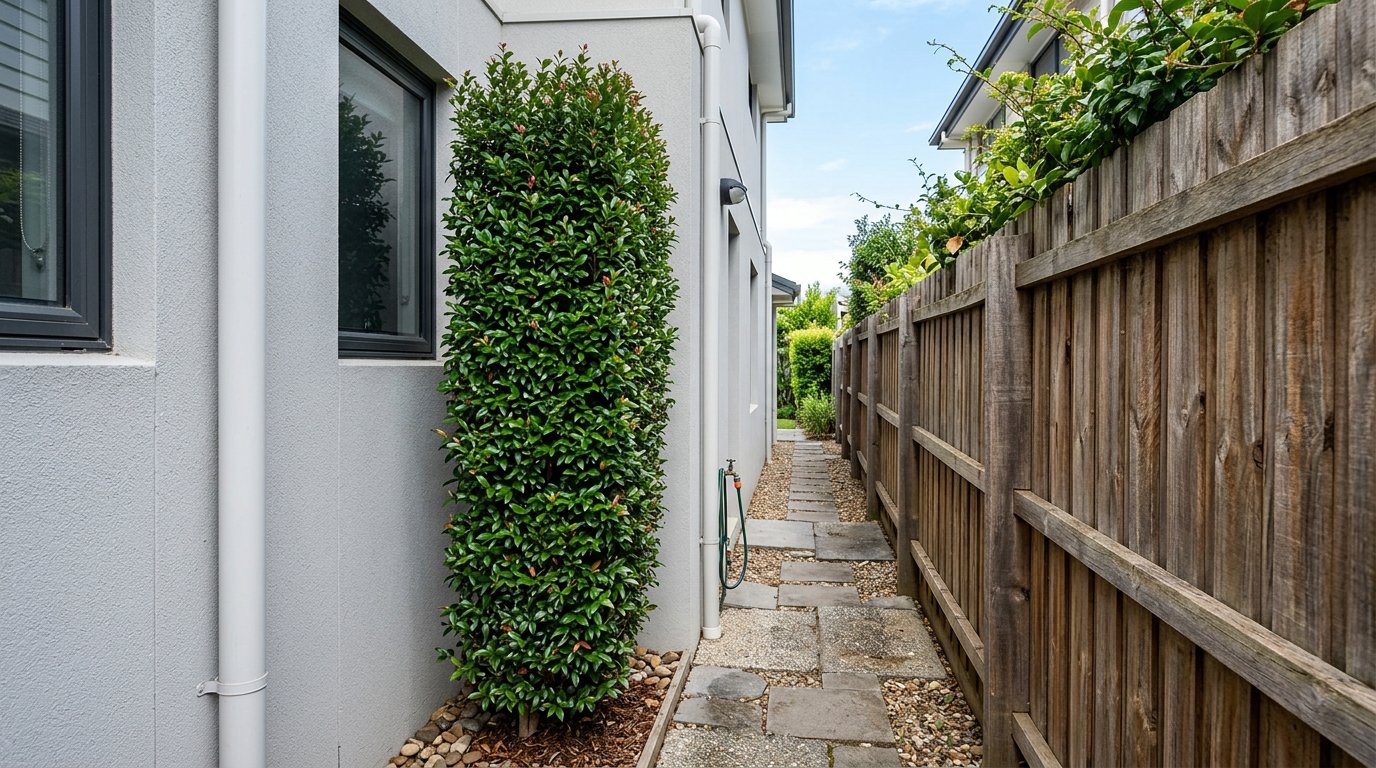
Start with the plant’s natural width
Every hedge plant has a natural width it “wants” to be.
You can trim it narrower, but the further below its natural width you push it, the more often you trim — and the more the lower and shaded sides tend to thin.
For narrow spaces, choose plants whose natural habit is already slim and upright, so you are trimming to maintain, not fighting to compress.
Slim, upright hedge plants
Murraya and upright Lilly Pilly varieties can be kept as relatively narrow, dense formal hedges with regular trimming.
Sweet Viburnum is naturally broader but can be maintained narrower if you commit to trimming both faces regularly.
The key is choosing an upright variety and keeping on top of the sides from the start, before it sets a wide habit.
Pleached trees: the real answer for very tight spaces
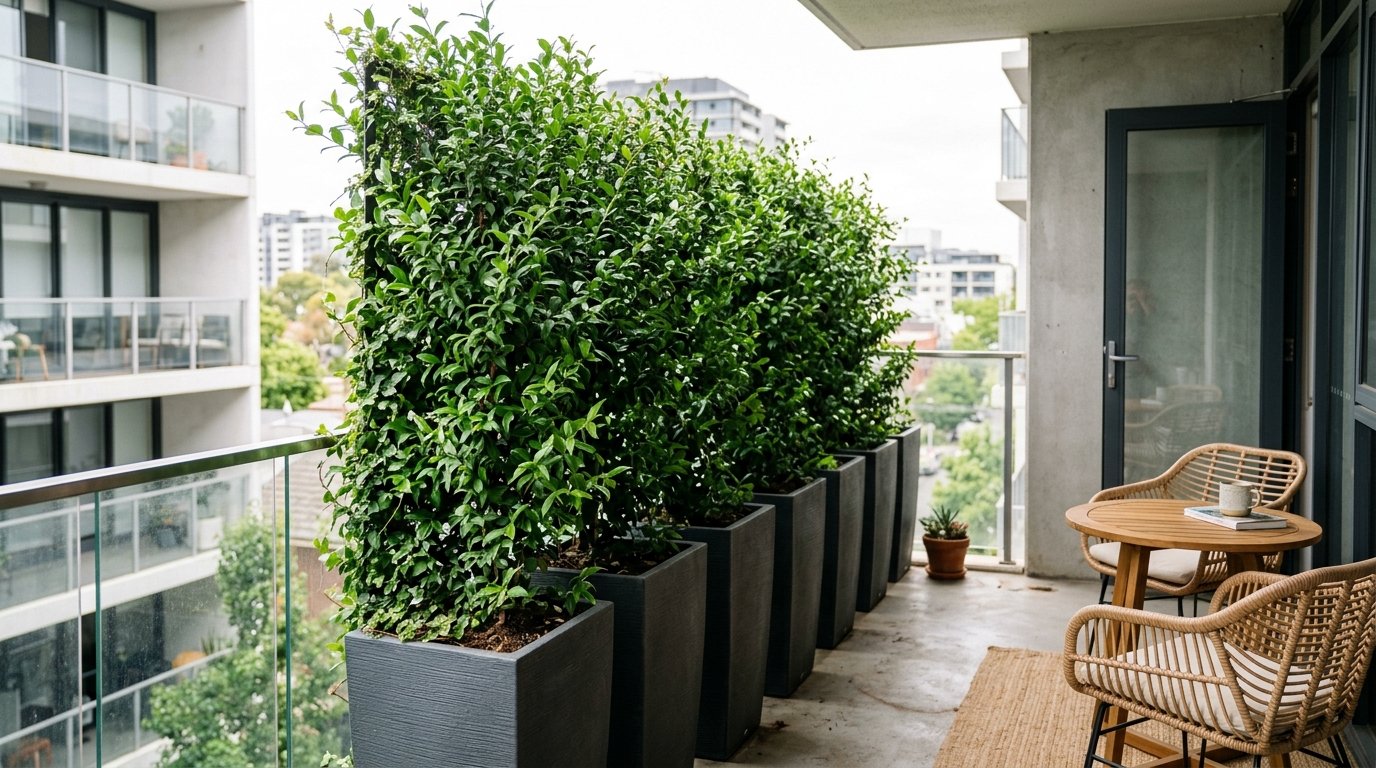
When a bed is genuinely too narrow for any ground-to-top hedge, a pleached tree is often the correct solution.
Pleached trees carry a flat panel of foliage on clear trunks — a “hedge on stilts”.
Because the screening happens up high, you do not need a wide dense base at ground level, which makes them ideal for slim side boundaries and for screening an upstairs window without filling the passage below.
Standards and elevated screening
Similar to pleaching, standard (lollipop) trees or a row of slim upright trees can screen at height while keeping the ground level open.
This suits narrow side accesses where you still need to walk past, roll a bin through, or keep a path clear.
Think in three dimensions: you often need the screen at eye or first-floor height, not necessarily at ankle height.
Bamboo: only clumping, never running
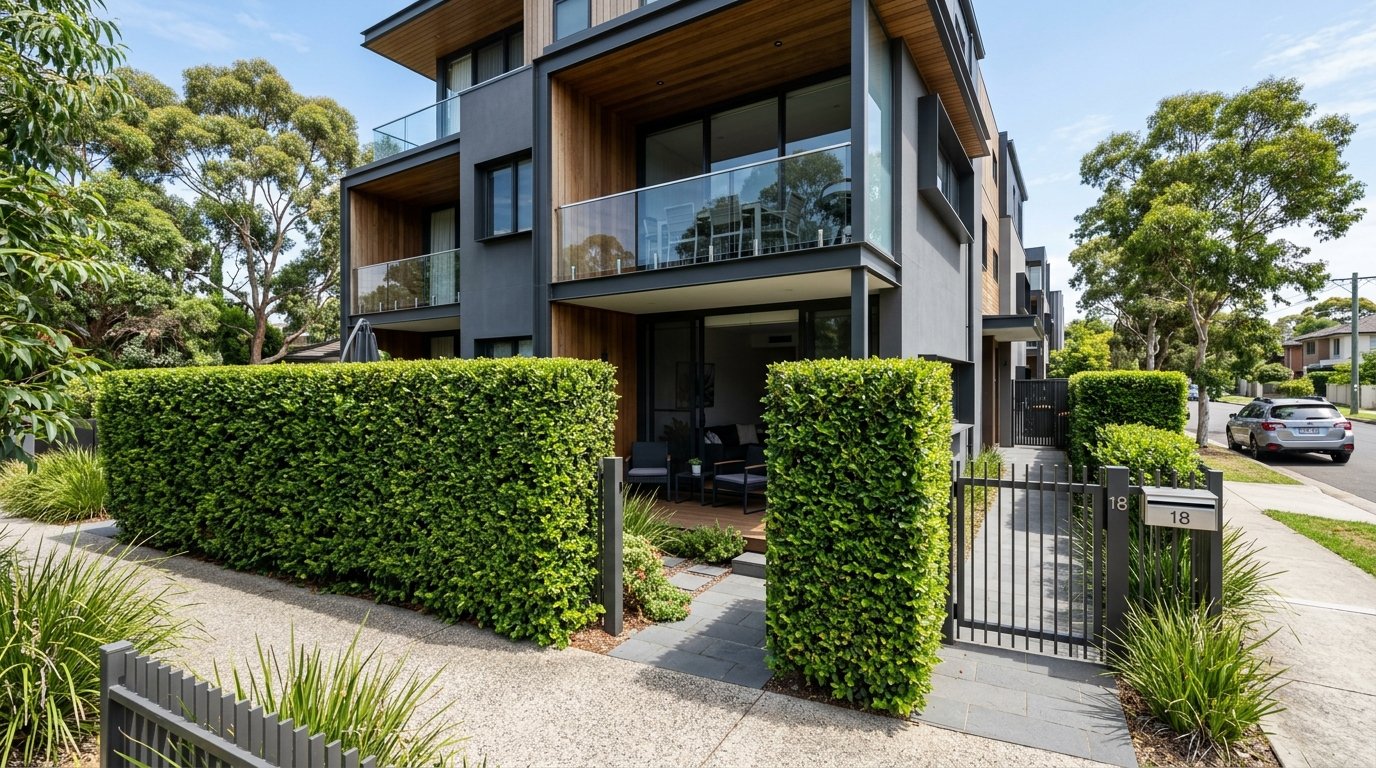
Bamboo can make a fast, very narrow, very tall screen — but only the right kind.
Use only clumping (non-invasive) bamboo, such as Slender Weavers-type Bambusa, and never running bamboo, which spreads aggressively and is extremely difficult to remove.
Even clumping bamboo benefits from a root barrier or containment and thoughtful placement. Chosen and contained correctly, it is one of the narrowest tall screens available; chosen wrongly, it becomes a serious problem for you and your neighbours.
Low narrow borders
For a slim low hedge — edging a path or defining a bed — naturally compact plants like Japanese Box and dwarf Westringia are ideal.
They are small and dense by nature, so keeping them slim is easy rather than a constant battle.
Plant off-centre, and mind the fence
In a narrow bed, plant far enough from the fence that air can move behind the hedge and you can access both faces.
A hedge planted hard against a fence tends to thin on the fence side and can trap moisture.
Leaving a little breathing space behind the plants keeps both faces healthy and makes trimming possible.
Trim both faces to keep it narrow
A narrow hedge only stays narrow if you trim the sides, not just the top.
Regular light trimming of both faces holds the width and keeps growth dense.
Let the sides go for a season and a “narrow” hedge quickly becomes a wide one you then have to cut back hard — which is exactly when thin, bare patches appear.
Watch the base: keep it slightly wider than the top
Even a narrow hedge should be trimmed so the base is very slightly wider than the top.
This lets light reach the lower foliage and prevents the bare-bottom look that ruins narrow screens.
A hedge trimmed wider at the top shades its own base and goes thin and leggy underneath.
Roots in narrow spaces
Narrow beds are often close to paving, pipes and foundations.
Avoid vigorous-rooted species like Ficus Hillii in tight spots near structures — the narrow above-ground footprint does not mean a narrow root system.
In confined positions near infrastructure, slimmer, less aggressive plants (or pleached trees in generous soil volume) are the safer choice.
Common narrow-hedge mistakes
Choosing a naturally wide plant for a narrow bed
Pick a slim, upright species instead of fighting a broad one.
Planting hard against the fence
Leave breathing space so both faces stay healthy.
Only trimming the top
Both faces must be trimmed to hold width.
Trimming wider at the top than the base
Keep the base slightly wider so the bottom does not go bare.
Using running bamboo
Only clumping bamboo, and even then contain it carefully.
Planting vigorous-rooted species near structures
A narrow canopy can still hide aggressive roots.
Tight space? Let us help you screen it properly
Narrow side passages and slim boundaries are exactly where the wrong plant causes years of trouble. If you have a tight space to screen, Garden Green can help you choose a slim hedge or pleached solution that fits — and looks after it once it is in. Get in touch to talk through your space.
Slim by nature beats narrow by force
To screen a narrow space without constant battles:
- choose a naturally slim, upright plant;
- consider a pleached tree where a full hedge will not fit;
- use only clumping bamboo, well contained, if you need a very narrow tall screen;
- plant off the fence with breathing space;
- trim both faces, base slightly wider than the top;
- keep vigorous roots away from paving and pipes.
The narrowest, healthiest screens come from picking a plant that is slim by nature — then a little regular trimming keeps it that way, instead of a constant fight to compress something that wants to be wide.
Frequently asked questions
What is the best narrow hedge for a small space in Australia?
Naturally slim, upright plants such as Murraya and upright Lilly Pilly varieties make good narrow formal hedges, and Sweet Viburnum can be kept narrower with regular trimming. For very tight spaces, a pleached tree is often better than any ground-to-top hedge. Choose a plant whose natural habit is slim so you maintain rather than fight its width.
How narrow can a hedge actually be kept?
Any hedge can be trimmed narrower than its natural width for a while, but the further below its natural width you push it, the more frequently you must trim and the more the shaded lower sides tend to thin. Choosing an upright, slim-habit species and trimming both faces regularly gives the best narrow result.
Are pleached trees good for narrow side passages?
Yes. Pleached trees carry a panel of foliage on clear trunks, so the screening happens up high without needing a wide dense base at ground level. This makes them ideal for slim side boundaries and for screening an upstairs window while keeping the passage below open and walkable.
Can I use bamboo for a narrow screen?
Only clumping (non-invasive) bamboo, such as Slender Weavers-type Bambusa — never running bamboo, which spreads aggressively and is very hard to remove. Even clumping bamboo benefits from a root barrier and careful placement. Chosen and contained correctly it is one of the narrowest tall screens available; chosen wrongly it becomes a serious problem.
How far from the fence should I plant a narrow hedge?
Leave enough space that air can move behind the hedge and you can reach both faces to trim. A hedge planted hard against a fence tends to thin on the fence side and can trap moisture. A little breathing space keeps both faces healthy and makes maintenance possible.
Why does my narrow hedge go bare at the bottom?
Usually because it is trimmed wider at the top than the base, so the top shades the lower foliage. Keep the base slightly wider than the top so light reaches the bottom. Trimming both faces regularly, rather than only the top, also helps keep a narrow hedge dense from the ground up.
Can I plant a narrow hedge near paving or pipes?
Choose slimmer, less aggressive species and avoid vigorous-rooted plants like Ficus Hillii in tight spots near structures. A narrow canopy does not mean a narrow root system, so in confined positions close to paving, pipes or foundations, root behaviour matters as much as the width of the foliage above ground.
Do narrow hedges need more maintenance?
Often yes, if you are holding a plant narrower than its natural width, because you must trim both faces regularly to keep the width and density. Choosing a naturally slim, upright species reduces this. Letting the sides go for a season turns a narrow hedge into a wide one that then needs hard cutting back.


