
Zoysia tenuifolia: No-Mow Grass Lawn and Groundcover Guide Australia

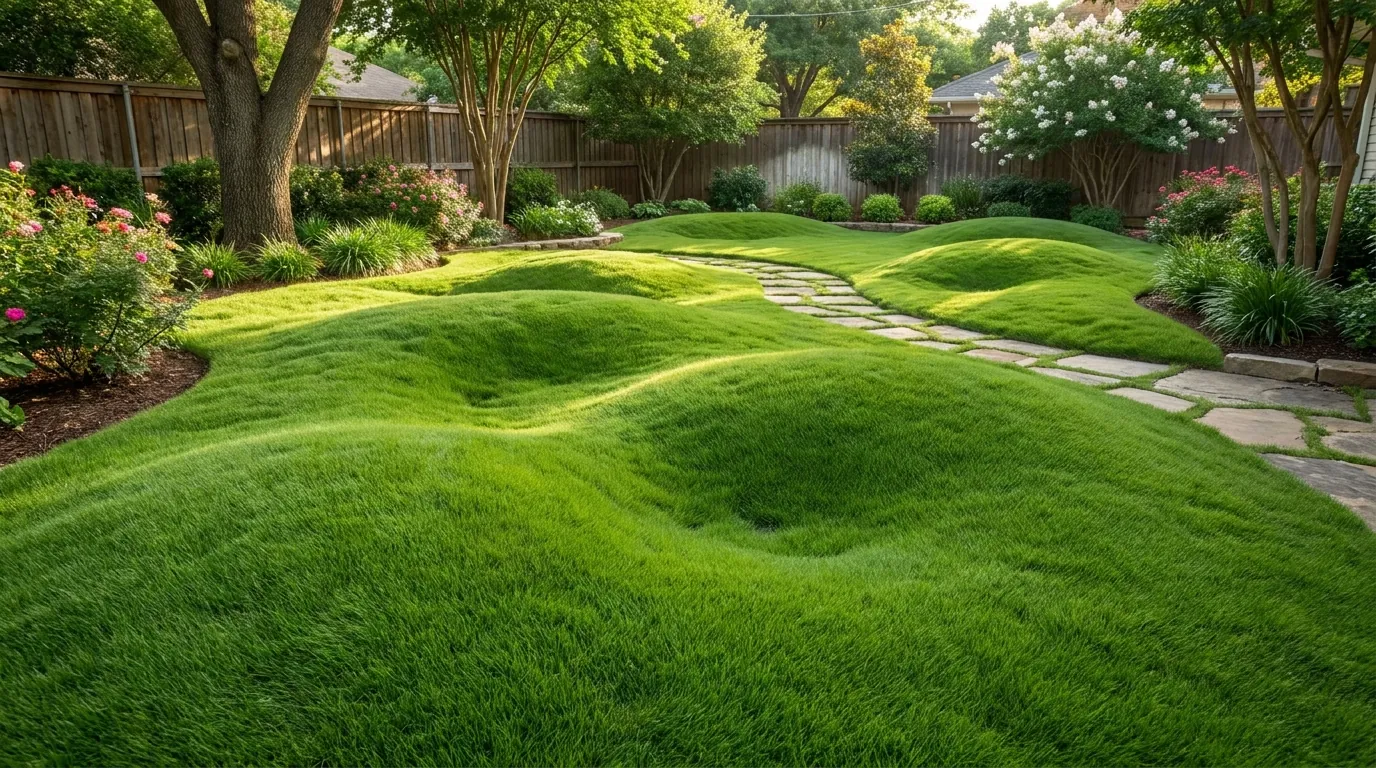
Zoysia tenuifolia is a very low, fine-leafed warm-season grass usually grown in Australia as an ornamental groundcover or low-mow lawn alternative. Current Australian nursery references commonly put it around 5–20 cm high, with individual plants or mats spreading roughly 20–40 cm before knitting into a broader carpet. Plantmark gives about 10 cm high × 40 cm wide, Bamboo Land lists 10–20 cm high, and Able Nursery gives 10 cm high × 40 cm spread.
The name “No-Mow Grass” is useful, but it needs context. If you leave Zoysia tenuifolia unmown, it develops the soft, lumpy, hummock-forming surface people buy it for. If you want it to look like a flat conventional lawn, it can be mown—but then it is no longer literally no-mow. Gardening Australia has demonstrated both forms: regularly mown as a fine lawn surface, or left alone to become architectural and undulating.
No-mow lawn and unmown groundcover are not quite the same thing
This distinction is the key to choosing Zoysia tenuifolia well.
Turf Queensland says the species can form a fine-textured lawn but is most commonly used in landscaping as a low-growing, unmown groundcover. Gardening Australia has shown that when it is mown regularly it forms a dense lawn surface, while an unmown planting develops taller, rolling tufts.
| How you manage it | What it becomes | Best use |
|---|---|---|
| Left unmown | Soft, uneven hummocks around 5–20 cm high | Between pavers, rockeries, slopes, Japanese-style gardens, ornamental groundcover |
| Mown occasionally | Flatter, tidier mat | Low-maintenance lawn alternative |
| Mown regularly | Dense fine-textured lawn surface | Where a conventional flat lawn appearance is wanted |
In our own installations, this management choice is more important than the common name. We would not promise a perfectly level “no-mow lawn” if the client actually wants a bowling-green finish. The natural unmown look is textured and rolling, not flat.
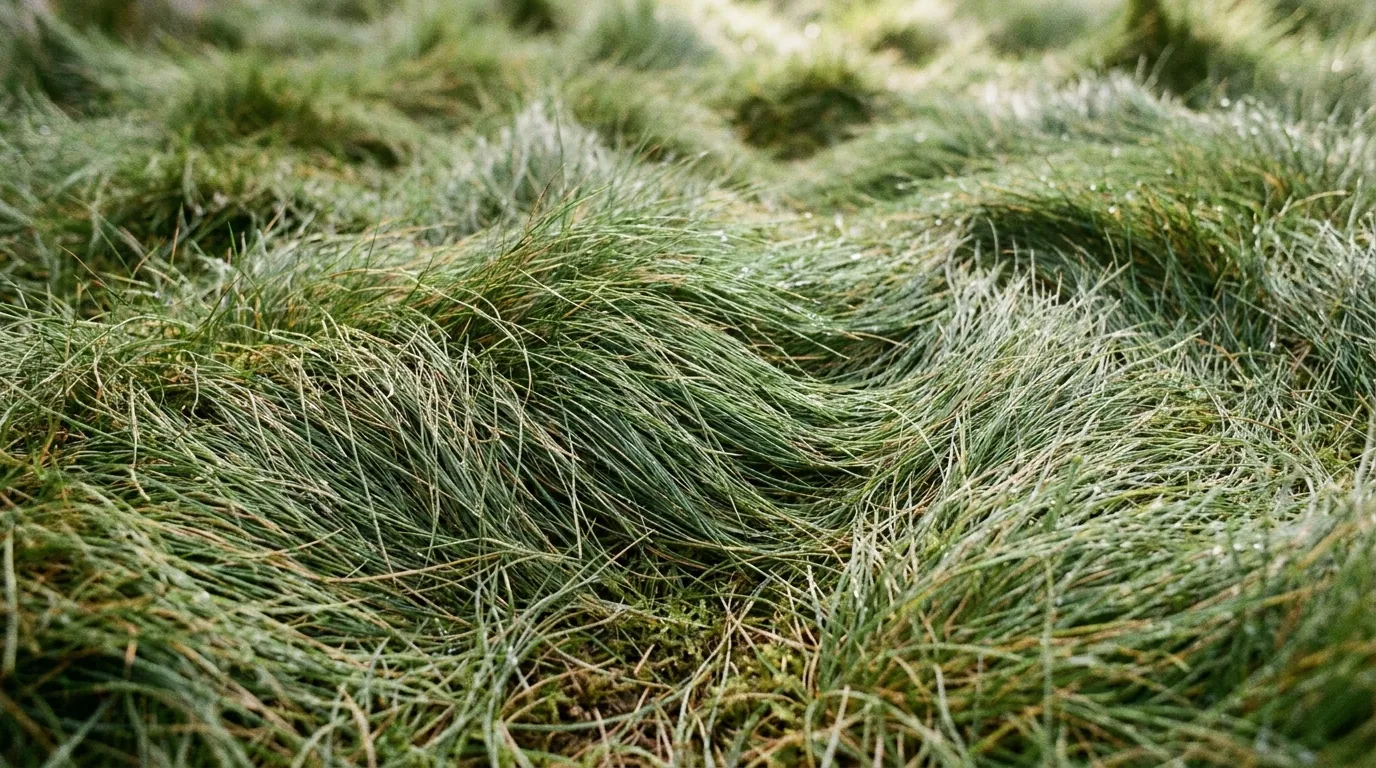
Its natural height is low, but the surface is not perfectly even
Australian suppliers are reasonably consistent on plant height. Plantmark describes the foliage as forming a low mat around 5–15 cm high and separately gives about 10 cm high × 40 cm wide. Bamboo Land lists 10–20 cm in height, while Able Nursery gives a mature size of about 10 cm high × 40 cm spread.
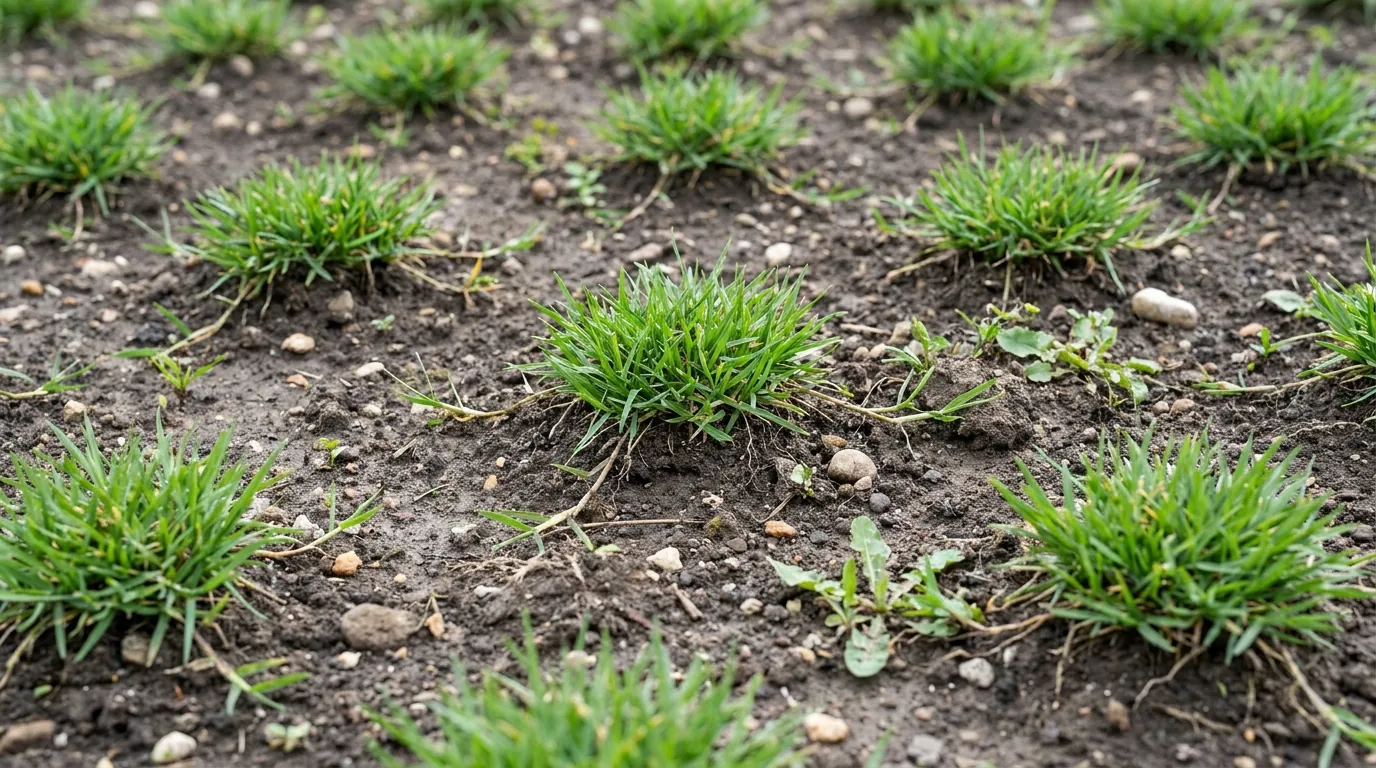
The important visual detail is the mounding habit. Zoysia tenuifolia does not always form one perfectly level sheet when left unmown. It tends to develop cushions and gentle waves, especially around rocks and paving.
That is exactly why we like it in architectural landscapes. It softens hard edges without looking like conventional turf has simply escaped into the garden bed.
How far apart should you plant Zoysia tenuifolia?
The answer depends on how quickly you want the gaps to close.
Plantmark recommends roughly 10–20 cm spacing for full coverage. The Botanical Society gives 20–30 cm centres for faster knitting, while Able Nursery and Westlake Nursery both recommend about 30 cm spacing.
| Planting spacing | What it means |
|---|---|
| 10–20 cm centres | Dense installation with the quickest visual closure; Plantmark’s recommendation for full coverage |
| 20–30 cm centres | Useful balance between plant numbers and fill time |
| About 30 cm centres | Common nursery recommendation where slower knitting is acceptable |
On jobs, we choose spacing according to budget and how much bare ground the client can tolerate during establishment. Wider spacing saves plants on day one, but because this species is naturally slow, the exposed gaps remain visible longer and weeds have more opportunity to colonise them.
Coverage is slow—that is the main trade-off
No Mow Australia describes Zoysia tenuifolia as an extremely hardy slow-growing grass. Plant Tiles Australia is even more direct, calling it incredibly slow to establish. Turf Queensland warns more broadly that slow-growing Zoysias can be overtaken by weeds while they are filling in.
Bamboo Land provides one of the few numerical spread estimates for the species: about 20 cm of spread per year. We treat that as nursery guidance, not a national biological rate, because site conditions and plant format matter enormously.
The practical lesson is solid even without a universal annual figure: if you want a finished green surface quickly, start with plant tiles, slabs or closer-spaced plants rather than expecting widely spaced 100 mm pots to become a continuous lawn in a few months.
In our experience, the first year is when weed control matters most. Once the Zoysia has knitted into a dense mat, there is far less exposed soil available for opportunistic weeds.
For a lawn, traffic level matters
This is another area where Australian sources are inconsistent.
Gardening Australia’s older lawn feature describes Zoysia tenuifolia as tough enough for children and dogs to use when maintained as lawn. Some current nursery pages likewise describe good traffic tolerance. Ladybird Nursery, however, recommends it primarily for low-traffic areas.
We would resolve that conservatively: Zoysia tenuifolia can tolerate ordinary domestic use once well established, but it is not the turf we would choose for constant football, repeated vehicle access or a narrow dog-run corridor receiving concentrated wear every day.
For ornamental groundcover between steppers, the hard surface should take most of the foot traffic while the Zoysia softens the spaces between.
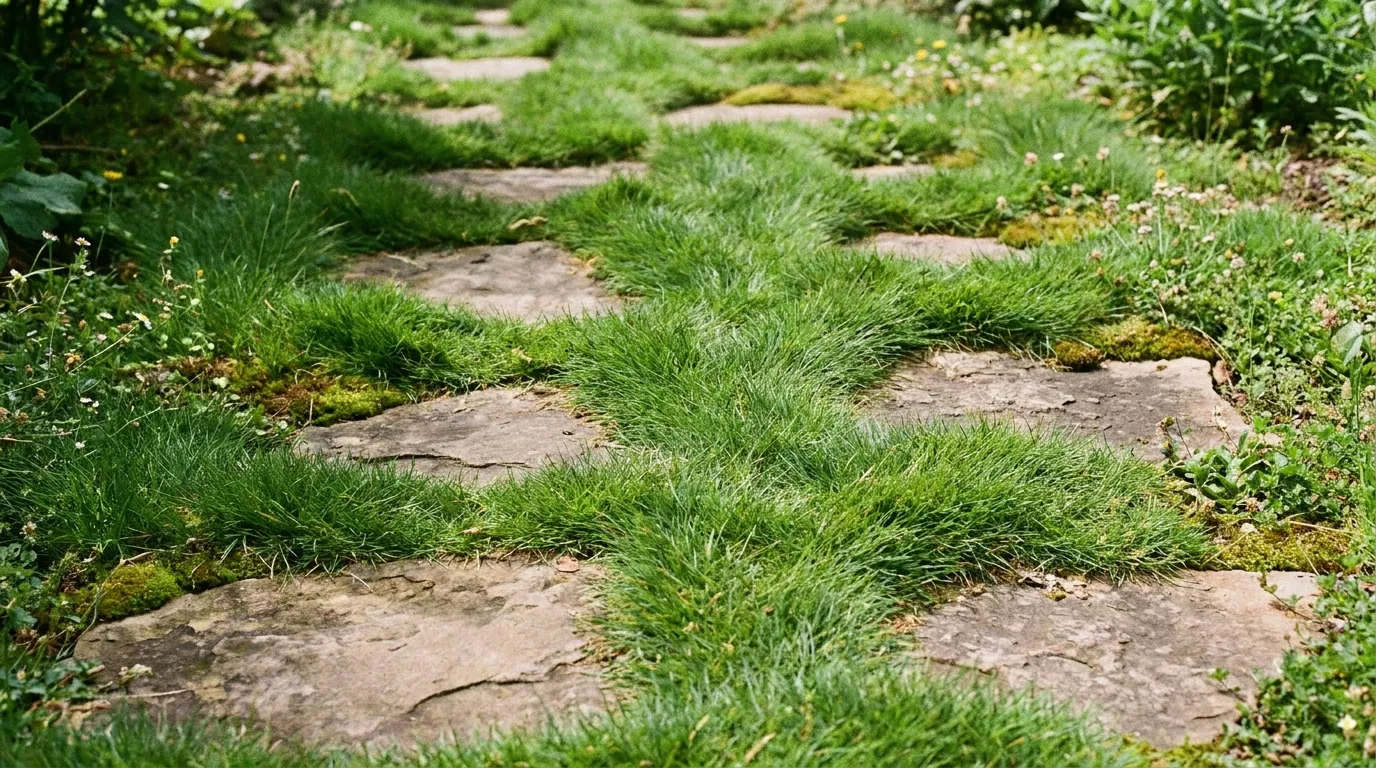
Between pavers is one of its best uses
There is strong agreement across the Australian result set here. Plantmark, Bamboo Land, Able Nursery, No Mow Australia, Ladybird Nursery and Plant Tiles Australia all recommend Zoysia tenuifolia between pavers or stepping stones.
Its low foliage can creep toward the edges of hardscape without producing the tall, floppy growth that makes many groundcovers unsuitable beside paths.
On installations, we leave the crown and soil level slightly below the finished top of the paver where practical. That gives the foliage room to mound without immediately sitting above the walking surface and being constantly scuffed.
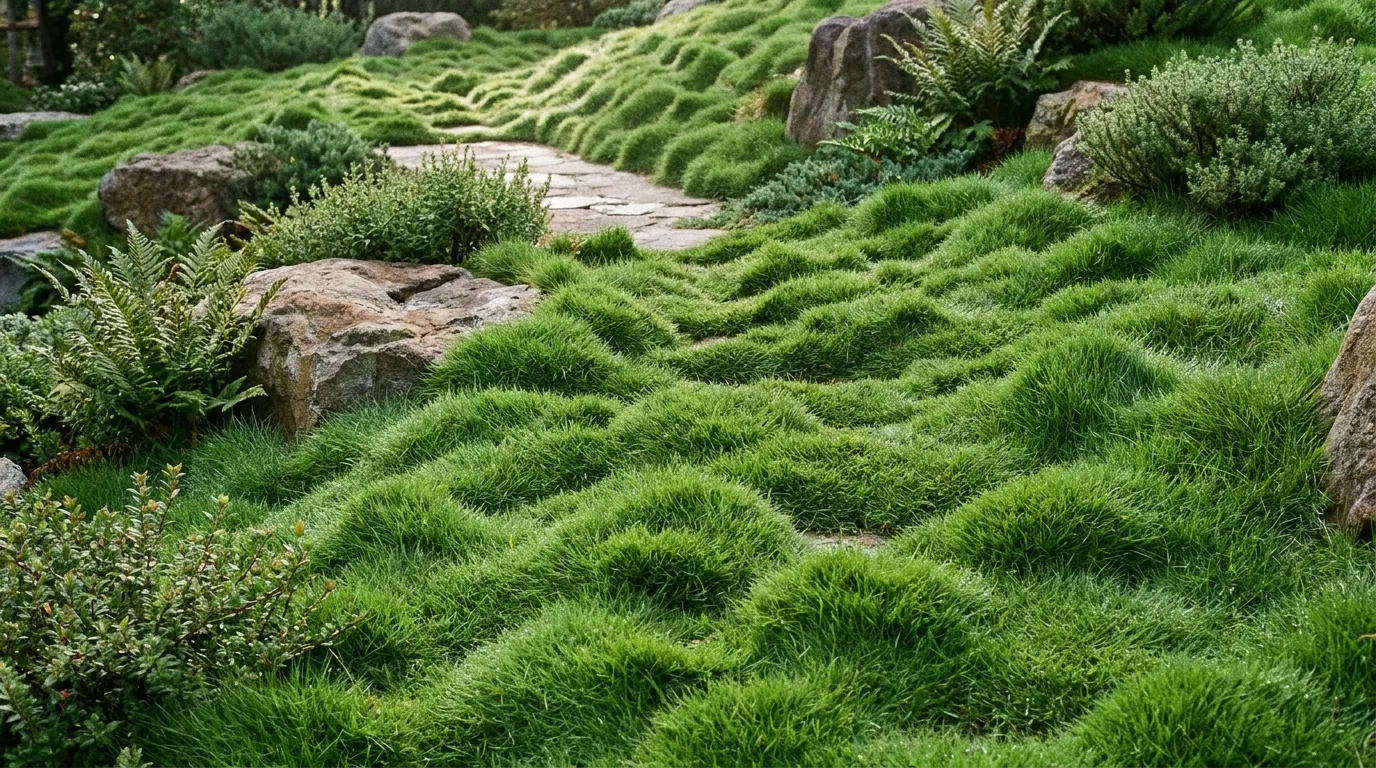
Slopes are another place where “no mow” genuinely matters
Plant Tiles Australia specifically recommends Zoysia tenuifolia for steep slopes because the surface does not require normal lawn mowing. Australian Plant Shop and Nursery Warehouse also list erosion-control or bank use.
That is more than a labour-saving point. Traditional mowing on a steep bank can be awkward or unsafe, so replacing a turf species that expects frequent mowing with a naturally low groundcover can improve the whole design.
We would still stabilise loose soil properly at planting. Young Zoysia plants do not instantly turn a freshly disturbed bank into an erosion-proof mat; the benefit improves as the rhizomatous cover knits together.
Full sun gives the strongest mat, but part shade is workable
Current Australian sources consistently list full sun to part shade. Garden View Nursery recommends at least 4–6 hours of direct light for best growth, while Plantmark, Bamboo Land and Able Nursery all list sun to semi-shade.
For a lawn-like result, we favour the brighter site. Dense growth is what makes the surface useful, and slow-growing Zoysia becomes even slower when light is heavily restricted.
Light shade can work well around stepping stones and garden edges. Deep shade where the ground remains cool and damp is a much weaker fit.
It is a warm-season grass
Turf Queensland places Zoysia species firmly among warm-season lawn grasses. That means the plant’s strongest activity comes through warm weather, while cooler southern conditions slow growth.
This matters especially during establishment. A patch planted just before cold weather will not knit at the same speed as one entering an active warm growing period.
In our own work, we judge progress across the warm season rather than expecting even monthly spread through winter. In cooler districts, the surface may lose some of its lush appearance and simply sit almost still until soil temperatures rise again.
What happens in frost?
Able Nursery says established Zoysia tenuifolia tolerates light frost, Plantmark says it tolerates light frost once established, and Bamboo Land describes it as quite cold tolerant and able to handle some frost once established.
That is useful but modest evidence. We would not convert it into an invented minimum-temperature rating.
Young plants are the stage we protect most carefully. Once a mat is established, the crown and rhizomes have much more buffering from the soil than a small recently planted pot.
Do not confuse Zoysia tenuifolia with ‘Zen Grass’
Gardening Australia’s recent native-lawn feature describes ‘Zen Grass’ as an improved lawn option but explicitly says it is a hybrid from Zoysia macrantha and Zoysia matrella—not ordinary Zoysia tenuifolia.
The same feature describes traditional Japanese Temple Grass, Zoysia tenuifolia, as slower to cover and potentially weaker during drought than the newer hybrid.
That distinction matters when comparing product claims. If a newer hybrid is advertised as faster-spreading, more flood-tolerant or stronger through drought, those traits should not automatically be copied onto straight-species Zoysia tenuifolia.
Drought tolerant does not mean drought-proof during establishment
Plantmark, Able Nursery, Australian Plant Shop and several other Australian sellers describe established Zoysia tenuifolia as drought tolerant. The consistent qualifier is once established.
New plants still need moisture while their root systems spread beyond the nursery plug or pot. Able Nursery recommends watering daily for the first 2–3 weeks after planting, while Garden View suggests deep watering once or twice weekly during establishment. Those schedules differ because nursery stock, soil and climate differ.
We would not use either as a rigid national calendar. Our approach is to keep the original root zone evenly moist while it establishes, then lengthen the interval as the mat begins rooting into surrounding soil.
Once established, deep occasional watering is more useful than frequent surface sprinkling.
Free drainage is more important than rich soil
Plantmark specifies a warm position in free-draining loam; Bamboo Land recommends moist, well-drained soil rich in organic matter; The Botanical Society suggests free-draining sandy or loamy soil and warns against waterlogging.
That tells us Zoysia tenuifolia is adaptable but does not want to sit in stagnant conditions.
On heavy clay, we improve surface drainage and soil structure rather than digging isolated pockets of soft mix that hold water. On very sandy sites, organic matter can improve moisture retention during establishment.
Feeding should stay light
Able Nursery recommends a slow-release fertiliser in spring. Westlake Nursery suggests feeding in spring and autumn, while Garden View recommends slow-release lawn fertiliser in early spring and again in mid-summer.
There is no reason to push this species hard. Its appeal is slow, compact growth. Excessive nitrogen can create softer, more vigorous foliage and undermine the low-maintenance character you bought it for.
In our own installations, we correct soil and establishment moisture first, then feed lightly if colour or growth indicates the mat needs support.
Does “no mow” really mean never mow?
It can—if you want the natural hummocked look.
Plant Tiles Australia says the plant is normally left unmown and suggests mowing perhaps once a year if a neater lawn appearance is wanted. Westlake Nursery suggests up to two mows per year to train it flatter. Gardening Australia confirms that regular mowing can turn the same species into a conventional dense lawn surface.
So the right mowing schedule depends on the design:
| Look you want | Mowing approach |
|---|---|
| Natural hummocks / Japanese-style groundcover | Leave unmown; trim edges only as needed |
| Low, tidier lawn alternative | One or two light mows per year is common nursery guidance |
| Flat conventional lawn | Mow regularly; at that point it is a low-growing lawn grass rather than a literal no-mow surface |
For us, this is the honest way to use the name. “No-Mow Grass” describes its ability to look intentional without regular mowing—not a guarantee that every possible lawn aesthetic requires zero cutting.
A 30 cm planting grid: what does that mean in real numbers?
Able Nursery and Westlake both recommend around 30 cm centres. On a simple square grid, that works out to roughly 11 plants per square metre.
| Area | Approximate plants at 30 cm square spacing |
|---|---|
| 1 m² | About 11 plants |
| 5 m² | About 56 plants |
| 10 m² | About 111 plants |
Those quantities are simple layout calculations, not a promise of a specific fill time. Planting at 20 cm centres uses substantially more plants but closes the visible gaps sooner; plant tiles and slabs reduce the waiting period further.
For larger areas, this calculation is why we compare pot planting with tiles before ordering. A cheap individual plant can become an expensive way to cover a big lawn once you multiply it across tens of square metres.
Where Zoysia tenuifolia makes the most sense
| Situation | Fit | Why |
|---|---|---|
| Between stepping stones | Excellent | Low, fine foliage softens hardscape without regular mowing |
| Rockeries and Japanese-style gardens | Excellent | Natural hummocks become part of the design |
| Steep bank that is difficult to mow | Very good | Low maintenance once the mat establishes |
| Passive lawn area | Good | Fine texture and very low mowing requirement |
| High-use sports lawn | Poor fit | Slow recovery and slow spread work against concentrated wear |
| Area needing instant coverage | Better from tiles/slabs | Widely spaced pots are slow to knit |
The main buying lesson is simple: choose Zoysia tenuifolia because you like its slow, sculptural carpet and low-maintenance habit. If you need rapid turf establishment, heavy-wear recovery or a perfectly flat lawn without mowing, another Zoysia or conventional turf species may suit the job better.
Frequently asked questions
How high does Zoysia tenuifolia grow if you do not mow it?
Current Australian nursery references commonly put unmown Zoysia tenuifolia around 5–20 cm high. Plantmark describes a low mat around 5–15 cm, while Bamboo Land lists 10–20 cm. The surface naturally develops soft hummocks rather than staying perfectly flat.
How far apart should Zoysia tenuifolia be planted?
Australian recommendations range from about 10–20 cm centres for dense coverage to around 30 cm centres for a lower-cost planting that takes longer to close. Plantmark recommends 10–20 cm for full coverage, while Able Nursery and Westlake use about 30 cm.
How fast does Zoysia tenuifolia spread?
The species is generally described as slow growing and slow to establish. Bamboo Land publishes an approximate spread of 20 cm per year, but that should be treated as nursery guidance rather than a universal rate. Light, climate, soil, spacing and starting plant format all affect coverage.
Does No-Mow Grass really need no mowing?
It can be left completely unmown if you want the natural wavy, hummocked look. For a flatter lawn-style surface, Australian nurseries commonly suggest one or two occasional mows per year, while regular mowing can produce a more conventional fine lawn.
Can Zoysia tenuifolia handle foot traffic?
Established Zoysia tenuifolia can handle ordinary domestic use, and Gardening Australia has demonstrated it as a usable home lawn. For concentrated heavy wear or sports use, its slow spread and recovery make faster turf grasses a safer choice.
Does Zoysia tenuifolia tolerate shade?
It grows in full sun to part shade. Garden View Nursery recommends around 4–6 hours of direct light for best growth. Light shade is workable, but deep shade slows an already slow-covering grass.
Is Zoysia tenuifolia frost tolerant?
Australian suppliers including Plantmark, Bamboo Land and Able Nursery say established plants can tolerate light frost. There is not enough strong evidence to justify a precise minimum-temperature claim for all Australian sites.
Is Zoysia tenuifolia the same as Zen Grass?
No. Gardening Australia identifies ‘Zen Grass’ as a hybrid involving Zoysia macrantha and Zoysia matrella. It is promoted as a faster-spreading improved lawn option, whereas straight Zoysia tenuifolia is the traditional slow-growing Japanese Temple Grass / No-Mow Grass used widely as ornamental groundcover.


