
Frangipani Problems: Rust, Black Tips & No Flowers

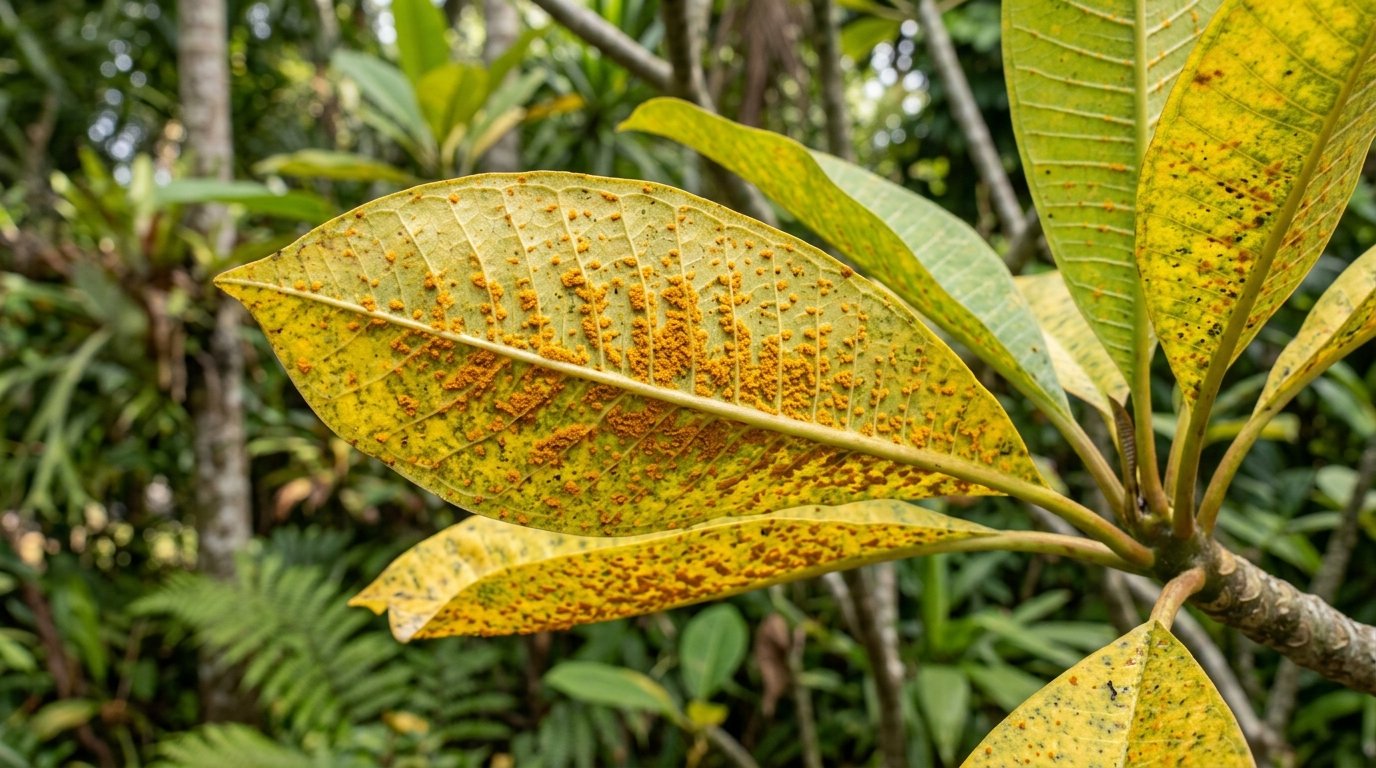
The most common frangipani problems in Australia are frangipani rust (orange powder under the leaves), black or mushy stem tips from cold and overwatering, and a failure to flower — usually caused by too little sun, too much nitrogen, or a plant that is simply too young. Frangipanis are tough, forgiving plants, and most of what goes wrong is environmental rather than a serious disease. Knowing which symptom you have makes the fix straightforward.
Because frangipanis drop their leaves and rest over the cooler months, some “problems” are just normal seasonal behaviour. This guide separates the genuine issues — rust, rot, scale, no flowers — from the things a frangipani does naturally, so you do not treat a healthy dormant plant.
Quick symptom guide
| What you see | Likely cause |
|---|---|
| Orange/yellow powder under leaves | Frangipani rust |
| Black, soft, mushy stem tips | Cold damage / stem rot |
| Healthy plant but no flowers | Too little sun, too much nitrogen, or too young |
| Sticky leaves, black coating | Scale + sooty mould |
| Leaves yellowing and dropping in autumn | Normal dormancy |
| Wrinkled, soft trunk in winter | Often overwatering in cold |
Problem 1: Frangipani rust
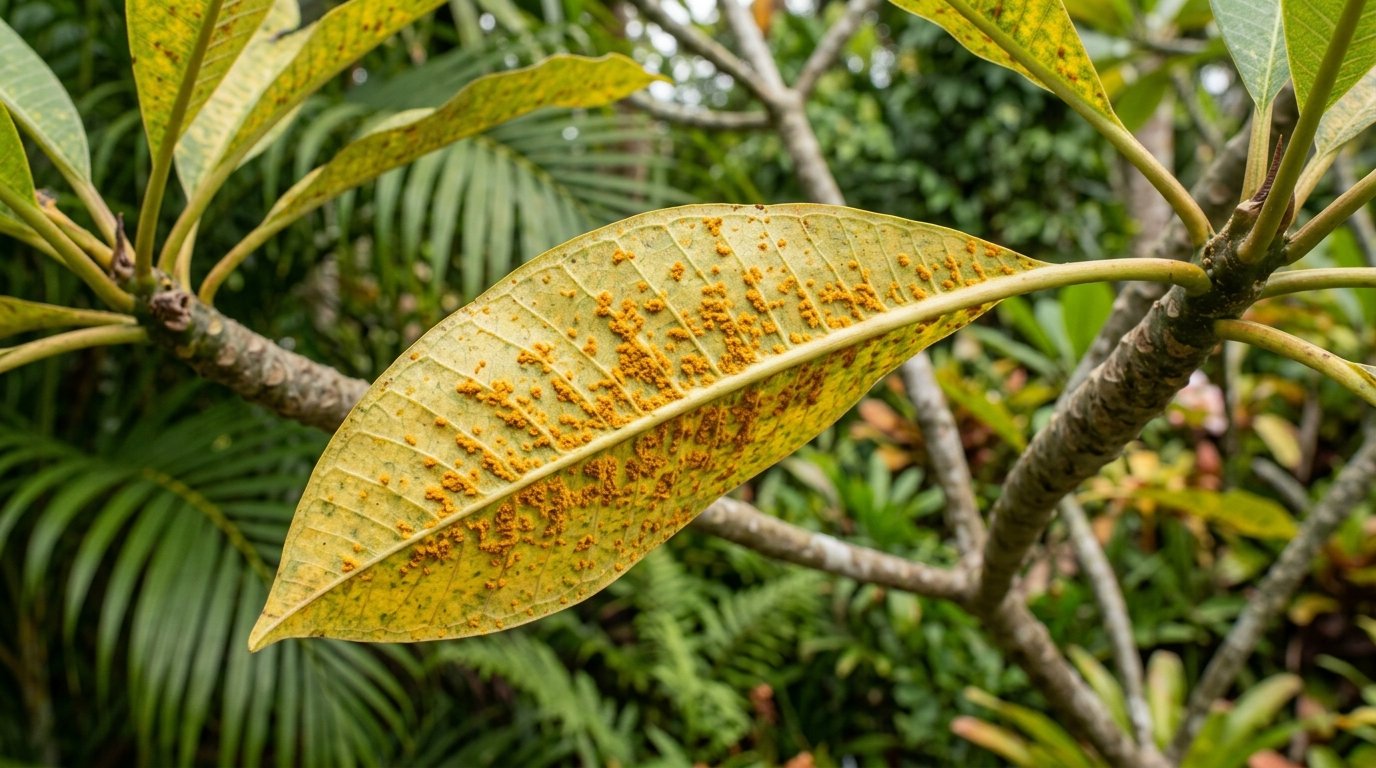
Frangipani rust is the most recognisable frangipani disease in Australia. It appears as orange, yellow or rusty powdery pustules on the undersides of the leaves, with corresponding yellow spotting on top.
It is most common in warm, humid conditions, typically later in the growing season, and can cause leaves to yellow and drop early.
Rust is rarely fatal to an established frangipani, but heavy infections weaken the plant. Managing it involves removing and binning badly affected leaves (not composting them), collecting fallen infected leaves, and improving airflow. Avoid wetting the foliage when watering.
Problem 2: Black tips and stem rot
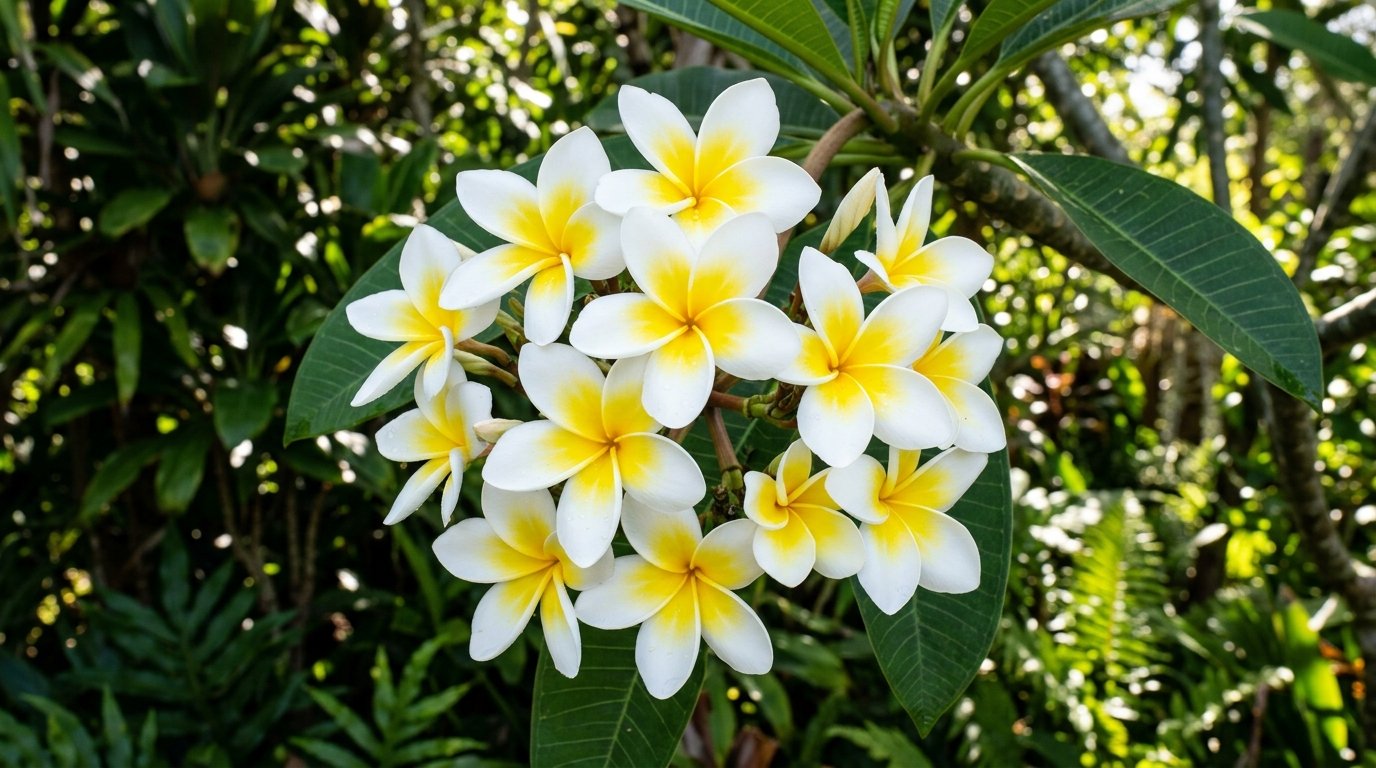
Black, soft or mushy stem tips are usually caused by cold damage, or by rot from overwatering — especially in winter when the plant is dormant and using little water.
Frangipanis are frost-tender and store water in their fleshy stems, so wet, cold conditions are the classic trigger for rot.
If a tip is black and mushy, cut back into clean, healthy, firm green tissue with a clean blade, and let the cut callus. Keep a rotting plant on the dry side and protect it from cold.
Problem 3: Not flowering
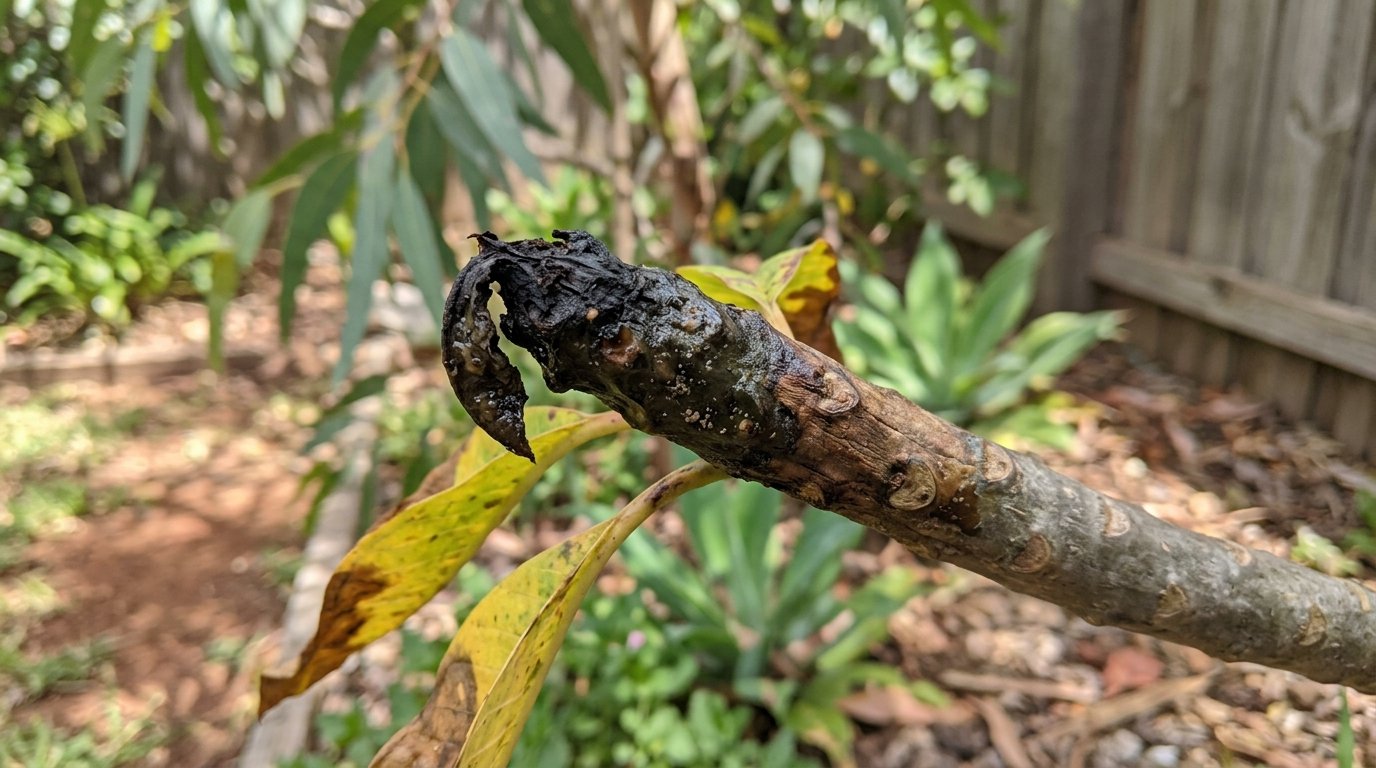
A healthy frangipani that will not flower is one of the most common complaints — and the causes are usually simple:
- Not enough sun — frangipanis are sun-lovers and flower poorly in shade;
- Too much nitrogen — high-nitrogen (lawn-type) fertiliser drives leafy growth at the expense of flowers;
- Too young — seedlings and young cuttings may take several years to bloom;
- Recent hard pruning — removing branch tips removes potential flower sites.
More sun and a fertiliser higher in phosphorus and potassium (rather than nitrogen) usually encourage better flowering over time.
Problem 4: Scale and sooty mould
Sticky leaves and a black sooty coating point to scale insects. The scale feed on the plant and excrete honeydew, and sooty mould then grows on the honeydew.
The black mould itself is harmless but indicates a scale problem. Controlling the scale — and improving the plant’s overall vigour — resolves the sooty mould over time.
Problem 5: Normal winter leaf drop
Deciduous frangipanis naturally lose their leaves and rest over the cooler months. Yellowing and dropping leaves in autumn is usually normal dormancy, not disease.
During this period the plant needs little or no water. Continuing to water heavily through winter is a common cause of the rot described above, so it is important not to mistake dormancy for a problem and overwater in response.
Watering: less is usually more
Frangipanis store water in their stems and dislike constantly wet feet.
- In the warm growing season they appreciate deep but infrequent watering with good drainage;
- in the cool dormant season they need very little water;
- in pots, ensure the mix drains freely and never leave them sitting in a saucer of water.
Overwatering, especially in cold weather, is behind many frangipani problems. A soil moisture check before watering helps avoid it.
Sun and position
Frangipanis want full sun and warmth. In too much shade they grow leggy, flower poorly and are more prone to problems.
They are also frost-tender, so in cooler areas a warm, sheltered, sunny spot — or a pot that can be moved — gives the best results.
When it is a real disease vs simple care
Most frangipani complaints are environmental — sun, water, cold, feeding — rather than serious disease. Rust and scale are the main genuine pest and disease issues, and both are manageable.
The risk is misreading the symptom: treating dormancy as disease and overwatering, or feeding a non-flowering plant more nitrogen and getting even fewer flowers. Correctly identifying the cause is most of the solution.
Not sure what is wrong with your frangipani? Get it diagnosed
Rust, rot, scale and simple care faults can be hard to tell apart from a photo alone, and the wrong response can make things worse. If your frangipani is struggling and you are not sure why, Garden Green’s plant disease diagnosis service can identify the problem from your description and photos and tell you exactly how to fix it. Send us your frangipani problem for a clear answer.
Keep it simple: sun, drainage, restraint
To keep a frangipani healthy:
- give it full sun and a warm, sheltered position;
- water deeply but infrequently in warmth, and very little in winter;
- ensure sharp drainage, especially in pots;
- manage rust and scale early;
- avoid high-nitrogen feeding if you want flowers;
- accept winter leaf drop as normal.
Frangipanis are among the most forgiving plants once you understand their rhythm. Most problems come from too much water, too little sun, or mistaking natural dormancy for something wrong.
Frequently asked questions
What is the orange powder under my frangipani leaves?
That is frangipani rust, a fungal disease that appears as orange, yellow or rusty powdery pustules on the undersides of leaves, with yellow spotting on top. It is common in warm, humid conditions later in the growing season and can cause early leaf yellowing and drop. Remove and bin affected leaves, collect fallen ones, improve airflow and avoid wetting the foliage.
Why are my frangipani stem tips going black and soft?
Black, soft or mushy tips are usually caused by cold damage or by rot from overwatering, especially in winter when the plant is dormant. Frangipanis store water in their stems and are frost-tender, so cold and wet together trigger rot. Cut back into clean, firm green tissue, let it callus, keep the plant drier and protect it from cold.
Why won’t my frangipani flower?
The usual reasons are not enough sun, too much nitrogen fertiliser driving leafy growth, a plant that is still too young, or recent hard pruning that removed flowering tips. Give it full sun, switch from high-nitrogen feed to one higher in phosphorus and potassium, and be patient with young plants, which can take several years to bloom.
Is it normal for a frangipani to lose all its leaves?
Yes. Deciduous frangipanis naturally drop their leaves and rest over the cooler months, so yellowing and leaf drop in autumn is usually normal dormancy rather than disease. During this period the plant needs little or no water. Overwatering a dormant frangipani in winter is a common cause of stem rot.
What causes sticky leaves and black coating on a frangipani?
Sticky leaves and a black sooty coating indicate scale insects. The scale excrete honeydew, and sooty mould grows on it. The mould itself is harmless but signals a scale problem. Controlling the scale and improving the plant’s vigour clears the sooty mould over time.
How often should I water a frangipani?
Water deeply but infrequently during the warm growing season, always with good drainage, and give very little water during winter dormancy. In pots, use a free-draining mix and never leave the plant sitting in water. Overwatering, particularly in cold weather, is behind many frangipani problems, so check the soil before watering.
Can I save a frangipani with stem rot?
Often yes, if you act early. Cut back the affected stem into clean, firm, healthy green tissue with a clean blade, and allow the cut to dry and callus. Keep the plant on the dry side, improve drainage and protect it from cold. Frangipanis are resilient and can regrow from healthy remaining tissue.
Does frangipani rust kill the plant?
Rarely. Frangipani rust weakens the plant and causes early leaf drop, but an established frangipani usually survives it. Manage it by removing affected and fallen leaves, improving airflow and avoiding wetting the foliage. Repeated heavy infections are more of a concern, so ongoing management through the humid season helps keep the plant strong.


