
Grevillea ‘Purple Haze’: Size, Care, Spacing & Australian Growing Guide

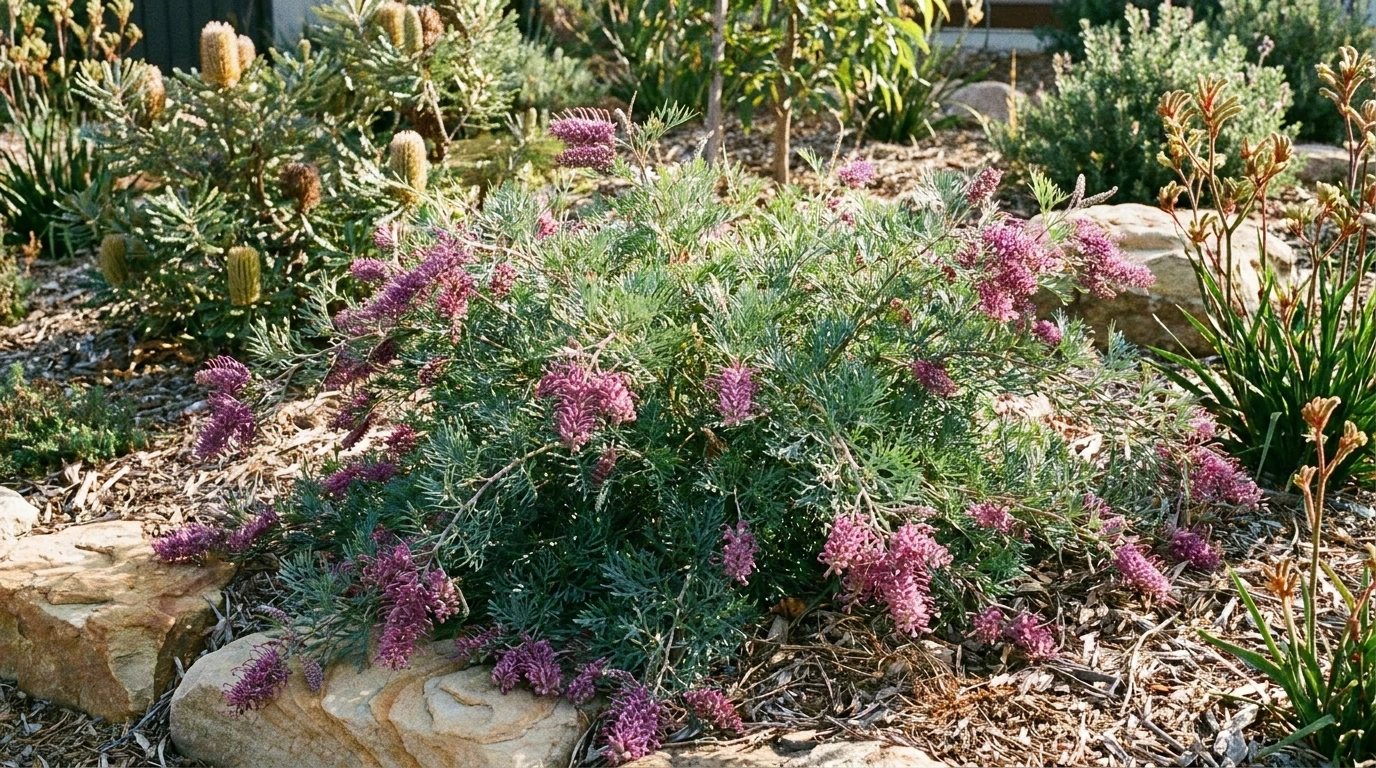
Grevillea ‘Purple Haze’ is best planned as a low, spreading feature shrub about 1 m tall and 2 m wide, with purple-mauve flowers held on long trailing stems. Plantmark publishes approximately 1 m high by 2 m wide for this cultivar, while Australis Plants gives the same 1 m by 2 m mature size. Mountain View Nursery lists a slightly broader height range of 0.6–1 m but again gives a 2 m spread.
That width is the important number when placing it. On our garden plans, we treat ‘Purple Haze’ as a spreading shrub rather than trying to squeeze it into the space of a compact one-metre ball. Plantmark’s published 2 m spread is why we would normally allow roughly 1.5–2 m between centres when the aim is eventual coverage without forcing neighbouring shrubs immediately on top of each other.
It is also worth buying the plant by its full identity rather than by flower colour alone. Australian suppliers Plantmark, Tarrawood Native Nursery and The Garden Feast identify it as Grevillea plurijuga ‘Purple Haze’, and The Garden Feast specifically describes ‘Purple Haze’ as a selection of G. plurijuga. Kew Plants of the World Online and the Australian Plant Census accept Grevillea plurijuga as an Australian species, with Kew recording its native range in Western Australia. That is a much stronger identity trail than treating ‘Purple Haze’ as a generic purple-flowering grevillea.
What exactly is Grevillea ‘Purple Haze’?
‘Purple Haze’ is a selected form associated with Grevillea plurijuga, not a general marketing name for any mauve grevillea. The Garden Feast describes its stock specifically as a selection of G. plurijuga, Plantmark lists it as Grevillea plurijuga ‘Purple Haze’, and Tarrawood Native Nursery also lists grafted Grevillea plurijuga ‘Purple Haze’.
The underlying species has a solid botanical trail. The Australian Plant Census accepts Grevillea plurijuga F.Muell., while Kew Plants of the World Online accepts the species and records G. plurijuga subsp. plurijuga from southern Western Australia. Flora of Australia describes that subspecies as a prostrate to procumbent, densely mounded shrub ranging from 0.3–2 m high in the wild.
That species description is useful background, but it should not be used as the mature dimensions of the named garden selection. For ‘Purple Haze’ itself, the Australian nursery material is much more consistent around a roughly 1 m high, 2 m wide landscape plant.
You may also see Australian retailers write Purple Haze™. We did not find dependable evidence in the material reviewed that justified describing this grevillea as a current Australian PBR-protected cultivar, so we have not added “PBR” to its name. A trade-mark style presentation and Plant Breeder’s Rights are not interchangeable terms.
How big does Grevillea ‘Purple Haze’ grow?
For garden planning, the most repeatable figure is approximately 1 m high by 2 m wide. Plantmark gives about 1 m by 2 m; Australis Plants also gives 1 m by 2 m; Mountain View Nursery gives 0.6–1 m by 2 m.
| Australian source | Published height | Published width | How we use that figure |
|---|---|---|---|
| Plantmark | Approx. 1 m | Approx. 2 m | Our main landscape-planning reference |
| Australis Plants | 1 m | 2 m | Supports the low, spreading habit |
| Mountain View Nursery | 0.6–1 m | 2 m | Useful where a lower finished profile is expected |
| Flora of Australia, wild G. plurijuga subsp. plurijuga | 0.3–2 m | Not a cultivar sizing figure | Botanical background only, not our spacing number |
The proportion matters. A plant that finishes around twice as wide as it is tall behaves very differently in a garden bed from an upright grevillea. We like that form where a bed needs width and movement without introducing another tall screening shrub.
How fast does Grevillea ‘Purple Haze’ grow?
This is one place where we would rather leave a blank than invent a convenient number. None of the stronger Australian sources we reviewed publishes a defensible annual growth rate in centimetres per year specifically for ‘Purple Haze’. Plantmark gives mature dimensions, Australis Plants gives mature dimensions and frost performance, and Australian retailers describe it as hardy or adaptable, but that is not the same thing as a measured annual extension rate.
So we would not publish a “30 cm per year” or “50 cm per year” claim for this cultivar. Establishment speed will also change with climate, drainage, rootstock, watering and the starting size of the plant. For design purposes, its mature 2 m spread is more useful than pretending the journey to that width happens at one fixed rate.
Flowers, foliage and the reason people notice it
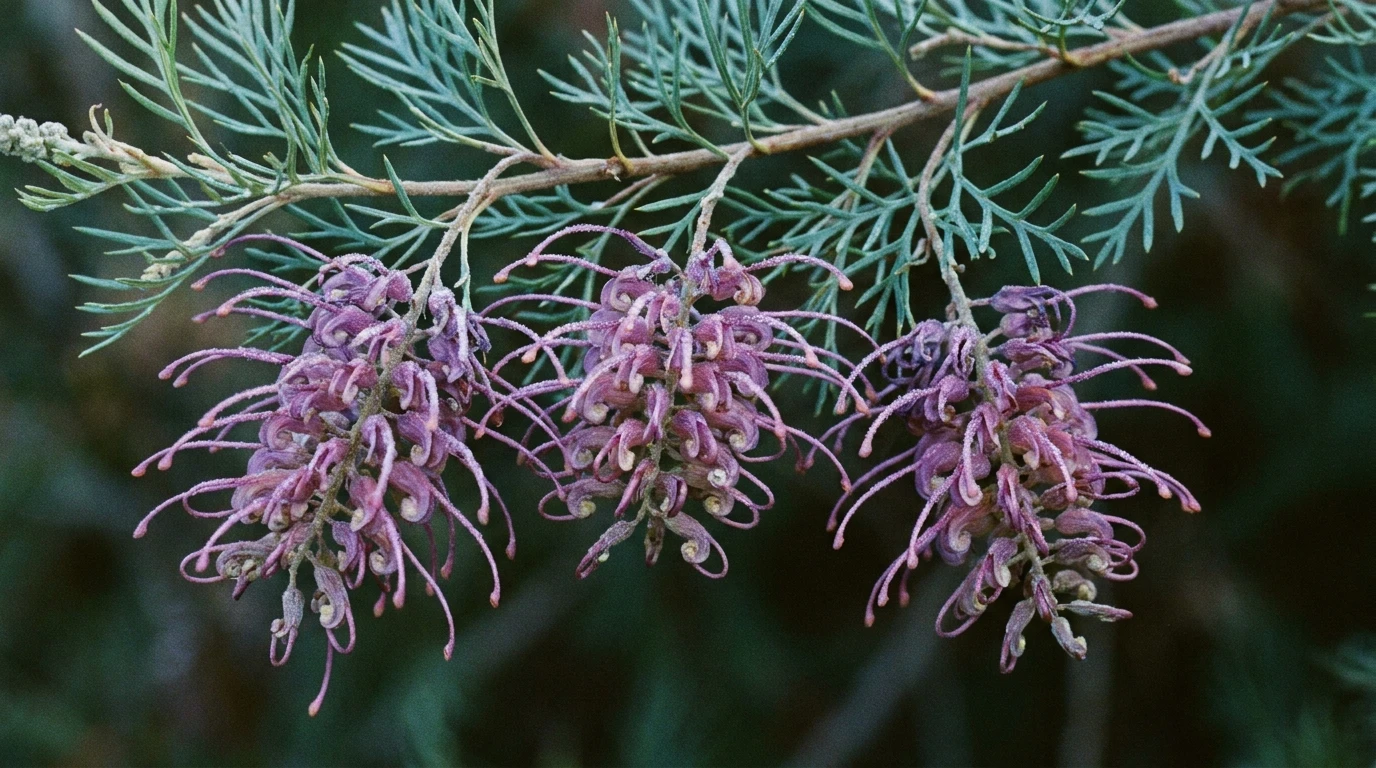
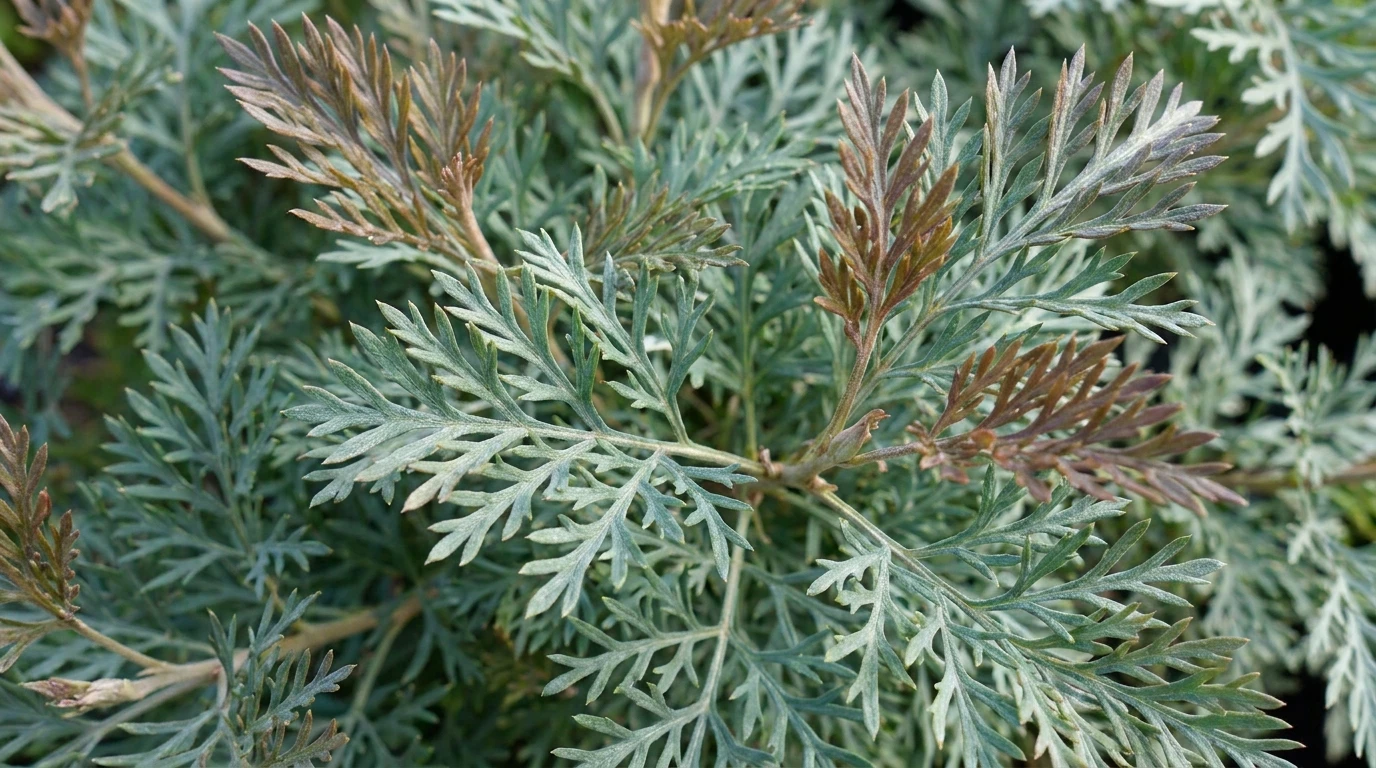
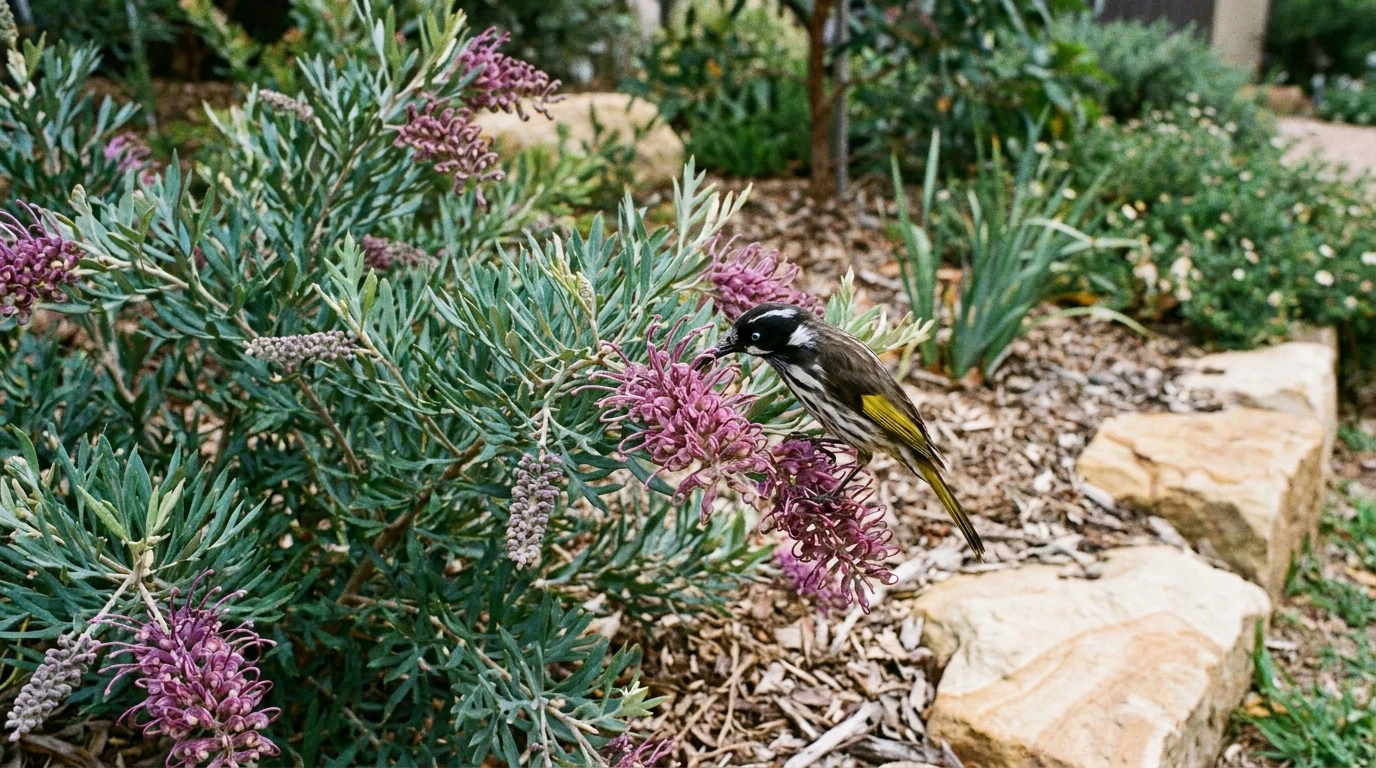
Australis Plants describes purple-mauve flowers carried on long trailing stems, with blue-green foliage and bronzy new growth. Plantmark describes dense blue-green foliage and purple brush-like flowers. The resulting plant has a softer, looser look than many stiff or upright grevilleas.
There is a useful difference between sources on flowering duration. Plantmark and Australis Plants describe the main flowering period as spring and summer, while The Garden Feast and Growmaster Heatherton say the mauve-purple flowers can occur for most of the year. Rather than promising permanent flowering, we would plan around a strong spring-summer display and treat flowers outside that period as a welcome extension where climate and plant condition allow it.
That is the main information-gain caveat with this plant: nursery descriptions are remarkably consistent on mature size, but less consistent on how long it flowers. Local climate is likely to matter more than a catalogue phrase.
Full sun or part shade?
Plantmark lists full sun as its position, while The Garden Feast says its grafted ‘Purple Haze’ can take full sun or part shade. Mountain View Nursery likewise lists full sun and part sun/part shade.
On our jobs, when flowering is the priority, we would normally start with the sunnier suitable part of the garden rather than deliberately hiding it in shade. Part shade gives some flexibility, but this is still a plant sold by Australian nurseries primarily for its flowers, foliage colour and broad ornamental form.
Soil and drainage
Plantmark specifies loam, sandy and well-drained soils. Growmaster Heatherton describes a preference for moist but well-drained soil, while The Garden Feast also stresses drainage and recommends planting with the top of the root ball level with the surrounding soil.
The common denominator is drainage. “Drought tolerant” does not mean “happy with roots sitting wet”. We would be much more comfortable planting ‘Purple Haze’ into an open, draining profile than into a low point where water repeatedly collects after rain.
When preparing the hole, The Garden Feast recommends a planting hole twice the size of the container, with the plant returned to the same soil level as the surrounding ground, followed by watering and mulch. That is a sensible establishment sequence without burying the crown or graft area.
How far apart should Grevillea ‘Purple Haze’ be planted?
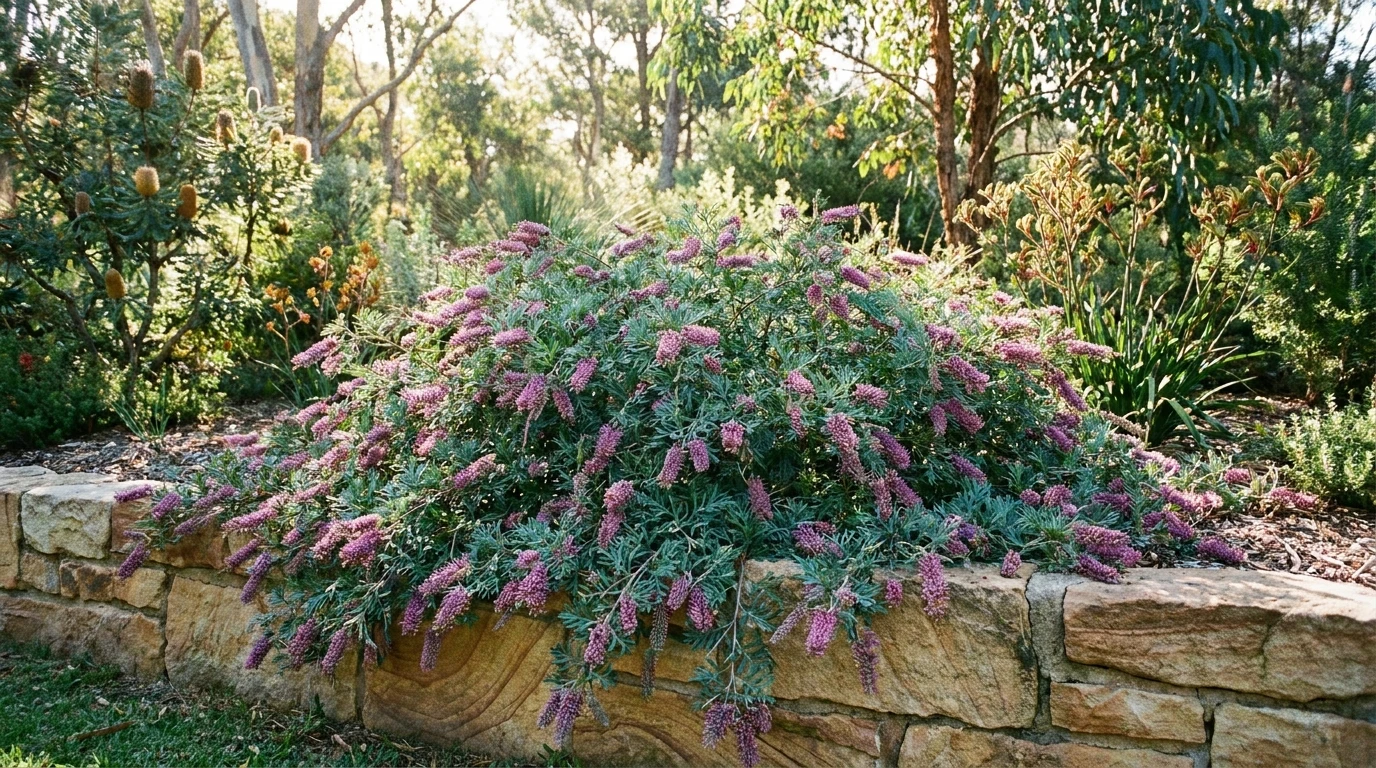
Plantmark, Australis Plants and Mountain View Nursery all converge around a mature width of about 2 m. Using that published width as the design basis, we generally think in terms of approximately 1.5–2 m centres depending on whether the intention is eventual overlap or a more individually defined shrub.
Closer spacing creates visual fill sooner but also means the plants will compete for the same horizontal space as they mature. At the wider end of that range, the naturally mounding outline is easier to read.
Against a path, driveway or lawn edge, remember that the 2 m mature width is the whole plant, not the distance it grows in one direction. A nominal 2 m-wide shrub can occupy roughly 1 m either side of its centre if growth is reasonably balanced. That simple geometry is why we do not centre it hard against a narrow walkway and then rely on constant clipping.
Where ‘Purple Haze’ works particularly well
| Garden situation | Would we use ‘Purple Haze’? | Why |
|---|---|---|
| Wide sunny native border | Yes | Plantmark’s approx. 1 m × 2 m habit gives useful low-level width without creating a tall screen. |
| Feature shrub among grasses and lower natives | Yes | Australis Plants describes blue-green foliage, bronzy new growth and purple-mauve trailing flowers, giving several layers of contrast. |
| Wildlife-oriented garden | Yes | Plantmark describes it as a bird and bee attractor, and Mountain View Nursery also promotes the flowers for birds, bees and other pollinators. |
| Large decorative container | Possible | Plantmark specifically lists container use, provided drainage and long-term root space are managed. |
| Very narrow strip beside a path | Usually not our first choice | The approximately 2 m mature spread published by Plantmark, Australis Plants and Mountain View Nursery can create ongoing pruning pressure. |
| Formal clipped hedge | Usually choose something else | Its published low mounding habit and trailing flower stems are more useful where they can be seen rather than repeatedly squared off. |
| Poorly drained depression | No> | Plantmark, Mountain View Nursery and Growmaster Heatherton all emphasise well-drained soil. |
Is Grevillea ‘Purple Haze’ drought tolerant?
The Garden Feast describes its grafted ‘Purple Haze’ as very drought tolerant, while Mountain View Nursery also lists drought tolerance. We still distinguish an established plant from a newly installed one. A fresh root ball occupies only a small volume of soil, so it needs deliberate watering while roots extend into the surrounding ground.
Once established, the Australian nursery descriptions support using ‘Purple Haze’ in lower-water native planting. We would still water through unusually prolonged dry periods if the foliage shows stress, particularly in exposed sites or containers.
How much frost can it take?
Australis Plants gives the most specific figure we found, listing ‘Purple Haze’ as frost hardy to -6°C. Mountain View Nursery uses the more conservative description “light frost tolerant”, while The Garden Feast describes it generally as frost tolerant.
We would use the Australis figure as evidence that the plant has useful cold tolerance, not as permission to ignore microclimate. Frost duration, wind exposure, wet soil and whether the plant is newly planted can all change what happens in a real garden.
Why grafted ‘Purple Haze’ is common
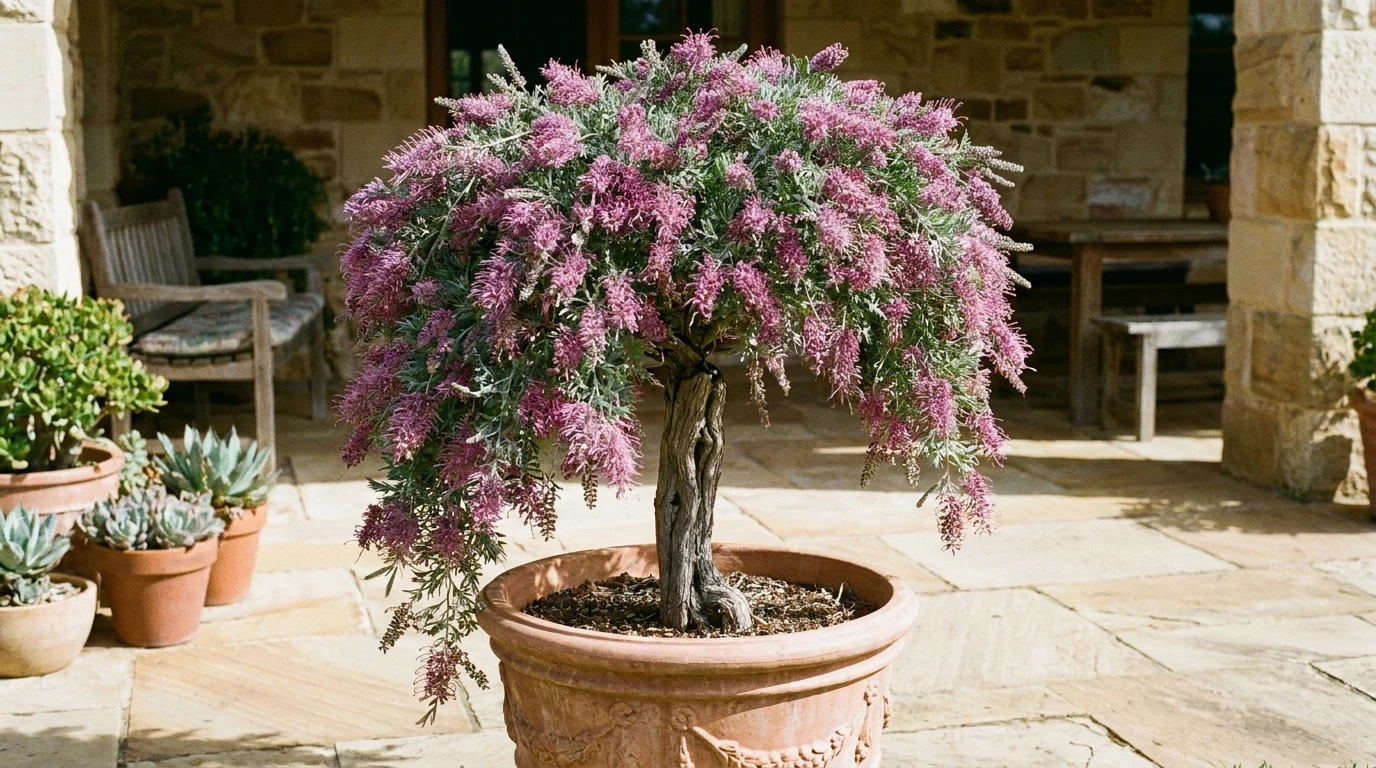
Several Australian suppliers present ‘Purple Haze’ as a grafted grevillea. Tarrawood Native Nursery specifically lists grafted Grevillea plurijuga ‘Purple Haze’, Growmaster Heatherton sells a grafted form, and The Garden Feast says its material is grafted onto a hardy rootstock to broaden garden adaptability.
If we are buying one, we check the graft union rather than treating the plant exactly like a shrub grown on its own roots. The Garden Feast specifically advises removing shoots that arise from the rootstock below the graft union when the plant is young. Those shoots belong to the rootstock, not to ‘Purple Haze’, and can eventually compete with the desired top growth.
Standard-grafted forms are also sold in Australia. Growmaster Heatherton lists a standard ‘Purple Haze’, while Australis Plants lists standard and low-graft forms. The finished shape therefore depends partly on what you actually buy: a low-grafted shrub and a raised standard are not interchangeable landscape products even though the flowering cultivar above the graft is the same.
Watering after planting
Immediately after planting, The Garden Feast recommends watering well and mulching. We follow the same basic principle: saturate the root ball and surrounding planting zone, then check soil moisture rather than watering automatically by calendar.
In free-draining soil the root zone can dry surprisingly quickly during warm weather; in heavier soil, repeated watering can keep it unnecessarily wet. The aim during establishment is an evenly moist root zone with air still present in the soil, not permanent saturation.
Fertiliser: keep phosphorus in mind
The Garden Feast recommends an annual low-phosphorus fertiliser formulated for Australian native plants and specifically advises against manure for ‘Purple Haze’. That is the direction we would follow rather than applying a general high-phosphorus garden fertiliser without checking its analysis.
We also avoid using fertiliser as a substitute for fixing drainage. If the root zone stays wet and airless, adding more nutrients does not solve the underlying site problem.
Pruning Grevillea ‘Purple Haze’
The Garden Feast says ‘Purple Haze’ does not need heavy pruning. Its natural attraction is the low mound with flowers extending on trailing stems, so on our jobs we would rather use occasional shaping cuts than turn it into a tightly clipped dome.
Light shaping after a strong flowering period can remove awkward extensions and encourage a denser outline. More importantly, give the plant enough room at the design stage. A shrub sold at around 2 m wide should not need to be rescued from a 70 cm gap by constant hard clipping.
Birds, bees and pollinators
Plantmark specifically describes ‘Purple Haze’ as a native bird and bee attractor. Mountain View Nursery likewise says its flowers attract birds, bees and pollinators. Gardening Australia has also featured Grevillea plurijuga ‘Purple Haze’ within a biodiverse Australian native garden.
For us, that makes it more useful than a colour-only ornamental. A spreading shrub at roughly 1 m high can sit below taller habitat plants while still contributing nectar-rich grevillea flowers through its main flowering season.
Common mistakes with Grevillea ‘Purple Haze’
Underestimating its width: Plantmark, Australis Plants and Mountain View Nursery all publish about 2 m of mature spread. Treating it as a little one-metre-wide filler is the quickest route to unnecessary pruning later.
Planting into a wet pocket: Plantmark specifies well-drained soil, Mountain View Nursery also specifies well-drained soil, and Growmaster Heatherton says moist but well drained. Drainage is not an optional detail.
Ignoring the graft: The Garden Feast advises removing shoots below the graft union, and Australian nurseries commonly sell this cultivar grafted. If a vigorous shoot appears from below the graft, it should not be assumed to be part of ‘Purple Haze’.
Using a generic fertiliser without checking it: The Garden Feast specifically recommends low-phosphorus native fertiliser.
Expecting a guaranteed twelve-month flower display: Plantmark and Australis Plants emphasise spring and summer, whereas Growmaster Heatherton and The Garden Feast report flowers for most of the year. We would promise the plant, not an exact twelve-month flowering calendar.
Our take on Grevillea ‘Purple Haze’
‘Purple Haze’ earns its place when we want a shrub that spreads sideways, stays relatively low and brings a flower colour that is less common than the reds, pinks and oranges. The strongest Australian size references agree closely enough for practical planning: roughly 1 m tall and 2 m wide.
Its best use is not as a plant to squeeze into whatever space is left. Give it width, sun, drainage and a planting composition that allows the trailing mauve-purple flowers to sit beyond the foliage. In that situation, its unusual form becomes the reason for planting it rather than a maintenance problem later.
Frequently asked questions
How big does Grevillea ‘Purple Haze’ grow?
Plantmark and Australis Plants both give Grevillea ‘Purple Haze’ a mature size of about 1 m high by 2 m wide, while Mountain View Nursery gives a height of 0.6–1 m and the same 2 m spread.
How far apart should I plant Grevillea ‘Purple Haze’?
Because Plantmark, Australis Plants and Mountain View Nursery all publish a mature spread of about 2 m, we generally plan roughly 1.5–2 m between plant centres depending on whether eventual overlap or individually defined shrubs are wanted.
Does Grevillea ‘Purple Haze’ need full sun?
Plantmark lists full sun, while The Garden Feast and Mountain View Nursery say Grevillea ‘Purple Haze’ can also grow in part shade, although we prefer a sunnier suitable position when flowering is the priority.
When does Grevillea ‘Purple Haze’ flower?
Plantmark and Australis Plants describe spring and summer as the main flowering period, while The Garden Feast and Growmaster Heatherton report flowers for much of the year, so the safest expectation is a strong spring-summer display with possible flowering beyond that in suitable conditions.
Is Grevillea ‘Purple Haze’ frost tolerant?
Australis Plants lists Grevillea ‘Purple Haze’ as frost hardy to -6°C, while Mountain View Nursery describes it as light-frost tolerant and The Garden Feast also lists frost tolerance.
Is Grevillea ‘Purple Haze’ drought tolerant?
The Garden Feast describes grafted Grevillea ‘Purple Haze’ as very drought tolerant and Mountain View Nursery also lists drought tolerance, although newly planted specimens still need regular establishment watering.
What soil does Grevillea ‘Purple Haze’ prefer?
Plantmark recommends loam, sandy and well-drained soils, while Growmaster Heatherton describes moist but well-drained soil, making reliable drainage the most consistent requirement across the Australian sources we reviewed.
Is Grevillea ‘Purple Haze’ usually grafted?
Grafted Grevillea ‘Purple Haze’ is commonly sold in Australia: Tarrawood Native Nursery, Growmaster Heatherton and The Garden Feast all list grafted plants, and The Garden Feast advises removing any rootstock shoots that emerge below the graft union.


