
Frangipani in Australia: The Complete Growing Guide

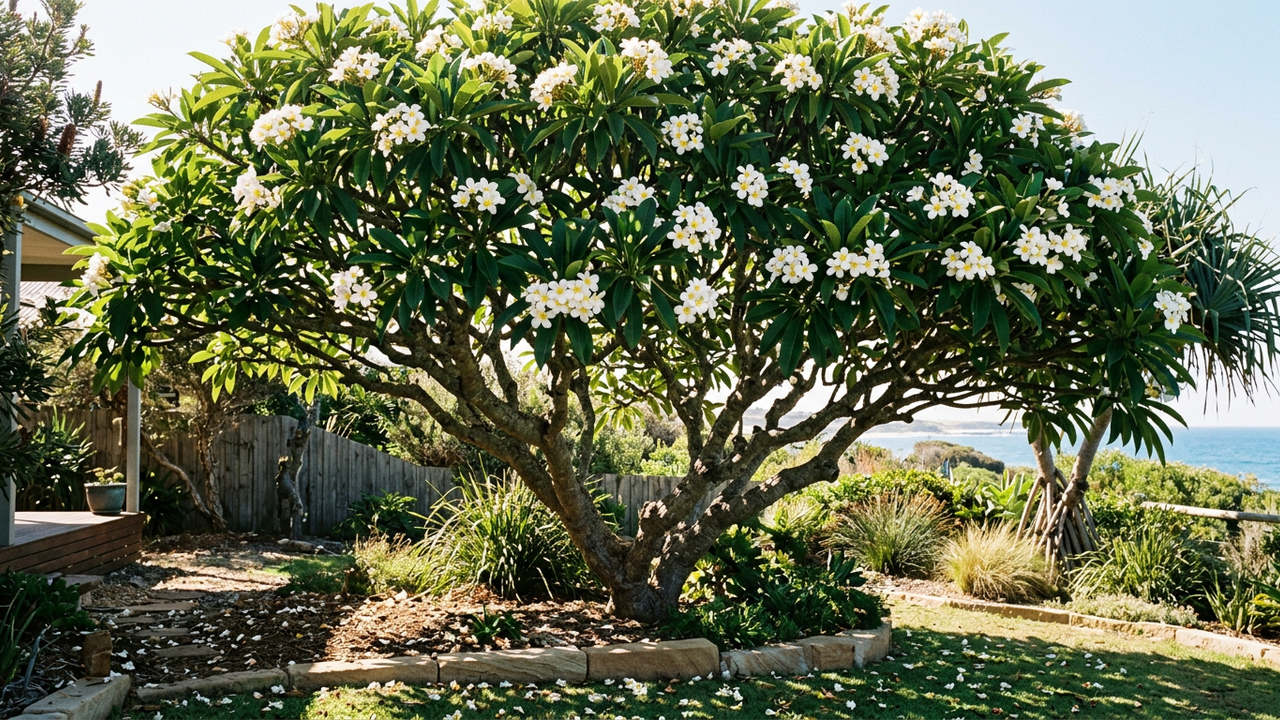
Few trees say “Australian summer” like a frangipani — the bare grey branches of winter giving way to glossy leaves and then those unmistakable, perfumed flowers. They’re one of the most loved and most forgiving trees you can grow in a warm Australian garden. This guide is the starting point: it explains the two very different plants that share the name “frangipani”, the main types and colours you’ll come across, where frangipani grows in Australia, and where to go next for planting, care, propagation and fixing problems.
First: “frangipani” means two different plants
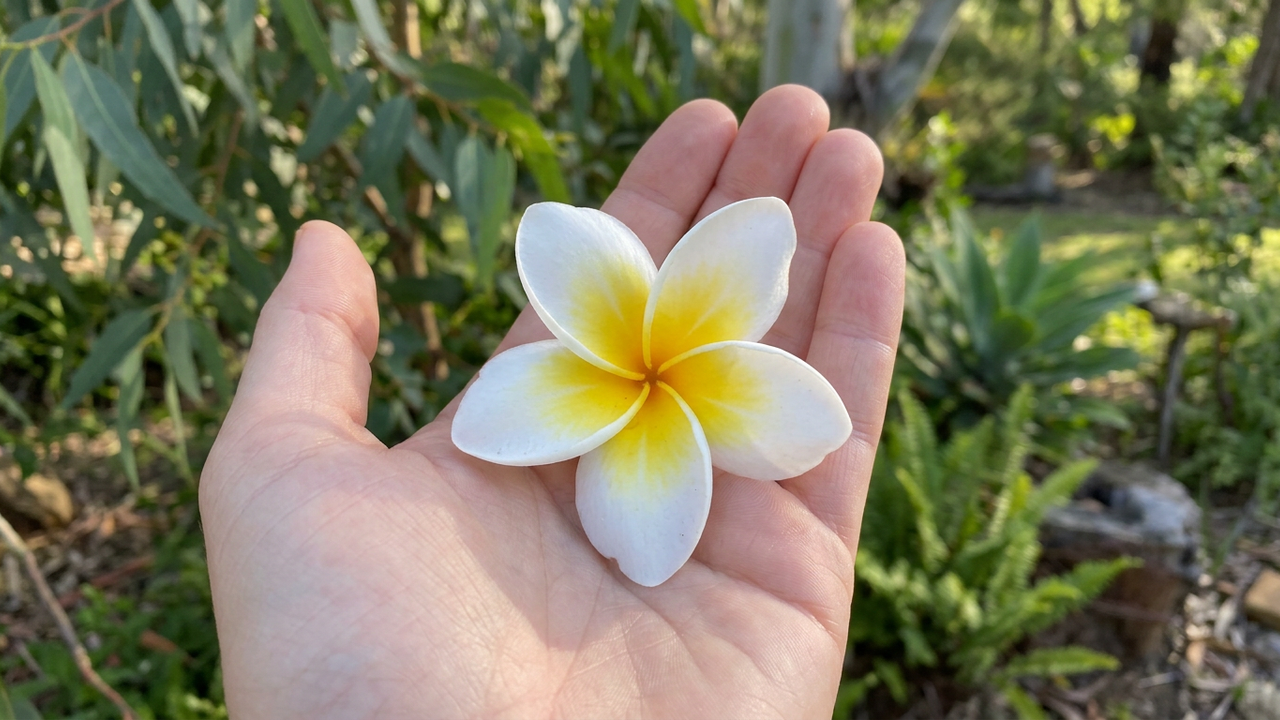
Before you buy, it’s worth knowing that two quite different trees are sold as “frangipani” in Australia:
- Tropical frangipani (Plumeria) — the classic tree with thick, succulent grey branches and waxy, scented flowers. It’s usually deciduous (bare in winter) and frost-tender. This is what most people mean by “frangipani”.
- Native frangipani (Hymenosporum flavum) — an Australian rainforest tree with similar-smelling flowers but a completely different habit: a tall, slim evergreen that handles cold better. It only shares the common name.
| Feature | True frangipani | Native frangipani |
|---|---|---|
| Botanical group | Plumeria | Hymenosporum flavum |
| Origin | Tropical Americas | Eastern Australian rainforests |
| Habit | Spreading, succulent-branched tree | Tall, narrow evergreen tree |
| Winter | Usually deciduous / dormant | Generally evergreen |
| Frost | Frost-tender | Handles moderate frost once established |
| Full guide | This page & the care guides below | Native frangipani guide |
The rest of this guide is about the tropical frangipani (Plumeria). If the Australian native is what you want, head straight to our native frangipani (Hymenosporum flavum) guide.
The main frangipani types and colours
Within Plumeria, three groups do most of the work in Australian gardens: rubra (the classic deciduous tree, source of almost all the colours — white, yellow, pink, red and multicoloured “rainbow” blooms), obtusa (the white-flowered “Singapore” frangipani, evergreen in warm areas), and pudica (the evergreen “Everlasting Love” frangipani that flowers for much of the year). For the full breakdown of types, colours and named cultivars, and help picking one, see our frangipani varieties guide.
Where frangipani grows in Australia
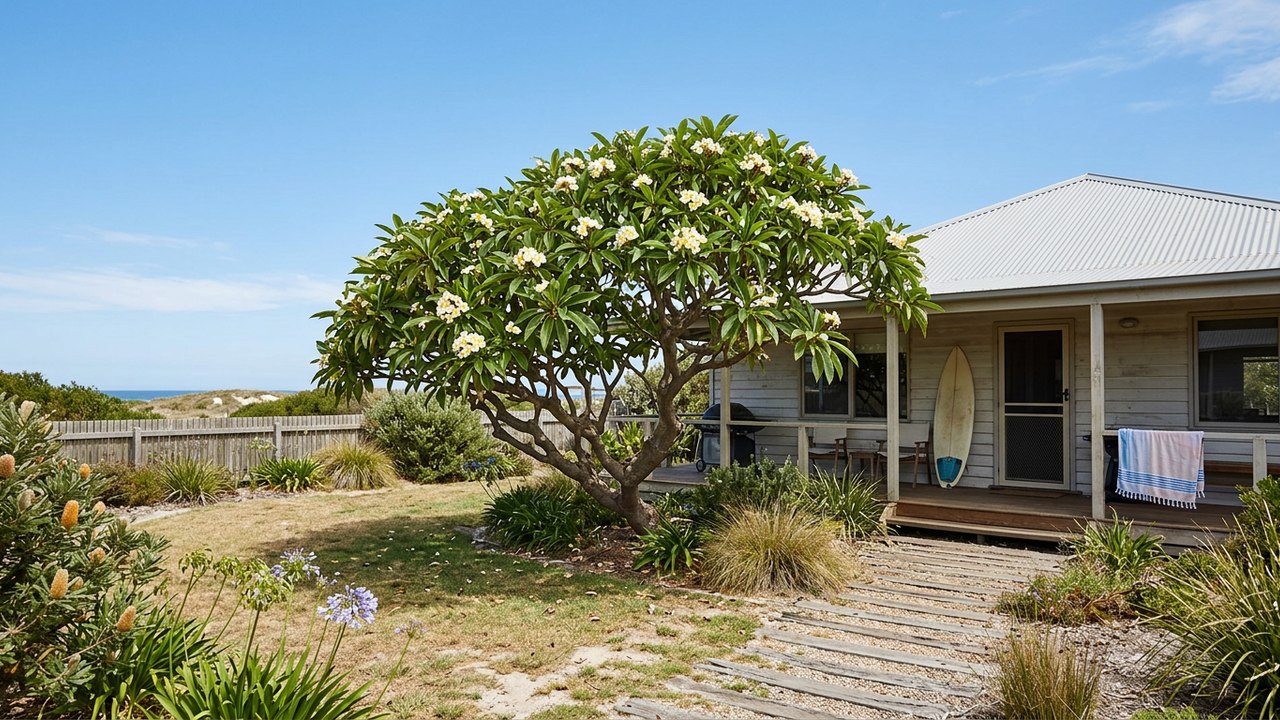
Frangipani is a warm-climate tree — easiest in frost-free coastal, subtropical and tropical gardens, and most at home in Queensland and northern New South Wales. It can be grown further south and inland with care, by choosing the warmest, most sheltered spot or by growing it in a pot that can be moved out of winter cold. The key conditions everywhere are the same: full sun, free-draining soil, warmth, and shelter from hard frost. Our grow & care guide covers this in detail, and a dedicated climate-and-region guide is on the way.
Planting, care and propagation
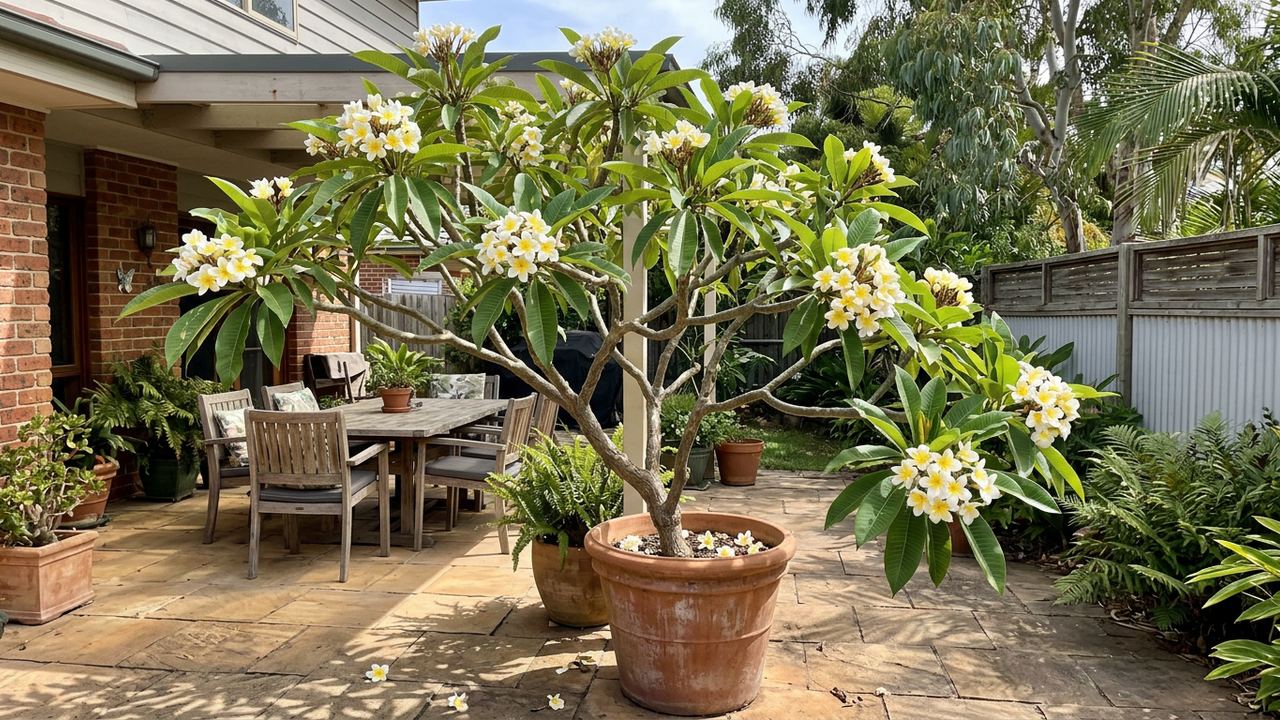
Frangipani asks for little once it’s in the right place: sun, drainage and a dry winter rest. Here’s where to go for each part:
- How to grow & care for frangipani — soil, planting, watering and the seasonal routine.
- Frangipani varieties — types, colours and how to choose.
- Growing frangipani from a cutting — the easy way to make new plants (guide on the way).
- Frangipani in pots & cooler climates, pruning, and fertilising for more flowers — dedicated guides on the way.
Frangipani problems
Most frangipani trouble comes down to cold, wet feet or a few common issues like rust and a reluctance to flower. If something looks wrong — rusty or spotted leaves, soft blackened stems, or no flowers on a mature tree — start with our frangipani problems guide, which routes you to the likely cause and fix.
Buying frangipani
Frangipani is sold everywhere from cheap cuttings and tube stock up to large advanced and specimen trees, with the coloured named varieties costing more than the common white-and-yellow. A dedicated buying-and-prices guide is on the way; in the meantime, the varieties guide will help you decide what to look for.

