
Native Frangipani (Hymenosporum flavum): The Complete Australian Care Guide

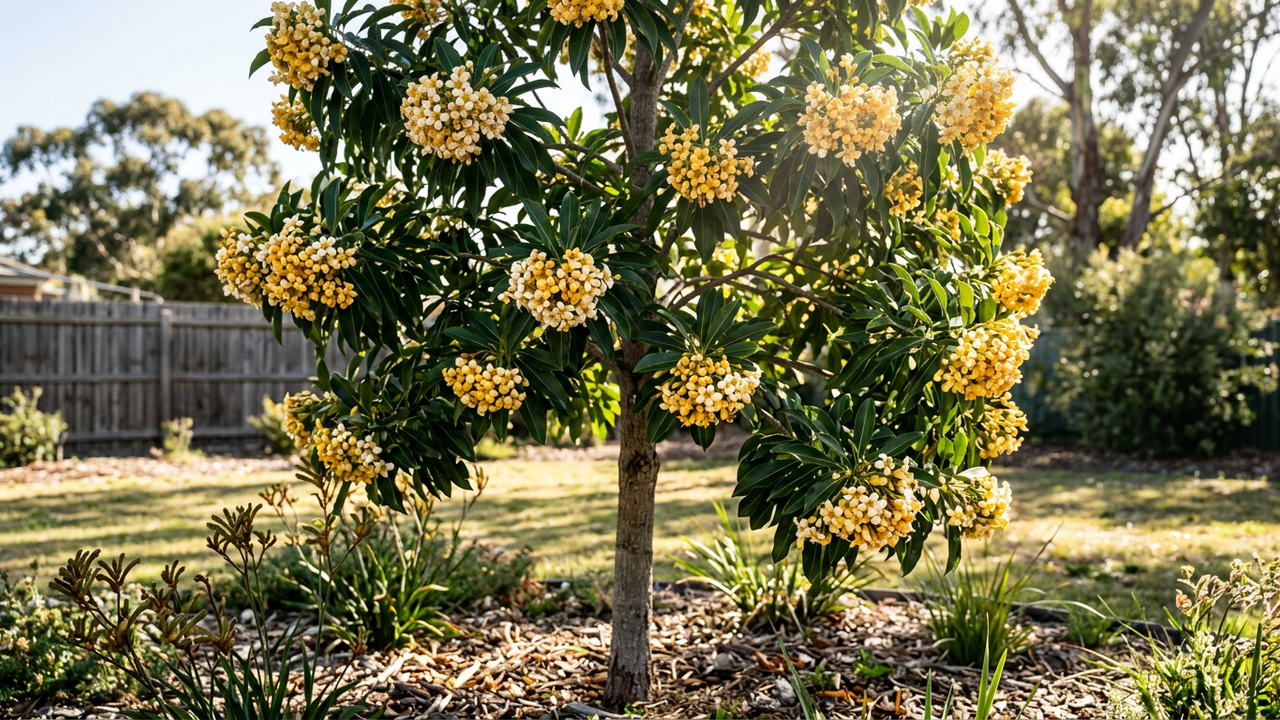
Ask most people to picture a frangipani and they’ll think of the fat, succulent-stemmed tropical tree with waxy flowers. Australia’s native frangipani is a different plant altogether — and in many gardens, a better-behaved one. Hymenosporum flavum is a slender evergreen rainforest tree from the east coast, and in late spring it covers itself in clusters of perfumed flowers that open cream and age to deep gold. The scent carries across a whole backyard on a warm evening.
It shares the common name “frangipani” only because its flowers look and smell similar. Botanically it is not related to the tropical frangipani (Plumeria) at all — it belongs to a different plant family, stays evergreen through winter, and copes with cold far better. This guide covers everything you need to grow it well in an Australian garden.
Native frangipani at a glance
| Botanical name | Hymenosporum flavum |
| Plant family | Pittosporaceae (not Plumeria / Apocynaceae — a different plant) |
| Origin | Rainforests of eastern Australia (Qld & NSW) and New Guinea |
| Habit | Slender, upright evergreen tree |
| Garden size | Commonly about 6–10 m tall in gardens (taller in the wild), fairly narrow |
| Flowers | Fragrant, open cream and age to gold/orange, mainly spring into early summer |
| Evergreen? | Yes — keeps its leaves year-round (unlike deciduous tropical frangipani) |
| Frost | Tolerates moderate frost once established; protect young plants |
| Best position | Full sun for most flowers; shelter from strong wind (branches are brittle) |
Native frangipani vs tropical frangipani — what’s the difference?
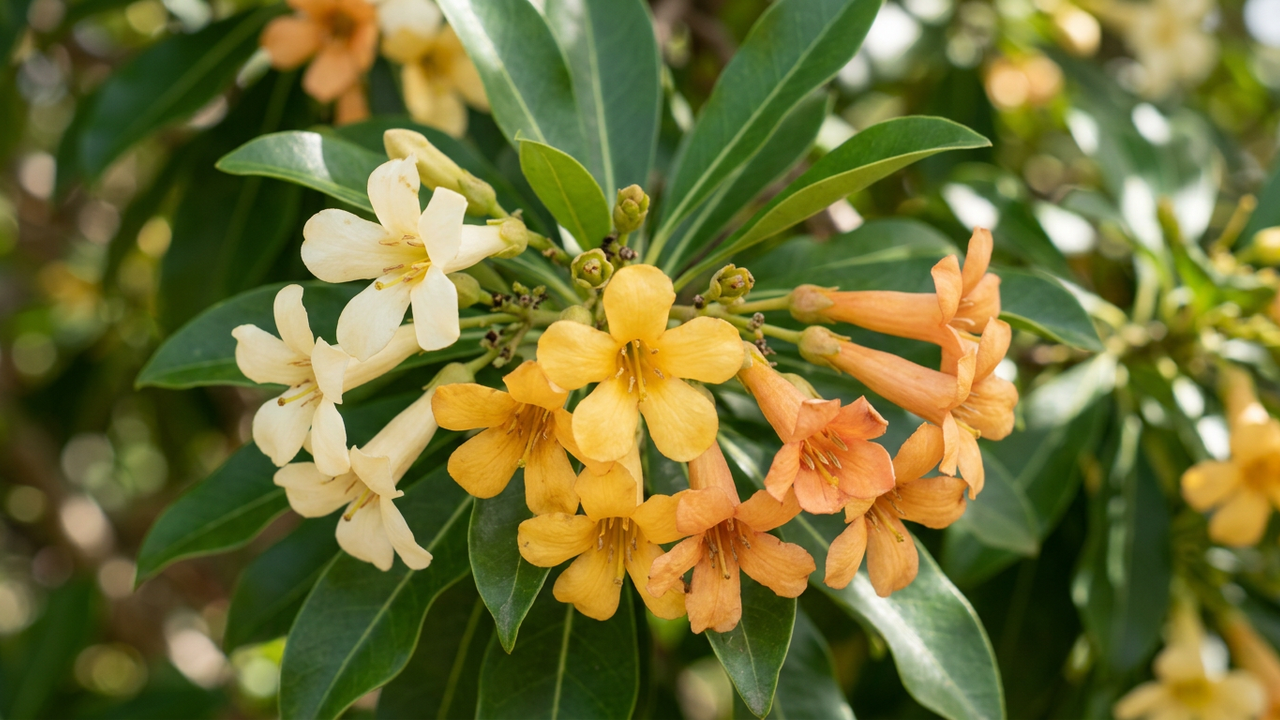
The two plants are easy to confuse by name and by the look of the flowers, but they behave very differently in the garden:
- Family: native frangipani is Hymenosporum flavum (Pittosporaceae); tropical frangipani is Plumeria (Apocynaceae). Different plants entirely.
- Leaves in winter: native frangipani stays evergreen; tropical frangipani usually drops its leaves and goes dormant.
- Cold tolerance: the native handles moderate frost once established; Plumeria is frost-tender.
- Shape: the native grows as a tall, slim tree; tropical frangipani is a lower, spreading, thick-stemmed tree.
If you came here after searching “native frangipani problems” or care, this is the right plant — the Australian native tree. For the tropical Plumeria (the deciduous one with thick stems), see our main frangipani guide.
Where native frangipani grows in Australia
It’s happiest in warm-temperate to subtropical gardens along the east coast, which match its rainforest origins, but it’s more adaptable than tropical frangipani. Because it tolerates moderate frost once it’s established, it can be grown in more southern and inland gardens than Plumeria — though in genuinely cold or heavy-frost areas, young trees still need protection through their first winters, and a warm, sheltered spot gives the best result anywhere.
Rather than going by city, judge your own position: it wants warmth, good drainage, shelter from strong wind, and protection from hard frost while young. A north-facing spot against a wall or among other plants that break the wind is ideal in cooler districts.
Position and soil
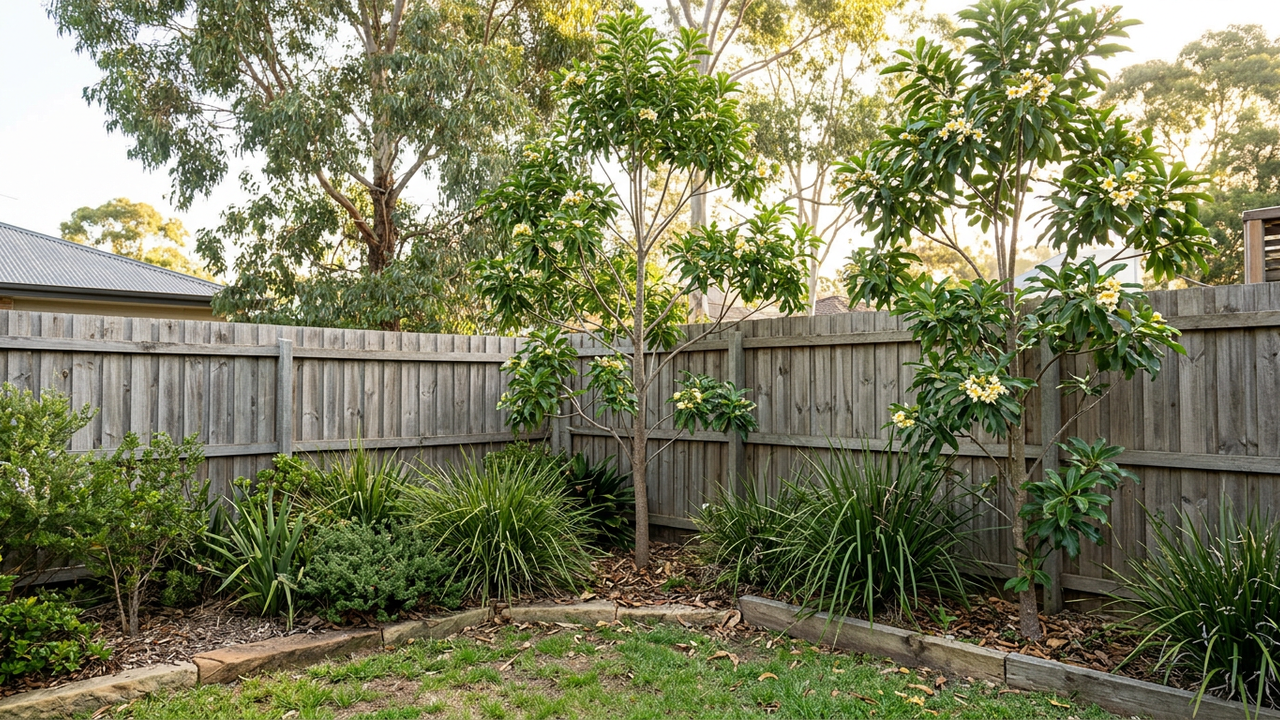
Give native frangipani full sun for the heaviest flowering — it will grow in part shade but flowers less. The two things it really cares about are drainage and shelter. It likes a well-drained soil (neutral to slightly alkaline is fine) and resents wet feet. Its branches are fairly brittle, so a position out of strong, buffeting wind protects both the shape of the tree and the flowers.
Its narrow, upright shape makes it a useful tree for smaller yards, for lining a driveway, or as a fragrant feature near an outdoor living area where you’ll catch the scent. It also suits a screening role when a few are planted in a row, though it isn’t a dense hedge.
How to plant native frangipani
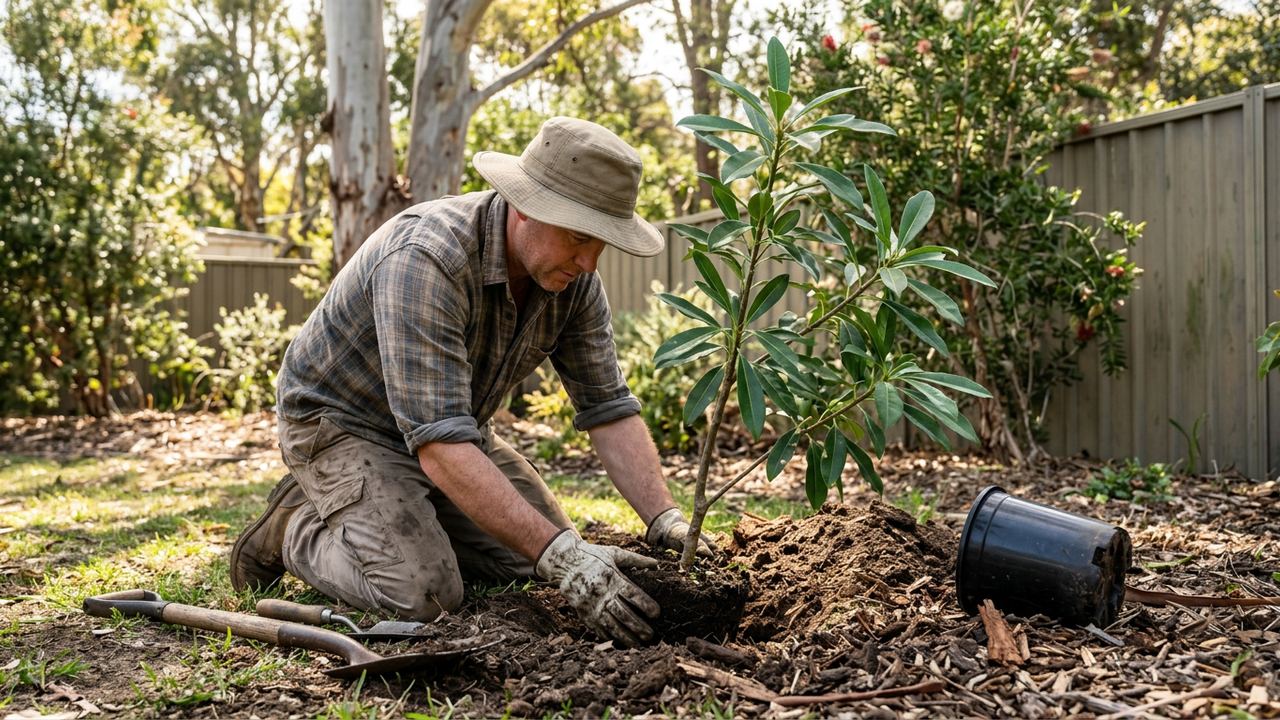
Plant in the warmer months once frost has passed, so the tree establishes before its first winter. Dig a hole twice the width of the pot, loosen the sides, and set the plant at the same depth it sat in the container. Backfill with the existing soil improved with a little compost, firm gently, water in well, and mulch around the base — keeping mulch off the trunk. In heavy or clay soils, plant on a slight mound or raised bed so water drains away from the roots.
Watering
Water regularly through the first one to two summers while the roots establish. After that, native frangipani is reasonably hardy and needs far less — deep, occasional watering in long dry spells is better than frequent light sprinkles. Always let the soil drain; it dislikes sitting wet.
During water restrictions, check your own water provider’s current rules and permitted times — these vary across Australia and change with the seasons. An establishing native tree is usually a permitted use, but confirm locally.
Feeding
Feed in spring with a fertiliser suitable for native plants. Many natives are sensitive to high phosphorus, so a native-specific, low-phosphorus formulation is the safe choice — follow the label rate. A layer of compost and mulch each year does much of the work on its own.
Pruning and shaping
Native frangipani naturally grows tall and slim, so it needs little pruning. If you want a bushier, lower tree, tip-prune the growing points when the plant is young to encourage branching. The best time to prune is just after flowering. Because the wood is brittle, make clean cuts and avoid heavy, hard pruning of old wood.
Flowers, fragrance and wildlife
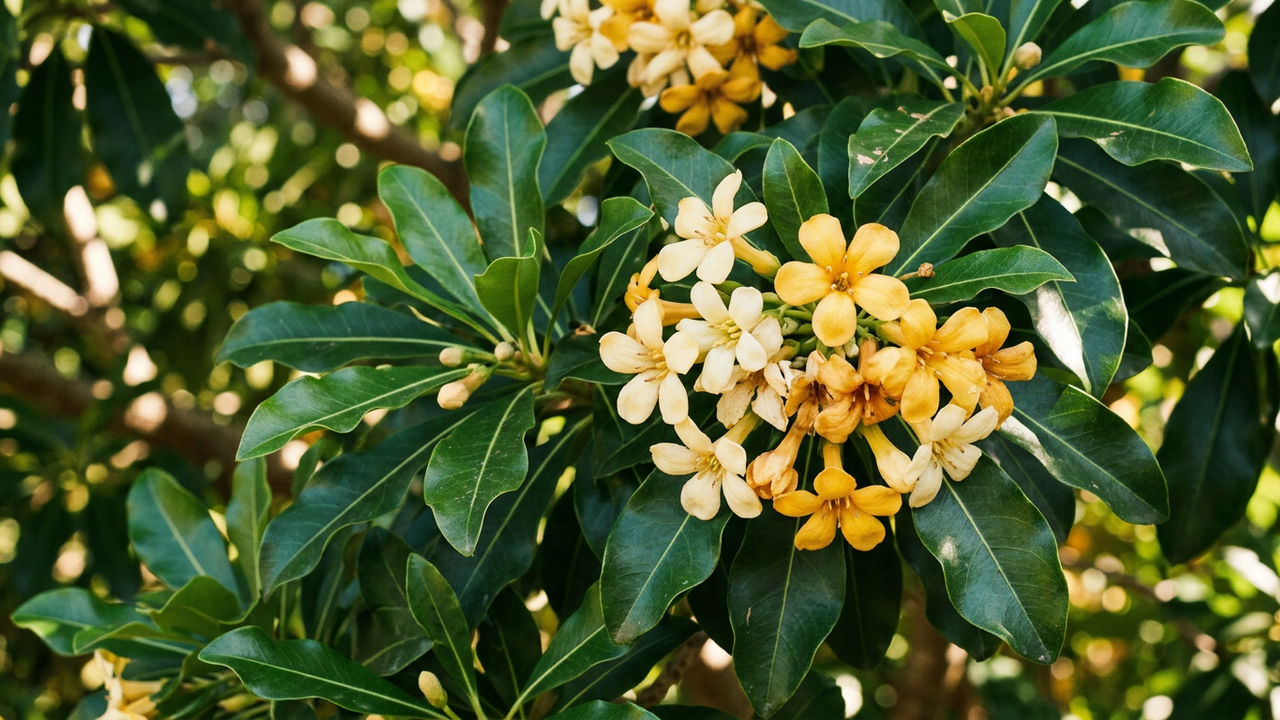
The main show comes in late spring into early summer, when clusters of tubular flowers open creamy-white and deepen to gold and apricot as they age, so a tree in full bloom carries several shades at once. The perfume is the real drawcard — strongest in the warmth of the day and into the evening. The flowers draw in nectar-feeding birds and insects, which makes it a good choice for a wildlife-friendly Australian garden.
Is native frangipani hardy? Common issues
It’s a tough, largely trouble-free tree once established. Most problems trace back to position rather than pests: wet, poorly drained soil can rot the roots, hard frost can burn young growth, and an exposed, windy spot can snap brittle branches and shorten the flowering display. Get drainage, shelter and frost protection right while the tree is young and it will mostly look after itself. If a tree looks unwell, start with those growing conditions before reaching for a spray.
Buying native frangipani: sizes and what to pay
Native frangipani is widely sold at Australian nurseries and online. As a rough guide to the sizes you’ll see (always confirm the current price and that the plant can be delivered to your area):
- Tube stock / small pots — the cheapest way in, often from around $15; a little patience needed while they grow.
- Standard nursery pots (around 200–300 mm) — an established young tree, commonly in the tens of dollars.
- Advanced container trees (larger pots up to 100 L) — an instant-impact tree, running into the hundreds of dollars.
- Specimen / ex-ground trees — a mature tree for immediate effect; priced well above the plant alone once extraction, transport and planting are added.
For a young, fast-growing tree, a standard pot size is usually the best value — native frangipani grows quickly once settled, so you don’t wait long for height.
For more Australian natives that suit a similar role, see our guide to Australian native plants.
FAQ
Is native frangipani the same as normal frangipani?
No. Native frangipani (Hymenosporum flavum) is a different plant from the tropical frangipani (Plumeria). They share a common name because the flowers look and smell similar, but they are in different plant families, and the native stays evergreen and handles cold better.
How fast does native frangipani grow?
Quite fast once established, especially in a warm, sheltered, well-drained spot in full sun. That quick growth is why a standard-pot plant is good value — it makes height without a long wait.
Will native frangipani survive frost?
An established tree tolerates moderate frost. Young plants are more tender, so protect them through their first winters and plant in a warm, sheltered position in colder districts.
Is it suitable for a small garden?
Yes — it is naturally tall and narrow rather than wide-spreading, so it fits narrow spaces, driveways and courtyards, and makes a fragrant feature near outdoor living areas. Tip-prune when young if you want a bushier shape.
Plant availability, sizes and prices vary by nursery and season — always confirm the current price and delivery before buying.

