
Frangipani Varieties in Australia: Types, Colours & How to Choose

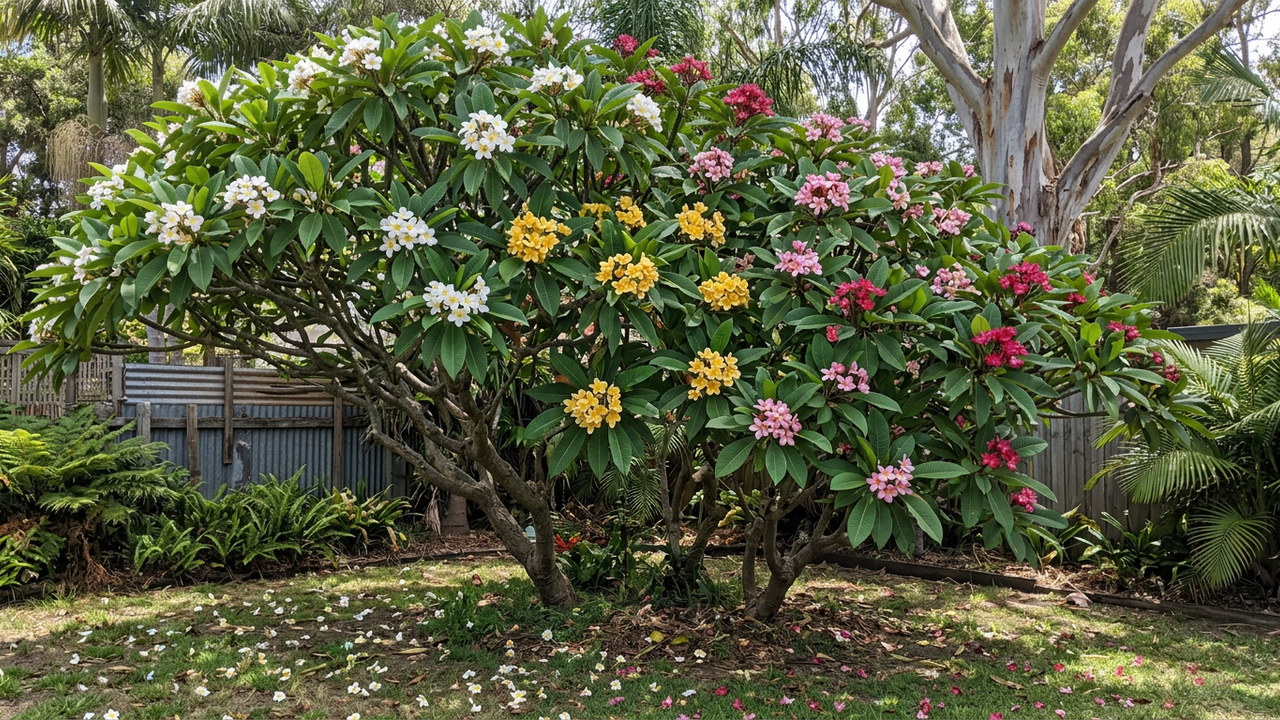
Walk down any street in a warm part of Australia in summer and the frangipanis give themselves away by scent before you even see them. What you might not realise is how much variety sits behind that one familiar name. Some frangipanis drop every leaf in winter; others stay green all year. Some come only in white and yellow; others flower in pink, red, apricot or a swirl of several colours in a single bloom. This guide sorts out the main types grown in Australia so you can pick the right one for your garden.
Almost all the frangipanis sold here belong to the genus Plumeria — the classic tropical tree. (Australia also has a native frangipani, which is a completely different plant; we cover the native frangipani (Hymenosporum flavum) separately.) Within Plumeria, three groups do most of the work in Australian gardens: rubra, obtusa and pudica.
Plumeria rubra — the classic frangipani
This is the frangipani most Australians picture: a spreading tree with thick, grey, succulent branches that drops its leaves over winter and bursts back into leaf and flower through the warm months. Nearly all the named, coloured frangipanis come from Plumeria rubra, which is why it offers by far the widest colour range — from pure white and soft cream, through butter yellow, into every shade of pink, deep red and cerise, and the prized multicoloured “rainbow” blooms that blend several tones in one flower. If colour is what you’re after, rubra is the group to look at. It’s deciduous, so expect bare branches in winter — that’s normal, not a sign of trouble.
Plumeria obtusa — the Singapore frangipani
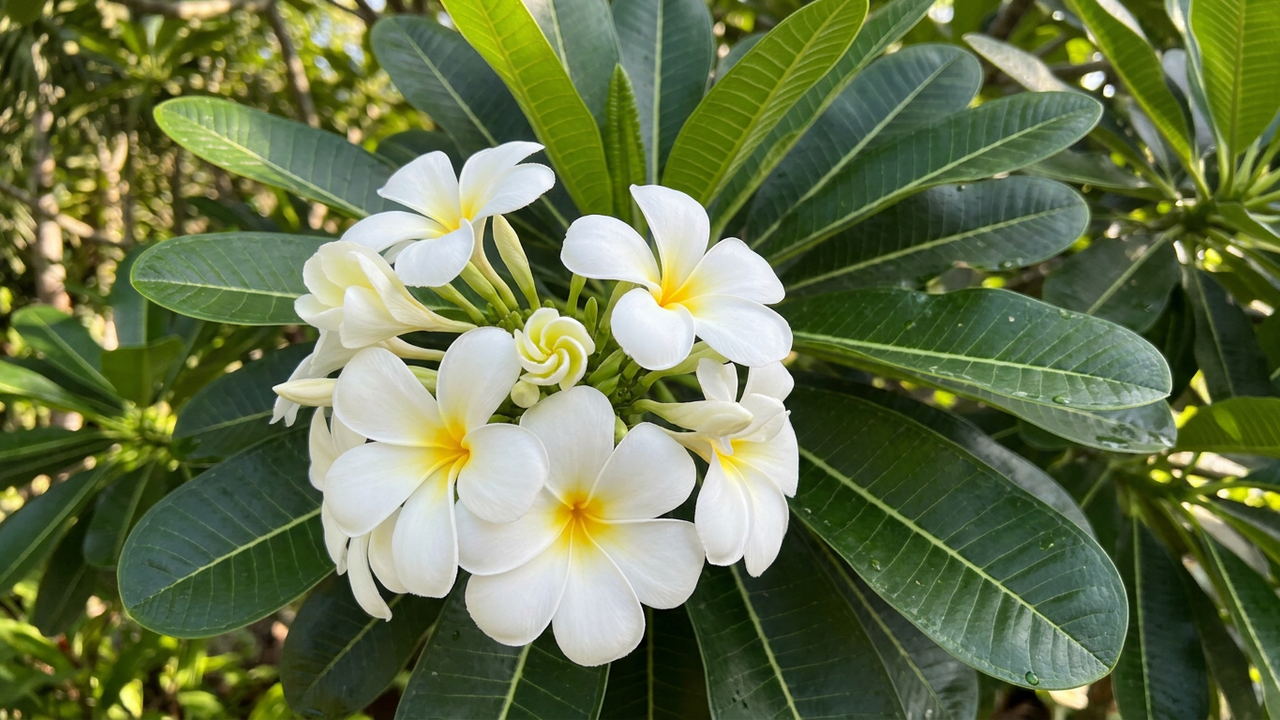
The Singapore frangipani (Plumeria obtusa) is the one to choose if you don’t want a bare tree in winter. It has glossy, rounded, darker leaves and typically pure white flowers with a yellow centre. In genuinely tropical and warm subtropical gardens it stays evergreen or close to it; in cooler districts it behaves more semi-deciduous and is less cold-hardy than rubra, so it suits the warmer parts of the country best. There’s also a dwarf form, “Petite Pink”, with small pale-pink flowers, useful for pots and smaller spaces.
Plumeria pudica — the evergreen frangipani
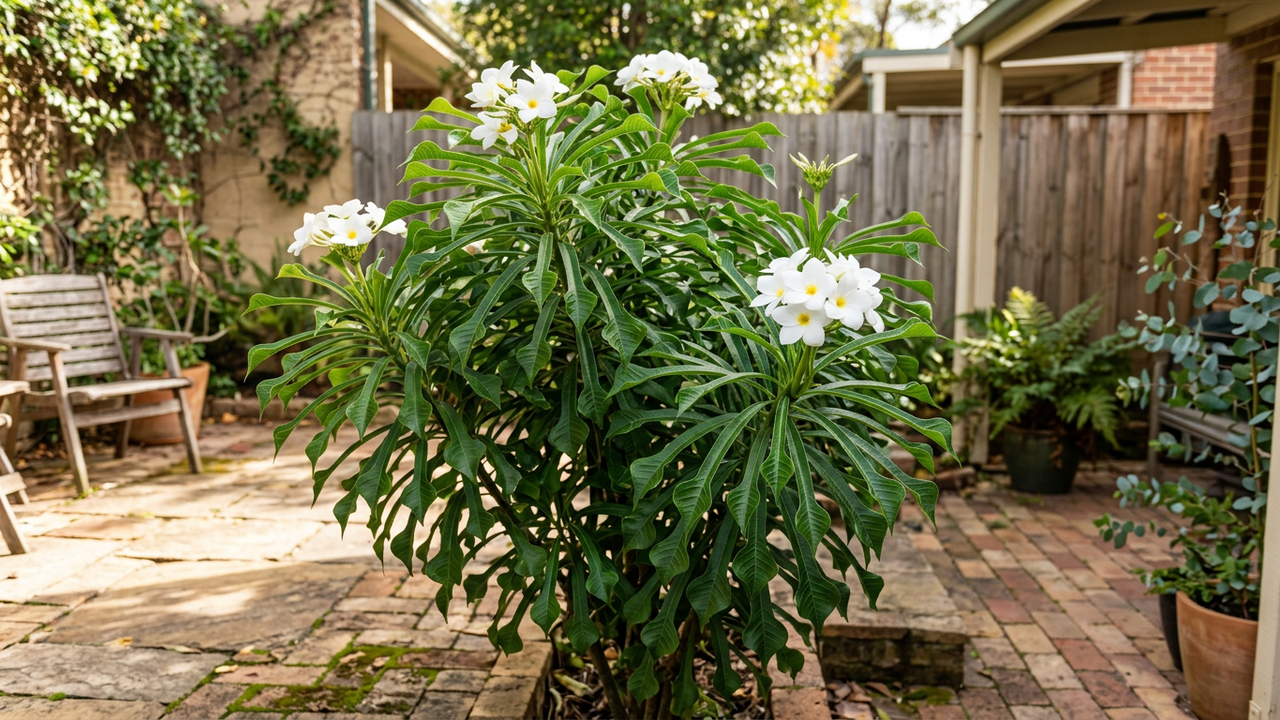
Pudica has become very popular in Australia, especially in the southern states, and it’s easy to see why. It keeps its distinctive long, fiddle-shaped leaves and flowers for much of the year, it grows quickly, and it’s a generous bloomer — usually in white with a yellow throat. It’s sometimes sold as “Everlasting Love” or the “hammerhead” frangipani after its leaf shape. If you want a frangipani that stays green and flowers for longer, pudica is the pick.
The frangipani colour range
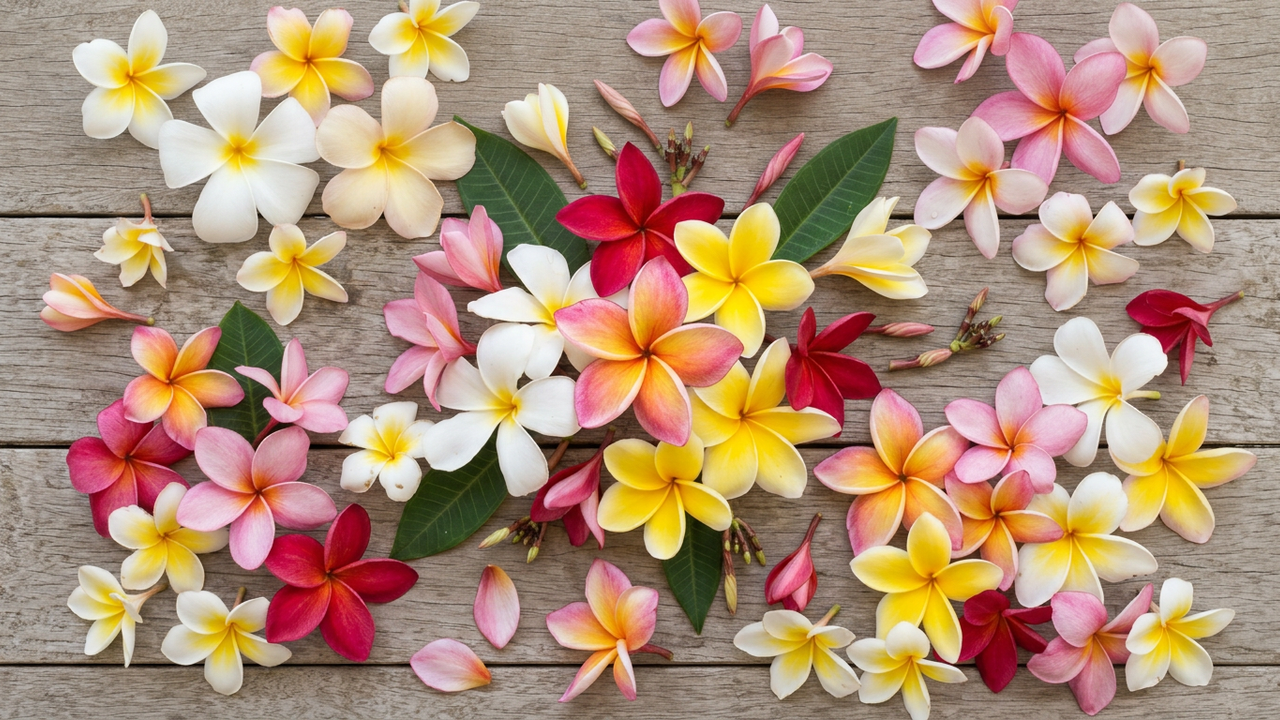
Because most coloured cultivars come from rubra, the colour you choose usually means choosing a named rubra variety. In broad terms you’ll find:
- White & yellow — the most common and often the cheapest; the classic white-petal, yellow-centre look.
- Pink to deep red — from soft blush through hot pink to dark red and cerise.
- Apricot & orange tones — warmer blends that shift as the flower ages.
- Rainbow / tricolour — several colours in one bloom; among the most sought-after.
- Named collector cultivars — unusual colours such as the lilac-silver “Darwin Blues” or very dark reds like “Black Red” turn up at specialist growers.
One practical note worth knowing before you buy by colour: the common white-and-yellow types are generally the toughest, and some growers find pink and red rubra varieties shrug off frangipani rust a little better than the white and yellow ones — though none are immune.
How to choose the right frangipani
- Want the widest colour choice? Go rubra and pick the named colour you like.
- Don’t want a bare tree in winter? Choose pudica (stays green, flowers long) or, in warm areas, Singapore obtusa.
- Gardening in a cooler district? Rubra is the most cold-tolerant of the three; still give it a warm, sheltered spot, or grow in a pot you can move.
- Small space or pot? Look at dwarf forms like obtusa “Petite Pink”, or keep a pudica or rubra container-grown.
Whichever you choose, the growing essentials are much the same — full sun, free-draining soil and warmth. And remember the Australian native frangipani (Hymenosporum flavum) is a separate tree if that’s what you were after.
FAQ
What is the most common frangipani in Australia?
Plumeria rubra. It is the classic deciduous frangipani and the source of almost all the coloured, named varieties, from white and yellow to pink, red and rainbow.
Which frangipani stays green all year?
Plumeria pudica (the evergreen “Everlasting Love” frangipani) holds its leaves and flowers for much of the year. Singapore frangipani (Plumeria obtusa) is evergreen in warm, tropical areas but more semi-deciduous in cooler districts.
What is a rainbow frangipani?
A multicoloured Plumeria rubra cultivar whose flowers blend several colours — often pink, yellow and apricot — in a single bloom. They are among the most sought-after.
Which frangipani colour is hardiest?
The common white-and-yellow types are generally toughest and cheapest. Some growers find pink and red rubra varieties resist frangipani rust slightly better, but no variety is completely immune.
Variety availability and names vary by nursery and season — confirm what’s in stock locally before you buy.
This guide is part of our complete Frangipani in Australia guide.


