
How to Grow & Care for Frangipani in Australia

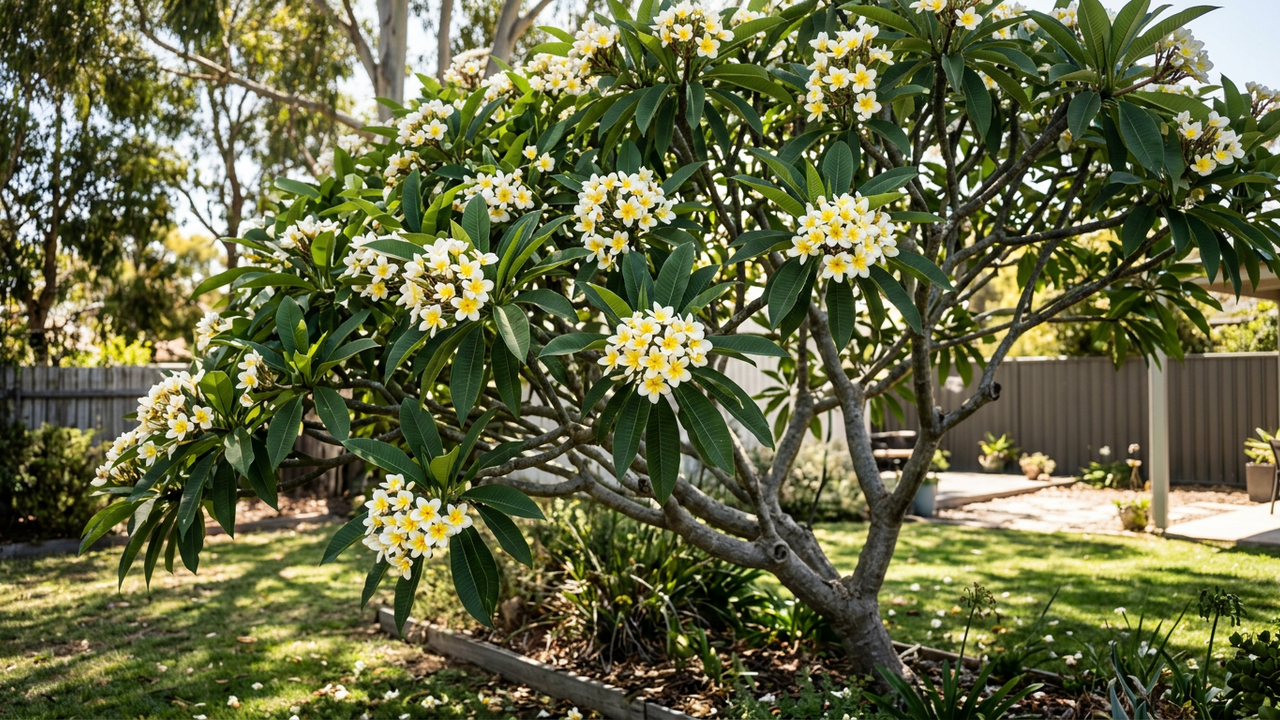
Frangipani is one of the easiest trees to love and, once it’s in the right spot, one of the easiest to grow. It asks for surprisingly little: sun, soil that drains, warmth, and the patience to leave it alone over winter. Get those right and a frangipani will reward you with decades of scented summer flowers. This guide covers the whole routine — where it grows, how to plant it, how to water it, and what’s normal through the seasons — and points you to our detailed guides for feeding, pruning and problem-solving.
Everything here is about the tropical frangipani, Plumeria. If you’re after the Australian native frangipani (Hymenosporum flavum), that’s a different tree with its own guide. Not sure which type suits you? Start with our frangipani varieties guide.
Where frangipani grows in Australia
Frangipani is a warm-climate tree. It’s at its easiest in frost-free temperate, subtropical and tropical gardens — the warm coast and the north are its natural home. The further you get into cold, frost-prone districts, the more care it takes: hard frost damages the soft stems, and cold, wet roots over winter are the quickest way to lose a tree.
Rather than judging by your city, judge your own spot. Frangipani wants warmth, full sun, free drainage and shelter from frost and cold wind. In cooler or inland areas you can still grow one well by choosing the warmest microclimate you have — a north-facing position against a brick or masonry wall that holds the day’s heat is ideal — or by growing it in a pot you can move somewhere sheltered over winter. Our guides to growing frangipani in pots and frangipani by Australian climate go deeper on cooler-climate growing.
Soil and drainage
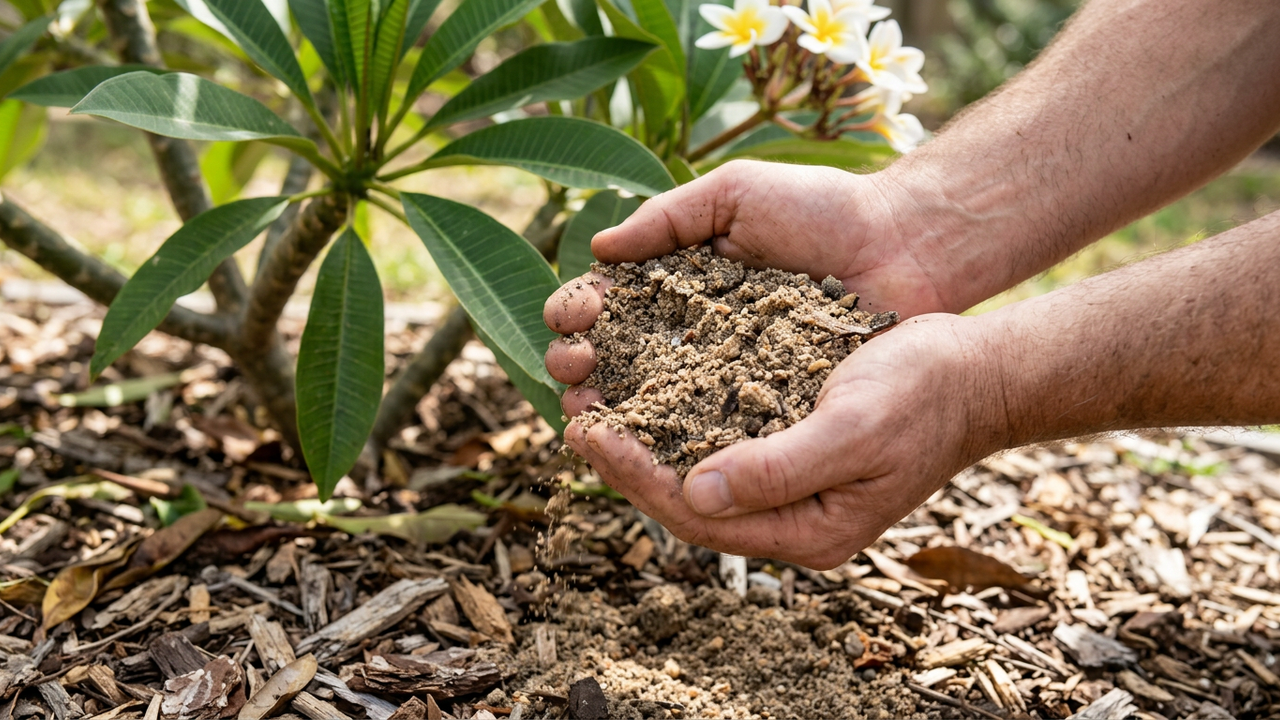
If there’s one thing frangipani won’t forgive, it’s wet feet. Free-draining soil is the single most important condition. A sandy or gravelly loam is perfect; heavy clay that holds water is the hardest situation, and the fix is to raise the planting area — a mound or raised bed — so water drains away from the roots rather than pooling around them. Frangipani isn’t fussy about soil richness, but it must drain.
How to plant a frangipani
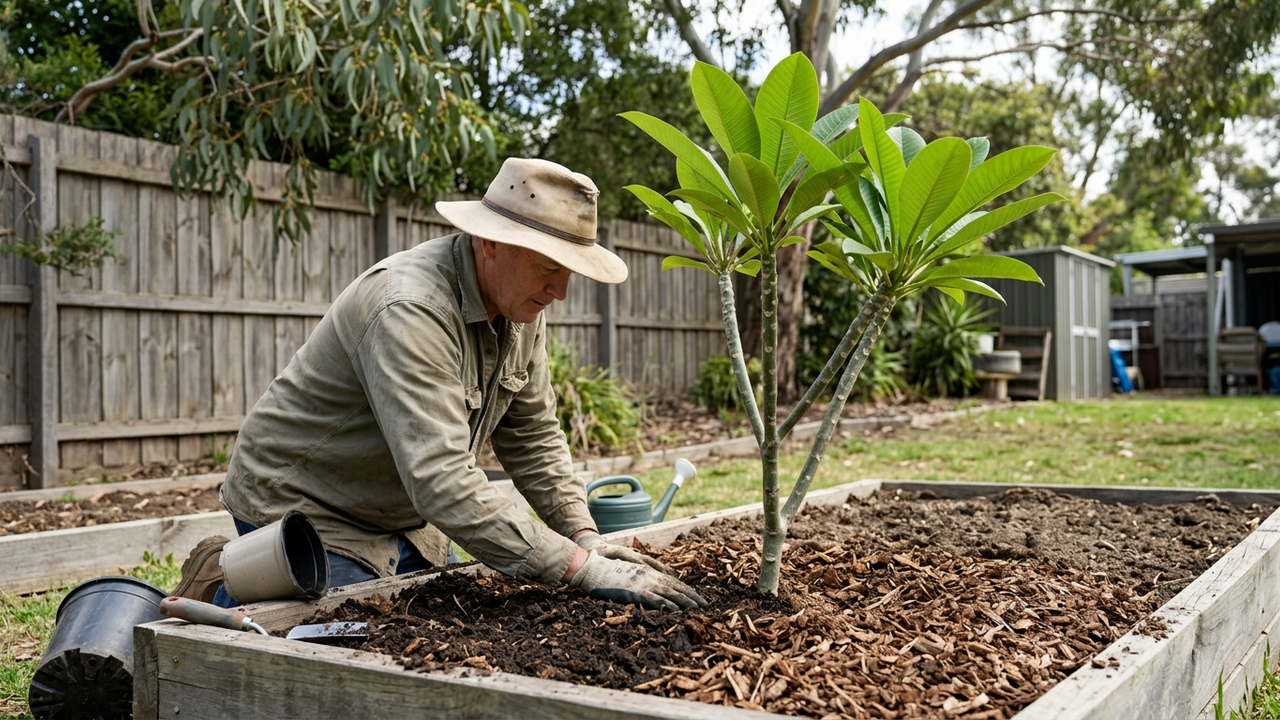
Plant in the warm months, once any frost risk has passed, so the tree settles in before the next winter. In temperate and Mediterranean areas early spring is a good window; in cold districts, wait until the weather has genuinely warmed. Dig a hole a little wider than the root ball, set the plant at the same depth it was in its pot, backfill with free-draining soil, firm gently and water in. Mulch around the base to keep moisture even, but keep the mulch off the trunk. If drainage is any concern, plant on a raised mound from the start.
Frangipani is famously easy to start from a cutting, too — a dedicated guide to growing frangipani from a cutting is on the way.
Watering
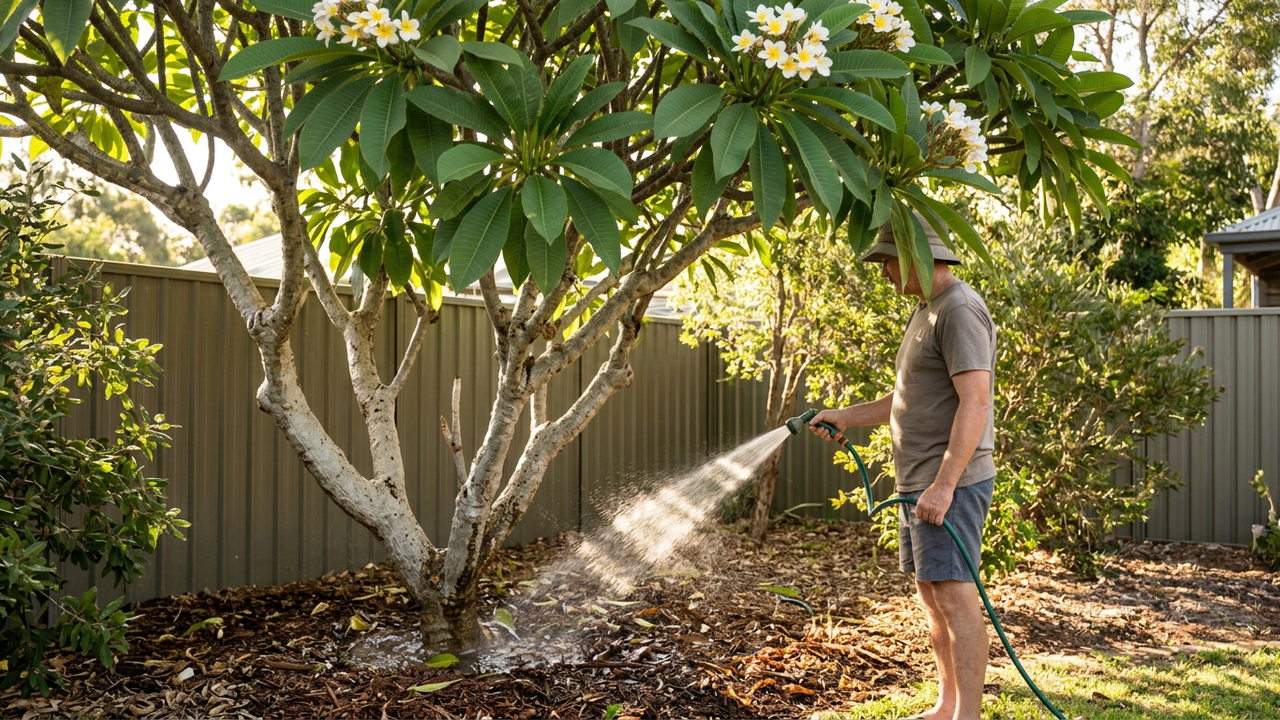
While a frangipani is establishing — its first one to two summers — water it regularly so the roots can get away. Once established, it’s genuinely drought, heat and even salt tolerant, and needs far less: a deep soak now and then in a long dry spell beats frequent light watering.
The one rule that saves trees: don’t water a dormant, leafless frangipani over winter. With no leaves, it’s using almost no water, and soaking cold soil around the roots is a common cause of stem and root rot. Ease right off as the tree drops its leaves and start again as it leafs up in spring. During water restrictions, check your own water provider’s current rules and permitted times — these vary across Australia and change by season.
Feeding and flowering (in brief)
Frangipani flowers on warmth and sunlight more than anything you can pour on it, but a feed through the growing season helps. In short: feed in the warm months, favour a fertiliser higher in phosphorus and potassium rather than one high in nitrogen (too much nitrogen gives you leaves at the expense of flowers), and don’t feed a dormant winter tree. Our detailed frangipani fertilising and flowering guides are on the way; if an established tree simply won’t bloom, that troubleshooting guide is coming too.
Pruning (in brief)
Frangipani needs very little pruning — mostly to shape it, reduce height, or remove damaged wood. The best time is the warm season, and every healthy piece you remove is a potential new plant from a cutting. A full pruning guide is on the way.
What’s normal through the seasons
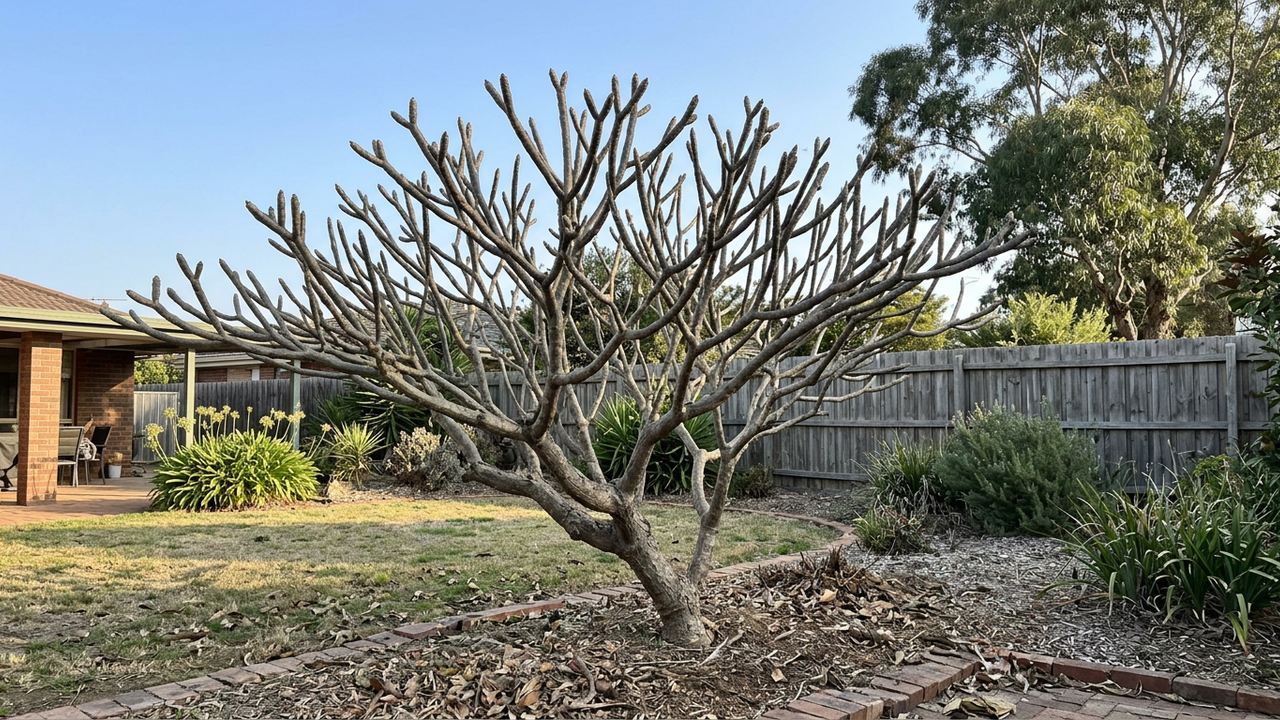
Most common frangipanis are deciduous, so a bare tree in winter is completely normal — not a sign of trouble. Through spring the tree leafs up; summer brings the flush of scented flowers; autumn winds things down; and in winter it rests, leafless, asking for nothing. The biggest seasonal mistakes are watering or feeding during that winter rest, and panicking at the normal bare-branch stage. Leave it be and it comes back.
If your tree shows genuine signs of trouble during the growing season — spotted or rusty leaves, soft blackened stems, or no flowers on a mature tree — work through our frangipani problems guide.
FAQ
How much sun does a frangipani need?
As much as you can give it. Full sun produces the best growth and the most flowers; in too much shade a frangipani grows leggy and flowers poorly.
Why are the leaves falling off my frangipani in winter?
That is normal. Most frangipanis are deciduous and drop their leaves over winter, resting until spring. Don’t water or feed the bare tree — just let it rest.
How often should I water an established frangipani?
Infrequently. Once established it is drought tolerant, so a deep soak during long dry spells is enough in the growing season, and little to none over the leafless winter.
Can I grow frangipani in a cold part of Australia?
Yes, with care. Choose the warmest, most sheltered spot (a sunny north-facing wall), protect young trees from frost, or grow in a pot you can move. The deciduous rubra types are the most cold-tolerant.
This guide is part of our complete Frangipani in Australia guide.


