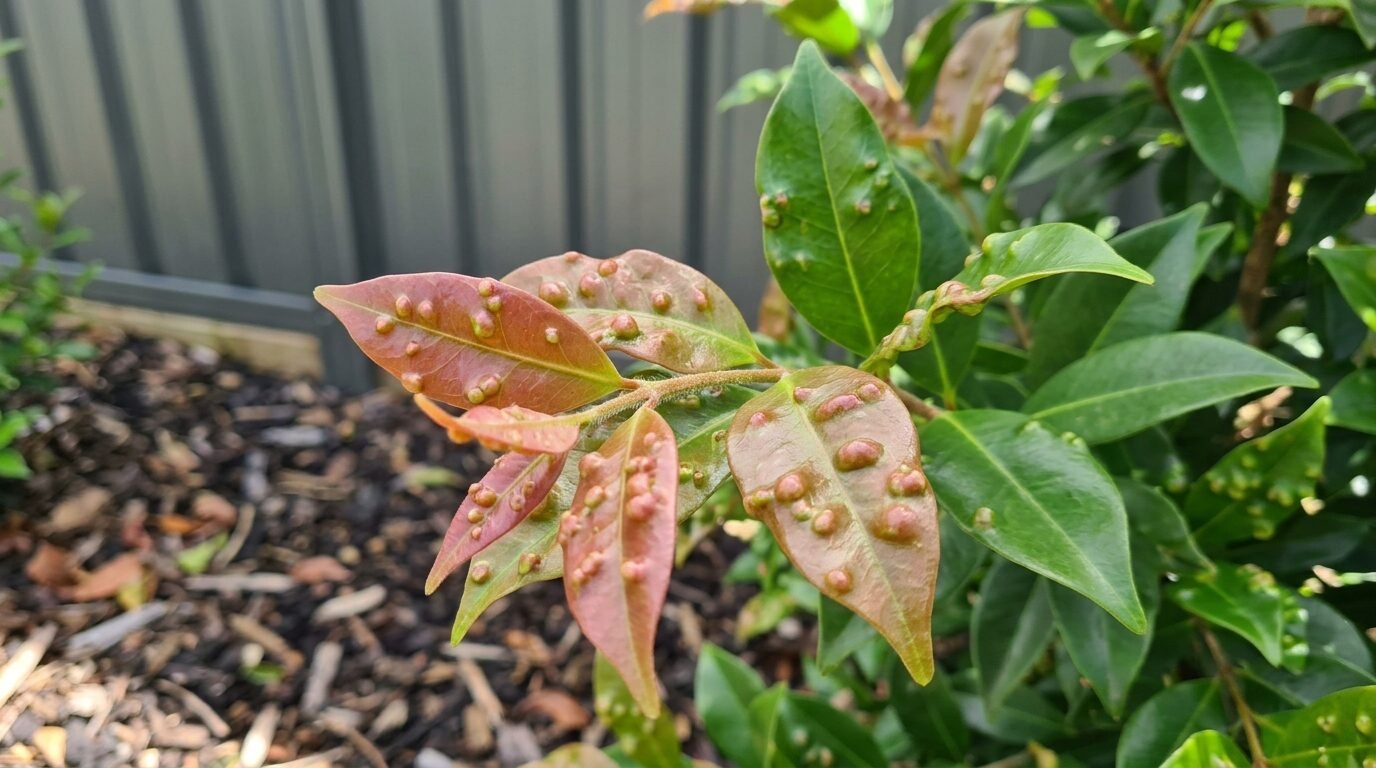
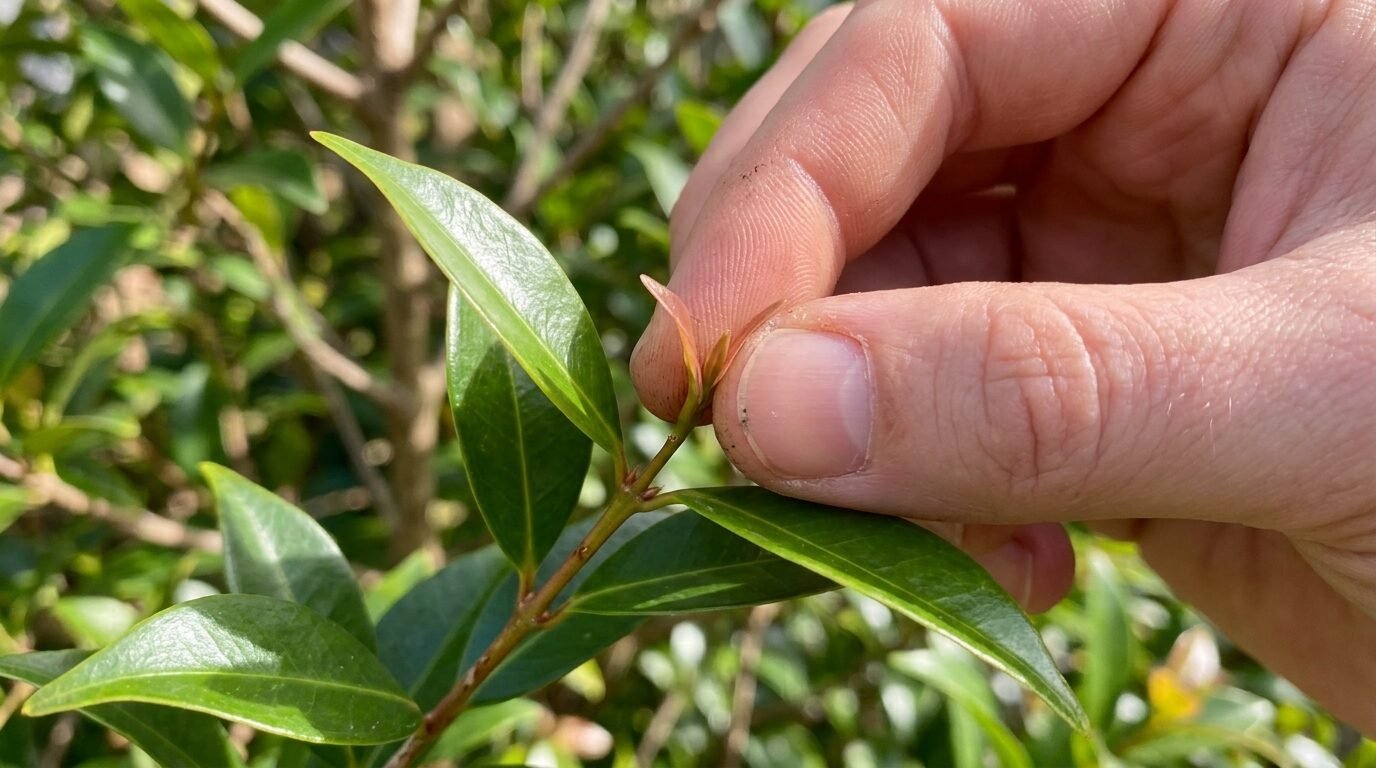
Those pimple-like bumps on new Lilly Pilly leaves are caused by the pimple psyllid, a tiny native sap-sucking insect that lays eggs in the soft new growth. The feeding makes the leaf tissue swell into little galls. It is mostly cosmetic and only affects new leaves, not older ones. Manage it by pruning off affected new growth, keeping the plant healthy and vigorous, and choosing psyllid-resistant varieties. Established hedges tolerate it well.
✔ How this guide was checked
This guide is based on the known biology of the Lilly Pilly pimple psyllid and standard horticultural management for Syzygium and Acmena hedges in Australia. We’ve kept chemical advice general and favoured cultural control (pruning, vigour, resistant varieties), and flagged which Lilly Pilly types are naturally less affected.
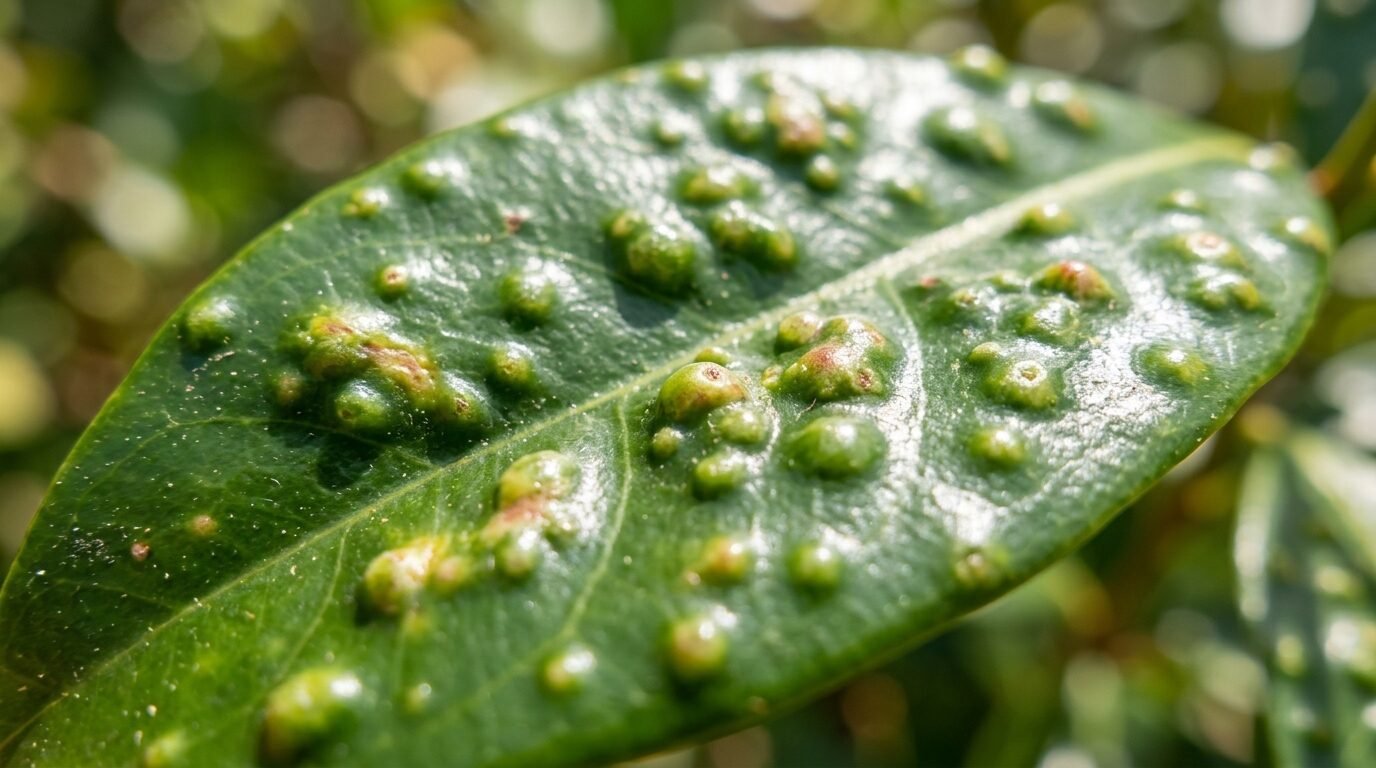
Macro of a Lilly Pilly leaf covered in pimple psyllid galls
What the pimples actually are
The raised bumps — sometimes red, sometimes green or purple — are galls, not a disease. A female psyllid lays eggs on the soft, unopened new leaves. When the nymph hatches and feeds, the leaf grows a small raised pocket of tissue (the pimple) around it. Once that leaf hardens off it can’t be re-infested — which is why damage only ever shows on fresh growth.
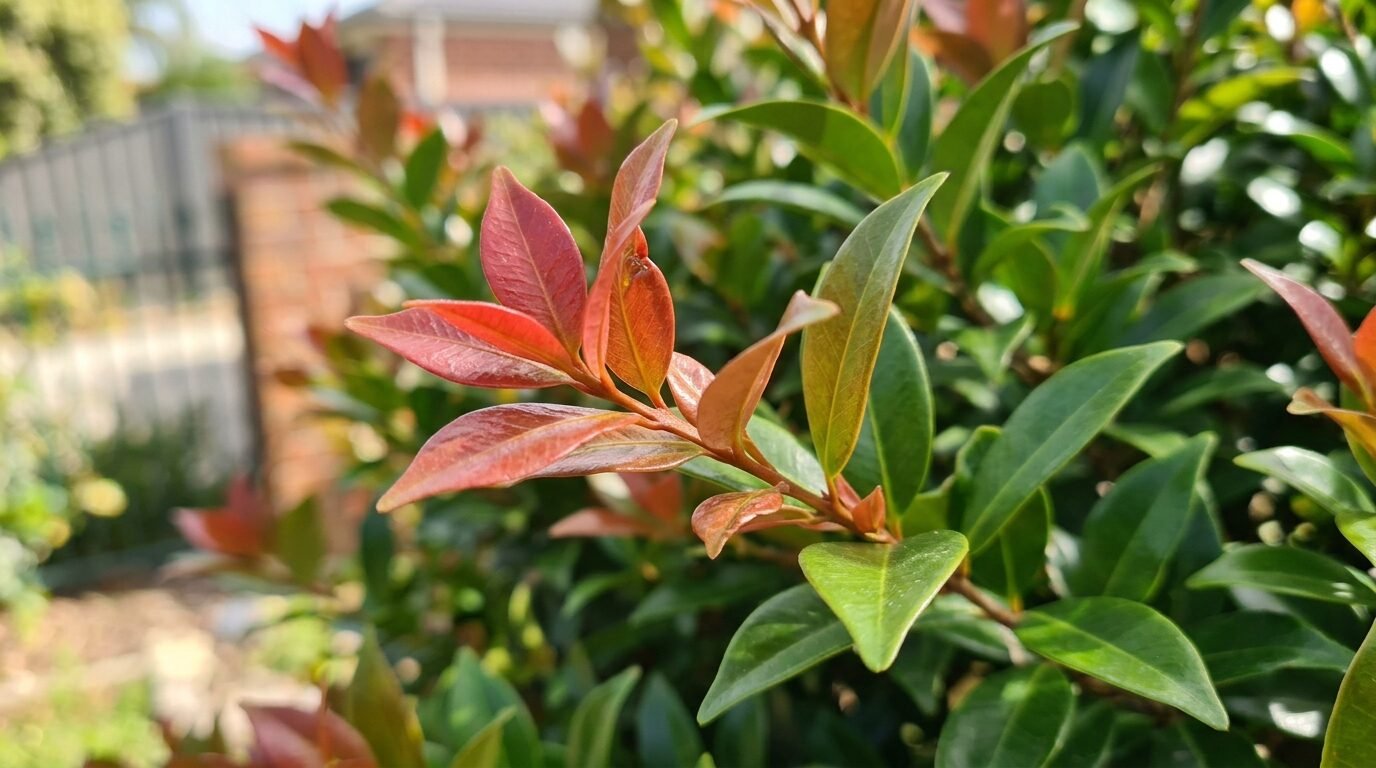
Bronze-red new growth flush on an Australian Lilly Pilly hedge
Which Lilly Pillies get it worst?
Susceptibility varies a lot, and it’s the biggest reason to choose your variety carefully:
Type
Psyllid susceptibility
Syzygium australe (common brush cherry forms)
Often the most affected, especially seedling-grown plants
Syzygium smithii / Acmena smithii
Generally much more resistant
Bred cultivars (Resilience, Backyard Bliss, Bush Christmas)
For an established, healthy hedge, psyllid is a cosmetic nuisance, not a real threat. The plant keeps growing and older foliage stays clean. Heavy, repeated infestations on young plants can distort and bronze new growth and slow things a little, but they rarely kill a Lilly Pilly. The goal is to keep it in check, not eradicate it.
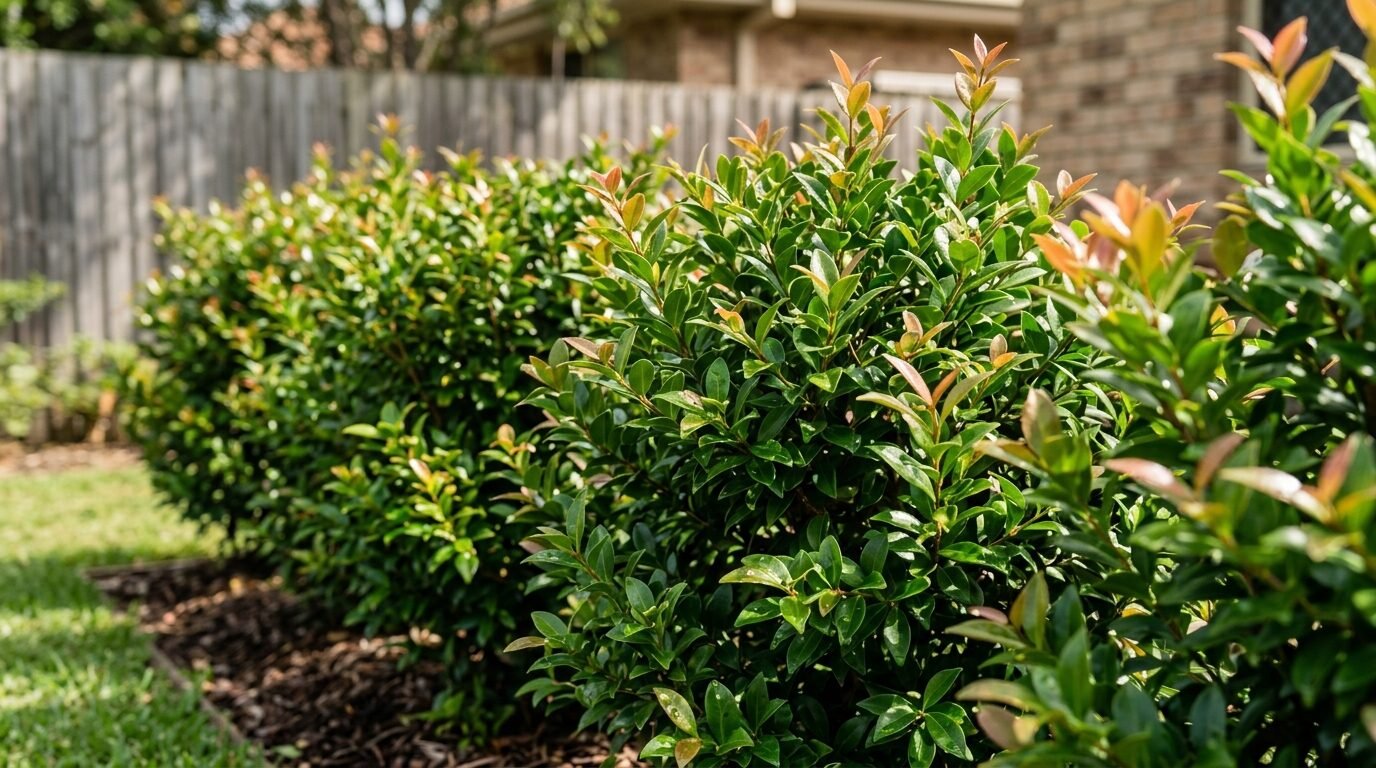
Tip-pruning affected new growth off a Lilly Pilly with secateurs
How to manage pimple psyllid
1
Prune off the galled new growth
Tip-prune the affected flush off and bin it (don’t compost). This removes the insects and triggers a fresh clean flush. See how to prune a Lilly Pilly hedge.
2
Keep the plant vigorous
A well-fed, well-watered hedge outgrows light psyllid damage. Feed in spring and keep water up over summer.
3
Treat the new flush if needed
For bad cases, a horticultural oil or a registered systemic applied as new growth emerges (per the label) protects the soft leaves. Older leaves need no treatment.
4
Time your pruning
Pruning to push a new flush when you can protect it, rather than during peak psyllid activity, helps that growth harden off clean.
Go easy on sprays
Blanket spraying mature foliage does little — the insect only lives in galls on new leaves — and heavy spraying knocks out the natural predators (parasitic wasps, ladybirds) that keep psyllid numbers down. Cultural control first, targeted treatment second.
The long-term fix: resistant varieties
Planting a new hedge? Start with a psyllid-resistant cultivar rather than a cheap seedling Syzygium australe. Bred selections and Acmena-type Lilly Pillies give the same lush screen with far fewer pimples. The ultimate Lilly Pilly hedge guide compares the options.
Frequently asked questions
What causes pimples on Lilly Pilly leaves?
A tiny sap-sucking insect called the pimple psyllid. It lays eggs in the new leaves and the leaf swells into a gall around the feeding nymph. It is cosmetic and only affects new growth.
Is Lilly Pilly psyllid harmful to the plant?
Rarely. It is mostly cosmetic. Established hedges keep growing happily; only heavy infestations on young plants distort and slow new growth. It almost never kills a Lilly Pilly.
How do I get rid of pimple psyllid?
Prune off the affected new growth and bin it, keep the plant vigorous with feeding and water, and if needed treat the fresh flush with horticultural oil or a registered systemic. Avoid blanket spraying old leaves.
Which Lilly Pilly is psyllid resistant?
Acmena / Syzygium smithii types and bred cultivars like Resilience, Backyard Bliss and Bush Christmas are far more resistant than common seedling Syzygium australe.
Will the pimpled leaves recover?
An individual galled leaf stays bumpy for life, but you can prune it off. New growth that hardens off clean, or on a resistant variety, comes through smooth.
When is psyllid worst?
During the warm-season flushes of soft new growth, typically spring into summer, when there is plenty of tender foliage to lay into.
Can I spray my whole hedge to stop it?
It is not very effective and can harm beneficial predators. The insects live inside galls on new leaves only, so target emerging growth rather than spraying mature foliage.
Do I need to treat psyllid at all?
Often no. Many gardeners just live with it or prune off the worst. Treat only if the look really bothers you or a young plant is being badly knocked around.