
Best Soil & Potting Mix for Alocasia (Australia)

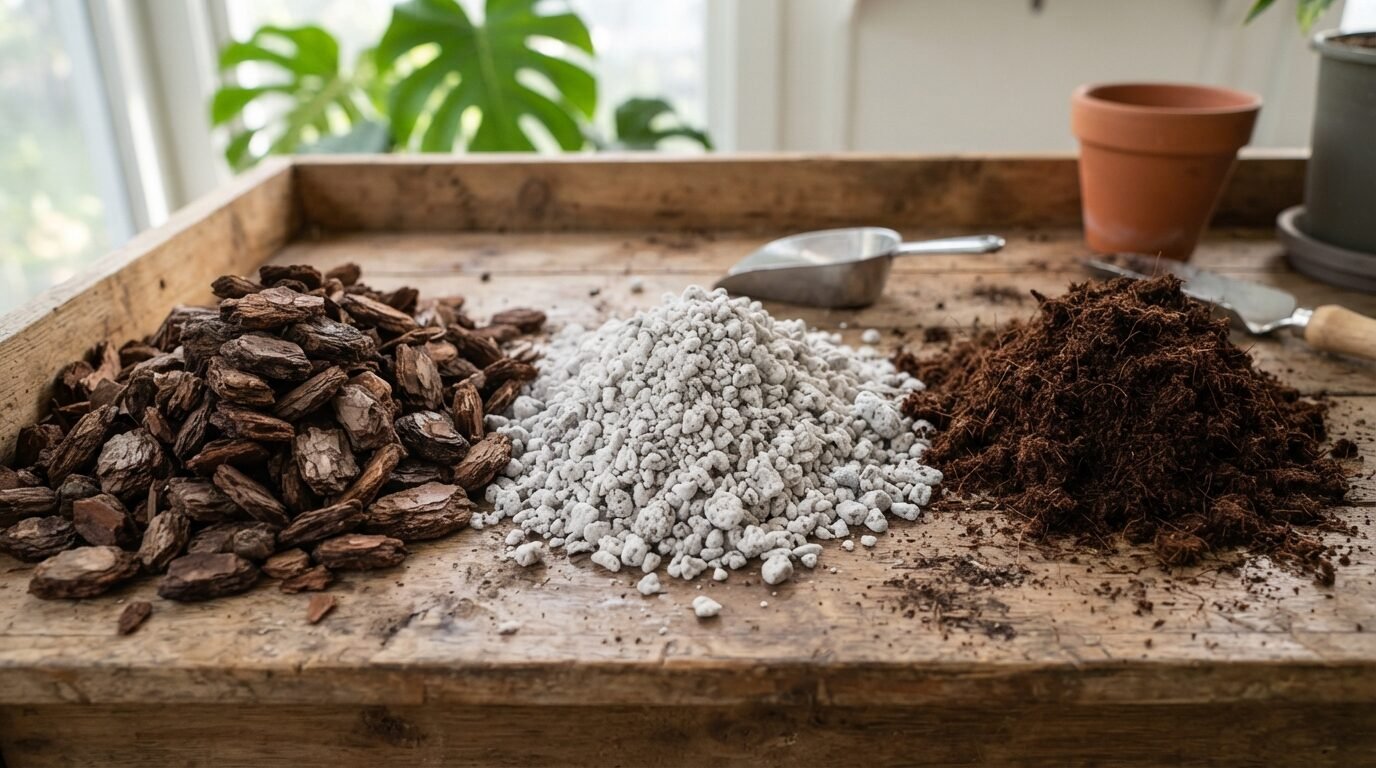
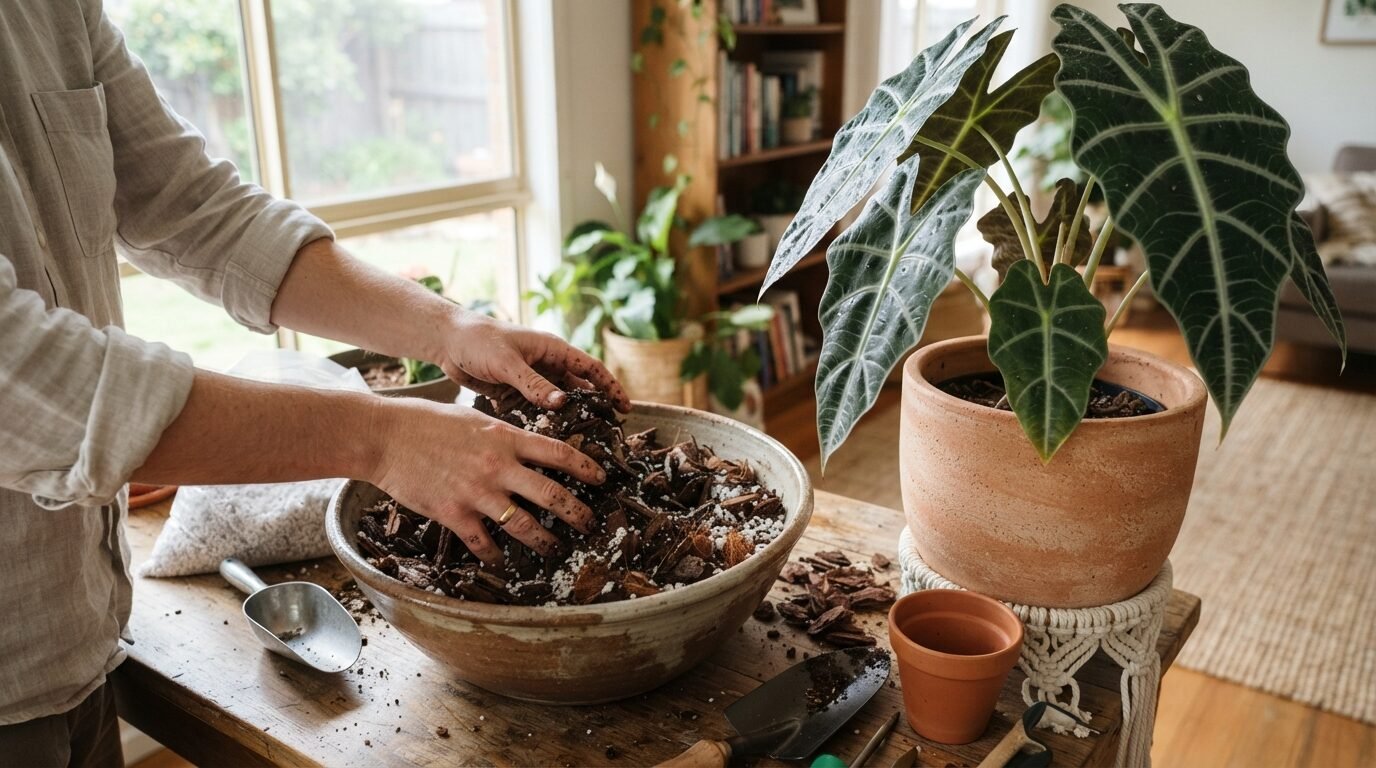
Quick answer: Alocasia want a chunky, free-draining, airy mix — never plain potting soil. A reliable blend is about one-third quality potting mix, one-third orchid bark or chunky coir, and one-third perlite, with a little compost. The mix should hold some moisture but drain fast, and the pot must have drainage holes. The right mix is half of good watering, so this is worth getting right.
Most Alocasia root problems start in the pot. These are aroids — in nature their roots run through loose, leafy, well-aerated ground, not heavy soil. Match that at home and overwatering and rot become far less likely.
What Alocasia roots actually need
Alocasia roots need three things from their mix: moisture they can access, fast drainage so they never sit in water, and air around them. Dense, water-logging soil fails on drainage and air, which is why plain potting mix so often leads to yellowing and root rot.
A simple Alocasia mix that works in Australia
You do not need anything exotic — combine easy-to-find components in roughly these proportions:
| Component | Rough share | Why |
|---|---|---|
| Quality potting mix | ~1/3 | base, holds some moisture & nutrients |
| Orchid bark or chunky coir | ~1/3 | structure, air pockets, drainage |
| Perlite | ~1/3 | fast drainage, keeps mix light |
| Compost / worm castings | small handful | gentle nutrient base |
The feel test: a good Alocasia mix feels loose and chunky, drains within seconds when you water, and never turns to dense mud. If water pools on top or the mix stays sodden, add more bark and perlite.
Pot choice and drainage
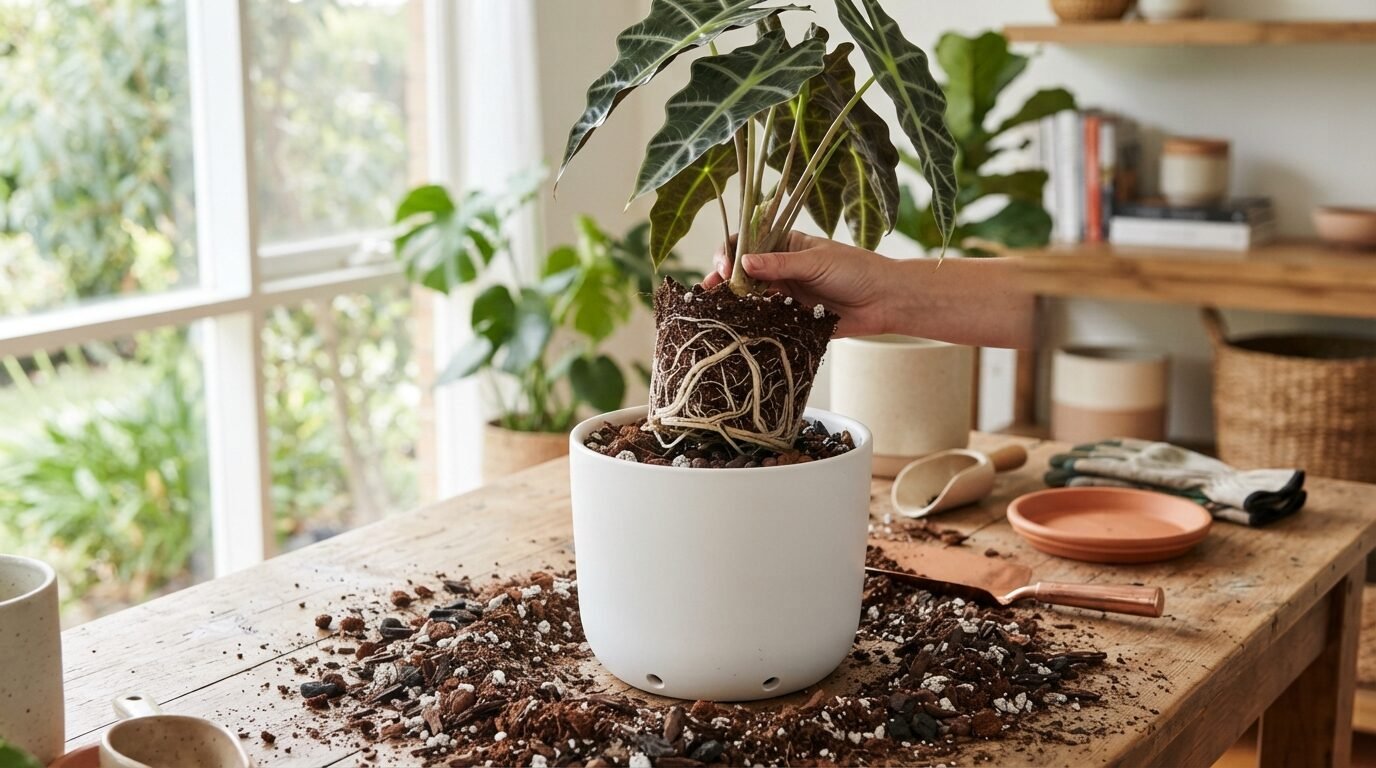
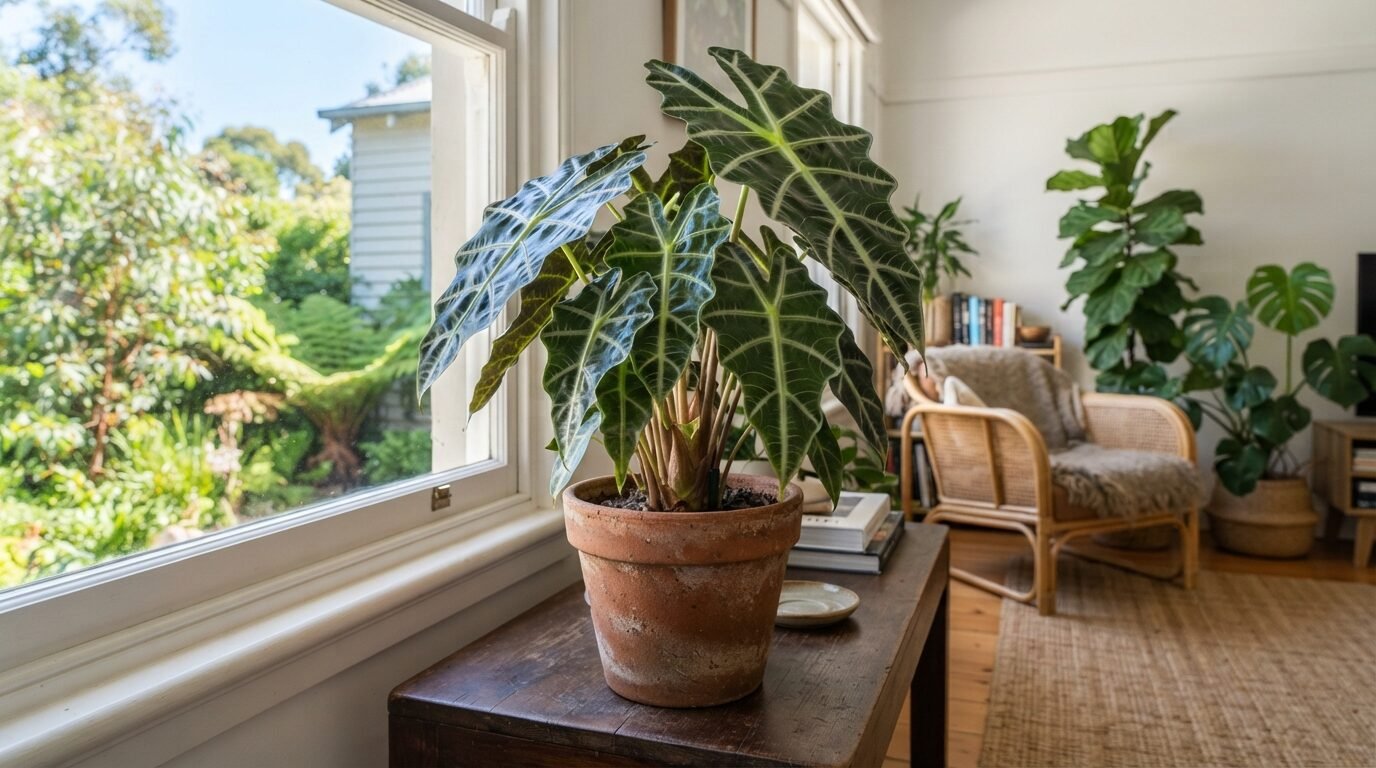
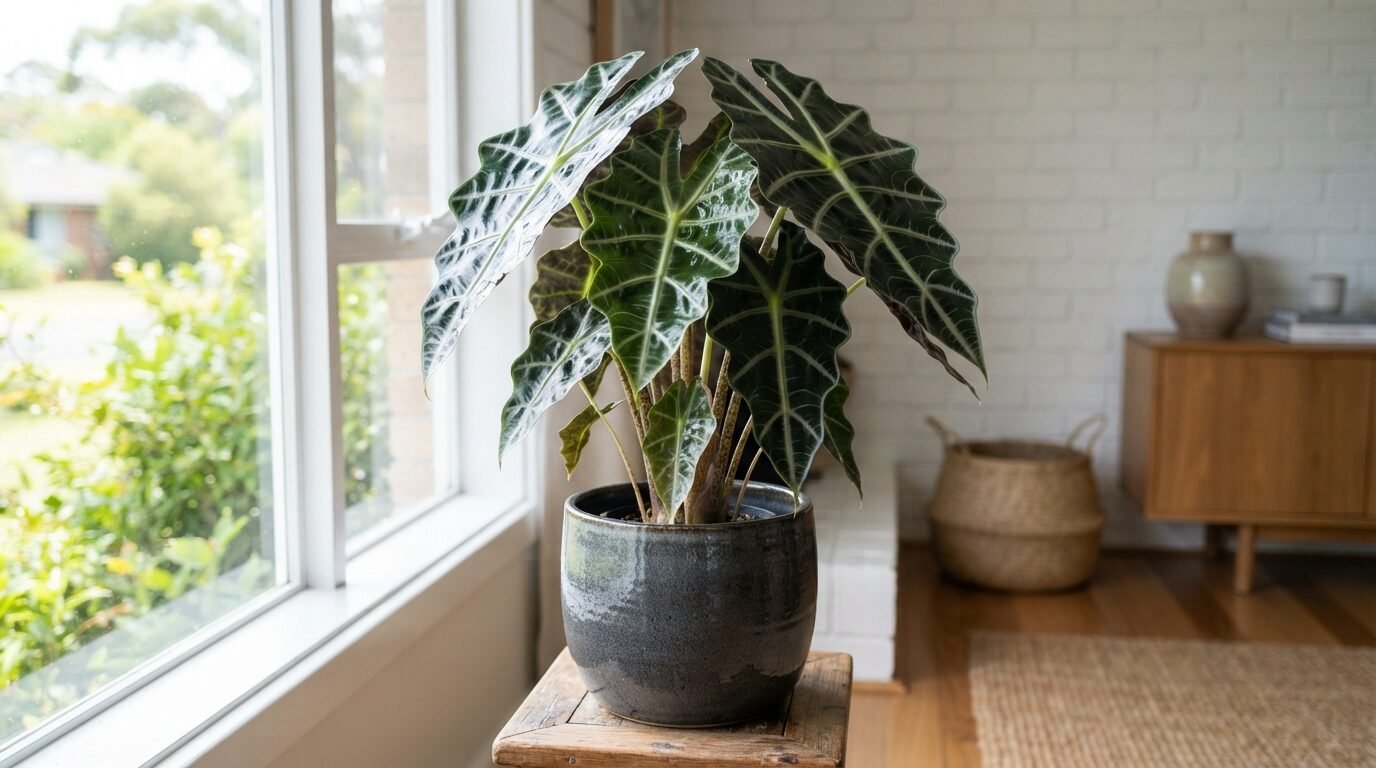
Choose a pot that just fits the root ball — a pot that is too big holds a reservoir of wet soil the roots cannot use. Drainage holes are non-negotiable. Terracotta breathes and dries faster (helpful if you tend to overwater); plastic holds moisture a little longer. Whatever you use, tip out any cover pot or saucer after watering.
When and how to repot
Repot every one to two years, or sooner if the plant is rootbound, the mix has broken down, or the corm and pups are crowding the pot. Do it in spring or early summer during active growth so the plant bounces back quickly — and it is the perfect time to divide and propagate.
Signs your mix needs attention
- water runs straight through without wetting the mix (it has dried out hard or broken down);
- the soil stays wet for days and smells sour (too dense / compacted);
- roots circling tightly or pushing out the drainage holes (rootbound).
For how the mix and your watering work together, see the Alocasia watering guide and the main Alocasia care guide.
Frequently asked questions
What soil is best for Alocasia?
A chunky, free-draining aroid-style mix — not plain potting soil. A good blend is roughly one-third quality potting mix, one-third orchid bark or chunky coir, and one-third perlite, with a little compost or worm castings. The aim is a mix that holds some moisture but drains fast and stays airy around the roots.
Can I use regular potting mix for Alocasia?
Standard potting mix on its own is usually too dense and water-retentive for Alocasia and often leads to soggy roots and rot. Use it as a base, but open it up with bark and perlite so the mix drains quickly and lets air reach the roots.
Do Alocasia need a well-draining pot?
Yes — a pot with drainage holes is essential. Alocasia roots rot quickly in waterlogged conditions, so excess water must be able to escape. Any attractive cover pot should be emptied after watering so the plant is never left standing in water.
What pot size and material suit Alocasia?
Pot into a container that just fits the root ball — an oversized pot holds too much wet soil. Both plastic and terracotta work; terracotta breathes and dries faster (good if you tend to overwater), while plastic holds moisture longer. Make sure whatever you choose has drainage holes.
Can I grow Alocasia in semi-hydro or LECA?
Yes, many growers do well with Alocasia in LECA or a semi-hydro setup, which gives excellent aeration and makes overwatering harder. It needs the right reservoir and nutrient routine, so treat it as a different system rather than a drop-in swap for soil.
How often should I repot an Alocasia?
Usually every one to two years, or when it becomes rootbound, the mix has broken down, or the corm and pups are crowding the pot. Repot in spring or early summer during active growth, which lets the plant recover quickly.
Should I add compost or fertiliser to the mix?
A small amount of compost or worm castings in the mix gives a gentle nutrient base. Beyond that, feed lightly during the growing season rather than loading the mix — too much fertiliser can burn roots, and a dormant plant does not need feeding at all.
How do I know my Alocasia mix needs changing?
If water runs straight through without wetting the mix, or the soil stays wet for days and smells sour, the mix has broken down or compacted. Both are signs it is time to refresh with a chunky, free-draining blend.


