
Devil’s Ivy (Pothos) Care in Australia: Complete Guide

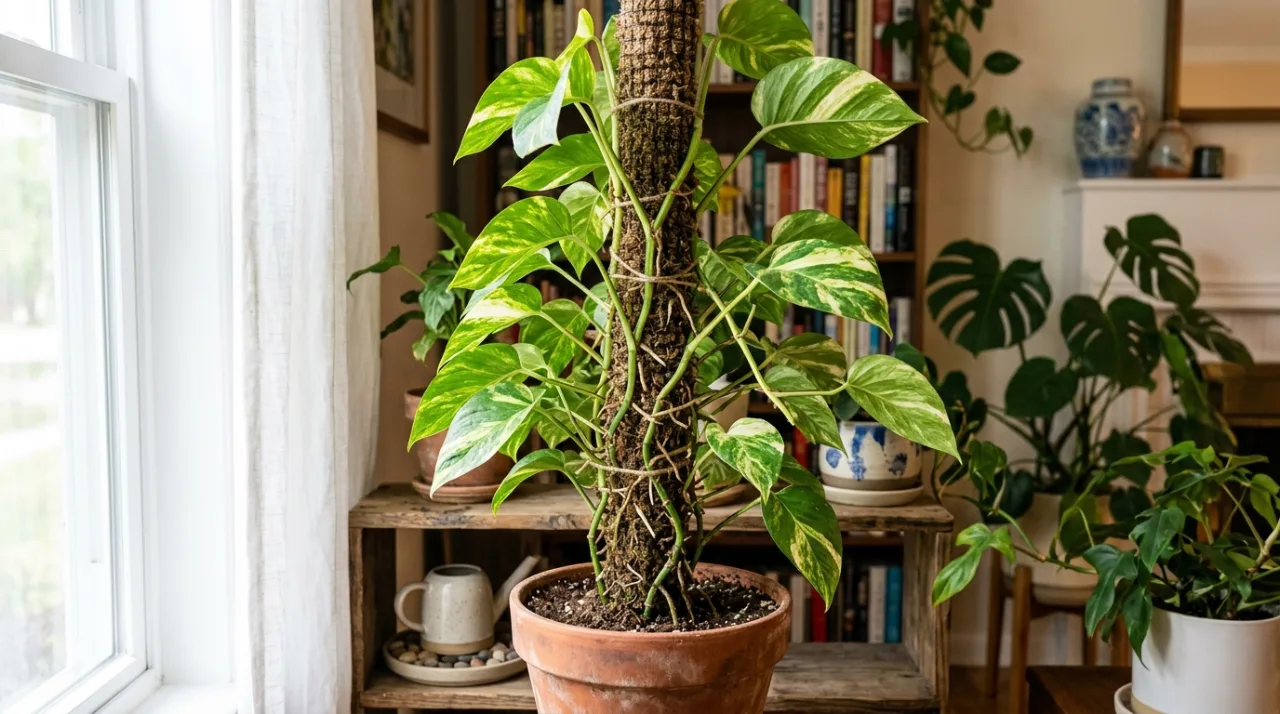
Devil’s Ivy (Epipremnum aureum), also sold as pothos, is one of the easiest indoor plants to grow in Australia — it tolerates low light, forgives missed watering and grows quickly as either a trailing plant or a climber. This guide covers light, watering, feeding, propagation, the most common problems and how to pick a variety, with links to deeper fix-it guides where you need them.
Related Devil’s Ivy guides:
- How much light does Devil’s Ivy need?
- Brown crispy tips on Devil’s Ivy: causes & fixes
- Devil’s Ivy pests: mealybugs, spider mites & fungus gnats
What is Devil’s Ivy (and is it the same as pothos)?
Devil’s Ivy and pothos are two common names for the same plant, Epipremnum aureum. It is a hardy evergreen vine from the arum family, grown almost everywhere in Australia as an indoor plant and, in frost-free subtropical and tropical gardens, sometimes outdoors. The “devil” nickname comes from how hard it is to kill — it stays green in low light and bounces back from neglect.
In its natural form it climbs, using aerial roots to grip. Indoors most people grow it as a trailing plant in a hanging pot or on a shelf, but you can train it up a moss pole for larger, more mature leaves.
How much light does Devil’s Ivy need?
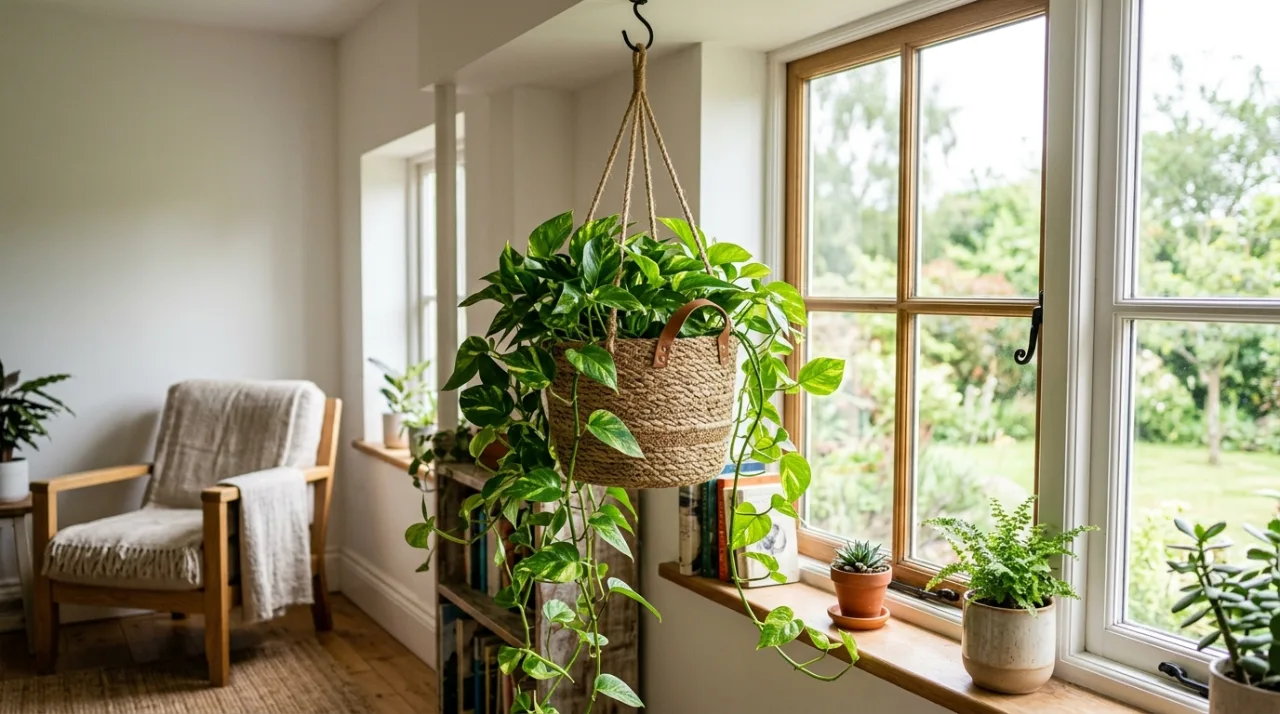
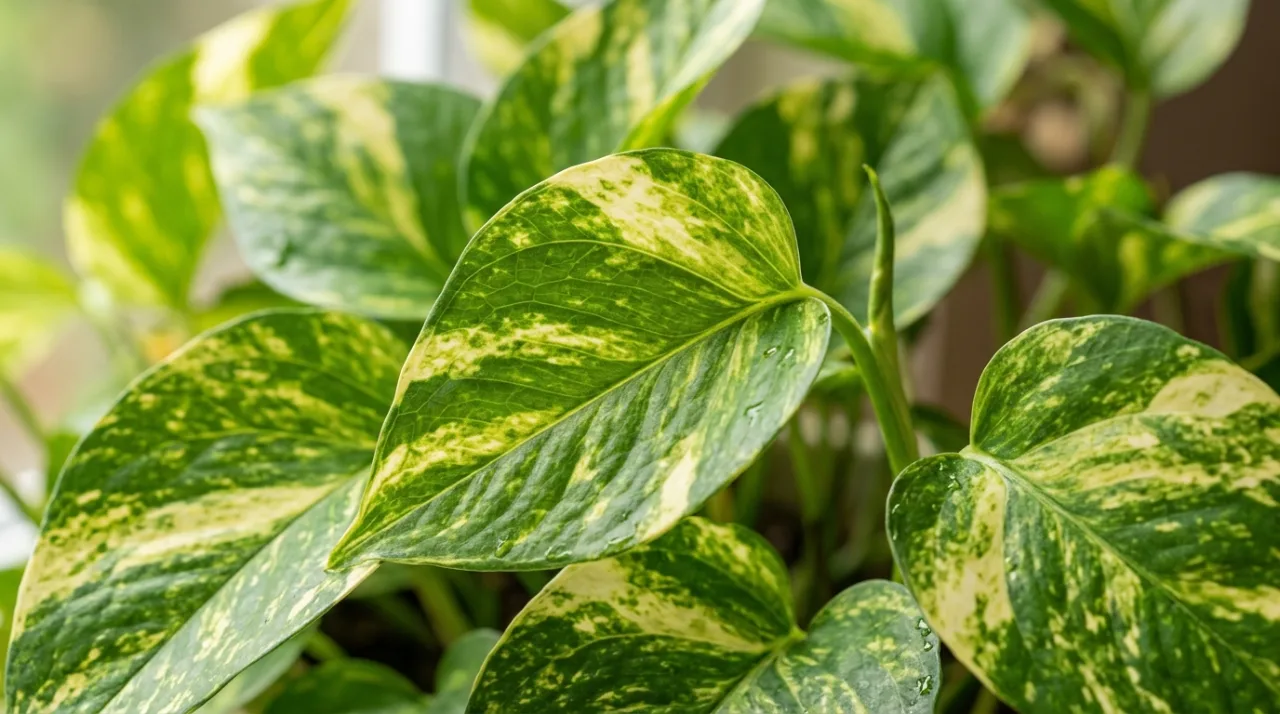
Devil’s Ivy grows best in bright, indirect light, but it is famous for coping with low-light positions where most plants sulk. In brighter light it grows faster and keeps its variegation (the cream, yellow or white marbling); in very low light it slows down and the leaves tend to revert to plain green. Avoid harsh direct sun through glass, which can scorch the leaves. For a full breakdown, see our guide on how much light Devil’s Ivy needs.
Watering and soil
Let the top few centimetres of mix dry out between waterings, then water thoroughly and let the excess drain away. Devil’s Ivy is far more likely to be killed by overwatering than by being too dry — soggy mix causes root rot, which shows up as yellowing leaves and mushy stems. In the cooler months it needs much less water than in summer.
Use a free-draining indoor potting mix and a pot with drainage holes. It roots readily in water, though potting mix is the usual way to grow it on; if you do keep a plant in water, change the water regularly to keep it fresh.
Temperature and humidity
Devil’s Ivy likes warm, stable indoor temperatures and dislikes cold draughts. It is not frost tolerant, so in cooler parts of Australia keep it inside over winter. It copes with average household humidity but appreciates a little extra in very dry, air-conditioned or heated rooms.
Feeding and potting
Feed lightly during the warm growing season with a balanced indoor-plant fertiliser, following the label rate, and ease off in winter when growth slows. Repot when it becomes rootbound or the potting mix has broken down; spring is a convenient time to do it.
How to propagate Devil’s Ivy
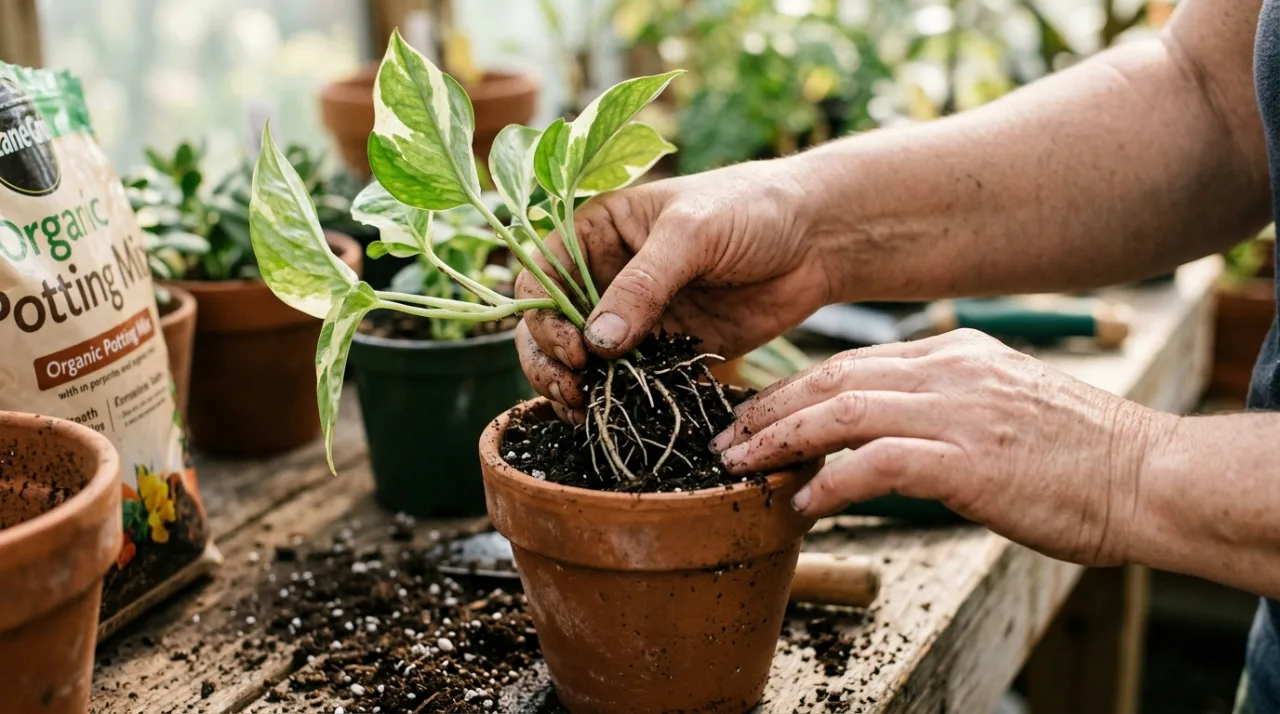
Devil’s Ivy is one of the simplest plants to propagate. Cut a healthy stem just below a node (the small bump where a leaf and aerial root emerge), remove the lowest leaf, and place the cutting in water or directly into moist mix. Roots usually form within a few weeks. Pot several rooted cuttings together for a fuller plant.
Climber or trailer: how to style it
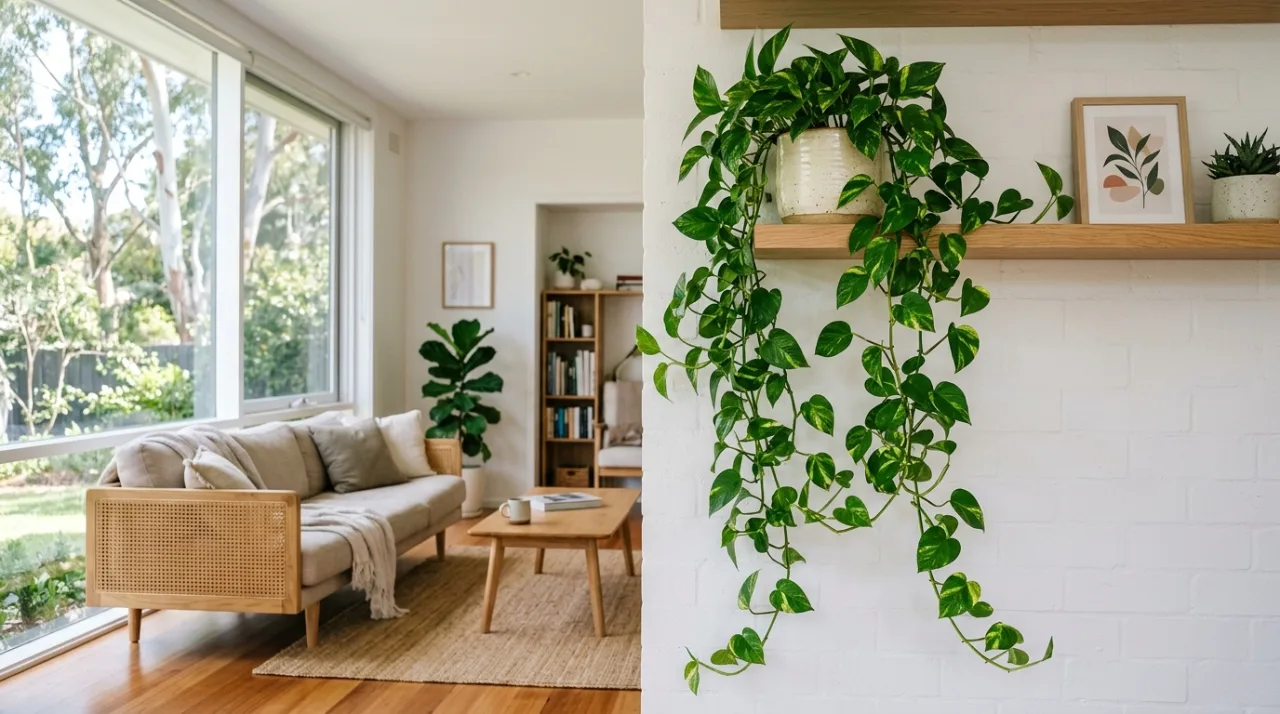
Left to trail, Devil’s Ivy makes long cascading stems ideal for shelves and hanging pots. Trained up a moss pole or trellis, the aerial roots attach and the plant produces noticeably larger leaves over time. Pinching back long stems encourages bushier growth and gives you free cuttings.
Common problems and fixes
Yellow leaves
Most often a watering issue — usually too much water or poor drainage, sometimes very low light. Check the mix isn’t staying wet and move the plant somewhere brighter if it’s in deep shade.
Brown, crispy tips
Typically dry air, inconsistent watering or a build-up of salts. Our detailed guide on brown crispy tips on Devil’s Ivy walks through each cause.
Pests
Mealybugs, spider mites and fungus gnats are the usual culprits indoors. See how to identify and treat Devil’s Ivy pests.
Long, leggy, sparse growth
Usually too little light. Move it brighter and pinch back the longest stems to encourage branching.
Is Devil’s Ivy toxic to pets?
Yes — like many arum-family plants, Devil’s Ivy contains insoluble calcium oxalate crystals and is considered toxic to dogs and cats if chewed, causing mouth irritation, drooling and vomiting. Keep it out of reach of curious pets. See our guide to plants toxic to dogs and cats in Australia.
Popular Devil’s Ivy varieties
- Golden Pothos — the classic, green leaves marbled with gold.
- Marble Queen — heavily variegated cream and green; slower growing.
- Neon — bright chartreuse-green leaves, no variegation.
- N’Joy and Pearls and Jade — compact, patchy white-and-green variegation.
- Jade — plain deep green, very tough in low light.
For more easy indoor foliage, see our best indoor plants for low light, plus our Calathea care guide and Alocasia care guide.
Frequently asked questions
Is Devil’s Ivy the same as pothos?
Yes. Devil’s Ivy and pothos are both common names for Epipremnum aureum. “Golden pothos” is the most widely grown form.
Can Devil’s Ivy grow in low light?
It tolerates low light better than most houseplants, but grows slowly and loses variegation there. Bright, indirect light gives the best growth and colour.
How often should I water Devil’s Ivy?
Let the top few centimetres of mix dry out, then water thoroughly. This usually means less often in winter and more in summer. It prefers to be slightly dry rather than soggy.
Why are my Devil’s Ivy leaves turning yellow?
Most commonly overwatering or poor drainage, sometimes very low light. Check that the mix isn’t staying wet and improve the light if needed.
Can I grow Devil’s Ivy in water?
Yes. Cuttings root readily in water and can be grown on in a jar if you change the water regularly to keep it fresh and oxygenated.
Is Devil’s Ivy safe for cats and dogs?
No. It contains calcium oxalate crystals and is toxic to pets if chewed, causing mouth irritation, drooling and vomiting. Keep it out of reach.
How do I make my Devil’s Ivy bushier?
Give it brighter light and pinch or prune back the longest stems. This encourages branching, and the cuttings can be rooted to fill out the pot.
Can Devil’s Ivy grow outside in Australia?
Only in frost-free subtropical and tropical areas, and it can become invasive if it escapes into bushland. In most of Australia it’s grown as an indoor plant.


