
Peace Lily Care in Australia: Watering, Drooping & Brown Leaves Fixed

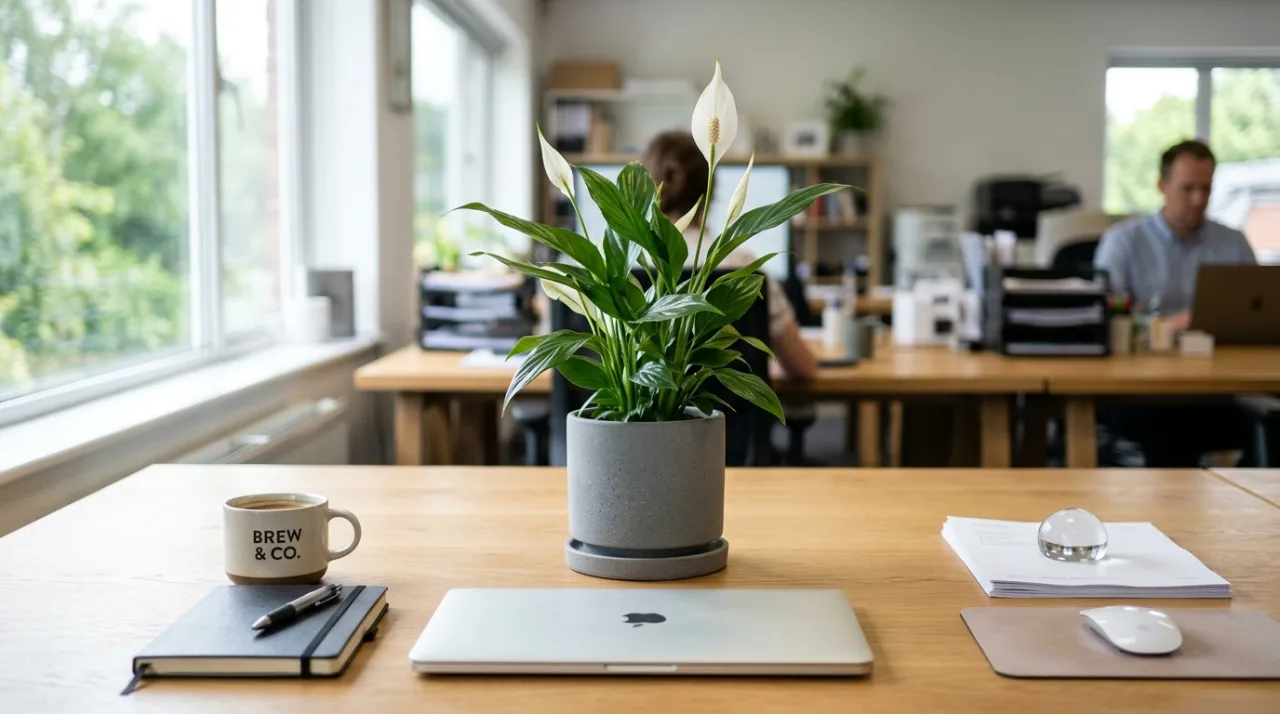
The peace lily (Spathiphyllum) is one of the most popular and forgiving indoor plants in Australia — it can flower in modest light, droops noticeably when it’s dry, and is easy to revive. This guide covers watering, light and soil, why the leaves droop or go brown, how to get it flowering again, repotting, pet safety and the best varieties.
Peace lily at a glance
The peace lily is a clumping, evergreen foliage plant with glossy dark-green leaves and distinctive white “flowers” (actually a spathe, a modified leaf, around the true flower spike). It’s prized for tolerating low light and for being one of the few indoor plants that can flower well indoors in adequate bright indirect light. Across most of Australia it’s grown as a houseplant; in warm, frost-free, shaded gardens it can also grow outdoors.
Light: how much does a peace lily need?
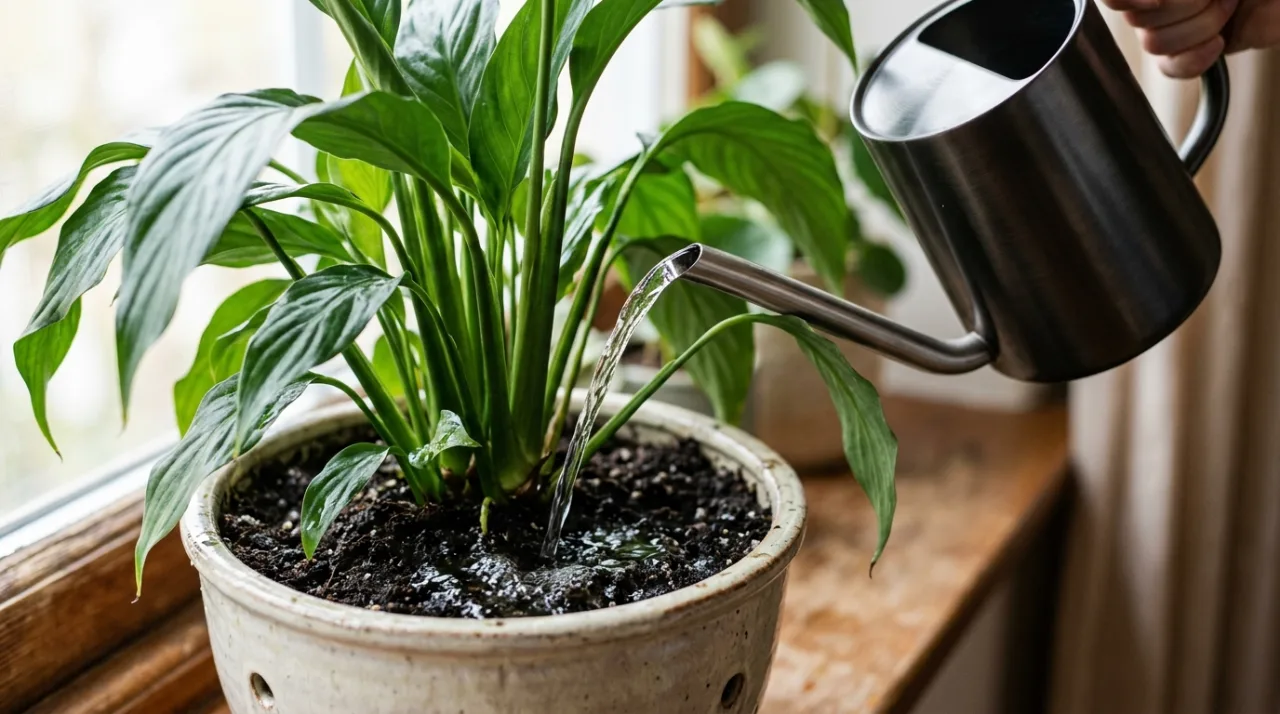
Peace lilies grow best in bright, indirect light but tolerate medium to low light, which is why they suit offices and bathrooms. More light (never harsh direct sun) means more flowers; deep shade means lush leaves but few or no blooms. If yours has stopped flowering, the most common reason is simply too little light.
Watering: the number-one peace lily skill
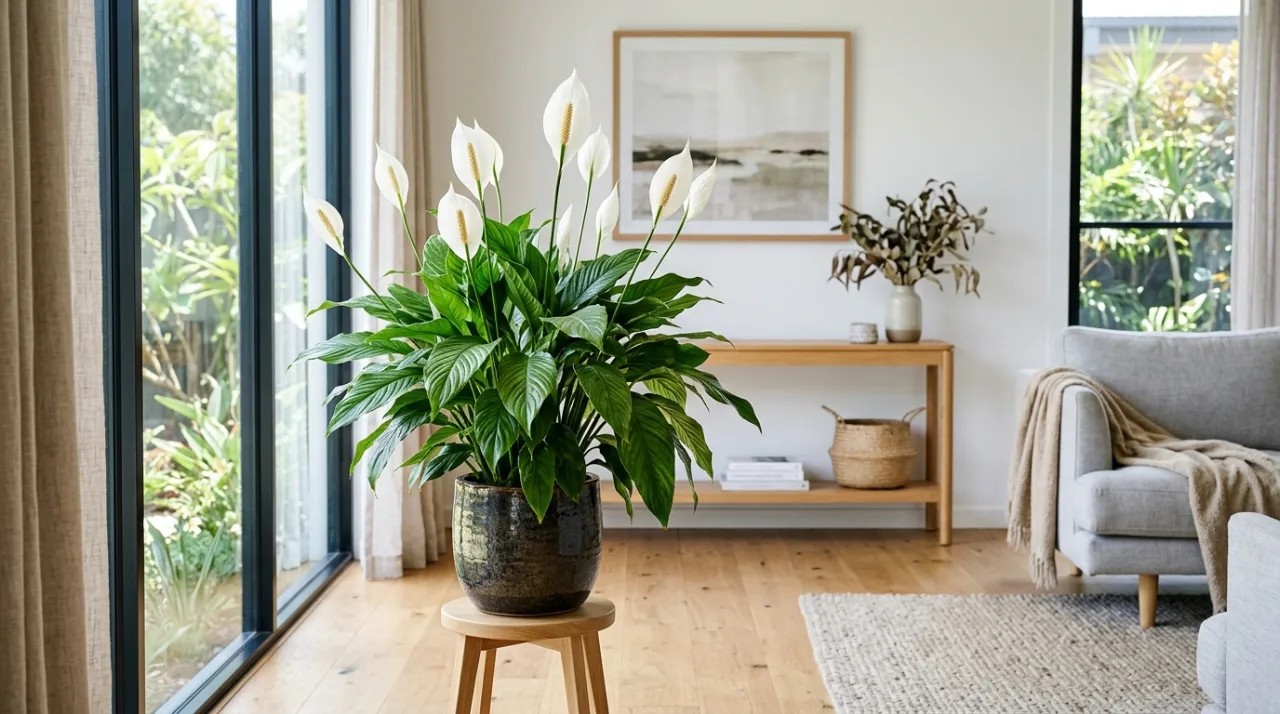
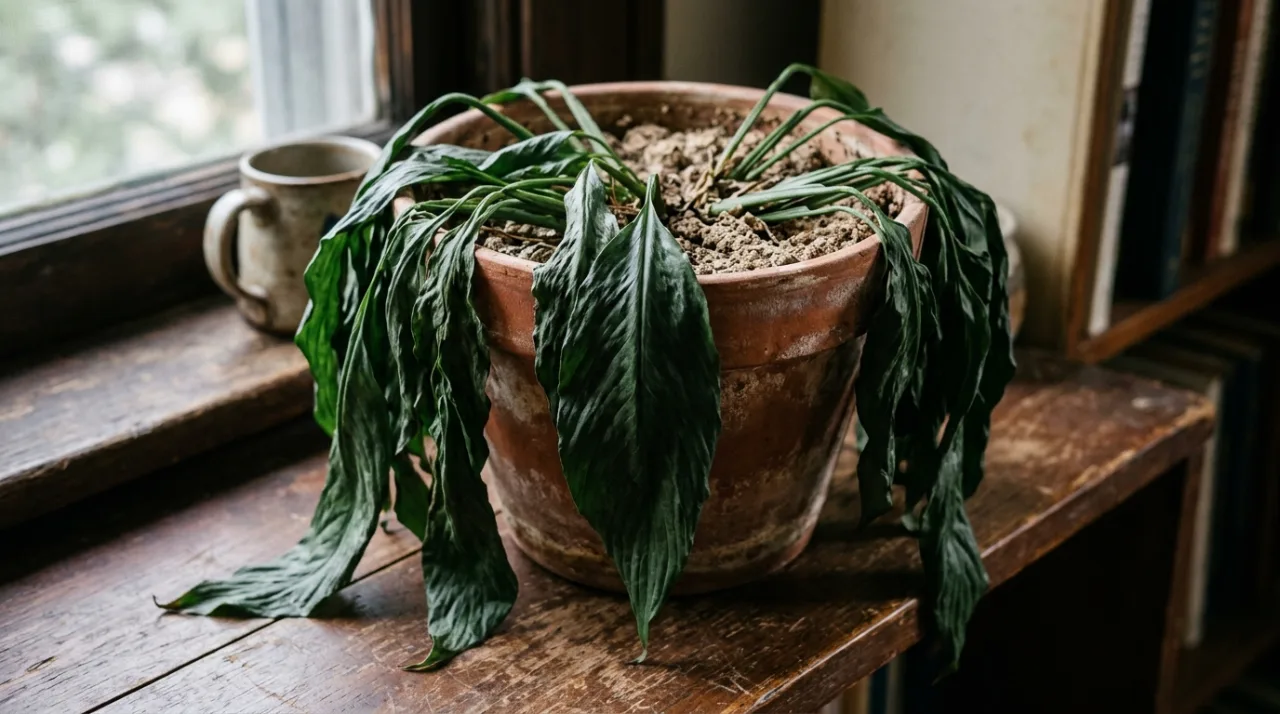
Peace lilies are famously expressive — the leaves often droop noticeably when the mix is dry and may recover after watering if the roots are healthy. Water thoroughly when the top of the mix feels dry, let the excess drain, and don’t leave the pot sitting in water. They need less water in the cooler months. Consistent watering (not bone-dry, not waterlogged) prevents most problems.
Why is my peace lily drooping?
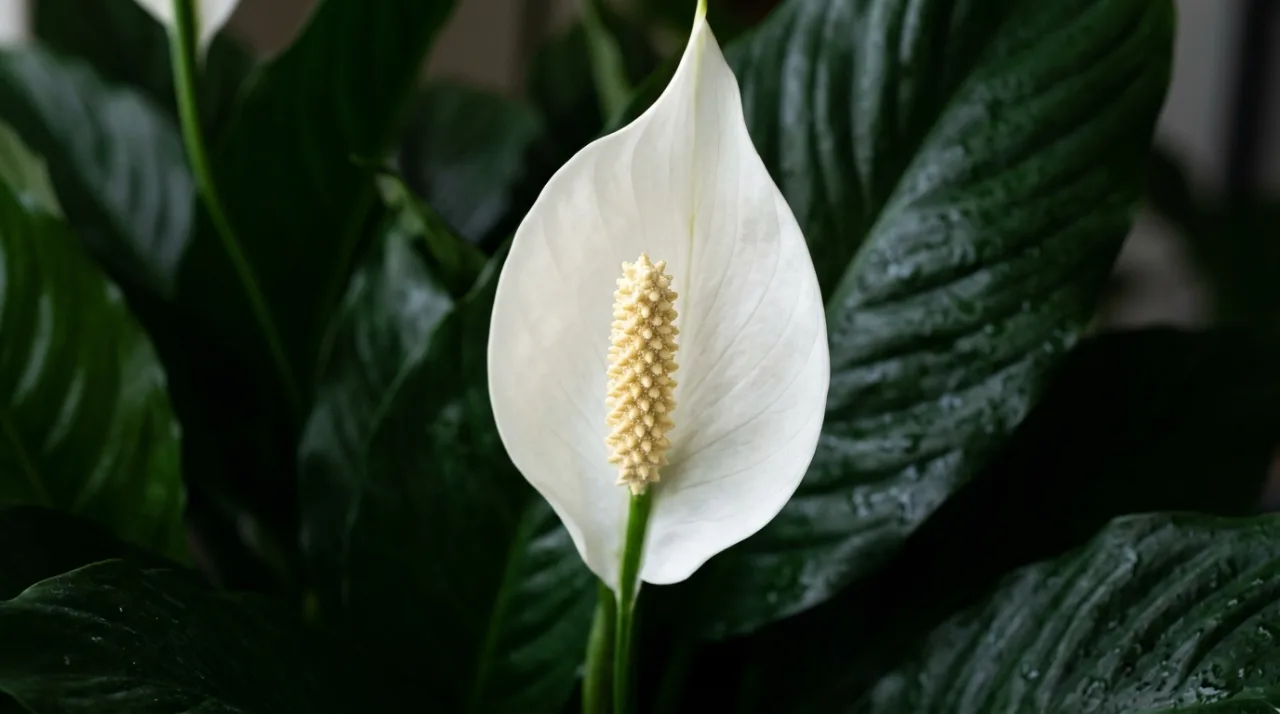
Drooping is usually one of two opposite causes. Underwatering is the common one — the whole plant wilts and recovers quickly after a good water. Overwatering or poor drainage causes drooping too, but the leaves often yellow and the mix stays wet; this points to root rot and needs the opposite fix (dry out, improve drainage, check roots). Occasional droop also follows repotting or a cold draught.
Brown leaves and brown tips: causes and fixes
Brown, crispy tips are usually dry air, inconsistent watering, or a build-up of salts and minerals. Watering thoroughly so water flushes through, keeping humidity up in dry rooms, and trimming damaged tips with clean scissors all help. Large brown patches can indicate sunburn (too much direct light) or overwatering. Brown flowers are normal as blooms age — just snip the spent flower stem at the base.
How to get a peace lily to flower
If a healthy peace lily won’t flower, give it more bright indirect light, feed lightly during the warm growing season, and make sure it isn’t sitting in deep shade. Established plants tend to flower more freely than very young or recently divided ones.
Soil, feeding and repotting
Use a quality free-draining indoor potting mix in a pot with drainage holes. Feed lightly with a balanced indoor-plant fertiliser through the warm months and ease off in winter. Repot every year or two in spring when roots fill the pot; peace lilies can also be divided at the same time to make new plants.
Is a peace lily toxic to pets?
Yes. Like other arum-family plants, peace lilies contain insoluble calcium oxalate crystals and are toxic to cats and dogs if chewed, causing mouth irritation, drooling and vomiting. Keep them out of reach of pets. A peace lily is not a true lily, so it does not carry the acute kidney-failure risk that true Lilium species pose to cats; its main issue is calcium-oxalate irritation. See our guide to plants toxic to dogs and cats in Australia.
Popular peace lily varieties
- Spathiphyllum wallisii — the classic compact peace lily.
- ‘Sensation’ — the largest, with broad leaves; good as a floor plant.
- ‘Domino’ — green-and-white variegated foliage.
- ‘Petite’ — small, tidy, good for desks and shelves.
For more easy-care foliage, see our best indoor plants for low light, plus our Devil’s Ivy (pothos) guide, Calathea care guide and Alocasia care guide.
Frequently asked questions
How often should I water a peace lily?
Water when the top of the mix feels dry, then drain the excess. This is more often in summer and less in winter. The leaves often droop when the mix is dry, which is a helpful reminder.
Why is my peace lily drooping even after watering?
If it stays droopy and the mix is wet, the cause is likely overwatering and root rot, not thirst. Let it dry out, improve drainage and check the roots.
Why won’t my peace lily flower?
Usually too little light. Move it to a brighter spot with indirect light and feed lightly in the warm months. Established plants flower more freely than very young ones.
Why are the tips of my peace lily turning brown?
Most often dry air, uneven watering or salt build-up. Water thoroughly so it flushes through, raise humidity in dry rooms, and trim damaged tips.
Can a peace lily grow in low light?
Yes, it tolerates low light better than most flowering plants, but it will produce fewer or no flowers in deep shade. Bright, indirect light is ideal.
Are peace lilies toxic to cats and dogs?
Yes. They contain calcium oxalate crystals and are toxic to pets if chewed, causing mouth irritation, drooling and vomiting. Keep them out of reach.
Should I mist my peace lily?
Misting can help in very dry, air-conditioned or heated rooms, but consistent watering and good general humidity matter more than misting.
How do I revive a wilted peace lily?
If it’s dry, water thoroughly and it usually recovers within hours. If the mix is wet and it’s still wilting, treat it for overwatering instead.


