
Westringia Hedge Problems Australia: Causes & Fixes

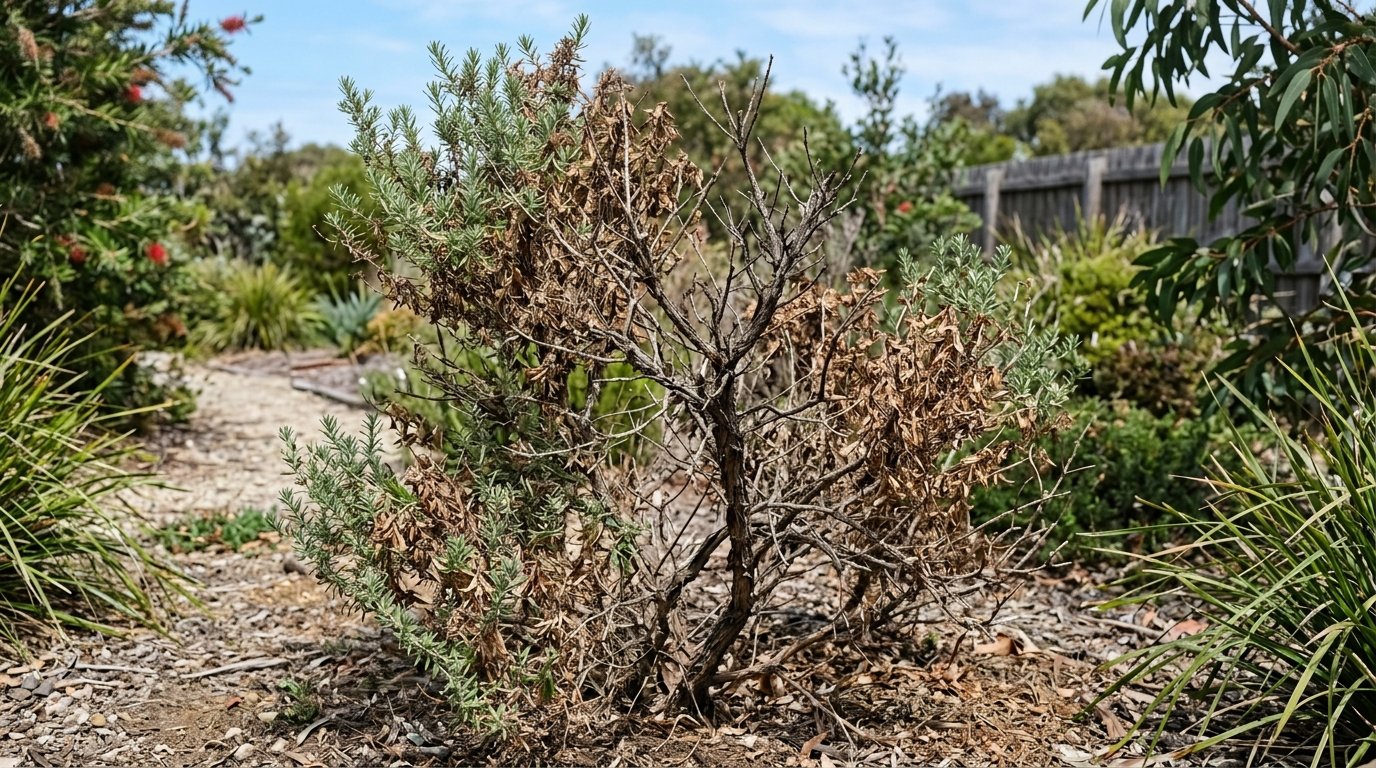
If a Westringia hedge is browning, wilting or suddenly dying, check the drainage before you give it more water. Coastal Rosemary is naturally a tough Australian coastal shrub: established plants cope remarkably well with wind, salt, lean soils and dry conditions, while Australian growers repeatedly identify constant wet feet as one of its biggest weaknesses. A plant that looks thirsty can actually have damaged, oxygen-starved or rotting roots.
Westringia fruticosa, commonly called Coastal Rosemary or Native Rosemary, is an Australian native in the Lamiaceae family. Kew’s Plants of the World Online accepts the species and records it as native to eastern Australia. PlantNET places it naturally on exposed coastal cliffs, harbour foreshores and skeletal soils along the New South Wales coast. That ecology helps explain both sides of its garden behaviour: it tolerates salt, wind and drought well once established, but usually performs poorly where its roots remain saturated.
The most useful diagnostic distinction is therefore between a dry plant and a plant whose roots can no longer function because the soil is too wet. Both can wilt, grey off, brown at the tips and lose foliage. On our hedge work, we do not respond to a struggling Westringia with the hose until we have checked what is happening below the mulch.
Which Westringia hedge problem is it?
| What you can see | Likely cause | What to check first |
|---|---|---|
| Sudden wilting or dieback even though soil is wet | Waterlogging, root damage or root rot | Check drainage and moisture below the surface before watering again |
| One plant collapsing after heavy rain while neighbours remain healthy | Localised drainage problem or root disease | Compare soil level, runoff and root-zone wetness with the healthy plants beside it |
| Yellow foliage with persistently wet soil | Root stress / poor drainage | Check whether the roots are sitting wet before applying fertiliser |
| Pale or yellow growth with otherwise sound drainage | Possible nutrition issue | Review soil conditions and feeding rather than automatically applying high-phosphorus fertiliser |
| Brown or grey foliage and dying tips | Root stress, drying conditions, frost or fungal damage | Check soil moisture, drainage, recent weather and whether symptoms begin at roots, tips or foliage |
| Bare woody centre | Late pruning / repeated cutting into the same outer shell | Check how much live green foliage remains before pruning harder |
| Open, leggy hedge | Too much shade or too little formative pruning | Check light levels and whether plants were tip-pruned while young |
| Dense top with sparse lower growth | Self-shading | Check whether the hedge is wider at the top than at the base |
| Leaf spotting in a dense humid hedge | Possible fungal leaf disease | Check airflow, retained moisture and prolonged leaf wetness |
| Sticky leaves, scale-like bumps or bronzing | Occasional scale or mite infestation | Inspect stems and leaf undersides, but rule out root/water problems first |
Westringia is generally less pest-prone than many popular hedge plants. When an established hedge deteriorates, root conditions, drainage, pruning history and light are usually higher on our checklist than insects.
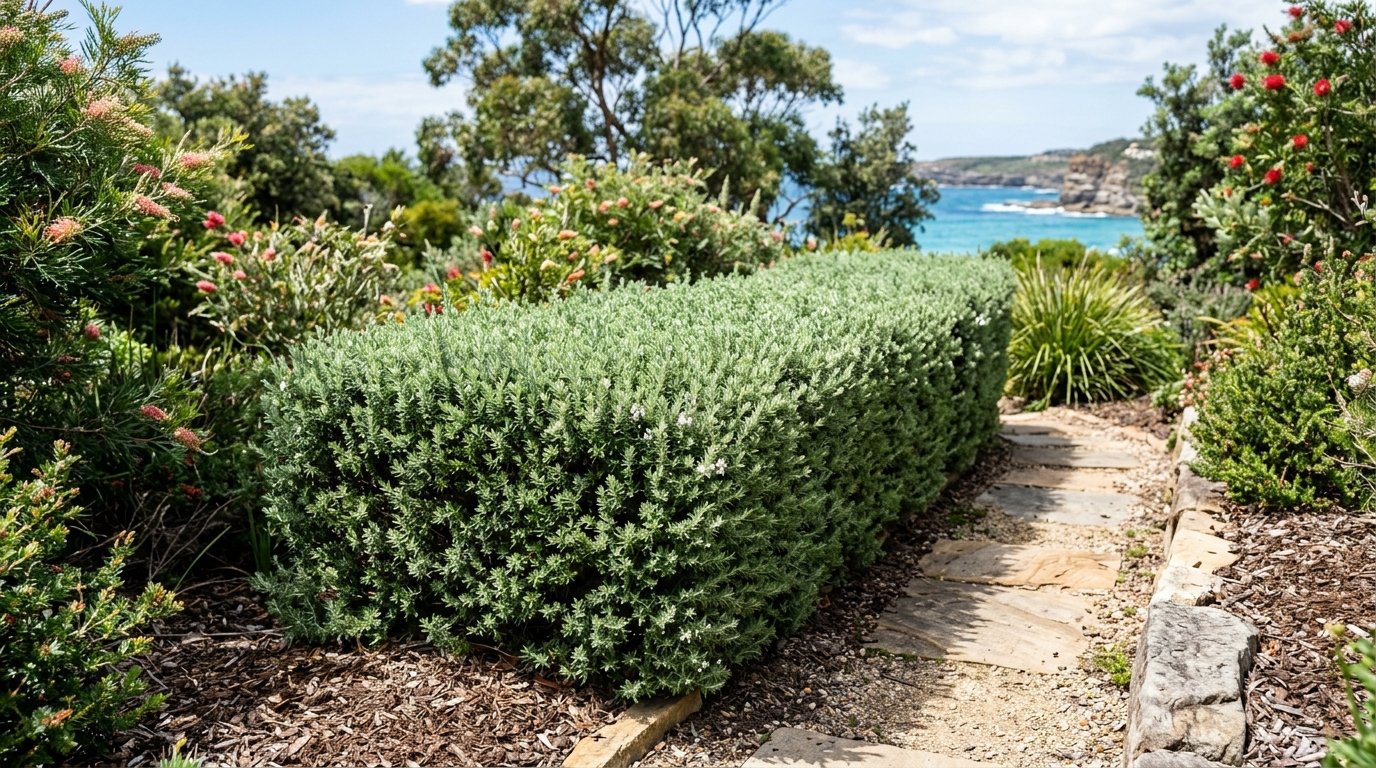
Wet feet are the first thing to rule out
Ozbreed’s current Westringia guidance is unusually direct: it describes wet feet as probably one of the biggest problems for the group. Yates Australia likewise warns that Westringias dislike constant wet feet and advises against overwatering.
This fits the natural species. PlantNET records Westringia fruticosa on exposed coastal cliffs and skeletal soils where excess water can move away readily rather than sitting around the roots.
Ozbreed’s Blue Gem guidance specifically says to avoid wet feet and depressed planting positions, and its Australian specification material warns that sitting in water can encourage fungal problems. Some selected cultivars such as Grey Box and Mundi are promoted as having better tolerance of periodic wet conditions, but that should not be interpreted as a licence to plant ordinary Westringia into a permanently saturated hole.
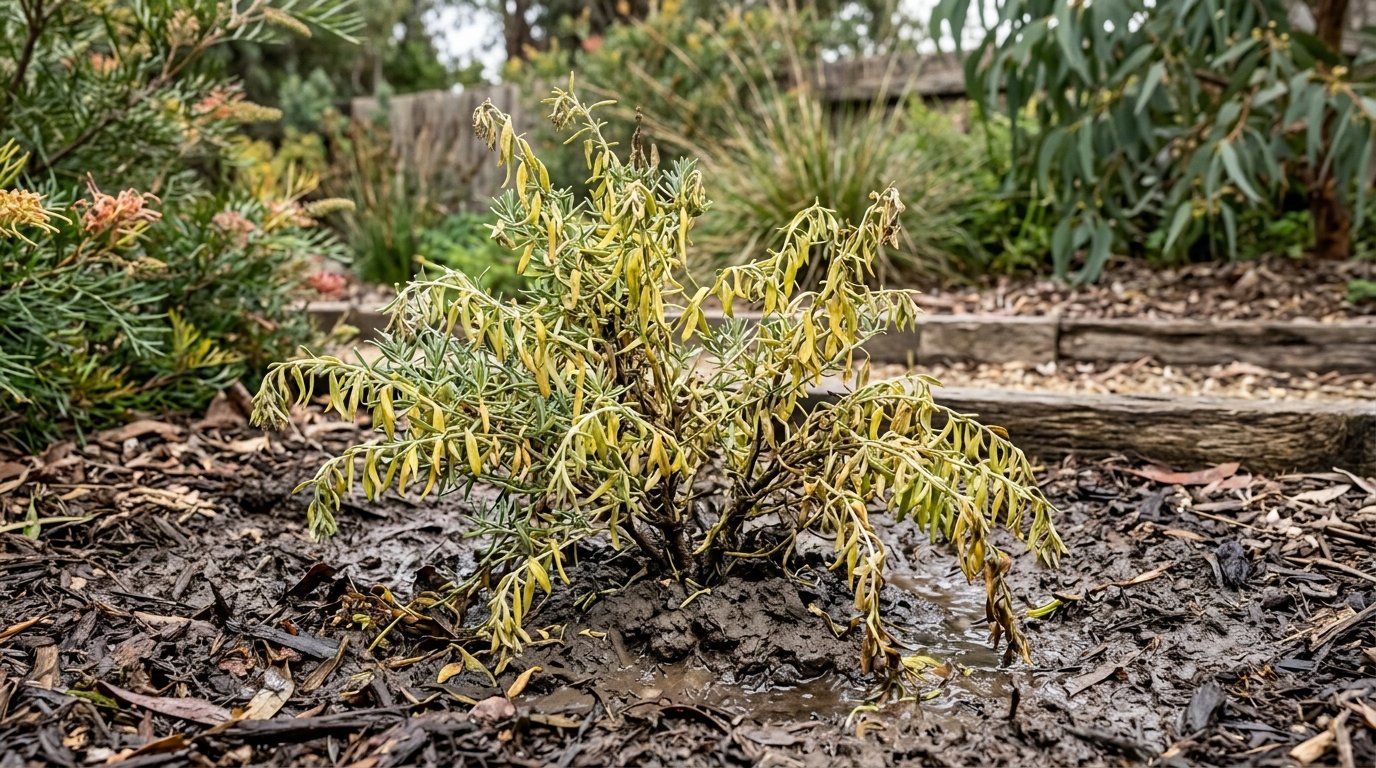
If the hedge is wilting while the soil is wet, do not automatically water it again.
What does waterlogging look like on Westringia?
Possible signs include:
- foliage becoming dull, grey-green or yellow;
- shoots wilting even though the ground is moist;
- individual branches dying back;
- one or more plants suddenly collapsing after extended rain;
- decline concentrated in the lowest part of a garden bed;
- roots becoming dark, soft or unhealthy rather than firm and pale;
- soil remaining wet long after surrounding areas have drained.
Australian nursery advice also reports Westringia failures after heavy rain where drainage is slow and root rot develops. The pattern is often confusing because damaged roots can no longer take up water efficiently, so the top of the plant wilts as though it were dry.
Root rot: diagnose the cause, not just the word
“Root rot” describes damaged and decaying roots; it does not tell you which organism or environmental condition caused the damage.
Australian nursery-production guidance documents Pythium and Phytopythium root rot on Westringia and notes that waterlogging and low oxygen can interact with disease. It also stresses that root-rot symptoms caused by Pythium, Phytophthora, Rhizoctonia, Fusarium and other pathogens can look similar, so accurate identification matters where disease treatment is being considered.
Phytophthora can be associated with root decline in poorly drained ornamental landscapes, but we would not diagnose Phytophthora simply because a Westringia has turned brown.
There is an interesting complication: Australian Native Plants Society material has historically recommended Westringia fruticosa as a hardy rootstock for some Prostanthera in areas where Phytophthora cinnamomi is a problem. That is another reason to avoid reducing every Westringia collapse to one pathogen.
First establish the physical root-zone problem:
- Is water collecting in a planting depression?
- Is there dense clay below an improved top layer?
- Is irrigation running far longer than required?
- Does roof or paving runoff enter the bed?
- Has mulch or soil been piled against the crown?
- Did the decline follow an extended wet period?
A fungicide cannot permanently fix a site that continually suffocates roots.
Yellow Westringia leaves: drainage comes before fertiliser
Yellowing on Westringia can result from inadequate nutrition, but in a plant that naturally tolerates relatively lean conditions, we first ask whether the roots are healthy enough to absorb nutrients.
The Australian National Botanic Gardens’ older cultivation notes describe Coastal Rosemary as drought hardy but also note that inadequate water can contribute to yellowing and bare wood. The opposite extreme—constant saturation—can also produce yellow foliage through root dysfunction.
So the first distinction is:
| Yellowing pattern | What it suggests |
|---|---|
| Yellowing plus saturated soil | Drainage/root stress should be investigated first |
| Yellowing plus very dry root zone | Actual water deficit is possible |
| Pale growth with healthy drainage and active growth | Nutrition may deserve review |
| Yellowing concentrated on a single failing plant | Look for a local root-zone or irrigation difference |
What about phosphorus and native fertiliser?
There is a common rule in Australian gardening that “native plants hate phosphorus”. That is too broad.
Australian Native Plants Society material shows that phosphorus sensitivity is particularly important in groups such as the Proteaceae—Banksia, Grevillea and Hakea are well-known examples—but also notes that many Australian plants tolerate ordinary phosphorus levels.
Westringia belongs to the Lamiaceae, not the Proteaceae. Seasol’s Australian Westringia guide specifically says Westringias tolerate normal levels of soil phosphorus.
We still would not respond to yellow leaves with heavy, high-phosphorus feeding. Ozbreed’s cultivar guidance generally recommends a slow-release fertiliser only if required. A fertiliser suitable for Australian gardens or a balanced slow-release product used according to its label is more sensible than applying large doses before checking drainage.
Brown, grey or dying Westringia foliage
Browning is one of the least specific symptoms.
It can result from:
- wet roots;
- genuinely dry soil;
- root disease;
- frost damage;
- heat or drying wind while a plant is establishing;
- fungal leaf problems in humid dense foliage;
- pruning too deeply into old wood.
The question is not simply “is it brown?” but where did the browning begin?
If the whole plant loses colour while its neighbours remain healthy after heavy rain, investigate roots and drainage. If only exposed tips brown after a cold event, frost moves higher on the list. If older internal wood is bare after years of shearing, the pruning history may explain more than the soil.
On our hedge work, we use those patterns before deciding whether the plant needs water, pruning or further diagnosis.
Do not rescue a wilting Westringia by watering blindly
This deserves its own section because it is such an easy mistake.
A plant with badly damaged roots can wilt because the roots are unable to take up enough water. Pouring additional water into already saturated soil removes even more oxygen and can accelerate the decline.
Before watering a struggling established Westringia:
- move the mulch aside;
- check below the dry-looking surface;
- compare the moisture near a healthy neighbouring plant;
- look for water collecting in the planting hole;
- check whether irrigation is actually reaching—or oversaturating—that section.
If the root zone is wet, stop treating the foliage as though the plant is drought-stressed and find out why the soil is not draining.
Why Westringia becomes woody or bare in the centre
Westringia responds extremely well to regular light pruning, but poorly to being ignored for years and then cut deeply into bare old branches.
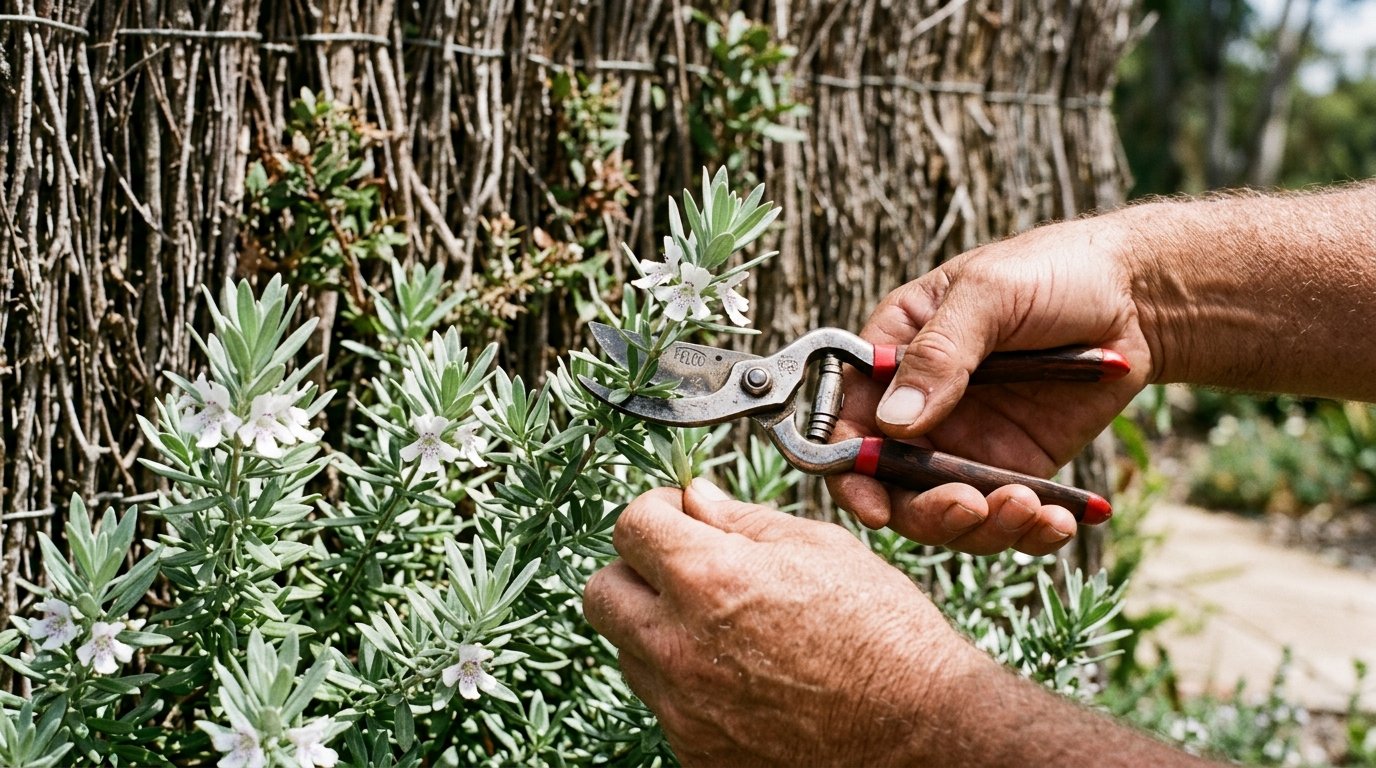
Gardening Australia’s current Coastal Rosemary pruning guidance says to start forming the hedge early, prune a little and often, and avoid cutting too deeply into older wood because bare patches can result.
Yates Australia is even more explicit: prune only into soft leafy growth rather than hard wood because Westringia does not respond reliably to severe cutting into old bare branches.
Seasol similarly warns that old plants cut back to bare branches may not recover.
This is why formative pruning matters. The best time to prevent a woody centre is when the hedge is young and fully furnished—not after the green shell has already moved far away from the main framework.
A bare base is often a hedge-shape problem
A dense Westringia can still lose foliage at the bottom if the upper canopy blocks light from reaching lower branches.
Gardening Australia magazine’s hedge-pruning guidance recommends keeping hedges slightly wider at the base than at the top so light can reach the lower foliage. The same guidance specifically includes Coastal Rosemary among plants that benefit from formative pruning during their early years.
If the hedge has become top-heavy, avoid simply clipping the top more aggressively while leaving the sides vertical or outward-flaring. Correct the overall profile gradually while retaining green growth.
If the bottom is already old, brown and completely leafless, Westringia may not regenerate reliably from that bare wood. At that point, replacement can sometimes give a better result than repeatedly cutting deeper.
Why the hedge grows but will not stay dense
Three things dominate: light, early tip pruning and cultivar choice.
Gardening Australia describes Coastal Rosemary as naturally dense when grown in full sun. Ozbreed’s cultivars such as Grey Box, Mundi and Blue Gem are also promoted for their dense habits and response to pruning.
Young shoots should be lightly tip-pruned to encourage lateral branches rather than being allowed to grow as long unbranched stems.
If a hedge stays open despite pruning, check:
- whether it receives enough direct light;
- whether plants were allowed to become leggy before shaping began;
- whether roots are healthy;
- whether the selected cultivar naturally suits the required hedge height;
- whether spacing was appropriate for that cultivar.
For cultivar size, spacing and routine hedge care rather than troubleshooting, see our Westringia fruticosa Coastal Rosemary growing and hedge guide.
Too much shade produces a different Westringia
Plantmark generally lists Westringia fruticosa for full sun to semi-shade, while Ozbreed commonly recommends full sun to light shade for its cultivars. Gardening Australia notes that Coastal Rosemary develops its naturally dense form in full sun.
That does not mean the plant instantly dies in part shade. It means deep or prolonged shade can change its structure.
Common shade symptoms include:
- longer gaps between leaves;
- fewer shoots through the centre;
- branches leaning toward available light;
- poorer flowering;
- a hedge that looks loose despite regular clipping.
Fertiliser cannot substitute for light. If one section of the hedge sits beneath a tree or behind a building and is consistently more open than the sunny section, light should be part of the diagnosis.
Fungal problems in humid, still hedges
Westringia is generally regarded as relatively pest- and disease-free, but its toughness is not absolute.
Seasol’s Australian growing guide notes that dense Westringia hedges can develop fungal leaf disease in tropical wet-season conditions when moisture and humidity become trapped in the foliage.
Ozbreed likewise warns that some Westringia cultivars can develop fungal problems where planted in depressed, poorly drained positions.
Useful cultural checks include:
- avoid keeping the root zone permanently saturated;
- maintain enough airflow through the hedge;
- avoid constant overhead wetting;
- remove badly affected dead material;
- clean pruning tools between diseased plants;
- avoid excessively dense planting where humid air cannot move.
If symptoms continue spreading, identify the disease before reaching for a fungicide.
Scale and mites: possible, but not our first assumption
Westringia can occasionally carry scale, mites or other sap-sucking pests, particularly where plants are stressed or foliage is dense.
Look for:
- raised scale-like bumps on stems;
- sticky honeydew;
- fine stippling or bronzing;
- webbing associated with mites;
- insects on leaf undersides.
But Australian cultivation references repeatedly describe the species as having relatively few serious pest problems. If an entire plant is collapsing in heavy wet soil, we would investigate the root zone before assuming a minor scale infestation caused the decline.
Frost damage on soft growth
Established Westringia is widely regarded as frost tolerant. Plantmark lists frost tolerance for a number of Westringia fruticosa cultivars, and Ozbreed documents cold tolerance across several selections.
Fresh, soft growth can still be damaged by a hard cold event even when older wood survives.
Frost damage tends to appear as:
- browned shoot tips;
- greyed or blackened soft growth;
- damage concentrated on exposed upper foliage;
- healthy older stems remaining below.
Do not immediately cut deeply into the hedge while more frost is likely. Wait until the extent of injury is clear, then remove dead tips while retaining green, viable growth.
Drought-hardy does not mean newly planted Westringia needs no water
The drainage message can be taken too far in the other direction.
Established Coastal Rosemary is drought hardy, but newly planted Westringia still needs establishment watering. Yates recommends keeping newly planted roots moist for the first several weeks, while Ozbreed’s current cultivar instructions also prescribe establishment watering before plants are expected to rely more heavily on their own root systems.
The goal is therefore not “never water Westringia”.
It is:
water when the plant genuinely needs it, then allow oxygen back into the root zone rather than keeping the soil permanently saturated.
When should a dying Westringia be replaced?
Replacement becomes more sensible when the underlying site problem cannot realistically be fixed or the plant no longer has enough healthy green framework to rebuild.
We would consider replacement where:
- the site remains permanently wet despite irrigation changes;
- heavy clay or a low planting position keeps repeatedly waterlogging the roots;
- most of the root system has decayed;
- the shrub has been cut deeply into old bare wood and fails to reshoot;
- deep shade prevents the hedge from ever becoming dense;
- large sections are dead while healthier plants in better positions demonstrate the site difference.
If the problem is permanently wet clay, simply replacing a dead Westringia with another ordinary Westringia in the same uncorrected hole often repeats the failure. Improve drainage, raise the planting position or choose a plant suited to the site.
Some selected Westringia cultivars have better documented tolerance of periodic wet conditions than ordinary forms, but cultivar choice should follow the site rather than be used to excuse chronic waterlogging.
Our diagnosis order for a struggling Westringia hedge
When a Coastal Rosemary hedge starts browning or dying, we work through the evidence in this order:
- Check the soil before watering. Wet feet are one of the most important Westringia problems to rule out.
- Compare affected and healthy plants. One collapsing plant often points to a local drainage, irrigation or root-zone difference.
- Inspect the roots where practical. Dark, soft or decaying roots move root damage higher on the list.
- Look at the pruning history. Bare old wood may be the result of late or overly hard pruning rather than disease.
- Check light. Deep shade commonly produces a loose, leggy hedge.
- Review recent weather. Frost, heat, prolonged rain and drying winds can all alter the symptom pattern.
- Inspect foliage for fungal spotting or pests. These occur, but are generally less characteristic than drainage problems.
- Review feeding only after root conditions are sound. Pale foliage is not a reason to fertilise waterlogged roots.
- Only then decide whether the answer is drainage, irrigation adjustment, pruning, nutrition, pest control or disease diagnosis.
That sequence is particularly important with Westringia because its reputation as a drought-tough plant can lead to the wrong rescue response: a wilted shrub gets watered more, even though the roots may already be sitting in saturated soil.
If the symptoms do not fit these patterns, several causes appear to be overlapping, or your hedge keeps declining after drainage, irrigation and pruning problems have been corrected, Garden Green’s plant and flower disease diagnosis service can help identify the likely cause and practical next step. You can also contact Garden Green with the details of what you are seeing.
Frequently asked questions
Why is my Westringia hedge suddenly dying?
Check the root zone first, especially after prolonged rain or frequent irrigation. Ozbreed identifies wet feet as one of the biggest Westringia problems, while Yates Australia warns against constant wet soil. Sudden decline in wet ground can result from oxygen-starved or rotting roots, and root-rot pathogens may also be involved.
Can overwatering kill Westringia?
Yes. Westringia is drought hardy once established but generally performs best in freely drained soil. Constant wet feet can damage roots and encourage fungal or water-mould problems. A wilting plant in saturated soil should not automatically be given more water; check drainage first.
Why are my Westringia leaves turning yellow?
Yellowing can result from either root stress or genuine water and nutrition problems. If the soil stays wet, investigate drainage before feeding. If drainage is sound and the root zone is excessively dry, lack of water may contribute. Westringia is not among the classic highly phosphorus-sensitive Proteaceae, so nutrition should be assessed rather than assuming all yellow native plants need a particular low-phosphorus treatment.
Why is my Westringia turning brown or grey?
Brown or grey foliage can result from waterlogged roots, genuine drought, frost, fungal problems or pruning damage. The position of the symptoms matters: whole-plant decline after wet weather points toward roots, while damaged exposed tips after cold weather are more consistent with frost. Check the root zone before deciding to water.
Can I cut a woody Westringia hedge back hard?
Be cautious. Gardening Australia advises pruning Coastal Rosemary a little and often and avoiding deep cuts into old wood, while Yates says Westringia does not rejuvenate reliably when cut back to hard bare branches. Keep cuts within leafy green growth wherever possible.
Why is my Westringia hedge bare at the bottom?
The lower hedge may be shaded by dense upper growth, or the plant may have been allowed to become tall and woody before formative pruning began. Keep the hedge slightly wider at the base than at the top so light reaches lower branches, and tip-prune young growth to build density early.
Does Westringia grow well in shade?
It tolerates some light or semi-shade, but its densest hedge growth is generally produced in stronger light. Gardening Australia describes Coastal Rosemary as naturally dense in full sun, while Australian nursery and Ozbreed guidance typically recommends full sun to light or semi-shade. Deep shade can produce open, leggy growth.
Should I replace a Westringia that has root rot?
Replacement may be the better option when most roots and branches have died or the site remains permanently waterlogged. Correct the drainage problem before replanting; otherwise another ordinary Westringia may fail in the same place. Where symptoms are uncertain, identify the root problem before assuming a specific pathogen is responsible.


