
Zoysia tenuifolia: No-Mow Grass Lawn and Groundcover Guide Australia

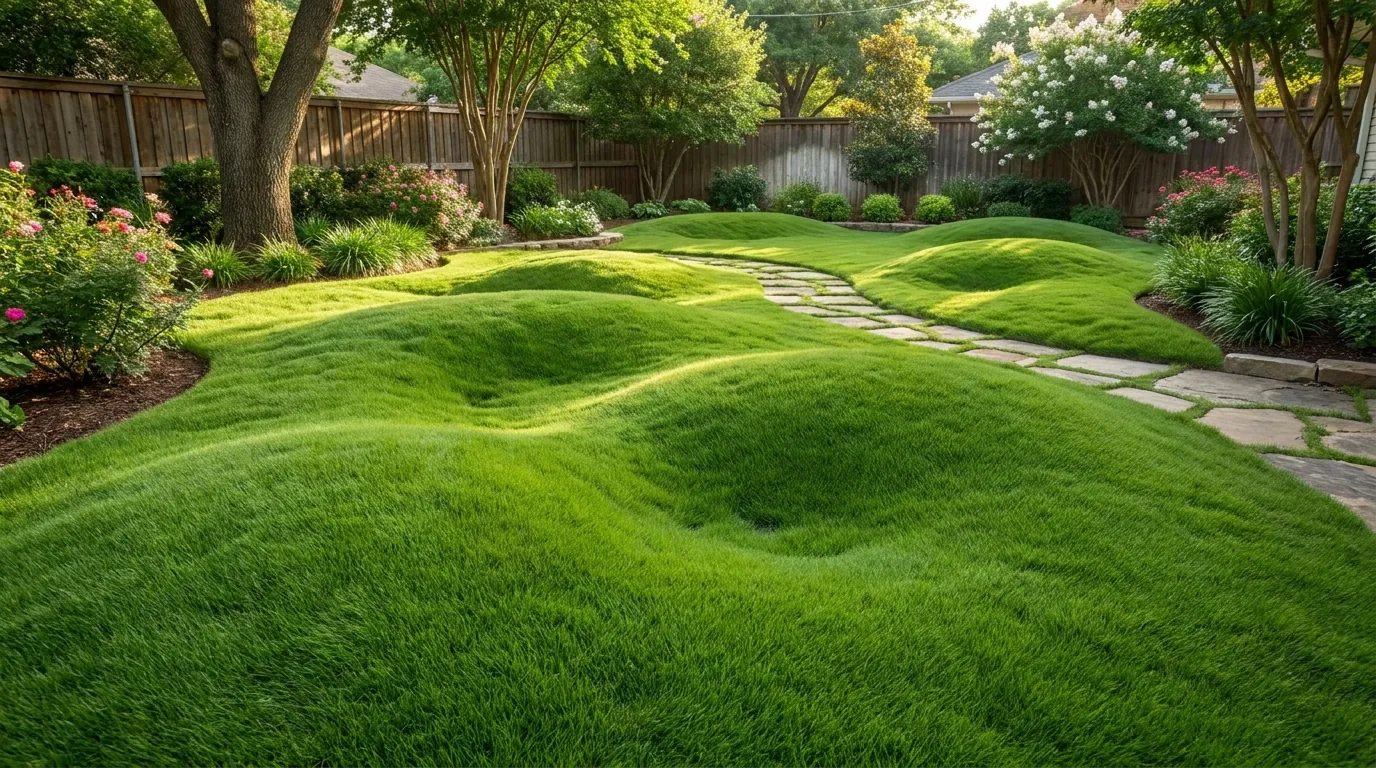
If you want a lawn that looks like a bowling green without mowing it, Zoysia tenuifolia is probably not what you are imagining.
If you want a soft, very fine-textured, slowly spreading green groundcover that can be left to form low rolling mounds, it becomes much more interesting.
In Australian nurseries it is commonly sold as:
- No-Mow Grass
- Korean Velvet Grass
- Korean Temple Grass
- Petting Grass
ABC Gardening Australia has long described Zoysia tenuifolia as both a genuine lawn grass and an architectural landscape plant: mow it regularly and it can form a dense lawn surface; leave it unmown and the foliage builds into a textured, undulating form.
That distinction matters.
“Low-mow” or “no-mow” does not mean the plant automatically stays flat like freshly cut couch.
It means you can choose to let its natural mound-forming habit become part of the design.
For broader lawn and turf planning, use our Grass & Turf hub.
Quick Answer: What Is Zoysia tenuifolia?
Zoysia tenuifolia is a very fine-leaved, warm-season creeping grass used in Australia as:
- a low-mow lawn alternative
- ornamental groundcover
- planting between pavers
- slope cover
- poolside planting
- courtyard groundcover
- Japanese-style garden texture
Australian horticultural sources commonly describe it as around 5–15 cm high when left in its natural low-growing form, depending on conditions and how much the surface mounds.
It spreads slowly by stolons and rhizomes and forms a dense mat over time.
A botanical-name note
Australian nurseries overwhelmingly sell it as Zoysia tenuifolia.
Kew’s Plants of the World Online currently treats that name as a synonym of Zoysia matrella.
For this article, Zoysia tenuifolia is retained because it is the practical horticultural name Australians will see in nurseries and landscaping specifications.
Zoysia tenuifolia at a Glance
| Feature | Zoysia tenuifolia |
|---|---|
| Common names | No-Mow Grass, Korean Velvet Grass, Korean Temple Grass |
| Plant type | Warm-season perennial creeping grass |
| Typical natural height | Roughly 5–15 cm |
| Growth habit | Very fine-leaved, mat-forming, slowly spreading |
| Unmown appearance | Soft, rolling or hummocky surface |
| Mown appearance | Denser, flatter lawn-like surface |
| Light | Full sun to part shade |
| Soil | Best in free-draining soil |
| Water | Regular while establishing; lower demand once established |
| Drought | Good once established |
| Frost | Growth slows; cold or frost can brown foliage |
| Traffic | Better for light-to-moderate household use than sports-level wear |
| Main uses | Groundcover, low-mow lawn, pavers, slopes, rockeries, courtyards |
The most important distinction in that table is unmown versus mown appearance.
Do not buy it expecting the two to look the same.
Is Zoysia tenuifolia Really a No-Mow Lawn?
It can be.
But “no mow” describes a design choice more than a magical lawn property.
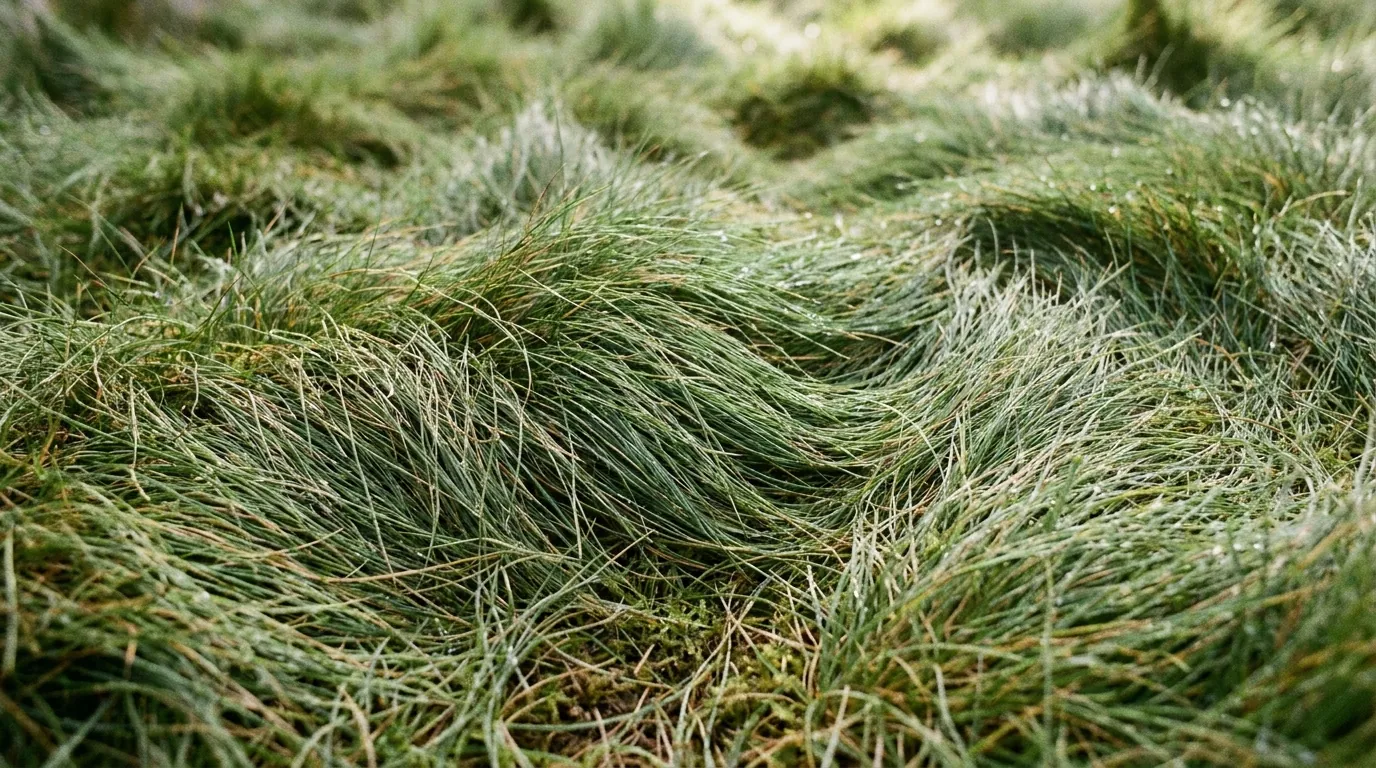
When left uncut, Zoysia tenuifolia forms a textured, rolling groundcover.
ABC Gardening Australia notes that without mowing it becomes higher and more architectural, while Nurseries Online describes the distinctive soft mounding habit as one of the species’ defining landscape features.
When would you mow it?
Mowing makes sense if you want:
- a flatter walking surface
- a more conventional lawn appearance
- easier movement of furniture or play equipment
- less pronounced mounding
Plant Tiles Australia notes that an occasional mow can be used where a neater lawn-style appearance is preferred.
When would you leave it unmown?
Leave it natural when the goal is:
- low maintenance
- sculptural groundcover
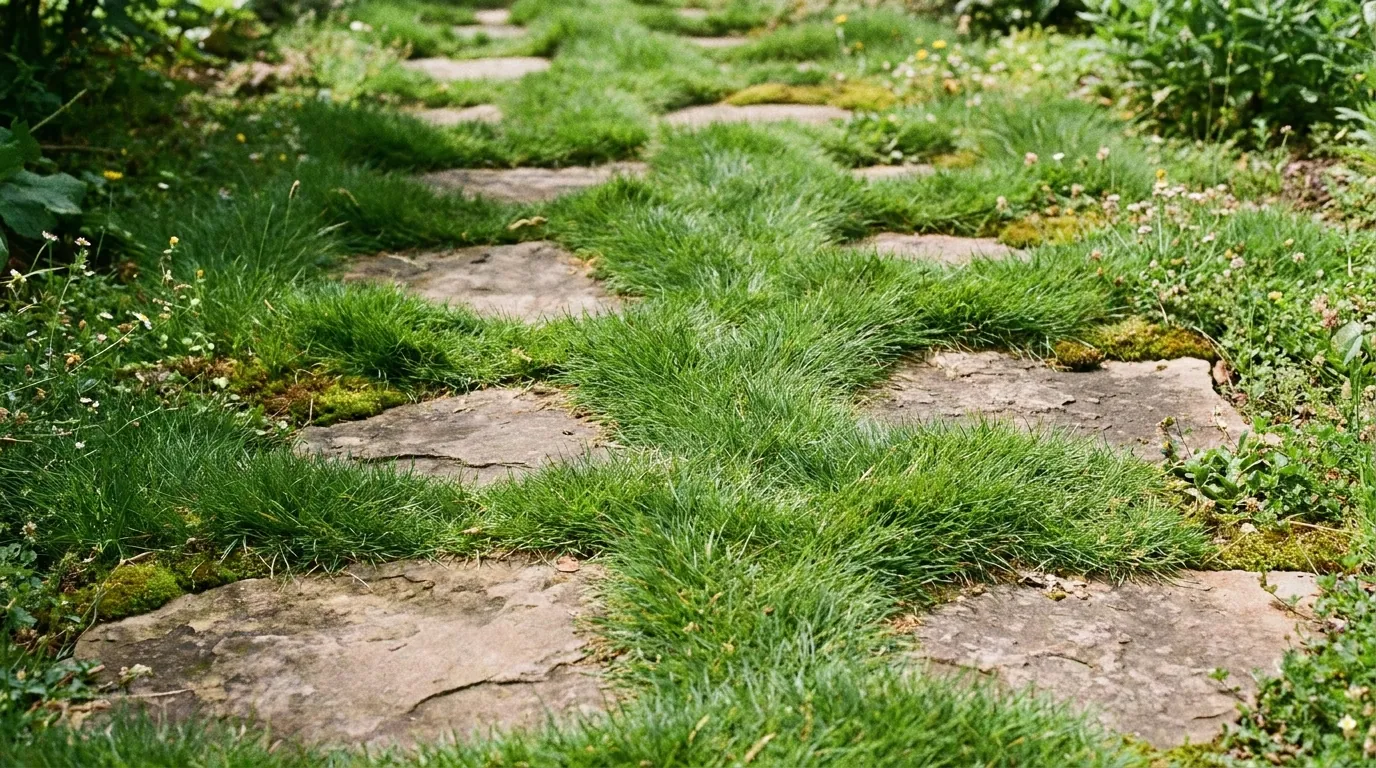
- planting between stepping stones
- covering a slope that is awkward to mow
- softening hard landscaping
- Japanese-style or contemporary garden design
The natural mounds are not a failure of maintenance.
They are the plant’s characteristic form.
What Does No-Mow Zoysia Look Like?
The foliage is extremely fine.
Kew’s GrassBase-derived description under Zoysia matrella records narrow linear to thread-like leaves and a mat-forming perennial habit with stolons and rhizomes.
In a garden, the effect is usually:
- dense green texture
- very fine blades
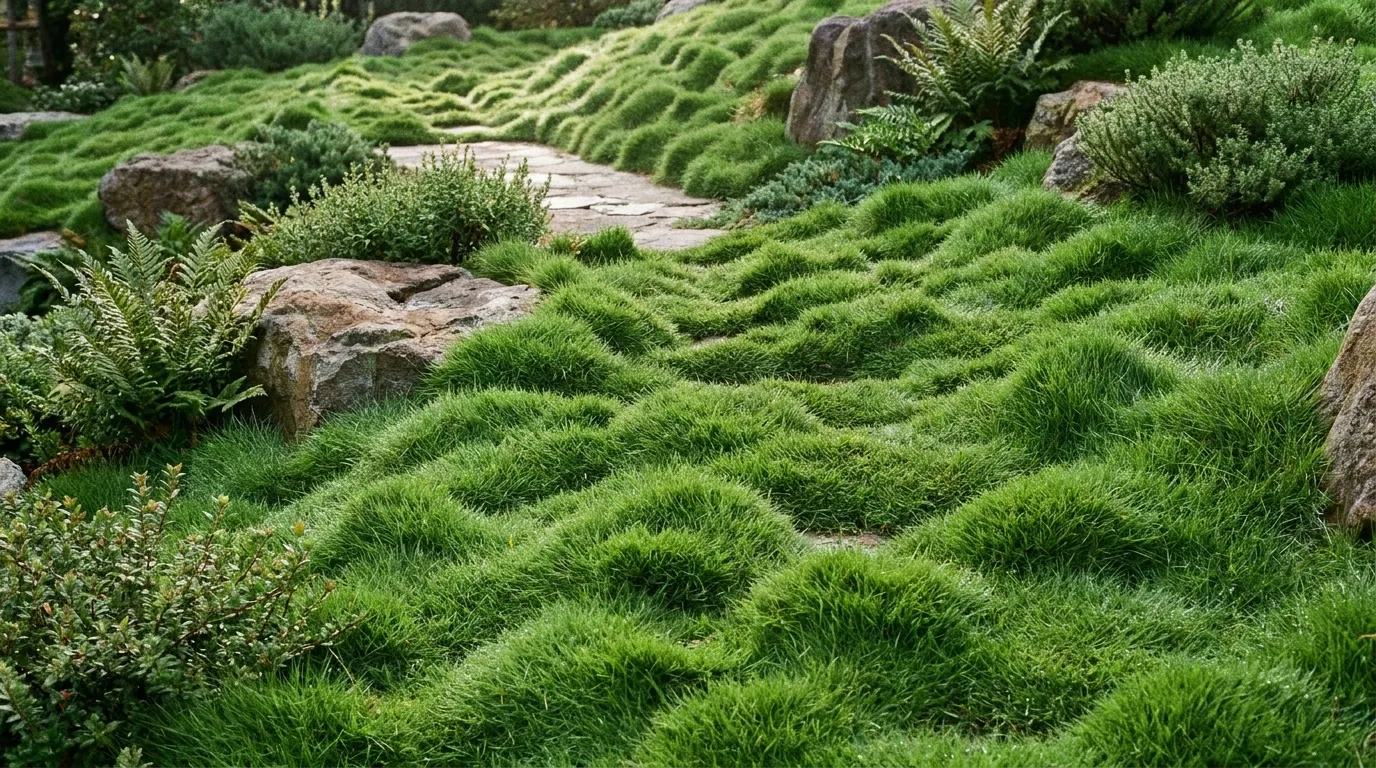
- low rolling humps
- soft edges around rocks and pavers
- less of the flat, striped appearance associated with conventional mown turf
This makes it visually useful in places where a standard lawn can look too formal.
How High Does Zoysia tenuifolia Grow?
Australian nursery references commonly list around 10–15 cm, with some sources giving approximately 5–10 cm or up to 20 cm depending on conditions and whether mounds are allowed to build.
Do not treat one height figure as exact.
The visible surface changes with:
- mowing
- foot traffic
- age
- soil depth
- moisture
- climate
- how much the stolons overlap and mound
A periodically mown area can sit much flatter than an ornamental unmown planting.
How Fast Does Zoysia tenuifolia Spread?
Slowly.
That is one of its greatest advantages after establishment and one of its greatest frustrations during establishment.
Turf Queensland specifically notes the slow growth of Zoysia grasses and says Zoysia tenuifolia is more commonly used as a low-growing landscape groundcover.
Bamboo Land gives an indicative spread of around 20 cm per year under suitable conditions, while Plant Tiles Australia also emphasises that establishment from individual pots or plugs can take a long time.
Do not use 20 cm as a guaranteed annual number.
Actual spread depends on:
- warmth
- planting density
- soil preparation
- water during establishment
- sun
- weed competition
- starting pot or tile size
How Far Apart Should No-Mow Grass Be Planted?
Spacing depends on how quickly you want full cover.
Australian suppliers commonly recommend roughly 30 cm spacing when establishing from individual plants, with closer planting giving faster closure and wider planting requiring more time and weeding between plants.
The trade-off is simple
Closer planting:
- costs more initially
- closes faster
- reduces open soil sooner
Wider planting:
- costs less initially
- takes longer to knit together
- leaves more space for weeds during establishment
This is exactly the type of use case the future Garden Green plant-spacing calculator should handle.
Do not apply one spacing blindly to every product format. Tiles, pots and pre-grown slabs are different starting materials.
Is Zoysia tenuifolia Good for a Normal Lawn?
Sometimes.
It depends on what “normal lawn” means in your household.
ABC Gardening Australia describes it as a legitimate lawn species that can form a dense fine-textured surface when mown.
But Turf Queensland notes that Z. tenuifolia is more often used as an unmown landscape groundcover than as a conventional turf lawn.
It suits you if you want:
- low mowing frequency
- a soft fine texture
- decorative groundcover
- modest household traffic
- slower growth
- an informal natural surface
It may not suit you if you need:
- fast establishment
- sports-level recovery
- a perfectly flat lawn
- rapid repair after heavy wear
- quick coverage from widely spaced plugs
For a standard family lawn, another turf species may be easier.
Can You Walk on Zoysia tenuifolia?
Yes, but traffic expectations need to be realistic.
Plant Tiles Australia reports that well-established plantings in good soil can cope with moderate household traffic, while some other Australian sellers position it more conservatively for low-traffic lawns and pathways.
Those views are not necessarily contradictory.
Traffic tolerance depends on:
- how well established the mat is
- soil depth
- water stress
- frequency of wear
- whether users repeatedly follow the same path
Good uses
- occasional barefoot walking
- stepping-stone surrounds
- courtyards
- light household lawn use
Poor uses
- football practice
- dog runs with repeated high-speed traffic
- school playing fields
- heavily trafficked access strips
Because recovery is slow, concentrated wear can remain visible for longer.
Is No-Mow Grass Good Between Pavers?
Yes.
This is one of its strongest uses.
Bamboo Land, Plant Tiles Australia and Australian nursery suppliers commonly recommend it for:
- stepping stones
- paver joints
- rockeries
- pool surrounds
- pathway edges.
Its fine texture softens hard paving without producing tall coarse foliage.
Leave enough growing space
Do not squeeze the root zone into a tiny crack with no soil volume and expect it to behave like a healthy lawn.
It still needs:
- usable soil depth
- moisture during establishment
- drainage
- enough light
Is Zoysia tenuifolia Good for Slopes?
Yes, particularly slopes where mowing would be awkward.
Its spreading, low-growing habit can create a useful groundcover over banks and embankments.
Nurseries Online and Plant Tiles Australia both recommend it for slopes and difficult-to-mow positions.
The slow establishment rate is the main limitation.
Until the surface closes, erosion and weed control still need attention.
Do not expect widely spaced plugs to provide instant slope stabilisation.
Does Zoysia tenuifolia Need Full Sun?
It grows in full sun to part shade.
Australian suppliers including Bamboo Land and Plantmark list that general range.
Is it good in shade?
It can tolerate more shade than some warm-season lawn grasses, but “part shade” is not the same as a dark courtyard.
Lower light can mean:
- slower spread
- thinner cover
- longer establishment
- more weed competition
A position receiving useful indirect or partial sun is very different from deep shade under a dense building overhang.
What Climate Suits Zoysia tenuifolia in Australia?
It is a warm-season grass.
Nurseries Online describes it as particularly well suited to warm, humid subtropical and coastal conditions, while Australian suppliers also sell it into warmer protected temperate areas.
Tropical and subtropical climates
These give the strongest combination of warmth and a long active-growing season.
Warm temperate and Mediterranean climates
It can grow successfully where summers are warm, but winter growth slows.
Cold and frost-prone districts
Expect dormancy, slower spread or browning during cold weather.
Evergreen Trees Australia describes it as frost sensitive, while Bamboo Land says established plants tolerate some frost.
The safest conclusion is:
light frost may be tolerated once established, but cold reduces appearance and growth.
Do not promise year-round bright green colour in every Australian climate.
Does No-Mow Grass Go Brown in Winter?
It can.
As a warm-season grass, Zoysia slows when temperatures fall.
In cooler or frost-prone areas, foliage may lose colour or brown temporarily, then resume growth with warmer conditions.
This depends on:
- local minimum temperatures
- frost exposure
- soil temperature
- site protection
- cultivar or plant material
A sheltered coastal Sydney garden and a frost-prone inland Victorian site should not be expected to look identical through winter.
What Soil Does Zoysia tenuifolia Prefer?
Free-draining soil is the safest starting point.
Bamboo Land recommends moist, well-drained soil with organic matter, while Plant Tiles Australia emphasises that establishment and traffic performance improve where there is a useful depth of quality growing medium.
The practical goal is:
- enough soil depth for roots
- drainage
- enough moisture to establish
- no compacted waterlogged base
For new lawn areas, our Soil & Turf Underlay Volume Calculator can help estimate the amount of prepared soil or underlay required.
How Often Should Zoysia tenuifolia Be Watered?
Do not use one fixed watering calendar.
During establishment
Keep newly planted roots from repeatedly drying out before they have moved into the surrounding soil.
Plant Tiles Australia notes that shallow newly installed tiles may need frequent small waterings initially until roots penetrate the prepared substrate.
After establishment
Water less frequently and more deeply according to:
- soil moisture
- rainfall
- temperature
- wind
- sun exposure
Australian sources commonly describe established Zoysia tenuifolia as drought tolerant.
“Drought tolerant” does not mean zero water under prolonged heat.
Is Zoysia tenuifolia Drought Tolerant?
Yes, once established.
Its dense mat and slow warm-season growth make it a useful low-water lawn alternative in suitable climates.
But establishment is the exception.
A newly planted lawn or grid of plugs needs enough moisture to build roots and connect across the soil surface.
The best water-saving result comes after the mat is established, not by starving new plants from day one.
Does Zoysia tenuifolia Need Fertiliser?
It does not need aggressive feeding to perform as a low-maintenance groundcover.
Avoid treating slow natural growth as a nutrient deficiency.
The plant’s slow spread is part of its biology.
If growth is weak, first check:
- temperature
- sunlight
- watering
- soil depth
- compaction
- weed competition
Use fertiliser only when there is a genuine reason and follow the product label.
Heavy feeding to force fast coverage works against the low-input purpose of the plant.
Does Zoysia tenuifolia Need Mowing at All?
Not necessarily.
That is the whole reason many people choose it.
If you like the soft mounded form, leave it unmown.
If you want a flatter surface, occasional mowing is possible.
ABC Gardening Australia confirms that regular mowing can produce a dense conventional lawn appearance, while Plant Tiles Australia notes occasional mowing can maintain a neater look.
Do not mow it like couch by default
Frequent low mowing removes the very architectural form most people buy Z. tenuifolia to create.
Choose the mowing regime based on the design outcome you want.
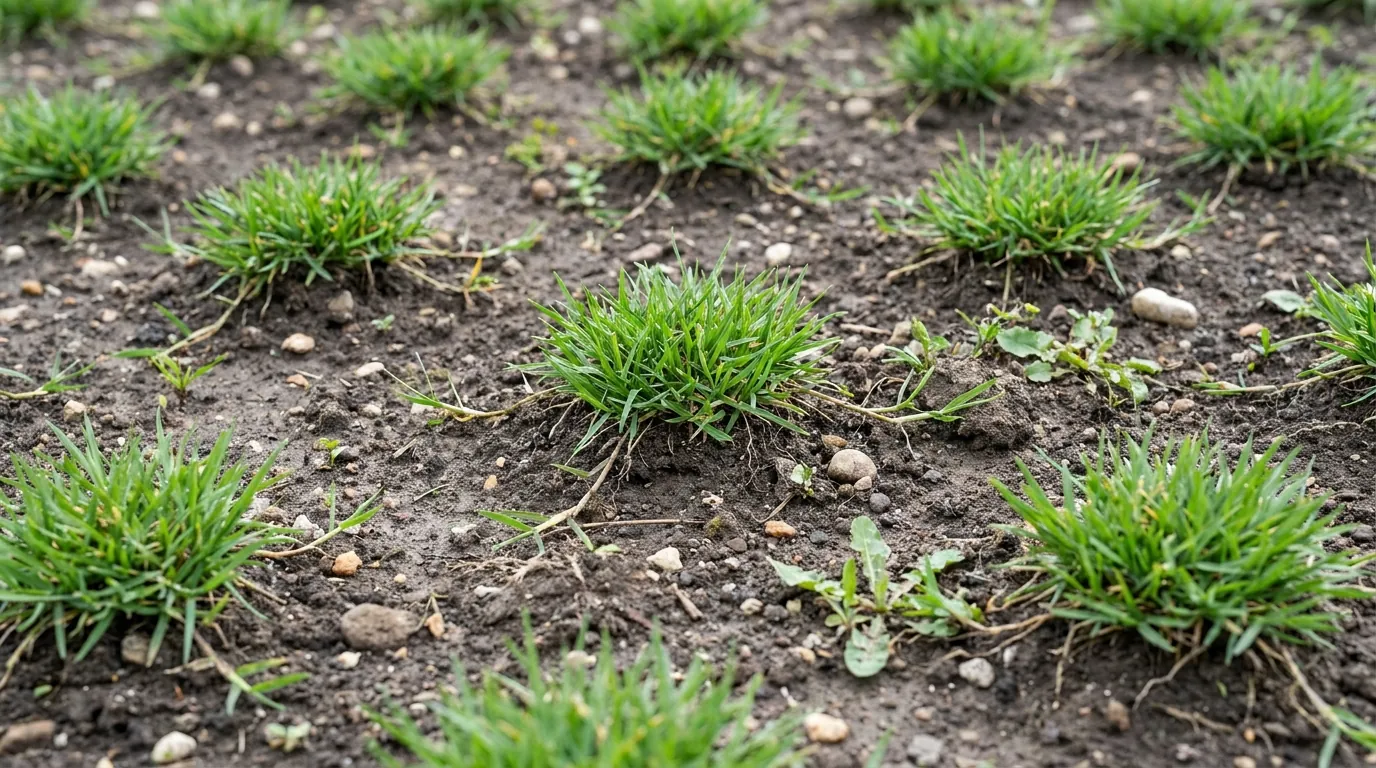
How Do You Control Weeds While It Establishes?
This is one of the less glamorous realities of No-Mow Grass.
Slow spread means bare soil remains exposed for longer when plants are widely spaced.
Turf Queensland warns that slow-growing Zoysias can be overtaken by weeds before establishment if they are grown from sparse starting material.
Useful strategies include:
- start with clean prepared soil
- plant densely enough for your budget and timeline
- weed manually while gaps remain
- avoid disturbing runners once they begin knitting together
- reduce unnecessary bare-soil areas
Pre-grown tiles or slabs cost more initially but reduce the open establishment window.
Can Zoysia tenuifolia Grow Around Pools?
Yes, where the site drains well and traffic is moderate.
Its fine texture and low height make it visually compatible with:
- pool edges
- stepping stones
- modern courtyards
- resort-style landscapes
Australian nursery references commonly recommend it around pools and pavers.
Do not assume it will tolerate constant chlorine discharge or permanently wet compacted soil.
It is still a living grass.
Is Zoysia tenuifolia Better Than Artificial Grass?
They solve different problems.
Choose Zoysia tenuifolia when you want:
- a living surface
- no synthetic fibres
- fine natural texture
- low mowing
- a softer transition between plants and paving
- a lawn that changes naturally with climate
Choose artificial grass when you prioritise:
- immediate full coverage
- no plant establishment
- no dormancy
- use in locations where living turf will not receive enough growing conditions
Artificial turf also has its own heat, drainage, installation and material trade-offs.
For those, use our Artificial Grass & Turf guide.
How Much Zoysia tenuifolia Do I Need?
First measure the actual planting area.
For irregular lawns, courtyards and stepping-stone layouts, calculate the square metres before deciding whether to use:
- plugs
- pots
- plant tiles
- slabs
Our Lawn Size & Turf Quantity Calculator can calculate the area and help with quantity planning.
For pots or plugs, the final number then depends on planting spacing.
Closer spacing gives faster coverage but requires more plants.
Frequently Asked Questions
Is Zoysia tenuifolia really no-mow grass?
It can be left unmown, but the result is not a flat conventional lawn. Unmown plants form low rolling or hummocky growth. Occasional mowing can be used if you want a flatter lawn surface.
How high does No-Mow Grass grow?
Australian horticultural sources commonly describe it around 5–15 cm high, although older mounded plantings may appear higher in places.
How far apart should Zoysia tenuifolia be planted?
Around 30 cm is a common Australian nursery recommendation when planting individual pots or plugs for reasonably quick coverage. Wider spacing costs less but takes longer to fill.
How fast does Zoysia tenuifolia spread?
It spreads slowly. Bamboo Land gives an indicative rate around 20 cm per year, but actual spread varies substantially with warmth, water, soil, starting material and planting density.
Can you walk on Zoysia tenuifolia?
Yes, once it is established, but it is better suited to ordinary household or moderate traffic than heavy sports-style wear. Slow recovery means repeated concentrated traffic can remain visible.
Does Zoysia tenuifolia grow in shade?
It grows in full sun to part shade. Coverage usually develops more slowly as light decreases, so deep shade should not be treated the same as ordinary part shade.
Is No-Mow Grass drought tolerant?
Yes, once established. New plantings still need regular moisture while roots establish and the groundcover knits together.
Does Zoysia tenuifolia go brown in winter?
It can in cooler or frost-prone climates because it is a warm-season grass. Protected warm-climate gardens generally retain better winter appearance than cold inland sites.
Is Zoysia tenuifolia good between stepping stones?
Yes. This is one of its most common landscape uses because the fine, low foliage softens paving and can be left unmown.
Is Zoysia tenuifolia native to Australia?
No. Kew places the taxon within Zoysia matrella, whose native range is tropical and subtropical Asia to the north-west Pacific. Australian nurseries grow it widely as an ornamental lawn and groundcover species.
Final Thoughts
Zoysia tenuifolia works best when you stop asking it to behave exactly like a conventional lawn.
Its strengths are:
- very fine foliage
- naturally low growth
- little or optional mowing
- drought tolerance after establishment
- part-shade tolerance
- useful coastal and warm-climate performance
- strong visual effect between pavers and across slopes
Its weaknesses are just as important:
- slow establishment
- slower repair after concentrated wear
- potential winter browning in colder climates
- an unmown surface that becomes mounded rather than perfectly flat
That makes it less suitable for a hard-working sports lawn, but very attractive for courtyards, low-use lawns, slopes and landscape groundcover.
For broader lawn and turf planning, continue to our Grass & Turf hub.
If you need to calculate the actual area before buying plants, tiles or turf material, use our Lawn Size & Turf Quantity Calculator.


