
Silver Banksia (Banksia marginata): Size, Flowers and Growing Guide for Australian Gardens

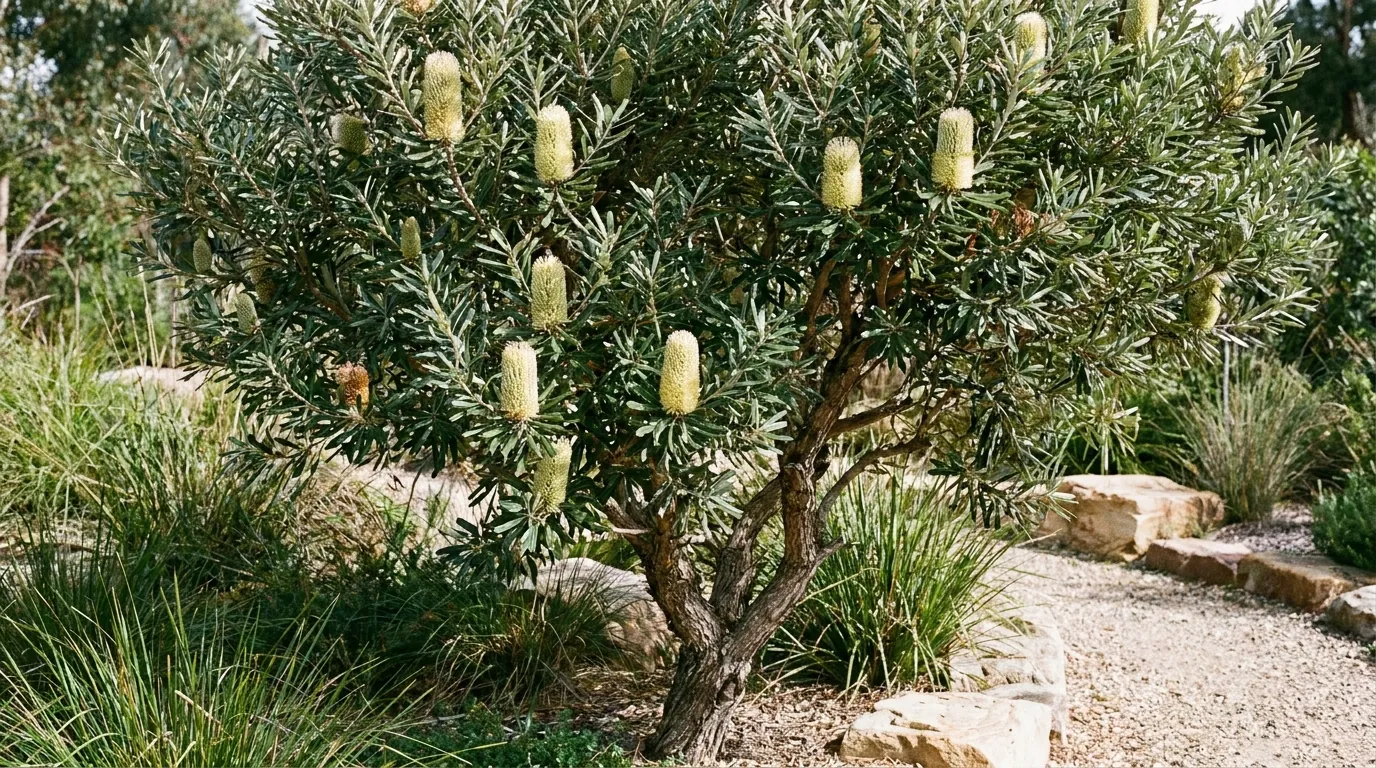
Silver Banksia is one of the most variable Banksias you can put in an Australian garden.
Depending on where the original plant material comes from, Banksia marginata can behave like a compact shrub, a broad screening plant or a small tree.
That variability is not a nursery inconsistency. It is part of the species.
Australian National Botanic Gardens describes Silver Banksia as ranging from around 1 to 12 metres, while NSW PlantNET also records it as a shrub or small tree to about 12 m.
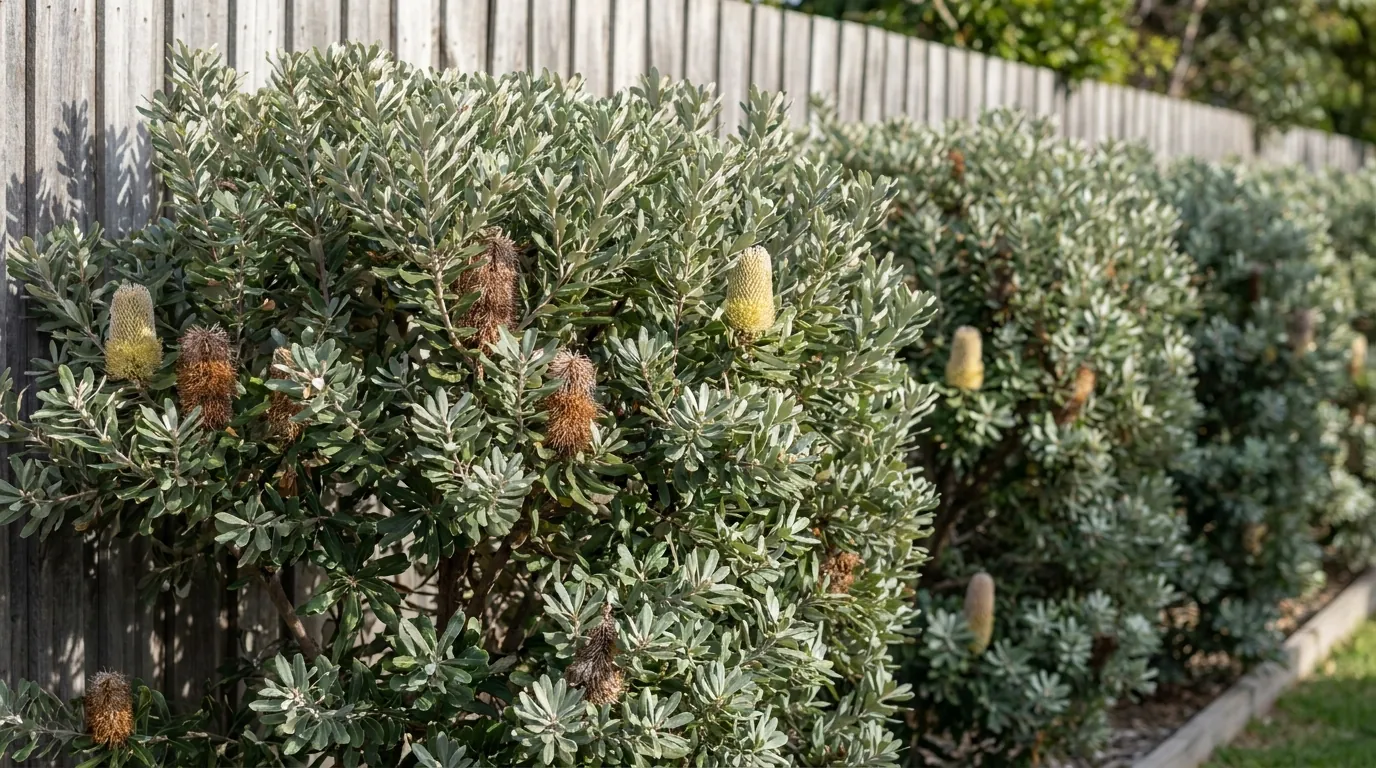
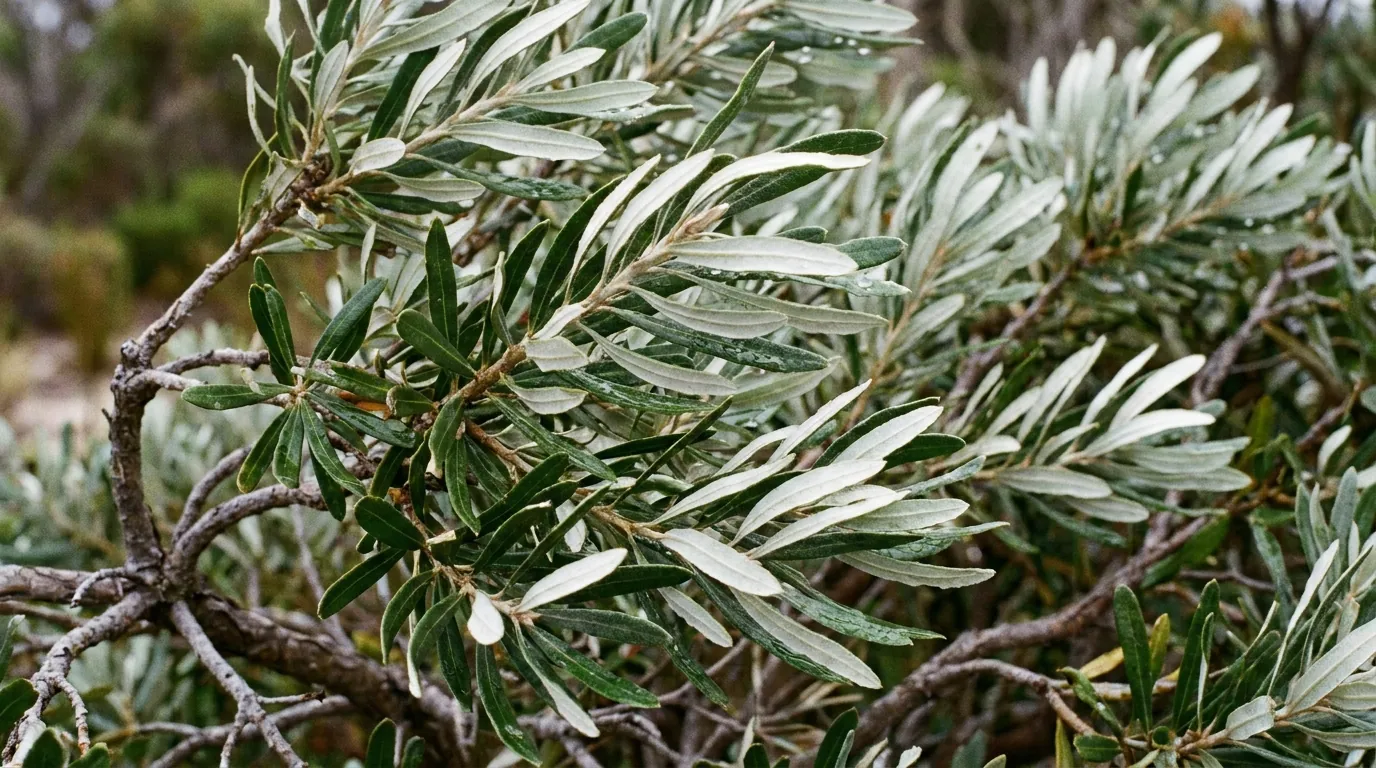
The feature that gives it its common name is more consistent: the leaves are green above and distinctly pale or silvery underneath.
When the wind turns the foliage, that pale underside can give the whole plant a silver-grey flicker.
If you are comparing Banksia marginata with other Australian Banksias, start with our Banksia in Australia guide before choosing by flower colour or nursery height alone.
Quick Answer: What Is Silver Banksia?
Silver Banksia is the common name for Banksia marginata, a species native to south-eastern Australia.
NSW PlantNET records it from New South Wales, Victoria, Tasmania and South Australia, while Australian National Botanic Gardens notes that it is the only Banksia naturally occurring in the Canberra region.
It can grow as:
- a low shrub
- a medium-sized dense shrub
- a taller spreading screen
- a small tree
The form depends heavily on provenance and growing conditions.
Its distinguishing features include:
- dull green upper leaf surfaces
- silvery-white undersides
- yellow cylindrical flower spikes
- woody seed-bearing cones
- strong wildlife value
- good adaptability across many temperate Australian conditions
Silver Banksia at a Glance
| Feature | Banksia marginata |
|---|---|
| Common name | Silver Banksia |
| Botanical name | Banksia marginata |
| Plant type | Evergreen shrub to small tree |
| Mature height | Highly variable, roughly 1–12 m depending on form and provenance |
| Typical garden habit | Often medium shrub to small tree |
| Leaves | Green above, silvery-white underneath |
| Flowers | Pale yellow to bright yellow cylindrical spikes |
| Flowering | Often late summer to winter; some forms flower more broadly |
| Light | Full sun to part shade |
| Soil | Adaptable, but generally best with good drainage |
| Frost | Many forms are frost tolerant |
| Landscape use | Feature plant, wildlife garden, screen, windbreak, native garden |
| Distribution | NSW, ACT region, Victoria, Tasmania and South Australia |
This table is a planning summary, not a promise that every seed-grown Silver Banksia will finish at the same dimensions. Its variability is one of the most important things to understand about the species.
Why Is Banksia marginata Called Silver Banksia?
The name comes from the leaves.
The upper surface is green, while the underside is covered in pale hairs that make it appear white or silver.
Australian Native Plants Society describes the underside as silvery, and NSW PlantNET describes it as white-tomentose.
The silver effect is easiest to see in wind
When leaves move or turn, the pale undersides become visible.
That creates a subtle two-tone effect that can make Silver Banksia useful even when it is not flowering.
It is one reason the species works well as:
- a feature shrub
- a native screen
- a wind-exposed planting
- a mixed foliage backdrop
How Big Does Silver Banksia Grow?
There is no single correct mature-height number for Banksia marginata.
Australian National Botanic Gardens gives a range of approximately 1–12 m, depending on the origin of the plant. NSW PlantNET also records plants to 12 m.
ANBG’s dedicated growing profile notes that a typical plant may be around 2 m high with a similar spread, but emphasises the enormous variation within the species.
Why does the size vary so much?
Different populations have adapted to different environments.
Some naturally occur as:
- low coastal shrubs
- compact inland forms
- dense rounded bushes
- taller tree-like plants
So a label reading “Silver Banksia” does not tell you everything about the eventual shape.
Provenance matters
If possible, ask the nursery whether the plant has a known provenance or selected form.
Australian Native Plants Society specifically recommends choosing a form originating from a climate similar to the garden where it will be grown.
That can matter for:
- frost tolerance
- coastal exposure
- dry climates
- humid conditions
- mature habit
Is Silver Banksia a Tree or a Shrub?
It can be either.
That is one of the defining features of Banksia marginata.
NSW PlantNET classifies it as a shrub or small tree, while ANBG describes naturally occurring forms from around 1 m shrubs up to 12 m trees.
If you need a predictable small shrub, choose a known compact form rather than assuming every seed-grown Silver Banksia will remain low.
Likewise, if you want a tree-like feature, do not assume a low-growing provenance will eventually develop into a tall single-trunk specimen.
What Do Silver Banksia Flowers Look Like?
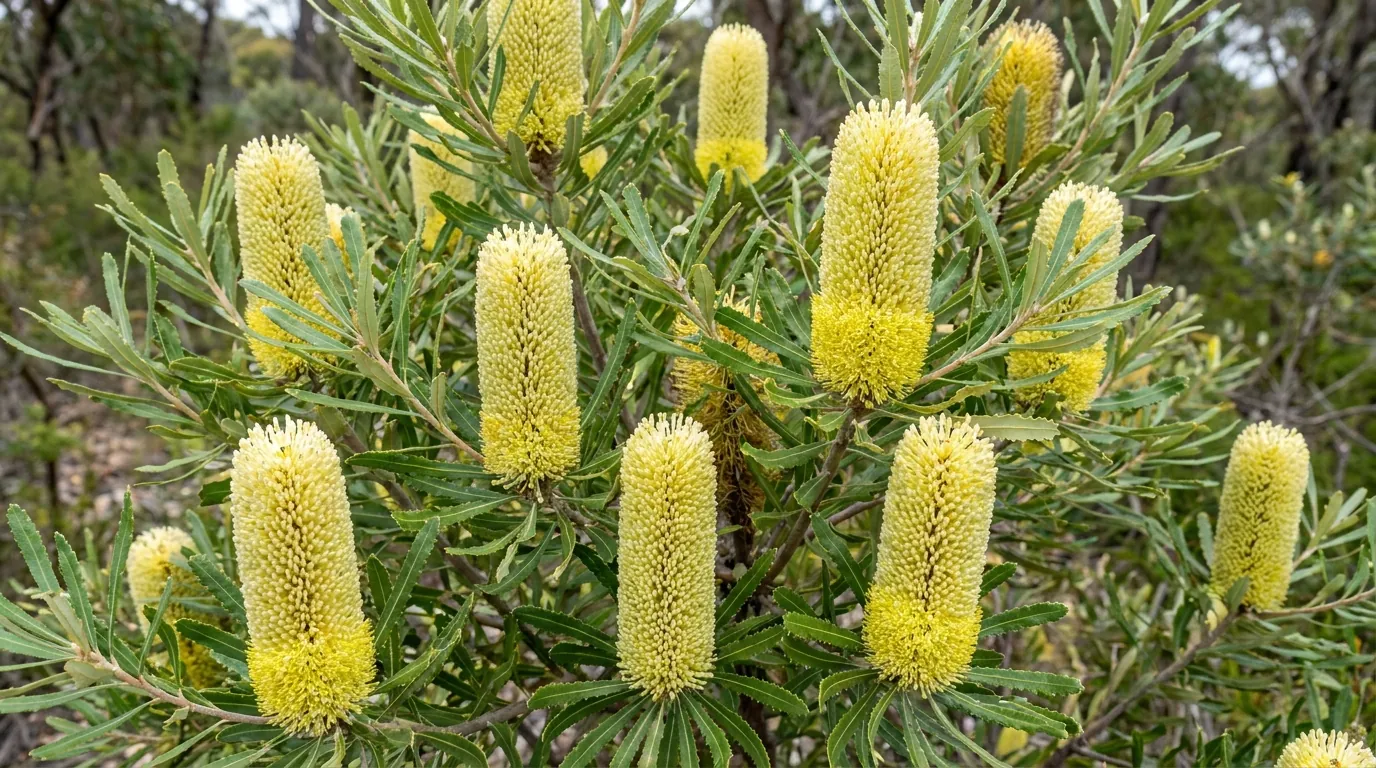
Silver Banksia produces cylindrical yellow flower spikes.
NSW PlantNET records inflorescences around 5–10 cm long, with pale-yellow flowers. ANBG notes colour ranging from greenish-yellow to bright yellow.
The flowers are not usually as brightly orange as some other Banksia species.
Their appeal is more subtle:
- soft yellow colour
- upright cylindrical form
- contrast with green-and-silver foliage
- strong nectar production
When does Silver Banksia flower?
Flowering varies with location and provenance.
ANBG describes flower heads opening from late summer to winter, while its dedicated growing profile notes that flowers can occur through much of the year but are most common from roughly February to July.
Do not treat one flowering calendar as universal across Australia.
Does Silver Banksia Attract Birds?
Yes.
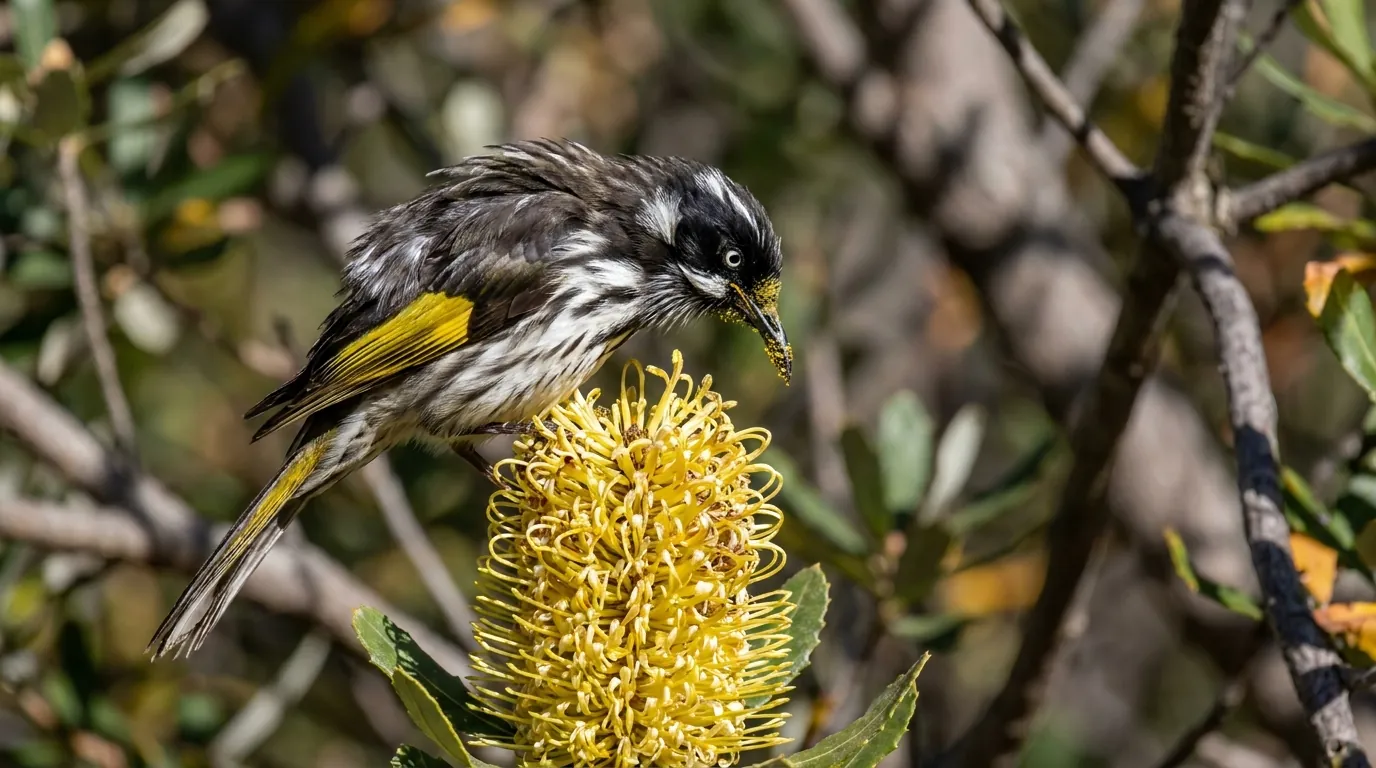
Banksias produce nectar-rich flower heads, and Banksia marginata is a useful wildlife plant.
ANBG notes that Banksia flowers attract native birds and small mammals, while the dedicated B. marginata profile specifically mentions honeyeaters, insects and small mammals among pollinators and visitors.
That makes Silver Banksia useful in:
- bird-friendly gardens
- mixed native plantings
- habitat gardens
- rural windbreaks
- revegetation-style gardens
The benefit is not only the flowers.
A mature shrub can also provide structure and shelter.
Where Does Silver Banksia Grow Naturally?
Its natural range is broad across south-eastern Australia.
NSW PlantNET records it in:
- New South Wales
- Victoria
- Tasmania
- South Australia
and ANBG notes its natural occurrence through the Canberra region.
ANBG’s growing profile describes a range from South Australia through Victoria and eastern New South Wales, north to the New England region, as well as Tasmania.
That broad distribution helps explain why the species contains so many forms adapted to different conditions.
What Climate Suits Banksia marginata?
Silver Banksia is one of the more adaptable temperate Banksias.
ANBG describes it as hardy across a variety of soils and climates, with most forms frost tolerant.
Southern temperate gardens
It is particularly well suited to many areas of:
- Victoria
- Tasmania
- South Australia
- the ACT
- southern and tableland NSW
Frost-prone areas
Many forms tolerate frost, but provenance still matters.
A plant originating from a cooler or higher-altitude population may perform differently from one from a milder coastal population.
Coastal gardens
Coastal forms can cope with wind and exposure.
ANBG’s growing profile specifically notes that selecting a coastal provenance can improve the chance of salt resistance.
The safest approach is to match the plant form to the site rather than treating every Silver Banksia as genetically identical.
Does Silver Banksia Need Full Sun?
Full sun is the strongest default choice, but partial shade is possible.
Australian National Botanic Gardens describes it as growing in sun or part shade, while noting that plants can become more spindly in deeper shade.
For a dense garden specimen or screen, stronger light usually supports:
- denser growth
- better structure
- stronger flowering
- less leaning toward light
Part shade can still work where the plant receives useful light for much of the day.
What Soil Does Silver Banksia Prefer?
Silver Banksia is more adaptable than many gardeners expect.
ANBG records it growing across sandy soils, loams and clay, and even tolerating moist conditions in some forms. It still generally performs best where drainage is adequate.
That does not mean every garden should plant it into stagnant wet clay.
The more useful rule is:
match the plant’s provenance to the site and avoid creating a permanently oxygen-poor root zone.
Australian Native Plants Society recommends well-drained soil for Banksias generally and warns against continually wet cultivation conditions even where some species naturally occur in damp habitats.
For general Banksia soil and planting guidance, use our Banksia in Australia guide rather than duplicating the full genus-level care article here.
How Often Should Silver Banksia Be Watered?
There should not be a fixed watering schedule for every Australian garden.
Water need changes with:
- plant age
- soil type
- rainfall
- temperature
- wind
- pot versus ground
- establishment
- provenance
Newly planted Silver Banksia
Keep the root ball from repeatedly drying hard while it establishes.
Do not respond to establishment stress by keeping the soil permanently saturated.
Established plants
ANBG describes Banksia marginata as drought resistant once established.
That does not mean mature plants never need water.
A long dry period in shallow or sandy soil can still create stress.
Does Banksia marginata Need Native Fertiliser?
Usually, restraint is safer than heavy feeding.
Banksias belong to the Proteaceae and have specialised cluster roots that are efficient at taking up nutrients from poor soils.
Australian Native Plants Society notes that Banksias can be damaged by excessive fertiliser, particularly phosphorus, and recommends low-phosphorus products when feeding is needed.
Do not use ordinary high-phosphorus fertiliser simply because the plant looks slow.
A slow or yellowing Banksia may instead have:
- root stress
- drainage problems
- unsuitable soil chemistry
- transplant stress
- pest or disease issues
If the plant is declining, use our Banksia problems guide rather than treating the symptom with fertiliser.
Can Silver Banksia Be Used as a Screen?
Yes, especially the denser shrub forms.
ANBG notes that some forms make useful screens or windbreaks, while its 2020 Banksia marginata profile describes dense forms as suitable screen plants.
The important qualification is form selection.
A naturally low rounded shrub and a taller sparse tree form will not create the same screen.
Before planting a row, ask:
- how tall is this provenance expected to grow?
- how wide will it become?
- is it naturally dense?
- does it have a shrub or tree habit?
- will it need pruning to hold the intended shape?
Do not plan spacing from the nursery pot size.
Can Silver Banksia Grow in a Pot?
Some compact or younger forms can grow in containers, but the species is too variable for a universal “yes, ideal pot plant” recommendation.
A known low-growing form can be a better candidate than an unknown seed-grown tree-form plant.
If growing one in a pot:
- use a container with reliable drainage
- use an appropriate low-phosphorus native potting mix
- avoid a permanently wet saucer
- allow enough volume for long-term root growth
- expect container size to influence final plant size
If your goal is specifically a small Banksia for a courtyard or pot, our small Banksias for pots and tiny gardens guide is the better starting point.
How Fast Does Silver Banksia Grow?
ANBG describes Banksia marginata as fairly fast growing under suitable conditions.
Do not turn that into a fixed centimetres-per-year promise.
Growth varies with:
- provenance
- climate
- moisture
- soil
- light
- age
- establishment
A compact shrub form may naturally add less height than a tree form even when both plants are healthy.
Can Silver Banksia Be Pruned?
Yes, but pruning response depends on the form.
Some Banksia marginata populations develop a lignotuber, a woody structure at the base that can produce new shoots after damage or fire.
Other forms rely mainly on seed regeneration.
Australian Native Plants Society records both fire-sensitive and fire-resistant forms, while ANBG notes that lignotuberous forms can tolerate heavier pruning than non-lignotuberous forms.
Do not assume every Silver Banksia can be hard-pruned
If you do not know the provenance or whether the plant is lignotuberous, light selective pruning is safer than cutting deeply into old bare wood.
Useful pruning reasons include:
- removing damaged branches
- maintaining clearance
- shaping a screen
- correcting uneven young growth
Avoid repeated heavy shearing simply because the plant is being used as a screen.
Is Silver Banksia Fire Resistant?
The answer is more complicated than yes or no.
Australian Native Plants Society notes that both fire-sensitive and fire-resistant forms of Banksia marginata occur.
Some forms regenerate after fire from a lignotuber.
Others depend mainly on seed.
That means you should not assign one universal fire-response strategy to the entire species.
For garden planning in bushfire-prone areas, follow current local bushfire landscaping guidance rather than relying on the plant name alone.
Why Is My Silver Banksia Turning Yellow or Dying?
Do not diagnose from colour alone.
Possible Banksia problems can include:
- root-zone stress
- poor drainage
- inappropriate fertiliser
- nutrient imbalance
- establishment problems
- pest damage
- root disease
The purpose of this article is to identify and grow Banksia marginata, not to duplicate the troubleshooting cluster.
If the plant is yellowing, browning, dropping foliage or collapsing, use our Why Is My Banksia Dying? guide.
If insects, scale, caterpillars or other pest damage are involved, use our Banksia and Grevillea pest guide.
Silver Banksia or Another Banksia: Which Fits Better?
Choose Banksia marginata when you want:
- silver-backed foliage
- yellow flower spikes
- south-eastern Australian provenance
- frost-tolerant options
- a shrub or small-tree form
- wildlife value
- a screen or native feature plant
Choose another Banksia if you specifically need:
- a predictable dwarf form
- a strongly coastal tall tree
- a groundcover
- a particular orange/red flower colour
- a highly controlled mature height
The biggest planning challenge with Silver Banksia is not whether it is hardy.
It is knowing which form you are buying.
For broader comparisons, use our Banksia in Australia guide.
Frequently Asked Questions
How tall does Banksia marginata grow?
It is highly variable. Australian sources record Silver Banksia from about 1 m shrubs to trees around 12 m tall, depending strongly on provenance. Many garden forms remain much smaller than the maximum.
Why is it called Silver Banksia?
The lower surface of each leaf is pale or silvery-white, creating a silver effect when the leaves move in the wind.
Is Silver Banksia native to Australia?
Yes. Banksia marginata is native to south-eastern Australia, including New South Wales, Victoria, Tasmania, South Australia and the Canberra region.
Does Silver Banksia tolerate frost?
Many forms are frost tolerant. Because the species is highly variable, provenance matters when choosing a plant for a particularly cold site.
Does Banksia marginata need full sun?
Full sun is ideal for dense growth and flowering, although the species can tolerate partial shade. Plants grown in heavier shade may become more open or spindly.
When does Silver Banksia flower?
Flowering varies, but Australian references commonly record flowers from late summer into winter, with some plants flowering over a broader period.
Can Silver Banksia be used as a hedge?
Dense shrub forms can work as informal screens or windbreaks. Because the species varies greatly in height and habit, choose a known dense form rather than assuming every Silver Banksia will hedge neatly.
Is Banksia marginata drought tolerant?
Established plants can tolerate dry periods, although newly planted Banksias still need establishment moisture. Soil depth, climate and provenance affect how much drought stress a plant can handle.
Can Silver Banksia be hard-pruned?
Only with caution. Lignotuberous forms can recover from heavier pruning, but not all Banksia marginata forms have the same regeneration strategy. If provenance is unknown, lighter selective pruning is safer.
Is Silver Banksia good for wildlife?
Yes. Its nectar-rich flower spikes attract honeyeaters and other nectar feeders, while mature plants also provide useful structure and shelter in native gardens.
Final Thoughts
Silver Banksia is best understood as a variable species rather than one fixed garden shape.
The same botanical species can appear as a low shrub in one population and a small tree in another. That means provenance matters almost as much as the name on the label.
The consistent features are easier to recognise:
- green leaves with silvery undersides
- pale-to-bright yellow flower spikes
- strong wildlife value
- good adaptability across temperate south-eastern Australia
- many forms with useful frost tolerance
- generally modest maintenance once established
If you want a Silver Banksia for a screen, small garden or tree-like feature, ask about the form before buying.
For broader Banksia selection and care, continue to our Banksia in Australia guide.
If an established Banksia is yellowing, browning or collapsing, use our Banksia problems guide instead.

