
Red artificial flowers can be beautiful, but they are not shy. Use too many and the whole room starts yelling at you. Use the right stems, in the right vase, with a bit of restraint, and they can bring warmth, depth and a proper focal point to a home, office, wedding table or memorial arrangement.
I like red flowers when they have a job to do. A few red roses in a hallway vase. Deep burgundy stems on a dining table. Poppies in a simple ceramic jug. A Christmas arrangement that feels Australian rather than snow-and-holly nonsense copied from the northern hemisphere.
The trick is choosing red artificial flowers that look natural enough up close and styling them so they suit Australian light, heat and everyday living.
Red works best as a feature colour, not a whole-room theme. Choose matte petals, deeper reds (burgundy, wine, ruby), realistic leaves and a simple vase. Avoid glossy bright-red bunches unless it is a short event display.
| Use | Works well | Be careful with |
|---|---|---|
| Entry table | Burgundy roses, poppies, natives | Too many bright-red stems |
| Dining table | Low red + cream arrangement | Tall centrepieces blocking guests |
| Christmas | Red + eucalyptus + cream | Fake-snow northern styling |
| Memorial | Poppies, roses, natives | Over-decorated arrangements |
Why red artificial flowers work so well in Australian homes
Red is a strong colour. It pulls the eye faster than white, pink or soft blue flowers. That can be useful in open-plan homes where a corner feels flat, or in offices where the greenery is all green and no one has had the courage to add colour.
In Australian homes, red artificial flowers work especially well in:
- entry tables
- dining areas
- console tables
- office reception counters
- covered patios
- event tables
- Christmas displays
- Mother’s Day arrangements
- Valentine’s Day arrangements
- memorial flowers
They also suit darker interiors. If you have charcoal, timber, black metal, brown leather or deep green décor, red can hold its ground. Pale flowers sometimes disappear in those rooms. Red does not.
That said, bright tomato-red flowers can look cheap if the petals are too glossy. In most homes, I prefer deeper reds: burgundy, wine, ruby, red-black, or muted poppy red. They look less plastic and are easier to style.
Which red artificial flowers look most natural?
- Matte, layered petals
- Deep red / burgundy tones
- Realistic, muted leaves
- Natural variation between blooms
- Glossy, bright-red petals
- Neon green leaves
- Flat, printed centres
- Every flower facing forward
Some red flowers translate better into faux stems than others. Red roses are common, but that also means cheap-looking ones are everywhere. I would be fussier with roses than almost any other artificial flower.
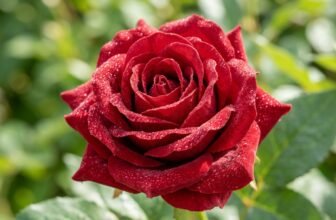
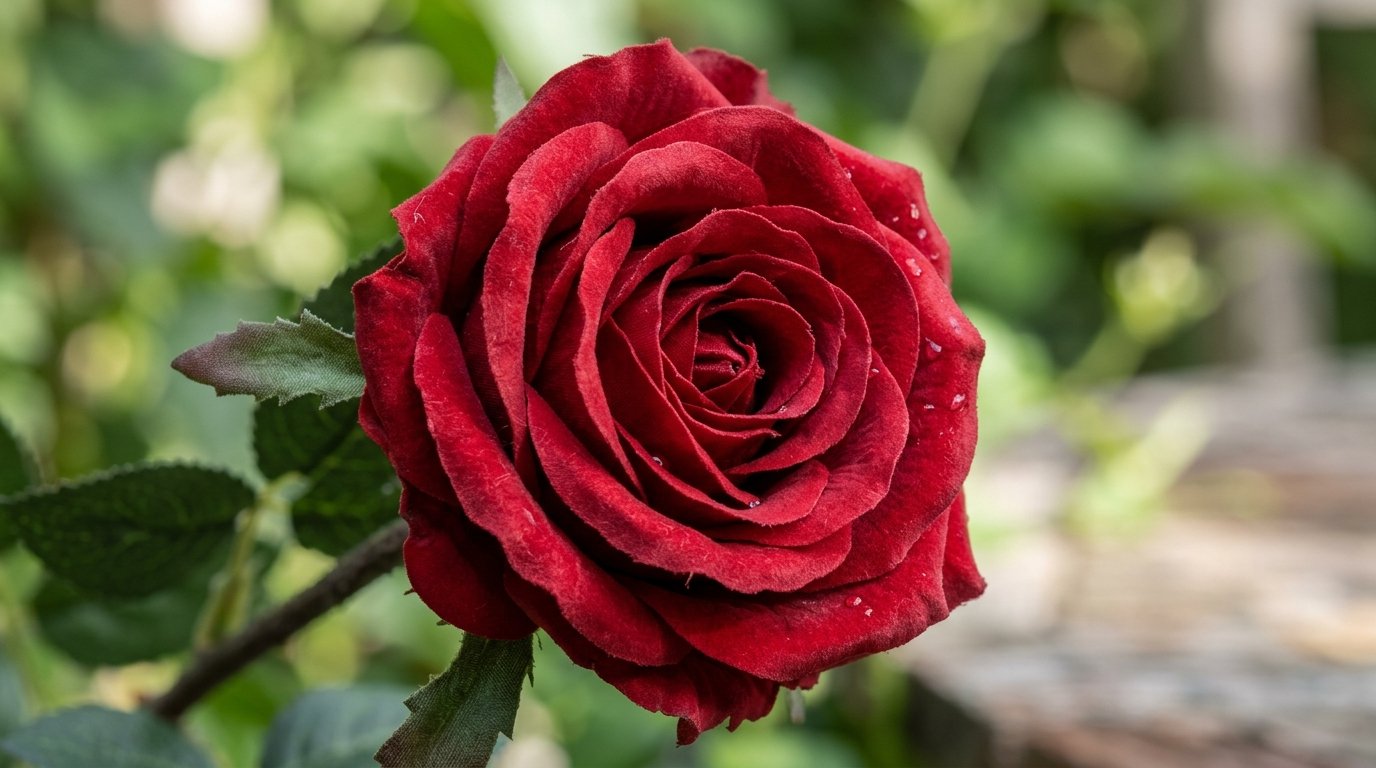
Red artificial roses can look lovely if the petals have shape, depth and a slightly irregular edge. Avoid roses that look like they were stamped out of one flat sheet of fabric. Real roses have shadow, folds and uneven petal layers.
A good faux rose usually has:
- layered petals
- a soft matte finish
- flexible stems
- realistic leaves
- natural colour variation
- no thick plastic shine
If the red is too flat, mix it with cream, white or dusty pink. Our white artificial flowers guide is useful if you want to soften red without making the arrangement look too busy.
Red poppies
Artificial poppies are one of my favourites because they do not need to look perfectly neat. Real poppies are a bit wild and papery anyway. That makes them forgiving.
Red poppies suit:
- rustic vases
- Anzac Day displays
- simple table arrangements
- cottage-style homes
- memorial corners
- country-style interiors
They look best with space around them. Don’t crush them into a tight bunch. Poppies need a bit of air.
Red dahlias and peonies
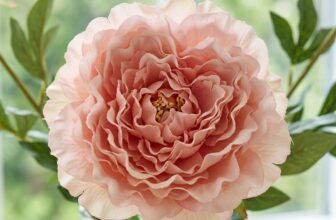
Dahlias and peonies work when you want a fuller, softer arrangement. Red peonies can look romantic without being too formal. Red dahlias are bolder and better for dining tables or events.
The risk is bulk. Big red flowers can overpower a small room. If the vase is short and fat, the arrangement can quickly look like a red cabbage. Use height and greenery to break it up.
Red native-style flowers
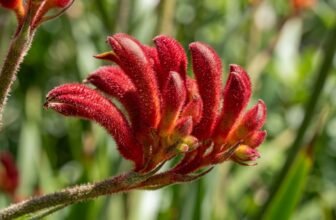
Red artificial natives are still harder to find in good quality, but when done well, waratah-style or bottlebrush-style stems can feel more Australian than imported-looking rose bunches.
For later content, I’d treat artificial native flowers as their own proper topic. Waratah, banksia, kangaroo paw and wattle all behave differently in arrangements, even when they are faux.
What to look for before buying red artificial flowers
Red exposes poor quality faster than softer colours. The dye, petal edge, leaf finish and stem all matter.
Choose matte over shiny
Glossy red petals are the quickest way to make a flower look fake. A little sheen is normal on some materials, but if it reflects like a Christmas bauble, leave it.
Matte fabric, real-touch latex and soft silk-style petals usually look better.
Look for colour variation
Real red flowers are rarely one flat red. They have darker centres, lighter edges, shadows and sometimes green or brown undertones.
Better artificial stems often use:
- darker petal bases
- slightly faded edges
- mixed red tones
- realistic centres
Green or brown stems rather than bright plastic green.
Check the leaves
Bad leaves ruin good flowers. With red flowers, the leaves are often very visible because the colour contrast is strong.
Look for leaves that are:
- not too shiny
- veined or textured
- not neon green
- attached cleanly
Not all facing the same direction.
Think about UV exposure
Australia’s sun is not gentle. If red artificial flowers are going outdoors, even under cover, check whether the seller says they are UV-treated or suitable for outdoor use.
Red, purple and deep pink can fade noticeably in strong sun. North and west-facing spots are the worst. Covered patios are safer than exposed balconies, but UV still creeps in.
If you want colour outdoors long term, choose outdoor-rated stems and expect some fading over time. That is not being negative. That is just the sun doing what the sun does here.
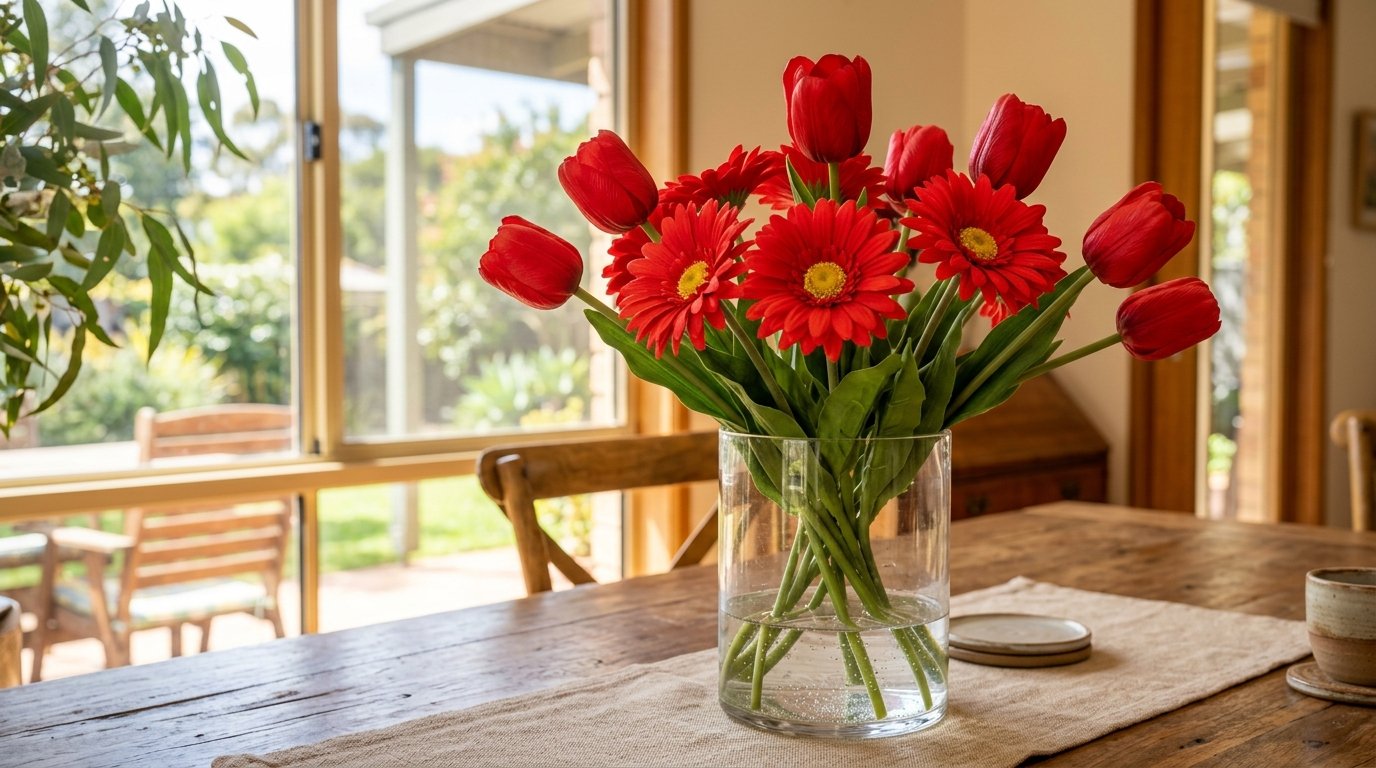
Styling red artificial flowers without overdoing it
Red flowers are not background flowers. Give them breathing room.
Keep the vase simple
For red flowers, I usually avoid heavily patterned vases. Plain ceramic, glass, stone, matte black, white, clear or timber-look vessels work better.
A good vase lets the flowers do the talking. A fussy vase plus red flowers can look like two people talking over each other.
If you are unsure about vase height or shape, use the guide on choosing a vase with artificial flowers . Vase proportion matters more than people think.
Mix red with softer colours
Red works well with:
- white
- cream
- dusty pink
- soft green
- eucalyptus tones
- burgundy
- blush
- deep plum
For a softer arrangement, pair red with pink. Our pink artificial flowers guide gives good ideas for keeping arrangements warm without making them too strong.
For a crisp look, red and white is classic. For a moodier look, red and burgundy with dark foliage can be beautiful.
Use red as the feature, not the whole arrangement
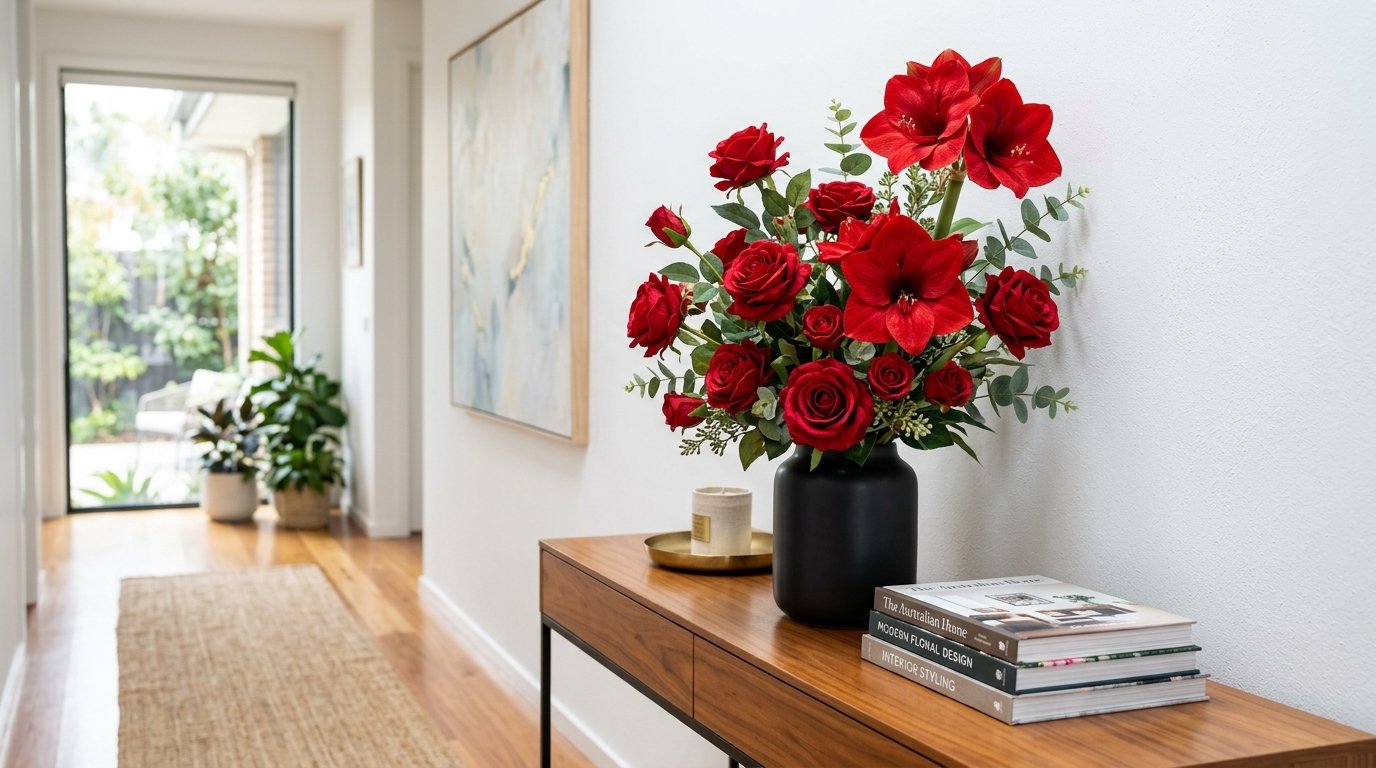
Use 3 red feature stems, 2 softer filler stems and 2 greenery stems in one calm vase. If the red feels strong, cut back the feature stems before adding filler.
If every stem is red, the arrangement can feel flat. Add foliage, neutral fillers or softer flowers.
A simple formula that works:
3 to 5 red feature stems.
2 to 4 neutral or white stems.
a few green filler stems
One vase with a calm shape.
For larger arrangements, increase the numbers but keep the ratio. Red should lead, not bully.
Red flowers make sense at Christmas, but we do not need to pretend we live in a snowy cottage. For an Australian Christmas table, try red flowers with eucalyptus-style greenery, cream flowers, timber, linen and simple candles.
Poinsettia-style stems can work, but use them carefully. Too many and it starts looking like a shopping centre display.
Mother’s Day
Mother’s Day in May suits deeper red, burgundy, blush and cream arrangements. Red roses are fine, but I’d mix them with softer tones unless the person genuinely loves dramatic flowers.
Weddings and events
Red flowers are strong in photos. They work well for evening weddings, winter weddings, formal table settings and bold bridal arrangements.
For daytime weddings, soften red with white, blush or greenery. In full Australian sun, bright red can look harsh in photos.
Memorial flowers
Red poppies, roses and native-style stems can work beautifully in memorial arrangements. Keep them respectful and simple. Too much decoration can feel wrong in that setting.
Caring for red artificial flowers
Artificial flowers still need care. Dust dulls red quickly.
Every few weeks, give them a light clean:
Take the stems out of the vase.
Shake them gently outside.
Dust petals with a soft cloth or makeup brush.
Wipe stems and leaves lightly.
Let them dry fully before putting them back.
For more detailed cleaning, use our guide on how to clean artificial flowers .
Avoid soaking red petals unless the product label says it is safe. Some dyes can bleed, especially on cheaper flowers.
Common mistakes with red artificial flowers
The biggest mistake is using too many bright red stems in one place. The second is choosing glossy petals.
I would avoid:
- shiny plastic petals
- neon green leaves
Tiny vases with huge flower heads.
- red flowers in every room
- outdoor use without UV suitability
Cheap bunches where every flower faces forward.
Arrangements with no greenery or softer filler.
Red is best used with confidence and restraint. Like chilli. A little can be excellent. Too much and everyone knows about it.
Some are, but not all. Check whether the flowers are UV-treated or marked for outdoor use. Red flowers can fade in strong Australian sun, especially on exposed balconies, fences and west-facing patios.