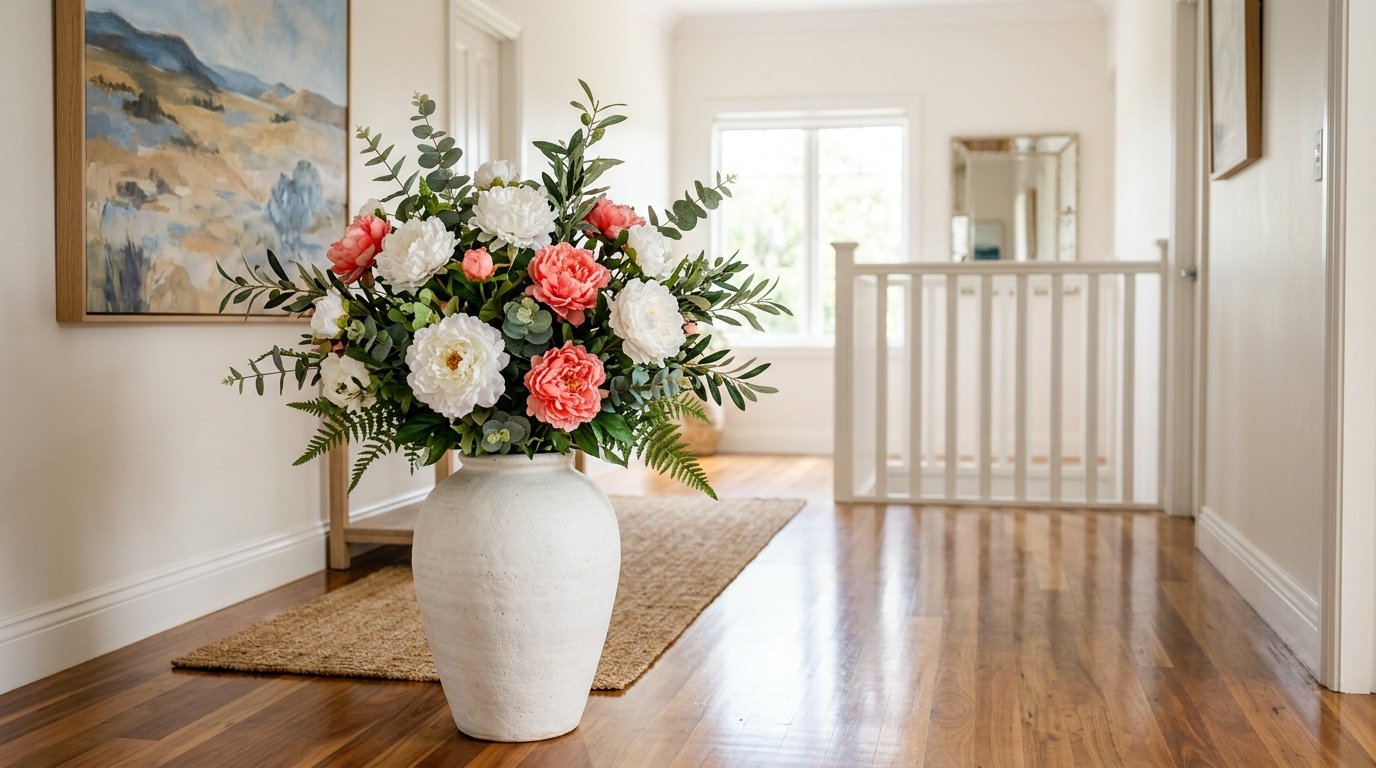

Artificial peonies are popular because they give you that soft, full, romantic flower look without the short fresh-flower season or the sad droop after a warm day. In Australia, that is a genuine advantage. Fresh peonies can be expensive, seasonal and fussy. Faux peonies sit there looking generous and calm while the weather outside does whatever dramatic thing it has planned.
But artificial peonies can go wrong quickly. Too round, too shiny, too stiff, too pink, and suddenly they look like scrunched fabric balls. A good faux peony should look layered, soft and slightly imperfect. Real peonies are not tidy little spheres. They have folds, shadows, loose petals and a bit of movement.
I like artificial peonies for bedrooms, wedding styling, Mother’s Day, dining tables, entry vases and softer home arrangements. They are not subtle, but they do not have to be loud either.
A good faux peony looks layered, soft and slightly imperfect — not a shiny round ball. Choose cream, blush, dusty pink or mauve, a matte finish, and give large heads room in a simple vase.
| Peony colour | Best use | Note |
|---|---|---|
| White / cream | Weddings, bedrooms, offices | Easiest to style |
| Blush / pink | Mother’s Day, dressing tables | Keep it muted |
| Burgundy | Dining, winter, formal | Rich and moody |
| Mauve / peach | Modern & coastal rooms | Softer looks more natural |
Why artificial peonies work so well
Peonies have volume. One good peony stem can do the work of several smaller flowers. That makes them useful when you want a full arrangement without buying half the shop. They work well for bedroom vases, wedding bouquets, bridal showers, Mother’s Day arrangements, dressing tables, dining table centrepieces, entry consoles and rental-friendly décor. They are also useful because fresh peonies are seasonal; artificial peonies let you get the look year-round, including for summer weddings. The main thing is choosing peonies that look soft, not stiff.
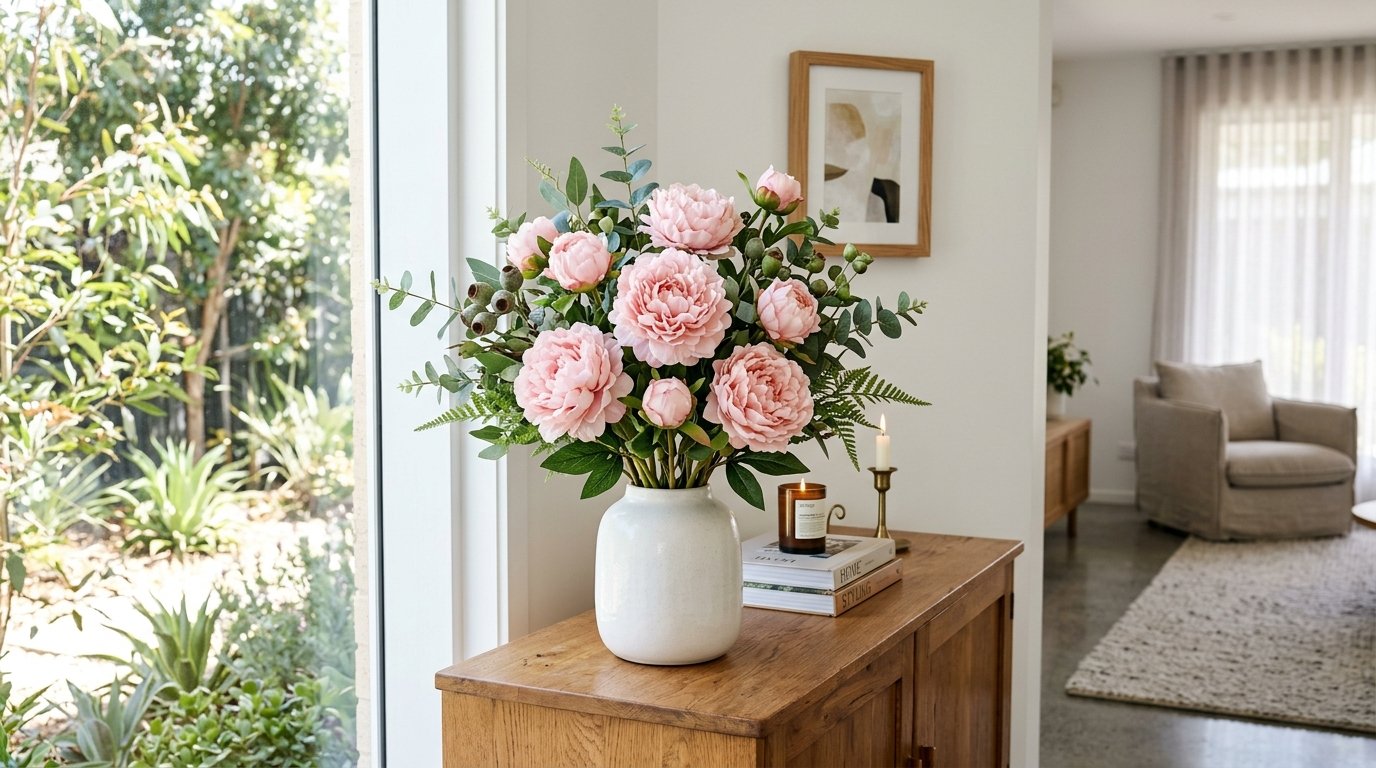
What makes artificial peonies look realistic?
- Layered, uneven petals
- Soft colour shading
- Matte finish
- Muted, natural leaves
- Perfectly round balls
- Bright pink or purple
- Glossy petals
- Oversized heads, tiny vases
Peonies are all about petal depth. If the flower head is one flat round shape, it will not convince anyone. Good artificial peonies should have many petals arranged at different depths. The centre should not look like a flat disc. Outer petals should open slightly and sit unevenly. A bit of irregularity is good. Real peonies do not look like they were assembled by a machine, even though the faux ones obviously were. We just do not want them admitting it.
Look closely at the petal edges. They should be soft, slightly curved or gently ruffled. Hard edges and fraying fabric make the flower look cheap. Real peonies often have subtle colour changes: the centre may be deeper and petal edges lighter. Flat colour is a warning sign. Peonies should not shine; a soft fabric or real-touch finish usually looks better. Peony foliage is often visible in arrangements, so look for leaves that are muted green, not shiny plastic. And some artificial peonies are huge. Big can be beautiful, but oversized peonies need a proper vase and room around them. A giant flower head in a tiny vase looks like a floral lollipop.
Best artificial peony colours for Australian homes
White and cream artificial peonies are elegant and easy to style. They work in bedrooms, weddings, dining rooms, bathrooms and offices. White peonies suit soft, calm rooms. Cream peonies feel warmer and are usually more forgiving under Australian indoor light. If you are building a neutral arrangement, our white artificial flowers guide can help with colour pairing.
Pink is the classic peony colour. Blush, dusty pink, soft rose and pale pink are the safest choices. Bright pink peonies can look fun for events, but in everyday home styling I would keep them muted. Soft pink peonies suit bedrooms, Mother’s Day, bridal showers and dressing tables. For more pink styling ideas, see the pink artificial flowers guide.
Red peonies are bolder and moodier than pink. Burgundy or wine-coloured peonies can look beautiful in dining rooms, winter arrangements and formal event styling. Bright red peonies can be hard to style unless the room has strong colours already. If you are working with red flowers, our red artificial flowers guide gives useful advice on avoiding that overdone Valentine’s Day look.
Mauve peonies are lovely in modern Australian interiors. They suit beige, grey, stone, sage green, soft pink and timber. Dusty purple works better than bright purple. Coral and peach peonies can look warm and cheerful, especially in spring and summer arrangements. They suit coastal homes, light timber, white walls and rattan furniture. The risk is orange; softer peach is safer.
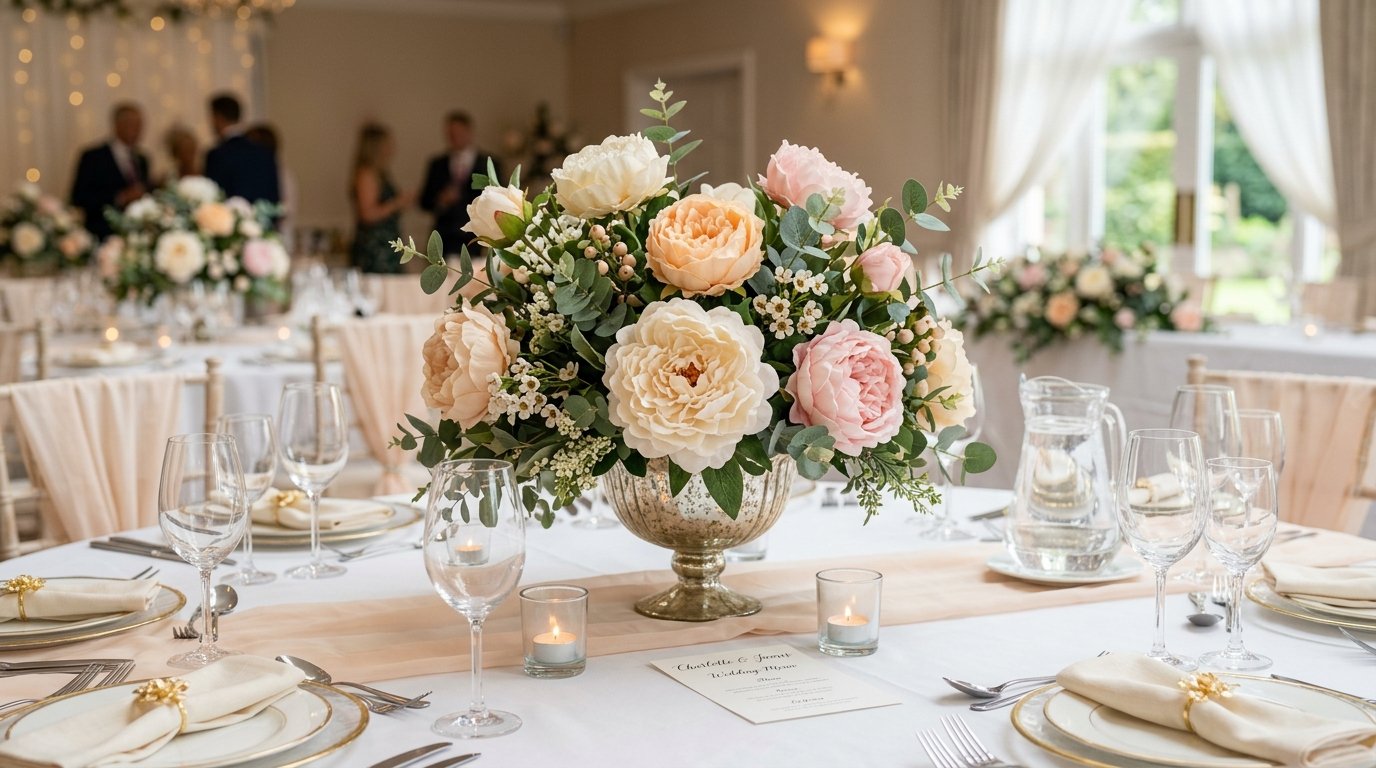
Artificial peonies for weddings in Australia
Artificial peonies are very popular for weddings because they give a generous bouquet shape and hold their form all day. They are useful for bridal bouquets, bridesmaid bouquets, arbour arrangements, table centrepieces, cake table flowers and bridal shower styling. For Australian weddings, artificial peonies can be practical in heat, when fresh flowers can struggle during summer ceremonies or long photo sessions. Blush, cream, white and dusty pink peonies are the safest wedding colours. Burgundy peonies work beautifully for autumn and winter weddings. Peach and coral suit warmer, coastal or garden-style weddings. A good wedding arrangement usually mixes peonies with other flowers and greenery. All peonies, all the time, can look heavy. Add roses, baby’s breath, eucalyptus-style foliage, orchids, hydrangeas or soft filler stems to create shape.
Styling artificial peonies by room
Peonies suit bedrooms naturally. Use blush, cream, white or dusty pink peonies in a small to medium vase. Keep them away from direct sun if possible, especially pale colours that can fade. A huge peony arrangement on a bedside table can look a bit much.
For living rooms, peonies can soften hard surfaces like stone, glass, timber and metal. Try cream peonies with eucalyptus greenery, blush peonies in a ceramic vase, burgundy peonies in a dark room, mauve peonies with grey or beige décor, or peach peonies in a light coastal space. Peonies are large flowers, so they will be noticed.
Peonies can work beautifully on dining tables, but keep the arrangement low. Large flower heads block conversation if the vase is too tall. Use a low bowl, short ceramic vase or wide glass vessel.
Small peony arrangements can soften bathrooms, especially white or tiled spaces. Use white, cream or blush and avoid placing fabric flowers right beside steam. An entry table can handle a fuller peony arrangement; this is a good place for cream, blush, mauve or burgundy peonies in a vase with enough weight. Artificial peonies can work in offices if the colours are restrained. Cream, white, blush and mauve feel more professional than bright pink. Use them in reception spaces rather than every desk. We are decorating, not opening a flower stall.
How to arrange artificial peonies in a vase
Peonies need space. Start with greenery, add the largest heads at different heights, turn some sideways, then a few smaller fillers. If it looks like one big blob, take a stem out.
Peonies need space. Do not jam them together until they look like one big round blob. Start with greenery, add the largest peony heads first, place them at different heights, turn some flowers slightly sideways, add smaller filler flowers or buds, then step back and remove anything that looks crowded. Peonies work well with roses, eucalyptus-style foliage, baby’s breath, hydrangeas, orchids and dried-look grasses. Choose a vase that balances the fullness of the flowers. For more detailed vase guidance, read our guide on choosing a vase with artificial flowers.
Seasonal styling with artificial peonies
Spring suits blush, pink, white, peach and lilac peonies with soft greenery. Mother’s Day in Australia falls in May, so warm blush, cream, mauve and dusty pink peonies work beautifully. For summer, use lighter colours and simpler arrangements, and keep peonies out of harsh direct sun; Australia’s summer light is not gentle. Autumn suits burgundy, mauve, dusty rose, cream and deeper pink in ceramic, stone or terracotta vases. Winter arrangements can handle deeper colours, like burgundy peonies with cream roses.
Indoor vs outdoor artificial peonies
Most artificial peonies are indoor flowers. Some may be labelled outdoor-suitable, but many are not. If you want to use peonies outdoors for a covered patio, balcony, wedding arbour or memorial arrangement, check for UV treatment and weather suitability. Peony petals are often layered, which means they can collect dust, moisture and grime. Outdoor use is possible, but I would not put ordinary indoor peonies in full sun and expect miracles. The sun will win. It usually does.
Caring for artificial peonies
Because peonies have layered petals, dust can settle inside the flower head. Take the arrangement outside, shake the stems gently, use a soft brush between petal layers, wipe leaves and stems, and use a cool low hairdryer if needed. Avoid soaking unless the product label says it is safe. Pale peonies show dust faster than darker ones. For full cleaning instructions, use our guide on how to clean artificial flowers.
Common mistakes with artificial peonies
Peonies should be full, but not perfect balls; look for loose petals and shape variation. Soft colours usually look more realistic than bright pink, bright purple or harsh red. Large peonies need room, so too many in one vase can look heavy. Short stems in a tall vase look awkward. And bad leaves make the whole arrangement look cheap, so check foliage before buying.
My honest take
Artificial peonies are one of the better faux flowers to use in Australian homes, but only if the petal shape and colour are right. Soft, layered, matte peonies can look beautiful. Shiny, oversized, perfectly round ones rarely do. For most homes, I would choose cream, blush, dusty pink or mauve. For weddings, invest in better-quality stems. For everyday décor, use fewer peonies than you think and give them a simple vase. Peonies should look generous and relaxed, not like a fabric pom-pom trying to be fancy.